![Inami Woodcarving Chopstick Rest Set: Toyama’s Temple-Carver Craft, Where to Buy [2026]](https://jpmono.com/wp-content/uploads/2026/05/japan-map-regions-and-prefectures-800x1050.png)
A chopstick rest is the smallest object on a Japanese table, and Inami woodcarving (井波彫刻, Inami chōkoku) is one of the largest-scale carving traditions in the country — a craft that normally fills temple transoms and shrine floats. Inami chopstick rests combine those two scales in a single hand-sized object. Each rest is cut from a single block of camphor, cypress, or zelkova by carvers descended from the temple sculptors of Inami, a district of Nanto City in Toyama Prefecture, on the Sea of Japan side of central Japan.
What makes Inami carving recognizable is depth. The same chisels that undercut a peony or a dragon on a temple beam are used here at tabletop scale, so a camellia, a fish, or an owl reads as a small relief sculpture rather than a stamped silhouette. No mold is involved; the grain runs through the form because the form was cut out of the grain. That is the quality a cast or pressed chopstick rest cannot reproduce.
This guide is written for international readers deciding whether a hand-carved Inami chopstick rest set is worth sourcing from Japan. We cover how the craft comes from Toyama’s temple-carver tradition, why the woodwork matters, how shipping works from outside Japan, and which buyer this object actually suits, including who should pass.
📅 Published: June 13, 2026
🔄 Last updated: June 13, 2026
⏱️ Read time: ~9 min
- Who this is for — and who should skip it
- Product overview (from published specs)
- Where this comes from — place, era, and the craft tradition
- Where to buy
- What it does well
- Weaknesses and things to verify before buying
- Conclusion — which buyer type are you?
- Other ways to approach this purchase
- ❓ Frequently Asked Questions
Who this is for — and who should skip it
- Want a genuine hand-carved object, not a molded or laser-cut imitation
- Are buying a meaningful, gift-scale entry point into a METI-designated craft
- Appreciate visible chisel work and natural wood grain over uniform finish
- Set a table where small details — the rest under each pair of chopsticks — are noticed
- Are comfortable sourcing from Japan and checking the product details before buying
- Need a dishwasher-safe, fully waterproof rest for daily hard use
- Want an exact, repeatable color and shape across every piece
- Are price-sensitive and a plain ceramic or bamboo rest would do
- Require a guaranteed in-stock item shipping today — hand-carved stock fluctuates
- Dislike the slight variation that comes with anything carved by hand
Product overview (from published specs)
| Spec | Detail | Source |
|---|---|---|
| Craft | Inami chōkoku (Inami woodcarving), METI-designated traditional craft (1975) | Maker / METI |
| Material | Solid wood — camphor (kusunoki), cypress (hinoki), or zelkova (keyaki); relief-carved by hand | Maker direct |
| Form | Tabletop chopstick rest (hashioki) set; relief motifs (e.g., camellia, fish, owl) | Product information |
| Set count | Sold as a set — exact piece count may vary | Unconfirmed |
| Dimensions / weight | Unconfirmed — not stated in captured data | — |
| Origin | Inami, Nanto City, Toyama Prefecture, Japan | Maker direct |
| Price | — | Amazon JP Global Store |
This guide draws on public craft references and the maker tradition. Prices, stock, wood species, and dimensions vary by workshop and piece, so confirm the current details with the carver or a specialist woodcraft seller.
📖 Glossary — key terms
- Inami chōkoku (井波彫刻) — “Inami woodcarving,” the deep-relief carving tradition of Inami, Toyama.
- Hashioki (箸置き) — a chopstick rest; the small support that keeps chopstick tips off the table.
- Ranma (欄間) — a carved transom panel set above sliding doors in traditional architecture; the architectural form this rest descends from.
- Shishi (獅子) — guardian-lion figures carved for temples and shrines.
- Kusunoki / hinoki / keyaki — camphor, Japanese cypress, and zelkova; the woods Inami carvers favor.
- METI — Japan’s Ministry of Economy, Trade and Industry, which designates official traditional crafts (Inami carving, 1975).
Related jpmono guides — other Toyama makers, other Japanese woodwork, and the same object type in a different material.
 Takaoka raden lacquer box
same Toyama
Johana shike-ginu silk scarf
same Toyama
Tateyama Tozan cotton book cover
same Toyama
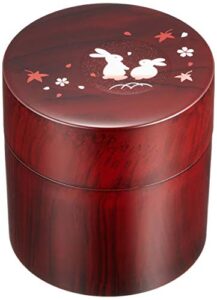 Yamanaka woodturned keyaki caddy
Hokuriku woodwork
Gohara mulberry wood bowl
woodwork
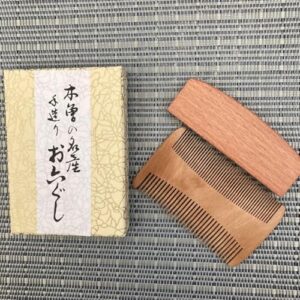 Kiso Oroku-gushi wooden comb
woodwork
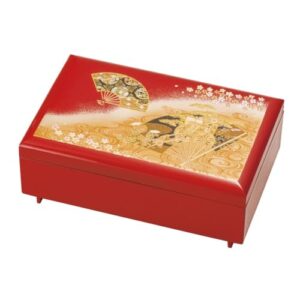 Kyo sashimono paulownia box
woodwork
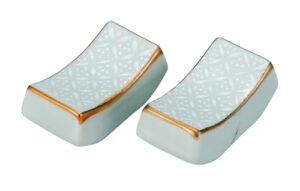 Owari shippō cloisonné chopstick rests
same type, contrast
Where this comes from — place, era, and the craft tradition

Inami sits on the Tonami plain in the southwest of Toyama Prefecture, on the Sea of Japan coast of the Hokuriku region — about 350 km northwest of Tokyo, with the Tateyama mountain range walling off the eastern horizon. The town is now part of Nanto City, formed when several Tonami-plain municipalities merged. The Sho River, draining out of the mountains above, gave the district both water and timber: the camphor, zelkova, and cypress that Inami carving depends on came down these valleys.

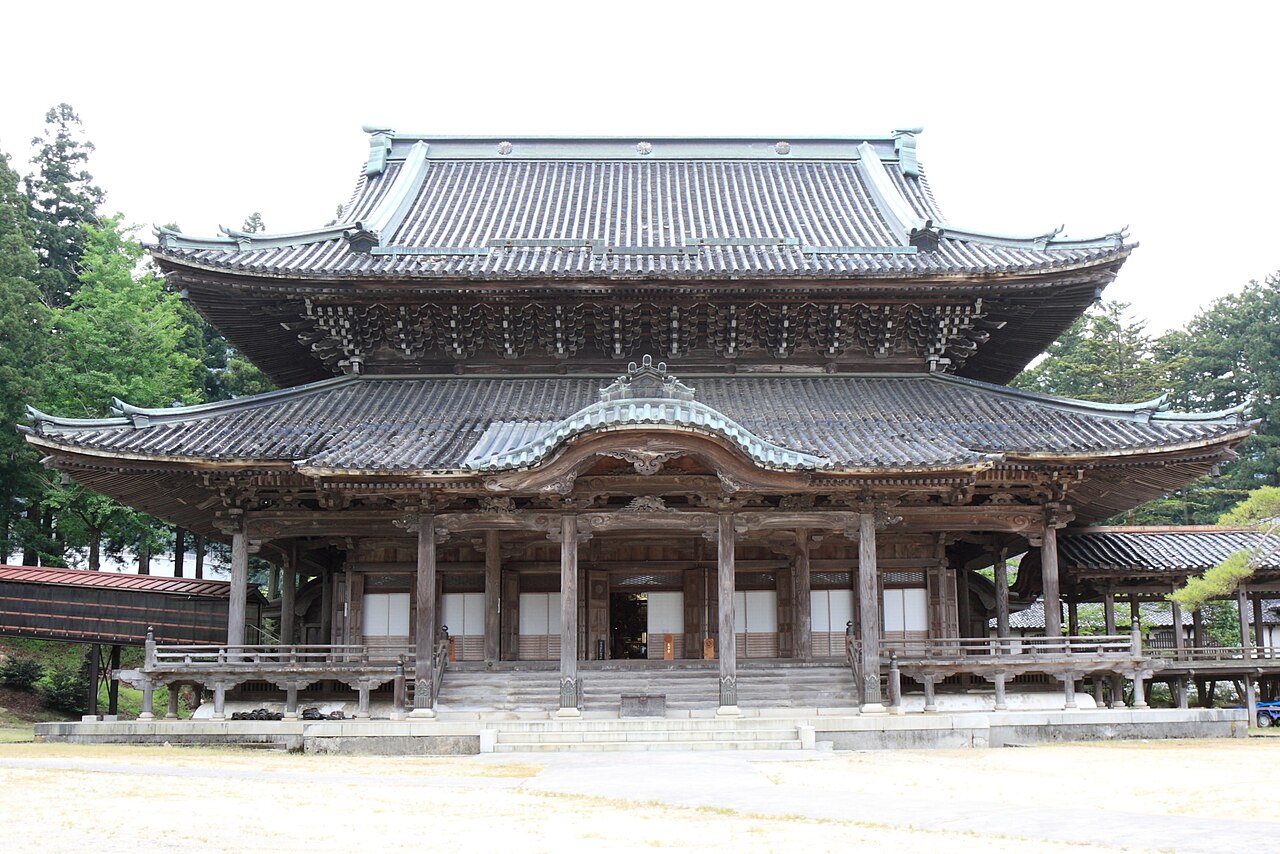
The craft has a precise origin, and it is religious rather than commercial. Inami grew up around Zuisenji, a major temple of the Jōdo-Shinshū (True Pure Land) school of Buddhism. The temple’s main hall burned more than once, and for the reconstruction completed in the 1760s, carpenter-sculptors were brought in from Kyoto’s Higashi Honganji — the head temple of the school — and they taught the local carpenters their deep-relief chisel technique.
-
1390 — Zuisenji is founded as a major Jōdo-Shinshū temple in Inami. -
1763 — The main hall is rebuilt after repeated fires; carpenter-sculptors from Kyoto’s Higashi Honganji teach local carvers their deep-relief technique. -
Late 18th century — Temple sculptors settle in Inami, carving ranma transoms and shishi guardian lions. -
19th–20th century — The work spreads to shrine-float carving and the home transoms that still line Yokamachi street. -
1975 — METI designates Inami chōkoku an official traditional craft. -
2000s–present — Carvers apply the same chisel work to tabletop pieces such as chopstick rests.
Those sculptors did not leave. Generations of them stayed in Inami, and the town became Japan’s foremost woodcarving district — its carvers producing the ranma (transom panels), shishi guardians, and shrine-float carvings that still line Yokamachi street. The technique was recognized as a METI traditional craft in 1975, and a working Inami carver still keeps some 200 chisels and knives at the bench, choosing among them for each cut.

“The chisels that undercut a dragon on a temple beam are the same chisels that lift a camellia off a chopstick rest. The scale changes; the hand does not.”
That is the continuity worth understanding before you weigh the price. The chopstick rest is a domestic, gift-scale entry point into a tradition usually encountered at architectural scale — a piece of temple-carving logic small enough to set beside a bowl of rice. The same undercutting that gives a ranma its shadow gives the rest its depth.
Where to buy
Prices for hand-carved Inami woodwork vary by carver, wood species, size, and detail. Any USD conversion is approximate; compare the current yen price with shipping and customs before purchasing.
| Store | Item / variant | Price (JPY + USD est.) | Notes |
|---|---|---|---|
| 🇺🇸 Amazon.com (US) | Browse Japanese chopstick rests & wooden tableware | varies (USD) | Best if you’re shopping from the US — Prime shipping, USD pricing, no international customs. Amazon US carries Japanese hashioki and wooden tableware from various makers; the exact Inami-carved set is sourced from Japan (next row). |
| 🇯🇵 Amazon JP Global Store | Inami chōkoku chopstick rest set | — | Amazon JP Global Store; international shipping may be available. |
| Maker direct | Inami carving workshops / Nanto craft cooperatives | Varies — JPY | Widest selection of motifs and woods; many workshops sell domestically only and may not ship abroad directly. |
| Proxy services (Buyee / Tenso) | Forwarding for Japan-only options | Item price + forwarding fee | Use when a workshop or marketplace ships within Japan only; adds a forwarding fee and consolidates customs paperwork. |
Prices in USD are approximate and depend on the current exchange rate. Amazon JP Global Store typically ships household items internationally; shipping to the US or EU commonly runs about $15–$40, and orders over local thresholds may incur customs duties.
What it does well
Weaknesses and things to verify before buying
- Purchase details were not available. Confirm the current details before committing.
- Piece count and product details are unconfirmed. Check the product specifications before buying.
- Hand-carved variation. Each piece differs slightly in grain, finish, and cut. If you want perfectly matched, identical units, this is not the object for you.
- Wood care. Carved wood is not a dishwasher item. Expect to hand-wipe and keep it from prolonged soaking; some pieces may be unfinished or lightly oiled.
- Stock fluctuates. Hand-carved inventory is limited and the specific motif you see may sell out; availability can change between viewing and checkout.
- International shipping and duties. Buying from Japan adds shipping cost and possible customs charges; factor these in beyond the item price.
Conclusion — which buyer type are you?
Other ways to approach this purchase
❓ Frequently Asked Questions
Is the Inami chopstick rest really hand-carved?
Yes. Inami chōkoku is a relief-carving tradition worked by hand with some 200 chisels and knives. Each rest is cut from a single block of wood, which is why pieces vary slightly and the motif shows genuine undercut depth rather than a pressed outline.
What wood is it made from?
Inami carvers favor camphor (kusunoki), Japanese cypress (hinoki), and zelkova (keyaki), woods historically supplied by the Sho River valley. The exact wood varies by workshop and individual piece.
Can it ship outside Japan?
International shipping for small woodcraft depends on destination, weight, and carrier. Maker-direct orders may require a proxy service when a workshop does not ship abroad.
How do I care for a carved wooden chopstick rest?
Treat it as hand-wash wood: wipe clean, avoid prolonged soaking, and keep it out of the dishwasher. Carved wood is not waterproof, and some pieces are unfinished or lightly oiled rather than sealed.
How is it different from a cloisonné or ceramic chopstick rest?
A cloisonné rest, such as Owari shippō, is metal-and-enamel and perfectly uniform; a wooden Inami rest is carved relief with natural grain and slight piece-to-piece variation. The wooden version reads as a small sculpture; the enamel version as a jewel-like object.
Why is no price shown in this guide?
Prices and stock for hand-carved woodwork vary by carver and season. Ask the workshop or specialist seller for the current yen price and include shipping and customs in the budget.
Is Inami woodcarving an officially recognized craft?
Yes. Inami chōkoku was designated a traditional craft by Japan’s Ministry of Economy, Trade and Industry (METI) in 1975, with a lineage tracing to the temple sculptors who rebuilt Zuisenji in the 1760s.
jpmono.com is curated by a Japan-based editorial team (working out of Toyama in the Hokuriku region and Nara in Kansai) and is independent. We do not take payment from the makers we feature; income comes from affiliate links. We review maker specifications and public craft references rather than physically testing every product.
This article was prepared with AI assistance and reviewed against public craft references and published craft documentation. Specifications and availability vary by carver and piece.
Affiliate disclosure: jpmono.com may earn a commission on qualifying purchases made through links on this page, at no additional cost to you.