![Fujina-yaki Yumachi-gama Yunomi: Izumo Mingei Teacup Guide [2026]](https://jpmono.com/wp-content/uploads/2026/05/japan-map-regions-and-prefectures-800x1050.png)
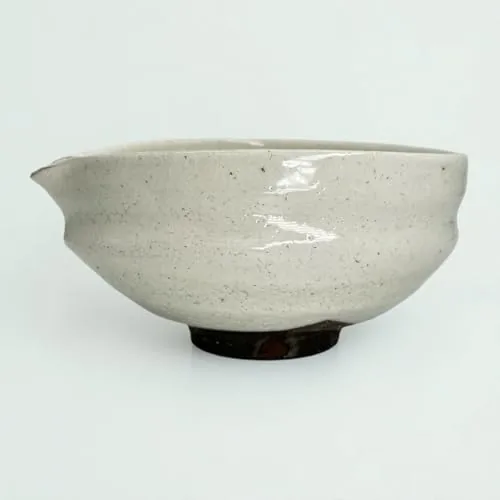
A yunomi (湯のみ, an everyday teacup with no handle) is the most ordinary object in a Japanese home, and for that reason it is one of the hardest to make well. The Fujina-yaki (布志名焼) yunomi from Yumachi-gama (湯町窯) is a warm, yellow-glazed example from Izumo in eastern Shimane Prefecture — a kiln founded in 1922 on the shore of Lake Shinji, in the same hot-spring district where the early twentieth-century folk-craft movement put down roots.
What makes Yumachi-gama yunomi notable to an international reader is its lineage rather than any single feature. Yumachi-gama sits inside the story of mingei (民藝, the Japanese folk-craft movement): Yanagi Soetsu, Shoji Hamada, and the English potter Bernard Leach all visited, and Leach’s influence is still visible in the kilns slipware and in the soft yellow glaze drawn from local Kimachi stone. A Yumachi-gama yunomi is the small, affordable end of that tradition — an honest, daily-use object rather than a display piece.
This guide is for readers shopping from outside Japan who want a genuine mingei teacup and need to know what the cup is, where it comes from, and how to buy it without guesswork. Prices, photographs, and variants can differ by seller, so they are reported as unavailable when not confirmed, while the place-based description draws on the editorial notes for the article.
🔄 Updated:
⏱️ Read time: ~9 min
Who this is for — and who should skip it
- Want a daily-use teacup with a documented mingei lineage, not a tourist souvenir
- Like warm, earthy slipware glazes over crisp white porcelain
- Appreciate the Leach–Hamada–Yanagi folk-craft story and want an object connected to it
- Are comfortable buying from Amazon JP Global Store and verifying price and stock yourself
- Prefer a handle-free yunomi for green tea or hojicha at home
- Need an exact price and photo before ordering — neither was available at the time of writing
- Want a perfectly uniform, machine-made set; mingei pieces vary by hand
- Are looking for a handled Western-style mug
- Need a formal matcha bowl (chawan) for tea ceremony — a yunomi is for everyday tea
- Require guaranteed dishwasher or microwave safety without checking the maker’s care guidance first

Product overview (from published specs)
Fujina-yaki and Yumachi-gama yunomi are mingei-style stoneware cups. Individual pieces vary in price, weight, dimensions, and finish, so the table reports confirmed characteristics and marks the remaining details as unconfirmed rather than guessing.
| Attribute | Detail | Source |
|---|---|---|
| Item | Fujina-yaki yunomi (handle-free teacup) | Keyword / editorial notes |
| Kiln | Yumachi-gama (founded 1922), Tamayu, Matsue | Editorial notes |
| Glaze | Kimachi yellow glaze (kigusuri), mingei slipware | Recommendation hint |
| Origin | Izumo, eastern Shimane Prefecture (Chugoku region) | Editorial notes |
| Material / size / weight | Unconfirmed — ask the maker | — |
| Dishwasher / microwave | Unconfirmed — ask the maker | — |
📖 Glossary — Japanese craft terms used in this article
Yunomi (湯のみ) — an everyday, handle-free teacup, taller than it is wide, used for green tea or roasted tea at home. Distinct from a formal matcha bowl.
Mingei (民藝, “folk craft”) — a movement formalized around 1925 by Yanagi Soetsu that found beauty in honest, anonymous, everyday objects made for use rather than display.
Fujina-yaki (布志名焼) — pottery from the Fujina district near Matsue, Shimane, with roots in the Edo period.
Yumachi-gama (湯町窯) — a kiln (gama means “kiln”) founded in 1922 in the Tamayu hot-spring district beside Lake Shinji.
Kigusuri / Kimachi yellow glaze — the kiln’s signature warm yellow glaze, drawn from local Kimachi stone.
Slipware — pottery decorated with liquid clay (slip); a technique Bernard Leach helped reinforce at Yumachi-gama.
Fumai-ko (不昧公) — the tea name of Matsudaira Harusato, the Matsue daimyo and famed tea master whose patronage tied local kilns to the region’s tea culture.

Buying options
No fixed price applies to every Fujina-yaki yunomi. JPY is the usual reference currency for the item, while any USD figures elsewhere on the site are approximate estimates at a ¥150/USD baseline. Compare current offers before ordering.
| Store | Item / Variant | Price | Notes |
|---|---|---|---|
| 🇺🇸 Amazon.com (US) | Browse Japanese teacups & yunomi | varies (USD) | Best if you’re shopping from the US — Prime shipping, USD pricing, no international customs. Amazon US carries Japanese teacups and tea sets from several makers; this exact Yumachi-gama cup ships from Japan (next row). |
| 🇯🇵 Amazon JP Global Store | Yumachi-gama Fujina-yaki yunomi | — | The selected Japanese source. Ships internationally from Japan to most major destinations. |
| Maker direct | Yumachi-gama (Tamayu, Matsue) | — | Small kiln; direct online ordering and overseas shipping are not confirmed in the data — treat as a showroom/gallery option. |
| Proxy services (Buyee / Tenso) | Japan-only sources forwarded abroad | item price + forwarding fee | Useful if a source is Japan-only; adds a service fee plus consolidated international shipping. |
What it does well
“The most ordinary object in a Japanese home is the hardest to make well — and the easiest to overlook. Mingei was the movement that taught Japan to look again.”
Weaknesses and things to verify before buying
- Offer details may vary. Confirm the current terms before ordering.
- Glaze tone and form vary by piece. View the seller’s product images before deciding.
- Set count unconfirmed. Confirm whether the offer is for a single cup or a pair before ordering.
- Care instructions unconfirmed. Microwave and dishwasher safety are not stated; assume hand-wash for handmade glazed pottery unless the maker says otherwise.
- Hand-made variation. If you want a perfectly matched, uniform set, this folk-craft piece may disappoint by design.
- International shipping cost and customs. Cross-border shipping from Japan adds cost and possible duties depending on your country’s thresholds.
- Fragility in transit. Pottery can arrive chipped; check the seller’s packaging and return terms.
Conclusion — which buyer type are you?
Other ways to approach this purchase
Where this comes from

Yumachi-gama stands in the Tamayu hot-spring district of Matsue, on the southern shore of Lake Shinji in eastern Shimane Prefecture. This is the Izumo region — the San’in side of the Chugoku district, facing the Sea of Japan rather than the busier Pacific corridor. The brackish lake, the hot springs, and the local Kimachi stone that colors the kiln’s glaze are all part of why pottery took hold and stayed here.
Izumo is one of Japan’s mythic ancient lands. It is home to Izumo Taisha, one of the oldest and most important Shinto shrines, and to the Kuni-yuzuri legend in which the deities of Izumo cede the land to the imperial line. Long before Tokyo or even Kyoto rose, Izumo was a center of myth and ritual.
The pottery’s recorded history begins later. Fujina-yaki originated in the Edo period under the patronage of the Matsue lord Matsudaira Harusato — better known by his tea name, Fumai-ko — a celebrated tea-master daimyo whose interest tied local kilns to the region’s deep culture of tea and wagashi (Japanese sweets). Matsue remains, to this day, one of Japan’s three great tea-and-sweets towns.
- Ancient era — Izumo emerges as a center of myth and ritual; Izumo Taisha and the Kuni-yuzuri legend anchor the region.
- 1603–1868 (Edo period) — Matsue grows as a castle town under the Matsudaira clan.
- Edo period (under Fumai-ko) — Fujina-yaki originates under the patronage of tea-master lord Matsudaira Harusato, linking kilns to Matsue’s tea culture.
- 1922 — Yumachi-gama is founded in the Tamayu hot-spring district beside Lake Shinji.
- 1920s–1930s — The mingei movement takes hold; Yanagi Soetsu, Shoji Hamada, and Bernard Leach visit, and Leach’s influence shapes the kiln’s slipware.
- 2026 — Yumachi-gama still produces its yellow-glaze mingei pottery, including the everyday yunomi.
Yumachi-gama’s deeper claim to attention is the early twentieth century. Founded in 1922, it became a meeting point for the mingei movement. Yanagi Soetsu, the potter Shoji Hamada, and the English potter Bernard Leach all visited, and Leach’s influence is still visible in the kiln’s signature slipware “egg baker” and in the warm yellow glaze drawn from local Kimachi stone.
That continuity is the point. The yunomi is not a relic or a reproduction; it is a current, everyday product of a kiln that has been making this kind of honest, useful object for a century. When a Yumachi-gama yunomi is described as mingei, that word carries the weight of a documented lineage that runs from Fumaiko’s tea bowls through Yanagi and Leach to the cups produced in Izumo today.
❓ Frequently Asked Questions
Does Amazon JP Global Store ship Fujina-yaki internationally?
What gives the cup its yellow color?
Is this teacup microwave or dishwasher safe?
How is this connected to Bernard Leach and the mingei movement?
How is a yunomi different from a matcha bowl?
Is the price shown on this page current?
jpmono.com is curated by a Japan-based editorial team (working out of Toyama in the Hokuriku region and Nara in Kansai) and is independent. We do not take payment from the makers we feature; income comes from affiliate links. We do not physically test every product — we read maker specifications and pottery references. Read more about our editorial standards.
🤖 This article was produced with AI assistance and editorial review. Where information was incomplete — including price and product imagery — that is stated plainly rather than filled in by guesswork.
Affiliate disclosure: jpmono.com may earn a commission on qualifying purchases made through links on this page, at no additional cost to you.