![Imado-yaki Maneki-neko Clay Cat: Tokyo’s Original Beckoning Cat [2026]](https://jpmono.com/wp-content/uploads/2026/06/imado-yaki-maneki-neko-clay-cat-where-to-buy-2026-featured.jpg)
The maneki-neko — the beckoning cat with one paw raised — is one of Japan’s most recognizable lucky charms, and most of the millions sold each year are mass-produced ceramic or plastic. The Imado-yaki (今戸焼, “Imado ware”) version is a different object entirely: a hand-shaped, low-fired earthenware figurine from the old riverside district of Asakusa in downtown Tokyo, descended from the very lineage that several traditions credit with inventing the beckoning cat in the first place.
Imado sits on the Sumida River in Taito Ward, and from the Edo period it was a center for unglazed and lightly fired clayware — roasting pans, braziers, ritual vessels, and folk dolls. Imado Shrine, formerly Imado Hachiman, is widely celebrated as a birthplace of the maneki-neko: in a late-Edo legend, a poor old woman who could no longer feed her cat made clay cat figures from a dream and sold them, and they became a sensation. The clay beckoning cat you are looking at here is the descendant of that folk object, not a souvenir-shop reproduction.
This guide is written for international readers deciding whether an authentic Imado-yaki clay cat is worth sourcing from Japan rather than buying a generic maneki-neko locally. We cover what the object actually is, where it comes from, how it compares to other Japanese clay figurines and Tokyo crafts on this site, the realistic purchase paths from outside Japan, and the honest caveats — including how scarce genuine pieces have become.
🔄 Last updated: June 20, 2026
⏱️ Read time: ~11 min
- Who this is for — and who should skip it
- Product overview (from published specs)
- 📍 Where this comes from — place, era, and the craft tradition
- 📦 Shipping & where to buy from outside Japan
- Price snapshot across stores
- What it does well
- Weaknesses and things to verify before buying
- Conclusion — which buyer type are you?
- Other ways to approach this purchase
- 🏆 Editor’s Pick
- ❓ Frequently Asked Questions
Who this is for — and who should skip it
- Want an authentic, hand-shaped lucky charm tied to a specific place and origin story, not a generic factory cat
- Value the folk-craft and historical lineage of Asakusa over a flawless, uniform finish
- Collect Japanese clay dolls and regional figurines (Hakata, Yatsuhashi, kokeshi, and the like)
- Are shopping for a meaningful housewarming, business-opening, or good-luck gift
- Accept that genuine Imado-yaki is scarce and may need to be sourced from Japan
- Just want any inexpensive maneki-neko for a counter or desk — a generic one costs far less
- Expect a glossy, glazed, machine-perfect surface; this is matte, low-fired earthenware
- Need something rugged — unglazed clay is fragile and porous, not a daily-handling object
- Are unwilling to deal with international shipping, fragile-item packing, or proxy services
- Require confirmed live pricing before buying (this listing’s price data was thin at writing)
Product overview (from published specs)
Data on this specific listing was limited at the time of writing. The values below reflect what the category and the Amazon JP snapshot indicate; treat anything marked “Unconfirmed” as something to verify on the live listing before purchase.
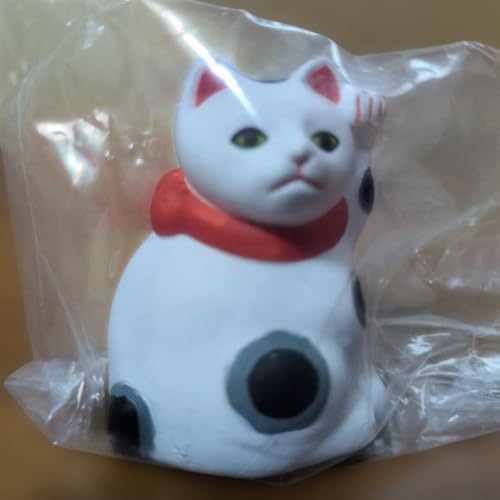
Imado-yaki Maneki-neko Clay Cat
今戸焼YUJIN招き猫
通常6~7日以内に発送します。 · Sold by 唯陽商店 · ASIN B0GY1MB1DW
Price and availability as of 2026-08-31 02:30 JST. The Amazon listing at the time of purchase is authoritative. jpmono.com earns a commission on qualifying purchases at no extra cost to you.
| Attribute | Detail |
|---|---|
| Object | Maneki-neko (招き猫, “beckoning cat”) figurine / lucky charm |
| Craft | Imado-yaki (今戸焼) — Edo-era earthenware of Asakusa, Tokyo |
| Material | Unglazed / low-fired local clay (earthenware) |
| Forming | Hand-shaped, hand-finished; pieces vary individually |
| Origin | Imado, Asakusa, Taito Ward, Tokyo (Kantō region) |
| Lineage | Imado Shrine, celebrated as a birthplace of the maneki-neko |
| Size / weight | Unconfirmed — check the live listing |
| Item ID (ASIN) | B0GY1MB1DW |
Sources: Amazon US search (primary, moonill-20) + Amazon JP Global Store (secondary, moonill-22, sourced listing) + maker direct where available. Only the Amazon JP listing snapshot was available; live pricing and dimensions may have shifted since the writing date.
📖 Glossary — key terms
Imado-yaki (今戸焼) — earthenware traditionally made in the Imado district of Asakusa, Tokyo, since the Edo period; unglazed or low-fired everyday and ritual clayware.
Maneki-neko (招き猫) — the “beckoning cat,” a folk lucky charm depicting a cat with one paw raised to invite fortune or customers.
Earthenware — pottery fired at relatively low temperatures, leaving the clay body porous and matte rather than vitrified and glossy.
Edo — the former name of Tokyo and of the Edo period (roughly 1603–1868), when the city was the seat of the Tokugawa shogunate.
Horoku (焙烙) — a shallow unglazed earthenware roasting pan, one of the traditional Imado-yaki products alongside hibachi braziers.
Asakusa — the old downtown (shitamachi) district of Tokyo around Sensoji temple, with Imado on its northern riverside edge.
Other Japanese clay figurines and Tokyo crafts we have covered — useful for weighing material, region, and use case.
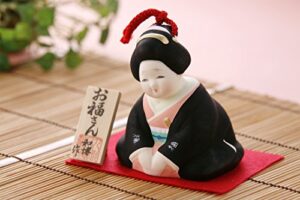 Hakata Ningyo clay figurine
Fukuoka bisque-clay figure
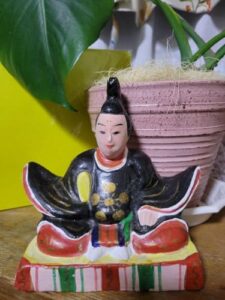 Akita Yatsuhashi clay doll
Tohoku folk clay doll
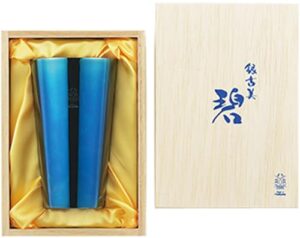 Tokyo Ginki silver tumbler
Another Tokyo metal craft
 Edo Komon pocket square
Tokyo stencil-dyed silk
 Tokyo Tsukiji yanagiba knife
Tokyo blade craft
Kobushi-yaki teapot
Hokkaido glazed pottery
Arita sometsuke mug
Glazed porcelain contrast
📍 Where this comes from — place, era, and the craft tradition

Imado (今戸) is a small district in Taito Ward, Tokyo, tucked against the west bank of the Sumida River where the city’s old downtown gives way to the water. It sits on the northern edge of Asakusa, the district that grew up around Sensoji temple and remained one of Edo’s busiest entertainment and pilgrimage quarters for centuries. The river mattered: it supplied workable clay and, just as importantly, the boat transport that let bulky, fragile earthenware move to market across the city.
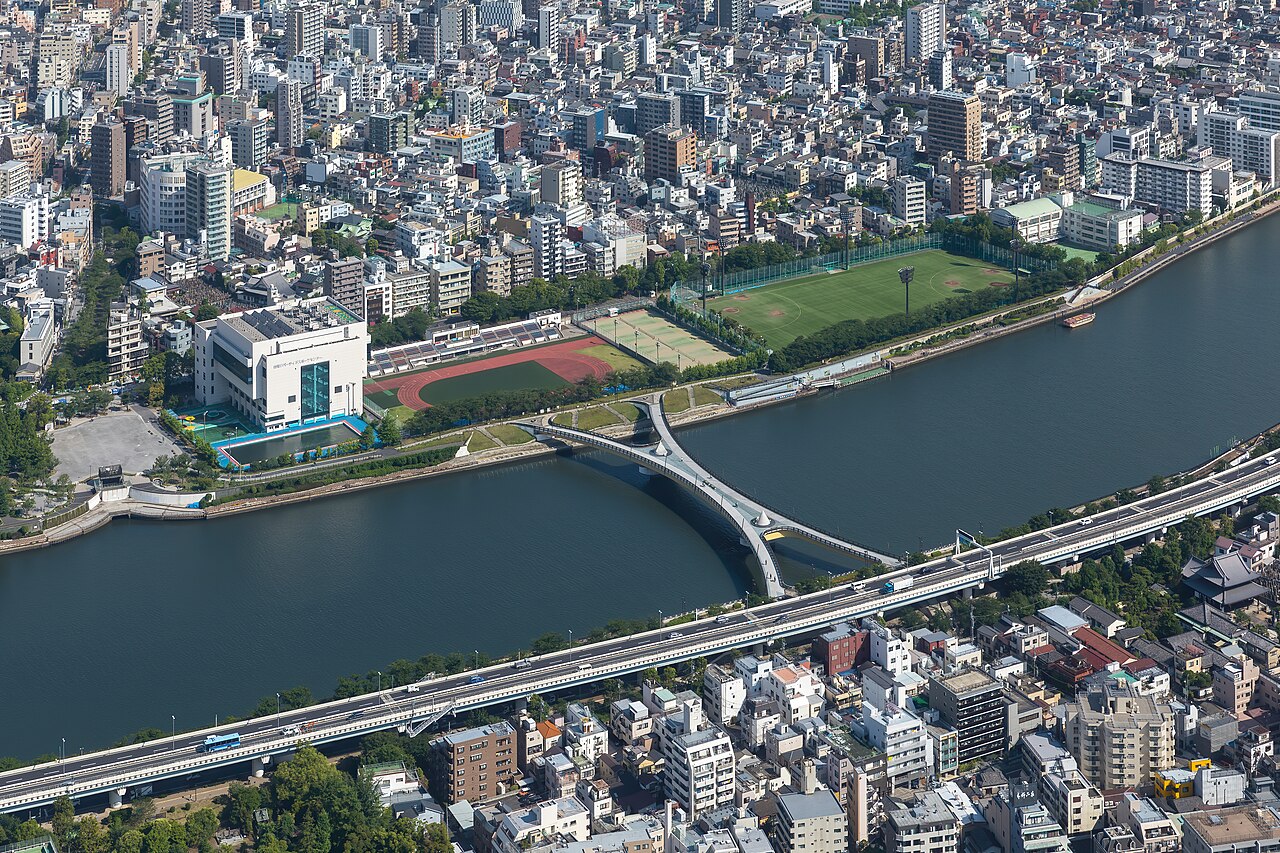
From the Edo period onward, Imado was known for unglazed and low-fired earthenware — the unglamorous, everyday end of Japanese ceramics. Kilns here turned out horoku (焙烙, shallow roasting pans), hibachi braziers, ritual and offering vessels, and clay dolls and folk charms. This was working pottery for a working city, made by the cartload rather than the showpiece, and the maneki-neko grew directly out of that folk-doll tradition.
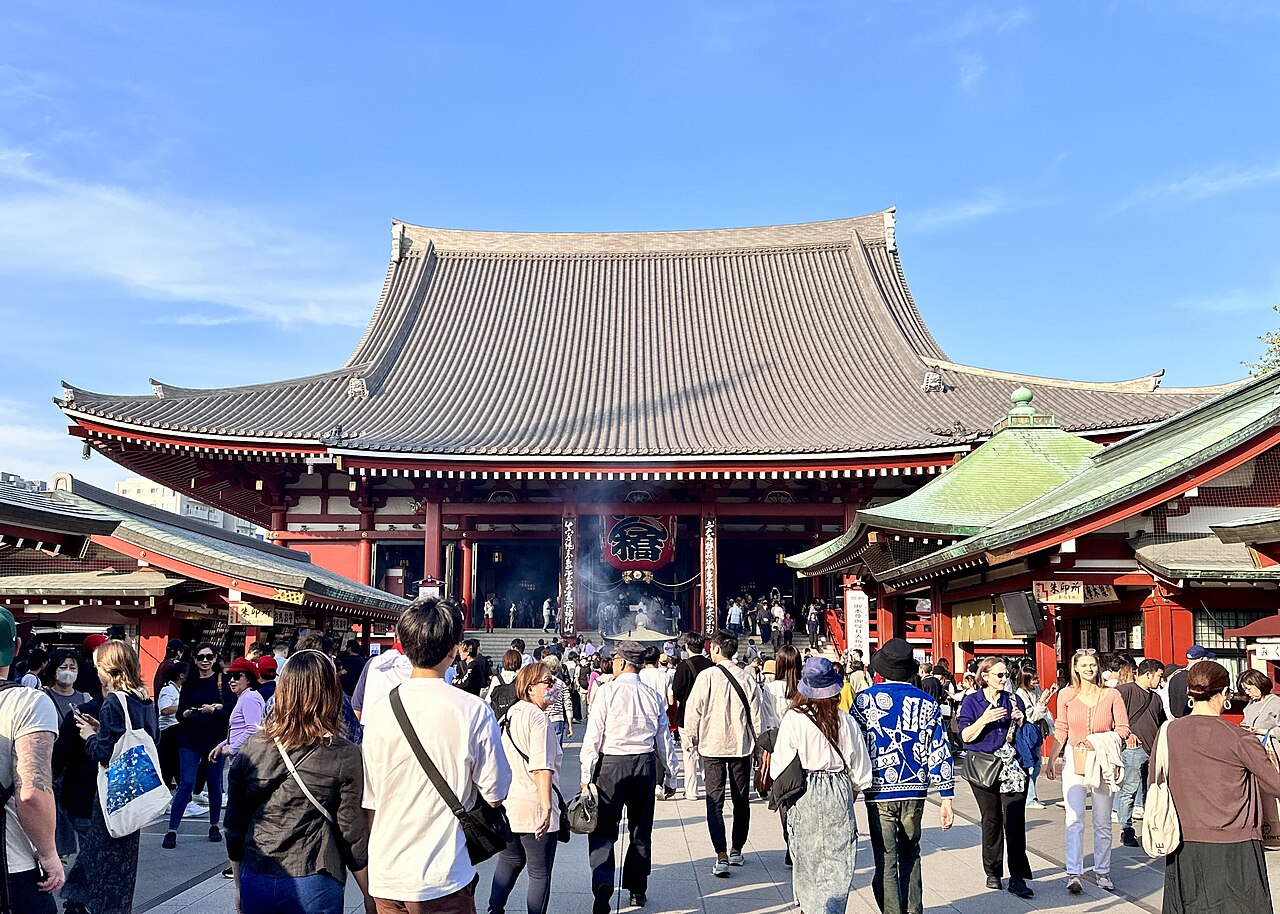
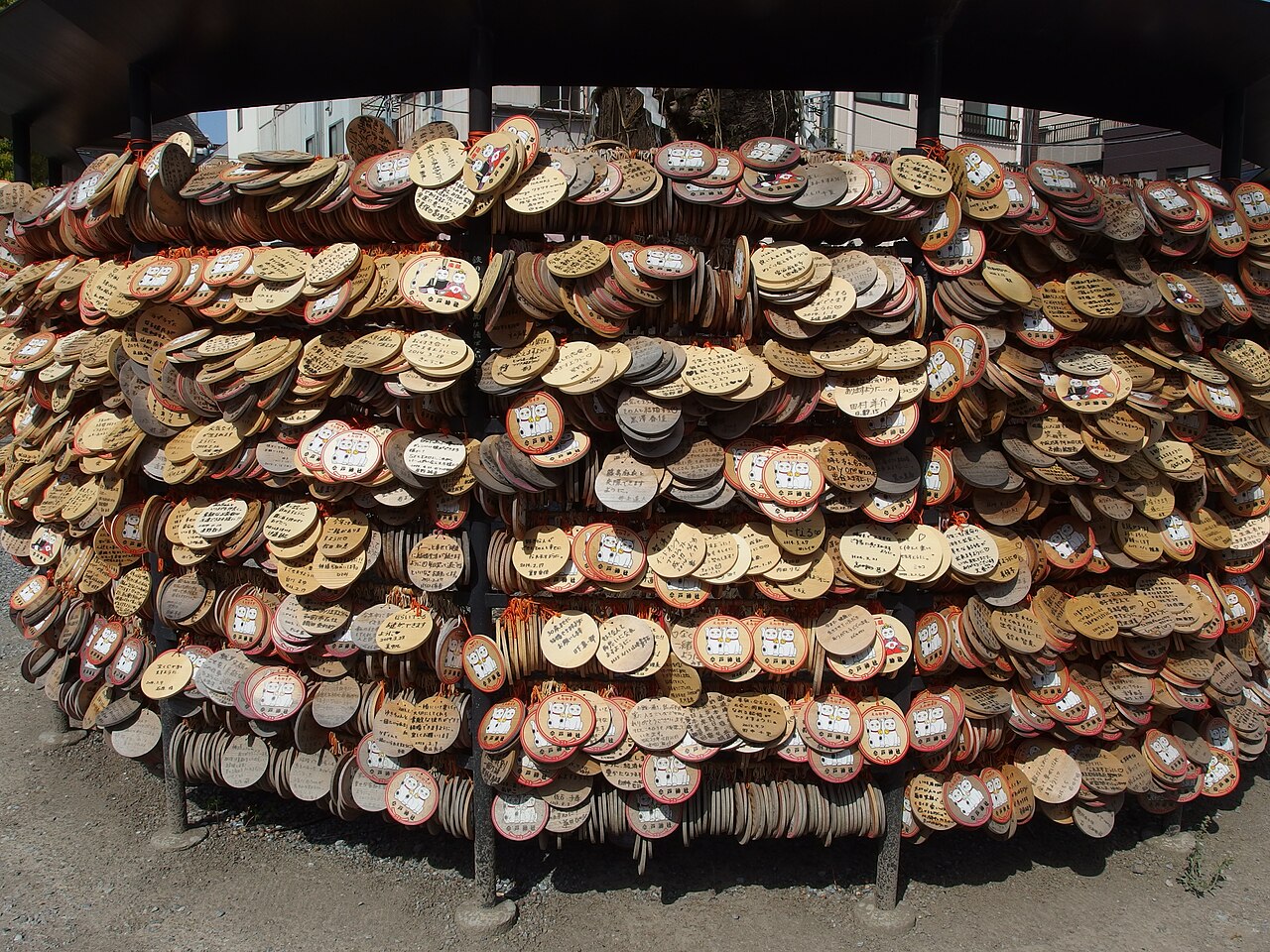
The defining story belongs to Imado Shrine, formerly Imado Hachiman, which is widely celebrated as a birthplace of the maneki-neko. In a late-Edo legend, a poor old woman of the district could no longer afford to keep her cat and had to give it up. The cat appeared to her in a dream and told her to make its likeness in clay; she did, sold the figures near the temple gates, and they became a sensation. Whatever the precise history — several places in Japan claim the beckoning cat’s origin, and the tradition is folk-belief rather than documented fact — the clay maneki-neko of Imado is the object at the root of that story.
-
Early Edo period (1600s) — The Imado district along the Sumida becomes a center for unglazed, low-fired earthenware. -
Edo period — Kilns produce horoku roasting pans, hibachi braziers, ritual vessels, and clay folk dolls. -
Late Edo (mid-19th century) — By tradition, a poor Imado woman makes clay cat figures from a dream; they become a sensation — the maneki-neko prototype. -
Meiji era onward — Mass-produced ceramic maneki-neko spread nationwide; demand for hand-made Imado pieces narrows. -
20th century — Disasters and urban change thin Asakusa’s working kilns; Imado-yaki contracts to a handful of makers. -
2026 — Only a few kilns keep the imado-yaki tradition alive, making authentic hand-shaped pieces scarce.
That last point is the continuity case, and it is a fragile one. Where a craft like Takaoka metalcasting or Nambu ironware still has a cluster of active workshops, Imado-yaki has dwindled to only a few kilns keeping the tradition alive. The earthenware that once moved by the boatload is now a small-batch, hand-shaped product, and authentic pieces are correspondingly scarce. That scarcity is exactly why an Imado-yaki maneki-neko is a different proposition from the beckoning cat on a convenience-store shelf.
“Most beckoning cats are pressed by the million. This one is hand-shaped clay from the district that the legend says invented the gesture.”
📦 Shipping & where to buy from outside Japan
Genuine Imado-yaki is a small-batch craft, so the realistic path for international buyers is the Amazon JP Global Store (where the specific listed item is sourced) or a Japan-based proxy service, rather than a local store. The Amazon JP Global Store ships many household items worldwide, though fragile earthenware can carry restrictions or higher packing requirements; confirm on the listing before ordering.
- International shipping to the US and EU typically runs roughly $15–$40 for a small item; remote regions cost more.
- Fragile, low-fired clay needs careful packing — prefer sellers who pack ceramics well, and consider a proxy that consolidates and re-packs.
- Orders above your country’s customs / duty threshold may attract import tax; check local limits.
- If the JP listing will not ship to your country, a proxy service (Buyee / Tenso) can forward it.
Prices in USD are approximate and depend on the current exchange rate (¥150/USD baseline as of mid-2026).
Price snapshot across stores
Live pricing for this specific listing was unavailable at the time of writing — only the Amazon JP snapshot was accessible, and the price field was not populated. Always verify the current price at the retailer before buying. JPY (¥) is the authoritative price; USD figures are approximate estimates.
| Store | Item / Variant | Price (JPY + USD est.) | Notes |
|---|---|---|---|
| 🇺🇸 Amazon.com (US) | Browse Japanese maneki-neko & clay figurines | varies (USD) | Best if you’re shopping from the US — Prime shipping, USD pricing, no international customs. Amazon US carries maneki-neko and Japanese clay figurines from various makers, useful for comparing styles and price tiers; the exact Imado-yaki piece is sourced from Japan (next row). |
| 🇯🇵 Amazon JP Global Store | Imado-yaki maneki-neko (ASIN B0GY1MB1DW) | Price unavailable at writing — check listing | The sourced listing for the specific item. Ships internationally from Japan to most major destinations; confirm fragile-item handling. |
| Maker direct | Imado-area kiln / shrine shop | Varies; often in person only | Only a few kilns remain; some pieces are sold near Imado Shrine in Asakusa rather than online. |
| Proxy services (Buyee / Tenso) | Forwarding of JP-only listings | Item price + service fee + forwarding | Useful when a listing will not ship to your country; adds a re-pack option for fragile clay. |
What it does well
Weaknesses and things to verify before buying
- Fragility. Unglazed, low-fired clay chips and breaks more easily than glazed porcelain — it is a display piece, not an everyday handling object.
- Porosity and staining. Earthenware is porous; keep it dry and away from grease and moisture, which can stain or weaken it.
- Thin listing data. Size, weight, and live price were not confirmed in the data available at writing — verify all of these on the live listing.
- Scarcity and authenticity. Only a few kilns still make genuine Imado-yaki; confirm the listing actually describes Imado-yaki and not a generic clay cat.
- Shipping risk. Fragile clay can crack in transit; prefer sellers or proxies who pack ceramics carefully, and budget for the chance of breakage.
- Price-to-utility. If you simply want a lucky cat to sit on a shelf, a mass-produced maneki-neko delivers the same gesture for a fraction of the cost.
Conclusion — which buyer type are you?
Other ways to approach this purchase
🏆 Editor’s Pick
❓ Frequently Asked Questions
Is the Imado-yaki maneki-neko really the “original” beckoning cat?
Does it ship internationally?
How should I care for unglazed earthenware?
Why is it more expensive than a regular maneki-neko?
How does it compare to Hakata or Yatsuhashi clay figurines?
Is the price shown reliable?
jpmono.com is curated by a Japan-based editorial team (working out of Toyama in the Hokuriku region and Nara in Kansai) and is independent. We do not take payment from the makers we feature; income comes from affiliate links. We do not physically test every product — we read maker’s specs and source listings. Read more about our editorial standards.
🤖 This article was prepared with AI assistance and reviewed against the available source data. Specifications, pricing, and availability were thin for this listing and should be confirmed on the live retailer page before purchase.
Affiliate disclosure: jpmono.com may earn a commission on qualifying purchases made through links on this page, at no additional cost to you.