![Sadowara Ningyo Clay Dolls: Miyazaki’s Shimazu Folk Pottery [2026]](https://jpmono.com/wp-content/uploads/2026/06/sadowara-ningyo-clay-doll-where-to-buy-2026-featured.jpg)
Sadowara ningyo (佐土原人形, “Sadowara dolls”) are hand-painted earthenware folk figures from Sadowara, the castle town of a Shimazu branch domain in what is now Miyazaki City, on the southeastern coast of Kyūshū. They are not porcelain and not tableware. They are low-fired, unglazed clay molded into small standing figures and finished by hand in bright mineral pigments, then displayed as okimono (置物, “ornamental objects placed on a shelf or alcove”).
The form most associated with Sadowara is the manju-kui (饅頭喰い) — a chubby child caught in the act of splitting a steamed bun in two. Alongside it you will find Tenjin scholar figures, hina dolls, and a handful of animal and warrior motifs, all carried as engimono (縁起物, “good-luck pieces”) in southern Hyūga households. The motifs themselves traveled south: Kyoto’s Fushimi ningyo tradition fed the design vocabulary, and the Shimazu trade network carried it down into Kyūshū.
This guide is for international readers weighing a Sadowara doll as a Kyūshū okimono or gift. We sort out what the manju-kui motif actually means, where the tradition sits in Miyazaki’s history and landscape, how it differs from porcelain crafts, and the realistic ways to buy one from outside Japan. Because this is a low-fired painted earthenware figure rather than a mass-listed product, availability is artisan-direct and largely Japan-side — we cover that plainly below.
🔄 Updated:
⏱️ Read time: ~11 min

- Who this is for — and who should skip it
- Product overview (from published specs)
- Where this comes from — place, era, and the craft tradition
- Price snapshot across stores
- What it does well
- Weaknesses and things to verify before buying
- Conclusion — which buyer type are you?
- Other ways to approach this purchase
- 🏆 Editor’s Pick
- ❓ Frequently Asked Questions
Who this is for — and who should skip it
- Collect Japanese folk toys (kyōdo-gangu) and want a Kyūshū piece with a clear domain history.
- Like the warm, matte look of unglazed painted earthenware over shiny porcelain.
- Want an engimono okimono for a shelf, alcove, or child-blessing gift rather than something functional.
- Appreciate the manju-kui motif’s folk meaning and do not need a flawless, machine-uniform finish.
- Are comfortable buying artisan-direct or via Amazon JP Global Store and a proxy when needed.
- Want something usable at the table — this is decorative, not tableware.
- Expect glossy, glazed porcelain; Sadowara dolls are matte unglazed clay.
- Need durability for handling or shipping abroad — painted earthenware is fragile.
- Want guaranteed Prime-style stock and pricing; availability here is small-batch and artisan-direct.
- Dislike hand-to-hand variation in painting; no two pieces are identical.
Product overview (from published specs)
Source data for this specific piece is thin. Only the Amazon JP listing snapshot is available; live pricing may have shifted since the writing date, and no US listing was found at the time of writing. The table below marks anything not confirmed in the fetched data as “Unconfirmed — check listing” rather than guessing.
Sadowara Ningyo Clay Dolls
★佐土原人形 饅頭喰 五代目窯元 伝統的工芸品
通常6~7日以内に発送します。 · Sold by ベストプライス東京本店 · ASIN B0FF49BZFH
Price and availability as of 2026-08-31 02:30 JST. The Amazon listing at the time of purchase is authoritative. jpmono.com earns a commission on qualifying purchases at no extra cost to you.
| Source | What it lists | Price (authoritative ¥ / USD est.) | Notes |
|---|---|---|---|
| 🇺🇸 Amazon US (search) | Browse Japanese clay folk dolls & okimono | varies (USD) | Best if you are shopping from the US — Prime shipping, USD pricing, no international customs. Amazon US carries assorted Japanese folk dolls and okimono for comparison; the exact Sadowara piece is sourced from Japan (next row). |
| 🇯🇵 Amazon JP Global Store | Sadowara ningyo manju-kui clay doll (ASIN B0FF49BZFH) | Unconfirmed — check listing (¥ is authoritative) | Sourced listing for the specific item. Ships internationally from Japan via Global Store to most major destinations. |
| Maker direct | Sadowara workshop / Miyazaki folk-craft outlets | Unconfirmed — check maker site | Artisan-direct; very small batches, often Japanese-language only and domestic shipping. |
| Proxy services (Buyee / Tenso) | Forwarding for JP-only listings | Item price + forwarding fee | Useful when a workshop or shop sells domestically only. Adds a consolidation/forwarding fee and customs handling. |
Material is unglazed, low-fired earthenware finished in hand-applied mineral pigments. Dimensions, exact weight, and the current price were not present in the fetched data and are marked unconfirmed above. Spec sheets indicate this is a decorative okimono rather than a functional vessel.
📖 Glossary — key terms used in this article
- Sadowara ningyo (佐土原人形) — painted clay folk dolls from Sadowara, Miyazaki.
- Manju-kui (饅頭喰い) — “bun-eating” motif: a child splitting a steamed bun, a classic good-luck/child-blessing figure.
- Tsuchi-ningyo (土人形) — earthenware clay dolls, a nationwide folk-toy category.
- Okimono (置物) — an ornamental object meant to be set on a shelf or in an alcove.
- Engimono (縁起物) — a good-luck charm or auspicious object.
- Fushimi ningyo (伏見人形) — the Kyoto clay-doll tradition that seeded many regional styles, including Sadowara’s.
- Shimazu (島津) / Satsuma — the powerful Kyūshū clan whose branch house governed the Sadowara domain.
- Hyūga (日向) — the old province name for the Miyazaki region.
- Shirasu (白砂) / Aira — the volcanic-ash plains of southern Kyūshū.
Related jpmono guides — same prefecture, the Shimazu/Satsuma lineage, other Kyūshū ceramics, and folk-craft okimono more broadly.
Where this comes from — place, era, and the craft tradition

Sadowara sits just north of central Miyazaki City, in the lower Ōyodo River basin where southern Kyūshū’s volcanic-ash soils — the Aira and Shirasu deposits laid down by ancient eruptions — meet the warm Pacific coast of old Hyūga province. The region is subtropical and humid, green year-round, and historically agricultural. That same workable clay and the river-and-coast logistics of a small castle town are why a painted-earthenware doll tradition could take root and find a local market here.
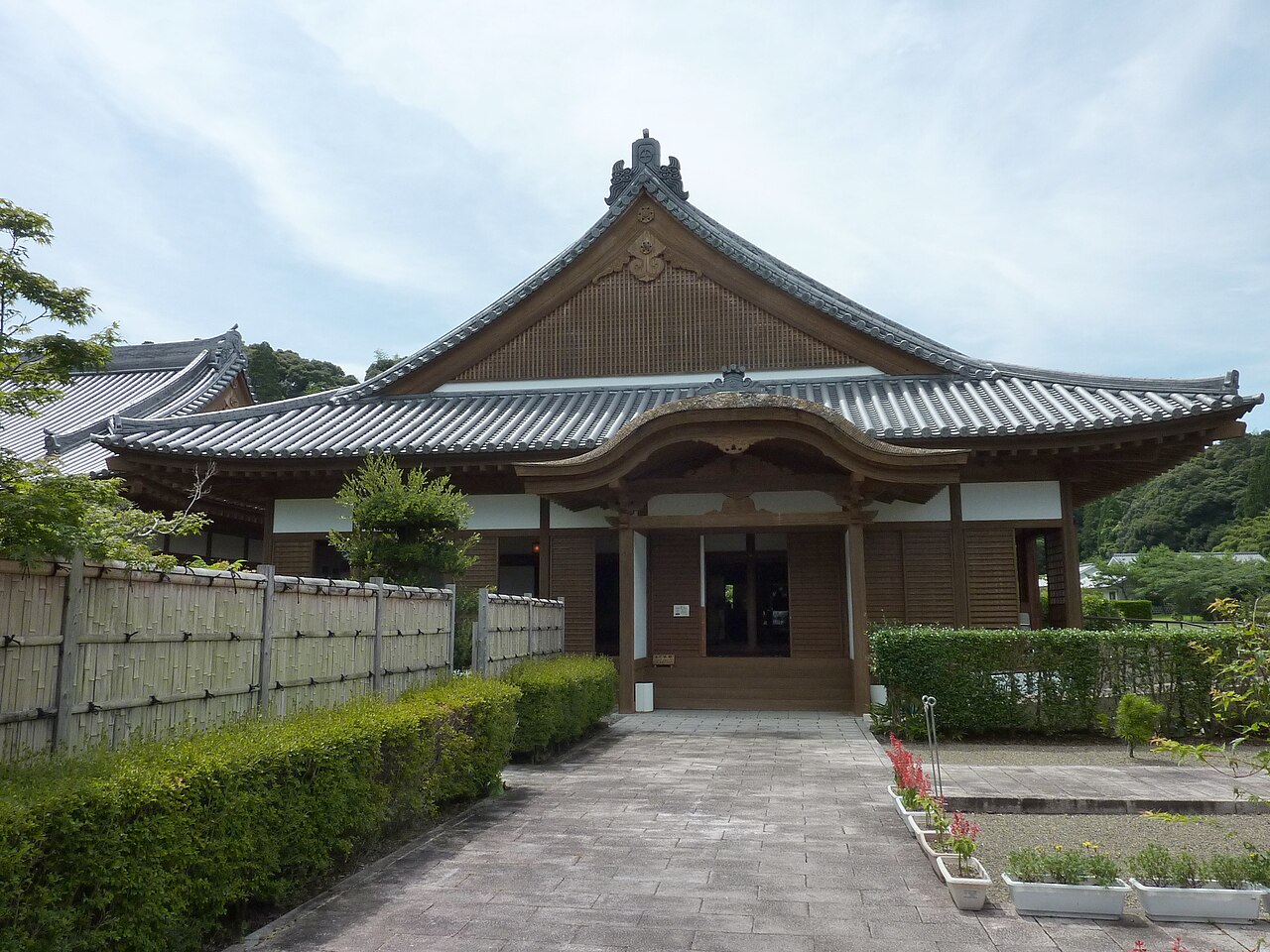
Sadowara was the castle town of the Sadowara domain (佐土原藩), a branch house of the Shimazu — the clan that ruled Satsuma and dominated southern Kyūshū through the Edo period. From the early 17th century, the branch domain governed this stretch of southern Hyūga, and its castle town concentrated the merchants and craftsmen who supply any feudal seat. It is in that castle-town economy that the clay-doll tradition formed.
The dolls’ design vocabulary, though, was not invented locally in isolation. Motifs traveled south from Kyoto’s Fushimi ningyo — the mother tradition of Japanese clay dolls — and arrived in Kyūshū along the Shimazu trade network that connected Satsuma to the central economy. So a Sadowara doll is a meeting point: Kyoto motifs, Shimazu logistics, and southern-Kyūshū clay and hands.
- 1603 — The Edo period begins; the Sadowara domain is established as a Shimazu (Satsuma) branch house governing southern Hyūga.
- 17th c. — The castle town concentrates merchants and craftsmen; painted-earthenware dolls take hold as local engimono.
- Edo period — Fushimi ningyo motifs from Kyoto reach Kyūshū via the Shimazu trade network, shaping the manju-kui, Tenjin, and hina forms.
- 1871 — The abolition of the han system (haihan-chiken) ends the Sadowara domain; the craft continues as a folk tradition.
- 2006 — The town of Sadowara is merged into Miyazaki City; the dolls are now made within the city limits.
- 2026 — Small-batch hand-painting continues, sold artisan-direct and through a handful of online listings.
The manju-kui motif belongs to a wider Japanese folk grammar of child-blessing and good fortune. The traditional reading goes back to a child’s-riddle: asked which parent he loves more, a clever child splits a steamed bun in two and asks which half tastes better — a lesson that both are inseparable. As a doll, the bun-splitting child is therefore a wish for cleverness and family harmony, and it is traditionally believed to carry good luck for a young household. Hyūga’s seaside shrines and child-blessing sites sit in the same folk-belief world.
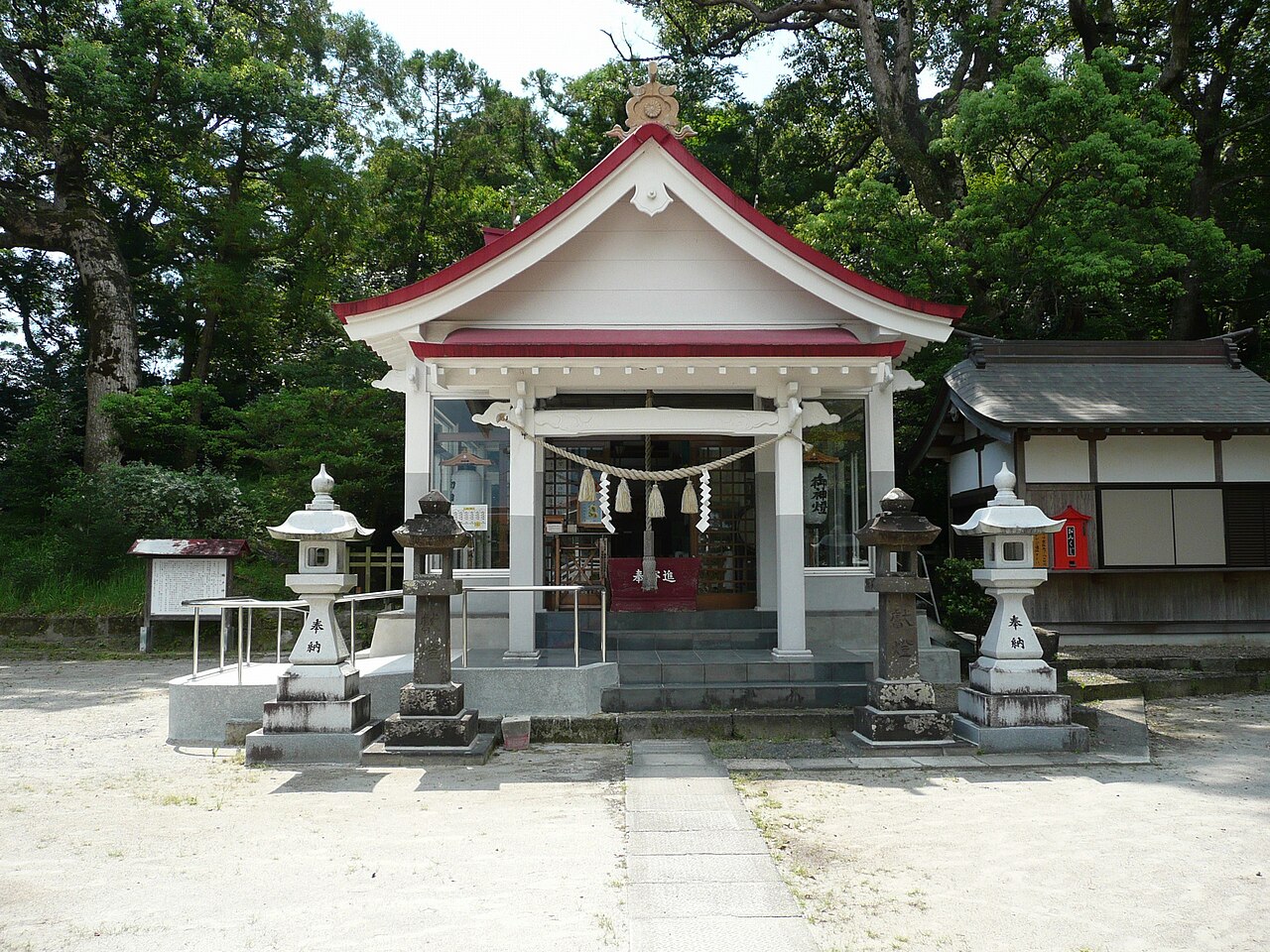
“A Sadowara doll is a meeting point — Kyoto motifs, Shimazu logistics, and southern-Kyūshū clay, fired low and finished by hand in a castle town facing the Pacific.”
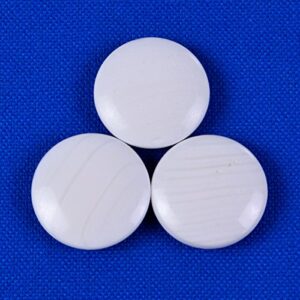
What “still being made here” means for Sadowara dolls is modest and honest: this is a small folk tradition, not an industrial pottery. Production is artisan-direct and low-volume, finished one piece at a time by hand, which is exactly why availability is limited and listings are sparse. The same southern-Kyūshū geography that supplied the clay here also gave the wider region its other crafts — Hyūga clamshell go stones from the same coast, and the woodland around Miyakonojo that fed its hatchet smiths.
Price snapshot across stores
The fetched data did not include a confirmed price for this listing, so JPY figures below are marked unconfirmed; the ¥ value on the live listing is always the authoritative one. USD figures elsewhere in this guide are approximate estimates at a ¥150/USD baseline as of mid-2026.
| Store | Item / variant | Price (¥ authoritative / USD est.) | Notes |
|---|---|---|---|
| 🇺🇸 Amazon US (search) | Browse Japanese clay folk dolls & okimono | varies (USD) | Best if you are shopping from the US — Prime shipping, USD pricing, no international customs. Amazon US carries assorted Japanese folk dolls for comparison; the exact Sadowara piece ships from Japan (next row). |
| 🇯🇵 Amazon JP Global Store | Sadowara ningyo manju-kui doll (B0FF49BZFH) | Unconfirmed — check listing | Sourced listing for the specific item. Ships internationally from Japan to most major destinations. |
| Maker direct | Sadowara workshop / Miyazaki folk-craft shops | Unconfirmed — check maker site | Small batches; often Japanese-language, domestic shipping only. |
| Proxy services (Buyee / Tenso) | Forwarding for JP-only listings | Item price + forwarding fee | For domestic-only shops; adds a forwarding fee and customs handling. Watch for duties over your local threshold. |
What it does well
Weaknesses and things to verify before buying
- Fragile earthenware. Low-fired painted clay chips and cracks easily; international shipping raises breakage risk. Confirm the seller’s packing.
- Thin listing data. Price, exact dimensions, and weight were not in the fetched data — verify all of them on the live listing before buying.
- Small-batch availability. Artisan-direct production means stock is intermittent; a listing you see today may be gone tomorrow.
- Not functional. This is decorative okimono, not tableware — do not expect food-safe or washable use.
- Hand-to-hand variation. Painting differs piece to piece; the doll you receive will not exactly match a catalog photo.
- Possible JP-only paths. If the maker or shop ships domestically only, you will need a proxy service (Buyee/Tenso) and should budget the added fee and customs handling.
- Pigment and dust care. Unglazed painted surfaces should be kept dry and dusted gently; no wet cleaning.
Conclusion — which buyer type are you?
Other ways to approach this purchase
🏆 Editor’s Pick
❓ Frequently Asked Questions
What is a Sadowara ningyo?
It is a hand-painted clay folk doll (tsuchi-ningyo) from Sadowara, the former castle town of a Shimazu branch domain in what is now Miyazaki City, Kyūshū. The dolls are low-fired, unglazed earthenware finished in bright mineral pigments and displayed as decorative okimono.
What does the manju-kui motif mean?
Manju-kui means “bun-eating”: a child splits a steamed bun in two. It comes from a folk riddle about loving both parents equally, so the doll is traditionally believed to wish for cleverness and family harmony — a common child-blessing engimono.
Can it ship outside Japan?
The Amazon JP Global Store listing ships internationally from Japan to most major destinations. If you buy from a domestic-only shop or the maker directly, you can use a proxy forwarder such as Buyee or Tenso. Because it is fragile earthenware, confirm protective packing before ordering.
How much does it cost?
The fetched data did not include a confirmed price, so check the live JP listing for the current figure. The JPY price shown there is authoritative; any USD figure is an approximate estimate at a ¥150/USD baseline as of mid-2026.
Is it usable as tableware?
No. A Sadowara doll is a decorative okimono, not a vessel. It is unglazed painted earthenware and is not food-safe or washable; keep it dry and dust it gently.
How is it different from Satsuma porcelain?
Both share the Shimazu/Satsuma background, but Satsuma ware and Satsuma kiriko are refined glazed ceramics and cut glass, while Sadowara dolls are humble low-fired painted clay folk figures. They sit in the broad pottery family but serve as folk okimono rather than fine tableware.
Is it a good gift?
Yes, for someone who appreciates folk meaning over function — the manju-kui motif is a classic wish for a child’s cleverness and family harmony. Because it is fragile, choose a recipient who will display rather than handle it, and pack it well for travel.
jpmono.com is curated by a Japan-based editorial team (working out of Toyama in the Hokuriku region and Nara in Kansai) and is independent. We do not take payment from the makers we feature; income comes from affiliate links. We do not physically test every product — we read maker specs and source listings.
🤖 This article was drafted with AI assistance from structured listing data and editor-curated sources, then reviewed before publication. Facts not present in the source data are marked as unconfirmed.
Affiliate disclosure: jpmono.com may earn a commission on qualifying purchases made through links on this page, at no additional cost to you.