![Ise Katagami Stencil-Carved Art Panel: Where to Buy Guide [2026]](https://jpmono.com/wp-content/uploads/2026/06/ise-katagami-stencil-art-panel-where-to-buy-2026-featured.jpg)
Ise katagami (伊勢型紙, “Ise pattern paper”) is the stencil-paper craft of Shiroko and Jike, two towns in Suzuka on the coast of Mie Prefecture. Thin sheets of mino washi are laminated together with persimmon tannin (kakishibu, 柿渋) into a tough amber board, and then a master carver cuts a motif into it — sometimes hundreds of dots per square inch, each one a hand stroke. For roughly a thousand years these sheets were not the artwork themselves but the tool: the stencil a dyer pressed against cloth to print komon, yukata, and yuzen kimono across the whole of Japan.
The item covered in this guide is a framed art panel — the same hand-carved stencil paper, but mounted and glazed for the wall rather than handed to a dyer. It is a way to own the carving as the object, not the means to an end. Tokyo’s Edo komon and Okinawa’s bingata both descend from this craft, which is one reason a small cluster of carving workshops in Suzuka once supplied dyers from Edo to Kyushu.
This article is written for an international reader deciding where, and whether, to buy one. We cover what the panel is, who it suits and who should pass, how to read the listing, where the craft comes from, and how to actually purchase it from outside Japan — leading with an Amazon US search path and the Amazon JP Global Store as the sourced-listing path.
🔄 Updated:
⏱️ Read time: ~11 min

- Who this is for — and who should skip it
- Product overview (from published specs)
- Where this comes from — place, era, and the craft tradition
- Price snapshot across stores
- 📦 Shipping & where to buy from outside Japan
- What it does well
- Weaknesses and things to verify before buying
- Conclusion — which buyer type are you?
- Other ways to approach this purchase
- 🏆 Editor’s Pick
- ❓ Frequently Asked Questions
Who this is for — and who should skip it
- Want a piece of an Important Intangible Cultural Property craft as wall art, not as a working dye tool
- Appreciate hand-carving where the labor is visible — hundreds of cut dots or fine slivers per pattern
- Are furnishing a quiet, neutral interior where an amber paper panel reads as restrained, not loud
- Like the idea of owning the upstream tool behind komon, yukata, and bingata dyeing
- Are buying a meaningful gift that carries a thousand-year provenance you can explain in a sentence
- Want a functional stencil to actually dye fabric — a framed panel is not meant to be inked
- Need a bold, colorful statement piece; katagami is monochrome amber-and-cut-shadow by nature
- Expect mass-produced consistency — hand-carved sheets vary, and that is the point
- Are shopping purely on price and want the cheapest decorative print
- Cannot accommodate light-sensitive paper away from direct sun and high humidity
Product overview (from published specs)
The data available for this specific listing is thin. Only the Amazon JP Global Store listing snapshot is available; live pricing may have shifted since the writing date, and a confirmed price was not present in the fetched data. The table below states what is known from the listing and the craft’s published characteristics, and marks anything unconfirmed plainly rather than guessing.
Ise Katagami Stencil-Carved Art Panel
伊勢型紙 小槌 花菱紋の図 額入り
通常6~7日以内に発送します。 · Sold by JIMMY Online Shop · ASIN B0G2LQ4TRV
Price and availability as of 2026-08-31 02:30 JST. The Amazon listing at the time of purchase is authoritative. jpmono.com earns a commission on qualifying purchases at no extra cost to you.
| Attribute | Detail | Source |
|---|---|---|
| Craft | Ise katagami (伊勢型紙) — stencil-carved paper | Maker / craft record |
| Form | Framed art panel for wall display (not a working dye stencil) | Listing |
| Material | Mino washi laminated with persimmon tannin (kakishibu); carved sheet mounted behind glazing/frame | Craft record |
| Carving technique | Hand-carved — tsuki-bori / kiri-bori (with dougu-bori, shima-bori across the craft) | Craft record |
| Pattern | Fine komon (小紋) motif | Listing / Recommendation |
| Origin | Shiroko / Jike, Suzuka, Mie Prefecture, Japan | Craft record |
| Designation | Important Intangible Cultural Property; METI traditional craft | Craft record |
| Dimensions / weight | Unconfirmed — check listing | — |
| ASIN | B0G2LQ4TRV | Spec |
Store sourcing: Amazon US (search, primary, moonill-20) for comparable Japanese wall art and washi goods; Amazon JP Global Store (secondary, moonill-22) for this exact sourced listing; maker-direct and proxy paths where relevant. Prices in USD are approximate and depend on the current exchange rate (¥150/USD baseline, mid-2026).
📖 Glossary — key terms
- Ise katagami (伊勢型紙) — stencil paper hand-carved in Suzuka, Mie, used to dye patterns onto cloth.
- Kakishibu (柿渋, “persimmon tannin”) — fermented unripe-persimmon juice used to laminate and harden the washi into water-resistant amber board.
- Mino washi (美濃和紙) — thin, strong Japanese paper used as the base layer of the stencil.
- Komon (小紋, “fine pattern”) — densely repeated small-scale motifs, historically dyed with these stencils.
- Tsuki-bori (突彫) — pushing a fine blade vertically through stacked sheets to cut freehand lines.
- Kiri-bori (錐彫) — punching round dots with a semicircular awl, often hundreds per inch.
- Dougu-bori (道具彫) — using shaped chisels to stamp out repeated motifs (flowers, fans) in one press.
- Shima-bori (縞彫) — carving fine parallel stripes, often guided by a temporary thread mesh (ito-ire).
- Edo komon — the Tokyo fine-pattern dyeing tradition that depends on Ise katagami stencils.
- Bingata — Okinawa’s stencil-resist dyeing, also reliant on carved stencil paper.
Related guides on jpmono.com — other Mie crafts, the dyeing traditions that depend on katagami, and washi-paper cousins.
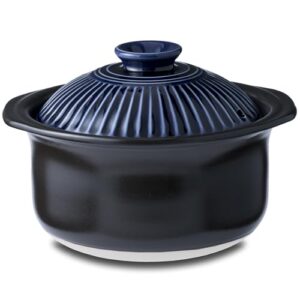 Banko-yaki Donabe (Mie)
Mie’s flameproof clay pot — same prefecture, different craft.
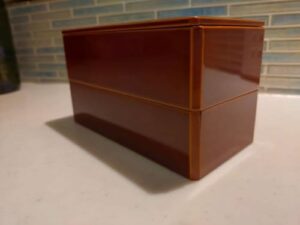 Ise Shunkei Bento (Mie)
Mie’s transparent-lacquer bento box.
 Edo Komon — dyed with Ise katagami
The Tokyo fine-pattern dyeing this stencil makes possible.
Ryukyu Bingata stencil dyeing
Okinawa’s stencil-resist cousin of the same technique.
 Sekishu Washi Scroll
Another washi tradition — the paper as the object.
Nishinosu Kozo Washi
Mulberry-fiber washi sheets for comparison.
 Ogawa Hosokawa-shi Washi
UNESCO-listed handmade kozo paper.
Where this comes from — place, era, and the craft tradition


Suzuka lies on the western shore of Ise Bay, in the old province of Ise — today the northern half of Mie Prefecture. It is part of the Tōkai corridor that links the Kansai heartland (Kyoto and Nara are about 100 km west) to the Kantō plain (Tokyo is roughly 350 km east). The carving towns of Shiroko and Jike sit on the coastal flats below the Suzuka Mountains, which separate Mie from Shiga and the lake basin beyond.
Two geographic facts shaped the craft here. First, the towns sat on the Ise pilgrimage and trade routes — the Tōkaidō highway and its branches passed close by, and Ise itself drew a steady national flow of pilgrims to the Grand Shrine. Second, Shiroko was a port. A small carving town with both a highway and a harbor could move finished stencils — light, flat, durable — to dyers anywhere in the country.

- ~1,000 years ago — Stencil-paper carving takes root in the Shiroko / Jike area of Ise (traditionally dated to around the Heian period).
- Edo period — Demand for komon and yukata patterns turns katagami into a national dyeing tool.
- Edo period — The Kii (Kishu) Tokugawa domain grants Shiroko merchants a monopoly guild and nationwide travel rights to sell stencils.
- Meiji onward — Western cloth printing and changing dress reduce demand; the craft narrows to specialists.
- 1955 — Ise katagami carving recognized as an Important Intangible Cultural Property; master carvers honored.
- 1983 — Designated a traditional craft (dentō kōgeihin) by Japan’s trade ministry (METI).
- Today — A small group of carvers continues; sheets are now also mounted and framed as interior art.
The historical anchor here is the Kii Tokugawa domain. Ise’s stencils mattered enough that one of the three Tokugawa houses — the lords of Kii (Kishu) — took the trade under its wing, granting Shiroko’s merchants a monopoly guild and the unusual privilege of traveling the whole country to sell. That is the mechanism behind a curious fact: a small town in Ise dressed the kimono of Edo, Kyoto, and points as far as Kyushu. The carving was made in one place; the patterns it printed appeared everywhere.
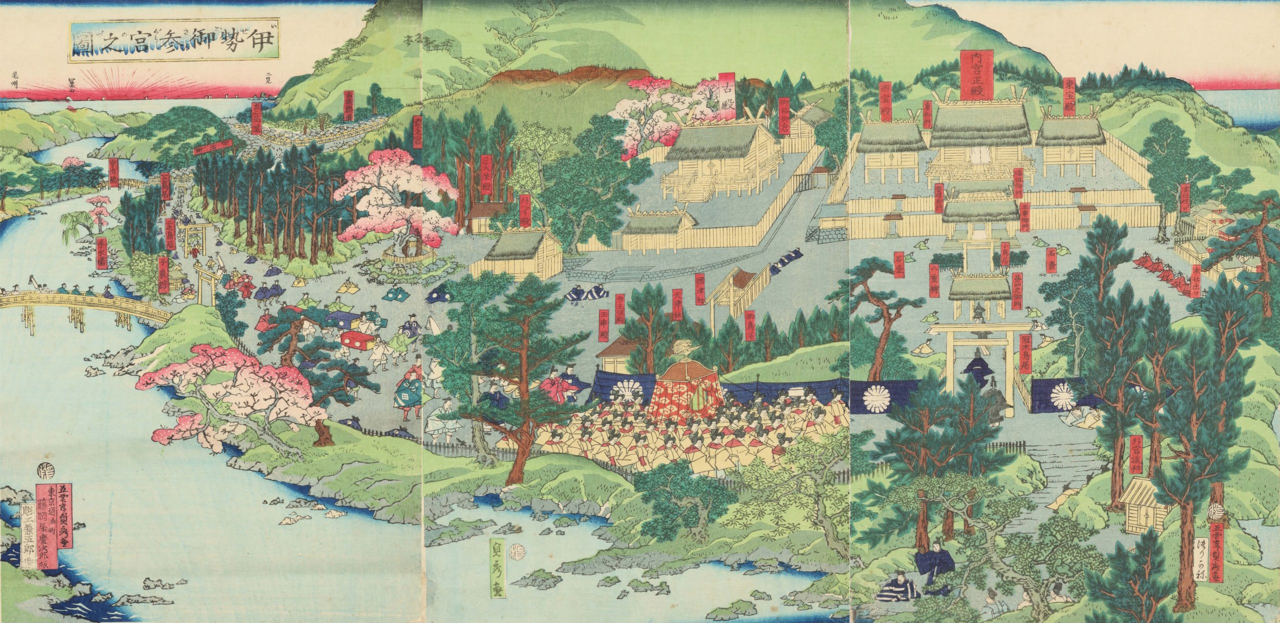
“The carving was always the upstream tool — the unseen reason a komon kimono had its pattern. Framed on a wall, that tool finally becomes the thing you look at.”
What “still being made here” means today is a small number of carvers keeping four techniques alive: tsuki-bori (pushing a blade through stacked sheets), kiri-bori (punching round dots with a semicircular awl), dougu-bori (stamping motifs with shaped chisels), and shima-bori (cutting fine stripes). A single fine komon sheet can hold a density that reads, at arm’s length, as a flat tone — only up close does it resolve into thousands of individual cuts. Mounting these sheets as framed panels is a contemporary extension that gives the craft a second life beyond the dye workshop.
Price snapshot across stores
A confirmed price for this specific listing was not present in the fetched data. Only the Amazon JP Global Store listing snapshot is available; live pricing may have shifted since the writing date. Treat the figures below as guidance and verify at the retailer before purchasing. The JPY price is authoritative; USD is an estimate at a ¥150/USD baseline (mid-2026).
| Store | Item / Variant | Price (JPY / USD est.) | Notes |
|---|---|---|---|
| 🇺🇸 Amazon.com (US) | Browse Japanese washi & stencil wall art | varies (USD) | Best if you’re shopping from the US — Prime shipping, USD pricing, no international customs. Amazon US carries Japanese washi panels, framed prints, and stencil-style wall art for comparison; this exact Ise katagami panel is sourced from Japan (next row). |
| 🇯🇵 Amazon JP Global Store | Ise katagami framed stencil art panel (ASIN B0G2LQ4TRV) | Price unconfirmed — check listing | The exact sourced listing. Ships internationally from Japan to most major destinations. Confirm current price and stock on the listing page. |
| Maker direct | Suzuka carving workshops / craft associations | Varies — Unconfirmed | Some carvers and the local craft association sell framed pieces directly; international shipping is case-by-case. |
| Proxy services (Buyee / Tenso) | Forwarding from JP-only shops | Item price + proxy fee + forwarding | Useful when a piece is listed only on a Japan-domestic shop that does not ship abroad. |
📦 Shipping & where to buy from outside Japan
The Amazon JP Global Store path is the most direct for international buyers: it lists this exact panel and ships to most major destinations from Japan. As a flat, lightweight framed paper item, shipping typically falls in the lower band — roughly $15–$40 to the US or EU, higher to more distant regions, though the listing page is the authoritative source at checkout. Orders above your country’s de minimis threshold may incur customs duty or import VAT on arrival; that is collected locally, not by the seller.
If a particular framed piece is sold only through a Japan-domestic shop or a maker’s own site that does not ship abroad, a proxy/forwarding service (Buyee, Tenso) can receive the parcel in Japan and re-ship it to you. This adds a service fee but opens up listings that would otherwise be unreachable. There are no voltage or certification concerns here — it is framed paper, not an electrical product — but it is light-sensitive: keep it out of direct sun and away from high humidity.
What it does well
Weaknesses and things to verify before buying
- Price and size unconfirmed in our data. The fetched listing snapshot did not include a confirmed price or dimensions — verify both on the Amazon JP listing before ordering.
- It is decorative, not functional. A framed panel is mounted for display; it is not meant to be inked and used as a working dye stencil.
- Light- and humidity-sensitive. Persimmon-tanned washi is durable but still paper. Direct sunlight will fade and brittle it over years; high humidity risks the mount.
- Hand-carved variance. Pattern, framing, and exact tone vary piece to piece. If you expect catalog-identical uniformity, this is the wrong category.
- Frame and glazing details unspecified. Confirm frame material, glazing (glass vs acrylic), and whether a hanging fixture is included before buying for a specific wall.
- Customs and final shipping cost. International duty/VAT and the final shipping quote appear at checkout or on arrival — budget above the item price.
Conclusion — which buyer type are you?
Other ways to approach this purchase
🏆 Editor’s Pick
❓ Frequently Asked Questions
What exactly is an Ise katagami art panel?
It is a sheet of Ise katagami — mino washi laminated with persimmon tannin and hand-carved with a fine pattern — that has been mounted and framed for wall display rather than used as a working dye stencil. The carving is the same craft; the presentation is for the home.
Can I use the panel to actually dye fabric?
No. A framed art panel is meant for display. Working stencils are sold separately and handled very differently; do not ink or wet a framed piece.
Does it ship internationally?
The Amazon JP Global Store listing ships from Japan to most major destinations. Expect roughly $15–$40 shipping to the US or EU for a light framed item, plus possible customs duty above your country’s threshold. Confirm the exact quote at checkout.
How much does it cost?
A confirmed price was not available in our data at the time of writing; only the listing snapshot was accessible. Check the current price directly on the Amazon JP Global Store listing (ASIN B0G2LQ4TRV). The JPY price there is authoritative; any USD figure is an estimate at about ¥150/USD.
How do I care for it?
Keep it out of direct sunlight and away from high humidity. Persimmon-tanned washi is tough but still paper — stable indirect light and a dry wall will preserve the amber tone and the fine cuts for many years.
Why is the first button an Amazon US search instead of the exact item?
Many Japanese craft items are not individually listed on amazon.com, but US buyers often prefer Prime shipping and USD pricing. The US search button lets you browse comparable Japanese washi and stencil wall art locally; the exact framed panel is sourced from the Amazon JP Global Store via the second button.
How is this related to Edo komon and Okinawan bingata?
Both dyeing traditions rely on carved stencil paper. Edo komon’s fine repeated patterns and Okinawa’s bingata stencil-resist dyeing both descend from the same katagami technique, which is why a single carving town in Ise influenced textiles nationwide.
jpmono.com is curated by a Japan-based editorial team (working out of Toyama in the Hokuriku region and Nara in Kansai) and is independent. We do not take payment from the makers we feature; income comes from affiliate links. We do not physically test every product — we read maker specs and source listings.
🤖 This article was prepared with AI assistance and reviewed against the available listing data. Specs and prices reflect the data available at the time of writing and may have changed; always verify on the retailer’s page before purchasing.
Affiliate disclosure: jpmono.com may earn a commission on qualifying purchases made through links on this page, at no additional cost to you.