![Odo-yaki Tosa Sometsuke Yunomi Tea Cup: Where to Buy in Japan [2026]](https://jpmono.com/wp-content/uploads/2026/05/japan-map-regions-and-prefectures-800x1050.png)
Odo-yaki (尾戸焼, “Odo ware”) is the old domain kiln of Tosa — the feudal name for what is now Kochi Prefecture, on the Pacific side of Shikoku. It was opened in 1653, when the second lord of the Yamauchi clan invited an Osaka potter to a site near Odojima in the castle town and set him to making tea utensils and daily ware for the household. For most of its history it was not a folk craft sold at market. It was the private tableware of a samurai domain, and that origin still shows in the work: restrained shapes, a quiet blue-and-white palette, and a fine crackle running through the glaze.
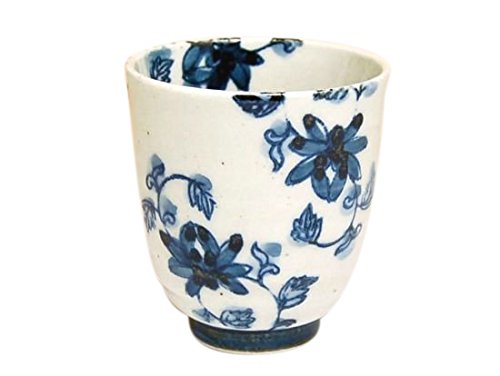
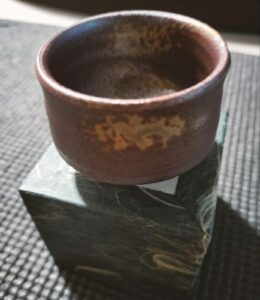
The signature Odo-yaki cup is a sometsuke (染付, cobalt blue-and-white) yunomi (湯のみ, a handle-less Japanese tea cup) with kannyu (貫入) — a deliberate web of fine crackle in the clear glaze that deepens in tone as the cup is used. Many pieces also carry the kiln’s distinctive ainagashi (藍流し, “running indigo”) brushwork. For an international reader, this is one of the lesser-exported regional porcelains of Japan, which is exactly why it rewards a closer look: it carries 370 years of one castle town’s history in an object you can actually drink from every morning.
This guide explains what Odo-yaki yunomi are, where the ware sits in Tosa and in the wider Shikoku and Kansai ceramic traditions, and practical ways to source Japanese ceramics from abroad. Prices vary by piece and should be compared across current craft sellers.
🔄 Updated: June 3, 2026
⏱️ Read time: ~11 min
- Who this is for — and who should skip it
- Product overview (from published specs)
- Where this comes from — place, era, and the craft tradition
- 📦 Shipping & where to buy from outside Japan
- Purchase options
- What it does well
- Weaknesses and things to verify before buying
- Conclusion — which buyer type are you?
- Other ways to approach this purchase
- ❓ Frequently Asked Questions
Who this is for — and who should skip it
- Like quiet, scholarly blue-and-white over bright or rustic glazes
- Want a daily-use tea cup with real regional provenance, not a generic souvenir
- Appreciate kannyu crackle that visibly changes with use over months and years
- Are building a small collection of Shikoku and western-Japan ceramics
- Are comfortable buying from the Amazon JP Global Store and waiting for international shipping
- Want a matched dinner set in guaranteed-identical pieces (hand-painted ware varies)
- Dislike visible crackle and read it as a defect rather than a feature
- Need a dishwasher- and microwave-certified everyday mug
- Confirm the purchase details before committing
- Prefer a handled Western-style cup over a handle-less yunomi
Product overview (from published specs)
Odo-yaki yunomi are described in general terms because dimensions vary by piece. The table focuses on the ware’s documented craft features rather than fixed measurements.
| Attribute | Detail | Source |
|---|---|---|
| Ware | Odo-yaki (Tosa Odo ware), Kochi Prefecture designated traditional craft | Maker / domain history |
| Body | Smooth white-grey porcelaneous clay | Ware characteristics |
| Decoration | Hand-painted cobalt sometsuke; kannyu crackle glaze; often ainagashi blue-running | Ware characteristics |
| Capacity / size | — | — |
| Origin | Kochi City, Kochi Prefecture, Shikoku, Japan | Maker / domain history |
| Price | — | — |
Odo-yaki yunomi vary in capacity and dimensions by piece; compare those details when choosing one.
📖 Glossary — key terms
- Odo-yaki (尾戸焼) — “Odo ware,” the official kiln of the Tosa domain, named for the Odojima area of Kochi where it was first sited.
- Sometsuke (染付) — underglaze cobalt blue painting on a white body; the classic Japanese (and Chinese) blue-and-white technique.
- Yunomi (湯のみ) — an everyday handle-less Japanese tea cup, taller than it is wide, for green tea.
- Kannyu (貫入) — the fine network of crackle in a glaze, here a deliberate aesthetic feature that darkens with use.
- Ainagashi (藍流し) — “running indigo,” an Odo-yaki brush technique where cobalt is allowed to flow and soften across the surface.
- Tosa (土佐) — the historical (pre-1871) name for Kochi Prefecture and its domain.
- Han (藩) — a feudal domain governed by a daimyō clan; abolished in 1871 in the Meiji reforms.
Related ceramics and crafts from Shikoku and western Japan already covered on jpmono — useful for placing Odo-yaki against its neighbors.
Where this comes from — place, era, and the craft tradition

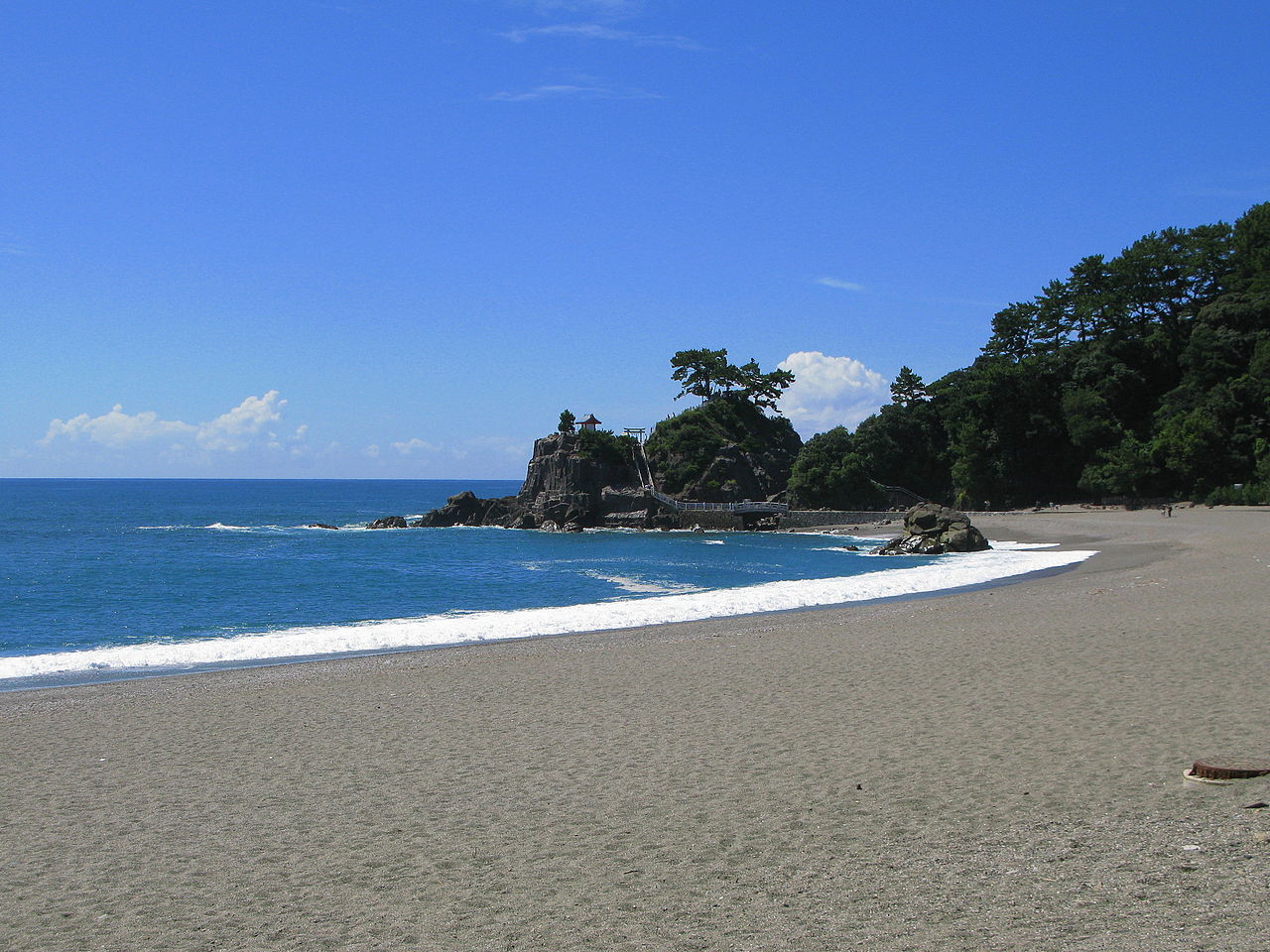
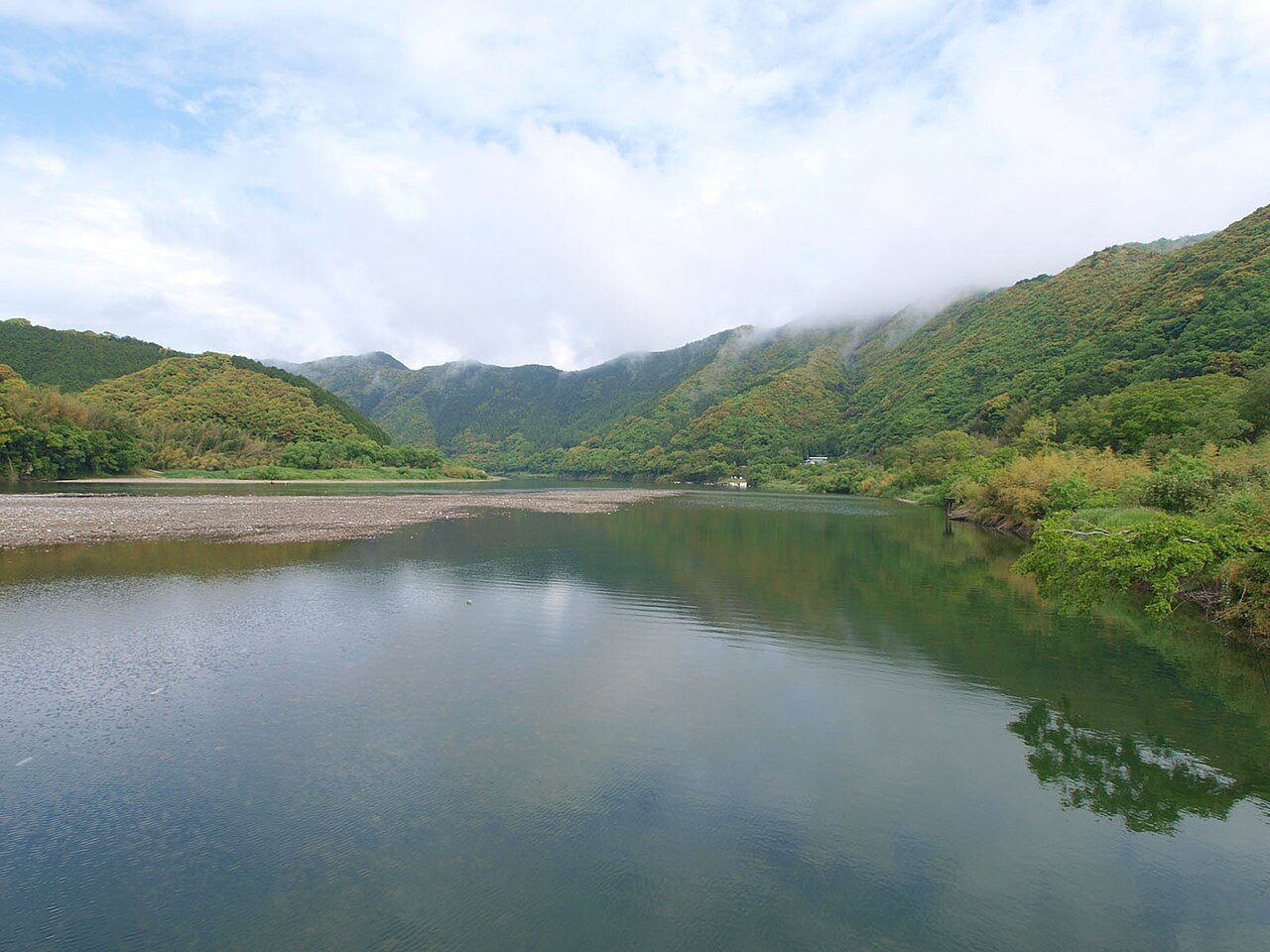
Kochi is the southern prefecture of Shikoku, the smallest of Japan’s four main islands. The city faces the Pacific across Tosa Bay, and the prefecture’s back is pressed against a long wall of mountains that separates it from the rest of the island. That geography matters for the craft. For centuries, Tosa was difficult to reach overland, which gave it a strong, self-contained regional character — its own dialect, its own food culture built around bonito and the warm Kuroshio current, and its own court-patronized crafts that developed somewhat apart from the better-known kilns of Kyushu and the Kansai.
The historical anchor for Odo-yaki is the Yamauchi clan and its castle town. After the Battle of Sekigahara, Yamauchi Kazutoyo was installed as the first lord of Tosa in 1601 and began building Kochi Castle as the seat of the domain. The kiln itself came two generations of authority later.
In 1653, the second lord, Yamauchi Tadayoshi, invited an Osaka potter named Kuno Shoeki to a site near Odojima inside the castle town and established a domain kiln to supply tea utensils and daily ware for the Yamauchi household. This was a deliberate act of cultural patronage, of the same kind that seeded official kilns in other domains — the lord wanted refined tableware made locally rather than imported. For more than two centuries the kiln worked under that patronage, producing the restrained, scholarly blue-and-white that suited a samurai tea culture.
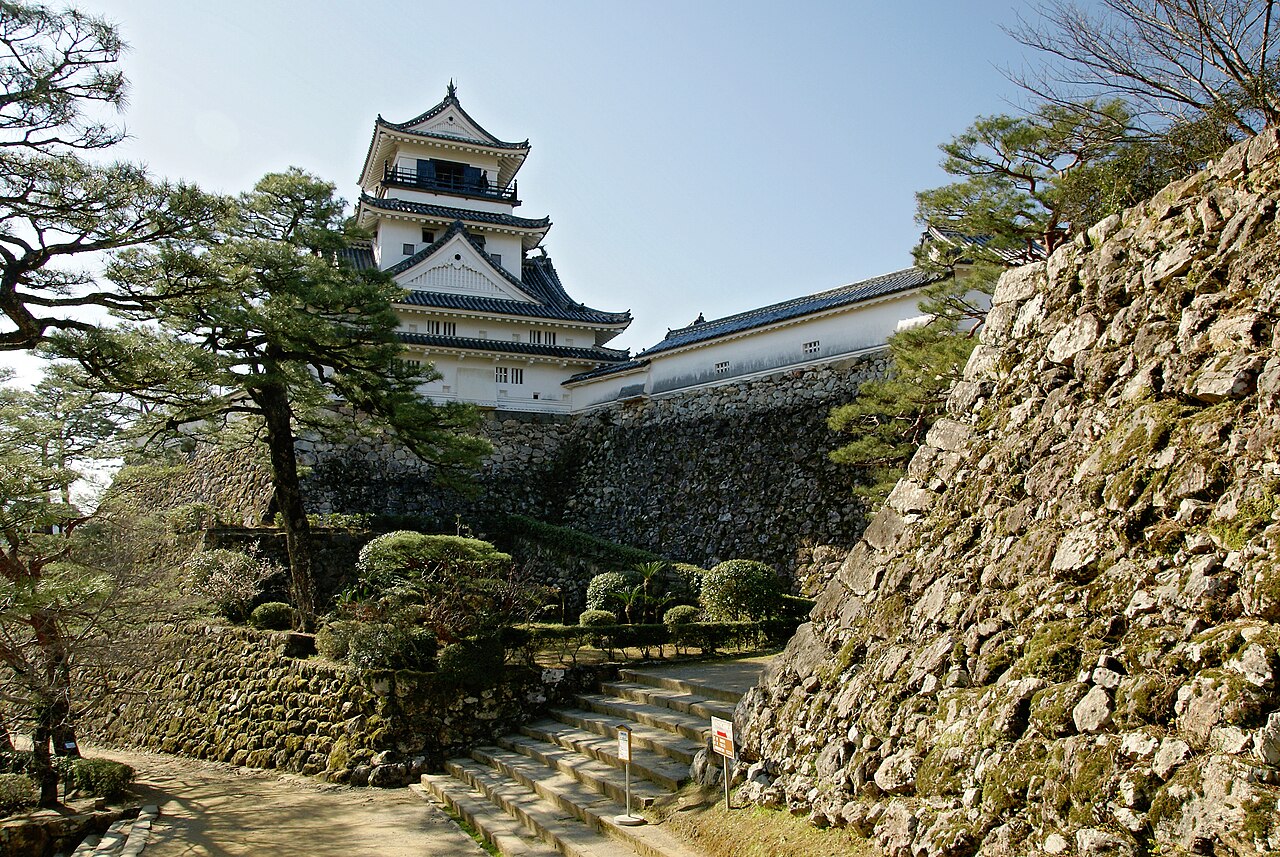
- 1601 — Yamauchi Kazutoyo installed as first lord of Tosa; begins building Kochi Castle.
- 1611 — Kochi Castle largely completed as the Yamauchi seat and the heart of the castle town.
- 1653 — 2nd lord Yamauchi Tadayoshi invites Osaka potter Kuno Shoeki; the Odo kiln is founded near Odojima.
- 17th–19th c. — Odo-yaki supplies tea utensils and daily ware to the domain under continuous Yamauchi patronage.
- 1871 — Abolition of the han (domain) system removes the kiln’s patronage; production declines.
- 20th c. — The tradition is revived by successor potters carrying the Odo-yaki name and techniques forward.
- 2026 — Odo-yaki remains a Kochi Prefecture–designated traditional craft, still made in Kochi City.
The Meiji reforms of 1871 abolished the domains, and with them the patronage system that had kept the kiln running. Odo-yaki declined after that loss, as many domain kilns did once their guaranteed customer — the lord’s household — disappeared. The line did not break entirely, though. Successor potters revived the ware in the modern period, and today it is recognized as a Kochi Prefecture designated traditional craft, still made in the city where it began.
“Odo-yaki was never a folk craft sold at market — it began as the private tableware of a samurai domain, and that restraint still shows in every cup.”
What “still being made here” means for Odo-yaki is continuity of technique rather than industrial scale. This was always a small, court-oriented kiln, not a mass-production pottery district. The work produced today is hand-painted, which means each cup varies, and the kannyu crackle and ainagashi brushwork connect directly back to the visual language the kiln developed under the Yamauchi. The aesthetic is restrained and unforced — closer in spirit to the clear, unhurried Tosa landscape than to the busier decorative styles elsewhere.
📦 Shipping & where to buy from outside Japan
The Amazon JP Global Store ships many ceramics internationally, with shipping to the US and EU commonly landing in roughly the $15–$40 range depending on weight and speed, plus any import-fees deposit Amazon estimates at checkout. Orders above your country’s de minimis threshold may incur customs duty on delivery, so factor that in. If the item is ever marked as not shippable to your country, a proxy forwarding service (Buyee or Tenso) can receive it in Japan and re-ship it to you, at the cost of an added handling fee. Prices in USD are approximate and depend on the current exchange rate.
Purchase options
Prices for Odo-yaki yunomi vary by form, painting, and finish. JPY remains the reference currency, and USD conversions are approximate.
| Store | Item / variant | Price (JPY + USD est.) | Notes |
|---|---|---|---|
| 🇺🇸 Amazon US (search) | Browse Japanese yunomi & tea cups | varies (USD) | Best if you are shopping from the US — Prime shipping, USD pricing, no international customs. Amazon US carries Japanese ceramics from several makers for comparison; this exact Odo-yaki cup is sourced from Japan (next row). |
| 🇯🇵 Amazon JP Global Store | Odo-yaki sometsuke yunomi | — | Ships internationally from Japan to most major destinations. |
| Maker direct | Odo-yaki kiln / Kochi craft outlets | Varies — check site | Widest selection of current pieces, but most domestic kiln pages do not ship abroad directly; pair with a proxy. |
| Proxy services (Buyee / Tenso) | Any JP option forwarded abroad | Item + fee + reship | Use when a seller does not ship directly to your country; a handling fee may apply. |
What it does well
Weaknesses and things to verify before buying
- Confirm the purchase details before committing.
- Confirm the cup’s size and capacity before ordering.
- Hand-painted variation. Color depth, brushwork, and crackle pattern differ piece to piece. This is intrinsic to the ware, not a defect — but it means you cannot expect a matched set of identical cups.
- Crackle is not a flaw. Kannyu is intentional. If you read fine surface lines as cracks or a hygiene problem, this ware will frustrate you.
- Care requirements. Crackle-glazed ceramics generally prefer hand washing and gentle handling; do not assume dishwasher or microwave safety. Avoid thermal shock.
- International shipping and customs. Final landed cost depends on shipping tier and any customs duty in your country. Budget beyond the item price.
- Fragility in transit. Ceramics can arrive damaged; check that the seller packs well and that the return path is workable from your country.
Conclusion — which buyer type are you?
Other ways to approach this purchase
❓ Frequently Asked Questions
What is Odo-yaki, in one sentence?
It is the official kiln of the old Tosa domain (now Kochi Prefecture), founded in 1653, known for blue-and-white sometsuke porcelain with a fine kannyu crackle glaze.
Is the crackle in the glaze a defect?
No. Kannyu crackle is a deliberate feature of the ware. It forms a fine web in the glaze that deepens in tone with use, and it is considered part of the cup’s character rather than damage.
Can I have it shipped outside Japan?
Japanese ceramic retailers and forwarding services may offer international routes; shipping and import fees vary by destination.
How should I care for it?
Treat it as a hand-wash item and avoid thermal shock. Do not assume dishwasher or microwave safety unless the maker explicitly states it, since crackle-glazed ceramics generally prefer gentle handling.
How is it different from Tobe-yaki or Otani-yaki nearby?
All three are Shikoku-region ceramics, but they differ in character: Tobe-yaki (Ehime) is a sturdy everyday porcelain, Otani-yaki (Tokushima) is known for very large pieces, and Odo-yaki is a small, court-patronized blue-and-white tradition with a restrained, scholarly aesthetic.
Why is there no confirmed price in this guide?
Odo-yaki yunomi prices vary by form and finish; compare current offers from Japanese ceramic sellers instead of treating one figure as universal.
Is each cup identical?
No. Odo-yaki is hand-painted, so brushwork, color depth, and crackle pattern vary from piece to piece. If you order more than one, expect them to be siblings rather than identical twins.
jpmono.com is curated by a Japan-based editorial team (working out of Toyama in the Hokuriku region and Nara in Kansai) and is independent. We do not take payment from the makers we feature; income comes from affiliate links. Read more about our editorial standards.
Affiliate disclosure: jpmono.com may earn a commission on qualifying purchases made through links on this page, at no additional cost to you.