![Kasukabe Kiri Paulownia Wood Accessory Box: Saitama Woodwork Buying Guide [2026]](https://jpmono.com/wp-content/uploads/2026/05/japan-map-regions-and-prefectures-800x1050.png)
Paulownia is the lightest wood grown in Japan, and for centuries that one property decided what a household kept its valuables in. A kiri (桐, “paulownia”) box breathes with the weather, swelling shut in humid summers and easing open in dry winters, so the contents sit in a near-constant micro-climate. The town of Kasukabe (春日部) in eastern Saitama turned that material into a recognized craft — first as kiri-tansu (桐箪笥, paulownia chests), and today as the smaller dovetail-jointed accessory and document boxes covered in this guide.
What makes Kasukabe work notable to an international reader is not surface decoration. There is no inlay and no relief carving. The value is in the material and the joinery: solid paulownia cut and fitted with nail-free corner joints precise enough to hold a lid that seals on humidity alone. The craft was designated a National Traditional Craft (伝統的工芸品) by Japan’s Ministry of Economy, Trade and Industry in 1979, and the same workshops that build full chests produce these boxes.
This guide is for readers deciding whether a Kasukabe paulownia box suits kimono accessories, documents, jewelry, or family keepsakes. It explains the material, the local woodwork tradition, how it compares with other Japanese boxes, and the practical points to check before purchase.
🔄 Updated:
⏱️ Read time: ~9 min
Saitama, Kantō
- Who this is for — and who should skip it
- Product overview (from published specs)
- 📌 How does it compare?
- Buying options
- What it does well
- Weaknesses and things to verify before buying
- Conclusion — which buyer type are you?
- Other ways to approach this purchase
- Where this comes from
- ❓ Frequently Asked Questions
Who this is for — and who should skip it
- Store kimono accessories, obi cords, or silk items that suffer in fluctuating humidity
- Want a passive, electricity-free way to buffer documents or valuables against damp
- Value material honesty and precise joinery over painted or carved decoration
- Are buying a long-horizon keepsake box meant to outlive its first owner
- Appreciate a nationally designated traditional craft with a verifiable maker region
- Want decorative surface art — Kasukabe boxes are deliberately plain
- Need an airtight or waterproof container; paulownia regulates, it does not seal hermetically
- Expect a hardwood feel — paulownia is soft and dents more easily than oak or walnut
- Need to confirm whether the interior suits your intended storage
- Are price-sensitive and unwilling to verify cost and shipping before ordering
Product overview (from published specs)
The table below focuses on the Kasukabe craft record and on characteristics that can vary between paulownia boxes. Unconfirmed values are left open rather than estimated.
| Attribute | Detail | Source |
|---|---|---|
| Material | Solid paulownia (kiri) wood | Craft record |
| Construction | Dovetail-jointed, nail-free corner joinery | Craft record |
| Lid | Fitted natural-wood lid; seals on humidity (moisture-regulating) | Craft record |
| Origin | Kasukabe, Saitama Prefecture, Kantō region | Craft record |
| Designation | National Traditional Craft (Kasukabe Kiri Tansu), designated 1979 | METI record |
| Dimensions | — | — |
| Weight | — | — |
| Price | — | — |
📖 Glossary — key terms
- kiri (桐, “paulownia”) — Japan’s lightest domestic wood; valued for humidity regulation, insect resistance, and a high ignition point.
- kiri-tansu (桐箪笥) — paulownia chests, traditionally used to store kimono and valuables.
- dovetail joinery / sashimono (指物) — interlocking corner joints that hold without nails or screws.
- Dentō-teki Kōgeihin (伝統的工芸品, “National Traditional Craft”) — a designation by Japan’s Ministry of Economy, Trade and Industry (METI) recognizing a regional craft tradition.
- Nikkō Kaidō (日光街道) — the Edo-period highway connecting Edo (Tokyo) to Nikkō; Kasukabe was a post town along it.

📌 How does it compare?
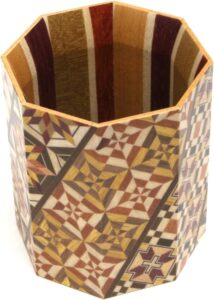
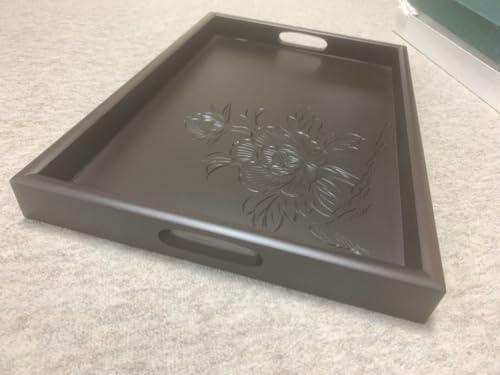
Related guides on jpmono.com — same prefecture, neighboring regions, and other Japanese woodwork:
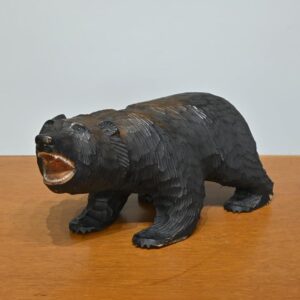
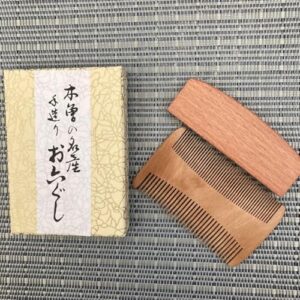
Buying options
Any USD amounts are approximate conversions at a ¥150/USD baseline, while prices for handmade paulownia boxes vary by piece.
| Store | Item / Variant | Price (JPY + USD est.) | Notes |
|---|---|---|---|
| 🇺🇸 Amazon US (search) | Browse Japanese paulownia (kiri) storage boxes | varies (USD) | Best if you are shopping from the US — Prime shipping, USD pricing, no international customs. Amazon US carries comparable Japanese paulownia and wooden storage boxes; this specific Kasukabe piece ships from Japan (next row). |
| 🇯🇵 Amazon JP Global Store | Kasukabe Kiri box | — | International shipping from Japan may be available. |
| Maker direct | Kasukabe paulownia workshops | Varies | Some workshops sell domestically; international shipping is not guaranteed. Confirm before ordering. |
| Proxy services (Buyee / Tenso) | Domestic-only options forwarded abroad | Item + forwarding fee | Useful when an option does not ship internationally directly; adds a forwarding fee and possible customs duty. |
International shipping note: Amazon JP Global Store ships many household goods to most major destinations; expect roughly $15–$40 to the US or EU, more elsewhere, plus possible customs duty over local thresholds. USD figures are approximate and depend on the current exchange rate.
What it does well
“For centuries a paulownia box was where a family put the things it could not afford to lose — light enough to carry out of a fire, and breathing slowly enough to keep silk from spoiling.”
Weaknesses and things to verify before buying
- Soft wood, easy to dent. Paulownia’s lightness comes from low density; it marks and scratches more readily than oak or walnut. It is a protective box, not a hard-use case.
- Not airtight or waterproof. The lid regulates humidity; it does not hermetically seal. Do not rely on it for submersion, dust-free vacuum storage, or pest-proof sealing.
- Confirm the interior capacity before ordering.
- Confirm the current total before ordering. Allow for shipping or customs.
- Plain by design. If you want decorative inlay or carving, this is the wrong object — look at Hakone yosegi or Nikkō-bori instead (linked above).
- Surface care. Paulownia is typically left unfinished or lightly finished; avoid water, harsh cleaners, and prolonged direct sun. Confirm the maker’s care guidance.
- Customs and forwarding. Buying from outside Japan may add duty over local thresholds, and proxy routes add forwarding fees. Budget for these beyond the listed price.
Conclusion — which buyer type are you?
Other ways to approach this purchase
Where this comes from

Kasukabe lies in eastern Saitama Prefecture, inland in the Kantō plain, on the alluvial floodplain of the Tone and Furutone rivers. That low, river-fed land was historically rich in fast-growing paulownia, which gave local workshops a steady supply of light, easily worked wood close at hand. The town also sat on the Nikkō Kaidō, the Edo-period highway running north from Edo to Nikkō, which put it on a working route for traveling craftsmen.
Local tradition holds that shrine carpenters and lacquerers traveling that highway to build Nikkō Tōshōgū — completed in 1617 and rebuilt in 1636 — settled in Kasukabe and applied their joinery skills to the abundant paulownia. It is a traditionally believed origin rather than a documented one, but it fits the geography: the wood, the highway, and the skilled hands all converged in the same place.
- 1617 — Nikkō Tōshōgū completed; carpenters and lacquerers travel the Nikkō Kaidō.
- 1636 — Tōshōgū rebuilt; more artisans pass through and settle along the highway.
- Edo period — Kasukabe grows as a Nikkō Kaidō post town and a center for kiri-tansu and kiri boxes.
- Tone & Furutone floodplain — River-rich land supplies fast-growing paulownia close to the workshops.
- 1979 — Kasukabe Kiri Tansu designated a National Traditional Craft by METI.
- 2026 — The same workshops still produce dovetail-jointed accessory and document boxes.
Through the Edo period the town grew into a recognized center for paulownia chests and boxes. The reason families chose paulownia was practical, not decorative. It is Japan’s lightest domestic wood; it regulates humidity, resists insects, and has a high ignition point that traditionally protected contents in a house fire — which is why kimono, deeds, and valuables went into kiri storage.
That heritage was formally recognized in 1979, when Kasukabe Kiri Tansu was designated a National Traditional Craft. The same craftsmen who build full chests produce the smaller dovetail-jointed accessory and document boxes covered here. What distinguishes Kasukabe work from Hakone yosegi marquetry or Nikkō-bori relief carving is exactly this: the value lives in the solid-paulownia material and precise nail-free joinery, not in surface decoration.
❓ Frequently Asked Questions
Does Amazon JP Global Store ship a Kasukabe paulownia box internationally?
Amazon JP Global Store ships many household goods to most major destinations, typically for around $15–$40 to the US or EU plus possible customs duty. Confirm that the retailer shows an international shipping option to your country before ordering; if it does not, a proxy service such as Buyee or Tenso can forward it.
Why paulownia (kiri) instead of a harder wood?
Paulownia is Japan’s lightest domestic wood and regulates humidity well, which is why it was traditionally used to store kimono, documents, and valuables. It also has a high ignition point. The trade-off is softness: it dents and scratches more easily than oak or walnut, so it suits protective storage rather than hard use.
Is the box airtight or waterproof?
No. The fitted lid regulates humidity and can seal closely on damp days, but it is not a hermetic or waterproof seal. Do not rely on it for submersion, vacuum storage, or fully pest-proof sealing.
What size is it, and what fits inside?
Measure what you plan to store—kimono accessories, obi cords, documents, or small valuables—and compare those measurements with the box’s interior before buying. Dimensions and weight vary by piece.
How is Kasukabe work different from Hakone yosegi or Nikkō-bori?
Kasukabe boxes are deliberately plain; their value is the solid-paulownia material and precise nail-free joinery. Hakone yosegi is decorative marquetry and Nikkō-bori is relief carving — both are surface-art traditions. If you want patterning or carving, choose those instead.
How do I care for a paulownia box?
Paulownia is typically left unfinished or lightly finished. Keep it away from standing water, harsh cleaners, and prolonged direct sunlight, and wipe it gently with a dry cloth.
Affiliate disclosure: jpmono.com may earn a commission on qualifying purchases made through links on this page, at no additional cost to you.

