![Ojiya Chijimi Ramie Table Runner: Snow-Bleached Echigo Linen [2026]](https://jpmono.com/wp-content/uploads/2026/05/japan-map-regions-and-prefectures-800x1050.png)
- What it is: A crinkle-textured ramie (choma) table runner woven in Niigata’s snow country and finished by snow-bleaching.
- Made in: Ojiya, Niigata Prefecture — Ojiya Chijimi, an Important Intangible Cultural Property (1955) and UNESCO Intangible Cultural Heritage (2009).
- Price band: Mid-range for artisan hand-woven ramie textiles.
- Best for: a summer table setting that wants a cool, matte, breathable natural fiber with genuine provenance.
- Skip if: you want a soft, drapey cotton or a wrinkle-free polyester — ramie is crisp and creases by nature.
- Shipping: ships internationally from Amazon Japan — jump to our pick ↓
Every spring, on the deep snow that still covers the fields of Ojiya, weavers lay out bolts of finished ramie cloth and leave them there for days. The snow is not a storage problem to be cleared — it is the last step of the process. Sunlight reflecting off the white surface releases ozone, and that ozone slowly lightens the cloth and softens it. The technique is called yukizarashi (雪晒し, “snow-bleaching”), and it is why an Ojiya Chijimi runner reads as cool and matte rather than bright and glossy.
Ojiya Chijimi (小千谷縮, “Ojiya crepe”) is a ramie textile from the Echigo snow country of Niigata, on the Sea of Japan side of central Japan. Its signature is shibo — a fine, all-over crinkle raised by weaving with hard-twisted weft yarns, which pulls the surface into a crepe that barely touches the skin. That structure is what makes ramie bearable in a humid Japanese summer, and what gives a table runner its characteristic stand-away drape. The cloth was refined in the 1670s from the older Echigo-jofu ramie tradition, and both were inscribed together on UNESCO’s Intangible Cultural Heritage list in 2009.
This guide is for readers deciding whether a snow-bleached ramie runner belongs on their table rather than a cotton or linen one. We cover what the material actually does, how to judge a genuine piece, where the craft comes from, and how to buy one from outside Japan. Exact specifications can vary, so we say so plainly rather than inventing them.
📅 Published: July 23, 2026
🔄 Updated: July 23, 2026
⏱️ Read time: ~9 min
ℹ️ Ojiya Chijimi is a hand-woven ramie textile; dimensions and other specifications vary by maker.
- Who this is for — and who should skip it
- Product overview (from published specs)
- Where to buy
- 📦 Shipping & where to buy from outside Japan
- What it does well
- Weaknesses and things to verify before buying
- Conclusion — which buyer type are you?
- Other ways to approach this purchase
- Where this comes from
- ❓ Frequently Asked Questions
Who this is for — and who should skip it
- Set a summer table and want a fiber that stays cool and matte rather than shiny.
- Prefer natural, breathable ramie/linen textures over soft cotton or synthetics.
- Value verifiable provenance — a named craft with UNESCO and national designations.
- Are comfortable with a crisp hand and visible creasing as part of the look.
- Want a runner that layers well with wood, ceramic, and lacquer tableware.
- Want a soft, drapey fabric — ramie is crisp and stands away from the surface.
- Expect wrinkle-free, machine-dry convenience; ramie creases and needs care.
- Need an exact color match — undyed and indigo tones vary batch to batch.
- Are shopping strictly on price against mass-produced polyester runners.
- Want fixed, guaranteed dimensions before ordering.
Product overview (from published specs)
The table below draws on the documented characteristics of Ojiya Chijimi. Because measurements can vary between hand-woven pieces, unconfirmed details are marked rather than guessed.
| Attribute | Detail | Source |
|---|---|---|
| Material | Ramie (choma / 苧麻) — a bast fiber, not cotton or true flax linen | Amazon JP Global Store |
| Surface | Shibo crinkle crepe, raised by hard-twisted weft yarns | Craft documentation |
| Finishing | Yukizarashi snow-bleaching (spring, on the field snow) | Craft documentation |
| Color | Undyed (natural) or indigo — exact options vary by product | Recommendation hint |
| Origin | Ojiya, Niigata Prefecture, Chūbu region | Craft documentation |
| Dimensions | — | — |
| Designations | Important Intangible Cultural Property (1955); UNESCO Intangible Cultural Heritage (2009, with Echigo-jofu) | Craft documentation |
📖 Glossary — key terms
- Ojiya Chijimi (小千谷縮) — “Ojiya crepe,” a ramie textile from Ojiya, Niigata, refined in the 1670s.
- Ramie / choma (苧麻) — a bast fiber spun from a nettle-family plant; crisp, strong, and cool, distinct from cotton and flax linen.
- Shibo (しぼ) — the fine crinkle texture created by weaving with hard-twisted weft yarns.
- Yukizarashi (雪晒し) — snow-bleaching; finished cloth is laid on spring snow so sunlight and ozone lighten and soften it.
- Echigo-jofu (越後上布) — the older, fine ramie tradition of the Echigo region from which Ojiya Chijimi descends.
- Nishikigoi (錦鯉) — ornamental colored carp, first bred by the same Ojiya farming communities.
Related jpmono guides — other Niigata crafts and other Japanese natural-fiber and indigo textiles worth setting beside this runner.
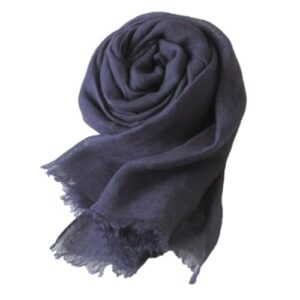 🧵 Omi-Jofu ramie stole
🪡 Yumihama-gasuri table runner
🍴 Tsubame flatware (Niigata)
🥣 Gohara lacquer bowl (Niigata)
🟥 Murakami Tsuishu coasters (Niigata)
 🌸 Yonezawa-ori silk stole
🔵 Buaisou indigo tenugui
Where to buy
Hand-woven ramie occupies a range of price points depending on fiber, weaving, finishing, and workmanship. Any USD amount used for comparison is an exchange-rate estimate.
| Store | Item / Variant | Price | Notes |
|---|---|---|---|
| 🇺🇸 Amazon US (search) | Browse Japanese ramie & linen table runners | varies (USD) | Best if you’re shopping from the US — Prime shipping, USD pricing, no international customs. Amazon US carries Japanese ramie, linen, and indigo table textiles from various makers; this exact Ojiya Chijimi piece ships from Japan (next row). |
| 🇯🇵 Amazon JP Global Store | This Ojiya Chijimi ramie runner (undyed / indigo) | — | Ships internationally from Japan to 65+ countries — including Canada, the UK and Australia — with import fees estimated at checkout. |
| Maker direct / craft cooperatives | Ojiya textile cooperative pieces | Varies | Certified Ojiya Chijimi is sold through local weaving cooperatives; most sites are Japanese-language and domestic-shipping only. |
| Proxy services (Buyee / Tenso) | Any JP-only product | Item + forwarding fee | Useful for domestic-only cooperative or auction products; adds a forwarding fee and a second shipping leg. |
📦 Shipping & where to buy from outside Japan
For international orders, shipping and import charges for a lightweight ramie runner vary by destination, carrier, and service. Check the customs rules for your country before ordering.
As a lightweight textile, a single runner is generally simple to pack, but postage, forwarding fees, and customs duties vary by destination and order size. Check the applicable threshold and carrier terms before ordering.
- 🧺 Washing: ramie is typically hand-washed cool and gently; check the care label before machine washing.
- 💧 Drying: gently reshape and air-dry flat or hung; avoid hard wringing, which can distort the shibo crinkle.
- 👕 Creasing: ramie creases by nature — light steaming relaxes folds, though the crinkle texture is meant to stay.
- 🗄️ Storage: fold loosely and keep dry; as a natural bast fiber it prefers a ventilated, low-humidity spot.
What it does well
“The snow that isolated Ojiya for half the year is the same snow that finishes its cloth — the constraint and the craft are the same white field.”
Weaknesses and things to verify before buying
- Dimensions vary by runner. Confirm the size before ordering.
- Ramie creases. If you want a fabric that stays smooth without care, this is the wrong fiber; the crispness that reads as elegant also holds folds.
- Color varies. Undyed natural and indigo tones shift between batches and dye lots; do not expect an exact screen-to-cloth match.
- “Chijimi”-style is not always certified Ojiya Chijimi. Similar crepe textiles exist; verify the maker or cooperative certification if authenticity matters to you.
- Hand-washing and reshaping are typical for ramie; treat any “machine washable” claim as product-specific and check the care label.
- Availability changes over time. Compare current product information before ordering.
Conclusion — which buyer type are you?
Other ways to approach this purchase
Where this comes from

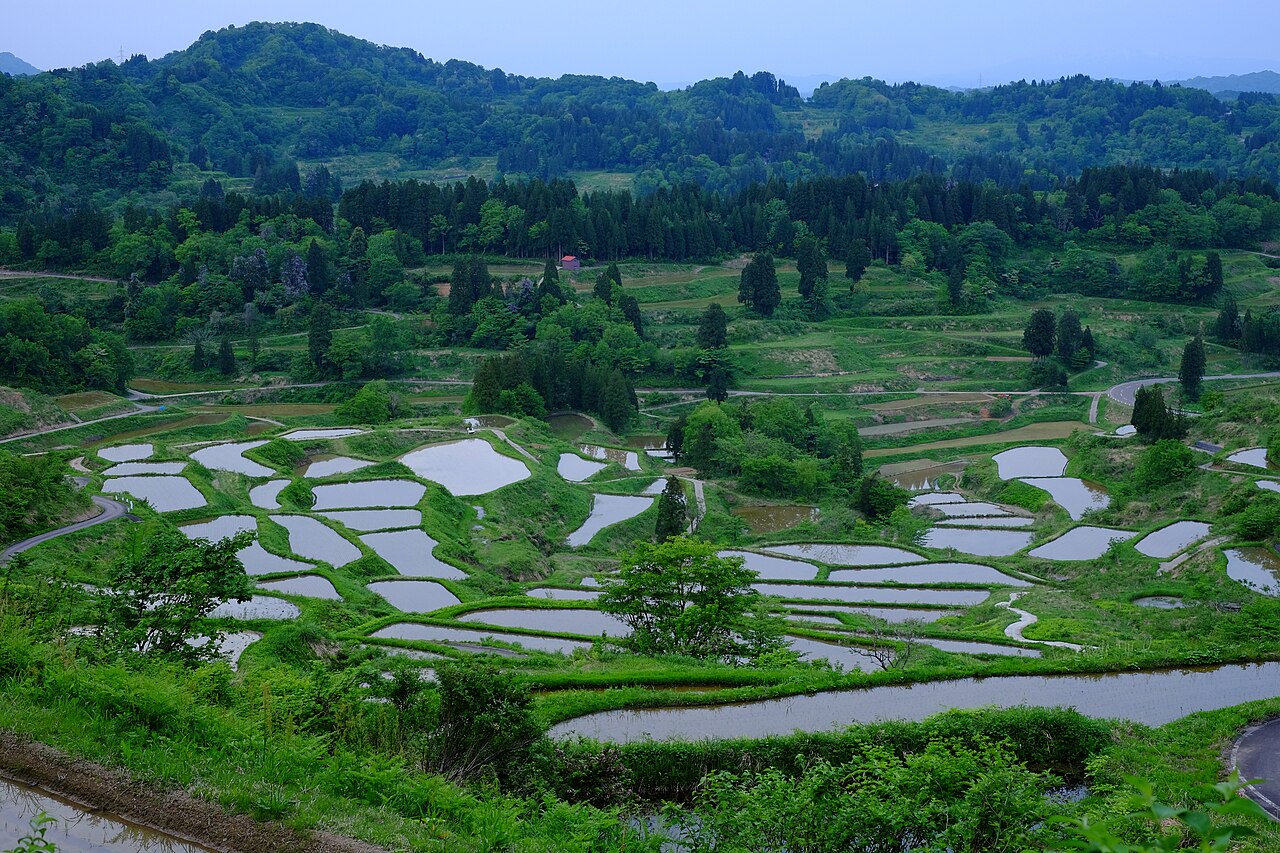
Ojiya sits in the Echigo snow country of Niigata Prefecture, in the Chūbu region on the Sea of Japan coast of central Japan. It lies along the Shinano River — Japan’s longest — in a basin that catches moisture off the sea and turns it into some of the heaviest snowfall of any inhabited place in the world. For roughly half the year the fields lie under meters of snow. That single climatic fact shaped both the local economy and, in time, the textile: farming stopped in winter, and weaving became the household work that filled the cold months.
The cloth itself descends from Echigo-jofu, the older fine-ramie tradition of the region. In the 1670s, Hori Jiroemon — a brother-in-law of Horiuchi Yasunaga — refined that tradition into a crepe by introducing hard-twisted weft yarns, and Ojiya Chijimi was born. The shibo crinkle that resulted was not decoration; it lifted the cloth off the skin and made ramie tolerable in humid summers. Through the Edo period the finished bolts moved down the Shinano River to Niigata port and on to Edo and Kyoto, where Echigo ramie built its reputation as a premium summer cloth.
-
Nara period (8th c.) — Fine ramie (choma) cloth valued for elite summer garments; the Echigo-jofu tradition that chijimi descends from. -
1670s — Hori Jiroemon refines the crepe shibo weave from Echigo-jofu, creating Ojiya Chijimi. -
Edo period (17th–19th c.) — Bolts ship down the Shinano River through Niigata port to Edo and Kyoto as premium summer cloth. -
Early 1800s — The same Ojiya farming communities are traditionally credited with first breeding Nishikigoi ornamental koi. -
1955 — Ojiya Chijimi designated an Important Intangible Cultural Property of Japan. -
2009 — Inscribed on UNESCO’s Intangible Cultural Heritage list, together with Echigo-jofu.
Winter isolation did more than fill idle hands. The same snowbound community that wove chijimi is also, by local tradition, where Nishikigoi (錦鯉, ornamental colored carp) were first bred — two crafts born of the same closed-in months and the same patient temperament. It is a telling pairing: both reward slow, attentive work through a long winter, and both became identities that Ojiya still carries.

The finishing step is the one that ties the cloth most directly to the place. In spring, weavers lay the woven bolts out on the remaining field snow for yukizarashi: sunlight reflecting off the snow generates ozone, which lightens the cloth and softens its hand over several days. It is traditionally believed that only the snow country’s specific combination of deep late-season snow and clear spring sun produces the effect — the reason the finishing has never migrated to warmer regions. National recognition arrived in 1955, and UNESCO recognition, shared with Echigo-jofu, in 2009.
❓ Frequently Asked Questions
What is Ojiya Chijimi made from?
It is woven from ramie (choma), a bast fiber that is crisper and cooler than cotton and distinct from flax linen. The cloth’s crinkle, called shibo, is raised by weaving with hard-twisted weft yarns.
What is yukizarashi snow-bleaching?
In spring, woven bolts are laid on the deep field snow so that sunlight and the ozone it generates gradually lighten and soften the cloth. It is the finishing step that gives Ojiya Chijimi its cool, matte character.
Can it be shipped outside Japan?
Yes. Ojiya Chijimi ramie pieces are commonly sourced through the Amazon Japan Global Store, which ships to 65+ countries including Canada, the UK, and Australia, with import fees estimated at checkout. As a light textile, shipping is inexpensive, roughly $15–$40 to most destinations.
How do I care for a ramie runner?
Ramie is typically hand-washed cool and gently, reshaped, and air-dried; avoid hard wringing so the crinkle is not distorted. It creases by nature, so light steaming relaxes folds. Follow the maker’s care label first.
Why does the price and size vary?
Hand-woven pieces vary in color between dye lots, especially indigo and undyed tones. Prices and dimensions also differ with the maker and weaving process.
Is this the same as Echigo-jofu?
They are related but not identical. Echigo-jofu is the older, flat fine-ramie tradition; Ojiya Chijimi is the crepe (chijimi) refinement developed from it in the 1670s. The two were inscribed together on UNESCO’s Intangible Cultural Heritage list in 2009.
jpmono.com is curated by a Japan-based editorial team (working out of Toyama in the Hokuriku region and Nara in Kansai) and is independent. We do not take payment from the makers we feature; income comes from affiliate links. Read more about our editorial standards.
Note: This article was prepared with AI assistance and reviewed against craft documentation. Descriptions of the textile and its care are general guidance; specifications can vary by maker.
Affiliate disclosure: jpmono.com may earn a commission on qualifying purchases made through links on this page, at no additional cost to you.