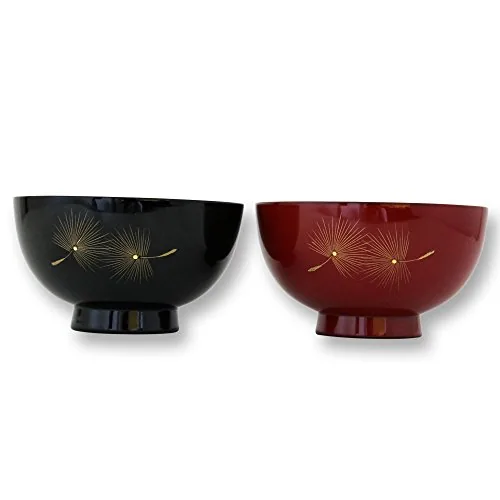
![Ouchi-nuri Vermilion Lacquer Sake Cup: Yamaguchi’s Court Craft [2026]](https://jpmono.com/wp-content/uploads/2026/06/ouchi-nuri-vermilion-lacquer-sake-cup-where-to-buy-2026-featured.jpg)
Ouchi-nuri (大内塗, “Ouchi lacquerware”) is the court lacquer of Yamaguchi — a vermilion-ground urushi ware decorated with gold autumn grasses and the lozenge crest of the medieval Ouchi clan. It is unlike almost anything else on this site. Where the lacquer pieces we have covered so far are plain soup bowls, trays, and chopsticks, a sakazuki (盃, a flat ceremonial sake cup) finished in the Ouchi tradition is a small piece of heraldry: a shu (朱, vermilion) field, scattered gold akikusa (秋草, autumn-grass) maki-e, and the gold-leaf Ouchi-bishi (大内菱) diamond crest.
What makes the object notable to an international reader is the court behind it. The Ouchi clan ruled the provinces of Suo and Nagato from Yamaguchi and, on the wealth of Ming China and Korean trade across the Seto Inland Sea, turned the city into the “Kyoto of the West” (西の京, Nishi-no-Kyo) during the Muromachi period. The same patronage that drew the ink painter Sesshu and sheltered Francis Xavier’s mission also commissioned this vermilion lacquer — a signature still defining the ware today, most familiar abroad in the rounded Ouchi-ningyo (大内人形) dolls.
This guide is written for the reader weighing a first decorated urushi sake cup. We cover what Ouchi-nuri is, how a court-style vermilion sakazuki differs from the plain lacquer soup bowls elsewhere on the site, what to verify before buying, where it sits among other Chugoku and lacquer pieces, and the two realistic ways to buy it from outside Japan. The featured piece is an Ouchi-nuri vermilion sakazuki (ASIN B0HFDDGYWT).
🔄 Updated: June 28, 2026
⏱️ Read time: ~12 min

- Who this is for — and who should skip it
- Product overview (from published specs)
- Price snapshot across stores
- 📍 Where this comes from — place, era, and the craft tradition
- What it does well
- Weaknesses and things to verify before buying
- Conclusion — which buyer type are you?
- Other ways to approach this purchase
- 🏆 Editor’s Pick
- ❓ Frequently Asked Questions
Who this is for — and who should skip it
- Want a decorated court-style lacquer cup, not a plain soup bowl
- Are drawn to the vermilion-and-gold signature and the Ouchi-bishi crest
- Value provenance — a craft tied to a documented medieval court
- Are happy to hand-wash and keep a lacquer cup out of the dishwasher
- Drink sake at room temperature or gently warmed (urushi dislikes heat extremes)
- Prefer plain, undecorated urushi — look at a solid-color soup bowl instead
- Need dishwasher- and microwave-safe drinkware for daily rough use
- Want a low-cost novelty cup; authentic Ouchi-nuri is priced as craft
- Have a confirmed urushi (lacquer-sap) skin sensitivity to cured surfaces
- Expect same-day pricing certainty — listings and stock move (see caveats)
Product overview (from published specs)
The data fetched for this guide was thin: the live Amazon US search returned no individually listed match, and the structured price feed was empty at the time of writing. The specifications below are drawn from the Ouchi-nuri tradition and the sourced Amazon JP Global Store listing identity (ASIN B0HFDDGYWT). Treat unconfirmed cells as “verify at the listing.”
Ouchi-nuri Vermilion Lacquer Sake Cup
大内人形盃 桑原大内塗 夫婦盃 酒器 飾り盃 漆器
通常7~8日以内に発送します。 · Sold by 健やか未来 · ASIN B0HFDDGYWT
Price and availability as of 2026-09-01 05:22 JST. The Amazon listing at the time of purchase is authoritative. jpmono.com earns a commission on qualifying purchases at no extra cost to you.
| Attribute | Detail | Source |
|---|---|---|
| Craft | Ouchi-nuri (大内塗) — vermilion court lacquerware with gold maki-e | Maker tradition |
| Origin | Yamaguchi, Yamaguchi Prefecture (Chugoku region) | Maker tradition |
| Item | Sakazuki (盃) — flat ceremonial sake cup | Listing identity |
| Finish | Shu (vermilion) urushi ground with gold akikusa (autumn-grass) maki-e | Maker tradition |
| Decoration | Gold-leaf Ouchi-bishi (大内菱) lozenge crest — the clan signature | Maker tradition |
| Designation | National traditional craft (dento kogei-hin), METI, 1989 | Maker tradition |
| Dimensions / weight | Unconfirmed — check the listing | — |
| ASIN | B01KT23R58 | Amazon JP Global Store |
Only the Amazon JP listing identity was available; live pricing and exact dimensions were not present in the fetched data and may have shifted since the writing date. Verify both at the listing before purchasing.
📖 Glossary — key terms (tap to expand)
- Urushi (漆) — the refined sap of the lacquer tree (Toxicodendron vernicifluum); cures into a hard, water-resistant film.
- Ouchi-nuri (大内塗) — Yamaguchi’s vermilion court lacquerware, decorated with gold autumn grasses and the Ouchi clan crest.
- Shu (朱) — vermilion; the red-orange ground color that defines Ouchi-nuri.
- Maki-e (蒔絵) — decorative lacquer technique sprinkling gold or silver powder onto wet urushi.
- Akikusa (秋草) — “autumn grasses,” the scattered floral motif used in Ouchi gold decoration.
- Ouchi-bishi (大内菱) — the Ouchi clan’s lozenge (diamond) crest, applied in gold leaf.
- Ouchi-ningyo (大内人形) — the rounded lacquered Ouchi dolls, the best-known form of the ware abroad.
- Sakazuki (盃) — a flat, shallow ceremonial sake cup, distinct from the deeper guinomi.
- Nishi-no-Kyo (西の京) — “the Kyoto of the West,” the historical nickname for Ouchi-era Yamaguchi.
Related jpmono guides — the other Yamaguchi and Chugoku makers, and the lacquer and sake-vessel families this cup belongs to.
 🧵 Yamaguchi: Yanai-jima cotton
🍵 Chugoku lacquer: Yakumo-nuri natsume
 🫙 Sanuki Shikki kinma natsume
 🎁 Takaoka raden lacquer box
 🍶 Tosa lacquer sake katakuchi
🍽️ Chugoku: Fujina-yaki plate
🍚 Chugoku: Miyajima woodwork
Price snapshot across stores
Live pricing was unavailable from the fetched data at the time of writing. JPY is the authoritative figure for the specific item; USD figures are approximate at a ¥150/USD baseline. Verify the current price at the listing before buying.
| Store | Item / variant | Price (JPY + USD est.) | Notes |
|---|---|---|---|
| 🇺🇸 Amazon US (search) | Browse Japanese lacquer sake cups | varies (USD) | Best if you are shopping from the US — Prime shipping, USD pricing, no international customs. Amazon US carries vermilion and gold-decorated urushi sake cups from various makers for comparing finishes; this exact Ouchi-nuri piece ships from Japan (next row). |
| 🇯🇵 Amazon JP Global Store | Ouchi-nuri vermilion sakazuki (ASIN B0HFDDGYWT) | Check live price (USD est. at ¥150/USD) | Ships internationally from Japan. This is the sourced listing for the specific item. |
| Maker direct | Yamaguchi Ouchi-nuri workshops | Varies | Widest selection of sakazuki, doll, and box pieces; Japanese-language ordering, limited overseas shipping. |
| Proxy services (Buyee / Tenso) | Any JP-only listing | Item price + proxy fee + forwarding | Use when a piece is listed only on a Japan-domestic store; adds a forwarding step and fee. |
📍 Where this comes from — place, era, and the craft tradition

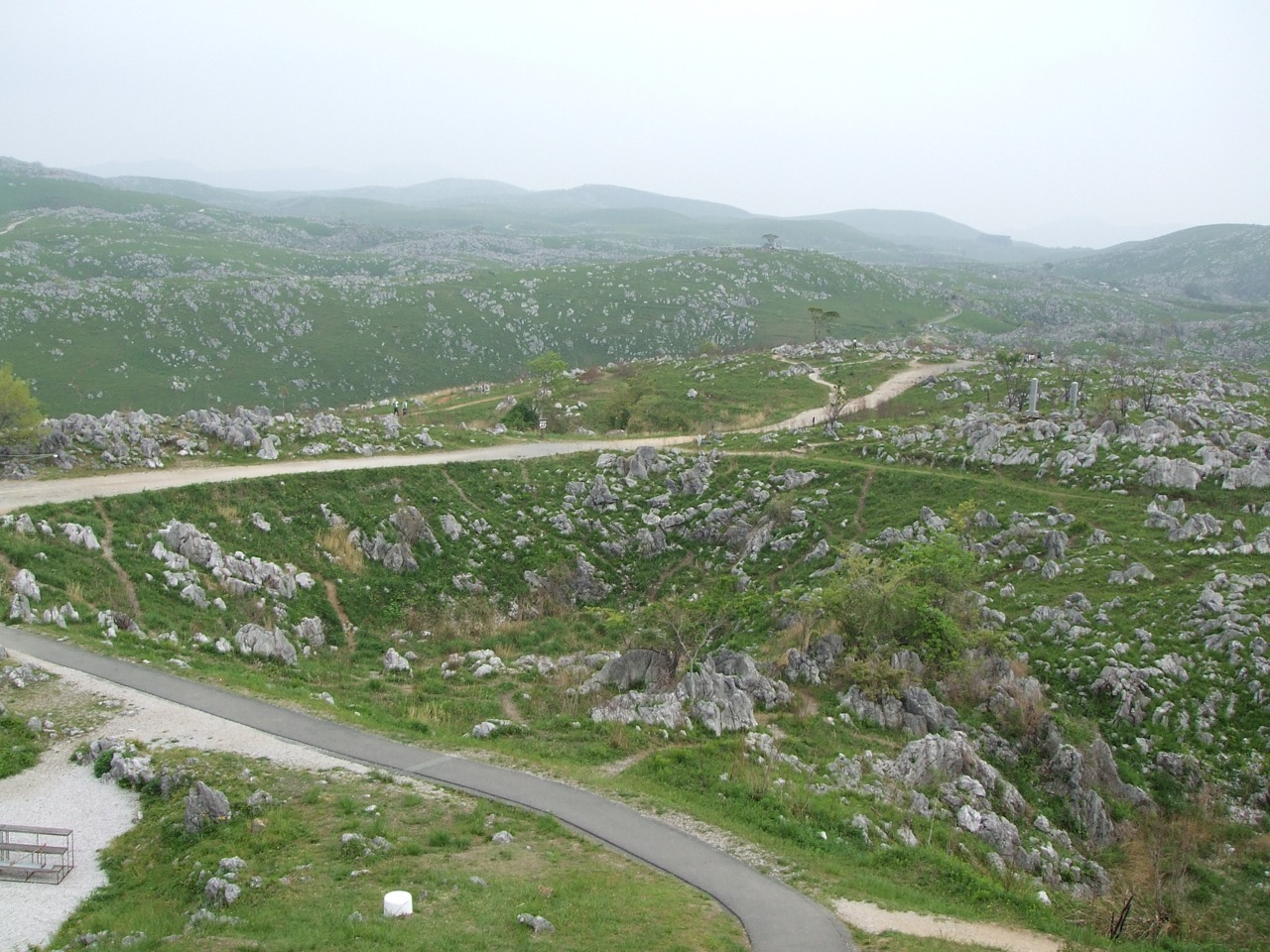
Yamaguchi sits at the far southwestern end of Honshu, Japan’s main island, where the Chugoku region narrows toward the Kanmon Strait and the island of Kyushu beyond. It faces the sheltered waters of the Seto Inland Sea — the historical maritime highway that made the city’s fortunes — and its interior rises into karst country, including the Akiyoshidai plateau and Akiyoshido, the largest limestone cave in Japan. This was a place positioned for trade, looking outward toward the Asian mainland rather than inward toward the capital.
That outward position is the whole story of Ouchi-nuri.
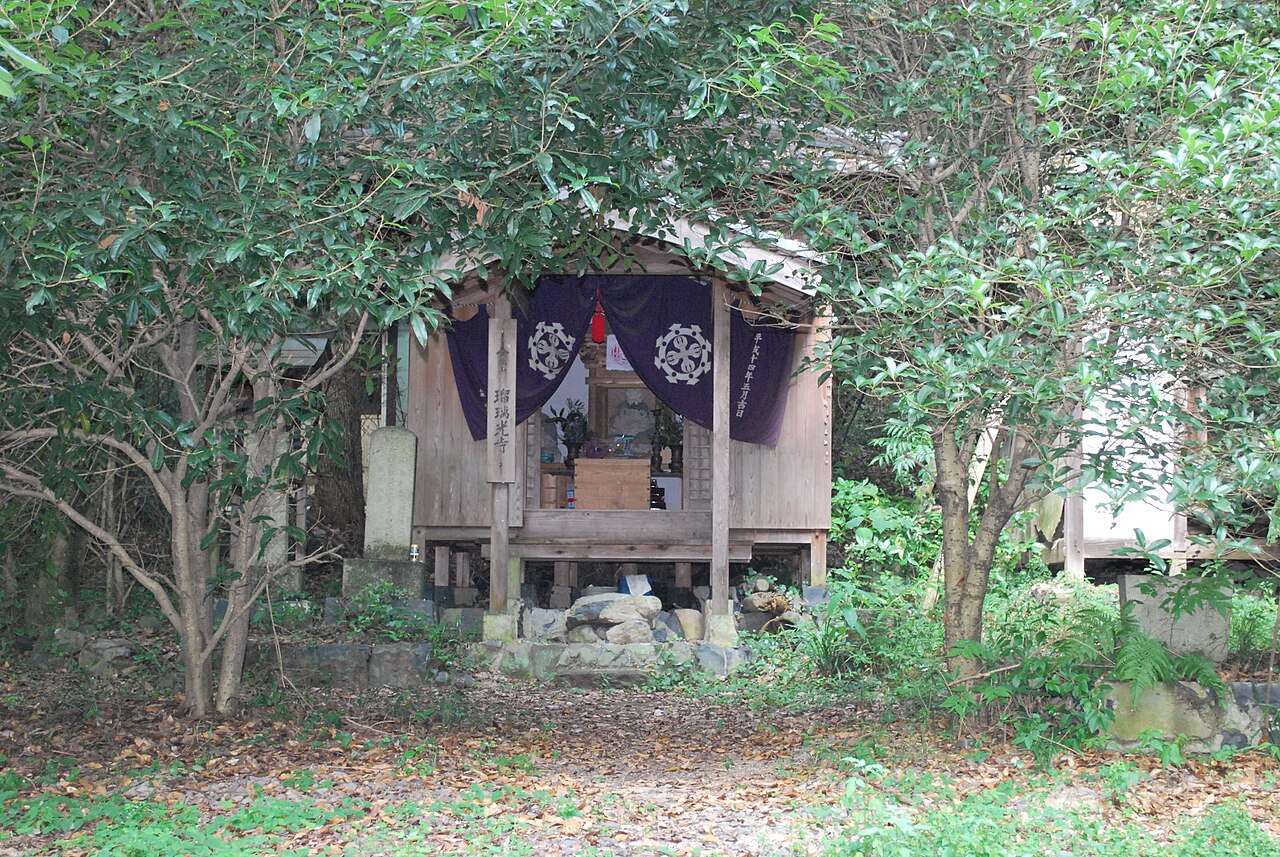
The Ouchi clan ruled the provinces of Suo and Nagato — today’s Yamaguchi Prefecture — from the city of Yamaguchi, and during the Muromachi period (the 14th to 16th centuries) they made it one of the wealthiest cultural centers in the country. The money came from the sea: the Ouchi controlled lucrative trade with Ming China and Korea across the Seto Inland Sea, and they spent it building a court city modeled on Kyoto itself. Yamaguchi earned its nickname, Nishi-no-Kyo, the “Kyoto of the West.” The Rurikoji five-story pagoda, raised by the clan in 1442 and ranked among Japan’s three finest, still stands as the most visible monument of that golden age.
- 14th c. — The Ouchi clan consolidates power over Suo and Nagato, ruling from Yamaguchi.
- 14th–16th c. — Funded by Ming China and Korean trade, Yamaguchi flourishes as Nishi-no-Kyo, the “Kyoto of the West.”
- 1442 — The Rurikoji five-story pagoda is built by the Ouchi clan, later ranked among Japan’s three finest pagodas.
- 15th c. — The ink painter Sesshu works under Ouchi patronage in Yamaguchi.
- 16th c. — The Ouchi court shelters Francis Xavier’s Christian mission, an early window onto Europe.
- 1989 — Ouchi-nuri is designated a national traditional craft (dento kogei-hin) by METI.
The Ouchi court was not only rich; it was cultivated. Its patronage drew the great ink painter Sesshu to Yamaguchi, and a generation later it sheltered Francis Xavier’s Christian mission — one of the earliest sustained contacts between Japan and Europe. Into that same cultured, outward-looking court came the lacquer that bears the clan’s name. The Ouchi commissioned vermilion urushi decorated with scattered gold autumn grasses and the gold-leaf Ouchi-bishi lozenge crest, a heraldic signature that has defined the ware ever since.
“Where most lacquer on this site is a plain soup bowl, Ouchi-nuri is a court signature — a vermilion field, gold autumn grass, and the lozenge crest of a clan that called its city the Kyoto of the West.”
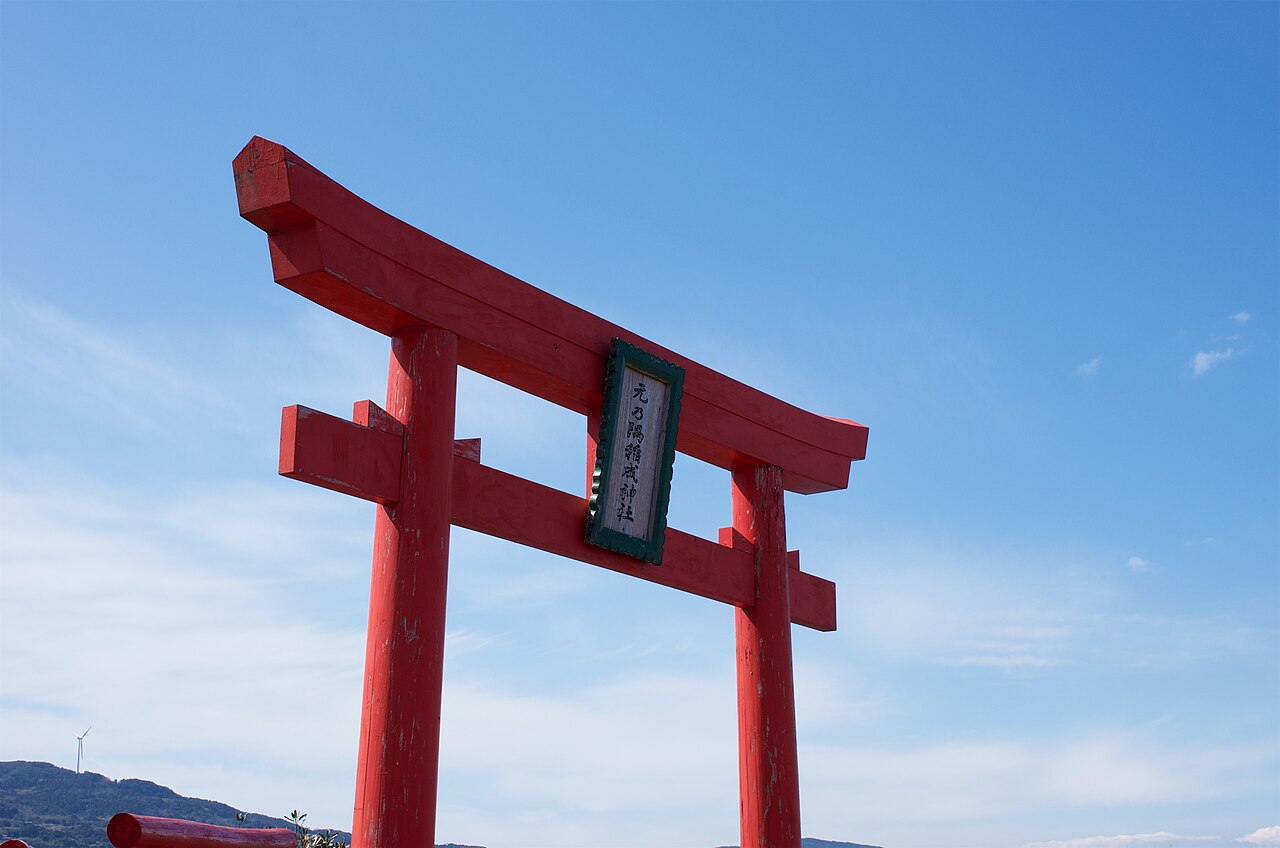
The vermilion is the heart of the ware. Shu — a warm red-orange — is the ground over which the gold akikusa and the Ouchi-bishi crest are laid, and it is the color most people in Yamaguchi associate with the tradition. The same shu runs through the prefecture’s landscape, most dramatically in the cascade of vermilion torii at Motonosumi Shrine on the Nagato coast. On a sakazuki, that ground turns a small drinking cup into a piece of the Ouchi court’s visual language.
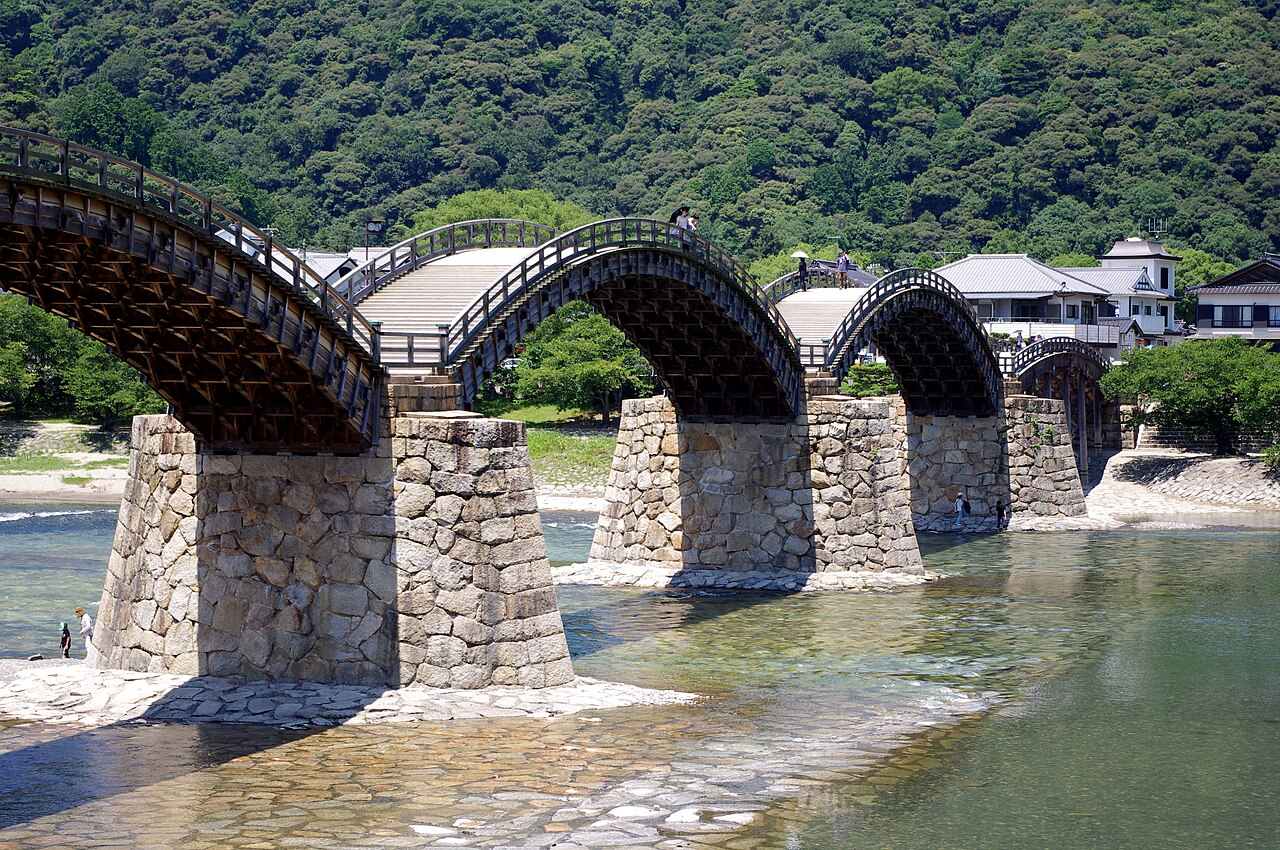
Continuity here runs through the craft rather than a single unbroken dynasty: the Ouchi clan itself fell in the 16th century, but the lacquer signature it commissioned outlived it and remained the regional craft identity. That continuity is visible across Yamaguchi’s broader culture of skilled handwork — the arched wooden Kintaikyo bridge at Iwakuni, rebuilt across generations, is one emblem of the same regional joinery and patience. Ouchi-nuri’s recognition as a national traditional craft by METI in 1989 formalized what the prefecture had carried for centuries, and the ware is most familiar abroad today in the rounded Ouchi-ningyo dolls finished in the same vermilion and gold.
What it does well
Weaknesses and things to verify before buying
- Live price was not in the fetched data. Confirm the current JPY price at the listing before ordering; figures here are estimates only.
- Dimensions and weight are unconfirmed. If exact capacity matters, check the listing — a flat sakazuki holds less than a deeper guinomi, and sizes vary by piece.
- Hand-wash only. No dishwasher, no microwave, no soaking. This is a lifestyle commitment, not a flaw, but it disqualifies rough daily use.
- Heat sensitivity. Urushi dislikes extreme heat; warm sake is fine, boiling-hot liquids are not advised.
- Gold decoration needs gentle handling. The akikusa maki-e and Ouchi-bishi crest are surface decoration; avoid abrasive sponges and scrubbing.
- Authenticity and source. Confirm the listing is a genuine Yamaguchi Ouchi-nuri piece and not an imported-lacquer look-alike; provenance is the point of paying craft prices.
- Lacquer sensitivity. Cured urushi is inert for most people, but anyone with a known lacquer-sap allergy should be cautious.
Conclusion — which buyer type are you?
Other ways to approach this purchase
🏆 Editor’s Pick
❓ Frequently Asked Questions
What is Ouchi-nuri, in one sentence?
It is Yamaguchi’s vermilion court lacquerware, decorated with gold autumn-grass maki-e and the gold-leaf Ouchi-bishi lozenge crest, commissioned by the medieval Ouchi clan and still defining the ware today.
How is it different from the plain lacquer cups on this site?
Most lacquer covered here is plain — solid-color soup bowls, trays, boxes, and chopsticks where the urushi surface is the whole statement. Ouchi-nuri is decorated: a vermilion ground carrying gold autumn grasses and the Ouchi clan crest. It is also the site’s first lacquer sake cup and Yamaguchi’s first lacquer entry.
Can I put it in the dishwasher or microwave?
No. Urushi lacquerware is hand-wash only and should be kept away from the microwave and prolonged direct heat. Warm sake is fine; boiling liquids are not advised, and the gold decoration should not be scrubbed with abrasive sponges.
Does it ship internationally?
The specific Ouchi-nuri sakazuki is sourced from the Amazon JP Global Store, which ships to most major destinations. Expect roughly $15–$40 shipping to the US, EU, or Australia, plus possible customs duty above your local threshold.
Why is the Ouchi-nuri history considered special?
The ware was commissioned by the Ouchi clan, who ruled Suo and Nagato from Yamaguchi and, funded by Ming China and Korean trade, made the city the “Kyoto of the West.” The same court drew the painter Sesshu and sheltered Francis Xavier’s mission. Ouchi-nuri was designated a national traditional craft by METI in 1989.
Is it a good gift?
Yes, for someone who appreciates decorated craft and sake. The flat sakazuki shape is traditional for celebrations and toasts, and the vermilion-and-gold court signature gives it a clear story.
How much does it cost?
Live pricing was unavailable in our fetched data at the time of writing. Authentic Ouchi-nuri is craft-priced; check the current figure directly at the listing before ordering.
jpmono.com is curated by a Japan-based editorial team (working out of Toyama in the Hokuriku region and Nara in Kansai) and is independent. We do not take payment from the makers we feature; income comes from affiliate links. Read more about our editorial standards.
🤖 This article was prepared with AI assistance and reviewed against the source listing data before publication. Specifications and pricing reflect the data available at the time of writing.
Affiliate disclosure: jpmono.com may earn a commission on qualifying purchases made through links on this page, at no additional cost to you.