![Yanai-jima Kingyo Cotton Pouch: Yamaguchi Goldfish Kinchaku [2026]](https://jpmono.com/wp-content/uploads/2026/05/japan-map-regions-and-prefectures-800x1050.png)
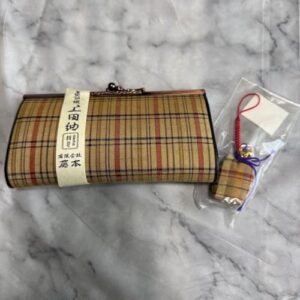
Yanai-jima (柳井縞, “Yanai stripe”) is the yarn-dyed striped cotton of Yanai, an old merchant and cotton-trading port on the Seto Inland Sea coast of Yamaguchi Prefecture. The cloth was woven in the villages around the town and traded through Yanai’s white-walled storehouse district during the Edo period, and the stripe-dyed weave became the town’s signature textile. A kinchaku (巾着, “drawstring pouch”) cut and sewn from that handwoven cotton is one common Yanai-jima product, often carrying the goldfish (kingyo) motif that Yanai is equally known for.
What makes the object notable to an international reader is the way two traditions meet in it. Yanai’s other famous craft is the kingyo chochin (金魚提灯, “goldfish lantern”), a papier-mâché folk emblem said to date to the late Edo era and now the face of the town’s summer festival. Modern Yanai-jima weavers frequently carry that goldfish into pouches and small goods, so a single drawstring bag links a yarn-dyed weaving heritage to a piece of local folk-craft iconography.
This guide is written for readers shopping from outside Japan who want a small, packable, genuinely regional textile rather than a generic souvenir. We cover what Yanai-jima cloth is, where it comes from, how the goldfish motif fits the town’s history, how it compares to other Japanese yarn-dyed and indigo textiles, and practical ways to find it abroad. It is a handwoven, small-batch craft, so size and finish can vary by workshop.
📅 Published: June 7, 2026
🔄 Updated: June 7, 2026
⏱️ Read time: ~10 min
- Who this is for — and who should skip it
- Product overview (from published specs)
- 📌 How does it compare?
- Where this comes from
- Buying options across stores
- What it does well
- Weaknesses and things to verify before buying
- Conclusion — which buyer type are you?
- Other ways to approach this purchase
- ❓ Frequently Asked Questions
Who this is for — and who should skip it
- Want a small, packable textile with a verifiable regional origin, not a generic souvenir
- Like yarn-dyed cotton, where the stripe is woven from pre-dyed threads rather than printed on
- Are drawn to the goldfish (kingyo) motif and Yanai’s folk-craft story
- Prefer handwoven, small-batch goods and accept their natural variation
- Need a low-cost, low-risk gift that travels flat in a suitcase
- Expect a large bag — a kinchaku is a small drawstring pouch, not a tote
- Want an exact color and stripe match to a photo; handwoven batches vary
- Need guaranteed colorfastness for heavy wet use without testing first
- Want same-day domestic shipping; this is sourced from Japan
- Are looking for a structured, lined, hardware-fastened purse
Product overview (from published specs)
Maker spec sheets vary by workshop, and not every Yanai-jima kinchaku has the same dimensions or finish. The table below describes the general characteristics of Yanai-jima textiles and the verified craft background; details that vary by piece should be confirmed with the maker rather than guessed.
| Attribute | Detail | Source |
|---|---|---|
| Item type | Kinchaku (drawstring pouch) | Product information |
| Material | Yarn-dyed striped cotton (Yanai-jima) | Craft background |
| Motif | Goldfish (kingyo), Yanai’s folk emblem | Product information |
| Construction | Handwoven cloth, small-batch | Craft background |
| Origin | Yanai, Yamaguchi Prefecture, Japan | Craft background |
| Dimensions / weight | — | — |
⚠️ Yanai-jima textile goods can vary in dimensions, weight, and price between workshops. Confirm the current details with the maker or seller before purchasing.
📖 Glossary — key terms
- Yanai-jima (柳井縞) — the yarn-dyed striped cotton historically woven and traded in Yanai, Yamaguchi.
- Kinchaku (巾着) — a small cloth pouch closed with a drawstring; long used to carry coins, seals, and small items.
- Kingyo (金魚) — goldfish; in Yanai, the motif of the town’s signature folk lantern.
- Kingyo chochin (金魚提灯) — a papier-mâché goldfish lantern, Yanai’s folk-craft emblem and the face of its summer festival.
- Yarn-dyed — cloth where the threads are dyed before weaving, so the stripe is structural rather than printed.
- Shirakabe no Machinami (白壁の町並み) — Yanai’s preserved district of white-walled Edo merchant storehouses.
📌 How does it compare?
If you are weighing this Yanai-jima pouch against other Japanese textiles and regional crafts, these jpmono guides cover neighboring traditions — yarn-dyed and indigo cottons, small textile goods, and other Chūgoku-region crafts.
Where this comes from

Yanai is a small port town on the Seto Inland Sea side of Yamaguchi Prefecture, the westernmost prefecture on Japan’s main island of Honshū. The Inland Sea — a sheltered band of water between Honshū, Shikoku, and Kyūshū — was for centuries Japan’s busiest trade corridor, and towns along its shore grew rich moving rice, salt, and cloth toward Osaka. Yanai was one of them, and cotton was its trade.

In the Edo period (1603–1868), Yanai lay within the Iwakuni domain, governed from the nearby castle town of Iwakuni. Cotton grown and woven in the surrounding villages was gathered, finished, and traded through Yanai’s merchant quarter, and the yarn-dyed striped cloth — Yanai-jima — became the town’s signature product. That commercial wealth is still legible in the architecture.
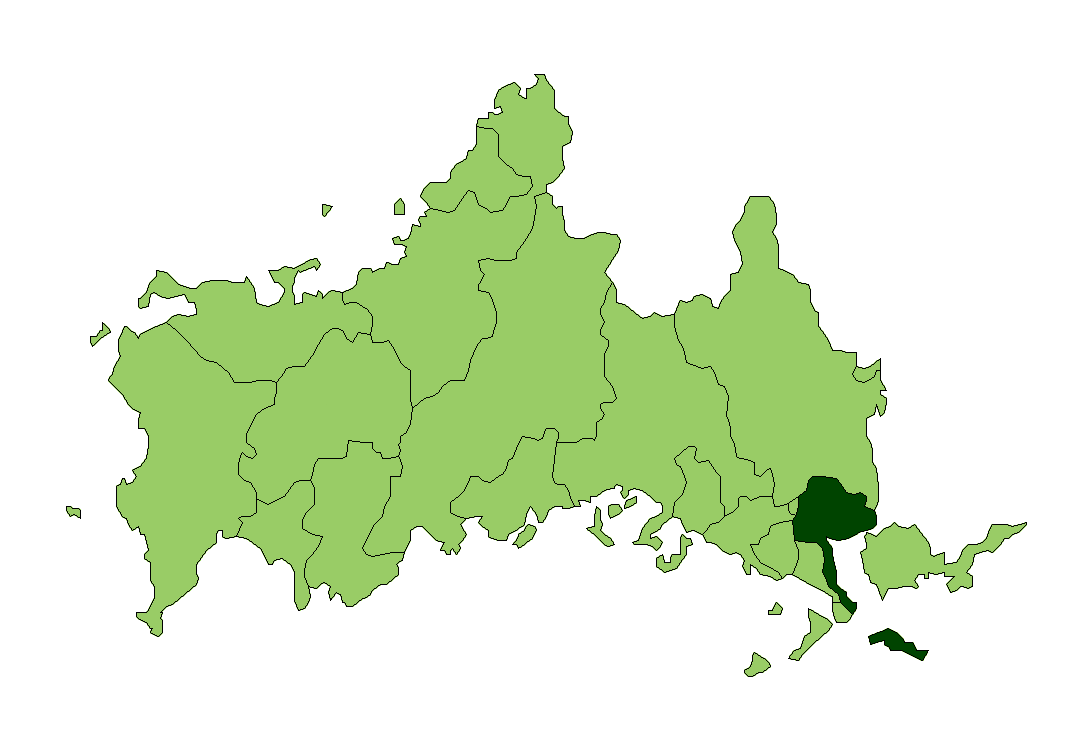
The Shirakabe no Machinami — the “white-walled townscape” — is a preserved district of Edo-era merchant houses and storehouses, the physical record of the trade that the cloth came from. Walking it is the closest thing to seeing the economy that produced Yanai-jima.
- Edo period — Yanai flourishes as a cotton-trading port within the Iwakuni domain on the Seto Inland Sea.
- 17th–18th c. — Cotton from surrounding villages is traded through Yanai’s storehouse district; the yarn-dyed stripe becomes the town’s signature cloth.
- Late Edo era — The kingyo chochin (goldfish lantern) folk craft is traditionally said to have originated in Yanai.
- 20th century — Yanai-jima weaving nearly dies out as industrial textiles displace handwoven cotton.
- Recent decades — Local preservation weavers revive Yanai-jima; cloth is again handwoven in small batches.
- Today — The Shirakabe no Machinami survives as a preserved district; the goldfish motif is carried onto pouches and small goods.
Yanai’s other claim is folk-craft, not textile. The kingyo chochin — a round papier-mâché goldfish lantern, traditionally said to have been devised in the late Edo era — became the town’s emblem and the centerpiece of its summer festival, when streets fill with red-and-white goldfish glowing overhead.
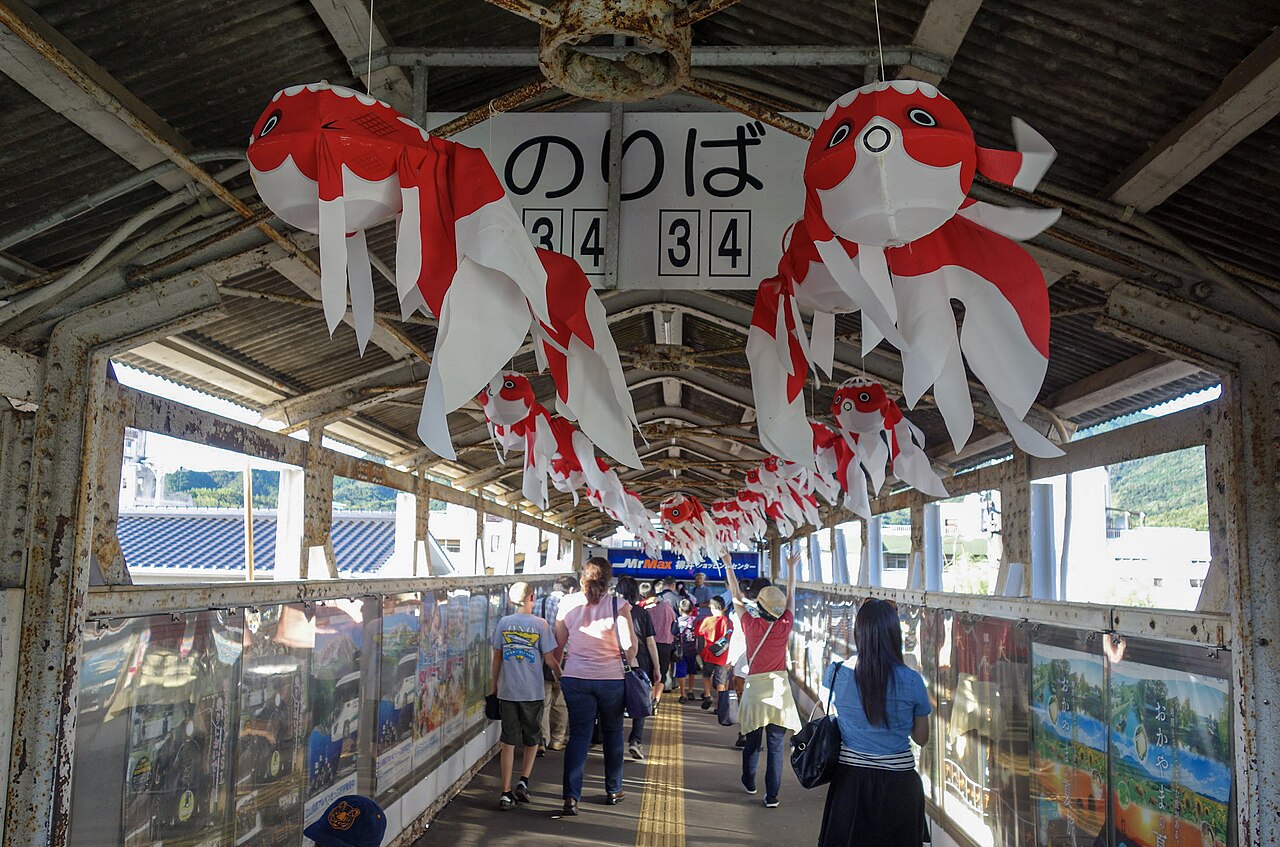
“In Yanai, two traditions meet in a single small pouch — the yarn-dyed stripe of a cotton port, and the goldfish of its summer lanterns.”
That overlap is why the goldfish appears on the cloth. A Yanai-jima pouch is not simply striped fabric with a fish printed on it; it is a deliberate joining of the town’s two best-known crafts, made by weavers who revived a tradition that had nearly disappeared. Because the cloth is handwoven in small batches, exact stripes and shades vary from piece to piece — a property of the process, not a defect.
Buying options across stores
Prices for small regional textile goods vary with the weave, materials, finish, and maker. USD figures elsewhere on this page are approximate (¥150/USD baseline, mid-2026).
| Store | Item / Variant | Price | Notes |
|---|---|---|---|
| 🇺🇸 Amazon.com (US) | Browse Japanese cotton pouches & kinchaku | varies (USD) | Best if you are shopping from the US — Prime shipping, USD pricing, no international customs. Amazon US carries Japanese cotton pouches and textile goods from various makers; the exact Yanai-jima piece is sourced from Japan (next row). |
| 🇯🇵 Amazon JP Global Store | Yanai-jima kingyo kinchaku | — | Ships internationally from Japan to most major destinations. |
| Maker direct | Yanai-jima preservation weavers / Yanai shops | Unconfirmed | Local Yanai workshops and town craft shops sell directly; international shipping is not guaranteed and would need confirmation. |
| Proxy services (Buyee / Tenso) | Forwarded from JP retailers | Item price + forwarding fee | Useful if a domestic-only Japanese shop stocks a stripe you want; adds a service fee and a consolidation step. |
What it does well
Weaknesses and things to verify before buying
- A kinchaku can suit a range of everyday uses; consider the intended contents before ordering.
- Stripe and color vary by batch. Because the cloth is handwoven, the piece you receive may differ from the photo in shade or stripe spacing. If you need an exact match, this is a poor fit.
- Colorfastness is not documented. Yarn-dyed cotton is generally stable, but the data does not confirm wash behavior; test gently or hand-wash cold before heavy use.
- Live price was unavailable. Confirm current pricing and stock at the retailer; small-batch items can sell out and restock irregularly.
- It is unlined and simply constructed. Do not expect a structured, hardware-fastened purse; it is a soft drawstring pouch.
- International shipping adds cost and time. The specific item ships from Japan; factor in shipping and possible customs duties for your country.
Conclusion — which buyer type are you?
Other ways to approach this purchase
❓ Frequently Asked Questions
Does Amazon JP Global Store ship this pouch internationally?
Small cotton pouches are generally low-restriction items for international shipping, but availability, cost, delivery time, and customs treatment depend on the destination.
What exactly is Yanai-jima?
Yanai-jima is the yarn-dyed striped cotton historically woven in the villages around Yanai, Yamaguchi, and traded through the town’s merchant storehouse district during the Edo period. The threads are dyed before weaving, so the stripe is structural. Production nearly ended in the 20th century and was revived by local preservation weavers.
Why does the pouch have a goldfish on it?
Yanai is the home of the kingyo chochin (goldfish lantern), a papier-mâché folk craft traditionally said to date to the late Edo era and now the town’s emblem and summer-festival centerpiece. Modern Yanai-jima weavers carry that goldfish motif onto pouches and small goods, linking the textile to Yanai’s folk-craft heritage.
Is it machine-made or handwoven?
Based on the craft background, Yanai-jima is handwoven in small batches by preservation weavers, so each piece carries natural variation in stripe spacing and shade. If you want an exact, repeatable match to a catalog photo, a handwoven item is not the right choice.
How should I care for it?
Care instructions were not part of the available data, so treat it as a handwoven yarn-dyed cotton: hand-wash cold or wash gently, avoid harsh bleaching, and test for color transfer before heavy wet use. Air-dry to limit shrinkage.
How does it compare to other Japanese cotton textiles?
It sits alongside other regional yarn-dyed and indigo cottons — Banshu yarn-dyed cotton, Awa aizome indigo, and Hamamatsu chusen-dyed cotton among them. Yanai-jima’s distinction is its specific tie to a single Seto Inland Sea port town and the goldfish motif of its lantern craft. See the comparison box above for related guides.
jpmono.com is curated by a Japan-based editorial team (working out of Toyama in the Hokuriku region and Nara in Kansai) and is independent. We do not take payment from the makers we feature; income comes from affiliate links. We do not physically test every product — we read maker specifications and regional textile sources.
🤖 This article was prepared with AI assistance and reviewed against maker specifications and verified craft background. Facts that vary by workshop are identified rather than guessed.
Affiliate disclosure: jpmono.com may earn a commission on qualifying purchases made through links on this page, at no additional cost to you.