![Sanuki Ittobori Zodiac Wood Carving from Kagawa: Where to Buy [2026]](https://jpmono.com/wp-content/uploads/2026/05/japan-map-regions-and-prefectures-800x1050.png)
Sanuki Ittobori (讃岐一刀彫, “Sanuki single-knife carving”) is a small carved-wood figure made in Takamatsu, the old castle town of Kagawa Prefecture on Shikoku island. The maker shapes a block of cherry or boxwood with a few decisive knife strokes, leaves those broad facets deliberately visible rather than sanding them smooth, then finishes the figure with bright mineral pigments. The zodiac (eto, 干支) animal of the year is the classic subject — a rounded ox, a sitting rabbit, a coiled dragon — alongside Daruma dolls and the festival faces of Okame and Hyottoko.
For an international reader, the appeal is twofold. First, it is one of the clearest surviving examples of the Japanese carving idea that “fewer cuts say more”: the tool marks are the decoration. Second, it is an inexpensive, lightweight, shelf-sized object with real regional provenance — the kind of thing that travels home in a suitcase and still means something. It sits in the same gift-and-display tradition as a New Year ornament rather than a piece of fine-art sculpture.
This guide covers what the piece is, where the Sanuki Ittobori craft comes from, how to judge a good one, where an overseas buyer can look for it, and which kind of buyer it suits. General routes include Japanese craft shops, international retailers, and proxy services when a maker does not ship abroad.
🔄 Updated:
⏱️ Read time: ~10 min
- Who this is for — and who should skip it
- Product overview (from published specs)
- Where this comes from — place, era, and the craft tradition
- Buying options across stores
- What it does well
- Weaknesses and things to verify before buying
- Conclusion — which buyer type are you?
- Other ways to approach this purchase
- ❓ Frequently Asked Questions
Who this is for — and who should skip it
- Want a small, genuinely regional Japanese craft object for a shelf, alcove, or New Year display
- Appreciate visible tool marks and hand-finishing over a flawless machined surface
- Are buying a zodiac (eto) figure as a seasonal gift or a year-of-birth keepsake
- Prefer lightweight, suitcase-friendly objects with a clear provenance story
- Like festive, folk-art color rather than muted minimalist tones
- Expect identical, symmetrical pieces — each is hand-carved and varies
- Want a large statement sculpture; these are small okimono, not centerpieces
- Prefer natural unpainted wood; the bright pigments are central here
- Need a guaranteed price or stock — hand-made stock fluctuates
- Want a functional object; this is purely a decorative display piece
Product overview (from published specs)
Hard specifications for hand-carved okimono are limited — each piece is individually made, so size and weight vary between examples. The table below reflects the general characteristics of Sanuki Ittobori as a craft category; exact dimensions and finish depend on the individual piece.
| Attribute | Detail (per category) |
|---|---|
| Craft | Sanuki Ittobori (讃岐一刀彫) — single-knife wood carving |
| Object type | Okimono (置物) — decorative display figure |
| Subject | Zodiac (eto, 干支) animal of the year |
| Material | Carved wood (traditionally cherry or boxwood) |
| Finish | Hand-painted mineral pigments; facets left visible |
| Origin | Takamatsu, Kagawa Prefecture (Shikoku) |
| Size / weight | Varies by piece — confirm before buying |
| Source | What it offers | Price |
|---|---|---|
| Amazon US (search) | Comparable Japanese carved wood okimono and zodiac figures | varies (USD) |
| Maker direct | Takamatsu / Kagawa craft workshops and shops | Varies; often Japan-only shipping |
| Proxy services (Buyee / Tenso) | Forwarding from Japan-only shops to overseas addresses | Item price + forwarding fee |
📖 Glossary — key terms
- Ittobori (一刀彫) — literally “single-knife carving.” The figure is shaped with a few broad, decisive strokes; the resulting facets are left visible as the decoration.
- Okimono (置物) — a decorative object meant to be set down and displayed, as in an alcove (tokonoma) or on a shelf.
- Eto (干支) — the twelve-animal Japanese zodiac cycle (rat, ox, tiger, and so on). A new animal marks each year; eto figures are common New Year gifts.
- Sanuki (讃岐) — the old province name for present-day Kagawa Prefecture on Shikoku.
- Daruma (達磨) — a rounded, weighted good-luck doll modeled on the monk Bodhidharma; a classic ittobori subject.
- Okame / Hyottoko (おかめ・ひょっとこ) — comic festival mask-faces, the cheerful woman and the puckered-mouth man, popular as folk okimono.
Where this comes from — place, era, and the craft tradition

Kagawa is the smallest of Japan’s prefectures and corresponds to the old province of Sanuki. It occupies the northeast corner of Shikoku — the smallest of the four main islands — and looks north across the calm, island-studded Seto Inland Sea toward Okayama on Honshu. The sheltered sea, the mild dry climate, and a long history as a trade and pilgrimage gateway gave the region a settled merchant and craft culture rather than a heavy-industry one.
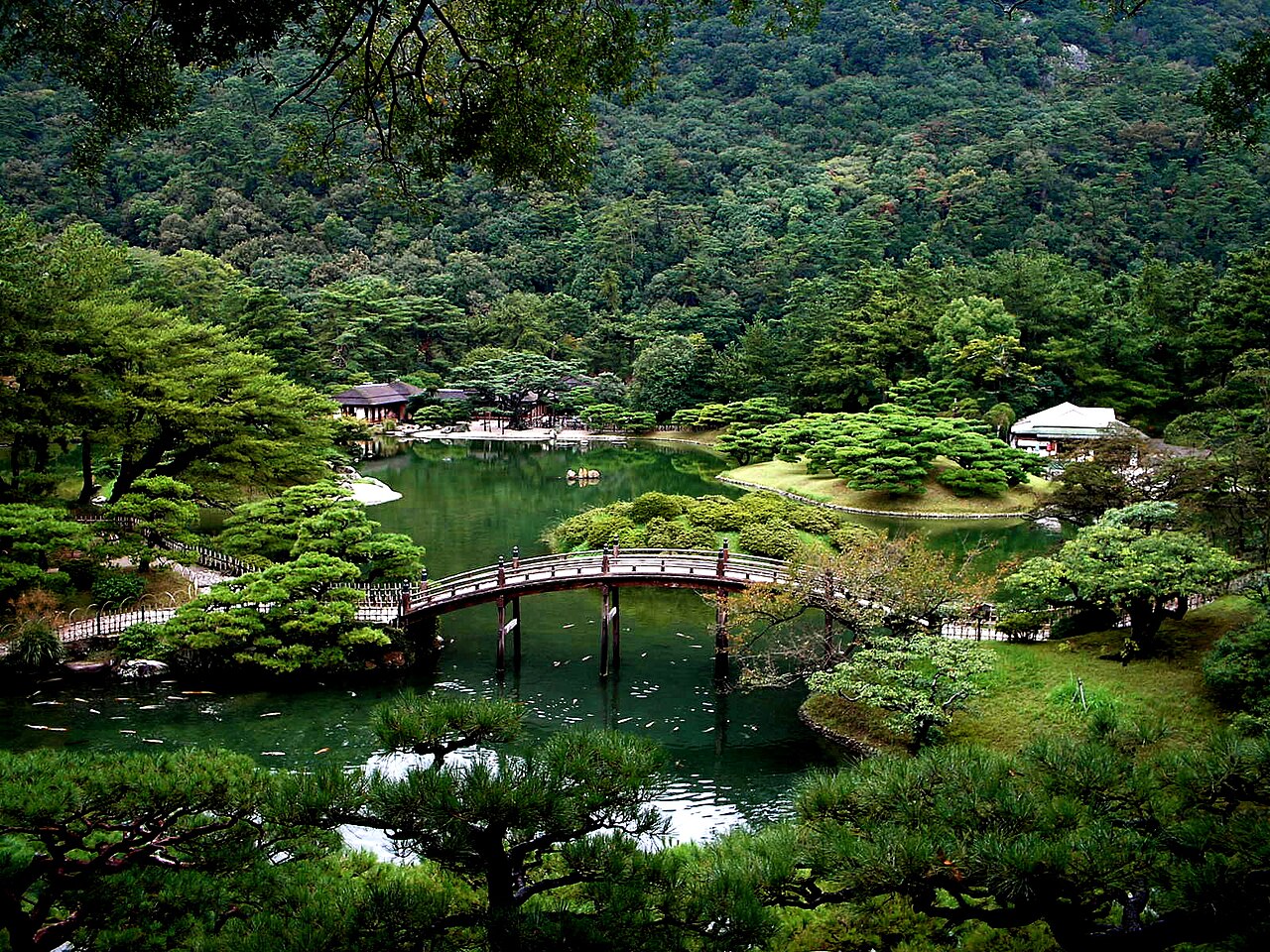
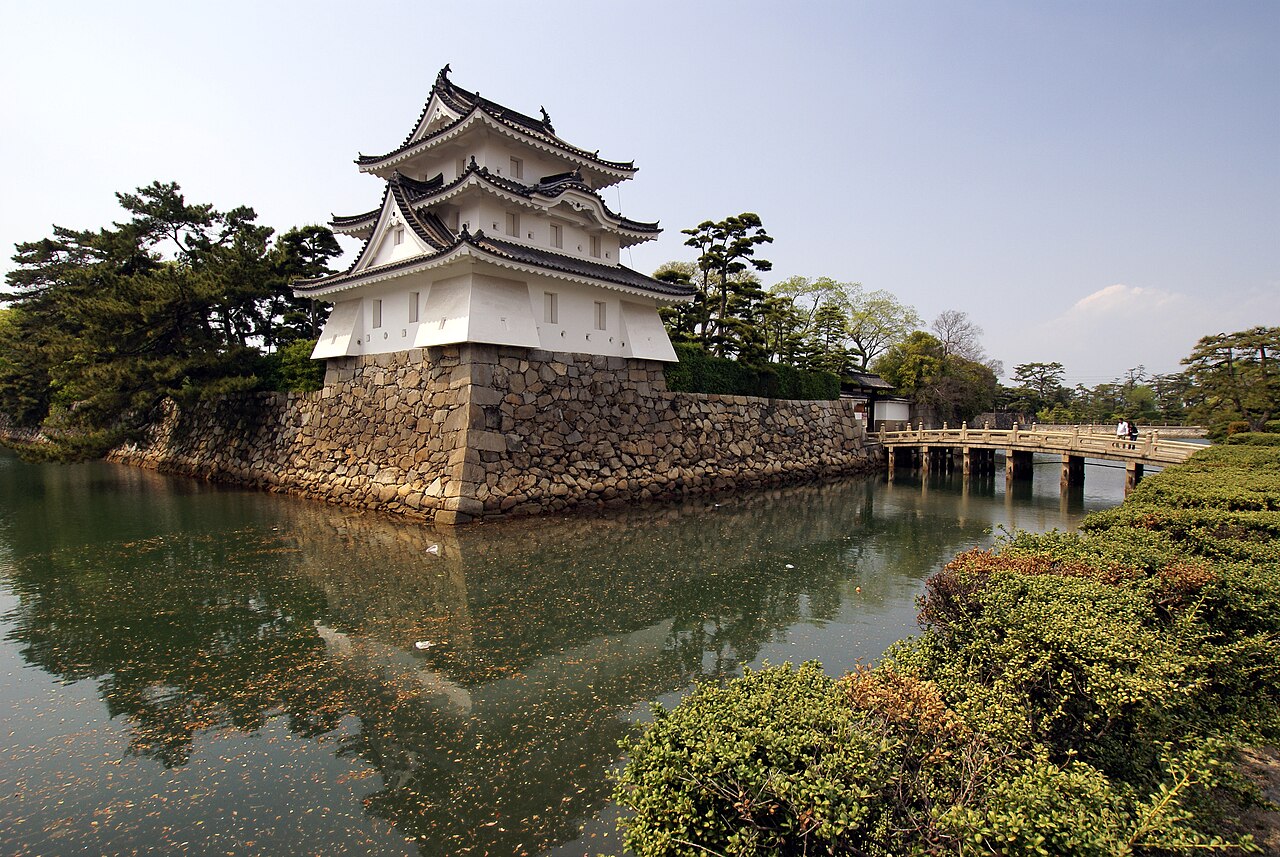
Its castle town, Takamatsu, became a center of patronage in the Edo period. From 1642 the city was ruled by the Takamatsu-Matsudaira house, a branch of the Mito Tokugawa, who governed Sanuki for more than two centuries and invested heavily in arts and crafts. The most visible legacy is Ritsurin Garden, one of Japan’s great daimyo strolling gardens, developed over generations of Matsudaira lords. The same lineage of patronage seeded Sanuki’s lacquerware (Sanuki shikki) and its woodcarving culture.
Sanuki Ittobori itself is the younger member of that craft family. It grew out of the local woodcarving culture and matured in the Meiji era (1868–1912), when carvers adapted the older idea of Nara Ittobori — “carving in single decisive strokes” — to local cherry and boxwood. The Nara version, centuries old and tied to the festivals of that former capital, supplied the technique; Sanuki gave it its own repertoire and its own bright palette.
- 8th c. — Nara Ittobori, the “single decisive stroke” carving idea, develops around the festivals of the former capital — the technical ancestor of the Sanuki craft.
- 1642 — The Takamatsu-Matsudaira house, a branch of the Mito Tokugawa, is installed as lords of Takamatsu and begins heavy patronage of crafts.
- Edo period — Ritsurin Garden is developed over generations and Sanuki lacquerware is established under Matsudaira patronage.
- Edo period — The Konpira (Kotohira-gu) pilgrimage trade spreads festive carved okimono as souvenirs and votive figures.
- Meiji era (1868–1912) — Sanuki Ittobori matures, adapting the Nara single-knife idea to local cherry and boxwood with bright mineral pigments.
- 20th c.–today — Zodiac (eto) animals, Daruma, and Okame/Hyottoko figures settle in as the classic repertoire; workshops in Takamatsu still carve them.
Sanuki sits on the old Konpira pilgrimage route. Kotohira-gu — the great shrine known affectionately as “Konpira-san” — drew pilgrims from across Japan, and that traffic gave local craftspeople a steady market for festive, portable objects: charms, lucky figures, and seasonal okimono. Zodiac carvings, Daruma, and the comic faces of Okame and Hyottoko all fit that demand, and they remain the craft’s core to this day.
“In ittobori the tool marks are not flaws to be sanded away — they are the decoration. A few decisive cuts are meant to say more than a smooth surface ever could.”
The continuity case here is modest and honest: Sanuki Ittobori is a living regional craft kept up by a small number of carvers in and around Takamatsu, rather than a large industry. Each piece is made by hand, so no two are identical, and the festive eto figures still move mainly as New Year and seasonal gifts. That small scale is exactly why provenance matters when you buy — and why the buying path below is worth reading carefully.
Buying options across stores
Prices for hand-carved okimono vary with wood, carving detail, paint, size, and maker. USD figures, where shown elsewhere, are approximate at a ¥150/USD baseline.
| Store | Item / Variant | Price (JPY + USD est.) | Notes |
|---|---|---|---|
| 🇺🇸 Amazon US (search) | Browse Japanese carved wood okimono | varies (USD) | Best if you’re shopping from the US — Prime shipping, USD pricing, no international customs. Amazon US carries comparable Japanese carved figures; the specific Sanuki piece ships from Japan (next row). |
| 🇯🇵 Amazon JP Global Store | This piece | — | Ships internationally from Japan. This is the exact item this guide is built around. |
| Maker direct | Takamatsu / Kagawa craft shops | Varies | Widest choice of designs and zodiac years, but often Japan-only shipping. |
| Proxy services (Buyee / Tenso) | Forwarding from Japan-only shops | Item + forwarding fee | Useful when a workshop or shop does not ship abroad directly; adds a service fee and a forwarding step. |
What it does well
Weaknesses and things to verify before buying
- Piece-to-piece variation. Each figure is hand-carved and hand-painted, so the exact shape, expression, and color will differ. Images are representative, not identical.
- Decorative, not functional. This is an okimono for display. It is not designed to be handled heavily, used, or placed outdoors.
- Painted surface needs care. Mineral pigments on wood can chip or fade with rough handling, moisture, or direct sunlight. Keep it dry and out of strong light.
- Zodiac year specificity. Eto figures represent a particular animal; if you want a specific year, confirm which animal the piece depicts.
- Shipping path. The exact item is sourced from Amazon JP Global Store and ships from Japan; delivery times and any customs duties depend on your country.
Conclusion — which buyer type are you?
Other ways to approach this purchase
❓ Frequently Asked Questions
What is Sanuki Ittobori?
Sanuki Ittobori is a wood-carving craft from Takamatsu in Kagawa Prefecture, on Shikoku. The carver shapes wood with a few decisive single-knife strokes, leaves the facets visible, and finishes the figure with bright mineral pigments. Zodiac animals, Daruma, and Okame/Hyottoko faces are the classic subjects.
Can it ship outside Japan?
For overseas buyers, Japanese shops and international retailers may offer shipping from Japan to many destinations. If a Japan-only shop does not export, a proxy service such as Buyee or Tenso can forward an order. Delivery times and customs duties depend on your country.
Why does my piece look different from the photo?
Each figure is hand-carved and hand-painted, so shape, expression, and color vary from piece to piece. A reference image may not match an individual figure exactly — that variation is a normal feature of the craft, not a defect.
How do I care for it?
Keep it dry and out of direct sunlight. The mineral pigments on wood can chip or fade with rough handling, moisture, or strong light. Dust it gently; it is a display object, not something to be handled heavily or placed outdoors.
Is it a good gift?
Yes — eto figures are traditional New Year and birth-year gifts in Japan. If you want a particular zodiac animal, confirm the motif with the seller and order ahead of the New Year when selection of the coming year’s animal is broadest.
How does it differ from a Hokkaido carved bear?
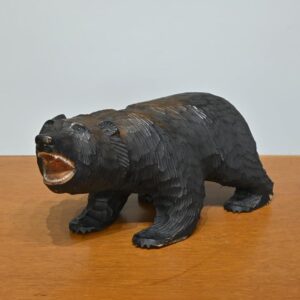
Both are carved-wood okimono, but the Hokkaido kibori bear is typically left as natural, unpainted wood with detailed relief carving, while Sanuki Ittobori uses bold faceted single-knife cuts and bright mineral pigments. They represent different regional carving traditions.
What does the price include, and is it confirmed?
Prices for Sanuki Ittobori figures vary with the wood, carving, paint, size, and maker. Any USD amount is an approximate estimate at a ¥150/USD baseline; compare the current price before purchasing.
jpmono.com is curated by a Japan-based editorial team (working out of Toyama in the Hokuriku region and Nara in Kansai) and is independent. We don’t take payment from the makers we feature; income comes from affiliate links. We don’t physically test every product — we read maker specifications and regional craft sources.
This article was prepared with AI assistance and reviewed against maker specifications and regional craft sources. Specifications, prices, and availability can vary between pieces and sellers.
Affiliate disclosure: jpmono.com may earn a commission on qualifying purchases made through links on this page, at no additional cost to you.