![Marugame Uchiwa Fan by IONO — Linen Dragonfly Hand-Pasted in Kagawa (¥3,630 / ≈$24 USD) [2026 Buyer’s Guide]](https://jpmono.com/wp-content/uploads/2026/05/iono-marugame-uchiwa-linen-tonbo-where-to-buy-2026-featured-942x1050.jpg)
Marugame uchiwa (丸亀うちわ) is the hand-pasted bamboo fan tradition of Marugame, a harbor town in northern Kagawa Prefecture on Shikoku island. The town has produced uchiwa continuously since the late 16th century, and today accounts for approximately 90% of all uchiwa made in Japan — a single-region concentration unmatched by any other Japanese craft, including Arita porcelain and Tokoname kyusu teapots. The Ministry of Economy, Trade and Industry designated Marugame uchiwa a Traditional Craft Product in 1997.
This guide centers on a specific Marugame uchiwa from IONO: a hand-pasted bamboo frame faced with 100% linen (麻 asa) and screen-printed with the auspicious tonbo (蜻蛉, dragonfly) motif. The piece measures W 28 × H 40 cm, weighs about 60 g, and lists for ¥3,630 (≈ $24 USD as of May 2026) on Amazon JP. Per the Amazon listing as of the writing date, it ships internationally via Amazon JP Global Store; live pricing and stock may have shifted since publication.
This article is written for international readers comparing real Marugame-made uchiwa against the generic “Japanese hand fan” inventory available on .com retailers. We cover the 400-year arc of the craft, the linen-vs-washi face material tradeoff, the cultural weight of the tonbo motif, and the practical buying picture — Amazon US, Amazon JP Global Store, maker-direct, and proxy paths.
🔄 Updated
⏱️ ~14 min read

- Who this is for — and who should skip it
- Product overview (from published specs)
- 📍 Where this comes from — Marugame, Kagawa, and the 400-year uchiwa trade
- Price snapshot across stores
- 📦 Shipping & where to buy from outside Japan
- What it does well
- Weaknesses and things to verify before buying
- Conclusion — which buyer type are you?
- Other ways to approach this purchase
- 🏆 Editor’s Pick
- ❓ Frequently Asked Questions
- 📌 Related Japanese Crafts
Who this is for — and who should skip it
- Want a verifiably Marugame-made uchiwa (90% national share, METI-designated tradition since 1997) rather than a generic Japan-themed paper fan.
- Prefer a linen (asa) face over standard washi paper for hand-feel, drape, and multi-year durability.
- Like the symbolic weight of the tonbo (dragonfly) motif — samurai-class “forward-only” auspicious imagery, doubling as a summer-season subject.
- Are buying a gift for a graduation, business opening, or new venture (the tonbo carries that meaning).
- Sit in the ¥3,000–¥5,000 sweet spot — above the washi-paper entry tier, below the named-craftsperson premium tier.
- Need a fan for heavy commercial or matsuri-event use — the linen face is more delicate than industrial paper.
- Live in a tropical-humidity climate where bamboo frames degrade quickly without climate-controlled storage.
- Want a folding sensu (扇子) fan rather than a fixed-frame uchiwa — different category entirely.
- Need the absolute cheapest option (¥1,500–¥2,500 washi-paper Marugame uchiwa exist; covered below).
- Want a named-craftsperson signature piece — those start around ¥6,000 and run to ¥15,000+.
Product overview (from published specs)
Per the Amazon JP listing snapshot as of , the specifications below are sourced from IONO’s product page and the linked retailer rows. Live pricing may have shifted since the writing date.
Marugame Uchiwa Fan by IONO
麻うちわ とんぼ【丸亀で手貼り制作】【布団扇】
在庫あり。 · Sold by IONOストア · ASIN B0BYX69Z9J
Price and availability as of 2026-08-31 02:30 JST. The Amazon listing at the time of purchase is authoritative. jpmono.com earns a commission on qualifying purchases at no extra cost to you.
| Spec | Value |
|---|---|
| Maker | IONO (Marugame partner workshop, Kagawa) |
| Made in | Marugame, Kagawa Prefecture, Shikoku, Japan |
| Face material | 100% linen (麻 asa) |
| Frame | Hand-bent local bamboo (竹 take), split and steamed |
| Dimensions | W 28 × H 40 cm (standard adult fudemochi 筆持ち format) |
| Weight | Approximately 60 g |
| Motif | Tonbo (蜻蛉, dragonfly) — screen-printed on linen |
| Pasting method | Hand-pasted (手貼り) in Marugame workshop |
| METI status | Marugame uchiwa designated Traditional Craft Product (1997) |
| Price | ¥3,630 (≈ $24 USD as of May 2026, ¥150/USD baseline) |
| Intl. shipping | Amazon JP Global Store, ~$8–$15 USD; no CITES concerns |
USD figures are explicit estimates based on a ¥150/USD baseline as of May 2026; the JPY price on the Amazon JP listing is the authoritative figure.
📖 Glossary — key Japanese terms used in this guide
- Uchiwa (うちわ, 団扇) — a fixed-frame, non-folding hand fan. Distinct from sensu (扇子), the folding fan.
- Marugame uchiwa (丸亀うちわ) — the Marugame, Kagawa regional uchiwa tradition; 90% of Japan’s uchiwa production.
- Asa (麻) — linen / bast-fiber fabric. Cooler hand-feel than cotton; historically used for summer kimono.
- Tonbo (蜻蛉) — dragonfly. Called katsumushi (勝ち虫, “victory bug”) in samurai-class symbolism for its forward-only flight.
- Fudemochi (筆持ち) — “brush-grip” — the standard adult uchiwa size with a slim handle around 28 × 40 cm.
- Te-bari / kami-bari / nuno-bari (手貼り / 紙貼り / 布貼り) — hand-pasting; paper-pasting; fabric-pasting. The face-application step.
- Konpira-san (金刀比羅宮) — major pilgrimage mountain shrine in Kotohira, Kagawa; the historical demand driver for Marugame uchiwa.
- METI Traditional Craft Product (経済産業大臣指定伝統的工芸品) — Japan’s government craft-heritage designation, awarded to Marugame uchiwa in 1997.
- Shokunin (職人) — craftsperson; the master-apprentice line through which Marugame skills are transmitted.
📍 Where this comes from — Marugame, Kagawa, and the 400-year uchiwa trade

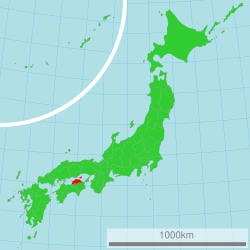
The region — northern Kagawa, on the Seto Inland Sea
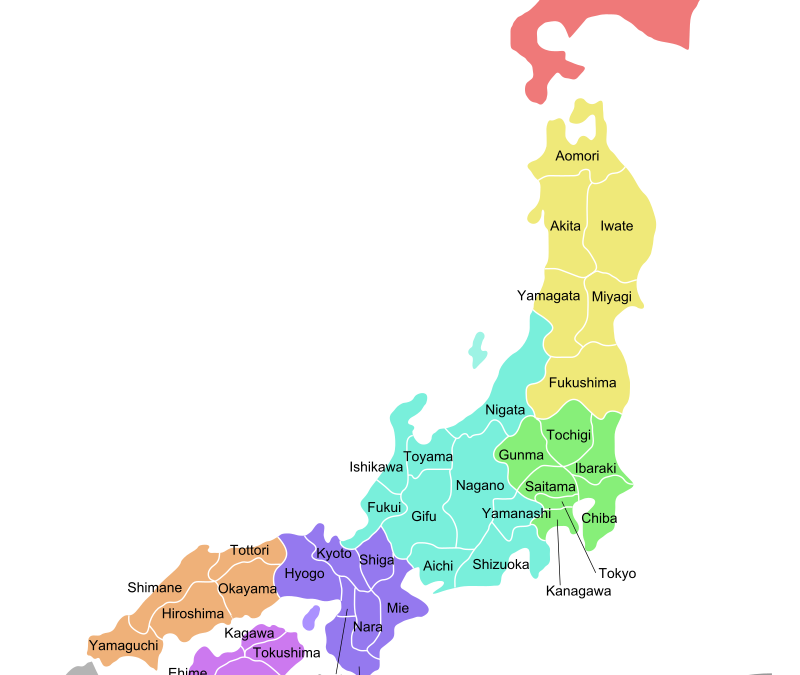
Marugame (丸亀) is a city of approximately 110,000 people in northern Kagawa Prefecture (香川県), on Shikoku — the smallest of Japan’s four main islands. Kagawa itself is the smallest prefecture in the country by area, but its position on the Seto Inland Sea historically placed it on the busiest commercial corridor in pre-modern Japan. The Seto Inland Sea was effectively the Mediterranean of feudal Japan, a sheltered waterway linking Kyūshū to Osaka and Kyoto.
For international-reader geography, Marugame is 35 minutes from Takamatsu (the Kagawa prefectural capital) by JR Yosan Line, two hours from Okayama via the Great Seto Bridge, and about 1.5 hours from Osaka by limited express. The closest international airport is Takamatsu (TAK), 35 km east. The Marugame Uchiwa Pavilion (うちわの港ミュージアム) is the central visitor destination, with workshop demonstrations and direct sales from member workshops.
Two geographic facts launched the uchiwa industry here. First, Marugame harbor was the entry point for pilgrims traveling to Konpira-san — the great mountain shrine at Kotohira, 15 km south, and the second-largest pilgrimage destination in Japan after Ise Jingū. Second, the surrounding Kagawa hills carry bamboo forests with the right species and growing conditions for uchiwa-grade culms. Pilgrim traffic created a captive market for portable souvenirs; the bamboo provided raw material; the harbor handled distribution. The cluster was self-reinforcing from the start.
The historical anchor — Tenshō era (1573–92), the Konpira-pilgrim trade
Marugame uchiwa’s founding period is the late 16th century, during the Tenshō era (1573–92). Konpira-san had become a major pilgrimage destination by the late Sengoku period, and pilgrims arrived by boat at Marugame harbor before walking the final 15 km to the shrine. Local craftspeople began producing uchiwa specifically as pilgrim souvenirs (omiyage 土産): lightweight, portable, decorated with the Konpira-san crest on the face, cheap enough that every returning pilgrim could afford one.
The fans served a second function as actual cooling tools for the hot boat journey back through the Seto Inland Sea summer. That dual role — souvenir and functional object — kept demand stable across centuries.
-
1573–92 (Tenshō era) — Marugame craftspeople begin making uchiwa as Konpira-pilgrim souvenirs. -
Early 1600s — Marugame Domain (Yamazaki, later Kyōgoku clan) extends official patronage; quality-control through the domain office. -
1750s–1830s — National dominance. “Marugame-uchiwa” becomes shorthand for Japanese uchiwa generally; regional share approaches 80%. -
Late Meiji–early Shōwa (1900s–1930s) — Electric fans and folding paper fans erode the cooling-tool market; Marugame survives by pivoting toward decorative and gift segments. -
1997 — METI designates Marugame uchiwa a Traditional Craft Product (経済産業大臣指定伝統的工芸品). -
2026 — ~30+ active workshops still operate; national share remains around 90%; the Marugame Uchiwa Cooperative runs the public Uchiwa no Minato Museum.
The local Marugame Domain — under the Yamazaki clan from 1641 and the Kyōgoku clan from 1658 — formalized the industry across the 1600s. The domain office provided bamboo-forest access at favorable prices, workshop registration as a regulated craft, brand control through inspection, and promotional partnership with the Konpira shrine. By the mid-Edo period (1700s), Marugame uchiwa had emerged as the dominant Japanese uchiwa brand.
The 90% national share
Marugame’s most striking statistic is its share of national uchiwa production: approximately 90% of all uchiwa made in Japan. This concentration is unmatched among Japanese crafts. Arita porcelain produces around 30% of Japan’s porcelain; Tokoname yaki produces roughly 70% of Japan’s kyusu teapots; Marugame stands alone at the 90% level.
“Marugame’s 90% national share is unmatched even by Arita porcelain or Ōdate magewappa. When you buy a Japanese uchiwa, the geography of where it was actually pasted is — statistically — Marugame.”
The concentration emerged from three reinforcing factors. The first is workshop apprenticeship clustering: bamboo-frame bending and fabric pasting are difficult skills, and apprentices need long training. A concentrated workshop ecosystem meant new craftspeople could train under multiple masters in a single town. The second is bamboo supply consolidation: the surrounding Kagawa forests grew the right bamboo at the right size, and outside Kagawa the species and seasoning protocols were less familiar. The third is brand-name consolidation: “Marugame-uchiwa” became the generic term for high-quality Japanese uchiwa, and competing regional uchiwa makers in Kyoto, Tokyo, and Akita found it difficult to differentiate at retail.
By the 1900s, more than 30 active workshops operated in Marugame, with collective annual production reaching five to eight million units. Today the workshop count is similar but production volume sits at roughly two to three million units — lower because of electric fans, folding paper fans, and air conditioning, but still meaningful.
The making process — bamboo to finished uchiwa, 7–10 days
A Marugame uchiwa is built through a multi-step hand process. Two- to three-year-old bamboo is cut from local forests in autumn and dried for six to twelve months. The seasoned culm is split lengthwise (heri-tori 折り取り) into a central handle and 40 to 60 radiating ribs — the most skilled step, because the cuts must be perfectly even. The split bamboo is then steamed and bent (saki-bari 先張り) into the characteristic round-end uchiwa shape, with the handle remaining thick while the ribs spread out and flatten.
The face is then attached. For paper uchiwa, washi (和紙) is brushed with starch paste and smoothed onto the skeleton without wrinkles (kami-bari 紙貼り). For fabric uchiwa like this IONO piece, 100% linen replaces the washi (nuno-bari 布貼り) — a harder process because linen does not absorb paste the way washi does, requiring more careful tension and smoothing. Excess fabric is trimmed around the edge with a sharp knife following the rib pattern, the face is decorated (printed, painted, or left plain), and the edge is bound with a decorative paper or fabric strip. The handle is sanded smooth as the final step.
A single experienced Marugame craftsperson produces 30 to 50 uchiwa per day. The full process from bamboo culm to finished uchiwa takes 7 to 10 days, mostly because of seasoning and drying intervals.
The tonbo (dragonfly) motif — katsumushi, the victory bug
For a foreign buyer, the tonbo motif carries broader appeal as well: dragonflies are universally legible across cultures as graceful flying insects, with the Japanese symbolic layer adding depth without requiring it to be the only entry point. The motif works equally well on an office wall, on a tearoom shelf, or as a tactile summer cooling tool.
Price snapshot across stores
Sources: Amazon US search (primary path, moonill-20), Amazon JP Global Store (the specific IONO listing, moonill-22), the Marugame Uchiwa Cooperative direct shop, and proxy services for Marugame items not on Amazon JP. The first row is consumer-facing — best for US shoppers comparing Japanese fan inventory in USD before deciding whether to source the specific IONO piece from Japan.
| Store | Item / Variant | Price (JPY + USD est.) | Notes |
|---|---|---|---|
| 🇺🇸 Amazon.com (US) | Browse Japanese uchiwa & hand fans | varies (USD) | Best if you’re shopping from the US — Prime shipping, USD pricing, no international customs. Amazon US carries imported Japanese fans across paper, silk, and bamboo categories; the specific Marugame IONO piece is sourced from Japan (next row). Verify country of origin on individual listings — many .com “Japanese fan” listings are Chinese-made. |
| 🇯🇵 Amazon JP Global Store | IONO Linen Tonbo (B0BYX69Z9J) | ¥3,630 (≈ $24 USD) | Ships internationally from Japan. ~60 g item + protective box, est. $8–$15 USD shipping to US/EU/AU/CA. Authoritative listing for this specific piece. |
| Maker direct — Marugame Uchiwa Cooperative | Cooperative shop & Uchiwa no Minato Museum | ¥1,500–¥15,000 (≈ $10–$100 USD) | In-person and mail-order. Full breadth of Marugame workshops, including premium named-craftsperson pieces not on Amazon. International mail-order possible on request; shipping ¥1,500–¥3,000 via Japan Post. |
| Proxy services (Buyee / Tenso) | Rakuten / Yahoo! Japan craft listings | ¥3,000–¥10,000 + proxy fee | Useful for premium-tier pieces from named Marugame workshops that aren’t on Amazon JP. Proxy fees roughly 5–10% on top of item + shipping. Slower fulfillment (1–3 weeks). |
📦 Shipping & where to buy from outside Japan
For international buyers, Amazon JP Global Store is the most straightforward route for this specific IONO piece. The fan weighs about 60 g; double-boxed with protective packaging, the shipped weight is roughly 150 g. Amazon JP Global Store quotes US-bound shipping at around $8–$15 USD with delivery in 1–3 weeks. EU, UK, AU, and CA destinations are similar. Uchiwa are flat-packed and considered non-restricted personal-import items; no CITES concerns apply because the bamboo is not an endangered species.
Customs duties depend on the destination threshold. The ¥3,630 (~$24 USD) item value sits below the US de minimis threshold ($800 at writing date) and below the EU IOSS threshold (€150) for VAT collection at checkout. Buyers in countries with lower thresholds (e.g., Canada’s CAD $20 for duty) may see a small fee at delivery.
Amazon US is a reasonable comparison stop before committing to a Japan import — Prime shipping, USD pricing, and no customs paperwork are real conveniences if a comparable Japanese-made fan is listed there. However, many .com “Japanese hand fan” listings are mass-produced in China and lack the Marugame attribution. Verify country of origin before purchasing if the Marugame-made provenance matters.
For named-craftsperson Marugame pieces in the ¥6,000–¥15,000 tier, Amazon JP coverage is patchy. Buyee or Tenso proxying from Rakuten and Yahoo! Auctions Japan opens up the full Marugame Cooperative inventory, at the cost of a 5–10% proxy fee and 1–3 weeks of fulfillment delay. The Marugame Uchiwa Cooperative also mails internationally on direct request.
What it does well
Weaknesses and things to verify before buying
- Linen is more delicate than industrial paper. Heavy commercial fanning, outdoor matsuri-event use, or fan-as-prop scenarios will wear the face faster than a washi tier would. For prop use, the ¥1,500 polka-dot 5sense uchiwa is a better fit.
- Humid-climate storage matters. The bamboo frame is fine in normal indoor conditions but can develop hairline cracks in long-term tropical humidity without climate control. Store flat or hung; avoid bathrooms and unconditioned attics.
- Sun exposure fades the linen. Direct sunlight over months will dull the screen-printed tonbo motif and yellow the linen. If displayed on a wall, choose a spot without direct afternoon sun.
- Not a folding fan. Uchiwa are fixed-frame — they do not collapse like the folding sensu (扇子). For pocket-portable purposes, the sensu category is what you want.
- Repair is workshop-bound. If a frame stick loosens or the linen tears at the rib edge, repair is realistically only available from a Marugame workshop. Round-trip shipping from outside Japan can exceed the price of a replacement.
- “Japanese hand fan” on Amazon US is not the same thing. Many .com listings advertised as “Japanese hand fans” are Chinese-made paper fans without Marugame attribution. If Marugame provenance matters, source from Amazon JP Global Store directly.
- The IONO listing snapshot may have shifted. Only the Amazon JP listing snapshot from is available; live pricing and stock may have changed. Verify on the linked listing before purchasing.
Conclusion — which buyer type are you?
Other ways to approach this purchase
🏆 Editor’s Pick
- Linen, not paper. The asa face is a step above the washi entry tier in hand-feel and multi-year durability.
- Auspicious motif. Tonbo (katsumushi, “victory bug”) works as both a samurai-class symbol of forward motion and a clear summer-season subject — meaningful for graduations, business openings, and new ventures.
- Verified Marugame provenance. Hand-pasted in a certified Marugame workshop within the METI-designated tradition (1997), unlike most “Japanese hand fan” listings on .com retailers.
- Right size, right price. Standard fudemochi 28 × 40 cm format, sitting between the ¥1,500–¥2,500 washi entry and the ¥6,000–¥15,000 named-craftsperson tier.
❓ Frequently Asked Questions
Is the IONO uchiwa actually made in Marugame?
Yes — per the Amazon JP listing, the piece is hand-pasted (手貼り) in a Marugame partner workshop in Kagawa Prefecture. The bamboo frame is hand-bent in Marugame, and the linen face is applied there. The product page explicitly carries the Marugame attribution, which is consistent with IONO’s role as a Marugame-cooperative-affiliated brand. If Marugame provenance is critical for a gift, the Amazon JP Global Store listing is more reliable on this point than generic “Japanese hand fan” listings on .com.
What’s the difference between linen (asa) and washi paper for the face?
Washi paper is the traditional and most common face material for Marugame uchiwa — light, easy to print on, replaceable when damaged, and inexpensive. Linen (asa) is a step up in three ways: it has a cooler textile hand-feel against the skin, it carries screen prints with more saturated color, and it survives years of intermittent use without tearing the way paper can. The tradeoff is price (linen runs roughly ¥1,000–¥1,500 above paper at the same workshop) and weight (linen is fractionally heavier, though both stay under 80 g).
Does Amazon JP Global Store really ship a bamboo fan internationally?
Yes. Uchiwa are flat-packed, weigh under 100 g, and are not subject to CITES restrictions (the bamboo species used is not endangered). Per the listing, the IONO uchiwa is available via Amazon JP Global Store to most major destinations including US, EU, UK, AU, and CA. Estimated shipping is $8–$15 USD with delivery in 1–3 weeks. The protective box adds another 50–100 g; double-boxing for the bamboo frame is recommended on the cooperative direct-ship path.
What does the tonbo (dragonfly) motif mean culturally?
The tonbo is traditionally called katsumushi (勝ち虫, “victory bug”) in samurai-class symbolism, because dragonflies in Japanese folklore fly only forward and never backward — a metaphor for unwavering forward motion. Sengoku-era armor and helmets often featured tonbo motifs for that reason. The tonbo is also a late-summer rice-paddy seasonal subject in poetry and art. Together, those layers make the motif appropriate for graduation gifts, business openings, and anyone embarking on a new venture, while also fitting the summer-cooling function of the uchiwa itself.
How long does a Marugame uchiwa last with normal use?
With reasonable care, a Marugame uchiwa lasts 10–15 years. The Marugame Uchiwa Cooperative cites this range publicly. Care basics: store flat or hung from the handle, avoid prolonged direct sun, clean with a slightly damp soft cloth, do not soak or wash, and avoid crushing or folding. If a frame stick loosens, Marugame workshops accept repair — for international owners, repair is realistically a one-time decision because round-trip shipping can exceed the price of a replacement.
Why is Marugame’s 90% national share so high?
Three reinforcing factors. First, apprenticeship clustering: bamboo bending and face pasting are difficult skills that require training under multiple masters, and a single concentrated town makes that practical. Second, bamboo-supply consolidation: the surrounding Kagawa hills carry the right bamboo species and seasoning protocols, which are less common elsewhere. Third, brand-name consolidation: “Marugame-uchiwa” became the generic retail label for high-quality Japanese uchiwa, leaving competing regional makers in Kyoto, Tokyo, and Akita unable to differentiate at retail. The combination has held the share above 80% for two centuries.
Is the IONO uchiwa a good gift for someone outside Japan?
It’s a strong gift candidate for three reasons. The object is visually legible to non-Japanese audiences without explanation (a flat fan with a dragonfly print reads cleanly across cultures), the symbolic layer adds depth when a sender wants to attach meaning (graduation, business opening, new venture), and the price point — ¥3,630 (~$24 USD) — sits comfortably in the modest-but-meaningful gift band. The main caveats are climate (tropical humidity is hard on bamboo frames) and use case (the recipient should have an indoor spot to display or store it, not be expected to use it as a daily cooling tool in heavy commuting).
jpmono.com is curated by a Japan-based editorial team (working out of Toyama in the Hokuriku region and Nara in Kansai) and is independent. We don’t take payment from the makers we feature; income comes from affiliate links. Read more about our editorial standards.
🤖 This article was drafted with AI assistance and reviewed by the jpmono editorial team. Specs are drawn from the Amazon JP listing snapshot for B0BYX69Z9J as of May 16, 2026, and the Marugame Uchiwa Cooperative public materials. Live pricing and availability may have shifted since publication.
Affiliate disclosure: jpmono.com may earn a commission on qualifying purchases made through links on this page, at no additional cost to you.