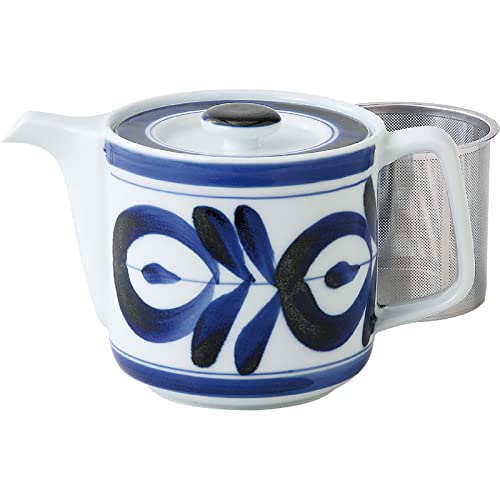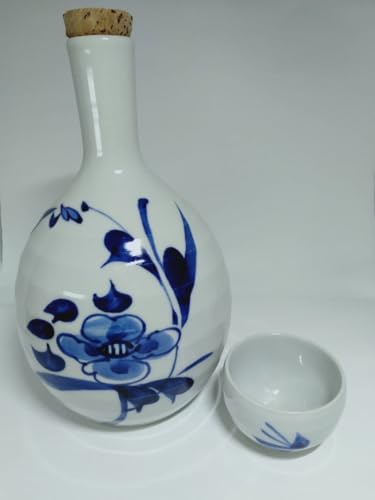
- What it is: a Tobe-yaki porcelain sake vessel set — a tokkuri-style serving flask with small cups, decorated in sometsuke blue on a thick white glaze
- Made in: Tobe district, Iyo City, Ehime Prefecture, on Shikoku — a porcelain center since the Edo period
- Price band: mid-range for Japanese porcelain sake ware — ¥4,490 (about $30 USD) as of October 30, 2026; verify on the listing
- Best for: drinkers who serve warm sake at home and want a sturdy, everyday set rather than a display piece
- Skip if: you need a named artist’s signed work, a gift box, or a piece-count guarantee stated up front
- Shipping: ships internationally from Amazon Japan — jump to our pick ↓
Thick white porcelain, a wash of cobalt blue sunk under the glaze, and a shape made to be picked up every evening: that is the everyday register of Tobe ware, the porcelain of a hilly district in central Ehime.
Tobe sits inside Iyo City on the island of Shikoku, just south of Matsuyama and inland from the Seto Inland Sea coast. The kilns there are generally said to have begun in the late 18th century, when a local potter is traditionally described as having learned porcelain techniques in Arita and returned to fire porcelain in Tobe. What came out of that beginning is not delicate court ware but sturdy table porcelain — thick-bodied, warmly white, painted in underglaze blue and built for daily handling.
This guide looks at one listing of that ware, a sake vessel set sold as 酒器セット 伊予国砥部焼, and at what a buyer outside Japan can and cannot confirm before ordering. It covers the set’s published details, the place and period behind the craft, the price across purchase routes, and the points worth checking while the parcel is still in Japan.
Updated
Read time ≈ 10 min

- Who this is for — and who should skip it
- Product overview (from published specs)
- 📍 Where this comes from — place, era, and the craft tradition
- 📌 How does it compare?
- Price snapshot across stores
- 📦 Shipping & where to buy from outside Japan
- What it does well
- Weaknesses and things to verify before buying
- Conclusion — which buyer type are you?
- Other ways to approach this purchase
- 🏆 Editor’s Pick
- ❓ Frequently Asked Questions
Who this is for — and who should skip it
- pour warm sake at home and want a flask-and-cups set that lives on the table rather than in a cabinet
- prefer thick, weighty porcelain that survives daily washing and the occasional knock
- like underglaze blue decoration that stays legible under ordinary kitchen light
- are building a small collection of regional Japanese tableware and want a Shikoku example
- are buying for a household that already drinks sake and does not need a beginner’s kit
- need the piece count, dimensions, or a signature spelled out before you commit — this listing does not itemize them
- want thin, translucent porcelain in the Arita or Kutani manner
- are buying a formal gift that must arrive in a named wooden box
- expect kiln-to-door traceability; the seller here is a marketplace shop, not the workshop
- need the set within a week — dispatch alone is listed at seven to eight days
Product overview (from published specs)
Only the Amazon JP listing snapshot is available for this set; live pricing may have shifted since the writing date. The table below separates what the listing states from what it leaves open, so nothing has to be guessed at the checkout page.
Tobe-yaki Sake Set
酒器セット 伊予国砥部焼
通常7~8日以内に発送します。 · Sold by こゆてゅこハウス · ASIN B0FY4HY71W
Price and availability as of 2026-10-30 09:13 JST. The Amazon listing at the time of purchase is authoritative. jpmono.com earns a commission on qualifying purchases at no extra cost to you.
| Attribute | What the listing states |
|---|---|
| Item | 酒器セット 伊予国砥部焼 — a sake vessel set in Tobe-yaki porcelain |
| Craft / origin | Tobe-yaki, from Tobe in Iyo City, Ehime Prefecture (stated in the listing title) |
| Material | Porcelain with a thick, warm-white glaze and sometsuke (underglaze cobalt blue) decoration |
| Set contents | Not itemized in the listing title — a tokkuri flask with small guinomi cups is the usual Tobe form, but confirm the count on the listing |
| Dimensions / capacity | Not stated — check the listing’s product details |
| Maker / signature | Not stated; sold by the marketplace shop こゆてゅこハウス |
| Condition | New |
| Price | ¥4,490 (about $30 USD at a ¥150/USD baseline) as of October 30, 2026 |
| Availability | Usually dispatched within 7–8 days |
| Packaging | Not stated — no gift box is described |
📖 Glossary — the words on the listing
- Tobe-yaki (砥部焼)
- Porcelain made in the Tobe district of Iyo City, Ehime. Known for thick walls, a warm white body, and blue underglaze painting.
- Sometsuke (染付)
- Underglaze cobalt-blue painting. The pigment is applied to the unfired body, then sealed under a clear glaze so it cannot wear off the surface.
- Tokkuri (徳利)
- The flask that holds and pours sake, typically with a rounded body and a narrow neck.
- Guinomi (ぐい呑み)
- A small sake cup, larger than a thimble-sized ochoko, meant to be emptied in a couple of swallows.
- Iyo (伊予)
- The old provincial name for the region that is now Ehime Prefecture. The listing title uses it: 伊予国, “Iyo province”.
- Ozu domain (大洲藩)
- The Edo-period authority that held territory in Iyo and is traditionally linked to the growth of the Tobe kilns.
📍 Where this comes from — place, era, and the craft tradition
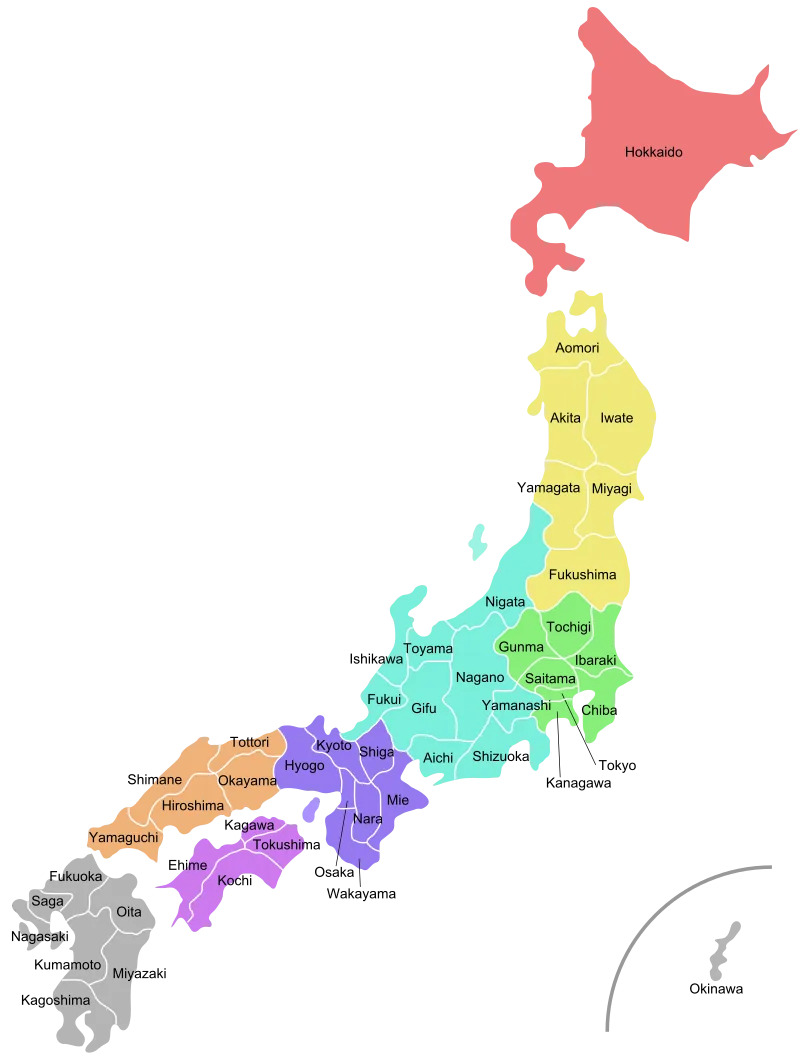
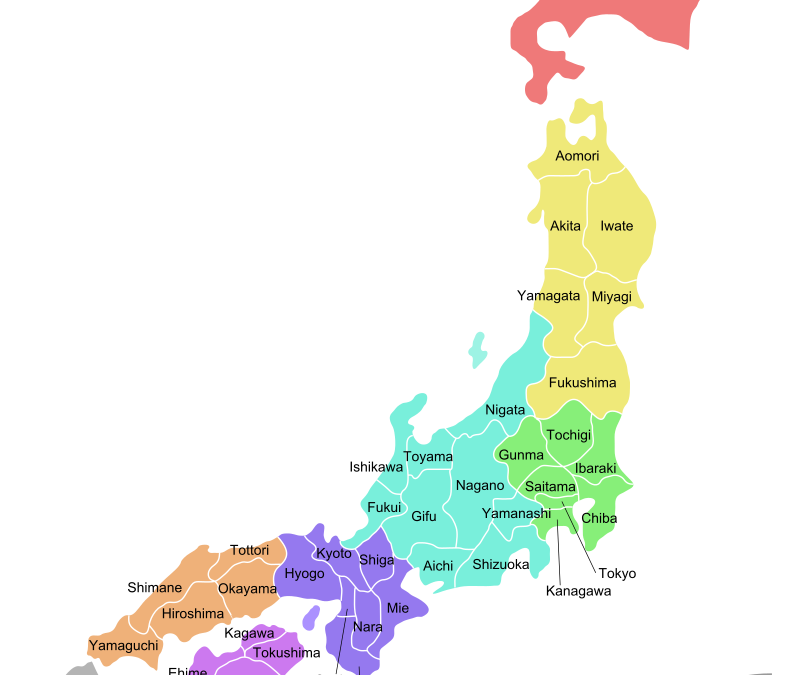
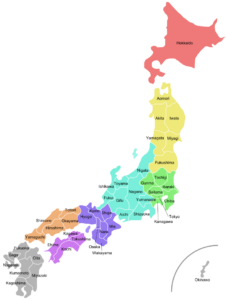
Ehime occupies the northwestern corner of Shikoku, the smallest of Japan’s four main islands. Tobe is not on the coast: it sits in the hills behind Iyo City, a short ride south of Matsuyama, the prefectural capital. That inland position matters. The district has the slope, the clay, and the fuel a kiln needs, while the ports of the Iyo coast and the Inland Sea route gave the finished ware somewhere to go. Matsuyama’s Ishite-ji, the pilgrimage temple on the Shikoku circuit, is a short ride north of the kilns and marks how old the travel traffic through this corner of the island is.

The commonly told account of Tobe’s porcelain dates the first kilns to the late 18th century. In that version, a local potter traveled to Arita — the porcelain town in Kyushu that had been firing blue-and-white ware since the early 17th century — learned the technique there, and came back to Tobe to fire porcelain of his own. The story is repeated in local retellings rather than documented in a single contemporary record, so it is best read as the origin account the district itself keeps.
What is clearer is the institutional side. The kilns are generally said to have developed with the backing of the Ozu domain, the Edo-period authority that held territory in Iyo. Domain patronage in that era usually meant protection, orders, and a measure of control over who could fire what. Under that arrangement Tobe went down the porcelain road rather than the stoneware one, and the district became a porcelain center rather than a scatter of country kilns.

-
1603–1868 — The Edo period. The Ozu domain holds territory in Iyo, and the Tobe kilns develop with its backing. -
Late 18th century — By the commonly told account, a local potter learns porcelain technique in Arita and returns to fire porcelain in Tobe. -
1868 — The Meiji Restoration closes the Edo period; domain patronage gives way to a national market for tableware. -
1871 — The han domains are abolished and replaced by prefectures; the kilns continue as private workshops within the new Ehime. -
20th century — Tobe ware settles into the profile it is known for abroad: thick white porcelain, blue sometsuke painting, plain plant motifs, sturdy daily shapes. -
2026 — Workshops remain clustered in the Tobe district, and sets of this kind are sold to overseas buyers through Amazon JP.
“Tobe did not become a porcelain town by accident of geology alone. It became one because a domain decided the district should fire porcelain, and the potters kept the decision alive for two centuries.”
What “still made here” means in practice is narrower and more concrete than heritage language suggests. The workshops are not scattered across Ehime; they are clustered in the Tobe district itself, within a few kilometers of one another, which is why the ware carries a single place name rather than a set of village names. The division of labor inside those workshops — throwing, trimming, painting, glazing, firing — is still organized around the same thick-bodied, blue-painted vocabulary. A set bought today is a continuation of that workshop cluster, not a revival of it.
The forms follow the local drinking habit. A tokkuri and a handful of small cups is a standard Tobe combination because warm sake is a standard Ehime pleasure, and thick walls hold heat a little longer than thin ones. The blue painting tends toward simple plant motifs — a stem, a few leaves, a small flower — applied with enough space around them that the white body does the rest of the work.

Geography did the distribution. The Inland Sea is a sheltered corridor of islands and channels, and for centuries it was the cheapest way to move heavy, breakable cargo between western Japan and the markets of Osaka and Edo. Iyo’s ports fed into that corridor, which is how a district of inland kilns could supply households far beyond Shikoku. The same logic explains why Tobe ware is found in ordinary kitchens rather than only in collections: it was made in volume, shipped in volume, and priced for use.
Hospitality completed the picture. Iyo has been a travel destination since long before railways, and Dogo Onsen in Matsuyama is the oldest and best known of its hot-spring inns. Inns that fed and lodged travelers needed tableware in quantity — plates, bowls, pouring vessels — and local porcelain was the practical answer. The tea and inn culture of the region and the kilns of Tobe grew up in the same economy, one supplying the other.

📌 How does it compare?
Price snapshot across stores
The price below is the JPY figure from the listing at the time of writing; USD is an estimate at a ¥150/USD baseline and moves with the exchange rate. Prices in USD are approximate and depend on the current exchange rate.
| Store | Item / variant | Price (JPY + USD est.) | Notes |
|---|---|---|---|
| 🇺🇸 Amazon US (search) | Browse Japanese porcelain sake sets | varies (USD) | Best if you are shopping from the US — Prime shipping, USD pricing, no international customs. Amazon US carries comparable Japanese porcelain from several makers; this exact Tobe set is sourced from Japan (next row). |
| 🇯🇵 Amazon JP Global Store | 酒器セット 伊予国砥部焼 (ASIN B0FY4HY71W) | ¥4,490 (about $30 USD) | Ships internationally from Japan to 65+ countries — including Canada, the UK and Australia — with import fees estimated at checkout. Sold by こゆてゅこハウス; usually dispatched in 7–8 days. |
| Maker direct | Tobe workshop purchase | Unconfirmed — check individual workshops | The listing does not name a workshop, so there is no single maker storefront to point to. Buying in Tobe or at a Ehime craft retailer is the direct route, and it requires a trip. |
| Proxy services (Buyee / Tenso) | Consolidated order from Japanese shops | Item price plus service and shipping fees | Useful when a Japanese retailer will not ship abroad. Adds handling fees and a second shipping leg, and porcelain needs careful packing at each hop. |
📦 Shipping & where to buy from outside Japan
The set is sold through Amazon JP, and the Global Store program handles export for most destinations. The listing ships to 65+ countries including Canada, the UK and Australia. Import fees are estimated and collected at checkout for most of them, which removes the surprise invoice on delivery but adds to the total shown at the cart.
Budget roughly $15–$40 for shipping to the US, the EU, Canada, the UK, or Australia, depending on the box size and the speed you pick. Porcelain is heavy for its volume, and a set with a flask and cups will sit at the upper end of that range more often than a single bowl would. Dispatch is listed at 7–8 days before the parcel even leaves Japan, so a realistic door-to-door estimate is two to three weeks.
Two alternatives are worth knowing. A proxy service such as Buyee or Tenso can buy from Japanese retailers that do not export, at the cost of fees and a second shipping leg. The other is to buy in person: Tobe is a short trip from Matsuyama, and the district’s workshops and shops are the only place to compare glazes side by side.
What it does well
- 🍽️ Dishwasher: not stated on the listing — hand-washing is the safer default for glazed sometsuke porcelain
- ♨️ Microwave: not stated — warm the sake in a pan of hot water rather than in the flask itself
- 🧴 Daily care: wash with a soft sponge and mild detergent, then wipe dry; avoid abrasive cleansers on the blue decoration
- 📦 Storage: stack cups with a cloth between them, and store the flask upright so the glaze at the rim is not bearing weight
Weaknesses and things to verify before buying
- The listing does not itemize the set. The title says 酒器セット, a sake vessel set, and stops there. Piece count, flask capacity, and cup diameter are not spelled out in the title, so check the product details before assuming a three-piece set.
- No workshop or artist is named. The seller is a marketplace shop, こゆてゅこハウス, not a kiln. Buyers who want a signed piece or a maker’s name on the box will not find it here.
- Hand-painted versus transfer-printed is not stated. Tobe’s decorative tradition is sometsuke painting, but this listing does not say which method produced the blue on these pieces. If that distinction matters to you, ask the seller.
- Dispatch is slow. Seven to eight days before shipping, plus international transit. For a gift with a fixed date, that is a real constraint.
- Breakage risk in transit. Porcelain crossing the Pacific or the Atlantic is packed by the seller, not by a specialist. Inspect on arrival and photograph the box before opening if it looks compressed.
- No gift packaging is described. If the set is a present, assume it arrives in a plain carton unless the listing says otherwise.
- Only the JP listing is available for this item. Live pricing may have shifted since the writing date, and no US-domestic equivalent of this exact set was found.
Conclusion — which buyer type are you?
Other ways to approach this purchase
🏆 Editor’s Pick
Three reasons this is the set to start with: it is Tobe-yaki from the district named on the label, the blue is underglaze sometsuke rather than a surface print, and the thick porcelain body is the version of the craft meant for everyday pouring rather than display. The listing is a sake vessel set in new condition, sold by こゆてゅこハウス, dispatched in 7–8 days.
❓ Frequently Asked Questions
What is included in this Tobe-yaki sake set?
The listing title names a sake vessel set (酒器セット) in Tobe-yaki porcelain and does not itemize the pieces. A tokkuri flask with small guinomi cups is the usual Tobe form, but the exact count should be confirmed on the listing before ordering.
Can the tokkuri be used for warm sake?
Warm sake is the standard use for a tokkuri, and the thick porcelain body of Tobe ware holds heat well. The listing does not publish a heat rating, so warm the flask in a pan of hot water rather than over a flame or in a microwave.
Is it dishwasher safe?
The listing does not state dishwasher or microwave suitability. Hand-washing with a soft sponge and mild detergent is the safer default for glazed sometsuke porcelain, and it keeps the blue decoration crisp over time.
Does Amazon JP ship this to the US, Canada, the UK, or Australia?
The Global Store program ships to 65+ countries including Canada, the UK and Australia. Import fees are usually estimated and collected at checkout, so the cart total is close to the landed cost.
How long does delivery take?
The listing gives 7–8 days for dispatch. Add international transit, and two to three weeks door to door is a realistic expectation rather than an outer limit.
Is the blue decoration hand-painted?
Sometsuke painting is the Tobe tradition, and the pigment sits under the glaze. This listing does not say whether the decoration was applied by hand or transfer-printed, so treat that detail as unconfirmed.
Would it work as a gift?
For someone who already drinks sake, yes — the set is a complete serving unit in a named regional craft. The listing does not describe gift packaging, so if presentation matters, order early and plan your own box.
jpmono.com is curated by a Japan-based editorial team working out of Toyama in the Hokuriku region and Nara in Kansai, and is independent. We do not take payment from the makers we feature; income comes from affiliate links. Read more about our editorial standards.
This article was prepared with the assistance of AI tools for drafting and formatting, and reviewed by our editorial team. Product details are taken from the linked retailer listing as of the date shown; specifications, prices, and availability can change.
Affiliate disclosure: jpmono.com may earn a commission on qualifying purchases made through links on this page, at no additional cost to you.