![Nambu Tekki Cast Iron Tetsubin: Iwate Iron Kettle Guide [2026]](https://jpmono.com/wp-content/uploads/2026/05/nambu-tekki-cast-iron-tetsubin-where-to-buy-2026-featured.jpg)
Nambu tekki (南部鉄器, “Nambu ironware”) is the cast-iron craft of Iwate Prefecture in northern Japan — concentrated in the city of Morioka and the Mizusawa district of Ōshū City, both within the Kitakami River basin. Its best-known object is the tetsubin (鉄瓶), the heavy iron water-kettle whose matte black surface and signature “arare” hailstone pattern have travelled further into international kitchens than almost any other Japanese metal craft. The tradition is roughly four centuries old as a named industry, and its underlying casting infrastructure in the same valley is roughly nine centuries old.
Two makers anchor the contemporary export market: Iwachu (founded 1902 in Morioka) and Oigen Foundry (founded 1852 in Mizusawa). Iwachu’s enamel-lined arare-pattern teapots are the most-shipped Nambu items on Amazon US; Oigen’s bare-iron, IH-compatible kettles cover the Mizusawa side of the tradition. Smaller hand-cast workshops still operate in both cities, but with limited international distribution.
This guide is written for readers outside Japan who are considering a Nambu tekki tetsubin for the first time. It walks through the difference between Morioka and Mizusawa, what “arare” and “kikkou” surface patterns mean, the bare-iron vs enamel-lined choice, the major maker options, and how the international shipping path works. We work from the publicly documented history of Iwate ironwork, the METI Traditional Craft registry, and the published maker catalogs of Iwachu and Oigen. The Amazon JP listing snapshot for this specific keyword was unavailable at the time of writing, so live pricing for individual ASINs is not quoted — instead, store-search links lead to current inventory.
🔄 Last updated: May 23, 2026
⏱ Read time: about 19 minutes
🇯🇵 Editorial centers: Toyama / Nara
The three classic Nambu surface patterns
- Who this is for — and who should skip it
- Product overview (from published specs)
- 📍 Where this comes from — place, era, and the craft tradition
- Which finish should you choose?
- Price snapshot across stores
- What it does well
- Weaknesses and things to verify before buying
- Conclusion — which buyer type are you?
- Other ways to approach this purchase
- 🏆 Editor’s Pick
- ❓ Frequently Asked Questions
Who this is for — and who should skip it
- Readers comparing the major Nambu tekki makers (Iwachu, Oigen, Suzuki Morihisa, small Mizusawa workshops) before committing to one
- International tea drinkers — matcha, sencha, hōjicha — who want a kettle or teapot with verifiable Iwate provenance
- First-time buyers trying to decide between an enamel-lined teapot (lower care) and a bare-iron water kettle (trace-iron release, traditional form)
- Gift buyers looking for a METI-designated Traditional Craft Product with a clean documentation chain and active international shipping
- Readers who want the cultural and historical context — the Hiraizumi gold-age connection, the Nambu-domain founding in 1611 — before paying for the object
- You want a single specific ASIN recommendation with confirmed Amazon JP pricing — this article is a category overview, not a single-product deep dive
- You expected a dishwasher-safe modern kettle — even enamel-lined Nambu tetsubin are hand-care only
- You wanted a “fast-boil” lightweight kettle — at 1.0–1.5 kg empty, Nambu cast iron is heavy and slow to heat by design
- You assumed every “Nambu-style” cast-iron teapot on Amazon is genuine Iwate-made — many low-cost listings are not; the maker stamp matters
- You only want decoration; a tetsubin is a working vessel that improves with daily use, not a shelf object
Product overview (from published specs)
The table below summarizes what Nambu tekki tetsubin look like as a category, based on the maker catalogs of Iwachu and Oigen and the METI Traditional Craft registry. Individual products vary; verify on the specific listing before purchase. The Amazon JP listing snapshot for this keyword was unavailable at the time of writing, so the specifications below are category-level rather than item-level.
| Specification | Typical range — Nambu tekki tetsubin (category) | Source |
|---|---|---|
| Object type | Tetsubin (鉄瓶, cast-iron water kettle) — distinct from tetsu-kyūsu (鉄急須, small cast-iron teapot for brewing) | Maker catalogs |
| Material | Cast iron, either bare interior (Oigen, Mizusawa tradition) or enamel-coated interior (most Iwachu export tetsu-kyūsu) | Maker catalogs |
| Capacity | Tetsu-kyūsu: typically 0.3–0.8 L. Full tetsubin: typically 0.9–1.6 L. | Iwachu / Oigen catalogs |
| Weight (empty) | 0.8–1.0 kg for a small tetsu-kyūsu; 1.4–2.2 kg for a full tetsubin | Maker catalogs |
| Surface patterns | Arare (霰, hailstone), kikkou (亀甲, tortoiseshell), plus modern variants (sazanami / nanami, plain matte) | METI registry |
| Heat sources | Gas, charcoal brazier, direct flame; IH (induction) only on models specifically engineered for it | Maker catalogs |
| Not compatible with | Microwave, freezer, dishwasher — universal across both bare-iron and enamel-lined models | Maker care notes |
| Production region | Morioka and Mizusawa (Ōshū City), Iwate Prefecture, Tōhoku — the only two districts permitted to use the “Nambu tekki” mark | METI registry |
| Designation | Nambu tekki (南部鉄器) — METI Traditional Craft Product, designated 1975 (first wave) | METI registry |
| Major active makers (export) | Iwachu (Morioka, founded 1902); Oigen Foundry (Mizusawa, founded 1852); Suzuki Morihisa (Morioka); Kikuchi Hōjudō (Yamagata adjacent tradition) | Maker sites |
| Typical price range | Small enamel-lined Iwachu tetsu-kyūsu: roughly ¥5,000–¥10,000. Full bare-iron tetsubin: roughly ¥15,000–¥35,000. Premium Suzuki Morihisa pieces: ¥50,000 and up. | Maker catalogs (category-level; live pricing unavailable for this keyword) |
| International shipping | Amazon JP Global Store ships most Iwachu and Oigen items to US, EU, UK, Canada, Australia. Estimated $25–$80 USD shipping for a 1–2 kg cast-iron item. | Amazon JP Global Store |
USD figures are approximate (¥150/USD baseline as of May 2026) and depend on the current exchange rate. The Amazon JP listing snapshot for this specific keyword was unavailable at the time of writing; individual ASIN prices may have moved since the writing date. Verify on the linked store.
📖 Glossary — Japanese craft terms used in this article
- Nambu tekki (南部鉄器)
- “Nambu ironware.” The cast-iron craft of the former Nambu domain and Date-clan administrative territory in present-day Iwate Prefecture — concentrated in Morioka and Mizusawa. Designated a Traditional Craft Product by Japan’s Ministry of Economy, Trade and Industry (METI) in 1975.
- Tetsubin (鉄瓶)
- Cast-iron water kettle, used to boil water. Distinct from a tetsu-kyūsu (鉄急須), the smaller cast-iron teapot used to brew leaves directly.
- Tetsu-kyūsu (鉄急須)
- Small cast-iron teapot, usually enamel-lined, used for brewing leaf tea. This is the form Iwachu exports most heavily into US and European markets; it is often mis-labeled “tetsubin” on international listings.
- Arare (霰)
- Literally “hailstones.” The signature Nambu surface pattern — rows of small raised bumps covering the kettle body. Functionally, the bumps increase surface area for heat exchange; visually, they are the most internationally recognized Nambu motif.
- Kikkou (亀甲)
- Literally “tortoise shell.” A hexagonal repeating pattern; in Buddhist iconography it traditionally represented longevity and protection. Common on Mizusawa-branch kettles.
- Nambu clan / Nambu domain (南部氏 / 南部藩)
- The samurai family that ruled the Morioka domain in Mutsu Province (present-day Iwate and northern parts of Aomori and Akita) from the late 12th century through the abolition of the domain system in 1871. The 27th lord, Nambu Toshinao, established the Morioka castle town in 1611 and seeded the local iron-casting industry by inviting Kyoto kettle-masters.
- Satetsu (砂鉄)
- Iron sand — fine, iron-bearing river sand traditionally smelted in tatara furnaces to produce pig iron. The Kitakami River basin is one of Japan’s historically iron-rich regions.
- Tatara (蹈鞴)
- Traditional Japanese bloomery furnace used to smelt satetsu into pig iron and steel; the raw-material foundation of Tōhoku iron-casting.
- Sayu (白湯)
- Plain boiled water, cooled to drinking temperature. Drinking sayu daily — particularly in winter — is a common Japanese habit and one of the principal uses of a bare-iron tetsubin.
- IH (アイエイチ)
- Induction heating. Standard in Japanese urban kitchens. Traditional tetsubin without an IH-certified flat base will not engage an induction coil.
- Shokunin (職人)
- Craftsperson; the lineage-based artisan tradition in which skills are transferred from master to apprentice over years.
📍 Where this comes from — place, era, and the craft tradition

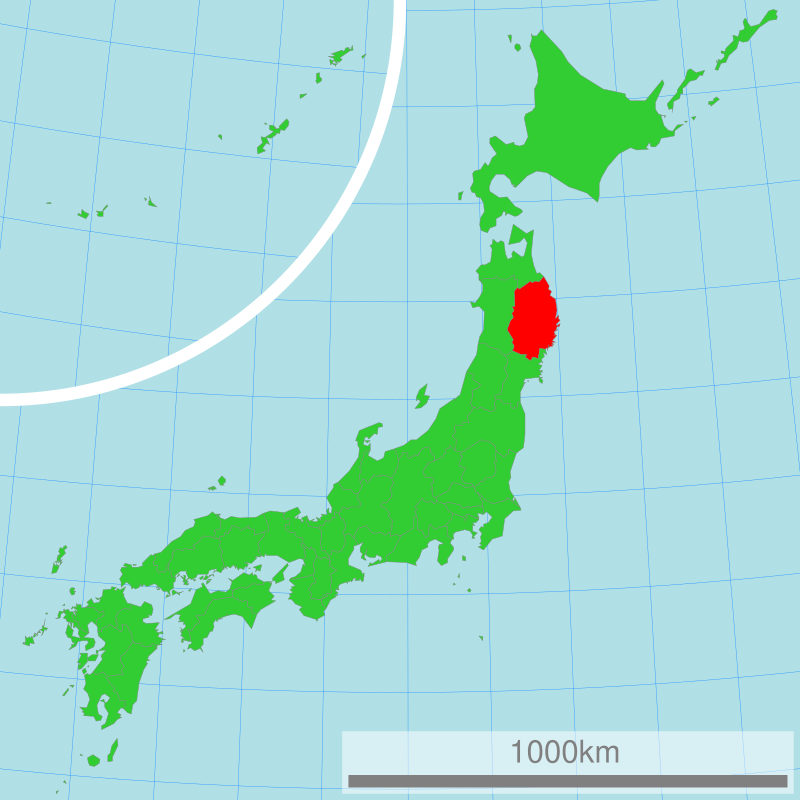
The region on the map
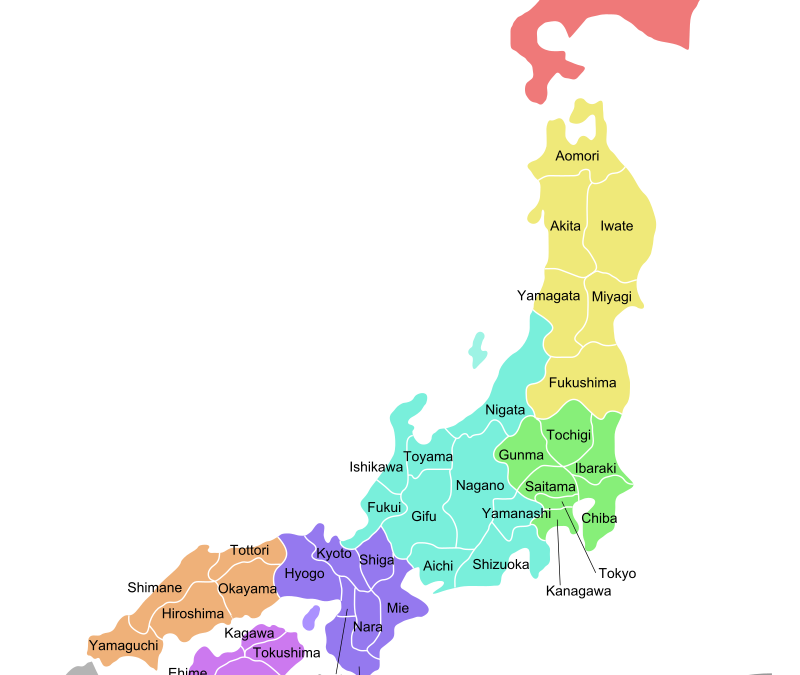
Iwate occupies the central-eastern portion of the Tōhoku region in northern Honshu. It is the second-largest prefecture in Japan by area but lightly populated, with the Ōu mountain range running along its western boundary and the Kitakami highlands rising to the east. Between the two ranges lies the Kitakami River basin, a 250-kilometer valley that flows south toward the Pacific. Morioka — the prefectural capital and the historical seat of the Nambu domain — sits in the northern part of that basin. Mizusawa, today incorporated into Ōshū City, sits in the southern part, about 70 kilometers downstream.
Three geographic facts shaped the craft. First, the rivers around the Kitakami valley carry satetsu (砂鉄, iron sand) — fine, iron-bearing river sand that could be smelted into pig iron in traditional tatara furnaces. The Tōhoku region was historically iron-rich, and both Morioka and Mizusawa sat on productive deposits. Second, the surrounding hardwood forests — oak, beech, chestnut — provided the dense charcoal that high-temperature smelting required. Third, the cold inland climate, with sub-zero winters and short summers, pushed daily life indoors around a hearth, and made hot water from a kettle on coals a year-round necessity rather than a refinement. The prerequisites for an iron-casting district were in place long before any domain lord intervened — but a domain lord did intervene, and the result is the modern industry.
The historical anchor — from Hiraizumi to the Nambu domain
The deep history of iron in this valley runs through Hiraizumi (平泉), the late-Heian capital of the Northern Fujiwara family. From the late 11th century, the Fujiwara consolidated control of Tōhoku from a city they built about thirty kilometers north of Mizusawa, using the considerable gold and iron resources of the region to construct what they intended as a Pure Land Buddhist counter-capital to Kyoto. Chūson-ji (中尊寺) was founded in 1105; its Konjikidō (金色堂, “Golden Hall”) was completed in 1124, an interior entirely covered in gold leaf with mother-of-pearl inlay and metalwork. The hall still stands, and still holds the mummified remains of three Fujiwara generations.
In 2011, UNESCO inscribed Hiraizumi as a World Heritage Site under the title “Hiraizumi — Temples, Gardens and Archaeological Sites Representing the Buddhist Pure Land.” The reach of the Fujiwara workshop economy — gold, lacquer, bronze, iron — depended on a network of supplier districts in the surrounding basin, and the Mizusawa foundries were one of them. When the Fujiwara age ended in 1189 with Minamoto no Yoritomo’s destruction of Hiraizumi, the temples survived, and so did the casting infrastructure that had supplied them. Mizusawa foundry records survive from the 12th century onward.
The modern “Nambu tekki” identity, however, is dated more conservatively to the early Edo period. In 1611, the 27th lord Nambu Toshinao (南部利直) — newly relocated from Sannohe to a fresh castle town at Morioka — invited the Kyoto kettle-master Suzuki Echu (鈴木越中) to the Nambu domain to establish refined tea-kettle production for the samurai class. Later, the Koizumi family (小泉家) followed from Kyoto. This was a deliberate policy import: capital-quality metallurgy and tea-ceremony aesthetics grafted onto a region that already had centuries of practical casting experience. The combination produced “Nambu tetsubin” as a recognized craft category.
“The Mizusawa casting practice is roughly nine centuries old — older than the Edo period itself, older than the formal Nambu tetsubin name, older than European steel-making. The 1611 founding of the Morioka kettle workshop added Kyoto aesthetics on top of an existing Tōhoku trade.”
-
802 — Isawa Castle built in present-day Mizusawa by Sakanoue no Tamuramaro as the Yamato state’s northern frontier base -
1105 — Chūson-ji founded in Hiraizumi, 30 km north of Mizusawa, under the Northern Fujiwara family -
1124 — Konjikidō (“Golden Hall”) completed at Chūson-ji; Mizusawa foundry records begin in this era -
1189 — Minamoto no Yoritomo destroys Hiraizumi; Mizusawa foundries continue uninterrupted -
1611 — Nambu Toshinao invites Kyoto kettle-master Suzuki Echu to Morioka; “Nambu tetsubin” as a named craft begins -
1659 — Nambu Shigenao (third Nambu-domain lord) brings the Koizumi family to Morioka; the arare hailstone pattern becomes a regional signature -
1852 — Oigen Foundry founded in Mizusawa by the Oikawa family (Kaei 5) -
1902 — Iwachu founded in Morioka by Iwashita Hachirobei; later becomes the largest Nambu tekki export maker -
1959 — The Morioka and Mizusawa branches merge administratively under the joint “Nambu tekki” designation -
1975 — “Nambu tekki” designated a Traditional Craft Product by METI, in the first wave of 15 categories -
1990s–2000s — European specialty-tea retailers (notably in France) drive a wave of international Nambu tetsubin export; Iwachu’s enamel-lined teapots take a leading position -
2011 — Hiraizumi inscribed as a UNESCO World Heritage Site -
2026 — Roughly 15 active Morioka makers and 10 active Mizusawa foundries continue to cast tetsubin daily
The Morioka branch vs the Mizusawa branch
The two cities of the Nambu tekki tradition are about 70 kilometers apart, and they were historically administered by different powers — Morioka by the Nambu domain, Mizusawa by the Date clan from Sendai. That split shaped the craft. From the late 17th century onward, the Morioka workshops leaned refined and decorative, oriented toward the tea-ceremony market and the samurai household; the Mizusawa workshops leaned practical and everyday-use, with hailstone (arare) and tortoiseshell (kikkou) surface patterns becoming their signature. Iwachu sits firmly in the Morioka tradition, with a large modern export catalog of enamel-lined tetsu-kyūsu teapots in bright colors aimed at international tea drinkers. Oigen sits firmly in the Mizusawa tradition, with bare-iron tetsubin in muted matte black and an IH-compatible line built for modern Japanese kitchens. Both branches received the joint METI designation in 1975 and are equally “Nambu tekki” in regulatory terms.
What “still being made here” actually means in 2026
The continuity case is concrete, not rhetorical. Roughly fifteen active tetsubin foundries operate in Morioka and about ten in Mizusawa as of the mid-2020s — small numbers, and the figures fluctuate as small workshops open and close. Combined annual tetsubin output across both districts is on the order of tens of thousands of pieces, far below the early Shōwa-era peak of hundreds of thousands, but the industry is alive. Most active makers are 4th-to-6th-generation family businesses; Iwachu is now in its fourth generation under the Iwashita family, and Oigen in its fifth-to-sixth under the Oikawa family.
The iron-pouring technique used today — molten iron from a coke or electric furnace, poured into hand-made sand-clay molds — is essentially the late-Edo technique, refined but not replaced. The casting sand often comes from Izu Ōshima volcanic deposits; the clay binder is local. A body-shell mold can be reused, but the surface-pattern molds for hailstone or tortoiseshell motifs are typically one-or-few-use, which is part of why each kettle’s surface has a slightly distinct character. Industrial scale exists in both cities — Iwachu’s main factory in Morioka uses a partially automated line for its enamel-lined export catalog — but the high-end tetsubin from both branches remain hand-finished, with the arare pattern impressed grain by grain.
Seasonal and culinary context
The tetsubin’s primary daily use in modern Japan is producing sayu (白湯, plain boiled water cooled to drinking temperature) and tea — most heavily from autumn through spring, when the cold weather makes a continuously available hot vessel a quiet luxury. In a traditional unheated Japanese room, the kettle on a kotatsu-side heating element or a modern gas stove is a winter constant. The kettle’s design ancestors are more specifically winter objects: the irori (囲炉裏), the sunken indoor hearth that was standard in rural Tōhoku houses, with the tetsubin hung from a hook above the coals.
For the water itself, the major tea-ceremony schools centered in Kyoto — Omote-senke, Ura-senke, Mushakōji-senke — routinely specify Nambu tetsubin for water heating before matcha (抹茶, powdered green tea) preparation. The folk-traditional argument is that the trace iron released into the boil from a bare-iron kettle “mellows” the water in a way that suits fine matcha; this is a sensory claim, not a chemical-purity one, and we mark it as the tradition rather than as proven fact. Sencha (煎茶, leaf green tea) and hōjicha (ほうじ茶, roasted green tea) are also standard pairings. The Kitakami valley’s food culture connects to the same landscape — wanko-soba (わんこそば), the small-bowl soba tradition that is the Iwate signature; Morioka cold noodles (盛岡冷麺); jaja-men (じゃじゃ麺) — and its sake breweries, including Nanbu Bijin in Ninohe and Asabiraki in Morioka, draw on the same water sources the iron-casters used for centuries to temper iron.
Which finish should you choose?
This piece is listed in 5 options. The photos below are the actual サイズ options on the listing right now — pick the one you want and confirm it on the product page before ordering, since hand-finished wares vary slightly piece to piece.
![Nambu Tekki Cast Iron Tetsubin: Iwate Iron Kettle Guide [2026] — 0.8L finish](https://m.media-amazon.com/images/I/41YABVa53ML._SL500_.jpg)
![Nambu Tekki Cast Iron Tetsubin: Iwate Iron Kettle Guide [2026] — 0.32L finish](https://m.media-amazon.com/images/I/41EvTur635L._SL500_.jpg)
![Nambu Tekki Cast Iron Tetsubin: Iwate Iron Kettle Guide [2026] — 0.32L finish](https://m.media-amazon.com/images/I/41X2NrCbKpL._SL500_.jpg)
![Nambu Tekki Cast Iron Tetsubin: Iwate Iron Kettle Guide [2026] — 0.65L finish](https://m.media-amazon.com/images/I/41U271+liiL._SL500_.jpg)
![Nambu Tekki Cast Iron Tetsubin: Iwate Iron Kettle Guide [2026] — 0.65L finish](https://m.media-amazon.com/images/I/41qWQ1xCB9L._SL500_.jpg)
Price snapshot across stores
Pricing for Nambu tekki tetsubin varies by maker, capacity, and pattern. The figures below are category-level ranges drawn from Iwachu and Oigen published catalogs as of May 2026 — the live Amazon JP listing snapshot for this specific keyword was unavailable at the time of writing, so individual ASIN prices may have moved. Treat as a starting reference and verify on the linked store.
| Store | Item | Price (JPY / USD est.) | Notes |
|---|---|---|---|
| 🇺🇸 Amazon.com (US) | Browse Japanese cast-iron tetsubin and tetsu-kyūsu | varies (USD) | Best if you are shopping from the US — Prime shipping, USD pricing, no international customs. Amazon US carries multiple Iwachu enamel-lined teapots and a smaller selection of full bare-iron tetsubin; selection rotates. Use this first if you are in the US, Canada, UK, or another Amazon-served country. |
| Amazon JP Global Store | Iwachu and Oigen tetsubin / tetsu-kyūsu (full Nambu-tekki search) | ¥5,000–¥35,000 (≈ $33–$233 USD) | Largest selection of Nambu tekki anywhere online. Ships internationally to most major destinations. Iwachu enamel-lined tetsu-kyūsu cluster at the lower end of the range; Oigen and Iwachu full bare-iron tetsubin at the upper end. |
| Maker direct (iwachu.co.jp, oigen-foundry.com) | Iwachu and Oigen full catalogs | Listed in JPY; broadly the same retail range | Limited English UI; some variants are Japan-domestic only. Useful for accessory orders (replacement lids, interior brushes, re-tanning guidance) and for confirming current catalog specifications. International shipping case-by-case. |
| Proxy services (Buyee / Tenso) | Any Nambu tekki listing on Rakuten, Yahoo Shopping, Yahoo Auctions, or maker site | Base price + 5–15% proxy commission + forwarding | Useful if Amazon JP Global Store does not ship to your country, or for specific small-workshop variants and vintage pieces unavailable on Amazon JP. |
USD figures are approximate (¥150/USD baseline as of May 2026) and depend on the current exchange rate. Customs duty may apply on the destination side for orders over local thresholds (US $800 de minimis; EU VAT applies; Canada and Australia have their own GST rules). Only category-level pricing was available at the time of writing; individual ASIN prices on Amazon JP can shift weekly.
What it does well
The Nambu tetsubin name dates to Lord Toshinao’s 1611 invitation of Kyoto kettle-masters; the underlying Mizusawa casting practice is nine centuries old. METI Traditional Craft Product since 1975 — a verifiable documentation chain rather than marketing claim.
Among Japanese metal crafts, Nambu tekki has the most steady international export presence. Iwachu enamel-lined teapots are individually listed on Amazon US in multiple colors; Oigen bare-iron full tetsubin ship through Amazon JP Global Store to most major destinations.
With standard daily after-care, a Nambu tetsubin commonly lasts 30 to 50 years. Many existing kettles in Japanese households are already in their second or third generation of use. The lid is the most likely part to require replacement; both major makers supply parts.
The Kyoto tea-ceremony schools (Omote-senke, Ura-senke, Mushakōji-senke) routinely specify Nambu tetsubin for matcha water. This is not exotic-Japan marketing — it is the working choice of practitioners in the discipline.
Weaknesses and things to verify before buying
- Confirm the kettle is actually Nambu-made. “Nambu-style” cast-iron teapots on the low end of international listings are often produced in China or other Asian markets to mimic the arare pattern. Genuine Nambu tekki carries a maker’s stamp (Iwachu, Oigen, Suzuki Morihisa, etc.) on the bottom and is sold by sellers who can document Iwate origin. Price alone is a rough filter — under roughly ¥4,000 for a “Nambu” teapot is a strong signal that it is not Iwate-made.
- Tetsubin vs tetsu-kyūsu vs teapot — these are not the same object. A tetsubin (鉄瓶) is for boiling water; tea is brewed separately in a kyūsu. A tetsu-kyūsu (鉄急須) is a small cast-iron teapot that brews leaves directly — this is what Iwachu mainly exports. International listings often label both as “Japanese tea kettle” indistinguishably. Confirm which form you are buying.
- Bare iron requires daily after-care; there is no shortcut. Bare-iron tetsubin rust if water is left standing. After each use, empty the water, allow the interior to dry from residual heat, and store with the lid removed for ventilation. If this routine is unwelcome, choose an enamel-lined model (Iwachu) instead.
- Enamel-lined kettles do not release iron. If your reason for buying is the folk-traditional dietary-iron and water-mellowing claim, an enamel coating blocks it entirely. The enamel model is then a beautiful heat-retentive vessel only. Both forms are legitimate; just match the form to the reason.
- Weight matters. A full-size 1.0 L bare-iron tetsubin weighs about 1.5 kg empty and 2.5 kg full. Older buyers, buyers with wrist injuries, or anyone expecting a fast-pour stainless kettle should consider a smaller tetsu-kyūsu (0.6 L, ~0.9 kg) instead.
- Never dishwasher, microwave, or freezer. The dishwasher strips seasoning from bare iron and damages enamel; the microwave is metal and will arc; the freezer creates thermal-shock cracking risk. Hand-wipe only, no detergent inside a bare-iron kettle.
- Live Amazon JP pricing was unavailable for this keyword at the time of writing. The ranges quoted above are category-level from published maker catalogs as of May 2026 — individual ASIN prices can move weekly, particularly on marketplace-seller listings. Check the linked store before committing.
Conclusion — which buyer type are you?
Wants a hand-cast bare-iron tetsubin and is prepared to spend ¥30,000+ for a signed piece. Suzuki Morihisa (Morioka) is the reference name; specialist galleries and Yahoo Auctions are the practical channels. Buyee or Tenso for forwarding.
Wants a real Nambu piece with international shipping and modest care. An Iwachu arare-pattern enamel-lined tetsu-kyūsu (~0.6 L) is the standard pick — start here. Search Amazon US first; fall back to Amazon JP Global Store for the wider color and size range.
A small Iwachu enamel-lined tetsu-kyūsu in matte black starts around ¥5,000–¥7,000 on Amazon JP. Below ¥4,000, listings are usually not genuine Iwate ware. A vintage Mizusawa piece via Yahoo Auctions is another budget path if you accept the verification work.
If you want a no-care, dishwasher-safe kettle or a one-button electric kettle, a Nambu tetsubin is the wrong object. A Tsubame (Niigata) stainless kettle or a quality Western enamel kettle will serve the use better; come back to Nambu when you actively want the iron tradition.
Other ways to approach this purchase
Amazon JP runs seasonal promotions (Prime Day in July, late November / early December, late March fiscal-year close). Discounts on Iwachu and Oigen are rarely deep, but 5–15% off does appear. Marketplace-seller pricing fluctuates more than maker-direct.
Vintage Nambu tetsubin appear regularly on Yahoo Auctions and at Japanese antique shops. A re-seasoned 30-year-old kettle can be a fine purchase, but verify the interior is intact and not rust-pitted; budget for the re-tanning step with green-tea leaves before first use.
Amazon JP loyalty points accrue toward future purchases on the Japanese side; useful only if you regularly buy from Amazon JP. Rakuten points (via proxy services) work similarly. For a one-time international purchase the value is largely locked.
If daily care is the dealbreaker, Tsubame (Niigata) hammered-copper kettles offer different antibacterial properties without iron release, and Western enamel kettles serve the same heat-and-pour function. A Nambu tetsubin should not be a reluctant purchase.
🏆 Editor’s Pick
This guide was assembled by the jpmono.com editorial team — a small group based in Toyama (Hokuriku region) and Nara (Kansai region), curating Japanese craft items for international readers. We do not test every item in our own kitchens; our role is to translate what Japanese makers, retailers, and craft historians say into English, and to flag international-buyer considerations (shipping, customs, care). For this article, the live Amazon JP listing snapshot for the keyword “Nambu Tekki Cast Iron Tetsubin” was unavailable, so individual ASIN-level pricing is not quoted; category-level ranges are drawn from the Iwachu and Oigen published catalogs and the METI Traditional Craft registry.
❓ Frequently Asked Questions
What is the difference between a tetsubin and a tetsu-kyūsu?
A tetsubin (鉄瓶) is a cast-iron water kettle, used to boil water on a stove or charcoal brazier. The boiled water is then poured into a separate teapot (kyūsu) to brew tea. A tetsu-kyūsu (鉄急須) is a smaller cast-iron teapot, usually enamel-lined inside, used to brew leaf tea directly. International listings often label both as “Japanese cast-iron teapot,” which can be confusing. The Iwachu arare-pattern pieces most commonly sold on Amazon US are tetsu-kyūsu, not full tetsubin.
Does Amazon JP Global Store ship Nambu tetsubin internationally?
Yes — most Iwachu and Oigen listings are enrolled in the Amazon JP Global Store and ship to the US, Canada, the EU, the UK, and Australia. Shipping for a 1–2 kg cast-iron item with shock-absorbing packaging usually runs $25–$80 USD. Delivery is typically one to three weeks. If your country is not served, a proxy-forwarding service (Buyee, Tenso) can fetch and forward instead.
How do I tell if a “Nambu” tetsubin on Amazon is genuine?
Three checks. First, look for a maker’s name — Iwachu (岩鋳), Oigen (及源), Suzuki Morihisa (鈴木盛久), Kikuchi Hōjudō, etc. Generic “Japanese cast iron” without a named maker is a red flag. Second, look at the price — genuine Iwate-made pieces start at roughly ¥5,000 for a small tetsu-kyūsu and ¥15,000 for a full bare-iron tetsubin; significantly cheaper “Nambu” pieces are typically Chinese imitations of the arare pattern. Third, check the seller — an Amazon JP Global Store listing from the maker or a known Japanese kitchenware retailer is safer than a marketplace seller with no Japanese-craft track record.
Should I get enamel-lined or bare iron?
Match the form to your reason. Enamel-lined (Iwachu’s export specialty) is the practical choice if you want a beautiful cast-iron teapot to brew leaf tea daily with minimal care — no daily drying ritual, no rust risk. Bare iron (Oigen’s specialty) is the choice if you want the folk-traditional trace-iron release into the water, the multi-generational seasoning of the interior, and the deeper craft tradition; the price is daily after-care. Both are equally “Nambu tekki” under METI; they just serve different uses.
What is the difference between Morioka and Mizusawa Nambu tetsubin?
Both are designated Nambu tekki by METI and use closely related casting techniques. Morioka — the former Nambu-domain capital, with the 1611 Suzuki Echu founding — leans refined and tea-ceremony oriented, with finer decorative detail. Iwachu and Suzuki Morihisa are the major Morioka makers. Mizusawa — the southern Iwate ironwork district with nine-century-old casting infrastructure — leans practical and everyday-use, with the hailstone (arare) and tortoiseshell (kikkou) surface patterns as its signature. Oigen is the major Mizusawa maker. Neither branch is better than the other; they target slightly different uses.
Will a Nambu tetsubin work on my induction (IH) stove?
Only if the specific model is engineered for induction. Traditional Nambu tetsubin were designed for open flame, gas stoves, and charcoal braziers, and have a slightly curved bottom that does not engage an induction coil. Both Iwachu and Oigen sell IH-compatible lines — Oigen’s H-200 series is a typical example — with a flat 5 mm base certified for both 100V (Japanese domestic) and 200V (most international induction) ranges. Check the listing’s compatibility section before purchase.
How long does a Nambu tetsubin last?
With standard after-use drying for bare-iron models and reasonable handling for enamel-lined models, a Nambu tetsubin commonly lasts 30 to 50 years. Many existing kettles in Japanese households are already in their second or third generation of use. The lid is the most likely part to need replacement; both Iwachu and Oigen supply parts. The interior of a bare-iron tetsubin actually improves over decades as the natural oxide layer matures — it is one of the few household objects that genuinely becomes better with age.
jpmono.com is curated by a Japan-based editorial team — working out of Toyama in the Hokuriku region and Nara in Kansai — and is independent. We do not take payment from the makers we feature; income comes from affiliate links. Read more about our editorial standards.
🤖 This article was drafted with AI assistance from the jpmono editorial pipeline, using the publicly documented history of Iwate ironwork, the METI Traditional Craft registry, and the published maker catalogs of Iwachu and Oigen, and was reviewed for accuracy before publication. The live Amazon JP listing snapshot for the keyword “Nambu Tekki Cast Iron Tetsubin” was unavailable at the time of writing, so individual ASIN-level pricing is not quoted in this article. We do not physically test every product; we read maker specs, listings, and the public historical record.
Affiliate disclosure: jpmono.com may earn a commission on qualifying purchases made through links on this page, at no additional cost to you.