![Kishu Hinoki Bath Bucket: Wakayama Cypress Yu-oke Buying Guide [2026]](https://jpmono.com/wp-content/uploads/2026/05/japan-map-regions-and-prefectures-800x1050.png)
A yu-oke (湯桶, “hot-water pail”) is the small wooden bucket you see beside every traditional Japanese bath — used to scoop water over the body before soaking, or to rinse off soap at the washing station outside the tub. The version covered in this guide is made from Kishu hinoki (紀州檜, “Kii cypress”), the tight-grained, aromatic cypress harvested from the Kumano mountains of Wakayama Prefecture, formerly Kii Province.
What sets Kishu hinoki apart is not decoration but the wood itself. Hinoki carries natural oils that resist water and decay, which is precisely why it has been the default timber for Japanese bathing vessels, temple architecture, and shrine reconstruction for centuries. The piece is coopered — built from vertical staves drawn tight, the old joinery used for rice tubs and sake casks long before glued plywood existed.
This guide is written for an international reader deciding whether a hinoki yu-oke is worth importing, and where to buy an authentic one. We cover what a published description shows, how the wood behaves, the care it demands, and the buying paths — because US sellers’ “hinoki bath buckets” are often generic imports, while Kishu-branded pieces are sourced more reliably from Japan-based retailers.
📅 Published: June 4, 2026
🔄 Updated: June 4, 2026
⏱️ Read time: ~9 min
- Who this is for — and who should skip it
- Product overview (from published specs)
- Where to buy across stores
- What it does well
- Weaknesses and things to verify before buying
- Conclusion — which buyer type are you?
- Other ways to approach this purchase
- 📍 Where this comes from — Kishu hinoki and the Kii forests
- ❓ Frequently Asked Questions
Who this is for — and who should skip it
- Already bathe in the Japanese style — wash outside the tub, then soak — and want the correct rinsing vessel
- Value the cypress aroma and the warm, soft contact of wood over plastic
- Are willing to dry and air the bucket after each use to keep it sound
- Prefer coopered, repairable wood goods to disposable bathroom plastics
- Want a piece traceable to Kishu hinoki rather than an unlabeled “hinoki-style” import
- Want a zero-maintenance item — wood left wet in a sealed bathroom can mildew
- Have only a shower stall with no space or habit for ladling water
- Need it dishwasher-safe or expect to leave it submerged
- Want a guaranteed exact price up front — prices in this category fluctuate
- Are unwilling to pay international shipping for a low-cost utility object
Product overview (from published specs)
Kishu hinoki bath buckets vary by size, band material, and maker, so a single authoritative specification sheet does not exist for the category. The table below therefore states only what can be verified from the general characteristics of a Kishu hinoki yu-oke; cells that could not be confirmed for a particular piece are marked rather than guessed.
| Attribute | Detail | Source |
|---|---|---|
| Material | Kishu hinoki (Wakayama Japanese cypress), knot-free aromatic wood | Spec / category |
| Construction | Coopered staves, hand-finished, bound with hoops | Spec / category |
| Dimensions | — | — |
| Weight | Not specified | — |
| Origin | Wakayama Prefecture (former Kii Province), Kansai, Japan | Spec data_notes |
| Price | Not specified — confirm before buying | — |
The table focuses on general Kishu hinoki yu-oke characteristics; size and price vary by maker and are not stated here when they cannot be confirmed.
📖 Glossary — key terms
- yu-oke (湯桶) — a wooden hot-water pail used to scoop and pour water during a Japanese bath.
- hinoki (檜) — Japanese cypress; aromatic, oily, decay-resistant softwood prized for baths, temples, and shrines.
- Kishu (紀州) — the historical name for Kii Province, today’s Wakayama Prefecture; “Kishu hinoki” is its branded cypress.
- oke (桶) — a coopered tub or pail built from vertical staves, the same joinery family as rice tubs and sake casks.
- taga (箍) — the hoop (traditionally copper, bamboo, or stainless) that binds the staves under tension.
- gosanke (御三家) — the three senior branches of the Tokugawa house; the Kii branch was one of them.
- Kumano Kodo (熊野古道) — the network of pilgrimage routes through Wakayama’s sacred, forested mountains.
Related jpmono guides for cross-shopping wood and regional craft — same province, same material family, or comparable hand-coopered/joinery objects.
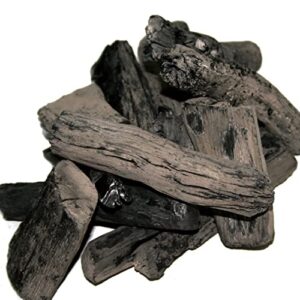 Kishu Binchotan (same province) →
Wakayama’s other famous forest product
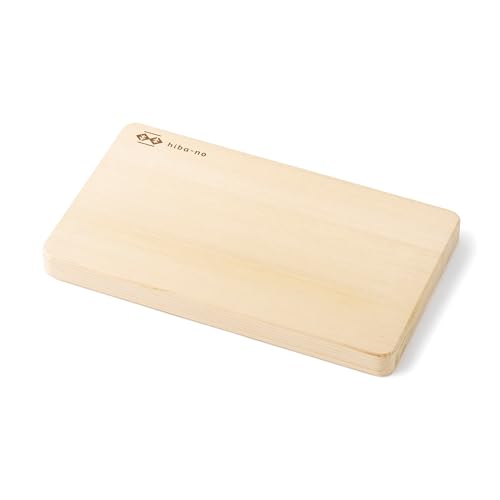 Aomori Hiba Board →
Another decay-resistant aromatic conifer
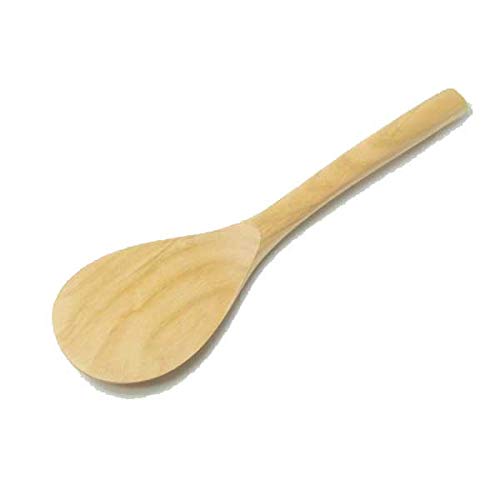 Miyajima Shamoji →
Carved wood kitchen tool
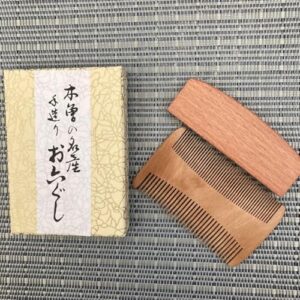 Kiso Oroku-gushi Comb →
Fine-grain mountain woodwork
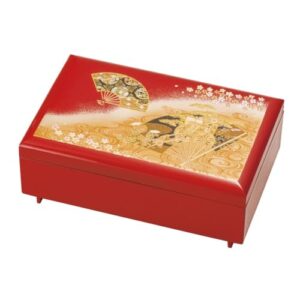 Kyo Sashimono Box →
Joinery-built wooden vessel
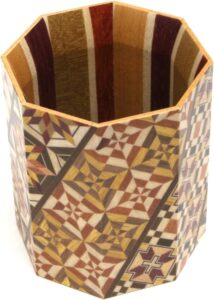 Hakone Yosegi Pen Stand →
Marquetry woodcraft
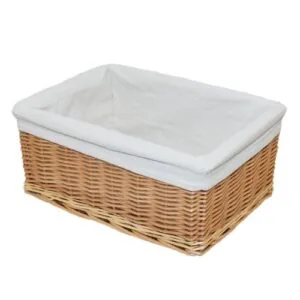 Toyooka Willow Basket →
Coopered/woven natural-material vessel
Where to buy across stores
Prices for Kishu hinoki yu-oke vary by size, maker, and seller. JPY is often the reference for Japan-sourced pieces, while any USD figure is an estimate at a ¥150/USD baseline.
| Store | Item / Variant | Price (JPY + USD est.) | Notes |
|---|---|---|---|
| 🇺🇸 Amazon.com (US) | Browse Japanese hinoki bath buckets & bath goods | varies (USD) | Best if you are shopping from the US — Prime shipping, USD pricing, no international customs. Amazon US carries hinoki bath stools, ladles, and buckets from various sellers, useful for comparing form and price. The specific Kishu-branded piece is sourced from Japan (next row). |
| 🇯🇵 Amazon JP Global Store | Kishu hinoki yu-oke | Price not stated — confirm before buying | Where this specific item is sourced; ships internationally from Japan to most major destinations. |
| Maker direct | Kishu woodware workshops | Varies | Some Wakayama hinoki workshops sell direct but often ship within Japan only; a proxy may be needed. |
| Proxy services (Buyee / Tenso) | Any Japan-based seller | Item price + forwarding fee | Useful when a workshop or marketplace will not ship abroad; adds a handling fee and consolidated forwarding. |
What it does well
Weaknesses and things to verify before buying
- Maintenance is mandatory. Wood left wet in a closed bathroom can mildew or develop black spots; the bucket must be rinsed and air-dried after each use.
- Product details are unconfirmed. Confirm the capacity and fit before buying if your washing area is small.
- Price was not retrievable. No live price was in the dataset; this category fluctuates, so verify the current figure before committing.
- Hoops can loosen. If the wood dries out fully between long idle periods, staves shrink and hoops may slip; brief soaking re-swells them, but neglect can split a stave.
- Not for submersion or dishwashers. It is a rinsing pail, not a soaking tub or a dishwasher-safe item; heat and prolonged submersion stress the joints and finish.
- Hinoki labeling varies. Generic products may use cypress of unstated origin; if Kishu provenance matters to you, confirm it with the seller rather than assuming.
“The same oils that let hinoki frame a thousand-year-old shrine are what keep a humble bath pail sound — the bucket is the temple’s timber, scaled down to the hand.”
Conclusion — which buyer type are you?
Other ways to approach this purchase
📍 Where this comes from — Kishu hinoki and the Kii forests

Wakayama Prefecture is the southern tip of the Kii Peninsula, the broad headland that hangs below Osaka and Nara into the Pacific. Its interior is mountainous and wet — the Kumano range catches heavy rainfall off the ocean — and those slopes carry some of the densest cypress and cedar forest in western Japan. Steep terrain, abundant rain, and warm temperatures grow the slow, straight-grained timber that the woodware trade depends on.
This is why a craft of water vessels took root here rather than the decoration the region is better known for abroad. The raw material was at hand.
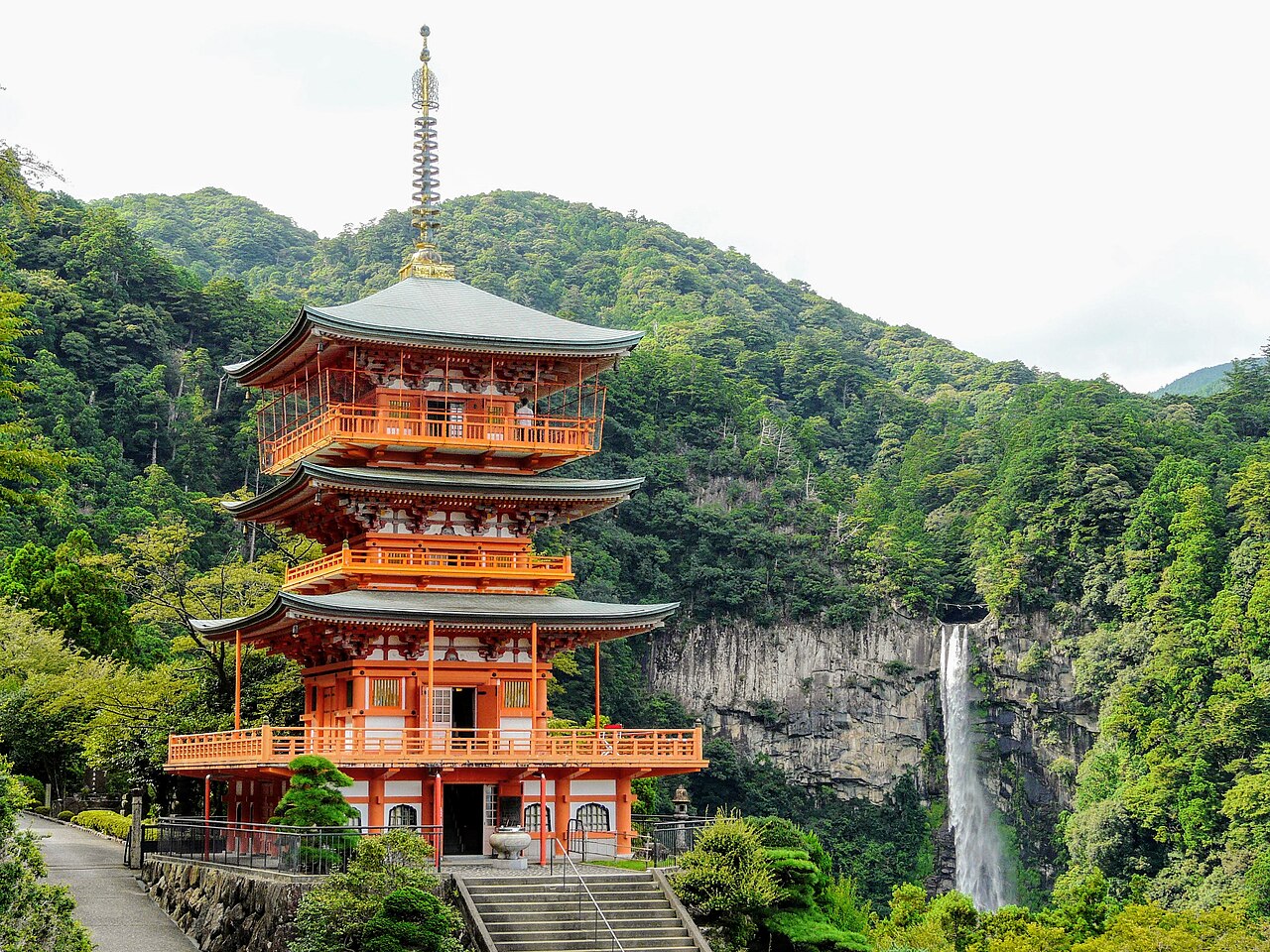
Wakayama was historically Kii Province, and from 1619 it was governed by the Kii Tokugawa — one of the three senior branches of the Tokugawa house known as the gosanke (御三家). That lineage carried unusual weight: the Kii branch supplied two of the Tokugawa shoguns, Yoshimune in the eighteenth century and Iemochi in the nineteenth. A domain of that rank guarded its assets, and the Kii forests were among them.
The domain managed and protected the cypress and cedar stands of the Kumano and Yoshino-Kumano mountains as a controlled resource. Out of that protection came the reputation of Kishu-zai (紀州材, “Kishu timber”) — and Kishu hinoki in particular — as a byword for tight-grained, fragrant, high-grade cypress.
- 794–1185 — During the Heian period the Kumano Kodo pilgrimage routes flourish; the surrounding forests are treated as sacred and protected.
- 1619 — The Kii Tokugawa domain is established at Wakayama, one of the three gosanke branches; the prized cypress and cedar forests fall under domain control.
- 1716 — Tokugawa Yoshimune, from the Kishu branch, becomes the eighth shogun — the first of two shoguns the domain supplies.
- 1858 — Tokugawa Iemochi, also of the Kishu line, becomes the fourteenth shogun, confirming the branch’s senior status.
- Edo period — Kishu-zai, especially Kishu hinoki, becomes a recognized name for high-grade, tight-grained, fragrant cypress used in architecture and water vessels.
- 2004 — The “Sacred Sites and Pilgrimage Routes in the Kii Mountain Range,” including the Kumano Kodo, are inscribed as a UNESCO World Heritage Site.
- 2026 — Kishu hinoki woodware, including yu-oke and ladles, remains in production and reaches international buyers through online sellers.
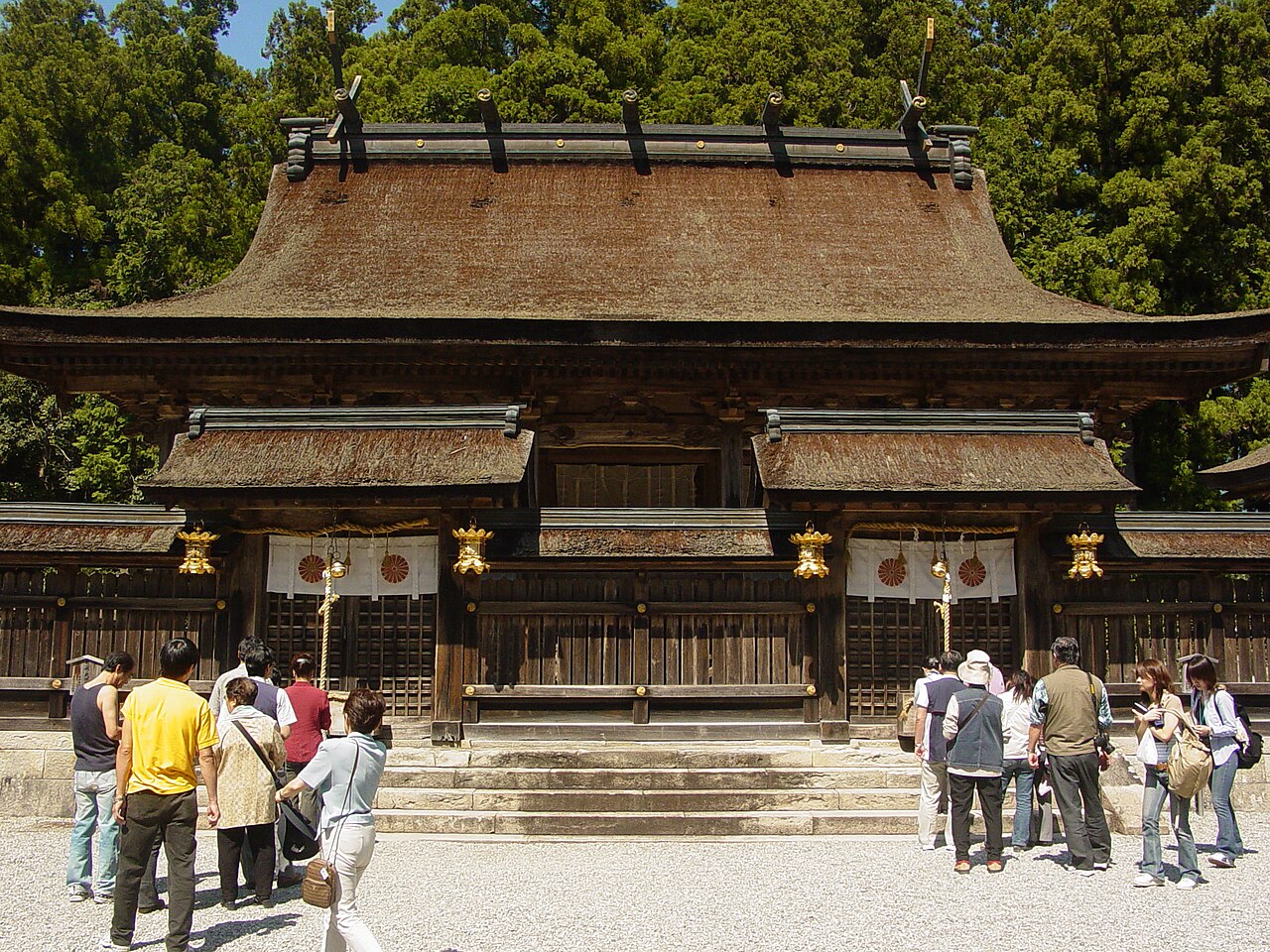
The link between the wood and the place is not only economic — it is ritual. The Kumano Kodo pilgrimage routes wind through these same forests to shrines whose architecture and cedar avenues are themselves cypress-and-cedar work. Water and cleansing are central to that landscape, from waterfalls treated as objects of worship to the act of ritual purification before approaching a shrine.
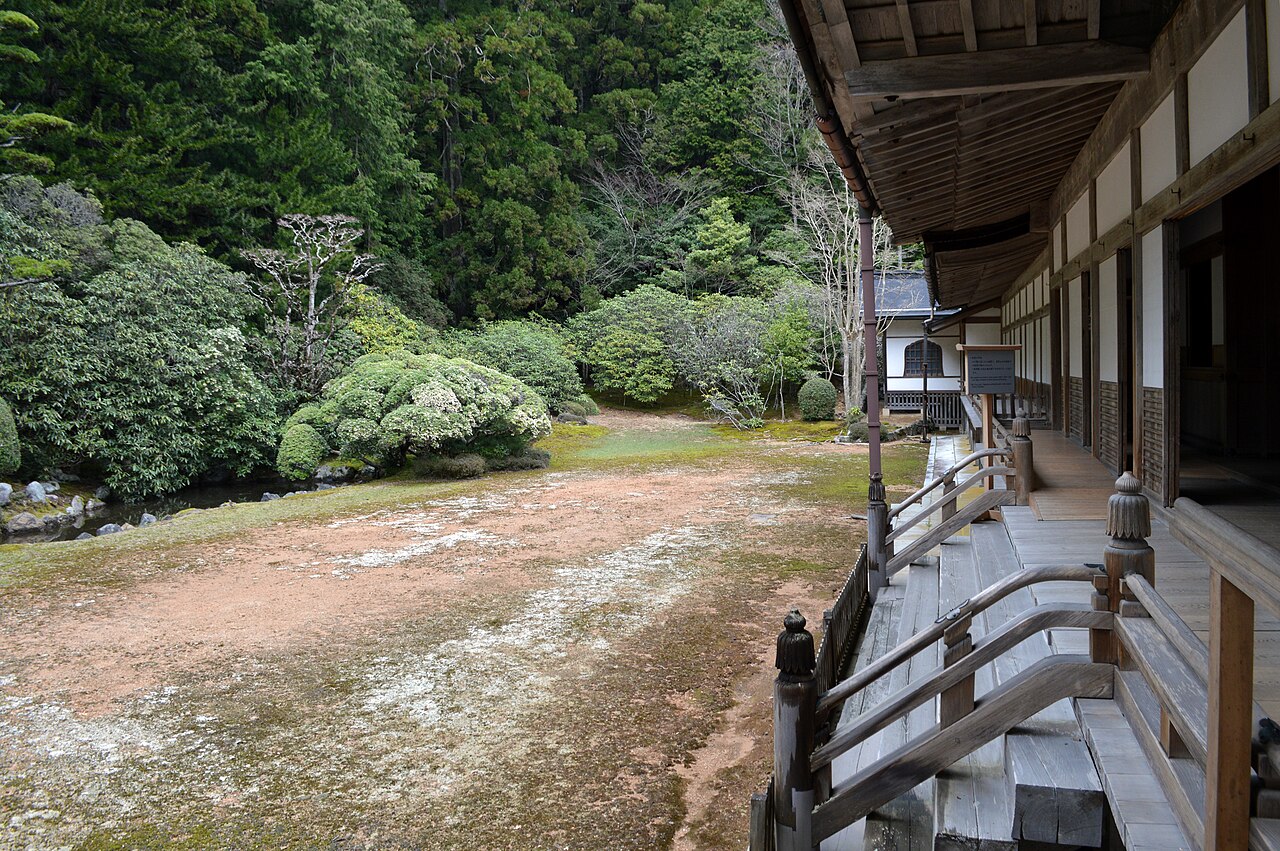
That lineage is what distinguishes a Kishu hinoki yu-oke from a generic cypress pail. The same timber that frames Mt. Koya’s monasteries and the Kumano shrines, scaled down, becomes the everyday vessel for pouring hot water over the body. Hinoki’s natural oils make it water- and decay-resistant, which is exactly why it was chosen for bath vessels and ladles in the first place — function and sacred geography pointing at the same wood.
❓ Frequently Asked Questions
Does Amazon JP ship a hinoki yu-oke internationally?
Kishu hinoki yu-oke are commonly exported via specialty bath-supply retailers and Japan-based shipping services. International shipping fees and customs duties depend on your country and the chosen retailer, so check the total at checkout for your destination.
How do I care for a hinoki bath bucket?
Rinse with clean water after use, wipe it down, and let it air-dry out of direct sunlight. Do not leave it sitting full or submerged, and avoid harsh detergents and dishwashers, which stress the joints and strip the wood’s oils.
What is the difference between Kishu hinoki and generic “hinoki”?
Kishu hinoki refers to cypress from the Kii forests of Wakayama, historically prized for tight grain and aroma. Generic cypress pieces may have an unstated origin. If provenance matters to you, ask the seller to confirm “Kishu” rather than assuming it.
How much does it cost?
Prices for this category fluctuate with size, maker, and season. JPY is often the reference for Japan-sourced pieces, and any USD figure is an estimate at roughly ¥150 per USD.
Why does the hoop seem loose after a while?
If the wood dries out fully during a long unused period, the staves shrink and the hoop can slip. Briefly soaking the bucket re-swells the wood and tightens the joint. Persistent looseness means it has been allowed to dry out too much.
Can I use it as a soaking tub or for cold plunges?
No. A yu-oke is a rinsing pail for scooping and pouring water, not a vessel for sitting in or for prolonged submersion. Using it that way stresses the construction and shortens its life.
jpmono.com is curated by a Japan-based editorial team (working out of Toyama in the Hokuriku region and Nara in Kansai) and is independent. We do not take payment from the makers we feature; income comes from affiliate links. Read more about our editorial standards.
Editorial note: this article was prepared with AI assistance and reviewed against maker and craft information. Specifications, pricing, and availability were not independently lab-tested; confirm current details with a seller before purchasing.
Affiliate disclosure: jpmono.com may earn a commission on qualifying purchases made through links on this page, at no additional cost to you.