![Echizen Yaki Yunomi: One of Japan’s Six Ancient Kilns [2026]](https://jpmono.com/wp-content/uploads/2026/05/echizen-yaki-yunomi-where-to-buy-2026-featured-1.jpg)
Echizen yaki (越前焼, “Echizen ware”) is the stoneware of Fukui Prefecture, on the Sea of Japan coast of central-west Japan. It is fired from iron-rich local clay at high temperature, frequently left unglazed, and finished by an accident the potters learned to court: as wood ash falls through the kiln and lands on the clay, it melts into a glassy green-brown skin called shizen-yu (自然釉, “natural ash glaze”) that runs down the side of the vessel in drips no two pieces share. A yunomi (湯のみ, the everyday Japanese tea cup) in this tradition is a small object carrying a long lineage.
In 1948 the ceramic scholar Koyama Fujio counted Echizen among Japan’s “Six Ancient Kilns” (Nihon Rokkoyō, 日本六古窯) — the six pottery centers that have fired continuously since the medieval era, alongside Bizen, Tamba, Shigaraki, Tokoname, and Seto. Echizen’s place on that list is not earned by decoration. It is earned by roughly 850 years of unbroken firing in the same valley, and by a body of work — storage jars, pots, grinding mortars — that once supplied the entire northern Sea of Japan coast.
This guide is written for an international reader who is choosing a first Japanese stoneware cup and wants to understand what Echizen ware actually is before weighing the purchase. It covers the place and its history, what to look for in an Echizen yunomi or free cup, how it compares to its fellow Ancient Kilns, and the realistic paths to buying one from outside Japan. A note up front, in keeping with our sourcing rules: no single Amazon listing was captured in the dataset for this guide, so the specifications below are category-level for Echizen yaki yunomi and free cups rather than a single SKU, and live pricing was unavailable at the time of writing.
Reading time: ~13 min
Region: Fukui · Hokuriku
![Echizen Yaki Yunomi: One of Japan's Six Ancient Kilns [2026]](https://m.media-amazon.com/images/I/51iF9V9j7wL._SL500_.jpg)
- Who this is for — and who should skip it
- Product overview (from published specs)
- 📍 Where this comes from — place, era, and the craft tradition
- Price snapshot across stores
- What it does well
- Weaknesses and things to verify before buying
- Conclusion — which buyer type are you?
- Other ways to approach this purchase
- 🏆 Editor’s Pick
- ❓ Frequently Asked Questions
Who this is for — and who should skip it
- want a daily tea or sake cup with real kiln provenance rather than a mass-market mug
- like the rustic, earthy aesthetic of unglazed stoneware and natural ash-glaze drips
- accept that each piece is unique and slightly irregular — that variation is the point
- drink sake or beer and want a cup whose coarse surface is traditionally said to soften the one and build a creamy head on the other
- can wait for international shipping or a proxy service rather than buying locally
- want a perfectly uniform, machine-finished cup with a glossy printed pattern
- need a guaranteed single named maker, color, and capacity — Echizen pieces vary kiln to kiln
- require a dishwasher- and microwave-rated item with manufacturer certification (most studio stoneware is not formally rated)
- are shopping to a fixed budget and need a confirmed price before ordering — pricing was not captured in this dataset
- dislike the look of an unglazed, porous, earth-toned surface that develops character with use

Product overview (from published specs)
The figures below describe Echizen yaki yunomi and free cups as a category, drawn from documented background on the Echizen ware tradition. They are not the spec sheet of a single listing: no individual Amazon item was captured in the dataset for this guide, so treat capacity and dimensions as typical ranges and verify the exact figures on whichever listing you choose. Only category-level data was available; live pricing was unavailable at the time of writing.
| Field | Value (category-level) |
|---|---|
| Item type | Yunomi (湯のみ) or free cup — single-cup format |
| Craft | Echizen yaki (越前焼), a stoneware tradition |
| Material | Iron-rich local clay, high-fired stoneware; frequently unglazed |
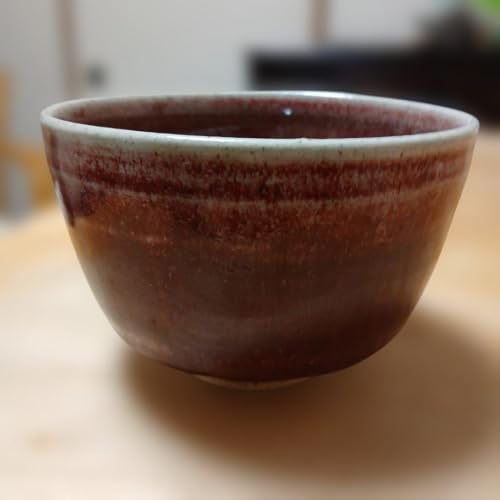
| Surface finish | Reddish-brown unglazed body, often with natural ash glaze (shizen-yu) — green-brown glassy drips from falling wood ash |
| Typical capacity | Approximately 150–300 ml for a single cup |
| Origin | Tannan area (today’s Echizen-chō / Ozowara), Fukui Prefecture, Hokuriku region, Japan |
| Modern hub | Echizen Tōgei Mura (越前陶芸村, “Echizen pottery village”) |
| Recognition | One of Japan’s Six Ancient Kilns (designated 1948 by Koyama Fujio); a National Traditional Craft |
| Price (at writing) | Unconfirmed — no single listing captured in the dataset; verify on the retailer |
| Source of record | Amazon US search (primary path) — Amazon JP Global Store (secondary, where Echizen pieces are sourced) — Maker direct (Echizen Tōgei Mura) — Proxy services (Buyee / Tenso) |
📖 Glossary — Japanese craft terms used in this article
Echizen yaki (越前焼) — “Echizen ware,” the high-fired stoneware tradition of Fukui Prefecture, named for the old province of Echizen.
Yunomi (湯のみ) — the everyday Japanese tea cup: a tall, handle-less cup, usually held in one hand. Distinguished from the smaller, lidded chawan used in formal tea.
Free cup (フリーカップ) — a Japanese-retail term for a versatile handle-less cup used for tea, sake, beer, water, or shōchū, typically a little larger than a yunomi.
Shizen-yu (自然釉) — “natural glaze.” The glassy green-brown coating that forms when wood ash from the kiln fire lands on the clay and melts at high temperature, rather than being applied by the potter. The hallmark of Echizen, Bizen, Tamba, and Shigaraki ware.
Nihon Rokkoyō (日本六古窯) — “Japan’s Six Ancient Kilns,” the term coined by ceramic scholar Koyama Fujio in 1948 for the six pottery centers in continuous production since the medieval era: Echizen, Bizen, Tamba, Shigaraki, Tokoname, and Seto.
Tsubo (壺) — a large storage jar; one of the historic mainstays of Echizen production.
Kame (甕) — a wide-mouthed pot or vat, used for storing water, grain, or fermented foods.
Suribachi (擂鉢) — a ridged grinding mortar used in Japanese kitchens for grinding sesame, miso, and other ingredients.
Kitamaebune (北前船) — the “northern-bound ships,” the Edo-period merchant vessels that traded along the Sea of Japan coast and carried Echizen pottery north to the Hokuriku and Tōhoku regions.
Echizen Tōgei Mura (越前陶芸村) — the “Echizen pottery village,” the modern cluster of kilns, a museum, and workshops that serves as the contemporary hub of the craft.

📍 Where this comes from — place, era, and the craft tradition

The region — Echizen, on the Hokuriku coast of central-west Japan
Echizen is the old name for the coastal heart of Fukui Prefecture (福井県), in the Hokuriku (北陸) region of central-west Japan — facing the Sea of Japan, north of Kyoto and south of Kanazawa. The kilns that define Echizen ware grew up in the Tannan (丹南) area, around the Ozowara district of what is today Echizen-chō (越前町), in low hills close to the coast.
Two facts about the place explain why a major pottery industry took root here. First, the local clay is iron-rich and plastic — the raw material for a dense, high-fired stoneware that needs no glaze to hold water. Second, the Sea of Japan coast was, for centuries, a working maritime highway rather than a remote edge. That combination — good clay inland, ships at the shore — turned a regional craft into a national supplier.
The historical anchor — a 12th-century kiln that never went cold
Echizen ware originated in the late Heian period, in the twelfth century. Its kiln techniques are traced to potters from Tokoname, the kiln tradition on the Chita Peninsula in modern Aichi, who moved north and adapted their methods to Fukui’s clay. From the medieval period onward the Echizen kilns were not making tea bowls for connoisseurs; they were making infrastructure — large storage jars (tsubo, 壺), wide-mouthed pots (kame, 甕), and ridged grinding mortars (suribachi, 擂鉢) in volume.
Those heavy, utilitarian wares traveled. Loaded onto the kitamaebune (北前船), the northern-bound merchant ships that worked the Sea of Japan coast, Echizen pottery was carried up to the Hokuriku and Tōhoku coasts, making the kilns one of medieval Japan’s major ceramic suppliers to the entire northern seaboard.
- Late 12th c. — Kilns founded in the Tannan area (Ozowara, modern Echizen-chō) in the late Heian period; techniques traced to Tokoname potters who moved north.
- 13th–16th c. — The medieval kilns mass-produce storage jars (tsubo), pots (kame), and grinding mortars (suribachi) in iron-rich, high-fired clay.
- Edo period — Echizen wares are shipped along the Sea of Japan coast aboard kitamaebune trading vessels, supplying the Hokuriku and Tōhoku coasts.
- 1948 — Ceramic scholar Koyama Fujio designates Echizen one of Japan’s Six Ancient Kilns (Nihon Rokkoyō), recognizing its continuous production since the medieval era.
- Late 20th c. — Echizen ware is recognized as a National Traditional Craft; Echizen Tōgei Mura (pottery village) develops as the modern hub of the craft.
- 2026 — The kilns still fire iron-rich local clay in the same area — roughly 850 years of unbroken production.
In 1948 the ceramic scholar Koyama Fujio surveyed the kiln traditions that had fired without interruption since medieval times and named six of them the Nihon Rokkoyō — the Six Ancient Kilns. Echizen was on the list alongside Bizen, Tamba, Shigaraki, Tokoname, and Seto. The designation is a statement about continuity rather than refinement: these are the kilns that never stopped.
“Echizen’s potters never glazed for decoration. The glass-green run down a jar’s shoulder is simply what happens when falling wood ash meets iron-rich clay at the temperature of a working kiln.”
What “still being made here” means — and how the cup fits the table
Echizen has been recognized as a National Traditional Craft, and the present-day center of the craft is the Echizen Tōgei Mura, the pottery village where working kilns, a museum, and studios cluster together. Production never lapsed into revival; it carried through. The modern yunomi and free cup are the small, domestic end of the same lineage that once shipped storage jars north by sea.
There is also a practical reason the unglazed format suits a cup. The coarse, slightly porous surface of high-fired Echizen stoneware is traditionally prized for the way it interacts with what you pour into it: it is said to soften the edge of sake, and to give beer a finer, creamier head than smooth glass or porcelain does. These are folk-traditional claims about the drinking experience rather than laboratory findings, but they are the reason the yunomi and the free-cup format have a natural home in this ware.

Price snapshot across stores
Four purchase paths exist for international readers. Amazon US is the easiest if you are shopping from the US and want comparable Japanese stoneware on a USD, Prime-shipped basis; Amazon JP Global Store is where the specific Echizen pieces are sourced and ships internationally; Echizen Tōgei Mura handles direct sales from the kilns; and Buyee or Tenso act as proxies for countries Amazon JP does not serve. No single listing was captured in the dataset, so the price column reflects that rather than a confirmed figure.
| Store | Item / Variant | Price (JPY · USD est.) | Notes |
|---|---|---|---|
| 🇺🇸 Amazon.com (US) | Browse Japanese stoneware yunomi & tea cups | varies (USD) | Best if you are shopping from the US — Prime shipping, USD pricing, no international customs. Amazon US carries Japanese stoneware tea cups and sake cups from several makers, useful for comparing shapes, sizes, and finishes. Echizen ware itself is most reliably sourced from Japan (next row). |
| Amazon JP Global Store | Echizen yunomi / free cup (search) | Unconfirmed — varies by kiln & size | Ships internationally from Japan to most major destinations. The exact piece, price, and maker depend on the listing you choose; no single SKU was captured for this guide. |
| Maker direct (Echizen Tōgei Mura) | Various kiln workshops | Unconfirmed — set by each kiln | The Echizen pottery village clusters working kilns, a museum, and studios. Best for buying from a specific named kiln; English-language ordering and overseas shipping are not guaranteed. Not a fast path. |
| Proxy services (Buyee / Tenso) | Any Japan-domestic listing | Item price + service fees + shipping | Useful for countries Amazon JP Global Store does not reach, and for buying from Japan-only shops. Adds roughly ¥800–¥1,500 in proxy fees on top of the item price; ceramics need careful packing for breakage. |
USD figures, where shown, are approximate at a ¥150/USD baseline as of May 2026, and the JPY price is the authoritative one. Because no single listing was captured in the dataset, treat all figures here as “verify at the retailer” rather than confirmed prices.
What it does well
A Six Ancient Kilns lineage with roughly 850 years of continuous firing. The cup belongs to the same tradition that once shipped storage jars up the Sea of Japan coast.
Natural ash glaze means no two cups carry the same drip pattern. You are buying a single object, not one identical unit off a line.
The coarse unglazed surface is traditionally prized for softening sake and giving beer a creamy head — a folk-traditional claim, but the reason the format endures.
High-fired clay makes a dense, hard-wearing body built for daily use rather than display. This is utilitarian ware by heritage.
Weaknesses and things to verify before buying
- No single listing was captured in the dataset. This guide is category-level. There is no confirmed maker, size, color, or price here — you must read the actual listing for those, and figures may differ from the typical ranges shown.
- Pricing is unconfirmed. Live pricing was unavailable at the time of writing. Verify the price and current stock on the retailer before ordering, especially if you are shopping to a fixed budget.
- Variation cuts both ways. Because ash glaze forms in the fire, the cup you receive may differ noticeably from a listing photograph. If you need an exact appearance, buy where the seller photographs the specific piece, or buy in person.
- Unglazed stoneware can be porous. Some bare Echizen surfaces absorb liquid and may stain or hold odor over time; many cups are glazed on the interior to counter this. Check whether the interior is glazed if that matters to you.
- Care ratings are usually not certified. Studio and small-kiln stoneware is often not formally rated for dishwasher or microwave use. Treat it as hand-wash unless the listing states otherwise, and avoid thermal shock.
- Ceramics are fragile in transit. International shipping and proxy forwarding both add breakage risk. Confirm protective packing, and factor that risk into the maker-direct and proxy paths in particular.
- Maker is not guaranteed by the “Echizen yaki” label alone. If supporting a specific named kiln matters to you, look for the kiln’s name on the listing rather than relying on the regional label.
Conclusion — which buyer type are you?
You want a piece from a specific named Echizen kiln, photographed individually. Buy through Echizen Tōgei Mura or a gallery that shows the exact cup, and accept slower, costlier shipping.
You want a genuine Echizen yunomi or free cup without overthinking it. Search Amazon JP Global Store, pick a piece in the 180–300 ml range whose ash-glaze pattern you like, and confirm the price on the listing.
You want the lowest landed cost. Compare a single-cup Echizen listing on Amazon JP against comparable Japanese stoneware on Amazon US, and factor shipping and customs into each before deciding.
You want a uniform, certified-dishwasher-safe printed mug, or you need a confirmed price and exact appearance up front. A mass-market cup will serve you better than rustic studio stoneware.
Other ways to approach this purchase
Amazon JP runs periodic discounts around Prime Day and the year-end sales. Tableware discounts tend to be modest, but shipping promotions can matter more than the cup’s price for an overseas order.
If you are traveling in Hokuriku, the Echizen Tōgei Mura pottery village lets you see and choose the exact cup from multiple kilns, and to visit the museum and studios in one stop.
Buyers with an active Amazon JP account may earn loyalty points on a domestic listing. This does not apply to Global Store guest checkout, and is a minor factor for a single cup.
If you cannot read the listing details, cannot accept piece-to-piece variation, or cannot wait for international shipping, an everyday cup from a local retailer is the more sensible buy.
🏆 Editor’s Pick
Single cup, roughly 150–300 ml · price varies by kiln and size (no single listing captured in the dataset)
Within this category, the cup to start with is the classic: an iron-rich, reddish, mostly unglazed Echizen yunomi or free cup carrying a green-brown shizen-yu run, made by a kiln in the Fukui Echizen Tōgei Mura cluster, in the 150–300 ml single-cup range. First, it is the most representative expression of the tradition — the ash-glaze surface is exactly what earns Echizen its place among the Six Ancient Kilns. Second, the single-cup format keeps both the price and the shipping risk low for a first international purchase. Third, the coarse surface is the one most associated with the practical drinking claims — softening sake, building a creamy head on beer.
Because no specific SKU was captured for this guide, treat this as a buying brief rather than a single product link: search, compare the ash-glaze patterns, confirm the capacity and the price on the listing, and choose the cup whose drip pattern you would be happy to drink from every morning.
❓ Frequently Asked Questions
What are Japan’s Six Ancient Kilns, and where does Echizen fit?
What is the green-brown glaze on an Echizen cup?
Why use an unglazed cup for sake or beer?
How do I care for an Echizen yunomi — is it dishwasher safe?
Can I buy Echizen ware and have it shipped outside Japan?
How is Echizen ware different from Bizen, Shigaraki, Tanba, or Tokoname?
jpmono.com is curated by a Japan-based editorial team working out of Toyama (Hokuriku region) and Nara (Kansai region). We focus on Japanese household objects with verifiable craft heritage and clear international shipping paths. We do not physically test every product — we read maker’s specs, source listings, and documented background — and we do not take payment from the makers we feature. Income comes from affiliate links. Read more about our editorial standards.
Editorial note: this article was drafted with AI assistance and reviewed by the jpmono editorial team before publication. It is a category-level guide to Echizen yaki yunomi and free cups; no single Amazon listing was captured in the dataset, so specifications are given as typical ranges and pricing was unavailable at the time of writing. Historical and craft facts are drawn from documented background on the Echizen ware tradition and the Six Ancient Kilns.
Affiliate disclosure: jpmono.com may earn a commission on qualifying purchases made through links on this page, at no additional cost to you.