![Koishiwara Yaki Tobikanna Mug: Fukuoka Mingei Pottery Guide [2026]](https://jpmono.com/wp-content/uploads/2026/05/koishiwara-yaki-tobikanna-mug-where-to-buy-2026-featured.jpg)
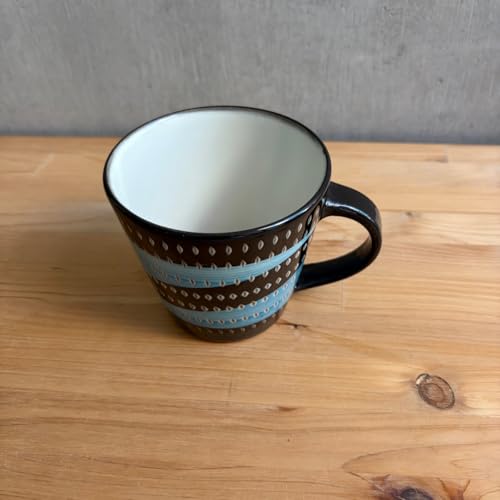
A Koishiwara-yaki (小石原焼, “Koishiwara ware”) mug is, at first glance, just a sturdy stoneware cup. Look closer at the band running around its belly and you see a fan of fine, repeating nicks — short chatter marks cut by a springy iron tool that “jumps” across the spinning clay. That technique is called tobikanna (飛び鉋), and it is the signature of a folk-pottery tradition that has been made in one mountain hamlet of Fukuoka Prefecture since 1682.
This guide is written from the perspective of a Japan-based editorial team — working out of Toyama in the Hokuriku region and Nara in Kansai — for readers outside Japan who want a real Sarayama-kiln piece rather than a generic “Japanese-style” mug. Koishiwara ware is mingei (民芸, “folk craft”) in the strict sense: it was made for daily use, by small family kilns, and it was singled out in the 1930s by the founders of the folk-craft movement as among the most beautiful everyday pottery in the world. The catch for an international buyer is that these are handmade objects from tiny workshops, so listings come and go, no two pieces are identical, and most of the supply lives on the Japanese-language side of the internet.
Below we cover what tobikanna and its sibling techniques actually are, how to read a listing so you know you are getting a genuine kiln piece, the realistic ways to order one from abroad, and which buyer this suits — and which it does not. Where the source data is thin, the guide says so plainly instead of guessing.
🔄 Last updated: May 24, 2026
⏱ Read time: ~9 min
- Who this is for — and who should skip it
- Product overview (from published specs)
- 📍 Where this comes from — Sarayama, Fukuoka, and 340 years of mingei
- Price snapshot across stores
- What it does well
- Weaknesses and things to verify before buying
- Conclusion — which buyer type are you?
- Other ways to approach this purchase
- 🏆 Editor’s Pick
- ❓ Frequently Asked Questions
Who this is for — and who should skip it
- Want a daily-use mug with a genuine craft pedigree, not a mass-produced lookalike
- Appreciate tobikanna chatter marks, brushed slip, and earthy ame or green ash glazes
- Accept that handmade stoneware varies piece to piece in tone, weight, and pattern
- Are comfortable ordering from Japan and waiting for international shipping
- Already enjoy mingei pottery such as Onta, Mashiko, or Shodai ware
- Need an exact color, capacity, or matched set — handmade pieces resist that
- Want a dishwasher- and microwave-certified everyday mug with printed specs
- Are unwilling to pay international shipping or handle possible customs duties
- Expect glossy, flawless porcelain — Koishiwara is rustic, matte-leaning stoneware
- Need it quickly; small-kiln stock and cross-border transit both take time
Product overview (from published specs)
The table below draws on the available source material: the Amazon JP Global Store listing for ASIN B0GWD8DYNT (the sourced piece) and the documented history of Koishiwara ware. Dimensions, weight, and a captured price were not present in the available data, so those cells say so rather than estimate. Only the Amazon JP listing snapshot is available; live pricing may have shifted since the writing date.
Koishiwara Yaki Tobikanna Mug
小石原焼 鶴見窯 マグカップ(飛び鉋/斜めライン/ブルー×ブラック)陶器 器 和食器 かわいい 可愛い
残り1点 ご注文はお早めに · Sold by Reboot Life · ASIN B0GWD8DYNT
Price and availability as of 2026-08-31 02:30 JST. The Amazon listing at the time of purchase is authoritative. jpmono.com earns a commission on qualifying purchases at no extra cost to you.
| Attribute | Detail | Source |
|---|---|---|
| Item type | Stoneware mug, Koishiwara ware (mingei folk pottery) | Listing / craft record |
| Origin | Sarayama hamlet, Toho village, Asakura district, Fukuoka Prefecture, Kyūshū | Craft record |
| Clay / body | Iron-rich stoneware clay | Craft record |
| Surface decoration | Tobikanna (chatter marks); some pieces also hakeme (brushed slip) or uchikake / nagashikake (poured slip) | Craft record |
| Glaze | Ame (amber) and/or green ash glaze over iron clay | Craft record |
| Tradition | Folk craft (mingei); kiln district founded 1682, first called Nakano-yaki | Craft record |
| Kiln examples | Small Sarayama family kilns (e.g., Maruta, Onimaru, Kashiwakubo) | Selection hint |
| Capacity / dimensions / weight | Not listed in available data — check the live listing | — |
| Price | Not captured in available data — verify on the listing before buying | — |
| Amazon JP Global Store ASIN | B0GWD8DYNT | Spec |
| International shipping | Yes — ships from Japan via Amazon JP Global Store to most major destinations | Global Store policy |
Sources: Amazon US search (primary, moonill-20) + Amazon JP Global Store (secondary, moonill-22, sourced listing) + maker context. Specs not present in the data are marked as such rather than estimated.
📖 Glossary — key Koishiwara-yaki terms
Koishiwara-yaki (小石原焼) — “Koishiwara ware,” the stoneware pottery made in the Sarayama district of Fukuoka Prefecture.
Tobikanna (飛び鉋, “jumping plane”) — a springy iron tool held against the spinning, leather-hard clay; it bounces rhythmically and cuts the fine, repeating chatter marks that are Koishiwara’s signature.
Hakeme (刷毛目, “brush marks”) — white slip applied with a coarse brush, leaving visible streaks.
Uchikake / nagashikake (打ち掛け / 流し掛け) — slip or glaze that is poured or thrown onto the surface for a flowing, semi-random pattern.
Ame glaze (飴釉) — an iron-based “candy” glaze in amber-to-brown tones.
Mingei (民芸) — the “folk craft” philosophy that prizes the beauty of ordinary, handmade, everyday objects.
Sarayama (皿山) — literally “plate mountain,” the name of the kiln hamlet where Koishiwara ware is produced.
📍 Where this comes from — Sarayama, Fukuoka, and 340 years of mingei

Koishiwara sits not in a city but in a fold of the mountains. The kiln district, Sarayama (“plate mountain”), lies in the former Toho village within the Asakura district of Fukuoka Prefecture, on Kyūshū — Japan’s southwestern main island. Fukuoka is best known abroad for its port-city capital, but the pottery comes from the quiet, forested interior, a long way from the coast and roughly a thousand kilometers southwest of present-day Tokyo. The surrounding hills supplied the two things a folk kiln needs most: iron-rich clay underfoot and timber to fire the climbing kilns.
The tradition is precisely datable. In 1682 the Kuroda lords of the Fukuoka domain extended the Korean-derived techniques of nearby Takatori ware to make sturdy, utilitarian stoneware here; the new ware was first called Nakano-yaki. From the start it was working pottery — storage jars, bowls, and cups for daily life — and its surface vocabulary of tobikanna, hakeme, and poured slip developed as fast, repeatable ways to finish that everyday work beautifully.
- Early Edo period — Korean-derived Takatori ware techniques take root nearby under the Fukuoka domain
- 1682 — Koishiwara ware founded in Sarayama; first called Nakano-yaki
- 1705 — Koishiwara potter Yanase Saburoemon crosses into Hita (Bungo, today Oita) and founds Onta ware, a direct daughter kiln
- 1930s — Yanagi Sōetsu and Bernard Leach, leaders of the mingei movement, praise Koishiwara as among the most beautiful everyday pottery in the world
- 2026 — Small family kilns in Sarayama still throw and decorate tobikanna ware by hand
The mingei recognition is the turning point that took Koishiwara from a regional utility ware to a name collectors know. In the 1930s, Yanagi Sōetsu — the philosopher who coined the word mingei — and the British potter Bernard Leach held up Sarayama’s anonymous, hand-thrown cups as proof of their central idea: that the deepest beauty lives in honest, useful, repeated work, not in signed art objects.
“In the 1930s, Yanagi Sōetsu and Bernard Leach singled out Koishiwara as among the most beautiful everyday pottery in the world.”
There is one more piece of continuity worth knowing, because it connects this mug to a neighbor. In 1705 a Koishiwara potter named Yanase Saburoemon crossed the prefectural line into Hita, in old Bungo province — today’s Oita Prefecture — and founded Onta ware. That makes Onta a direct daughter kiln of Koishiwara, sharing the same tobikanna and slip vocabulary. If you have read our Onta yaki mug guide, you are looking at the parent tradition here.
Price snapshot across stores
A captured price was not present in the available data, so the table reports availability and shipping paths rather than a number. Always confirm the live price at the retailer before buying — small-kiln pieces and exchange rates both move.
| Store | Item / variant | Price | Notes |
|---|---|---|---|
| 🇺🇸 Amazon.com (US) | Browse Japanese stoneware & mingei mugs | varies (USD) | Best if you are shopping from the US: Prime shipping, USD pricing, no international customs. Amazon US carries Japanese stoneware and mingei-style mugs from various makers, useful for comparing shapes and price tiers. This specific Sarayama-kiln piece ships from Japan (next row). |
| 🇯🇵 Amazon JP Global Store | Koishiwara tobikanna mug (ASIN B0GWD8DYNT) | Not captured — check listing | The sourced listing for the specific piece. Ships internationally from Japan to most major destinations; JPY is the authoritative price once you open the listing. |
| Maker direct | Sarayama kilns / galleries & pottery fairs | varies | Many small Sarayama kilns sell through galleries, the spring and autumn pottery fairs, and Japan-domestic channels; there is no single English storefront. |
| Proxy services (Buyee / Tenso) | Forwarding for listings that do not ship abroad | varies + fees | Use when a Japan-only listing will not ship to your country. Adds forwarding and handling fees, and you are responsible for any customs duties. |
Prices in USD are approximate and depend on the current exchange rate. Where a JPY figure is shown on the listing, that JPY price is the authoritative one.
What it does well
Weaknesses and things to verify before buying
“Handmade means variable. Treat the listing photo as a guide to the style, not a guarantee of the exact cup you receive.”
- No captured price in the available data. The source material did not include a price, so you must verify the current figure on the live listing before committing.
- Specs are thin. Capacity, dimensions, and weight were not listed. If exact size matters to you, ask or read the listing photos and description carefully.
- Piece-to-piece variation. Glaze tone, chatter-mark density, and weight differ between handmade cups. The photo shows a representative piece, not necessarily the one shipped.
- Care is not certified. Microwave and dishwasher suitability are not stated in the data. Mingei stoneware is commonly hand-washed; do not assume dishwasher safety without confirmation.
- International shipping and customs. Cross-border shipping adds cost and time, and orders above your country’s threshold may incur duties you pay on delivery.
- Stock is intermittent. Small kilns produce in batches; a listing that is live today may sell out, and restocks are not scheduled like factory goods.
- Authenticity vigilance. “Koishiwara-style” is not the same as a Sarayama-kiln piece. Confirm the kiln or seller and look for true hand-cut tobikanna rather than a molded imitation.
Conclusion — which buyer type are you?
Other ways to approach this purchase
🏆 Editor’s Pick
❓ Frequently Asked Questions
What does “tobikanna” mean?
Tobikanna means “jumping plane.” A springy iron tool is held against the leather-hard clay as it spins, and it bounces rhythmically, cutting the fine band of repeating chatter marks that is Koishiwara ware’s signature surface.
What is mingei, and why is Koishiwara associated with it?
Mingei is the “folk craft” philosophy that values the beauty of ordinary, handmade, everyday objects. In the 1930s, Yanagi Sōetsu and Bernard Leach singled out Koishiwara as among the most beautiful everyday pottery in the world, which cemented its place in the movement.
How is Koishiwara ware different from its sister kiln, Onta ware?
They share the same lineage. In 1705 the Koishiwara potter Yanase Saburoemon crossed into Hita in old Bungo province — today’s Oita Prefecture — and founded Onta ware, making Onta a direct daughter kiln of Koishiwara with the same tobikanna and slip techniques. Koishiwara is the larger parent district in Fukuoka.
Can I buy a Koishiwara mug from outside Japan?
Yes. The sourced piece (ASIN B0GWD8DYNT) is listed on the Amazon JP Global Store, which ships internationally to most major destinations. If a particular listing will not ship to your country, a proxy forwarding service such as Buyee or Tenso is the usual workaround, with added fees and possible customs duties.
Is it safe in the microwave or dishwasher?
The available listing data does not state microwave or dishwasher suitability, so we cannot confirm it. Handmade mingei stoneware is traditionally hand-washed and treated gently; check the specific listing or ask the seller before assuming it is dishwasher safe.
Why are no two pieces identical?
Each mug is thrown and decorated by hand at a small kiln, so glaze tone, chatter-mark density, and weight vary from piece to piece. The listing photo represents the style; the exact cup you receive will differ slightly, which is part of the appeal of handmade folk pottery.
jpmono.com is curated by a Japan-based editorial team working out of Toyama (Hokuriku region) and Nara (Kansai region), and is independent. We do not take payment from the makers we feature; income comes from affiliate links. We do not physically test every product — we read maker specs and source listings.
Note: This article was drafted with AI assistance and reviewed against the available source data. Specifications not present in that data are marked as unconfirmed rather than estimated.
Affiliate disclosure: jpmono.com may earn a commission on qualifying purchases made through links on this page, at no additional cost to you.