![Hagi-yaki Matcha Chawan Tea Bowl: Where to Buy a Choshu Classic [2026]](https://jpmono.com/wp-content/uploads/2026/06/hagi-yaki-matcha-chawan-tea-bowl-where-to-buy-2026-featured.jpg)
A Hagi-yaki (萩焼, “Hagi ware”) matcha bowl is one of the few household objects in Japan that is supposed to look unfinished when you buy it. The body is pale and soft, the straw-ash glaze is thin and matte, and a web of fine cracks runs across the surface before the bowl has held a single serving of tea. That is not a defect. It is the starting point of a slow change that potters in the old castle town of Hagi have built their reputation on for more than four centuries.
The kiln dates to 1604, when Mori Terumoto — the western daimyo who lost his standing at the Battle of Sekigahara and was relocated to the remote Sea-of-Japan coast — put two Korean potter brothers to work as his domain’s official kiln. The tea world ranks the result second only to Raku in an old saying: ichi-Raku, ni-Hagi, san-Karatsu (“first Raku, second Hagi, third Karatsu”). The prized quality is hagi-no-nanabake, the “seven transformations,” in which the porous body slowly absorbs tea through its crackle and matures in color with use.
This guide is written for international readers deciding whether a Hagi-yaki chawan belongs in their tea practice or on their shelf, and where to buy one from outside Japan. We cover the founding history, the craft mechanics behind the changing glaze, who the bowl suits and who should pass, how it compares to other Japanese ceramics we have reviewed, and the realistic purchase paths — Amazon US for comparable Japanese ceramics, and the Amazon JP Global Store for the specific sourced listing.
🔄 Updated:
⏱️ Read time: ~12 min

- Who this is for — and who should skip it
- Product overview (from published specs)
- Where this comes from
- Price snapshot across stores
- What it does well
- Weaknesses and things to verify before buying
- Conclusion — which buyer type are you?
- Other ways to approach this purchase
- 🏆 Editor’s Pick
- ❓ Frequently Asked Questions
Who this is for — and who should skip it
- Practice or are learning sadō (tea ceremony) and want a bowl made for whisking matcha
- Like objects that visibly change with use and improve over years rather than staying static
- Value documented craft heritage — a domain kiln with an unbroken line since 1604
- Prefer a quiet, muted aesthetic over bright glaze or painted decoration
- Are comfortable hand-washing and giving a porous ceramic gentle, ongoing care
- Want a dishwasher-safe, low-maintenance everyday mug
- Expect a flawless, uniform surface with no cracks or color variation
- Dislike the idea of a vessel staining and darkening over time
- Need a guaranteed exact color and pattern — each piece varies, and listings rotate
- Are shopping purely on price and do not care about provenance
Product overview (from published specs)
The data available for this specific listing is thin. The Amazon US search snapshot returned no individual product entries for this exact piece, and no live price was captured at the time of writing. The table below therefore states confirmed attributes from the listing identity and the craft tradition, and marks anything unconfirmed plainly rather than guessing.
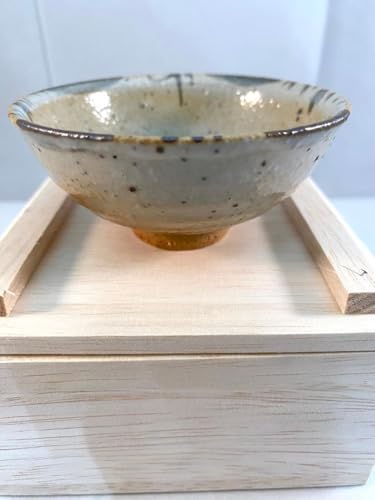
Hagi-yaki Matcha Chawan Tea Bowl
萩焼 ろくろびき 井戸抹茶碗 手づくり 茶道具 日本製 天然釉 手仕事 和食器 ギフト
在庫あり。 · Sold by 株式会社 ばいてんn · ASIN B0FZTTNYL2
Price and availability as of 2026-09-01 05:22 JST. The Amazon listing at the time of purchase is authoritative. jpmono.com earns a commission on qualifying purchases at no extra cost to you.
| Attribute | Detail | Source |
|---|---|---|
| Craft | Hagi-yaki (萩焼) — Yamaguchi domain pottery, founded 1604 | Listing identity |
| Item type | Matcha chawan (tea-ceremony bowl) | Listing identity |
| Body / firing | Low-fired, soft, porous stoneware | Craft tradition |
| Glaze | Thin loquat-pale straw-ash glaze with fine kan-nyu crackle | Listing identity |
| Maker | Named Hagi kiln (Amazon JP Global Store listing) | Listing identity |
| ASIN / item ID | B0FZTTNYL2 | Amazon JP |
| Dimensions / weight | Unconfirmed — check the live listing | — |
| Price | Not captured at time of writing — verify on the listing | — |
Note on data: only the Amazon JP Global Store listing identity was available for this exact item, and live pricing was unavailable at the time of writing. Dimensions and weight vary by individual piece in handmade Hagi-yaki and should be read directly from the current listing before purchase.
📖 Glossary — key terms
Hagi-yaki (萩焼) — pottery from Hagi, Yamaguchi Prefecture; the Mori clan’s domain kiln, prized in tea culture.
Chawan (茶碗) — a bowl for drinking tea; in tea ceremony, the wide bowl used to whisk and drink matcha.
Matcha (抹茶) — powdered green tea, whisked with hot water rather than steeped.
Hagi-no-nanabake (萩の七化け) — the “seven transformations”; the gradual change in a Hagi bowl’s color and surface as tea seeps into the porous body and crackle.
Kan-nyu (貫入) — the fine network of crackle lines in the glaze, formed as glaze and body cool at different rates.
Sadō / chadō (茶道) — “the way of tea,” the Japanese tea ceremony.
Ichi-Raku, ni-Hagi, san-Karatsu — a tea-world ranking of preferred wares: “first Raku, second Hagi, third Karatsu.”
Other Japanese ceramics and tea utensils we have reviewed — useful for weighing body, glaze, and use against this Hagi-yaki chawan.
 Karatsu Ware Guinomi →The “san-Karatsu” of the tea saying
Bizen Ware Mug (Chūgoku) →Unglazed wood-fired stoneware
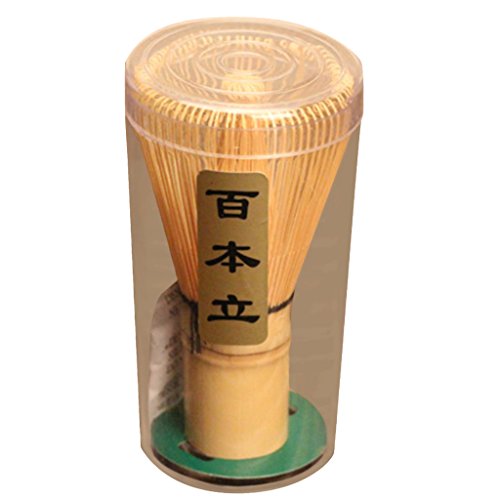 Takayama Chasen Whisk →The whisk that pairs with this bowl
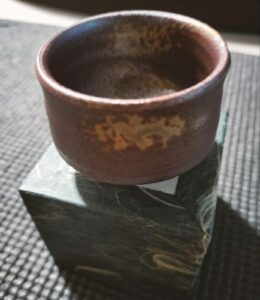 Tamba-yaki Guinomi →One of the Six Ancient Kilns
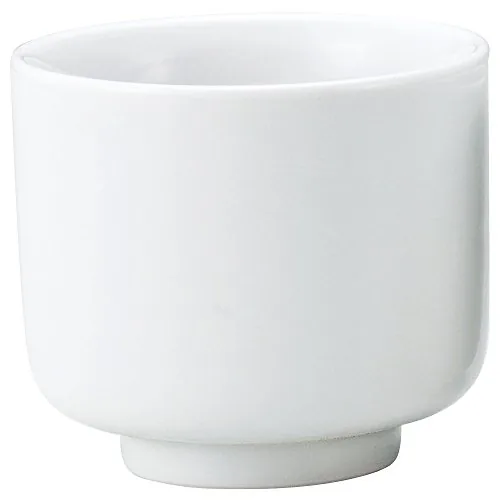 Shiro-Satsuma Sake Cup →Crackled ivory Kyūshū ware
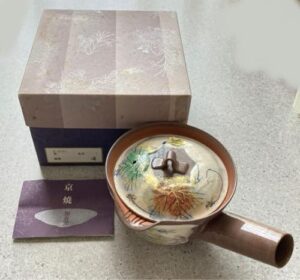 Kiyomizu-yaki Kyusu →Kyoto teapot for leaf tea
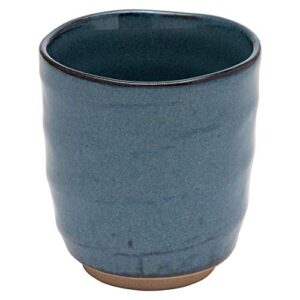 Shitoro-yaki Yunomi →Everyday cup for steeped tea
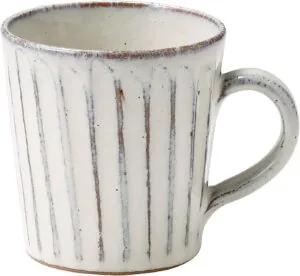 Shigaraki Hechimon Mug →Rustic Six-Kiln stoneware mug
Where this comes from

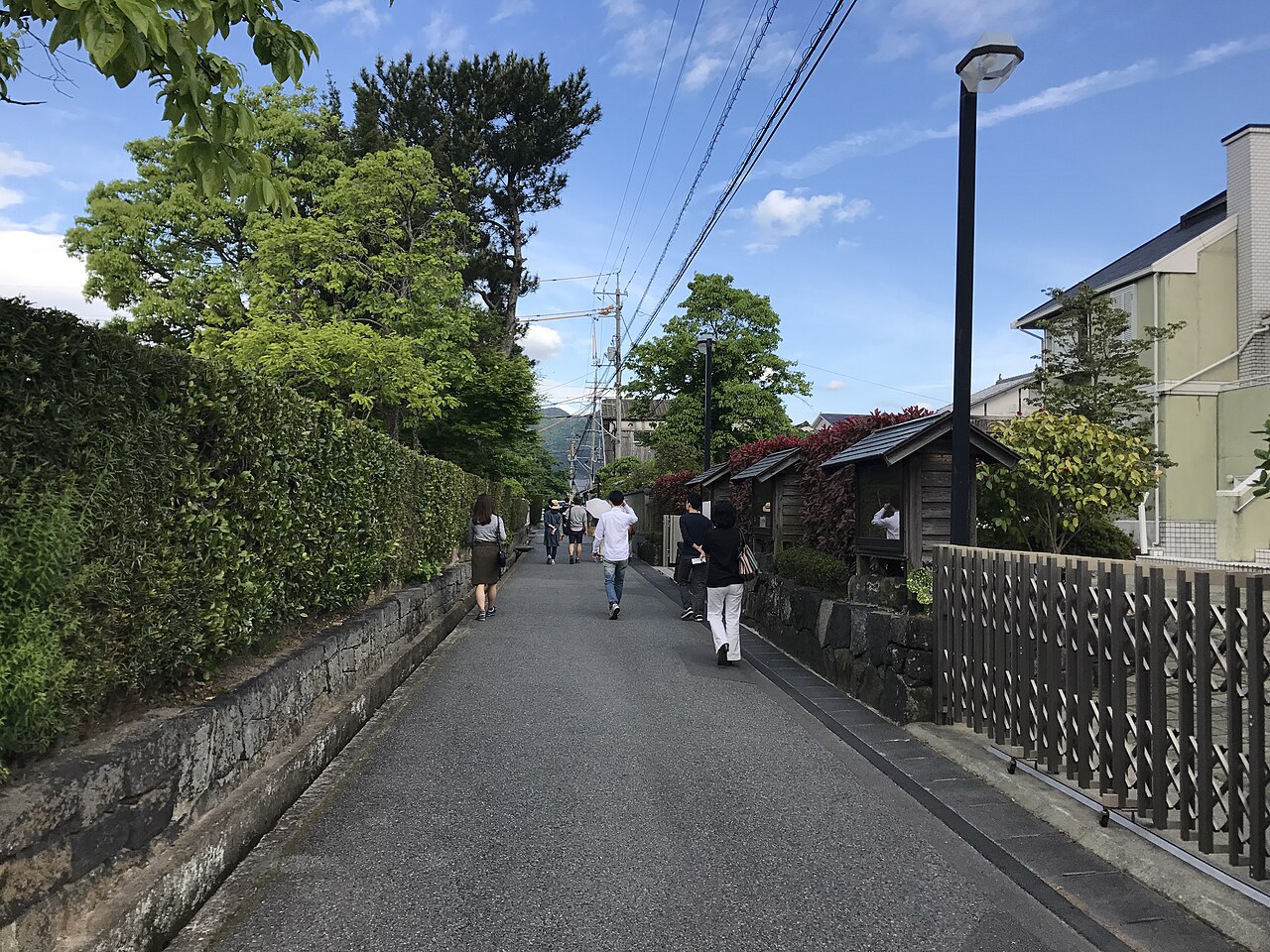
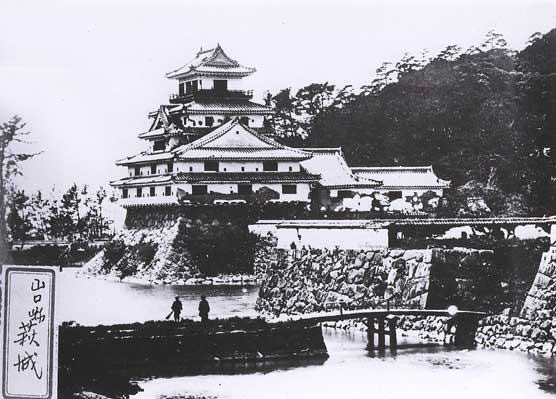
Hagi is a small castle town built on a river delta where the Abu River meets the Sea of Japan, at the western edge of Honshu in Yamaguchi Prefecture. The Chūgoku region here is rural and mountainous, and Hagi’s position — facing north toward the sea, with mountains at its back and Kyūshū just across the strait to the southwest — kept it both defensible and remote. That remoteness matters to the craft: the town stayed a closed domain center for two and a half centuries, and the kilns operated under steady patronage rather than open-market competition.
The clay tells part of the story too. The local daido and mishima clays fire to a soft, pale, porous body at relatively low temperatures, and the regional straw and feldspar ashes produce the thin, milky glaze that defines the ware. The body’s openness is exactly what allows tea to seep in and the surface to mature — a material accident of place that the potters turned into the central virtue of Hagi-yaki.
- 1600 — Mori Terumoto is on the losing side at the Battle of Sekigahara and his domain is greatly reduced.
- 1604 — The Mori relocate to Hagi and establish the castle town; the domain’s official kiln is founded with Korean potters.
- 17th c. — Brothers Yi Jakgwang and Yi Gyeong work as the domain kiln; the line later takes the name Saka Kōraizaemon.
- Edo period — Hagi-yaki becomes a favored tea ware; the saying ichi-Raku, ni-Hagi, san-Karatsu places it second among tea wares.
- 1857 — Yoshida Shōin reopens the Shōka Sonjuku academy in Hagi, training men who would lead the Meiji Restoration.
- 1868 — The Meiji Restoration ends the domain system; the Hagi kilns continue as independent workshops.
- 2015 — Hagi’s industrial-era and castle-town heritage gains wider recognition as the town is listed among Japan’s preserved historic districts.
- 2026 — Hagi kilns continue producing tea bowls in an unbroken line over 400 years old.
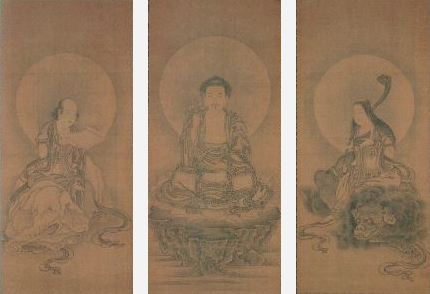
The kiln was not a folk craft that grew up by accident. It was a domain institution. When Mori Terumoto was forced west after Sekigahara, he brought the apparatus of a great house with him, and an official kiln was part of that — staffed, in the founding generation, by Korean potters whose throwing and glazing traditions shaped the ware from the start. The brothers recorded as Yi Jakgwang and Yi Gyeong became the founding line, later known as Saka Kōraizaemon, and the kiln supplied tea utensils to the Mori lords and their circle.
“A Hagi bowl is sold unfinished on purpose — the tea you whisk in it over the years is the final step of the glaze.”
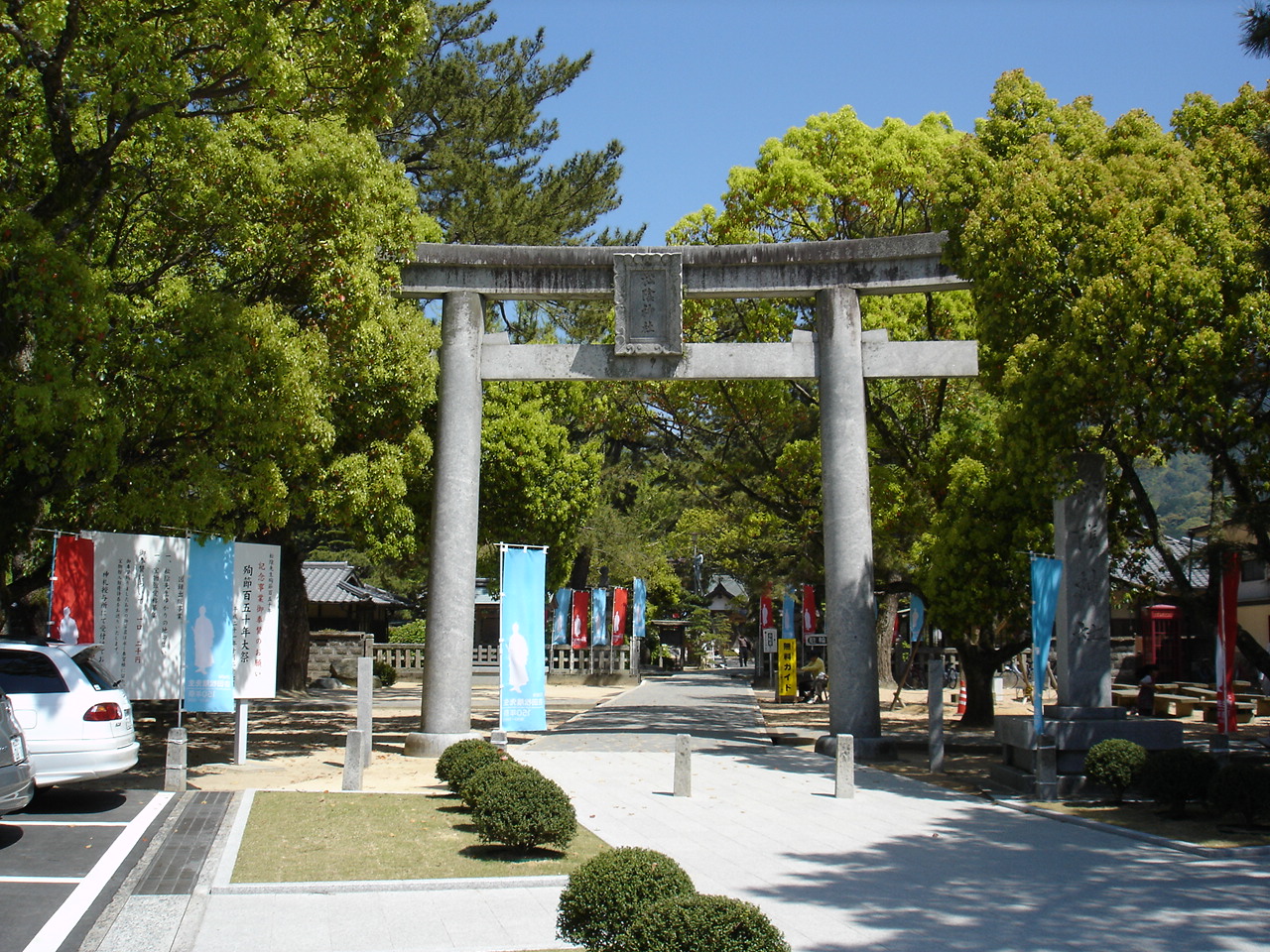
Hagi’s importance did not end with the tea bowls. The same closed Chōshū domain became the cradle of the Meiji Restoration. Yoshida Shōin’s Shōka Sonjuku academy, on the edge of the town, taught a generation of young samurai who would help topple the shogunate and remake Japan as a modern state. The town that produced those revolutionaries is the same town whose kilns kept firing through the upheaval — which is why a Hagi bowl carries both the weight of samurai-era patronage and a continuity that was never broken.
That continuity is the real argument for the ware.
Price snapshot across stores
The first row is the easiest path for most US and EU readers; the second is the sourced listing for this specific bowl. Live pricing for this exact item was not captured at the time of writing — verify on the listing before buying.
| Store | Item / Variant | Price (JPY + USD est.) | Notes |
|---|---|---|---|
| 🇺🇸 Amazon US (search) | Browse Japanese matcha bowls & tea ceramics | varies (USD) | Best if you are shopping from the US — Prime shipping, USD pricing, no international customs. Amazon US carries matcha bowls and tea ceramics from various makers for comparison; this exact Hagi-yaki piece is sourced from Japan (next row). |
| 🇯🇵 Amazon JP Global Store | Hagi-yaki matcha chawan (ASIN B0FZTTNYL2) | Price varies — verify on listing | The sourced listing for this specific bowl. Ships internationally from Japan to most major destinations. |
| Maker direct | Individual Hagi kiln pieces | Varies by kiln | Many Hagi kilns sell through their own sites or galleries; international shipping is case-by-case. |
| Proxy services (Buyee / Tenso) | Domestic-only JP listings | Item price + forwarding fee | Useful when a bowl is listed only on a Japan-domestic shop; adds a forwarding fee and consolidated shipping. |
Prices in USD are approximate and depend on the current exchange rate (≈ ¥150/USD baseline as of mid-2026). The JPY price on the listing is the authoritative figure for the specific item.
What it does well
Weaknesses and things to verify before buying
- It needs care. A porous, low-fired body is not dishwasher-friendly and should be hand-washed, dried fully, and ideally “seasoned” before first use. This is a maintenance commitment, not a grab-and-go cup.
- It will stain and darken. That is the intended behavior, but if you want a vessel that stays pristine and bright, the changing surface will read as discoloration, not patina.
- Each piece varies. Color, crackle, weight, and exact size differ between handmade bowls. The piece you receive will not be identical to any photo.
- Pricing was unavailable. No live price was captured for this listing at the time of writing; confirm the current price and any shipping surcharge on the listing before committing.
- The crackle can hold moisture. If a bowl is stored damp, the porous body and kan-nyu can develop odor or, rarely, mildew. Thorough drying after each use is essential.
- Specs are thin. Dimensions, weight, and the specific kiln were not fully confirmed in the data available; read the live listing for those details rather than relying on this guide alone.
Conclusion — which buyer type are you?
Other ways to approach this purchase
🏆 Editor’s Pick
❓ Frequently Asked Questions
Why does a new Hagi bowl already have cracks?
Can I put a Hagi-yaki bowl in the dishwasher or microwave?
Does the Amazon JP Global Store ship Hagi-yaki internationally?
How is Hagi-yaki different from Raku or Karatsu ware?
Do I need to season the bowl before first use?
Is each bowl identical to the listing photo?
What price should I expect?
jpmono.com is curated by a Japan-based editorial team (working out of Toyama in the Hokuriku region and Nara in Kansai) and is independent. We do not take payment from the makers we feature; income comes from affiliate links. We do not physically test every product — we read maker specs and source listings.
Note: This article was prepared with AI assistance and reviewed against the available source listing data. Specifications, pricing, and availability should be confirmed on the retailer’s page before purchase.
Affiliate disclosure: jpmono.com may earn a commission on qualifying purchases made through links on this page, at no additional cost to you.