![Echizen Yu Kurosaki Senko Santoku Knife: Where to Buy [2026]](https://jpmono.com/wp-content/uploads/2026/05/japan-map-regions-and-prefectures-800x1050.png)
The Echizen Yu Kurosaki Senko santoku is a hammered-finish, all-purpose Japanese kitchen knife forged in Takefu, the historic blade district of Echizen City in Fukui Prefecture. It carries a powder-steel core, often described as SG2 / R2, under a hand-hammered tsuchime surface, and it is the work of Yu Kurosaki, a contemporary Takefu smith working within a forging tradition that the region dates to 1337.
What makes it worth an international reader’s attention is the place behind it. Echizen Uchihamono (越前打刃物, “Echizen forged blades”) was the first cutlery region in Japan to be designated a National Traditional Craft by the Ministry of Economy, Trade and Industry, in 1979. The knife is not a generic stainless santoku with a story bolted on afterward — it comes from a town that has been forging blades by hand for close to seven centuries, and the maker is a named, traceable smith rather than an anonymous factory line.
This guide is written for readers deciding whether the Kurosaki Senko santoku is the right Japanese knife to buy, and how to buy a genuine piece from outside Japan. It lays out the buying paths, places the knife in its Echizen context, compares it against santoku and blade peers, and is honest about one significant limitation: the data fetched for this article returned no live price and no measured spec sheet, so every commercial figure below is marked unconfirmed rather than guessed.
🔄 Updated: May 28, 2026
⏱️ Read time: ~11 min
- Who this is for — and who should skip it
- Product overview (from published specs)
- 📍 Where this comes from — place, era, and the craft tradition
- Buying options
- 📦 Shipping & where to buy from outside Japan
- What it does well
- Weaknesses and things to verify before buying
- Conclusion — which buyer type are you?
- Other ways to approach this purchase
- ❓ Frequently Asked Questions
Who this is for — and who should skip it
- Want one do-everything blade for vegetables, fish, and boneless meat
- Value powder-steel (SG2/R2) edge retention and accept the maintenance it asks for
- Want a knife tied to a named Takefu smith and a METI-designated craft region
- Are comfortable hand-washing, drying, and occasionally honing on a whetstone
- Appreciate a hand-hammered tsuchime finish over a uniform machine-ground face
- Want one inexpensive workhorse you can leave to the dishwasher
- Prefer a longer gyuto or chef’s knife for large proteins and big-batch prep
- Need a guaranteed in-stock, Prime-fast US purchase today
- Want a confirmed price and full spec sheet before committing (both unconfirmed here)
- Are hard on edges — high-hardness steel can chip on bone, frozen food, or prying

Product overview (from published specs)
The table below draws only on the qualitative facts available for this article. Where the fetched data returned nothing measurable — weight, exact hardness, handle material, live price — the cell reads “Unconfirmed” rather than a guessed value, in keeping with this site’s no-fabrication rule.
| Attribute | Detail |
|---|---|
| Type | Santoku (三徳) — all-purpose Japanese kitchen knife |
| Blade length | — |
| Finish | Hammered tsuchime (槌目) face |
| Core steel | Powder-metallurgy stainless, listed as SG2 / R2 (two names for the same steel) |
| Construction | Stainless-clad powder-steel core; exact cladding layers unconfirmed |
| Hardness (HRC) | Unconfirmed — check with the maker |
| Handle | Unconfirmed — check with the maker |
| Weight | Unconfirmed — check with the maker |
| Origin | Takefu, Echizen City, Fukui (Echizen Uchihamono) |
| Smith / brand | Yu Kurosaki |
Background on Takefu and its smithing tradition informs this guide. Current prices and measured specifications vary by seller, so confirm them before purchase.
📖 Glossary — key terms in this article
- Santoku (三徳) — literally “three virtues”; a short, broad all-purpose knife meant to handle vegetables, fish, and meat with one blade.
- Tsuchime (槌目) — a hammered surface finish left by the smith; the dimples can help release sticky slices and partly mask use patina.
- SG2 / R2 — a powder-metallurgy stainless steel; SG2 and R2 are two names for essentially the same steel (R2 is the Takefu Special Steel designation). Known for fine grain and edge retention at high hardness.
- Echizen Uchihamono (越前打刃物) — “Echizen forged blades,” the Takefu cutlery tradition designated a National Traditional Craft in 1979.
- Takefu (武生) — the historic blade district, now part of Echizen City, Fukui Prefecture.
- San-mai / clad (三枚) — three-layer construction in which a hard cutting core is sandwiched between softer, tougher outer layers.
- Shokunin (職人) — a skilled craftsperson working a recognized trade.
- Koku (石) — an Edo-era unit of rice yield used to measure the size and rank of a feudal domain.

📍 Where this comes from — place, era, and the craft tradition

Echizen City — the former Takefu — sits in central Fukui Prefecture, on the Sea of Japan coast of the Hokuriku region. It is an inland town of mountains and river plains in what was historically Echizen Province, sheltered from the open coast but close enough to the trade routes that connected the Japan Sea ports to Kyoto. The cutlery industry took root here for practical reasons: iron-working knowledge, water, and a steady farming demand for sickles and edged tools.
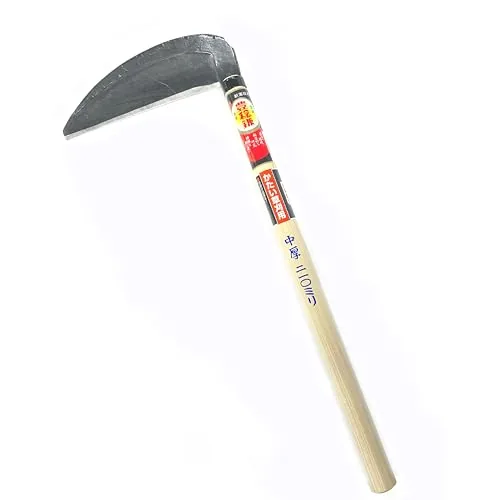
The forging tradition is dated to 1337. In that year Chiyozuru Kuniyasu, a swordsmith from Kyoto, settled in Takefu, and — alongside making swords — taught the local smiths to forge sickles for the region’s farmers. That dual practice is what makes Echizen one of Japan’s oldest cutlery towns: the same hands that shaped weapons also armed the harvest.
- 1337 — Kyoto swordsmith Chiyozuru Kuniyasu settles in Takefu and teaches local smiths to forge sickles, seeding the Echizen cutlery trade.
- 1573 — The Asakura clan, who ruled Echizen from their valley seat at Ichijōdani, fall to Oda Nobunaga.
- Early Edo (1600s) — The Echizen Matsudaira — descended from Yuki Hideyasu, a son of Tokugawa Ieyasu — hold the roughly 680,000-koku Fukui domain as a senior Tokugawa kin house.
- 1979 — Echizen Uchihamono becomes the first cutlery region designated a National Traditional Craft by METI.
- 1993 — The Takefu Knife Village cooperative is established, gathering the district’s workshops to keep hand-forging alive.
- 2026 — Contemporary Takefu smiths, Yu Kurosaki among them, forge powder-steel kitchen knives for kitchens worldwide.
Founding (1337), the METI designation (1979), and the cooperative (1993) are the firm dated anchors from the sourcing for this article; the Edo-period entry is given as an era rather than a single invented date.
The land itself was the heart of Echizen Province. The Asakura clan ruled it from their fortified valley at Ichijōdani until Oda Nobunaga’s conquest in 1573. Under the Tokugawa peace that followed, the Echizen Matsudaira — descended from Yuki Hideyasu, a son of Tokugawa Ieyasu — held the roughly 680,000-koku Fukui domain as a senior kin house of the ruling family. The blades kept being forged through all of it.
“Seven centuries before stainless steel reached a home kitchen, a Kyoto swordsmith taught Takefu’s farmers to forge — and the town has not stopped since.”
Continuity is the point of the place. The Takefu Knife Village cooperative, founded in 1993, keeps the district’s hand-forging and dual-layer hammer-welding lineage alive under one roof. Yu Kurosaki is a contemporary Takefu master smith working within that tradition; his hammered tsuchime finishes and powder-steel cores carry the centuries-old Echizen forging method into modern kitchens. In Takefu’s lineage the blade is still shaped by hammer and hand rather than stamped from sheet — and that is precisely the continuity the 1979 METI designation recognizes.

Buying options
Prices vary by seller, so the comparison avoids a fixed figure that may quickly become outdated. The buying paths are arranged to help international readers compare US and Japan-based channels.
| Store | Item / variant | Price | Notes |
|---|---|---|---|
| 🇺🇸 Amazon.com (US) | Browse Japanese kitchen knives | varies (USD) | Best if you are shopping from the US — Prime shipping, USD pricing, no international customs. Amazon US carries hand-forged Japanese knives from makers such as Shun, Tojiro, and Yoshihiro, useful for comparing geometry, steel types, and price tiers. Yu Kurosaki’s exact Senko santoku is sourced from Japan (next row). |
| 🇯🇵 Amazon JP Global Store | Kurosaki Senko santoku ~165 mm | Unconfirmed — verify with the maker | The selected Japanese source. Ships internationally from Japan to most major destinations. |
| Maker direct (Takefu Knife Village / Kurosaki workshop) | Senko line | Unconfirmed | Maker and cooperative channels are Japanese-language; direct international shipping is not guaranteed. Verify before ordering. |
| Proxy services (Buyee / Tenso) | Any Japan-only source | Item price + forwarding fee | Use when a Japanese seller does not ship abroad directly; the proxy receives the parcel in Japan and forwards it. Note that some carriers restrict blades — confirm before booking. |
Prices in USD are approximate and depend on the current exchange rate (¥150/USD baseline as of mid-2026). Where the JPY price itself is unconfirmed, no USD estimate is shown.
📦 Shipping & where to buy from outside Japan
Sourcing an Echizen-Yu Kurosaki Senko santoku from outside Japan generally goes through a Japanese knife specialist, an Echizen bladesmith cooperative, or a proxy service (Buyee or Tenso) that can receive the parcel in Japan and forward it. Confirm the couriers blade-restriction rules for your country before booking, and check whether the seller ships internationally directly.
- Shipping cost: roughly $15–$40 to the US and EU, higher to other regions.
- Customs: orders above your country’s import threshold may incur duty — budget for it.
- Blade carriage: some couriers and proxy routes restrict knives; confirm the destination accepts the item before paying.
- Certification: as a hand tool, no voltage or electrical certification applies.
What it does well
An SG2/R2 core takes a fine edge at high hardness and holds it longer between sharpenings than typical kitchen stainless — check the hardness specified by the maker.
The santoku profile handles vegetables, fish, and boneless meat in one compact blade — the everyday Japanese household knife.
A named Takefu smith working in a region designated a National Traditional Craft in 1979 — not an anonymous factory line.
The hammered tsuchime face can help release sticky slices and partly masks the patina of daily use, on top of its hand-made look.
Weaknesses and things to verify before buying
- Offer details may vary. Confirm the current terms before ordering.
- Some specifications are unconfirmed. Exact edge hardness, handle material, and cladding layers should be confirmed with the maker if they matter to you.
- Availability varies. Hand-forged Japanese knives may be hard to find on amazon.com; check current stock from a Japan-based seller.
- Hand-care required. High-hardness powder steel should be hand-washed, dried promptly, and honed on a whetstone — it is not a dishwasher knife.
- Compact size. A ~165 mm santoku is short for large proteins or big-batch prep; a longer gyuto may suit those tasks better.
- Hard steel can chip. Powder steel taken to high hardness is less forgiving — avoid bone, frozen food, and any twisting or prying.
- Import friction. Buying from Japan can add shipping, customs duty, and blade-carriage restrictions depending on your country and courier.
Conclusion — which buyer type are you?
You want a named-smith, hand-forged Echizen santoku in powder steel and will maintain it → this type of knife fits; confirm size and handle with the seller.
You want a reliable everyday Japanese santoku at a more predictable price → compare entry-level VG10 or molybdenum-vanadium santoku from makers such as Tojiro and similar mass-forged lines before deciding.
Price-sensitive and undecided → confirm the live price first, and consider a simpler blade such as a Higonokami folder from a Miki-based smith as a low-cost way to feel Japanese carbon-steel performance.
You want dishwasher-safe, zero-maintenance, guaranteed-in-stock US delivery → this hand-forged piece is not the right buy.
Other ways to approach this purchase
Prices for named-smith knives fluctuate; if there is no rush, compare offers across a few weeks before buying.
Named-smith knives surface on Japanese resale marketplaces; a proxy can forward a domestic-only purchase — inspect condition and ask about edge wear.
If you shop Amazon regularly, applying accrued points or gift balance at checkout offsets the international shipping cost.
If the price and specifications are unconfirmed, it is reasonable to wait until the information is fuller before buying.
❓ Frequently Asked Questions
Is the Yu Kurosaki Senko santoku dishwasher-safe?
Treat it as hand-wash only. High-hardness powder steel and a hand-finished blade do not belong in a dishwasher; wash by hand, dry promptly, and store dry. This protects both the edge and the finish.
What is SG2 / R2 steel?
SG2 and R2 are two names for essentially the same powder-metallurgy stainless steel (R2 is the Takefu Special Steel designation). Its fine, even grain lets it reach high hardness and hold a keen edge longer than conventional kitchen stainless, in exchange for asking more care in use.
Can I buy it from outside Japan?
Yes. Sourcing a hand-forged Echizen-Yu knife from outside Japan usually involves either a Japanese knife retailer that exports directly, or a proxy service such as Buyee or Tenso that forwards parcels from Japanese sellers. Note that some couriers restrict blades, so confirm the courier rules for your destination before booking.
Is a 165 mm santoku big enough?
For everyday vegetables, fish, and boneless meat in a home kitchen, a ~165 mm santoku is a comfortable all-rounder. If you regularly break down large proteins or cook in big batches, a longer gyuto will serve those tasks better. Confirm the exact blade length with the maker or seller.
How do I sharpen and care for it?
Sharpen on whetstones rather than a pull-through device; high-hardness powder steel responds well to a fine stone and holds the result. Hone lightly and regularly, keep it dry, and avoid bone, frozen food, and twisting motions that can chip a hard edge.
How much does it cost?
Prices and stock for named-smith kitchen knives fluctuate. Check current offers from authorized retailers before ordering.
jpmono.com is curated by a Japan-based editorial team (working out of Toyama in the Hokuriku region and Nara in Kansai) and is independent. We do not take payment from the makers we feature; income comes from affiliate links. We do not physically test every product — we read maker specifications and regional sources, and we say so plainly when information is thin. Read more about our editorial standards.
This article was drafted with AI assistance and reviewed against publicly available reference data for Echizen-Yu bladesmithing. Where live price and measured specifications were unavailable, they are marked unconfirmed rather than estimated, in line with our no-fabrication policy.
Affiliate disclosure: jpmono.com may earn a commission on qualifying purchases made through links on this page, at no additional cost to you.