![Kabazaiku Cherry Bark Tea Caddy: Kakunodate’s Akita Woodwork [2026]](https://jpmono.com/wp-content/uploads/2026/06/kabazaiku-cherry-bark-tea-caddy-where-to-buy-2026-featured.jpg)
In the snow country of northern Akita, in a preserved castle town called Kakunodate, there is a craft that wraps the bark of wild mountain cherry around wood. It is called kabazaiku (樺細工, “cherry-bark work”), and one of its most enduring forms is the chazutsu (茶筒) — a tea caddy. The bark is peeled, dried, then heat-pressed onto a wooden core and burnished until the grain glows like polished stone.
What makes a kabazaiku caddy more than decorative is the bark itself. Cherry bark carries natural oils that resist moisture and help buffer humidity, and Kakunodate makers have leaned on that property for over two centuries to keep loose-leaf tea dry and aromatic. The town is the only place in Japan that still produces kabazaiku, and the work is a nationally designated Traditional Craft (伝統工芸品, dentō kōgeihin).
This guide is written for international readers weighing a kabazaiku tea caddy as a daily-use object or a gift. We cover what the craft is, where it comes from, how it compares with tin and lacquer caddies, what to verify before buying, and the realistic paths to purchase from outside Japan. Where the data is thin, we say so rather than guess.
🔄 Updated:
⏱️ Read time: ~9 min
![Kabazaiku Cherry Bark Tea Caddy: Kakunodate's Akita Woodwork [2026]](https://m.media-amazon.com/images/I/319HDSajkaL._SL500_.jpg)
- Who this is for — and who should skip it
- Product overview (from published specs)
- Where this comes from — place, era, and the craft tradition
- Price snapshot across stores
- What it does well
- Weaknesses and things to verify before buying
- Conclusion — which buyer type are you?
- Other ways to approach this purchase
- 🏆 Editor’s Pick
- ❓ Frequently Asked Questions
Who this is for — and who should skip it
- Store loose-leaf tea and want a container that buffers humidity rather than just looking the part
- Appreciate a single-origin craft with documented heritage — Kakunodate is the only place producing kabazaiku
- Want a daily-use object whose surface deepens in tone with handling
- Are buying a meaningful gift for a tea drinker, host, or someone connected to Japan
- Prefer natural materials (cherry bark, wood) over metal or plastic
- Want an airtight, gasket-sealed container for long-term bulk storage
- Need something dishwasher-safe or that tolerates water and heat (this is wood and bark)
- Are price-sensitive — handmade single-origin craft sits above mass-market caddies
- Expect identical units; natural bark grain varies piece to piece
- Cannot accommodate international shipping, customs, or proxy-buying logistics

Product overview (from published specs)
The source data provided for this listing contained no fetched product record — no images, dimensions, weight, or live price. The table below therefore reflects only what is reliably known about kabazaiku tea caddies as a craft category and the sourcing path; spec values that were not supplied are marked accordingly. Verify the exact figures on the retailer listing before buying.
Kabazaiku Cherry Bark Tea Caddy
【角館・樺細工】桜皮 総皮茶筒 お茶入れセット(大) 色出し 桐箱入
現在在庫切れです。 · ASIN B008QI7CYA
Price and availability as of 2026-08-31 02:30 JST. The Amazon listing at the time of purchase is authoritative. jpmono.com earns a commission on qualifying purchases at no extra cost to you.
| Attribute | Detail | Source |
|---|---|---|
| Craft / type | Kabazaiku (cherry-bark work) tea caddy / chazutsu | Craft category |
| Primary material | Wild mountain-cherry (yamazakura) bark veneer over a wooden core | Craft category |
| Origin | Kakunodate, Senboku City, Akita Prefecture (Tōhoku) — the only production area in Japan | Craft category |
| Designation | Nationally designated Traditional Craft (dentō kōgeihin) | Craft category |
| Functional claim | Bark’s natural oils traditionally relied on to regulate moisture / humidity and keep tea fresh | Craft category |
| Dimensions / capacity | Unconfirmed — check the retailer listing | Not supplied |
| Weight | Unconfirmed — check the retailer listing | Not supplied |
| Item reference | Amazon JP Global Store ASIN B008QI7CYA (sourced listing) | Spec |
| Price | Live pricing was unavailable at the time of writing — verify at the retailer | Not supplied |
Sources for this guide: Amazon US search (primary, tag moonill-20) and Amazon JP Global Store (secondary, tag moonill-22, sourced listing), supplemented by maker-direct context. No third-party spec values were invented; unsupplied fields are marked “Unconfirmed.”
📖 Glossary — key terms
- Kabazaiku (樺細工) — “cherry-bark work.” The Akita craft of layering polished wild-cherry bark over a wooden form. Despite the kanji 樺 (usually “birch”), the material is cherry, not birch.
- Chazutsu (茶筒) — a tea caddy; a cylindrical canister for storing loose-leaf tea.
- Yamazakura (山桜) — wild mountain cherry, the bark source.
- Kakunodate (角館) — a preserved Edo-period castle town in Akita, nicknamed the “little Kyoto of Michinoku.”
- Matagi (マタギ) — traditional mountain hunters of the Tōhoku highlands; the Ani matagi region is where the bark-working technique originated.
- Dentō kōgeihin (伝統工芸品) — a craft officially designated as “traditional” under Japan’s national craft-promotion framework.

Where this comes from — place, era, and the craft tradition

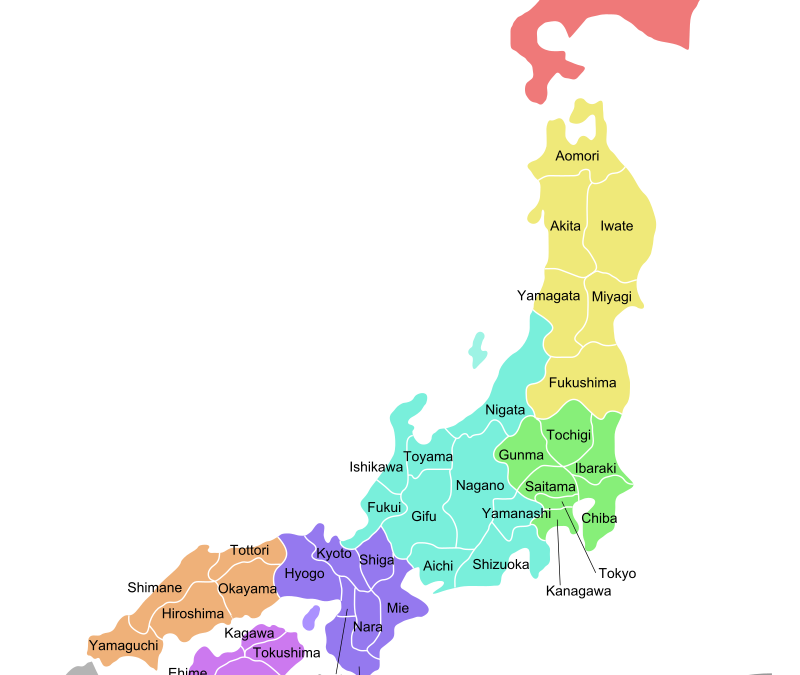
Akita lies in the far north of Honshū, in the Tōhoku region — a part of Japan historically called Michinoku, “the deep interior.” Kakunodate is an inland town set among rivers and mountains, and its winters are long and snowbound. That climate matters: a region with cold, wet seasons puts a premium on materials that manage moisture, and it gave indoor handwork a place in the household economy through the snow months.
Kakunodate is a preserved castle town of the Satake-Kita clan, a branch of the lords who governed the Akita domain in the Edo period. Its grid of samurai residences and dark wooden walls, shaded by weeping cherry trees, earned it the nickname “the little Kyoto of Michinoku.” The town was built for a warrior class, and it is from that warrior class that the craft descends.
“Kakunodate is the only place in Japan that still makes kabazaiku — a craft a samurai town adopted to survive the off-season, and never let go.”
The technique arrived in the 1780s. A figure recorded as Fujimura Hikoroku is credited with introducing cherry-bark working to Kakunodate’s lower-ranking samurai, adapting a bark-handling method from the Ani matagi — the mountain-hunter communities of the Akita highlands. For samurai families on modest stipends, kabazaiku became a sanctioned side income, work that could be done indoors and sold to support the household. That origin is part of why the craft carries the disciplined, restrained aesthetic it does.
- 1603 — Edo period begins; Kakunodate develops as a castle town of the Satake-Kita clan
- 1780s — Fujimura Hikoroku introduces cherry-bark working to Kakunodate’s lower-ranking samurai, adapting an Ani matagi technique
- Edo period — samurai families take up kabazaiku as a sanctioned household side income
- 1868 — the Meiji Restoration ends samurai stipends; for many Kakunodate families craft work shifts from side income toward a primary livelihood
- 20th century — kabazaiku receives national designation as a Traditional Craft (dentō kōgeihin)
- 2026 — Kakunodate remains the sole production area for kabazaiku in Japan
When the Meiji Restoration abolished the samurai class and its stipends in the late 19th century, the off-season craft became, for many families, the main one. That continuity is the point worth understanding before you compare prices: kabazaiku is not a revival product or a tourist novelty. It is a working tradition that passed without a break from a samurai side trade into a designated regional industry, and it is still made only in this one town.
The functional heart of the object is the bark. Wild mountain-cherry bark is peeled, dried, and then heat-pressed with glue onto a turned wooden core, after which the surface is burnished to a deep, glossy grain. The bark’s natural oils are traditionally believed to resist moisture and buffer humidity — the property that makes a kabazaiku chazutsu prized for keeping loose-leaf tea dry and aromatic. Treat that as a craft-tradition claim rather than a laboratory-certified specification.

Price snapshot across stores
Live pricing was unavailable from the source data at the time of writing, so the table shows purchase paths and notes rather than fabricated figures. JPY is the authoritative currency for the sourced item; any USD figures elsewhere are approximate (¥150/USD baseline, mid-2026). Always confirm the current price at the retailer.
| Store | Item / Variant | Price | Notes |
|---|---|---|---|
| 🇺🇸 Amazon US (search) | Browse Japanese tea caddies & chazutsu | varies (USD) | Best if you are shopping from the US — Prime shipping, USD pricing, no international customs. Amazon US carries tin, ceramic, and wooden Japanese tea caddies from various makers for comparison; the Kakunodate kabazaiku piece itself ships from Japan (next row). |
| 🇯🇵 Amazon JP Global Store | Kakunodate kabazaiku tea caddy (ASIN B008QI7CYA) | Price unconfirmed at time of writing | The sourced listing for the specific item in this guide. Ships internationally from Japan to most major destinations; customs/duties may apply over local thresholds. |
| Maker direct | Kakunodate kabazaiku ateliers / cooperative | varies | Widest finish and shape selection; international shipping support varies by workshop and is not guaranteed. |
| Proxy services (Buyee / Tenso) | Forwarding for JP-only listings | item + fees + forwarding | Use when a listing does not ship abroad directly. Adds service fees and a second shipping leg; budget accordingly. |
What it does well
Weaknesses and things to verify before buying
- Not waterproof and not dishwasher-safe. This is wood and bark. Wipe dry; avoid soaking, immersion, and direct heat.
- Seal is snug, not airtight. A kabazaiku caddy buffers humidity but is not a gasketed, vacuum-grade container. For long-term bulk storage, a sealed tin may suit you better.
- Specs were not supplied. Dimensions, capacity, and weight were not in the source data — confirm them on the listing so the caddy fits your tea volume.
- Price was unconfirmed at writing. No live price was available; handmade single-origin craft generally sits above mass-market caddies, so check before committing.
- Natural variation. Bark grain and color differ piece to piece; the unit you receive will not match a photo exactly.
- International logistics. Shipping from Japan, possible customs duties, and (for JP-only listings) proxy-service fees add cost and time.
- The “freshness” claim is craft tradition, not lab data. The moisture-regulating property is traditionally believed and widely reported, but treat it as a heritage claim rather than a certified specification.
Conclusion — which buyer type are you?
Other ways to approach this purchase
🏆 Editor’s Pick
❓ Frequently Asked Questions
What is kabazaiku, and is it really made from cherry bark?
Kabazaiku is the Akita craft of layering polished wild mountain-cherry bark over a wooden core. Despite the kanji 樺 often meaning “birch,” the material is cherry. It is made only in Kakunodate and is a nationally designated Traditional Craft.
Does a kabazaiku caddy actually keep tea fresher?
Cherry bark’s natural oils are traditionally relied on to resist moisture and buffer humidity, which is why Kakunodate makers have used it for tea caddies for over two centuries. Treat this as a long-standing craft-tradition claim rather than a laboratory-certified specification.
How do I care for it? Can I wash it?
No. It is wood and bark, so it is not dishwasher-safe and should not be soaked or immersed. Wipe it with a dry or barely damp cloth, keep it away from direct heat and prolonged moisture, and let it dry fully before storing tea.
Where is it made, and is Kakunodate the only place?
Yes. Kabazaiku is produced only in Kakunodate, a preserved samurai castle town in Akita Prefecture, in the Tōhoku region of northern Honshū. The technique was introduced there in the 1780s.
Can I buy it from outside Japan?
The sourced listing is on Amazon JP Global Store, which ships internationally to most major destinations; customs duties may apply above local thresholds. For listings that do not ship abroad directly, proxy services such as Buyee or Tenso can forward your order for added fees.
How is it different from a tin tea caddy?
A tin caddy (such as Kaikado) gives a tighter, more sealed closure and a metal aesthetic; a kabazaiku caddy is a natural wood-and-bark object that buffers humidity and ages with handling. If you want a near-airtight seal, consider tin; if you want a natural material with regional heritage, kabazaiku fits.
jpmono.com is curated by a Japan-based editorial team (working out of Toyama in the Hokuriku region and Nara in Kansai) and is independent. We do not take payment from the makers we feature; income comes from affiliate links. We do not physically test every product — we read maker specs and source listings.
This article was prepared with AI assistance and reviewed against the available source data. Facts about the craft and its origin are drawn from the supplied research notes; product specifications and pricing that were not present in the source data are marked as unconfirmed rather than estimated.
Affiliate disclosure: jpmono.com may earn a commission on qualifying purchases made through links on this page, at no additional cost to you.