![Tobe-Yaki Baizan-Gama Indigo Porcelain Rice Bowl: Where to Buy [2026]](https://jpmono.com/wp-content/uploads/2026/06/tobe-yaki-baizan-gama-porcelain-rice-bowl-where-to-buy-2026-featured.jpg)
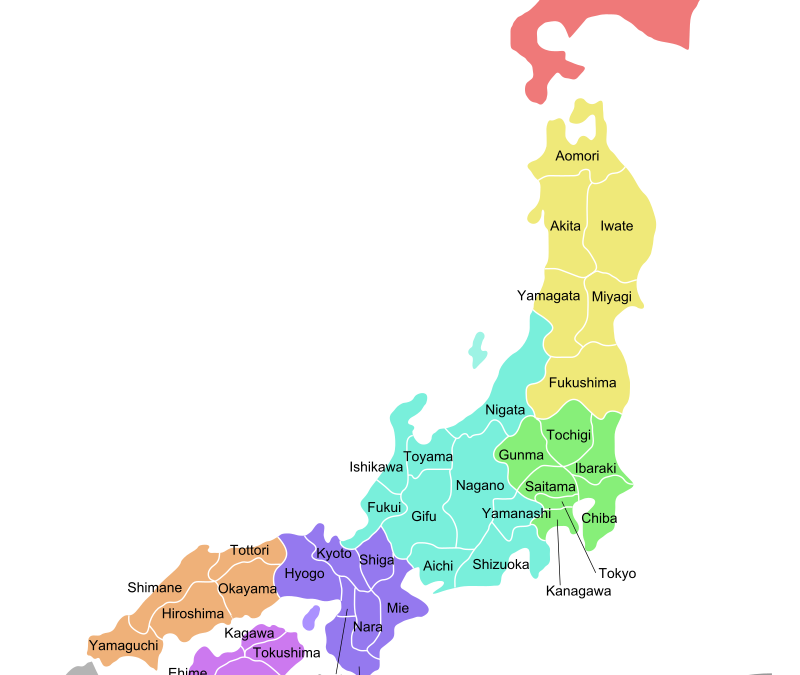
In the hills just south of Matsuyama, on the island of Shikoku, the town of Tobe has been firing thick white porcelain since 1777. The story of how it began is unusually literal: the local Ozu domain (大洲藩) had a whetstone industry, and the grinding of those stones left behind a pale waste rock. Under an official named Sugino Johei, the domain decided to turn that byproduct into porcelain clay. A discard became an industry.
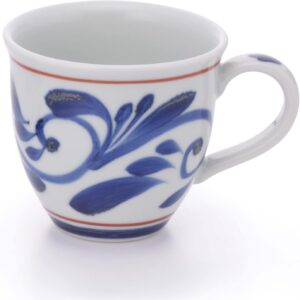
The result, two and a half centuries later, is Tobe-yaki (砥部焼) — chunky, heavy, chip-resistant white porcelain (hakuji) painted freehand in cobalt blue. The piece this guide covers is a rice bowl, gohan chawan, from Baizan-gama (梅山窯), the oldest and largest kiln in Tobe, founded in 1882. Its hand-drawn karakusa (arabesque vine) and dami indigo wash are the look most people picture when they hear “Tobe blue.”
This article is written for international readers deciding whether a Tobe-yaki rice bowl belongs in their kitchen. We cover what the form is good at, where it is sourced, how to buy it from outside Japan, and how it compares with other Japanese everyday porcelain. A note on data up front: the product feed for this piece returned no live US listing and no current price, so figures below are marked as unconfirmed where the data did not supply them — we do not invent prices or specifications.
🔄 Updated:
⏱️ Reading time: ~11 min

- Who this is for — and who should skip it
- Product overview (from published specs)
- Where this comes from — place, era, and the craft tradition
- What it does well
- Weaknesses and things to verify before buying
- Conclusion — which buyer type are you?
- Other ways to approach this purchase
- 📦 Shipping & where to buy from outside Japan
- Price snapshot across stores
- 🏆 Editor’s Pick
- ❓ Frequently Asked Questions
Who this is for — and who should skip it
- Want a daily-use rice bowl built to survive years of washing, not a display piece
- Like the cobalt-on-white sometsuke look but prefer a sturdy, weighty body over delicate thinness
- Value hand-painting and accept the small irregularities that come with it
- Are building a mixed table of Japanese everyday porcelain (Hasami, Mashiko, Arita) and want a Shikoku entry
- Are comfortable buying from Amazon JP Global Store and waiting for international shipping
- Want eggshell-thin, lightweight porcelain — Tobe-yaki is deliberately thick and heavy
- Need a confirmed exact price and dimensions before ordering (the current feed lacks both)
- Expect perfectly identical, machine-printed patterns across a set
- Want next-day domestic delivery in the US or EU at a low flat rate
- Prefer ornate overglaze color (in that case Kutani or Kyo-yaki suit you better)
Product overview (from published specs)
The table below draws on the Amazon JP Global Store source listing for ASIN B0H9BRWRLT plus the maker tradition documented for Baizan-gama and Tobe-yaki. Where the feed did not supply a value, the cell is marked unconfirmed rather than guessed.
Tobe-Yaki Baizan-Gama Indigo Porcelain Rice Bowl
砥部焼 梅山窯 飯碗 茶碗 くらわんか 大 小 ペア 2個セット 夏
通常6~7日以内に発送します。 · Sold by 和み彩堂 · ASIN B0H9BRWRLT
Price and availability as of 2026-09-01 05:22 JST. The Amazon listing at the time of purchase is authoritative. jpmono.com earns a commission on qualifying purchases at no extra cost to you.
| Attribute | Detail | Source |
|---|---|---|
| Craft | Tobe-yaki (砥部焼), porcelain of Tobe, Ehime | Maker tradition |
| Kiln | Baizan-gama (梅山窯), founded 1882 — oldest and largest in Tobe | Maker tradition |
| Material | White porcelain (hakuji), thick-walled | Maker tradition |
| Decoration | Freehand cobalt (gosu) karakusa arabesque with dami wash | Listing image / tradition |
| Form | Gohan chawan (rice bowl) | Listing |
| Diameter / height / weight | Unconfirmed — check listing | — |
| Designation | National traditional craft (METI), designated 1976 | Maker tradition |
| ASIN | B0H9BRWRLT | Amazon JP Global Store |
| Price | Unavailable at time of writing — verify on listing | — |
Data note: the product feed for this item returned an empty US search result and no current price. Only the Amazon JP Global Store listing snapshot (ASIN B0H9BRWRLT) is available; live pricing and exact dimensions may have shifted since the writing date. Verify both on the listing before ordering.
📖 Glossary — Japanese craft terms used here
- Tobe-yaki (砥部焼) — porcelain from the town of Tobe in Ehime Prefecture, Shikoku.
- hakuji (白磁) — white porcelain; the undecorated white body that defines Tobe ware.
- gosu (呉須) — the cobalt-oxide pigment that fires to deep blue under the glaze; the source of “Tobe blue.”
- sometsuke (染付) — underglaze blue-and-white painting, the broad category this bowl belongs to.
- karakusa (唐草) — the flowing arabesque or vine scroll pattern, a Baizan-gama signature.
- dami (濃み) — a brush-wash shading technique that fills areas with graded cobalt tone.
- gohan chawan (ご飯茶碗) — a rice bowl, as distinct from a tea bowl (chawan for matcha).
- gama / kama (窯) — a kiln; “Baizan-gama” means “the Baizan kiln.”
- tobe-ishi (砥部石) — the local whetstone rock whose pale waste was reworked into porcelain clay in 1777.
Related jpmono guides for placing this bowl in the wider world of Japanese everyday porcelain and tableware:
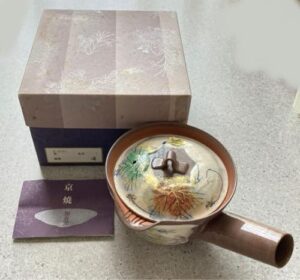
Where this comes from — place, era, and the craft tradition

Ehime occupies the northwestern corner of Shikoku, the smallest of Japan’s four main islands, facing the Seto Inland Sea. The old province name was Iyo, and its political center was the castle town of Matsuyama. Tobe lies a short way inland to the south, in a band of hills that — and this is the crucial geographic fact — held good deposits of whetstone rock. That stone is what put Tobe on the map twice over: first as a sharpening-stone industry, and then, almost by accident, as a porcelain town.
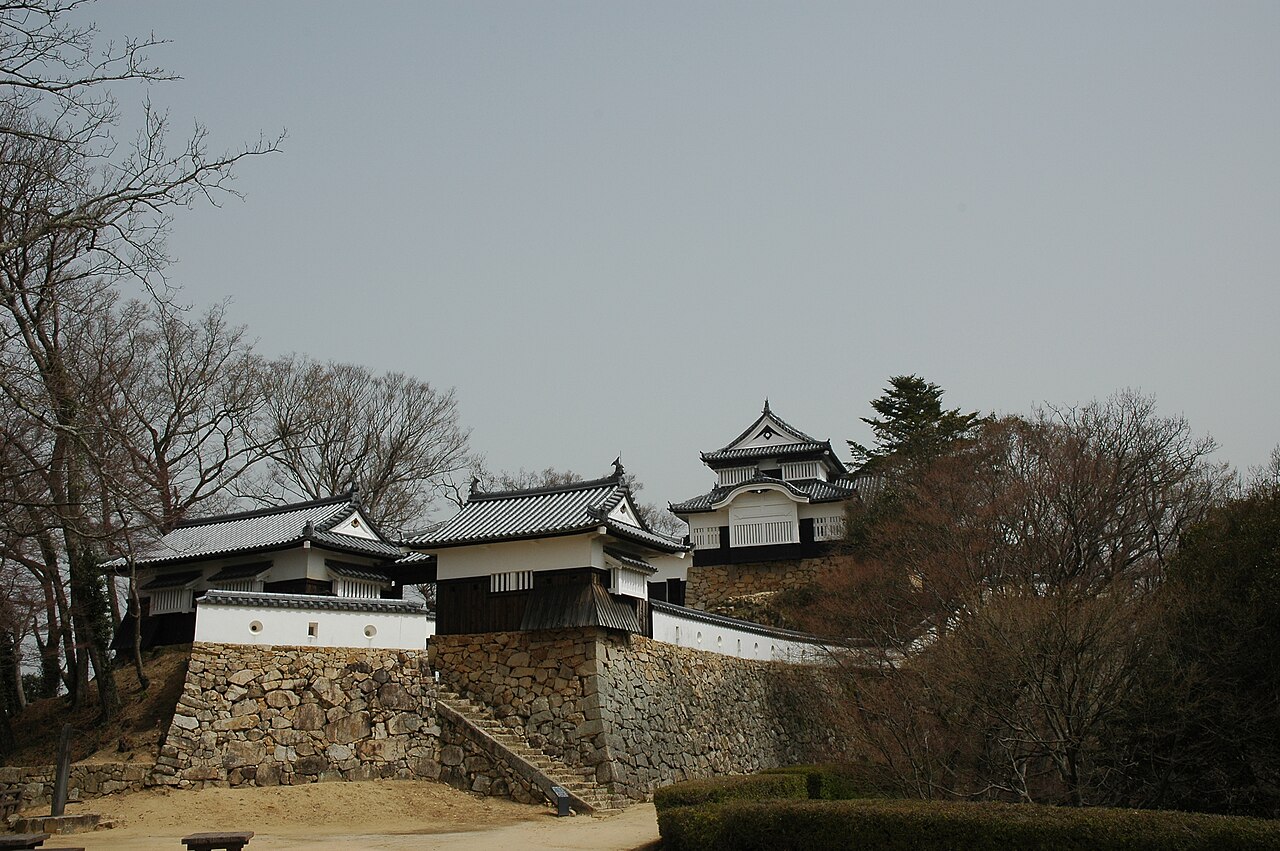
The decisive moment came in 1777. The Ozu domain (大洲藩), which administered part of this area, ran a whetstone trade, and the grinding of those stones produced a pale waste rock that piled up with no use. Under an official remembered as Sugino Johei, the domain backed an experiment to mill that discarded stone into a workable porcelain clay. It succeeded. What had been refuse became the raw body of a new ware.

“A byproduct of whetstone grinding became, in 1777, an entire porcelain tradition — Tobe-yaki is one of the few crafts whose founding act was recycling.”
- 1777 — The Ozu domain, under Sugino Johei, turns whetstone waste stone into porcelain clay; Tobe-yaki is born.
- 19th c. — Tobe grows into a porcelain district supplying everyday tableware to Iyo households and inns.
- 1882 — Baizan-gama (梅山窯) is founded; it becomes the oldest and largest kiln in Tobe.
- Late 1800s — Baizan-gama helps standardize the deep cobalt “Tobe blue” and the karakusa-with-dami style.
- 1976 — Tobe-yaki is designated a national traditional craft by METI.
- 2024 — The Tobe-yaki Traditional Industry Hall continues to document and promote the ware.
- 2026 — Baizan-gama still produces hand-painted Tobe rice bowls for daily use.
Baizan-gama, founded in 1882, is the continuity at the center of the story. As the oldest and largest kiln in the town, it became the face of the indigo karakusa style — the freehand arabesque, filled with the graded dami wash, that most buyers now read as the default Tobe look. The cobalt is applied by brush, not transfer-printed, which is why no two bowls carry an identical line.
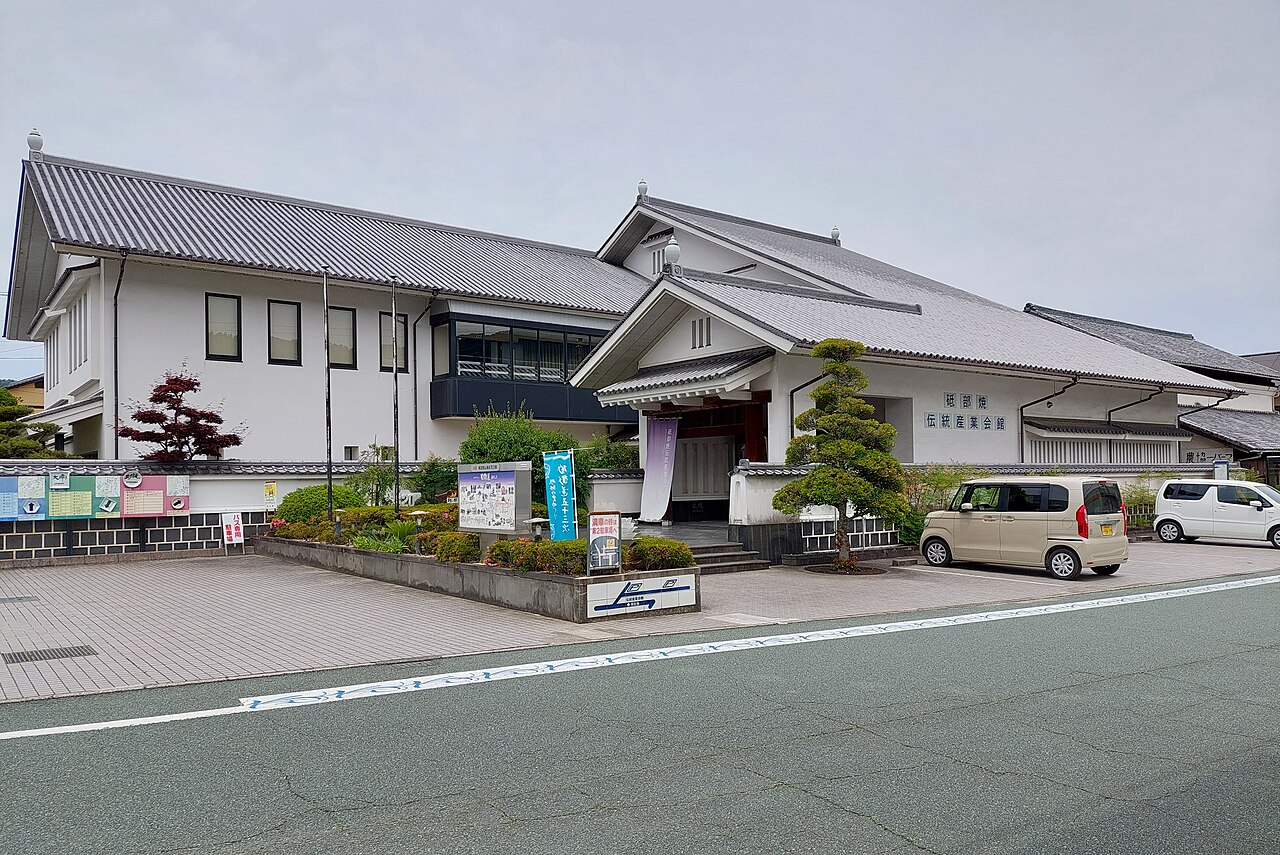
What sets Tobe-yaki apart from thinner porcelains is mass. The walls are thick, the body is heavy in the hand, and the ware is known for resisting chips along the rim — qualities that matter precisely because the everyday rice bowl is the most-handled, most-washed vessel in a Japanese kitchen. Tobe was made to be used hard, every day, and to keep going.
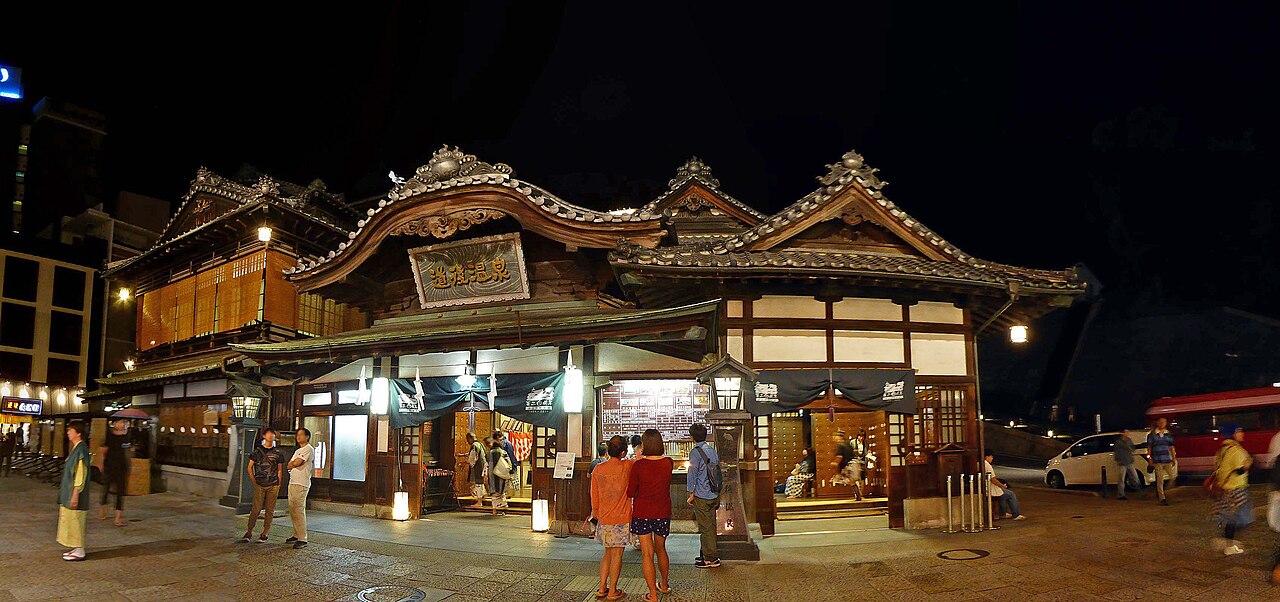
That practicality is also why Tobe ware was never courtly porcelain in the way some other kilns aspired to be. It fed the inns around Dogo Onsen, the farm and merchant households of Iyo, the ordinary table. Its blue-and-white is unfussy. When you set a Baizan-gama rice bowl down, you are continuing a use it was designed for from the start.
What it does well
Weaknesses and things to verify before buying
- No confirmed price in the current feed. The data returned no live price for ASIN B0H9BRWRLT; confirm the JPY figure on the Amazon JP Global Store listing before ordering.
- Dimensions and weight are unconfirmed. Diameter, height, and weight were not in the feed. If exact size matters for your table, check the listing’s spec section or contact the seller.
- It is heavy by design. Anyone expecting light, thin porcelain will find Tobe-yaki noticeably chunky; that is the tradition, not a flaw, but it is a fit question.
- Hand-painting means variation. The karakusa line, spacing, and dami shading differ bowl to bowl. If you want a perfectly matched set, buy from a single seller and expect minor differences.
- International shipping and customs apply. The specific item ships from Japan via Amazon JP Global Store; factor in shipping time, cost, and possible import duties for your country.
- Microwave / dishwasher labeling may not translate cleanly. Japanese-spec care icons do not always map to overseas appliances; verify dishwasher and microwave suitability on the listing rather than assuming.
Conclusion — which buyer type are you?
Other ways to approach this purchase
📦 Shipping & where to buy from outside Japan
The specific item in this guide is sourced from the Amazon JP Global Store listing (ASIN B0H9BRWRLT), which ships internationally to most major destinations. International shipping on small porcelain pieces typically runs in the rough range of $15–$40 to the US and EU and higher to other regions, depending on weight and speed. Porcelain is fragile, so confirm the seller’s packaging note and expect it to ship boxed and padded.
Two cautions for overseas buyers. First, orders above your country’s de minimis threshold may attract import duties or VAT on arrival — budget for that on top of the item and shipping. Second, Japanese-spec care labels (microwave, dishwasher) do not always translate cleanly to overseas appliances, so verify suitability on the listing rather than assuming. Prices and stock fluctuate; the affiliate links below lead to current data.
Price snapshot across stores
| Store | Item / variant | Price (JPY + USD est.) | Notes |
|---|---|---|---|
| 🇺🇸 Amazon.com (US) | Browse Japanese porcelain rice bowls | varies (USD) | Best if you are shopping from the US — Prime shipping, USD pricing, no international customs. Amazon US carries Japanese blue-and-white porcelain from several makers for comparison; this exact Baizan-gama bowl is sourced from Japan (next row). |
| 🇯🇵 Amazon JP Global Store | Baizan-gama Tobe-yaki rice bowl (ASIN B0H9BRWRLT) | Price unavailable at time of writing — verify on listing | The sourced listing for the specific item; ships internationally from Japan. |
| Maker direct (Baizan-gama / Tobe) | Full pattern and size range | Varies — not in feed | Widest selection and matched sets; international ordering varies by shop. |
| Proxy services (Buyee / Tenso) | Any Japanese-store listing | Item price + proxy fee + forwarding | Useful when a Japan-only shop does not ship abroad; adds handling cost. |
Prices in USD are approximate and depend on the current exchange rate (¥150/USD baseline as of mid-2026). The JPY price is the authoritative one for the specific listed item. Figures and availability are based on data at the time of writing and may have changed.
🏆 Editor’s Pick
❓ Frequently Asked Questions
What is Tobe-yaki, and why is it thicker than other porcelain?
Tobe-yaki is the white porcelain of Tobe town in Ehime, made since 1777 from clay milled out of local whetstone waste rock. It is deliberately thick-walled and heavy, which gives it a reputation for resisting chips — a practical choice for an everyday rice bowl that gets handled and washed constantly.
Is the cobalt pattern hand-painted or printed?
Baizan-gama’s karakusa is painted freehand with cobalt (gosu) and shaded with a dami wash, so each bowl carries a slightly different line. If you buy several, expect small variations rather than identical machine-printed patterns.
Can I buy this from outside Japan?
Yes. The specific item is sourced from the Amazon JP Global Store listing, which ships internationally to most major destinations. You can also browse comparable Japanese porcelain on Amazon US, or use a proxy service like Buyee or Tenso for shops that do not ship abroad.
How much does it cost?
The current data feed did not return a live price for this listing, so we do not quote one here. Check the Amazon JP Global Store listing for ASIN B0H9BRWRLT for the authoritative JPY price, and remember that international shipping and possible import duties add to the total.
Is it microwave and dishwasher safe?
As underglaze blue-and-white porcelain, Tobe-yaki is generally everyday-friendly, but Japanese-spec care labels do not always map cleanly to overseas appliances. Verify the microwave and dishwasher icons on the listing for this exact piece before assuming, especially for dishwasher use.
How is this different from the Tobe-yaki mug you also cover?
Both are Tobe-yaki from the same town, but they are different products from different kilns: this is a Baizan-gama rice bowl (gohan chawan), while the linked mug is a Senzan-gama piece. The rice bowl is the everyday eating vessel; the mug is for drinks.
jpmono.com is curated by a Japan-based editorial team (working out of Toyama in the Hokuriku region and Nara in Kansai) and is independent. We don’t take payment from the makers we feature; income comes from affiliate links. We don’t physically test every product — we read maker specs and source listings.
This article was prepared with AI assistance and reviewed against the source listing data. Specifications, prices, and availability should be confirmed on the retailer’s page before purchase.
Affiliate disclosure: jpmono.com may earn a commission on qualifying purchases made through links on this page, at no additional cost to you.