![Yakusugi Cedar Chopsticks: Yakushima’s Thousand-Year Wood, Where to Buy [2026]](https://jpmono.com/wp-content/uploads/2026/06/yakusugi-cedar-chopsticks-where-to-buy-2026-featured.jpg)
Yakusugi cedar chopsticks are turned from a wood that almost no one is allowed to cut anymore. The name yakusugi (屋久杉, “Yakushima cedar”) refers to Cryptomeria japonica growing on Yakushima, a granite island off the southern tip of Kagoshima Prefecture, that has passed a thousand years of age. The island’s heavy rainfall and thin granite soil starve the trees, so they grow slowly and lay down dense, resin-saturated wood with a tight, fragrant grain — the same qualities that let fallen trunks resist rot on the forest floor for centuries.
That scarcity is the whole story. Live-tree logging on Yakushima is now banned, and craftspeople work only doma-buri — fallen trunks and Edo-period stumps recovered from the forest. A pair of yakusugi chopsticks is therefore not a mass commodity but a small object cut from a finite, heritage material, usually finished unlacquered or with a light wipe so the grain and scent stay on the surface where your hand meets them.
This guide is written from a Japan-based editor’s desk for international readers who want to understand what they are actually buying, where it comes from, and how to get a genuine pair shipped abroad. We cover the material and its limits, the place and history behind it, how the listing’s purchase options work, and an honest list of who should pass.
🔄 Updated:
⏱️ Read time: ~9 min

- Who this is for — and who should skip it
- Product overview (from published specs)
- 📍 Where this comes from — place, era, and the craft tradition
- Price snapshot across stores
- What it does well
- Weaknesses and things to verify before buying
- Conclusion — which buyer type are you?
- Other ways to approach this purchase
- 🏆 Editor’s Pick
- ❓ Frequently Asked Questions
Who this is for — and who should skip it
- Want a small, meaningful object cut from a genuinely rare, protected wood
- Prefer natural, unlacquered wood you can feel and smell over a coated finish
- Are buying a gift with a real story behind it — a UNESCO island and centuries-old cedar
- Already use and hand-wash wooden chopsticks and understand their care
- Value provenance and scarcity over the lowest possible price
- Want dishwasher-safe, set-and-forget everyday chopsticks for a busy kitchen
- Need a large matched set for a household of four or more at a budget price
- Dislike the upkeep of bare wood (occasional drying, no soaking, no dishwasher)
- Expect a glossy lacquer surface and uniform machined shape
- Are uncomfortable buying a finite heritage material on conservation grounds
Product overview (from published specs)
Available data for this specific pair is thin. The fetched dataset for ASIN B0CYSZVN3V returned no live Amazon US results and no captured price snapshot, so the table below states only what can be confirmed from the listing identity and the material itself. Where a value is not in the data, it is marked rather than guessed.
Yakusugi Cedar Chopsticks
屋久杉 箸 ねじり一膳箸 23cm [屋久杉天然木/ギフト箱] 日本製
在庫あり。 · Sold by Amazon.co.jp · ASIN B0CYSZVN3V
Price and availability as of 2026-09-01 05:22 JST. The Amazon listing at the time of purchase is authoritative. jpmono.com earns a commission on qualifying purchases at no extra cost to you.
| Attribute | Detail | Source |
|---|---|---|
| Material | Yakusugi — Yakushima cedar (Cryptomeria japonica), worked from recovered fallen/stump wood | Listing + data notes |
| Form | Chopsticks, one pair | Listing title |
| Finish | Natural — unlacquered or lightly wiped (so grain and scent remain) | Recommendation hint |
| Origin | Yakushima, Kagoshima Prefecture, Kyūshū, Japan | Data notes |
| Length / weight | Unconfirmed — not present in fetched data; check the listing | — |
| Price | Not captured in our snapshot — verify on the live Amazon JP Global Store listing | — |
| ASIN | B0CYSZVN3V | Spec |
Sources for this guide: Amazon US search (primary, tag moonill-20), Amazon JP Global Store (secondary, tag moonill-22, the sourced listing), and the material facts in the data notes. Only the listing identity is available; live pricing and dimensions may have shifted and should be verified before purchase.
📖 Glossary — key terms in this guide
- Yakusugi (屋久杉) — Yakushima cedar; specifically a sugi on the island that has lived more than 1,000 years.
- Yakushima (屋久島) — a granite island off southern Kagoshima, registered as a UNESCO World Heritage natural site in 1993.
- Sugi / Cryptomeria japonica (杉) — Japanese cedar, the species these chopsticks are turned from.
- Doma-buri (土埋木) — fallen trunks and old stumps recovered from the forest floor; the only yakusugi craftspeople may now use.
- Nengu (年貢) — Edo-period land tax. On Yakushima it was paid in cedar roof shingles rather than rice.
- Hiragi (平木) — flat cedar roof shingles split from yakusugi, the form in which the tax was paid.
- Shimazu / Satsuma domain — the clan and feudal domain that governed Kagoshima and logged the island’s cedar in the Edo period.
📍 Where this comes from — place, era, and the craft tradition

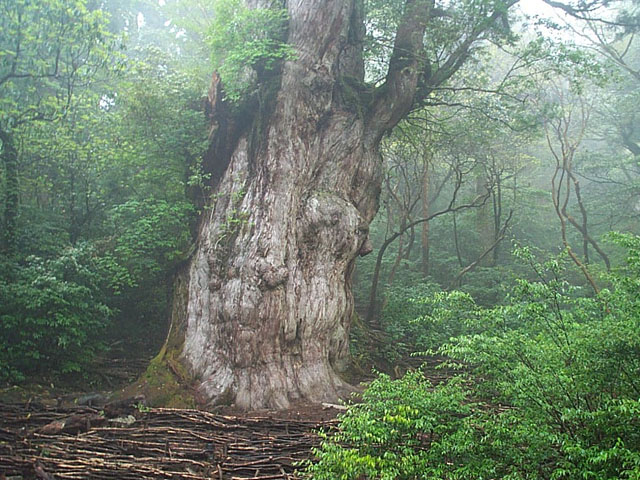
Yakushima is a near-circular granite island in the East China Sea, roughly 60 km off the southern coast of Kyūshū and forming the southernmost reach of Kagoshima Prefecture — about 1,000 km southwest of Tokyo. Its interior rises steeply into peaks approaching 2,000 meters, and clouds piling against that wall make it one of the rainiest places in Japan. The granite bedrock gives little for roots to feed on.
Those two facts — relentless rain and poor soil — are why the island’s cedar matters. Starved and slow, a Yakushima sugi lays down extremely tight annual rings packed with resin. The wood becomes dense, aromatic, and so rot-resistant that trunks felled or fallen centuries ago still lie sound on the forest floor. A tree that passes a thousand years earns the name yakusugi; the famous Jomon Sugi is estimated, by various methods, at somewhere between 2,000 and 7,000 years old.
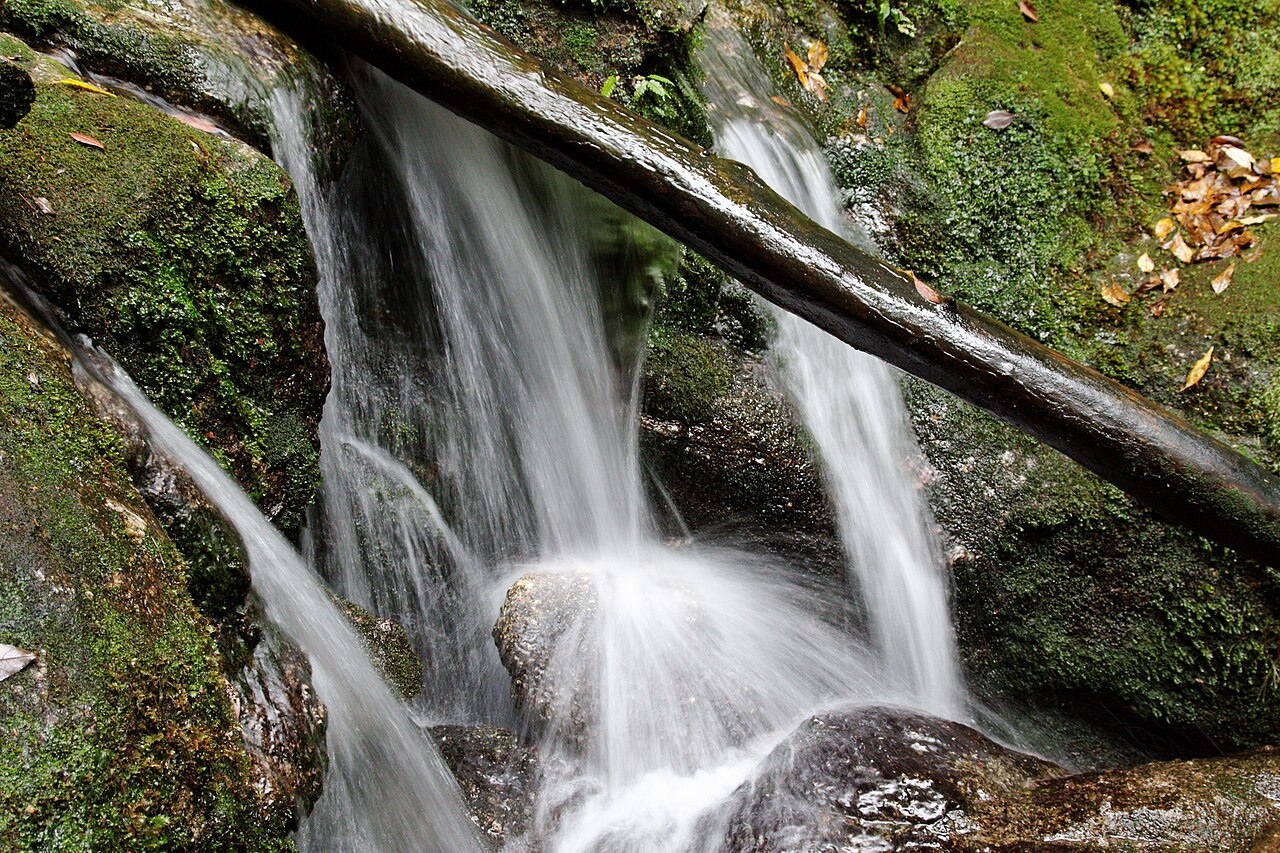
The island was not always protected. In the Edo period (1603–1868), the Shimazu — the clan that ruled the Satsuma domain from Kagoshima — logged yakusugi heavily. Because the granite island could not grow enough rice, its land tax (nengu) was paid not in grain but in flat cedar roof shingles called hiragi, split from yakusugi. The stumps left behind by that era still stand in the forest, weathered but intact, and they are the visible record of the trade.
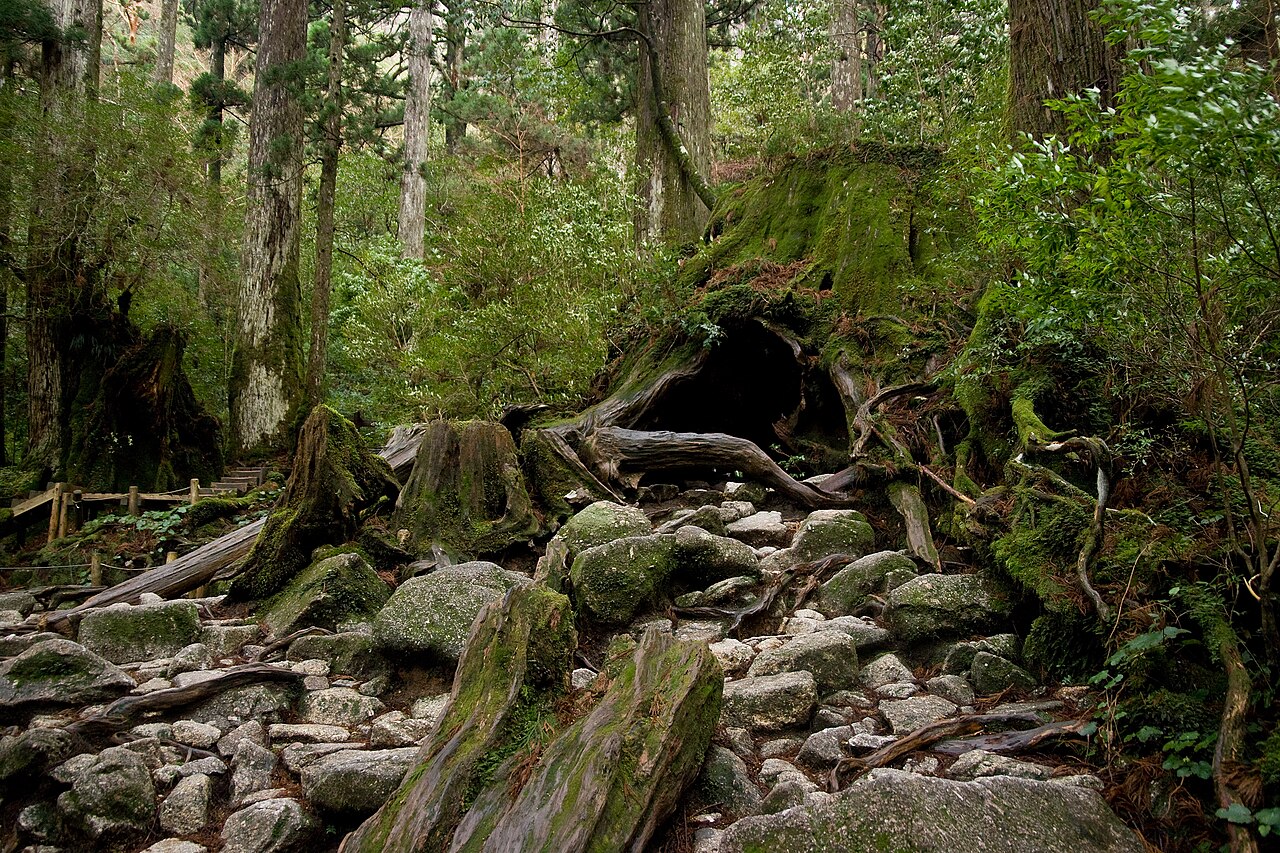
- c. 2,000–7,000 years ago — the island’s oldest cedars (the future Jomon Sugi) take root (estimated).
- Over 1,000 years — trees that reach this age earn the name yakusugi.
- Edo period (1603–1868) — the Shimazu (Satsuma) domain logs yakusugi; land tax (nengu) is paid in cedar shingles (hiragi).
- Edo-era stumps — trees felled for the domain (such as Wilson’s Stump) leave stumps that still stand in the forest.
- Late 20th century — live-tree logging is banned; makers may use only recovered doma-buri (fallen trunks and old stumps).
- 1993 — Yakushima is registered as a UNESCO World Heritage natural site; its mossy forests later inspire the setting of Princess Mononoke.
- 2026 — craftspeople work only recovered wood; yakusugi is, by design, a finite heritage material.
That ban is the defining condition of the craft today. No living yakusugi may be cut. Everything a maker turns — chopsticks, trays, small boxes — comes from doma-buri: trunks that fell naturally and stumps recovered from the forest, including wood left over from the Edo-period logging. Each piece is, in a literal sense, drawn from a fixed and shrinking supply.
“Every pair of yakusugi chopsticks comes from a tree that fell on its own or a stump left standing for centuries — not one living cedar on Yakushima may be cut for them.”
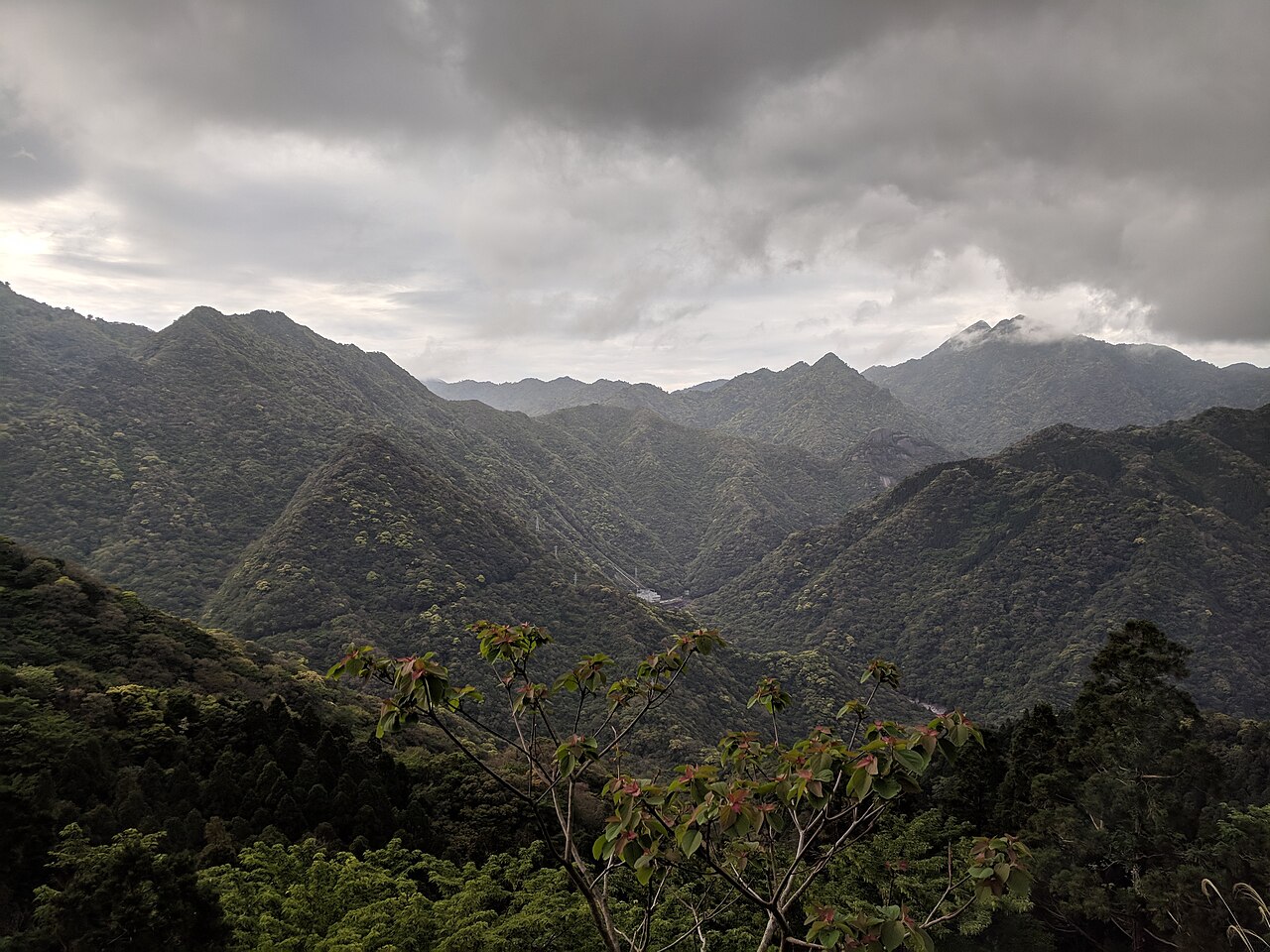
For a buyer, the terroir is the value. The same slow growth that makes the wood rare also makes the grain on a finished pair of chopsticks unusually fine and even, and gives bare yakusugi its faint, resinous cedar scent. Left unlacquered, that grain and aroma sit right where your fingers and lips meet the wood — which is exactly why most makers finish these pieces with nothing heavier than a wipe of oil.
Related jpmono guides — other Kagoshima crafts, Japanese woodwork, and chopstick alternatives worth weighing against a yakusugi pair.
Price snapshot across stores
Our snapshot did not capture a live price for this pair. The JPY figure on the Amazon JP Global Store listing is the authoritative one — verify it there before buying. USD figures elsewhere on this site are approximate (¥150/USD baseline as of mid-2026).
| Store | Item / variant | Price (JPY + USD est.) | Notes |
|---|---|---|---|
| 🇺🇸 Amazon US (search) | Browse Japanese wooden chopsticks | varies (USD) | Best if you’re shopping from the US — Prime shipping, USD pricing, no international customs. Amazon US carries Japanese wood and bamboo chopsticks from various makers; the specific yakusugi pair is sourced from Japan (next row). |
| 🇯🇵 Amazon JP Global Store | Yakusugi cedar chopsticks (ASIN B0CYSZVN3V) | Price on listing — not captured in our snapshot | The sourced listing for this exact pair. Ships internationally from Japan to most major destinations; verify the current price and shipping at checkout. |
| Maker direct | Yakushima workshop pieces | Varies — unconfirmed | Some island workshops sell directly, but pages are usually Japanese-only and may not ship abroad. No maker URL is in our data for this listing. |
| Proxy services (Buyee / Tenso) | Any Japan-only listing | Item price + proxy fee + forwarding | Useful only if a pair appears on a Japan-domestic shop that does not ship abroad; adds handling and forwarding cost. |
What it does well
Weaknesses and things to verify before buying
- No price or dimensions in our data. The fetched snapshot returned an empty dataset for this ASIN — confirm price, length, and exact contents on the live listing before ordering.
- Bare wood needs care. Unlacquered cedar should be hand-washed, dried promptly, and kept out of the dishwasher and long soaks; it is not a set-and-forget utensil.
- Softwood is less hard-wearing. Cedar is softer than lacquered or hardwood chopsticks, so the tips can dent or wear with heavy daily use.
- “Yakusugi” labeling varies. Because the material is scarce and valuable, verify the seller’s description and any provenance claims; grain and origin can be hard to confirm from photos alone.
- Finite, heritage material. Supply comes only from recovered wood. Some buyers will see that as the appeal; others may prefer a renewable wood or bamboo on conservation grounds.
- International shipping and customs. Buying via Amazon JP Global Store means cross-border shipping (commonly in the ~$15–$40 range to the US/EU for small items) and possible duties above your local threshold — check before checkout.
Conclusion — which buyer type are you?
Other ways to approach this purchase
🏆 Editor’s Pick
❓ Frequently Asked Questions
What exactly is “yakusugi”?
Yakusugi is Japanese cedar (Cryptomeria japonica) growing on Yakushima island that has lived more than 1,000 years. The island’s heavy rain and poor granite soil make the trees grow slowly, producing dense, resin-rich, rot-resistant wood.
Are living trees cut to make these chopsticks?
No. Live-tree logging on Yakushima is banned. Craftspeople work only doma-buri — fallen trunks and Edo-period stumps recovered from the forest floor — which is why yakusugi is a finite, heritage material.
Can it ship outside Japan?
The sourced listing is on the Amazon JP Global Store, which ships internationally to most major destinations. Expect cross-border shipping in roughly the $15–$40 range for a small item, plus possible customs duties above your local threshold.
How do I care for unlacquered cedar chopsticks?
Hand-wash with mild soap, rinse, and dry promptly. Avoid the dishwasher, long soaking, and prolonged heat. An occasional light wipe of food-safe oil helps the bare wood; treat them as a keepsake utensil rather than a daily workhorse.
How much do they cost?
Our data snapshot did not capture a live price for this pair, and we do not guess. The JPY price shown on the Amazon JP Global Store listing is authoritative — please verify it there before buying.
Why is Yakushima famous beyond its cedar?
Yakushima was registered as a UNESCO World Heritage natural site in 1993, and its moss-deep primeval forests are widely cited as the inspiration for the forest setting of the film Princess Mononoke.
Is a yakusugi pair a good gift?
Yes, for a recipient who appreciates provenance and natural materials. It carries a substantial story — a UNESCO island, centuries-old cedar, and an Edo-period tax paid in cedar shingles — in a small, lightweight object. Include a short note on hand-washing care.
jpmono.com is curated by a Japan-based editorial team (working out of Toyama in the Hokuriku region and Nara in Kansai) and is independent. We do not take payment from the makers we feature; income comes from affiliate links. Read more about our editorial standards.
This article was prepared with AI assistance and reviewed against the source listing and provided data notes. Specs, prices, and availability should be verified on the retailer’s page before purchase.
Affiliate disclosure: jpmono.com may earn a commission on qualifying purchases made through links on this page, at no additional cost to you.