![Onta-yaki Tobikanna Katakuchi Spouted Bowl: Where to Buy [2026]](https://jpmono.com/wp-content/uploads/2026/06/onta-yaki-tobikanna-katakuchi-spouted-bowl-where-to-buy-2026-featured.jpg)
A katakuchi (片口, “single-spout” pouring bowl) is one of the quiet workhorses of the Japanese table — a lipped vessel you reach for to decant sake, mix a dressing, pour out dashi, or serve at the moment of use rather than store. The version covered here is made in Onta-yaki (小鹿田焼), the pottery of a single mountain hamlet called Sarayama in Hita, Oita Prefecture, on the island of Kyūshū. It carries the kiln’s signature decoration: tobikanna (飛び鉋, “flying chisel”), the rhythmic, comb-like chatter pattern struck into the leather-hard clay as the pot turns.
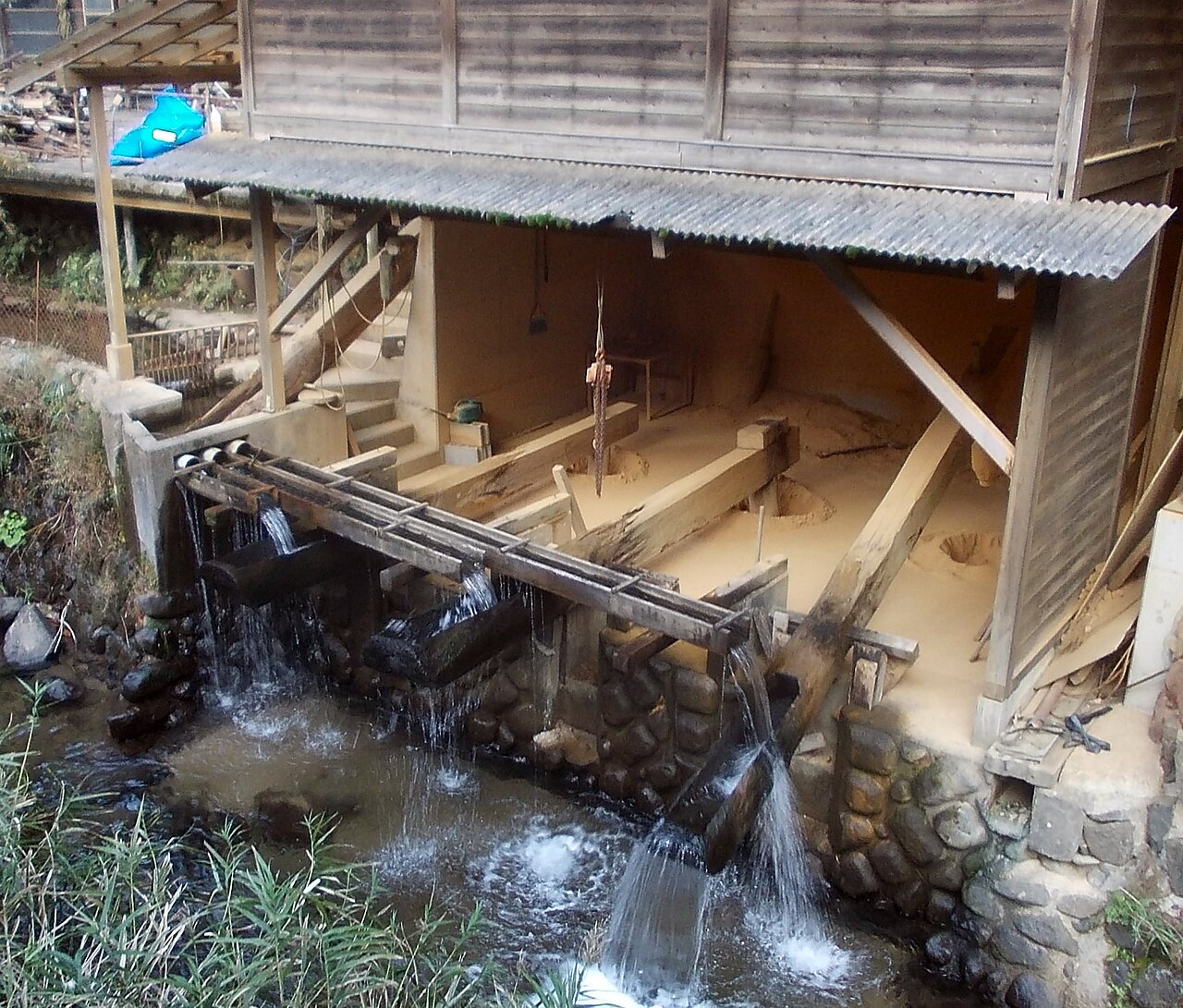
Onta-yaki is unusual even by the standards of Japanese folk pottery. The craft has been carried by a closed handful of families since 1705, the clay is still crushed by water-powered hammers fed by the mountain stream, and the work was championed by the early-20th-century mingei (民藝, “folk-craft”) movement of Yanagi Sōetsu. In 1995 the technique was designated an Important Intangible Cultural Property. For international readers, that combination — a living village kiln, an instantly recognizable mark, and a genuinely useful everyday form — is what makes a humble pouring bowl worth a closer look.
This guide is written for buyers shopping from outside Japan. It covers who the piece suits and who should skip it, what the published listings actually state (and where the data is thin), how the price compares across stores, and the practical realities of buying handmade Kyūshū stoneware internationally. Where a fact is not in the source data, it is marked as such rather than invented.
🔄 Updated:
⏱️ Read time: ~11 min

- Who this is for — and who should skip it
- Product overview (from published specs)
- Price snapshot across stores
- What it does well
- Weaknesses and things to verify before buying
- Conclusion — which buyer type are you?
- Other ways to approach this purchase
- Where this comes from
- 🏆 Editor’s Pick
- ❓ Frequently Asked Questions
Who this is for — and who should skip it
- Want a genuine village-kiln folk piece, not a mass-produced facsimile of one
- Like the idea of a single multipurpose pourer for sake, dressings, dashi, or tea
- Appreciate visible hand-marks — the tobikanna chatter, slight asymmetry, glaze pooling
- Are building a mingei-leaning table and want a recognizable, documented tradition
- Accept that each piece varies because it is thrown and decorated by hand
- Need exact, repeatable dimensions and color across multiple units
- Want bright white, painted, or porcelain-smooth tableware (this is dark stoneware)
- Expect dishwasher- and microwave-rated specs printed on the box
- Are unwilling to hand-wash and treat the piece gently
- Need it shipped fast and cheaply — this sources from Japan, with the costs that implies
Product overview (from published specs)
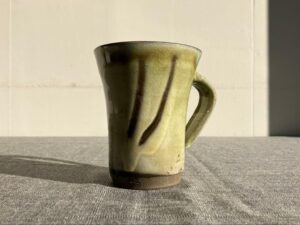
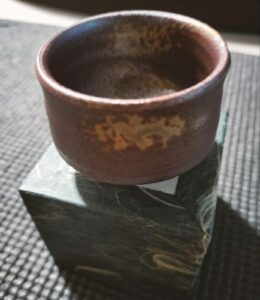
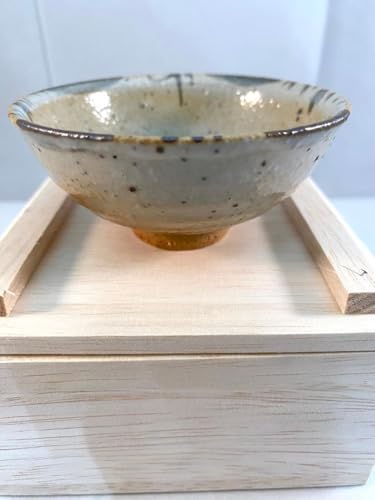
Based on listings, this is a hand-thrown iron-glaze stoneware katakuchi decorated with tobikanna, made in the Sarayama district of Hita by one of the traditional Onta family kilns (the Sakamoto, Kuroki, and Yanase line). Because Onta work is sold as folk ware rather than spec-sheet product, several measurable fields are simply not published. The table below distinguishes what the listings state from what is unconfirmed.
Onta-yaki Tobikanna Katakuchi Spouted Bowl
小鹿田焼 直径約11.5cm 片口 飛びかんな 飛び鉋 おんた焼き 中鉢 和食器
通常6~7日以内に発送します。 · Sold by mokomoko-shop · ASIN B0FY3BMQKL
Price and availability as of 2026-09-01 05:22 JST. The Amazon listing at the time of purchase is authoritative. jpmono.com earns a commission on qualifying purchases at no extra cost to you.
| Attribute | Detail | Source |
|---|---|---|
| Craft | Onta-yaki (小鹿田焼), folk stoneware | Maker tradition |
| Form | Katakuchi — single-spout pouring bowl | Listing |
| Decoration | Tobikanna (flying-chisel chatter), often with hakeme / uchikake glaze | Maker tradition |
| Material | Iron-glaze stoneware, local Sarayama clay, wood-fired | Maker tradition |
| Origin | Sarayama, Hita, Oita, Kyūshū | Maker tradition |
| Dimensions / capacity | Unconfirmed — varies by piece; check the live listing | — |
| Weight | Unconfirmed — check manufacturer / listing | — |
| ASIN | B06X9L2ZNN | Amazon JP Global Store |
⚠️ Data note: the fetched dataset for this guide returned no live product fields beyond the item identifier. Only the Amazon JP listing snapshot is available, and live pricing was unavailable at the time of writing; figures and dimensions may have shifted since. Always confirm size, capacity, and price on the retailer page before buying. Sources consulted: Amazon US search (primary, moonill-20), Amazon JP Global Store (secondary, moonill-22, sourced listing), and maker tradition.
📖 Glossary — key terms
Katakuchi (片口) — a bowl with a single pulled spout, used to pour or decant. A folk-table staple for sake, sauces, dashi, or batter.
Onta-yaki (小鹿田焼) — folk pottery from the Sarayama hamlet in Hita, Oita, made continuously since 1705.
Tobikanna (飛び鉋, “flying chisel”) — a decoration made by holding a sprung metal blade against the turning pot so it skips and chatters, leaving a band of rhythmic dashes.
Hakeme (刷毛目) — sweeping brush-marks of white slip across the surface.
Uchikake (打ち掛け) — glaze poured or flung onto the pot so it trails and runs.
Mingei (民藝) — the “folk craft” movement led by Yanagi Sōetsu, which prized anonymous, handmade, everyday objects.
Karausu (唐臼) — water-powered rocking hammers that crush the raw clay; the sound of them is registered as one of Japan’s “100 soundscapes.”
Related pieces already covered on jpmono — same village, neighboring Kyūshū kilns, and other mingei pourers and cups for cross-shopping.
Price snapshot across stores
JPY (¥) is the authoritative price for the specific item; USD figures are approximate estimates at a ¥150/USD baseline as of mid-2026. Live pricing was unavailable in the fetched data at the time of writing — confirm at the retailer before buying.
| Store | Item / variant | Price (JPY + USD est.) | Notes |
|---|---|---|---|
| 🇺🇸 Amazon US (search) | Browse Japanese mingei pottery & pouring bowls | varies (USD) | Best if you are shopping from the US — Prime shipping, USD pricing, no international customs. Amazon US carries Japanese stoneware and folk-pottery serving pieces from various makers; this exact Onta katakuchi ships from Japan (next row). |
| 🇯🇵 Amazon JP Global Store | This exact Onta-yaki tobikanna katakuchi (ASIN B0FY3BMQKL) | Price varies — unavailable in data; confirm on listing | The sourced listing. Ships internationally from Japan to most major destinations. |
| Maker direct | Sarayama family kilns (no unified online storefront) | N/A | Onta kilns mostly sell on-site or through galleries; no consolidated direct-ship shop. Best secured in person or at the autumn pottery fair. |
| Proxy services (Buyee / Tenso) | Forwards Japan-only listings abroad | Item price + forwarding fee | Useful when a kiln or gallery sells only within Japan. Adds a service fee and a second shipping leg; fragile-item packing is your responsibility to request. |
What it does well
Thrown and decorated by one of the closed Onta families in Sarayama, not a factory reproduction of the style. The mingei lineage is documented.
The tobikanna chatter band is one of the most identifiable surfaces in Japanese folk pottery — visual interest without painted decoration.
A katakuchi pours sake, dressing, dashi, or batter, and doubles as a small serving bowl. One object, many table jobs.
Iron-glaze stoneware is dense and durable, made for daily handling rather than display-only delicacy.
Weaknesses and things to verify before buying
- Dimensions and capacity are unconfirmed in the data. Each piece varies; verify size and volume on the live listing before purchase, especially if you need it to hold a specific amount.
- Pricing was unavailable at the time of writing. The fetched dataset returned no price; treat any figure you see at checkout as the real one and confirm before buying.
- Hand-made variation is the point, not a defect. Color, chatter spacing, glaze runs, and small irregularities differ unit to unit. If you want identical matched pieces, this is the wrong category.
- Care is hands-on. Unglazed or partially glazed stoneware can absorb liquids and odors; hand-washing and gentle treatment are safest. Dishwasher and microwave ratings are not published — do not assume them.
- It is dark, earthy ware. If your table is bright porcelain or modern white, the iron-glaze tone may not match what you picture.
- International shipping adds cost and time. Sourced from Japan, the piece carries shipping fees, possible customs duties above local thresholds, and breakage risk in transit for a fragile ceramic.
Conclusion — which buyer type are you?
You value documented mingei provenance and a living village kiln. The Onta katakuchi fits — buy the genuine Sarayama piece and accept the hand-made variation.
You want one characterful pourer for everyday sake and sauces. This works well; confirm size on the listing so it suits your table.
Handmade Kyūshū stoneware plus international shipping is not the cheapest path. If price is the deciding factor, browse comparable folk pourers on Amazon US first.
You need matched sets, exact specs, dishwasher safety, or bright porcelain. A folk stoneware katakuchi will frustrate you — choose another category.
Other ways to approach this purchase
Onta holds an autumn pottery fair (Mintōka-sai) where prices and selection are best — worth it if you can travel or use a forwarder during the event.
Mingei galleries and Japanese secondhand markets carry Onta pieces. Condition and authenticity vary, so buy from sellers who document the kiln.
If you buy through Amazon JP Global Store, marketplace points and card rewards can offset some of the international shipping premium.
If shipping or variation is a dealbreaker, a domestically available folk pourer (see the Amazon US search) covers the same table function.
Where this comes from

Onta-yaki is made in one place and effectively nowhere else: Sarayama (皿山, literally “plate mountain”), a tiny hamlet folded into the hills of Hita in northwestern Oita Prefecture, on the southern main island of Kyūshū. Hita sits inland among forested mountains, threaded by the Chikugo River system. The kiln district has everything a folk pottery needs within walking distance — clay dug from the hillsides, a stream to power the clay-crushing hammers, and timber for the wood-burning climbing kilns.
The kiln was founded in 1705, when a potter was invited from the neighboring Koishiwara kiln across the prefectural border in what is now Fukuoka to supply everyday ware for the Hita region. At the time Hita was a Tenryō (天領) — a territory under the direct administration of the Tokugawa shogunate rather than a local domain lord. That mattered economically: as an administrative and commercial hub, Hita generated steady demand for practical pots, and the merchant district of Mameda-machi grew prosperous enough to keep the village kilns busy for generations.
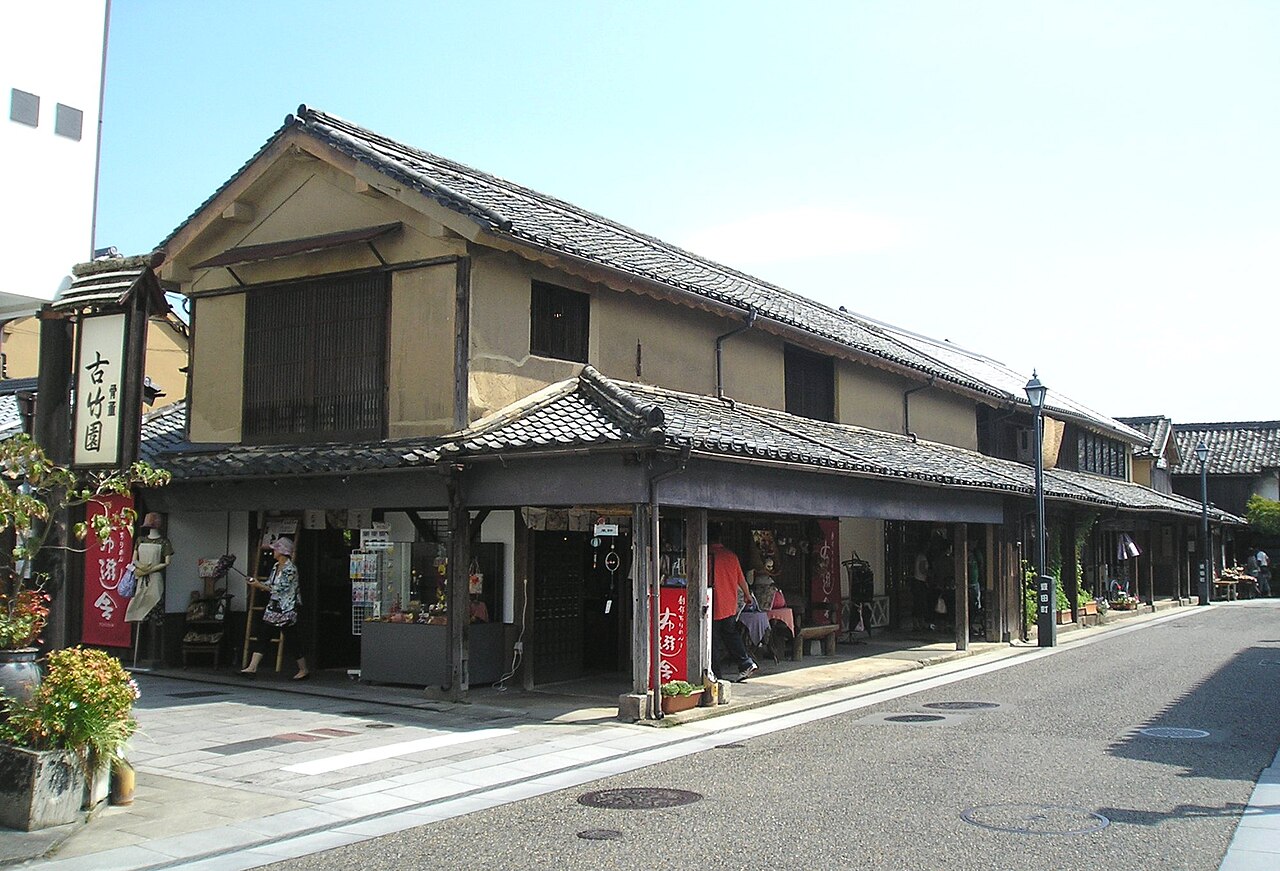
- 1705 — Kiln founded at Sarayama; a potter is invited from Koishiwara to serve the Hita region.
- Edo period — Hita governed as a Tenryō (direct shogunate territory); Mameda-machi merchants sustain demand.
- 1920s–30s — Yanagi Sōetsu’s mingei movement champions Onta as exemplary anonymous folk craft.
- 1954 & 1964 — British potter Bernard Leach visits and works at the village, raising its international profile.
- 1995 — The Onta-yaki technique is designated an Important Intangible Cultural Property.
- 2008 — The sound of the karausu clay hammers is listed among Japan’s “100 soundscapes.”
- 2026 — Still made by the same closed handful of Sarayama families, by hand.
What sets Onta apart is its closure. For three centuries the craft has passed only through a small, fixed group of families — the Sakamoto, Kuroki, and Yanase lines among them — with, by tradition, no apprentices taken from outside the village and the work divided so that techniques stay within the hamlet. The clay is still crushed by water-powered karausu (唐臼) — see-sawing hammers driven by the stream — rather than by machine, and the pots are wood-fired in climbing kilns. This is why a single katakuchi carries so much weight: it is the product of an unbroken local system, not a style applied in a distant factory.
“The clay is crushed by the stream, shaped by hands that learned only in this valley, and marked by a chisel allowed to skip — three centuries of the same village answering the same question.”
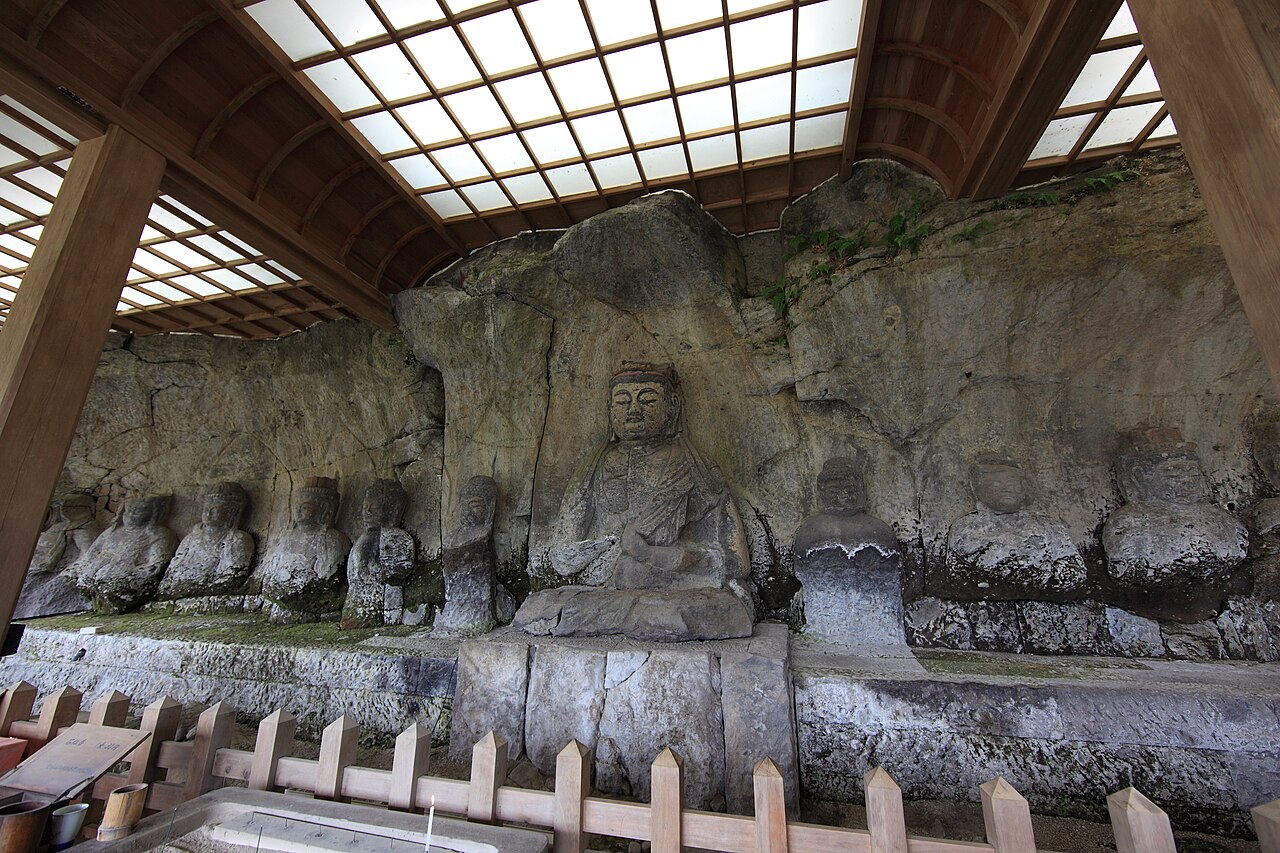
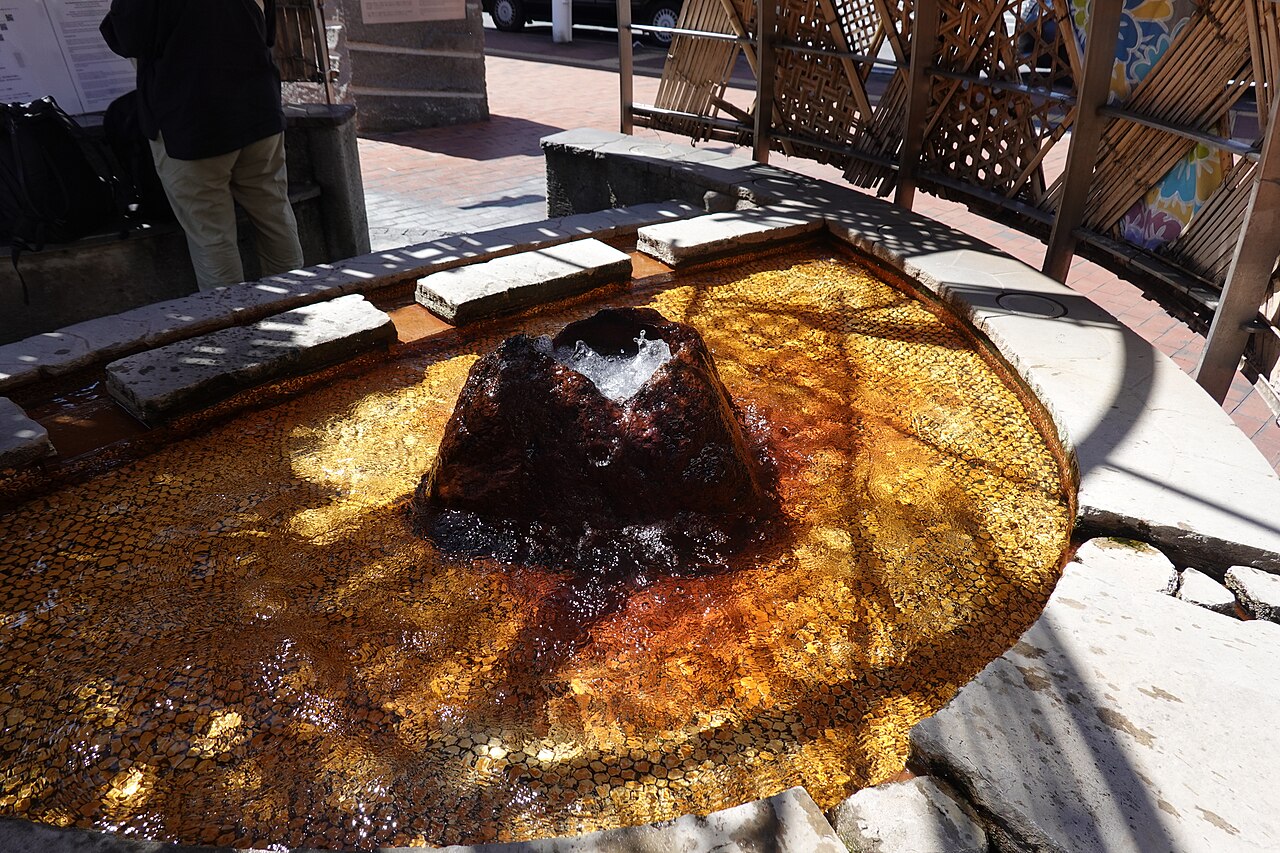
The wider prefecture frames the kiln. Oita is a Kyūshū prefecture defined by mountains and water rather than industry — most famous for the hot springs of Beppu and Yufuin, and home to National Treasures like the Usuki Stone Buddhas, carved into cliff faces and tended by hand over centuries. That patient, hand-carried sensibility is the same context in which a village kiln can keep working the way it did in 1705.
On the table, a katakuchi belongs to the everyday rhythm of Japanese eating and drinking — decanting cold sake in summer, warming it in winter, pouring out a citrus-soy dressing, or serving a small simmered dish. It is folk ware in the truest sense: made to be used, refilled, and washed, year after year. That is exactly the appeal the mingei movement saw in it a century ago.
🏆 Editor’s Pick
❓ Frequently Asked Questions
Does Amazon JP Global Store ship this Onta-yaki katakuchi internationally?
What is tobikanna, the pattern on the bowl?
How should I care for it — is it dishwasher safe?
Will the piece I receive look exactly like the photo?
What can I actually use a katakuchi for?
Why is the price shown as varying rather than fixed?
How is Onta-yaki different from the neighboring Koishiwara ware?
jpmono.com is curated by a Japan-based editorial team (working out of Toyama in the Hokuriku region and Nara in Kansai) and is independent. We do not take payment from the makers we feature; income comes from affiliate links. We do not physically test every product — we read maker tradition and source listings.
🤖 This article was prepared with AI assistance and reviewed against the source listing data. Facts not present in the underlying data are marked as unconfirmed rather than asserted.
Affiliate disclosure: jpmono.com may earn a commission on qualifying purchases made through links on this page, at no additional cost to you.