![Awa Tokushima Cast Bronze Orin: Handmade Buddhist Altar Bell Guide [2026]](https://jpmono.com/wp-content/uploads/2026/05/japan-map-regions-and-prefectures-800x1050.png)
An orin (おりん, a Buddhist altar bell) is one of the quietest objects in a Japanese home, and one of the most demanding to make well. The example covered here is a hand-cast bronze orin from Tokushima, on the island of Shikoku — the former province of Awa, a place better known abroad for indigo dye and its summer dance festival than for metalwork. Yet the two are connected. The merchant wealth that indigo built funded temples and family altars, and altars need bells.
Tokushima does not market a single nationally branded “Tokushima orin” the way Takaoka markets its cast bronze or Nambu its iron kettles. What it has instead is a living base of bronze sand-casters who supply the gilt fittings and bells of Awa butsudan (the regional Buddhist-altar craft) and the struck atari-gane gongs that keep time in Awa Odori. The orin here sits inside that lineage rather than under a famous maker’s name.
This guide is written for international readers weighing a small, evergreen piece of Shikoku metalwork — for an altar, a meditation corner, or simply a desk. It covers the bell’s form and uses, where the craft comes from, how to choose one from outside Japan, and who should pass when the available details are too limited.
🔄 Updated:
⏱️ Read time: about 11 minutes
- Who this is for — and who should skip it
- Product overview (from published specs)
- Where this comes from — place, era, and the craft tradition
- 📦 Shipping & where to buy from outside Japan
- Where to buy Awa Tokushima bronze bells
- What it does well
- Weaknesses and things to verify before buying
- Conclusion — which buyer type are you?
- Other ways to approach this purchase
- ❓ Frequently Asked Questions
Who this is for — and who should skip it
- Want a real Buddhist altar bell with a long, clean sustain rather than a decorative novelty
- Keep a butsudan, a meditation space, or a daily mindfulness practice
- Value regional casting lineage over a famous brand name
- Appreciate solid, unadorned bronze that develops a patina over decades
- Are comfortable confirming the bell’s details before buying
- Want a specific certified brand (this is a regional craft, not a single-maker label)
- Expect ornate gilt or makie decoration; this is plain cast bronze
- Are price-sensitive and need a fixed quote before ordering internationally
- Prefer a synthetic or alloy “singing bowl” sold purely as a wellness object
Product overview (from published specs)
Bronze altar bells from the Awa Tokushima tradition are typically cast in small batches by workshops that also serve the local butsudan and festival trade. Because each piece is finished and tuned individually, several physical specifications — exact weight, height, alloy proportions — vary from bell to bell. The table below marks anything not confirmed in published workshop data. Do not treat the blanks as zero — confirm them with the workshop before ordering.
| Attribute | Detail | Source |
|---|---|---|
| Item | Cast bronze orin (Buddhist altar bell) with cushion and mallet | Product details |
| Material | Karakane (唐金) — bronze, a copper-tin casting alloy | Spec / craft lineage |
| Process | Sand-cast (suna-gata), finished by hand | Spec / craft lineage |
| Origin | Tokushima Prefecture (former Awa province), Shikoku | Spec |
| Included | Bell, cushion (zabuton), striking mallet (rin-bō) | Product details |
| Diameter / weight | — | — |
| Pitch / tuning | Unconfirmed — varies by casting | — |
| Maker | Regional Awa casting workshop (no single national brand) | Spec data notes |
📖 Glossary — key terms
- Orin (おりん) — a bowl-shaped Buddhist altar bell, struck on the rim to produce a clear, long-sustaining tone used to mark prayers.
- Karakane (唐金, “Tang metal”) — the traditional Japanese term for cast bronze, a copper-tin alloy prized for its tone and patina.
- Butsudan (仏壇) — a household Buddhist altar; Awa butsudan is Tokushima’s recognized regional version, requiring gilt fittings and bells.
- Awa-ai / aizome (阿波藍 / 藍染) — Awa indigo and indigo dyeing, the trade that made the Tokushima domain wealthy.
- Atari-gane (当り鉦) — the small struck bronze hand-gong that keeps rhythm in Awa Odori, cast by the same metal culture.
- Rin-bō (りん棒) — the small padded mallet used to strike an orin.
- Shokunin (職人) — a skilled craftsperson; here, the sand-casters who pour and finish the bronze.
Where this comes from — place, era, and the craft tradition

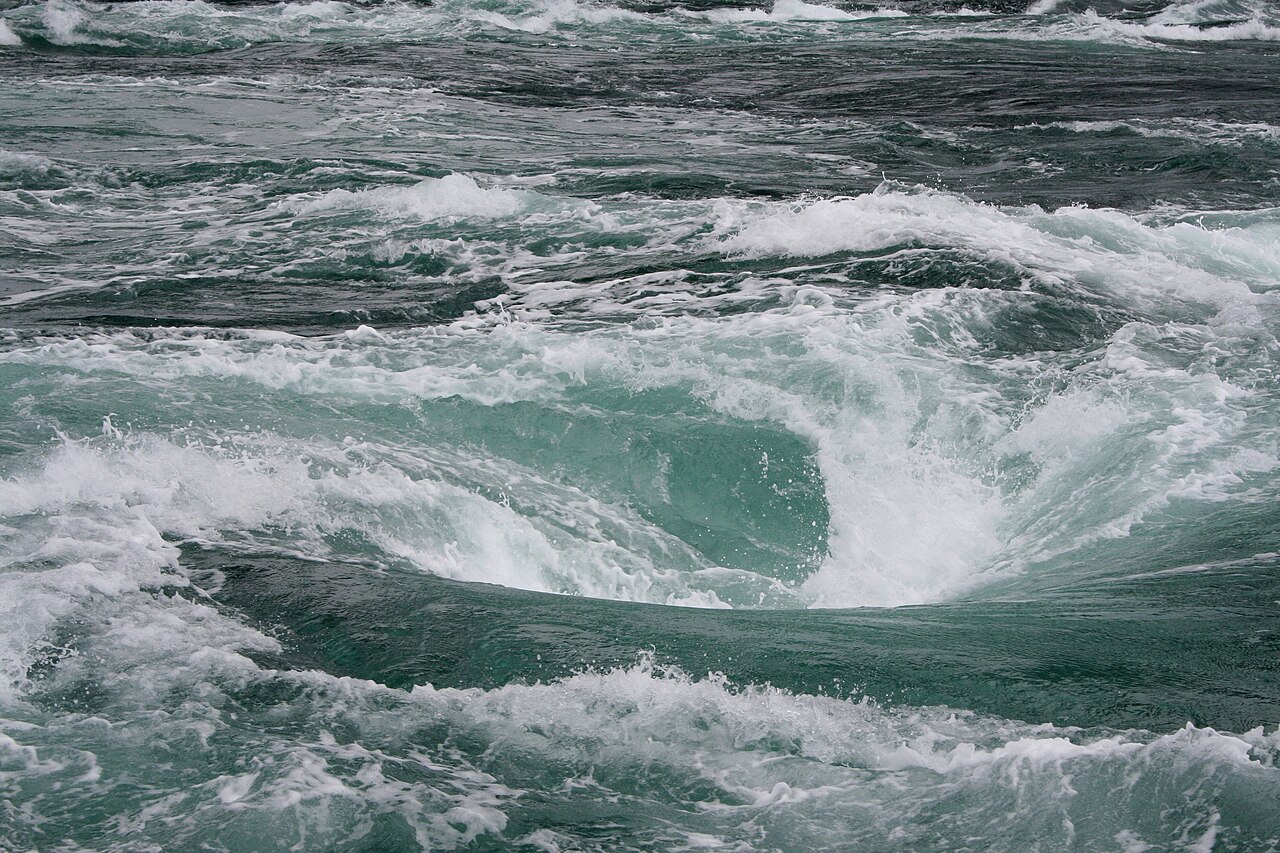
Tokushima city sits at the mouth of the Yoshino River on the eastern edge of Shikoku, the smallest of Japan’s four main islands. The former province of Awa occupied roughly the area of today’s Tokushima Prefecture, hemmed by mountains to the west and opening onto the Kii Channel to the east. That channel, and the Naruto strait that separates Shikoku from Awaji Island, tied the province directly into the maritime trade of the Inland Sea.
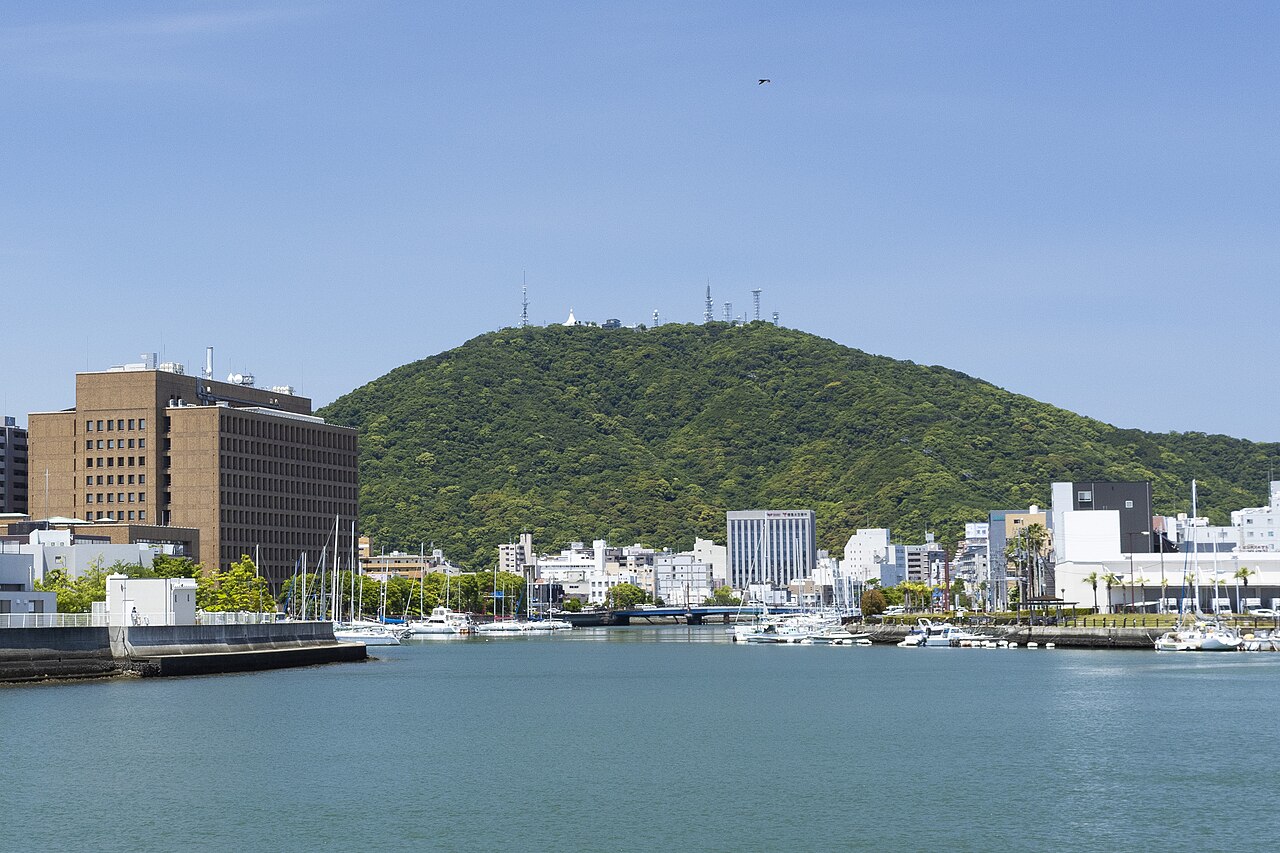
The province’s wealth came from a plant. Awa-ai — Awa indigo — grew in the fertile, flood-renewed soil of the Yoshino River basin, and by the Edo period Tokushima was the dominant indigo producer in Japan. The dye trade made the domain one of the richest of its size, and the indigo merchants (aishō) who controlled it became major patrons.
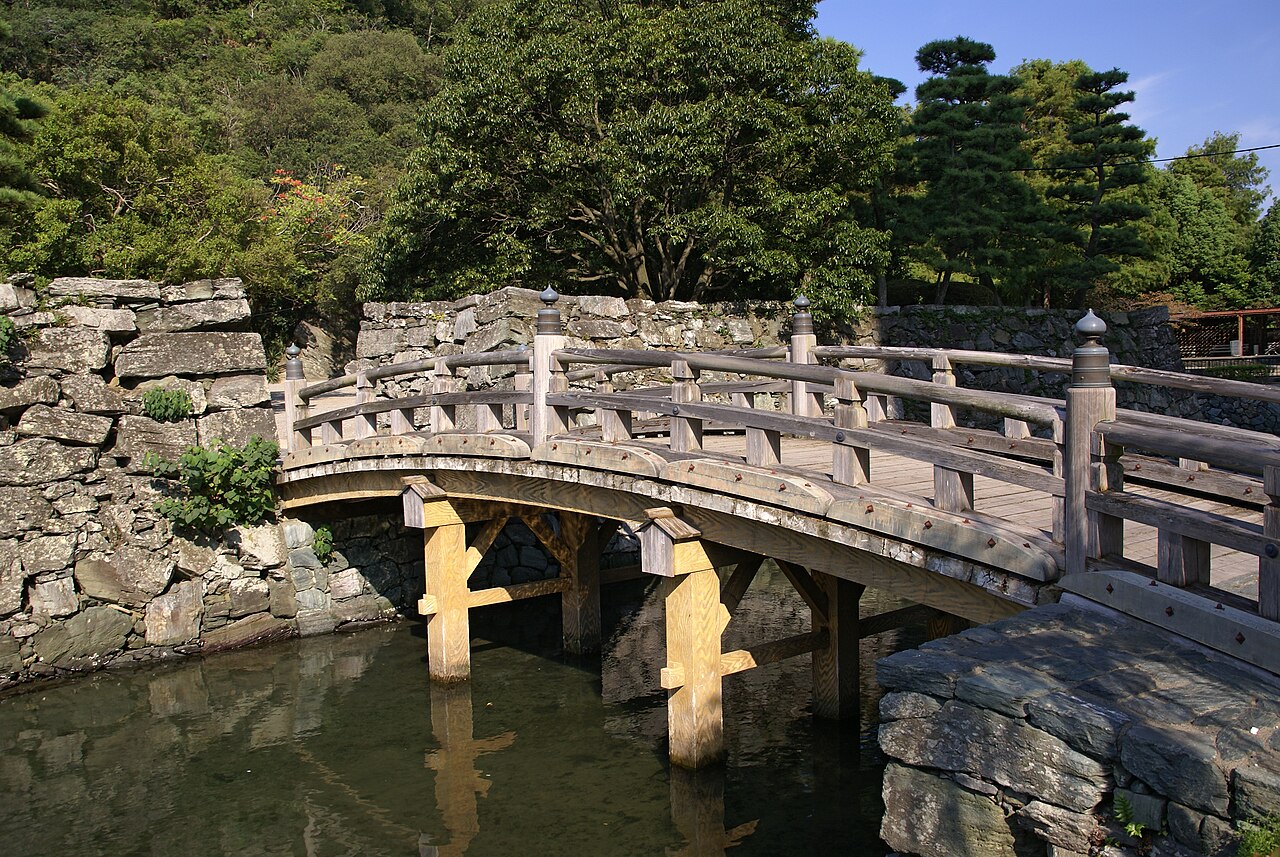
Awa was ruled from Tokushima Castle by the Hachisuka clan, who held the domain from the late sixteenth century through the end of the Edo period. Stable, prosperous, and devout, the castle town supported a dense temple economy — and temples, along with the household altars of merchant families, created sustained demand for two things: gilt metal fittings and bells. This is the demand that anchored a local base of bronze casters.
- 1585 — Hachisuka Iemasa enters Awa province and establishes Tokushima Castle as the domain seat.
- Late 1500s — Awa Odori is traditionally said to begin as a Bon dance in the new castle town (folk-traditional dating).
- Edo period (1603–1868) — Awa-ai indigo makes the Hachisuka domain one of Japan’s wealthiest for its size.
- Edo period — Indigo merchants (aishō) fund temples and family altars, creating steady demand for bells and gilt fittings.
- Edo–modern — Awa butsudan develops as a regional craft requiring orin bells; bronze (karakane) sand-casters form a sustaining base.
- Modern — The same casting culture supplies the struck atari-gane hand-gongs central to Awa Odori, Japan’s most famous dance festival.
- 2026 — Small Tokushima foundries still sand-cast bronze orin to order, as a living secondary metalcraft.
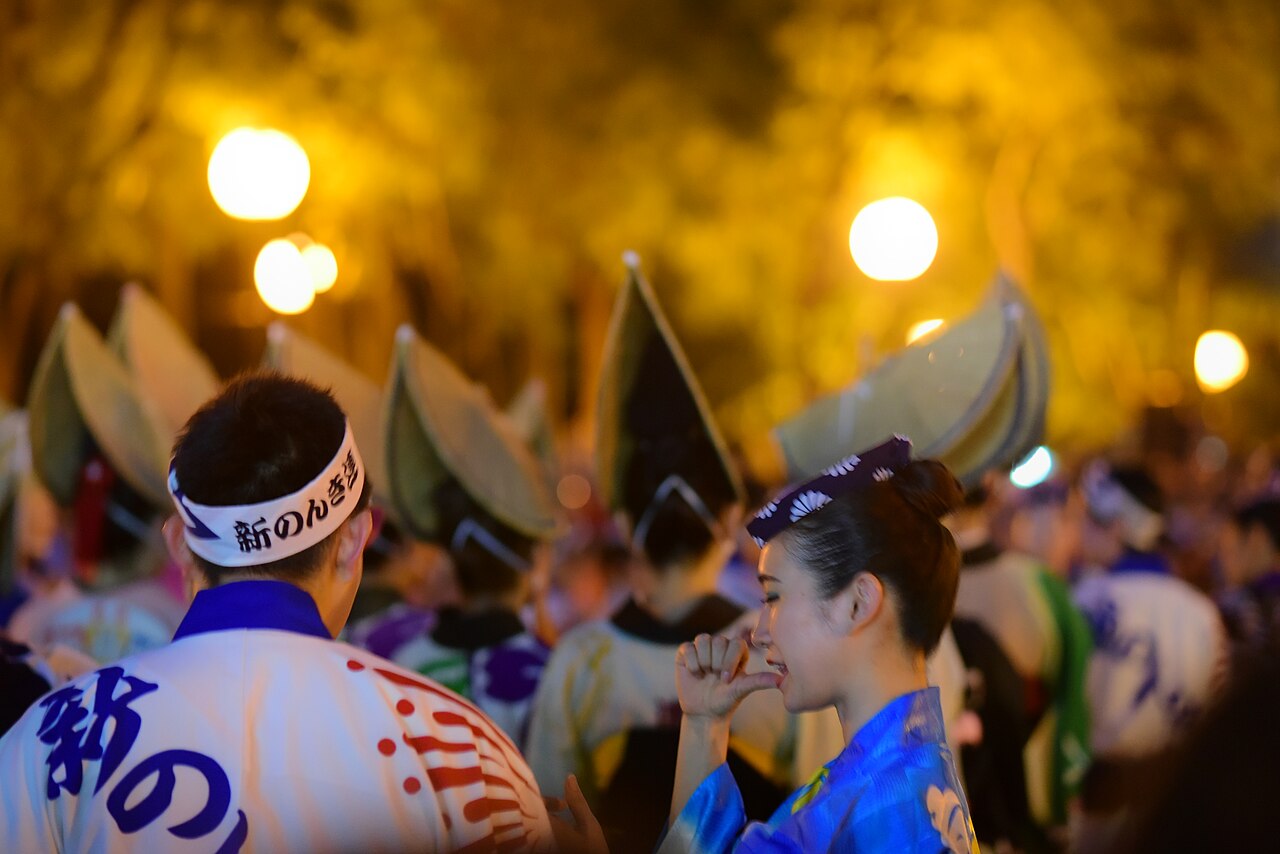
The clearest proof that Tokushima keeps a working bronze tradition is audible every August. Awa Odori, the city’s Bon dance and the largest such festival in Japan, is driven by percussion — and at its core is the atari-gane, a small struck bronze gong whose bright, carrying note cuts through the drums and shamisen. The same alloy family, the same casting knowledge, sits behind both that gong and the altar bell in this guide.
“Indigo paid for the temples, the temples needed bells, and the bells needed casters — which is why a province famous for blue cloth also quietly learned to pour bronze.”
What “still made here” means in Tokushima is honest but modest. This is not a flagship like Takaoka or Nambu, with a roster of named houses and METI catalog pages. It is a secondary metalcraft: a smaller number of workshops casting bells and fittings to order, kept alive by the altar trade and by festival demand. That is exactly why no single “Tokushima orin” brand exists — and why the craft is anchored in the Awa butsudan and festival-casting lineage rather than one maker’s name.
Related jpmono guides — other Shikoku crafts and comparable Japanese metalwork worth reading alongside this one.
 🏺 Otani-yaki tumbler (Tokushima)
🟦 Buaisou Awa indigo tenugui (Tokushima)
 🍳 Kuwana cast iron skillet
 🎴 Owari shippo cloisonné
 🫖 Kaikado tin caddy
 🍵 Odo-yaki yunomi (Shikoku/Kochi)
 🟤 Sanuki kinma lacquer (Shikoku/Kagawa)
🎋 Iyo sudare blind (Shikoku/Ehime)
📦 Shipping & where to buy from outside Japan
- Shipping cost: roughly $15–$40 to the US and EU for a small bell; higher to other regions.
- Customs: orders above your local de-minimis threshold may incur duties; the carrier usually collects these on delivery.
- Proxy option: if the Global Store will not ship to your country, forwarding services such as Buyee or Tenso can relay a domestic-only purchase.
- No voltage concerns: this is a non-electrical object — no adapter or certification issues.
Where to buy Awa Tokushima bronze bells
| Store | Item / variant | Price (JPY + USD est.) | Notes |
|---|---|---|---|
| 🇺🇸 Amazon.com (US) | Browse Japanese orin altar bells | varies (USD) | Best if you are shopping from the US — Prime shipping, USD pricing, no international customs. Amazon US carries bronze orin and singing bells from several makers, useful for comparing size and tone. The exact Awa-cast piece ships from Japan (next row). |
| 🇯🇵 Amazon JP Global Store | Awa cast bronze orin set | — | Ships internationally from Japan. |
| Maker direct | Awa casting workshop (no single national brand) | — | No central storefront; regional altar shops and butsudan retailers may stock comparable bells. |
| Proxy services (Buyee / Tenso) | Domestic-only JP shops | item price + proxy fee | Useful if the Global Store will not ship a particular purchase to your country. |
What it does well
Weaknesses and things to verify before buying
- No confirmed price. Live pricing was unavailable at the time of writing. Treat any USD figure as an estimate and verify before purchase.
- No single-maker guarantee. This is a regional craft, not a certified brand. Buyers who want a named house with documented provenance may be disappointed.
- Tone varies by casting. Each sand-cast bell differs slightly in pitch; the exact note cannot be guaranteed remotely.
- International stock fluctuates. Global Store availability for a niche item can lapse; a proxy service may be needed.
- Patina, not polish. Bronze darkens with age. If you want a permanently bright finish, this is not the right object.
Conclusion — which buyer type are you?
Other ways to approach this purchase
❓ Frequently Asked Questions
Does Amazon JP ship this orin internationally?
Many small household goods on the Amazon JP Global Store ship to most major destinations, and a compact bronze bell is usually eligible. Final eligibility and shipping cost for your country are shown at checkout. If a seller ships domestically only, a proxy service like Buyee or Tenso can forward it.
What size and weight is it?
The available dimensions and weight vary because orin come in many sizes. Choose a size suited to its intended place and use.
Is this a famous brand-name orin?
No. There is no nationally branded “Tokushima orin.” The piece is anchored in the Awa butsudan and Awa Odori casting lineage — a living regional metalcraft — rather than a single maker’s label.
How do I care for a bronze bell?
Wipe it with a dry, soft cloth and keep it dry. Bronze naturally darkens into a patina over years; that is expected and does not affect the tone. Avoid abrasive polishes if you want to preserve the surface.
Can I use it outside a Buddhist altar?
Yes. While its origin is the household altar, the clear sustain also suits meditation practice, mindfulness timing, or simply a quiet desk object. No religious context is required.
Will the tone be exactly as shown?
Each bell is sand-cast individually, so pitch varies slightly between pieces. The spec describes a clear, long-sustaining tone, but an exact note cannot be guaranteed when buying remotely.
What is the price?
jpmono.com is curated by a Japan-based editorial team (working out of Toyama in the Hokuriku region and Nara in Kansai) and is independent. We do not take payment from the makers we feature; income comes from affiliate links. Read more about our editorial standards.
Affiliate disclosure: jpmono.com may earn a commission on qualifying purchases made through links on this page, at no additional cost to you.