![Mito-bori Hand-Engraved Brass Letter Opener: Ibaraki Metalcraft [2026]](https://jpmono.com/wp-content/uploads/2026/05/japan-map-regions-and-prefectures-800x1050.png)
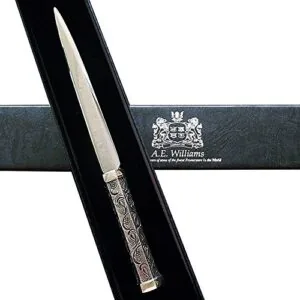
Mito, the old castle town that anchors Ibaraki Prefecture northeast of Tokyo, spent the Edo period as the seat of one of the three senior Tokugawa branch houses. That status concentrated scholars, sword-smiths, and metal-carvers into a single domain — and it is from that lineage of sōken-kinkō (装剣金工, “sword-fitting metalwork”) that this hand-engraved brass letter opener descends. The blade is cut, not cast, by a chisel held the way the old menuki and tsuba carvers held theirs.
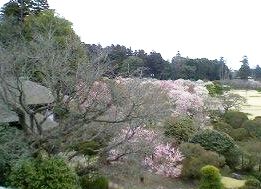
What makes the piece worth a second look for an international reader is the motif. The plum blossom worked in relief along the handle is not a generic flower: it is the signature flower of Mito, drawn from Kairakuen, the plum garden built by the reformist lord Tokugawa Nariaki and counted among Japan’s three great landscape gardens. When the 1876 sword ban ended samurai demand for decorated fittings, Mito’s engravers turned the same hands to desk objects and accessories. A letter opener like this one is a direct descendant of that pivot.
This guide is written for readers weighing a Mito-bori brass paper knife as a desk object or a gift: what the craft tradition actually is, how it differs from inlay work such as Higo zōgan, who it suits, and who should pass. Dimensions and other details can vary by maker, so unconfirmed numbers are left open rather than guessed.
🔄 Updated:
⏱️ Read time: ~9 min
Who this is for — and who should skip it
- Want a desk object with a documented craft lineage rather than a mass-stamped opener
- Appreciate hand-cut relief work and small tool marks as evidence of the maker’s hand
- Are buying a meaningful gift — retirement, a writer, a stationery enthusiast
- Like the cultural specificity of the Mito plum motif and its garden origin
- Are comfortable letting brass develop a patina over time
- Just need a cheap, disposable opener for daily mail volume
- Expect a machine-perfect, identical-every-time finish
- Dislike polishing or want a metal that never tarnishes
- Want same-day domestic shipping rather than an international order from Japan
Product overview (from published specs)
Mito-bori (水戸彫) is the metal-engraving tradition of Mito, Ibaraki Prefecture, where craftsmen chisel family crests, kanji and decorative motifs into brass, copper and iron by hand. Pieces are valued for the crispness of the cuts and the patience the work demands rather than for any single factory line, so each item you find tends to differ in motif, layout and size.
| Attribute | Detail | Source |
|---|---|---|
| Craft | Mito-bori / Mito kinkō hand engraving (relief & openwork) | Maker tradition (data notes) |
| Material | Brass (real metal, not plated resin) | Product title |
| Motif | Plum-blossom or dragon relief on the handle | Product details |
| Origin | Mito, Ibaraki Prefecture, Kantō region, Japan | Maker tradition |
| Length / weight | — | — |
📖 Glossary — key terms (tap to open)
Mito-bori (水戸彫, “Mito carving”) — the metal-carving tradition of Mito, worked in relief and openwork cut directly into the metal surface.
Sōken-kinkō (装剣金工, “sword-fitting metalwork”) — the carving of sword fittings such as the guard and grip ornaments; the trade from which Mito-bori descends.
Kinkō (金工) — decorative metalworking in general; a kinkō-shi is a metal-carving artisan.
Takabori (高彫, “high carving”) — bold high-relief engraving, a hallmark of the Mito school.
Tsuba / menuki / kozuka (鍔・目貫・小柄) — the sword guard, grip ornaments, and small utility-knife handle; classic canvases for kinkō carving.
Shakudō (赤銅) — a copper-gold alloy that patinates to deep blue-black, prized in Edo-period fittings alongside iron and brass.
Haitōrei (廃刀令, “sword abolition edict”) — the 1876 ban on wearing swords in public, which ended samurai demand for decorated fittings.
Where this comes from

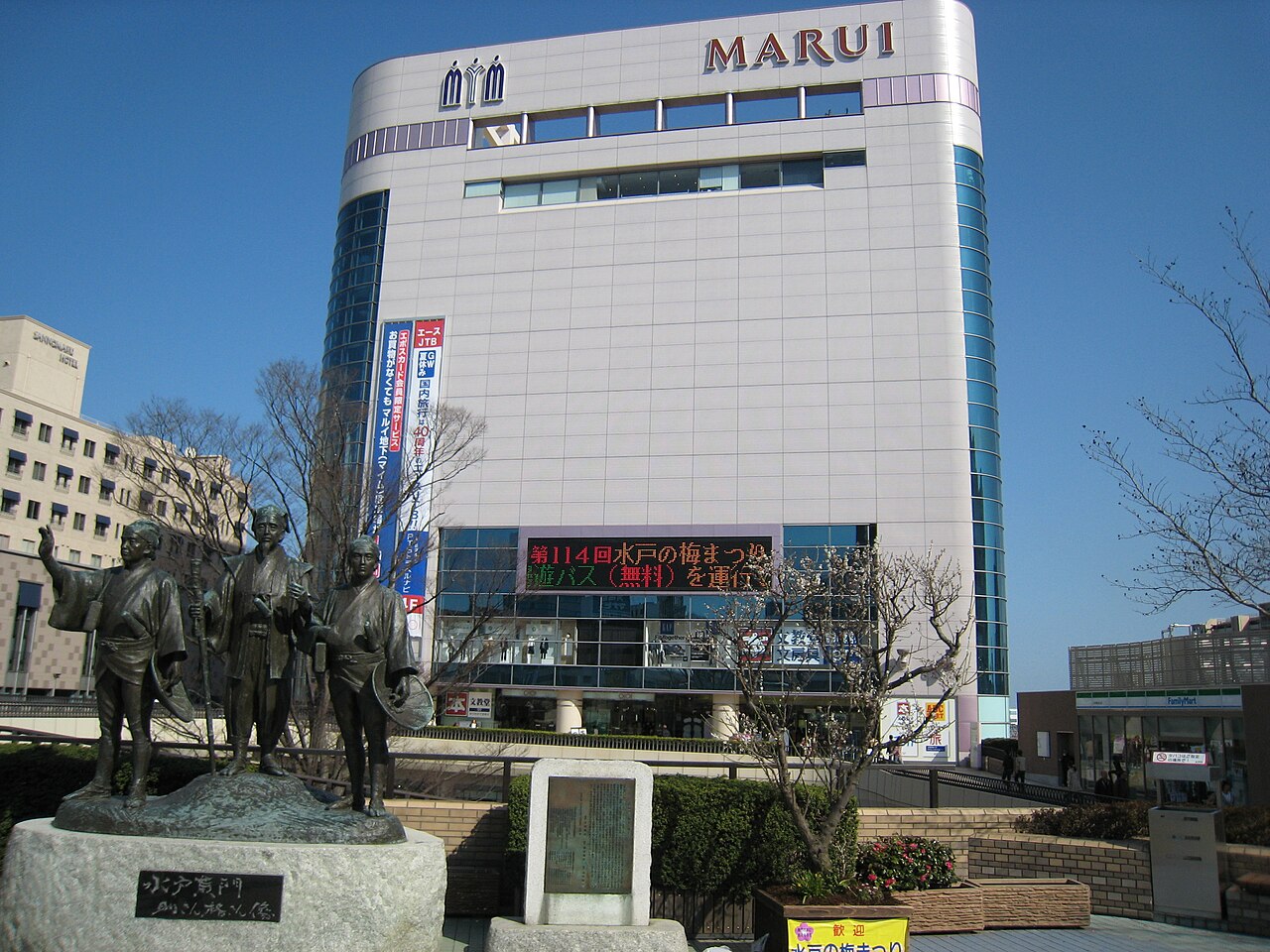
Mito sits on the Pacific side of the Kantō plain, the capital of Ibaraki Prefecture and roughly 100 km northeast of Tokyo. In the Edo period it was the seat of the Mito domain — one of the three senior Tokugawa branch houses, the gosanke, whose lords ranked among the most prestigious daimyō in the country. That rank mattered for craft: a domain of that standing maintained sword-smiths and metal-carvers, and concentrated the patronage that lets a specialized trade like sword-fitting carving take root and refine itself over generations.
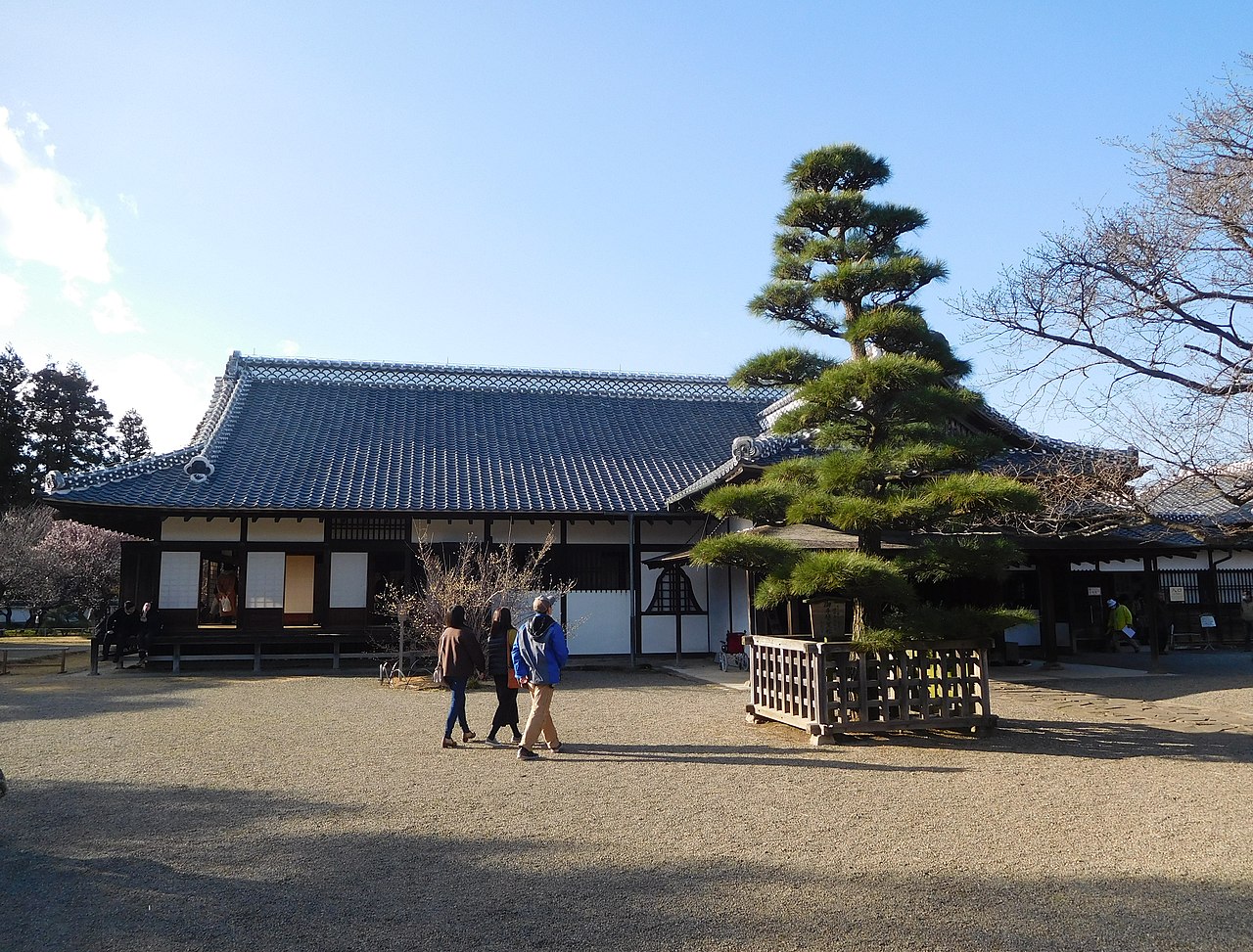
Mito’s other distinction was intellectual. The domain ran the Dai-Nihon-shi (大日本史), a monumental history of Japan begun under Tokugawa Mitsukuni in the seventeenth century and not completed for centuries. In 1841 the reformist lord Tokugawa Nariaki founded the Kōdōkan, the domain academy, and the following year opened Kairakuen, a vast plum garden on the edge of the castle town.
- 1609 — Mito domain established as a senior Tokugawa branch house (gosanke).
- 1657 — Tokugawa Mitsukuni launches the Dai-Nihon-shi history project.
- Edo period — The Mito school of sōken-kinkō flourishes; bold takabori relief, dragon, wave, and plum motifs.
- 1841 — Tokugawa Nariaki founds the Kōdōkan domain academy.
- 1842 — Kairakuen plum garden opened; the plum becomes a signature emblem of Mito.
- 1876 — The Haitōrei sword ban ends samurai demand for decorated fittings.
- After 1876 — Mito engravers redirect their chisels to decorative metalwork: desk objects, accessories, and fittings.
- 2026 — The Mito-bori carving lineage continues in brass and shakudō desk pieces such as this letter opener.
Through the Edo period, Mito became a leading center of sōken-kinkō — the carving of sword fittings such as tsuba (guards), menuki (grip ornaments), and kozuka (small-knife handles) in iron, shakudō, and brass. The Mito school favored bold high-relief and openwork: dragons coiling across a guard, waves, and above all the plum blossom that the city had made its own. The scholarly culture of the domain and Nariaki’s plum garden gave that aesthetic its anchor.
“When the swords were banned, the chisels did not stop — they simply moved from the warrior’s hilt to the scholar’s desk.”
That continuity is the real story. When the 1876 Haitōrei dissolved the samurai’s right to carry swords, the demand for decorated fittings collapsed almost overnight. The carvers who had spent their lives cutting plum and dragon into sword steel did not vanish; they turned the same chisels to decorative metalwork — paperweights, accessories, fittings, and desk knives. A Mito-bori letter opener is a direct descendant of that pivot, the carving vocabulary of the sword fitting carried onto an object you can still use.
One distinction is worth keeping straight, because it separates Mito-bori from other Japanese metal traditions a reader might confuse it with. Inlay crafts such as Higo zōgan (肥後象嵌) set gold or silver wire into a darkened base metal. Mito-bori is the opposite operation: the design is relief and openwork cut directly into the metal itself. The mark of the chisel is the decoration. That is why each piece carries small, honest irregularities — and why no two are truly identical.
What it does well
Where to buy Mito-bori
Hand-engraved brass letter openers from Mito typically fall in the low-to-mid thousands of yen depending on the engraver and the complexity of the motif. Mito-bori is a small workshop tradition without one uniform retail price, so the craft and finish should be compared from one maker to another.
| Store | Item / Variant | Price (JPY + USD est.) | Notes |
|---|---|---|---|
| 🇺🇸 Amazon US (search) | Browse Japanese letter openers & brass metalcraft | varies (USD) | Best if you’re shopping from the US — Prime shipping, USD pricing, no international customs. Amazon US carries Japanese brass and engraved desk pieces; the exact Mito-bori piece is sourced from Japan (next row). |
| 🇯🇵 Amazon JP Global Store | Mito-bori brass letter opener | — | Ships internationally from Japan to most major destinations. |
| Maker direct | Mito kinkō workshop pieces | Varies — Japanese-language site | Possible for some Mito metal-carving studios, but usually domestic shipping only; a proxy may be required. |
| Proxy services (Buyee / Tenso) | Forwarding from JP-only shops | Item price + forwarding fee + shipping | Useful when a piece is listed only on a domestic shop; adds a service fee and a second shipping leg. |
International shipping note: the Amazon JP Global Store generally ships household items like this worldwide; expect roughly $15–$40 in shipping to the US or EU, and check whether your order crosses your country’s customs threshold for duties.
Weaknesses and things to verify before buying
- Price was not confirmed at writing. Treat any figure as provisional and verify the current price at the retailer.
- Brass tarnishes. The metal will dull and develop a patina over time. That is normal and reversible with a brass polish, but it is not a maintenance-free finish.
- Piece-to-piece variation. Because the relief is hand-cut, the exact motif placement, depth, and tool marks differ between examples. Buyers wanting machine-identical units may be disappointed.
- Motif may vary (plum vs dragon). The design may show plum blossom or dragon relief; confirm which motif is offered if it is the reason you are buying.
- It is a letter opener, not a knife. A decorative brass opener is sized for envelopes and light paper, not for heavy cutting tasks.
- International order, not same-day. Shipping from Japan takes longer than a domestic purchase and may incur customs handling.
Conclusion — which buyer type are you?
Other ways to approach this purchase
❓ Frequently Asked Questions
Is this letter opener made of real brass?
Does Amazon JP Global Store ship this internationally?
What is Mito-bori, and how is it different from Higo zōgan inlay?
Will the plum-blossom or dragon design look exactly like the photo?
How do I care for a brass letter opener?
Is it a good gift?
Why does the Editor’s Pick link to an Amazon US search first?
Affiliate disclosure: jpmono.com may earn a commission on qualifying purchases made through links on this page, at no additional cost to you.