![Nishijin Ori Card Case: Kyoto’s 1,200-Year Silk Weave Tradition [2026]](https://jpmono.com/wp-content/uploads/2026/05/nishijin-ori-silk-card-case-where-to-buy-2026-featured.jpg)
Nishijin-ori (西陣織, “Nishijin weave”) is a brocade silk textile produced in the Nishijin district of northwest Kyoto, where the looms have run, with brief interruptions, for roughly twelve centuries. A meishi-ire (名刺入れ, “card case”) woven in this tradition is a flat envelope of figured silk — typically backed with thin leather or cardstock — used for business cards, transit passes, or memberships. It is the smallest practical object the Kyoto weaving district still makes by hand, and it carries the same warp-and-weft logic as a formal kimono obi.
What makes Nishijin interesting to an international reader is the unusual continuity of the craft. The district’s looms have woven imperial court regalia under the Heian-era Oribe-no-tsukasa office, full sets of noh costume for Edo-period theatre, silk linings for Meiji bureaucratic uniforms, and — since the 1872 Lyon Jacquard mission — the same patterns translated to mechanical looms without breaking the brocade tradition. The card case is a 20th- and 21st-century pivot product: when daily kimono wear declined, the same workshops compressed their pattern catalog onto pocket-sized objects that fit a contemporary international life.
This guide is written for international buyers comparing where to source a Nishijin-ori silk card case in 2026. It covers what the weave actually is, who the named makers are (Tatsumura Bijutsu, Hosoo, Saiei, Kawashima Selkon), how to read a brocade pattern, and the shipping reality for buyers outside Japan. Editorial perspective is from a Japan-based curation team working out of Toyama (Hokuriku) and Nara (Kansai).
🔄 Updated: May 23, 2026
⏱ Read time: ~13 min
Hand-loomed silk card case
Kyoto · 1,200-year continuous tradition
![Nishijin Ori Card Case: Kyoto's 1,200-Year Silk Weave Tradition [2026]](https://m.media-amazon.com/images/I/31QAFmImkOL._SL500_.jpg)
- Who this is for — and who should skip it
- Product overview (from published specs)
- 📍 Where this comes from — Nishijin, Kyoto, Kansai
- Which finish should you choose?
- Price snapshot across stores
- What it does well
- Weaknesses and things to verify before buying
- Conclusion — which buyer type are you?
- Other ways to approach this purchase
- 🏆 Editor’s Pick
- ❓ Frequently Asked Questions
Who this is for — and who should skip it
- Carry physical business cards or transit cards and want a daily-use object with verifiable craft provenance
- Care about Kyoto’s continuous textile lineage and the named maker workshops (Tatsumura, Hosoo, Saiei, Kawashima Selkon)
- Appreciate brocade weave patterns — karakusa, kikkou, shippō, hōō, Heian-court motifs — and want them at pocket scale
- Want a Japanese-craft gift that fits in a shipping envelope without customs complications
- Visit Kyoto and want to source directly from the Nishijin quarter showrooms
- Want a cheap card case for everyday rough handling — synthetic leather alternatives exist at one-tenth the price
- Need a thick, multi-compartment cardholder; Nishijin meishi-ire are typically flat envelopes that hold 10–20 cards, not bulky wallets
- Cannot accept a 1–4 week international shipping window from Japan
- Are unwilling to handle silk gently (no soaking, no friction with rough textiles, avoid pocket lint and prolonged sun exposure)
- Are buying solely as a souvenir without a clear use — even the smallest Nishijin pieces reflect real labor and deserve to be carried

Product overview (from published specs)
The fetched data for this guide returned no live Amazon US or Amazon JP listings for the search term “Nishijin Ori Silk Card Case” at the time of writing — the meishi-ire universe rotates frequently, with small workshop runs going on and off the Global Store program throughout the year. The table below summarizes what is consistent across Nishijin-ori silk card cases as a category, drawing on the named makers’ public catalogs and the Nishijin Textile Center’s published descriptions. Always verify spec details on the actual listing before purchase.
| Attribute | Typical specification |
|---|---|
| Outer fabric | Silk brocade (絹100% or silk + gold/silver-wrapped thread for nishiki-class weaves) |
| Lining / backing | Thin cowhide, washi-paper interleaf, or silk-on-silk depending on maker |
| External size | ~11 × 7 cm typical (fits standard Japanese meishi 91 × 55 mm) |
| Capacity | ~10–20 cards depending on stock thickness and whether the case has a paper interleaf |
| Closure | Magnetic snap, button stud, or open-flap fold (varies by maker) |
| Construction | Brocade woven on Jacquard or hand-draw loom in Nishijin, cut and assembled by leatherwork partner studios |
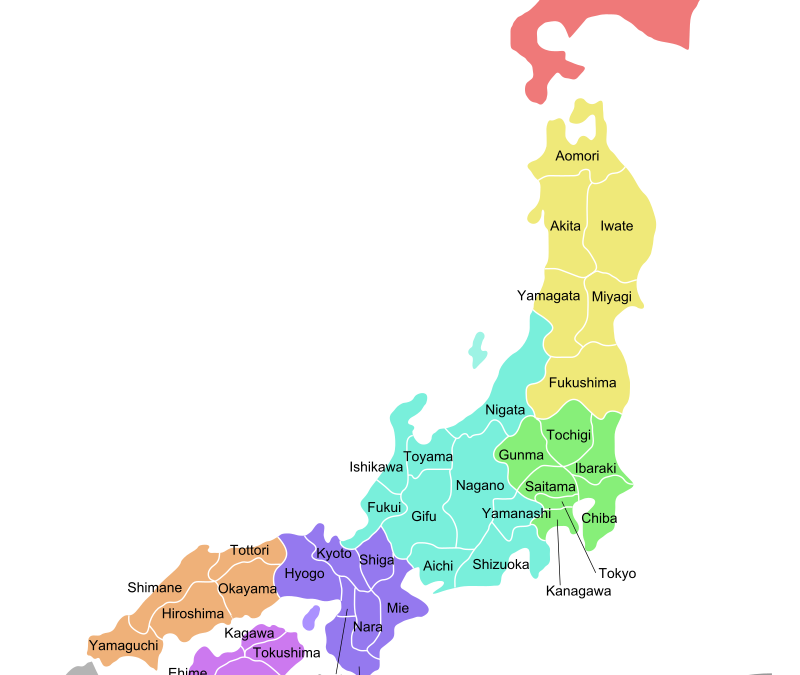
| Origin | Nishijin district, Kamigyō / Kita ward, Kyoto City, Kyoto Prefecture (Kansai region) |
| Designation | METI Traditional Craft (dentōteki kōgeihin), Nishijin-ori designated 1976 |
| Price band | ¥4,000–¥18,000 typical for a meishi-ire (≈ $27–$120 USD); nishiki-class can exceed ¥25,000 |
Data sources: Nishijin Textile Center (nishijin.or.jp), Tatsumura Bijutsu and Hosoo public catalogs, METI Traditional Crafts register. Listing-level pricing is unconfirmed at the time of writing — verify on the retailer page.
📖 Glossary — Japanese terms used in this guide
- Nishijin-ori (西陣織) — “Nishijin weave”; figured silk brocade woven in the Nishijin district of northwest Kyoto.
- Nishijin (西陣) — literally “west camp”; the district name dates to the post-Onin War regrouping of weavers at the former site of the Yamana Sōzen’s western army encampment.
- Meishi-ire (名刺入れ) — “card case” / “name-card holder”; a flat envelope for business cards.
- Obi (帯) — the wide sash that ties a kimono; the historical core product of the Nishijin looms.
- Oribe-no-tsukasa (織部司) — Heian-era court office that supervised imperial weavers in the northern part of Heian-kyō.
- Hata clan (秦氏) — 5th–6th century immigrant clan from the continent who brought sericulture and loom technology to the Kyoto basin.
- Karakusa (唐草) — “Chinese vine”; the curling arabesque pattern carried west along the Silk Road, central to the Nishijin pattern catalog.
- Kikkō (亀甲) — “tortoise shell”; a hexagonal lattice pattern with auspicious longevity associations.
- Shippō (七宝) — “seven treasures”; an interlocking circle pattern of Buddhist origin.
- Jacquard loom — the punched-card mechanical loom invented in Lyon in 1804; introduced to Nishijin in 1872 and used alongside hand-draw looms ever since.
- METI Traditional Craft (dentōteki kōgeihin, 伝統的工芸品) — designation by Japan’s Ministry of Economy, Trade and Industry guaranteeing geographic origin, traditional materials, and traditional techniques.

📍 Where this comes from — Nishijin, Kyoto, Kansai

Kyoto sits in a basin ringed by mountains on three sides — the Tamba highlands to the north and west, the Higashiyama range to the east — with the Kamo and Katsura rivers running through. The basin’s mild humid summers and crisp winters suited mulberry cultivation, silk-worm rearing, and the year-round dye work that the textile economy depended on. The Hata clan (秦氏), an immigrant lineage that settled in the Kyoto basin from the 5th to 6th centuries, brought continental sericulture and loom techniques and established the agricultural and craft base on which later imperial workshops were built.
The city itself became the imperial capital in 794, when Emperor Kanmu moved the court from Nara and laid out Heian-kyō on a Chinese grid plan. For more than a thousand years — until the Meiji-era move to Tokyo in 1869 — Kyoto concentrated the country’s painters, lacquerers, dyers, swordsmiths, papermakers, ceramicists, and above all its weavers. The Heian-era Oribe-no-tsukasa (織部司) court office formalized the weavers’ guild in the northern part of the capital, and the district that would later become Nishijin was already producing court silks by the 9th century.
-
5th–6th c. — The Hata clan (秦氏), immigrants from the continent, settle in the Kyoto basin and seed local sericulture and loom technique. -
794 — Heian-kyō (modern Kyoto) becomes the imperial capital. The Heian court’s Oribe-no-tsukasa (織部司) office concentrates weavers in the northern part of the capital. -
1467–1477 — The Ōnin War devastates Kyoto. The city burns intermittently for eleven years; weavers scatter to Sakai, Yamaguchi, and rural Yamashiro. -
Late 15th c. — Dispersed weavers regroup at the former site of Yamana Sōzen’s western army encampment (nishi-jin, 西陣). The district name sticks. -
17th–18th c. (Edo period) — Nishijin supplies obi, kosode, and noh costume to the shogunal court and the daimyō houses. The district’s looms expand to roughly 7,000 households at peak. -
1869 — The Meiji court relocates to Tokyo. Kyoto’s official-patronage base collapses overnight; Nishijin must find a commercial market or close. -
1872 — A Meiji mission travels to Lyon and brings Jacquard looms back to the Horikawa-Imadegawa intersection. Nishijin modernizes without breaking the brocade tradition. -
1976 — METI designates Nishijin-ori a Traditional Craft (dentōteki kōgeihin), formalizing the brocade weave as a protected category. -
1994 — “Historic Monuments of Ancient Kyoto” inscribed as UNESCO World Heritage; cultural-tourism interest in the surrounding craft district intensifies. -
2026 — Roughly 200 active ateliers remain in the Nishijin district. Tatsumura, Hosoo, Kawashima Selkon, and Saiei serve both formal kimono and contemporary product lines including card cases.
The 1467–1477 Ōnin War is the pivot point most international readers do not know. Kyoto, then the wealthiest city in Japan and one of the largest in East Asia, burned in waves for eleven consecutive years. The shogunate dissolved into a succession war between the Hosokawa eastern army and the Yamana western army; both armies camped within the city. The weavers, who had concentrated near the imperial palace, scattered to Sakai, Yamaguchi, and quieter Yamashiro villages. When they returned in the late 15th century, they re-established their workshops on the former site of Yamana Sōzen’s western encampment — the nishi-jin — and the name has held for five and a half centuries.
“A single Nishijin obi can carry 8,000 to 12,000 warp threads on a Jacquard loom; the same warp-and-weft logic, compressed to roughly 10 × 7 cm, produces a card case. The arithmetic of the weave is unchanged from the Heian court — only the finished object is now pocket-sized.”
The second pivot is 1869. When Emperor Meiji moved the imperial seat to Tokyo, Kyoto lost its official-patronage market within a single year — court robes, ceremonial obi, shōzoku for the imperial household. Nishijin’s response was both reactionary and forward: a delegation of three weavers (Sakura Tsuneshichi, Inoue Ihei, and Yoshida Chūshichi) traveled to Lyon in 1872 to study the Jacquard loom, brought the technology back to the Horikawa-Imadegawa intersection, and rebuilt the district’s output around mechanized brocade for export silks and the new merchant-class market. The hand-draw sora-bata loom remained in use for the highest-end nishiki and noh-costume work, but the volume product moved to Jacquard.
A sora-bata is a tall hand-draw loom worked by two weavers in tandem: one operates the warp shed from below, while a partner sits on top of the frame and lifts the heddle cords by hand for each pick. A complex Heian-pattern obi can take 6 to 12 months to weave on a sora-bata. The 1872 Jacquard introduction did not retire the sora-bata — it simply absorbed the mid-tier and merchant-grade work, freeing the hand-draw loom for the very top of the catalog. Both technologies remain in active use in 2026, with roughly 200 active ateliers in the Nishijin district employing somewhere on the order of 1,500 people across weaving, dyeing, warping, and finishing trades.
Standing inside the Nishijin quarter today, the geography of the craft is unusually compact for a thousand-year industry. The Nishijin Textile Center (nishijin.or.jp), the cooperative showroom at the Horikawa-Imadegawa intersection, is within walking distance of the Tatsumura Bijutsu showroom, the Hosoo flagship on Iwakami-dōri, and dozens of family ateliers tucked behind plain machiya facades. The sound of the looms — a soft mechanical clatter from open ground-floor workshops — is still part of the district’s ambient soundscape. The traditional cultural pairing is with the Kyoto tea ceremony schools (Urasenke, Omotesenke, Mushakōji-senke), whose ceremonial textiles still come almost exclusively from Nishijin looms.
Which finish should you choose?
This piece is listed in 3 finishes. The photos below are the actual 色 options on the listing right now — pick the one you want and confirm it on the product page before ordering, since hand-finished wares vary slightly piece to piece.
![Nishijin Ori Card Case: Kyoto's 1,200-Year Silk Weave Tradition [2026] — 紺青 finish](https://m.media-amazon.com/images/I/41vcdKy8MxL._SL500_.jpg)
![Nishijin Ori Card Case: Kyoto's 1,200-Year Silk Weave Tradition [2026] — 赤 finish](https://m.media-amazon.com/images/I/41IMv8ec-iL._SL500_.jpg)
Price snapshot across stores
Live pricing was unavailable at the time of writing — Amazon US and Amazon JP Global Store both returned empty fetched results for the search term “Nishijin Ori Silk Card Case.” The table below shows where to look, with consumer-side guidance per row. Card-case prices fluctuate with maker, weave class (Jacquard vs hand-draw sora-bata), and pattern complexity; verify at the retailer before purchase.
| Store | Item / Variant | Price | Notes |
|---|---|---|---|
| 🇺🇸 Amazon.com (US) | Browse Japanese silk card cases and brocade meishi-ire | varies (USD) | Best if you’re shopping from the US — Prime shipping, USD pricing, no international customs. Amazon US carries a small selection of Japanese silk card cases and Nishijin-labeled pieces, though specific named-maker pieces (Tatsumura, Hosoo) are scarce on .com and most authentic Nishijin meishi-ire ship from Japan (next row). |
| 🇯🇵 Amazon JP Global Store | Nishijin-ori silk card case (named-maker listings) | ¥4,000–¥18,000 typical (≈ $27–$120 USD) | Ships internationally from Japan via Amazon JP Global Store. Stock rotates — small workshop runs go on and off the Global Store program throughout the year. Use the search above and filter for “ships internationally.” |
| Maker direct (Tatsumura / Hosoo / Kawashima Selkon) | Named-house catalogs, including hand-draw sora-bata pieces | varies (¥, often higher) | Tatsumura (tatsumura.co.jp), Hosoo (hosoo.co.jp), and Kawashima Selkon (kawashimaselkon.co.jp) sell directly. Maker-direct is the only path for the highest-tier nishiki and hand-draw pieces; international shipping is usually available by email request. Slower fulfillment than Amazon JP. |
| Proxy services (Buyee / Tenso) | Forward from Rakuten / Yahoo! Japan / maker sites | item price + proxy fee + intl. shipping | Useful for cases listed on Japanese stores that don’t ship abroad themselves — particularly Rakuten listings by small Nishijin ateliers. Adds ~¥1,000–¥3,000 proxy fee plus international postage (~$10–$25 for a card case). Recommended only if Amazon JP and maker-direct have stocked out the piece you want. |
USD figures are approximate (¥150/USD baseline as of May 2026). JPY is authoritative for the underlying listing.
What it does well
Weaknesses and things to verify before buying
- “Nishijin-style” is not Nishijin. The phrase 西陣風 (“Nishijin-style”) is sometimes used by makers outside the district for brocade-look products. Look for explicit 西陣織 (“Nishijin-ori”) labeling, the METI Traditional Craft mark, or attribution to a named atelier registered with the Nishijin Textile Industrial Cooperative Association.
- Jacquard vs hand-draw is a major price axis. The vast majority of card cases on Amazon JP are Jacquard-woven — that is fine, and still authentic Nishijin-ori. Hand-draw sora-bata pieces typically cost ¥18,000–¥40,000+ for a card case and are usually special-order through maker-direct rather than Amazon.
- Capacity is modest. Most Nishijin meishi-ire hold 10–20 cards in total. If you need a 40-card holder for heavy networking, a leather business-card folder is a better fit; the silk case is for a daily handful of cards plus transit passes.
- Silk-grade care, not leather-grade. Avoid prolonged pocket friction with rough denim seams, perfume contact, soaking, or direct sun storage. The lifespan is 5–15 years of regular use depending on handling, vs decades for a heavy leather case.
- Pattern visibility depends on lighting. Many Nishijin patterns rely on subtle warp-vs-weft color contrast that reads beautifully under directional indoor light and disappears under flat fluorescent overheads. If you can, view product photos taken under multiple light sources before buying.
- Stock rotates and listings expire. Roughly 200 ateliers operate in the district, with small SKU runs. A specific pattern seen last quarter may not be available now. Treat Amazon JP listings as snapshots, not catalogs.
- International shipping adds time. Amazon JP Global Store typically delivers a card case in 1–2 weeks; maker-direct can be 2–4 weeks plus the email exchange to confirm international handling. Plan ahead for gifting occasions.
Conclusion — which buyer type are you?
Other ways to approach this purchase
🏆 Editor’s Pick
For most international readers, the right starting point is a Tatsumura Bijutsu Jacquard meishi-ire in a Heian-court karakusa or kikkō pattern, in the ¥8,000–¥12,000 band. Tatsumura’s archive specialization (Hōryū-ji and Shōsō-in reproductions) gives the deepest pattern lineage at the named-maker price tier, and the Jacquard build keeps the case in pocket-tough range without sacrificing the brocade structure. A Hosoo piece is the alternative if you prefer contemporary color blocking over heritage reproduction.
- Strongest pattern provenance among the affordable tiers — Shōsō-in archive reproductions trace the weave to the 8th century
- Jacquard build handles daily carry better than the hand-draw nishiki tier, at one-third the price
- Tatsumura Bijutsu has operated continuously since 1894; the workshop is registered with the Nishijin Textile Industrial Cooperative Association
Live pricing for specific listings was unavailable at the time of writing — the search URLs above will surface current stock. JPY is authoritative; USD figures are approximate (¥150/USD as of May 2026).
❓ Frequently Asked Questions
Does Amazon JP Global Store ship Nishijin-ori card cases internationally?
Yes, when the specific listing is enrolled in the Global Store program. Filter the search results for “ships internationally” and check the product page’s shipping section. Most named-maker (Tatsumura, Hosoo, Kawashima Selkon) listings are eligible; some small-atelier or limited-stock pieces are domestic-only, in which case a proxy service (Buyee / Tenso) is the workaround. Card cases are light enough (under 60 g) that international shipping is typically $10–$20 from Japan.
How is Nishijin-ori different from Hakata-ori or Kyō-yūzen?
All three are Japanese silk traditions, but the technique differs. Nishijin-ori is a brocade weave — pattern produced by the structure of the warp-and-weft interlacing — typical of obi, noh costume, and figured silk. Hakata-ori (Fukuoka) is a warp-faced plain weave with horizontal striping called kenjō-gara, much firmer and used for narrow obi and neckties. Kyō-yūzen is a dyeing technique (resist-dyed motifs on plain silk), not a weave at all — patterns are painted onto woven cloth. Nishijin meishi-ire show the brocade structure clearly when held at an angle.
Can I wash a Nishijin silk card case?
No — not in a machine, and only careful spot-cleaning by hand if essential. Silk is sensitive to water spotting, alkaline detergents, and prolonged sun exposure. If the case becomes soiled, a soft brush will lift most surface dust; deeper cleaning is a job for a Japanese kimono cleaner (arai-hari specialist). Store away from direct sunlight in the included paper sleeve or paulownia box.
What does the METI Traditional Craft designation actually guarantee?
It guarantees that the cloth was woven in the Nishijin production zone using designated traditional techniques and materials (silk, brocade-class weave on Jacquard or hand-draw loom), by a workshop registered with the Nishijin Textile Industrial Cooperative Association. It does not guarantee a specific named maker or a specific price tier — it is a baseline authenticity mark, not a quality grade. Tatsumura and Hosoo go significantly beyond the baseline.
Is a Jacquard-woven Nishijin card case still “real” Nishijin-ori?
Yes. The Jacquard loom was introduced to Nishijin in 1872 as part of a Meiji-era modernization mission to Lyon, and has been a designated traditional Nishijin technique for more than 150 years. The METI Traditional Craft designation covers both Jacquard and hand-draw sora-bata production. Hand-draw is the older and more labor-intensive tier — typically reserved for the top nishiki pieces — but Jacquard is not a shortcut; the warp-and-weft brocade structure is the same.
How long will a Nishijin silk card case last in daily use?
Typical service life is 5–15 years of regular daily carry, depending on handling. The silk surface shows wear at flex points (the spine of the fold, the closure flap) before the interior backing fails. Avoiding rough denim pocket friction, perfume, and direct sun extends the life significantly. Many users transition the case to display or special-occasion use after 5–7 years of daily wear, while the silk retains its pattern integrity.
Are Nishijin card cases appropriate as gifts in a business context?
Yes — the meishi-ire is a recognized gift category in Japanese business culture, particularly for promotions, retirements, and international counterparts who value Japanese craft provenance. A ¥8,000–¥15,000 Tatsumura or Hosoo piece sits comfortably in the corporate-gift band, and the small footprint avoids the awkwardness of larger ceremonial gifts. The paulownia (kiri) presentation box that named makers include reinforces the gift framing.
jpmono.com is curated by a Japan-based editorial team (working out of Toyama in the Hokuriku region and Nara in Kansai) and is independent. We do not take payment from the makers we feature; income comes from affiliate links. Read more about our editorial standards.
AI-assistance note: this article was drafted with the assistance of large language models against a fact base provided by the editorial team (Nishijin Textile Center public materials, METI Traditional Craft register, Tatsumura Bijutsu / Hosoo / Kawashima Selkon public catalogs). All facts were verified against the source materials before publication; pricing was unavailable from the live Amazon data fetch and is reported as a typical range rather than a specific listing. Reader feedback corrections are welcome.
Affiliate disclosure: jpmono.com may earn a commission on qualifying purchases made through links on this page, at no additional cost to you.