![Beppu Bamboo Woven Basket (Take-zaiku Kago): Where to Buy Oita’s Craft [2026]](https://jpmono.com/wp-content/uploads/2026/06/beppu-take-zaiku-bamboo-woven-basket-where-to-buy-2026-featured.jpg)
Beppu take-zaiku (別府竹細工, “Beppu bamboo work”) is the woven-bamboo craft of Beppu, in Oita Prefecture on the island of Kyūshū. It is the only bamboo craft in Japan to hold the national Traditional Craft designation, awarded in 1979. The kago (籠, “basket”) covered in this guide is a hand-woven madake-bamboo basket — the everyday, useful end of a tradition that also produces museum-grade work.
What makes the craft internationally notable is not novelty but continuity and standard. The basket is built from split madake (真竹, “true bamboo”), a species Oita produces in some of the largest volumes in Japan, and assembled by hand using weaving patterns — ajiro-ami, yatsume-ami, mutsume-ami and others — that define the tradition. Beppu produced Japan’s first bamboo artist named a Living National Treasure, and the prefecture still runs a dedicated training center for weavers. This is monozukuri (ものづくり, “the making of things”) with a paper trail, not heritage marketing.
This article is written from a Japan-based editor’s desk for international readers who are weighing a purchase from outside Japan. We cover what the basket is, where it comes from, how to read the listings, the honest weaknesses, and the realistic buying paths — because authentic Beppu take-zaiku is premium and largely sold inside Japan, which shapes everything about how you should shop for it.
🔄 Updated:
⏱️ Read time: ~11 min

- Who this is for — and who should skip it
- Product overview (from published specs)
- 📍 Where this comes from — place, era, and the craft tradition
- Price snapshot across stores
- What it does well
- Weaknesses and things to verify before buying
- Conclusion — which buyer type are you?
- Other ways to approach this purchase
- 🏆 Editor’s Pick
- ❓ Frequently Asked Questions
Who this is for — and who should skip it
- Want a genuine, hand-woven Japanese bamboo basket with a documented craft lineage, not a factory commodity
- Value the look of bare, oiled madake — warm tone, visible weave, natural irregularity
- Will use it dry: as a fruit or bread basket, a tabletop catch-all, an entryway tray, or storage
- Are comfortable buying from a Japan-based listing and waiting on international shipping
- Appreciate that small variation between pieces is a sign of handwork, not a defect
- Need a low-cost basket and do not care where or how it was made
- Expect dishwasher-safe, fully waterproof kitchenware — natural bamboo is neither
- Want a guaranteed exact size and color; handmade pieces vary and listings are often thin on dimensions
- Need it tomorrow — authentic pieces ship from Japan and stock is intermittent
- Are shopping purely on price; mass-produced bamboo baskets cost a fraction of this
Product overview (from published specs)
The fetched data for this item is thin: Amazon US search returned no individual listing for this exact piece at the time of writing, which is consistent with the craft being premium and JP-sourced. The table below draws on the spec sheet and the craft’s documented characteristics; fields not confirmed in the listing are marked rather than guessed.
| Attribute | Detail | Source |
|---|---|---|
| Craft | Beppu take-zaiku (別府竹細工) — national Traditional Craft, designated 1979 | Spec data_notes |
| Form | Kago — hand-woven basket | Spec |
| Material | Madake (真竹, true bamboo); Oita is among Japan’s leading madake producers | Spec data_notes |
| Weave | Ajiro-ami and/or yatsume-ami (octagonal) among the eight core techniques | Spec / recommendation hint |
| Origin | Beppu, Oita Prefecture, Kyūshū | Spec |
| Dimensions / weight | Unconfirmed — check the listing before buying | Not in fetched data |
| Item ID (Amazon JP) | B01EYEEUIU | Spec |
| Price | Unconfirmed at time of writing — live pricing may have shifted; verify on the listing | Not in fetched data |
Sources: Amazon US search (primary, moonill-20) returned no individual listing for this exact piece; Amazon JP Global Store (secondary, moonill-22) is the sourced listing for item B01EYEEUIU; maker-direct and proxy paths are discussed below. Specs absent from both the listing snapshot and the fetched data are marked “Unconfirmed.”
📖 Glossary — key terms
- take-zaiku (竹細工) — “bamboo work”; the general term for woven and split-bamboo craft.
- kago (籠) — a woven basket.
- madake (真竹) — “true bamboo” (Phyllostachys bambusoides), the long-fibered species prized for fine splitting and weaving.
- ajiro-ami (網代編み) — a twill-like plaiting where strips pass over and under in a diagonal pattern.
- yatsume-ami (八つ目編み) — “eight-eye” weave producing octagonal open holes.
- mutsume-ami (六つ目編み) — “six-eye” hexagonal open weave.
- meshi-kago (飯籠) — a ventilated kitchen basket historically used to hold cooked rice.
- Living National Treasure (人間国宝) — a holder of an Important Intangible Cultural Property, the highest individual craft honor in Japan.
- monozukuri (ものづくり) — “the making of things”; Japan’s craft-and-manufacturing ethos.
📍 Where this comes from — place, era, and the craft tradition

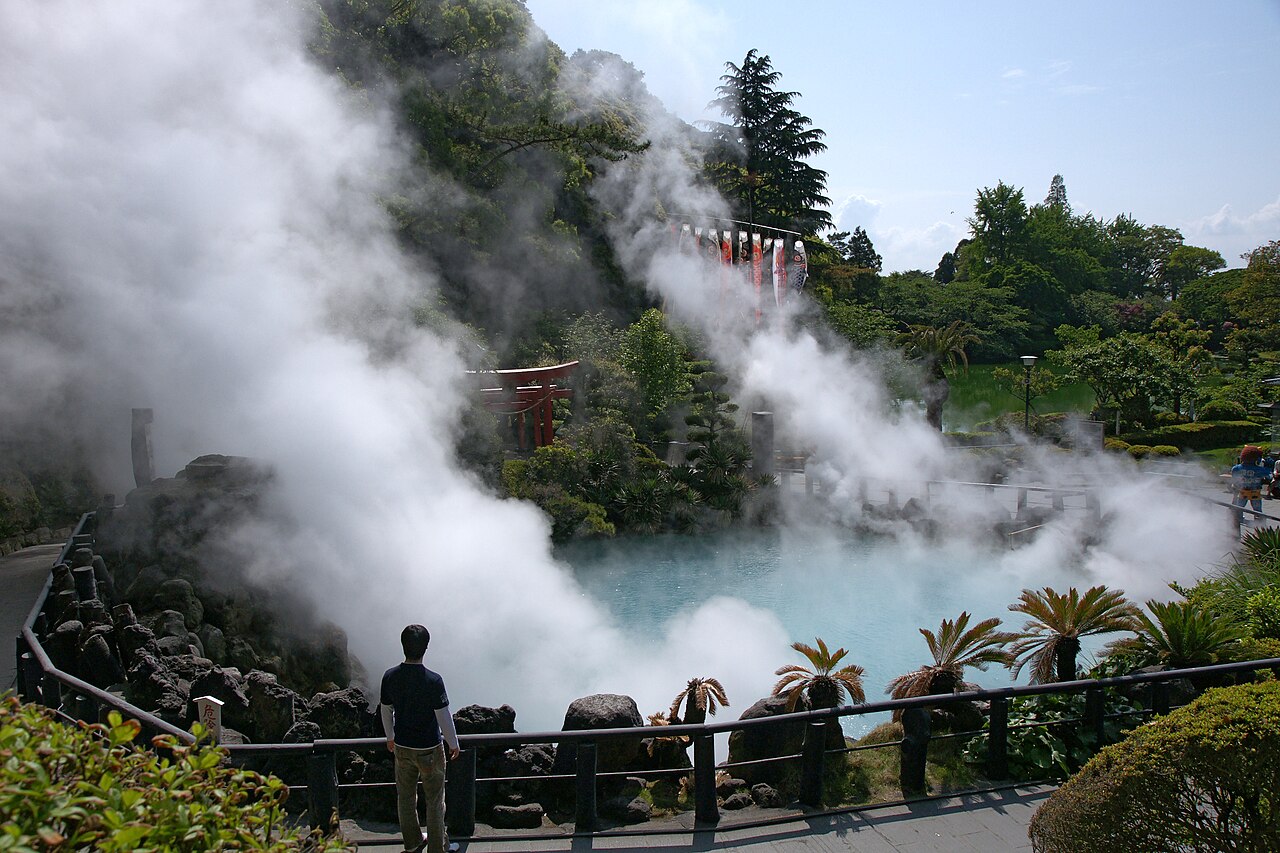
Beppu sits on the east coast of Oita Prefecture, on the northeastern shoulder of Kyūshū, the southwesternmost of Japan’s four main islands. The city wraps around Beppu Bay with steep, steaming hills behind it. That geography is not incidental to the craft: the same warm, humid slopes that drive the hot springs also grow madake, and Oita is among the largest madake producers in Japan. Raw material and market sat in the same place.
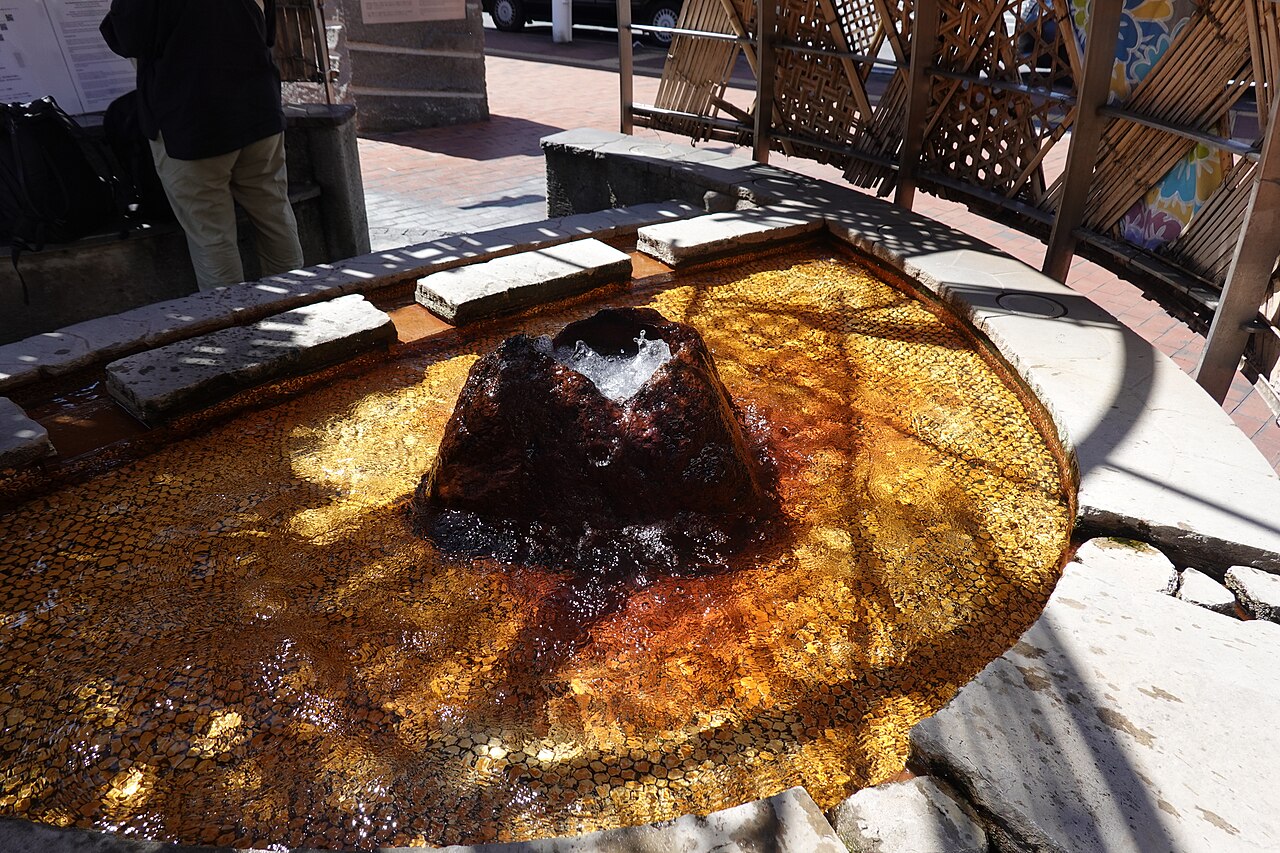
Local legend traces basket-weaving here back to the era of Emperor Keikō and traveling Kōbukai-period figures who are said to have brought the skill. That is a folk-origin story — traditionally told rather than documented — and worth flagging as legend. The industry that can actually be traced grew through the Muromachi and Edo periods, when Beppu’s hot springs drew long-stay guests for tōji (湯治, “hot-spring cure”) visits that could run for weeks.
Those guests needed everyday ware, and they wanted something to carry home. Beppu’s weavers supplied meshi-kago and other kitchen baskets as both daily goods and souvenirs. A craft tradition is rarely built on art alone; this one was built on a steady, practical local market that the onsen economy guaranteed.
-
Legendary era — By tradition, basket-weaving is said to reach back to Emperor Keikō and Kōbukai-period travelers (folk origin). -
Muromachi period (1336–1573) — Weaving develops as documented everyday craft around Beppu. -
Edo period — Beppu’s hot springs draw long-stay tōji guests who buy meshi-kago kitchen baskets as daily ware and souvenirs. -
1967 — Shōno Shōunsai of Beppu is named the first bamboo artist designated a Living National Treasure. -
1979 — Beppu take-zaiku is designated a national Traditional Craft — the only bamboo craft in Japan to hold the title. -
Today (2026) — The Oita Prefectural Bamboo Crafts Training Center still trains new weavers in the eight core techniques.
The honors followed the working tradition rather than replacing it. In 1967, Shōno Shōunsai of Beppu became the first bamboo artist named a Living National Treasure — recognition that the craft’s ceiling was as high as any in Japan. In 1979, Beppu take-zaiku received the national Traditional Craft designation, and it remains the only bamboo craft in the country to hold it.
“Of every bamboo tradition in Japan, only one carries the national Traditional Craft designation — and it comes from a hot-spring town that learned to sell baskets to people staying long enough to need them.”
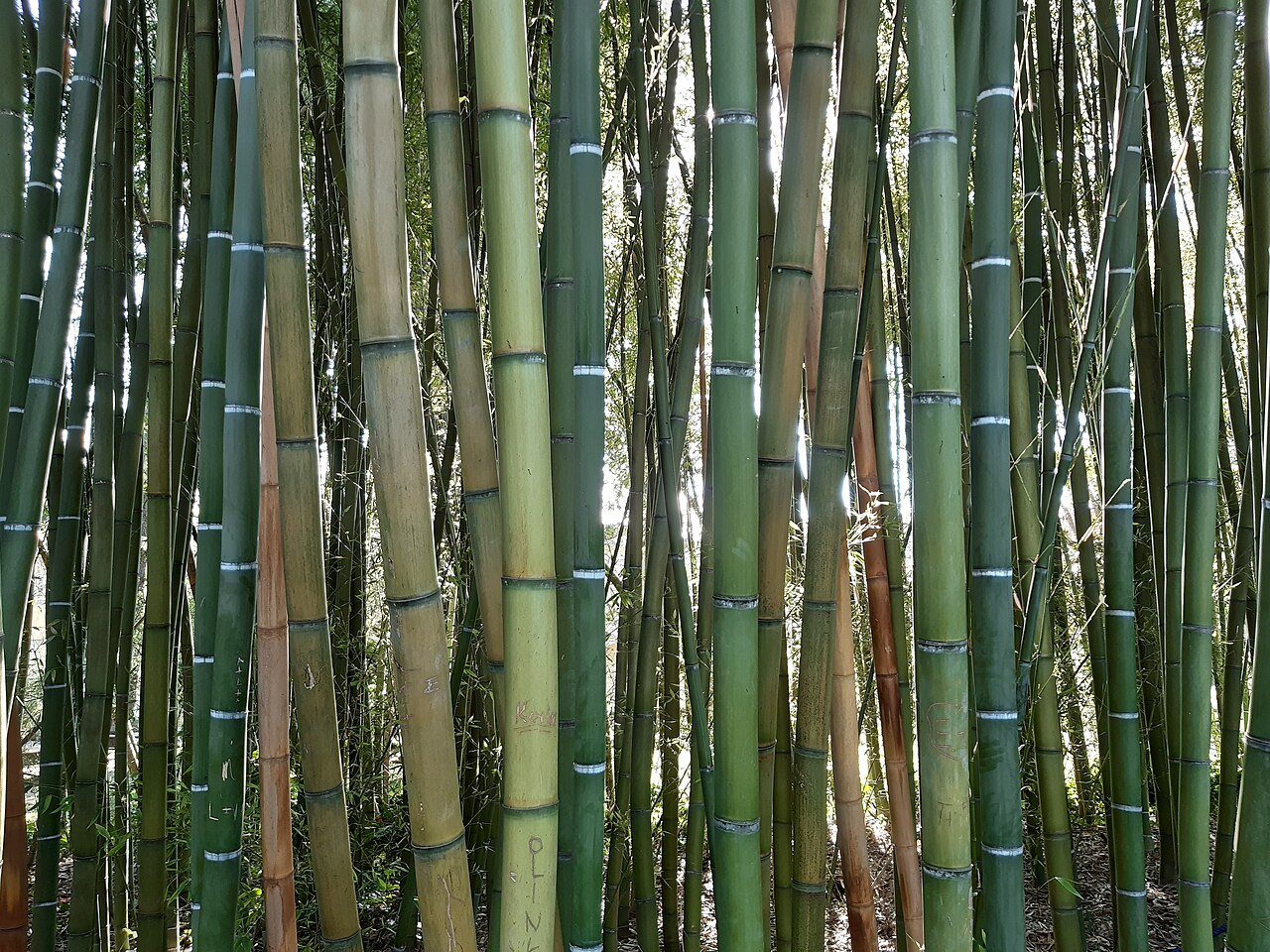
What “still being made here” means in practice is a living pipeline rather than a single surviving workshop. The eight core weaving techniques — ajiro-ami, yatsume-ami, mutsume-ami and the rest — are taught formally, and the Oita Prefectural Bamboo Crafts Training Center continues to bring new weavers into the trade. A buyer is therefore purchasing into a tradition that is being actively transmitted, not salvaged.
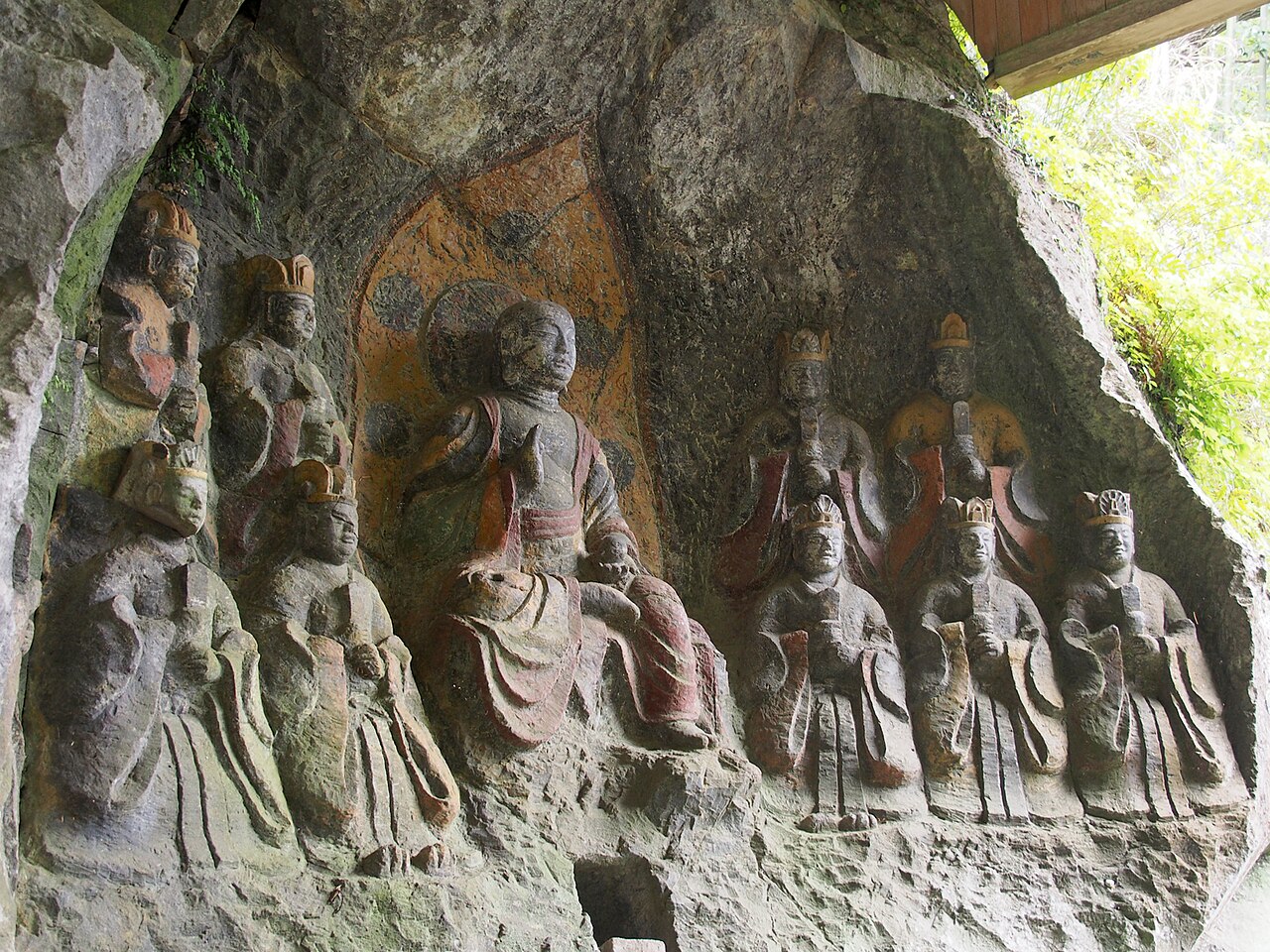
Oita’s wider heritage frames the craft. The prefecture is home to the Usuki Stone Buddhas, a group of carved cliff figures designated a National Treasure — evidence of a region with deep devotional and handcraft roots long before the bamboo trade was formalized. A kago from Beppu sits inside that longer story of careful, patient making.
Other Japanese bamboo and woodwork pieces we have covered — useful for placing this kago against fans, blinds, whisks, and turned wood.
Price snapshot across stores
Pricing was not present in the fetched data for this exact piece; treat the figures below as paths to check, not quotes. JPY is the authoritative currency for the JP listing; USD is an approximate estimate at a ¥150/USD baseline as of mid-2026.
| Store | Item / Variant | Price (JPY + USD est.) | Notes |
|---|---|---|---|
| 🇺🇸 Amazon US (search) | Browse Japanese bamboo baskets & woven storage | varies (USD) | Best if you are shopping from the US — Prime shipping, USD pricing, no international customs. Amazon US carries Japanese-style bamboo baskets from various makers; authentic Beppu take-zaiku itself ships from Japan (next row). |
| 🇯🇵 Amazon JP Global Store | Beppu take-zaiku madake kago (item B01EYEEUIU) | Price unconfirmed at time of writing — verify on listing | The sourced listing for the specific item. Ships internationally from Japan to most major destinations; stock is intermittent for authentic pieces. |
| Maker direct | Beppu workshop / co-op pieces | varies | Some Beppu workshops and the local craft co-op sell directly; selection is widest in Japan and may not ship abroad without a forwarder. |
| Proxy services (Buyee / Tenso) | Any JP-only listing | item price + forwarding fee | Useful when a piece is listed only on a Japan-domestic shop; adds a forwarding fee and a second shipping leg. Watch for customs duties above your local threshold. |
What it does well
Weaknesses and things to verify before buying
- Thin US availability. Authentic Beppu take-zaiku is premium and largely sold within Japan; the fetched Amazon US search returned no individual listing for this piece. Expect to buy via the JP Global Store or a proxy.
- No confirmed dimensions or weight. The listing data is sparse on size. If exact dimensions matter for a shelf or use, confirm them on the listing or with the seller before ordering.
- Price not confirmed at time of writing. Treat any figure as provisional; live pricing for handmade craft fluctuates and stock is intermittent.
- Not waterproof or dishwasher-safe. Natural bamboo should be kept dry, wiped rather than soaked, and never put in a dishwasher or left damp, or it can mold or split.
- Handmade variation. Color, weave tightness, and minor proportions vary between pieces. This is intrinsic to handwork, but it means the item you receive will not be pixel-identical to the photo.
- “Beppu-style” look-alikes exist. Mass-produced bamboo baskets imitate the look at a fraction of the price. If authenticity matters, confirm the maker or co-op, not just the product photo.
- International shipping and customs. JP Global Store ships abroad, but transit time is longer and orders above your local duty threshold may incur customs charges.
Conclusion — which buyer type are you?
Other ways to approach this purchase
🏆 Editor’s Pick
❓ Frequently Asked Questions
Is Beppu take-zaiku really the only bamboo craft with a national designation?
Yes. Per the spec data, Beppu take-zaiku is the only bamboo craft in Japan designated a national Traditional Craft, awarded in 1979. Other regions weave bamboo, but none hold that specific national title.
What is madake, and why does it matter here?
Madake (真竹, “true bamboo”) is a long-fibered species that splits cleanly into fine, strong strips, making it ideal for weaving. Oita is among Japan’s leading madake producers, which is a large part of why the craft took root in Beppu.
Does the Amazon JP Global Store ship internationally?
The Amazon JP Global Store ships many household items to most major international destinations. Transit takes longer than domestic Prime, and orders above your country’s duty threshold may incur customs charges. Confirm the shipping estimate on the listing before ordering.
How do I care for a woven bamboo kago?
Keep it dry. Wipe with a soft, slightly damp cloth and let it air-dry fully; do not soak it, run it through a dishwasher, or store it damp, as natural bamboo can mold or split. Used dry, a good basket lasts for years and deepens in tone.
Why is authentic Beppu take-zaiku hard to find on US Amazon?
It is a premium, largely hand-made craft sold mainly within Japan. The fetched Amazon US search returned no individual listing for this exact piece. The realistic path for international buyers is the Amazon JP Global Store or a forwarding proxy such as Buyee or Tenso.
What are ajiro and yatsume weaves?
Ajiro-ami (網代編み) is a twill-like diagonal plaiting, while yatsume-ami (八つ目編み, “eight-eye”) produces an open octagonal pattern. They are two of the eight core techniques that define Beppu take-zaiku, chosen by the maker to suit the basket’s form and use.
Can I use it for food in the kitchen?
Yes, for dry food handling — bread, fruit, or as a ventilated holder, echoing the historic meshi-kago role. Keep it away from standing water and wet foods, and dry it after any contact with moisture.
jpmono.com is curated by a Japan-based editorial team (working out of Toyama in the Hokuriku region and Nara in Kansai) and is independent. We do not take payment from the makers we feature; income comes from affiliate links. We do not physically test every product — we read makers’ specs and source listings.
Note: This article was prepared with AI assistance and reviewed against the available source data. Specs, prices, and availability were thin in the fetched dataset and are marked as unconfirmed where not verifiable; always check the live listing before purchasing.
Affiliate disclosure: jpmono.com may earn a commission on qualifying purchases made through links on this page, at no additional cost to you.