![Oita Bungo Hand-Forged Petty Knife: Kurouchi Carbon Blade Buying Guide [2026]](https://jpmono.com/wp-content/uploads/2026/05/japan-map-regions-and-prefectures-800x1050.png)
A petty knife is the small, all-purpose blade a Japanese kitchen reaches for dozens of times a day — peeling, trimming, slicing a single apple, breaking down a shallot. The version covered here comes from Oita, the prefecture on the eastern coast of Kyushu that was once Bungo Province, and it is hand-forged in high-carbon steel with a kurouchi (黒打ち, “black-forged”) finish: the dark forge scale is left on the blade flats rather than polished away. The look is rustic; the reason is practical.
What makes an Oita blade worth a second look is the lineage behind it. Bungo was one of Japan’s serious swordmaking provinces. The Takada school — often catalogued as Takada-mono (高田物) — forged practical fighting swords in volume from the late Muromachi period through the Edo period, supplying the Funai, Usuki, and Kitsuki domains. When the 1876 Haitorei edict banned the wearing of swords, that forging knowledge did not vanish; it moved into kitchen knives, farm tools, and sickles, which is the route most Japanese regional cutlery actually took.
This guide is written for an international reader deciding whether a hand-forged carbon petty knife from Oita belongs in their kitchen. It covers what the format is good at, where carbon steel will frustrate you, how it compares to the better-known Echizen, Sakai, and Kaga blades, and realistic ways to buy one from outside Japan. Where product details vary, this article says so plainly rather than guessing.
🔄 Updated:
⏱️ Read time: about 11 min
- Who this is for — and who should skip it
- Product overview (from published specs)
- 📍 Where this comes from — place, era, and the craft tradition
- 📌 How does it compare?
- Buying options across stores
- 📦 Shipping & where to buy from outside Japan
- What it does well
- Weaknesses and things to verify before buying
- Conclusion — which buyer type are you?
- Other ways to approach this purchase
- ❓ Frequently Asked Questions
Who this is for — and who should skip it
- Want a small, agile blade for peeling, trimming, and detail work rather than a large chef’s knife
- Appreciate hand-forged carbon steel that takes — and holds — a very keen edge
- Are willing to wipe the blade dry after each use and accept a developing patina
- Value a piece with documented regional heritage over a mass-finished stainless tool
- Like the rustic look of a black kurouchi finish over a mirror polish
- Want a knife you can leave wet in the sink — carbon steel rusts if neglected
- Need one knife to do everything; a petty is a companion blade, not a primary chef’s knife
- Put knives in the dishwasher (this will damage both edge and handle)
- Expect a polished, uniform factory finish — forge scale is intentionally uneven
Product overview (from published specs)
Hand-forged high-carbon kurouchi petty knives can vary in steel grade, blade length, weight, and finish. The table below states the general category and craft characteristics; exact figures should be checked with the maker or seller before purchase.
| Attribute | Value | Source |
|---|---|---|
| Type | Petty knife (small utility blade) | Product details |
| Origin | Oita Prefecture (old Bungo Province), Kyushu, Japan | Spec / data_notes |
| Construction | Hand-forged (uchihamono) | Spec / data_notes |
| Steel | High-carbon steel | Spec hint |
| Finish | Kurouchi (black forge scale left on the flats) | Spec hint |
| Blade length | — | Not in fetched data |
| Weight | — | Not in fetched data |
| Edge | — | Not in fetched data |
| Price | — | Not in fetched data |
This guide draws on maker tradition and general craft information about Oita Bungo blades. Exact prices and specifications may vary by knife, maker, and seller; proxy services are an alternative when direct export is unavailable.
📖 Glossary — key Japanese terms
Petty knife (ペティナイフ, peti naifu) — a small Western-style utility blade, usually 120–150 mm, used for peeling, trimming, and detail work. The Japanese kitchen adopted it as the everyday companion to a larger santoku or gyuto.
Kurouchi (黒打ち) — literally “black-forged.” The dark iron oxide scale formed during forging is deliberately left on the blade’s flats instead of being ground off. It gives a rustic look and adds a thin layer of corrosion resistance to those surfaces.
Uchihamono (打刃物) — “struck blades,” i.e., hand-forged cutlery, as opposed to blades stamped or cut from sheet stock.
Takada-mono (高田物) — blades attributed to the Takada (Fujiwara Takada) school of swordsmiths active in Bungo Province from the late Muromachi period onward.
Bungo (豊後) — the old province name for most of present-day Oita Prefecture.
Haitorei (廃刀令) — the 1876 government edict prohibiting most people from wearing swords, which pushed many swordsmiths into making kitchen and farm tools.
📍 Where this comes from — place, era, and the craft tradition

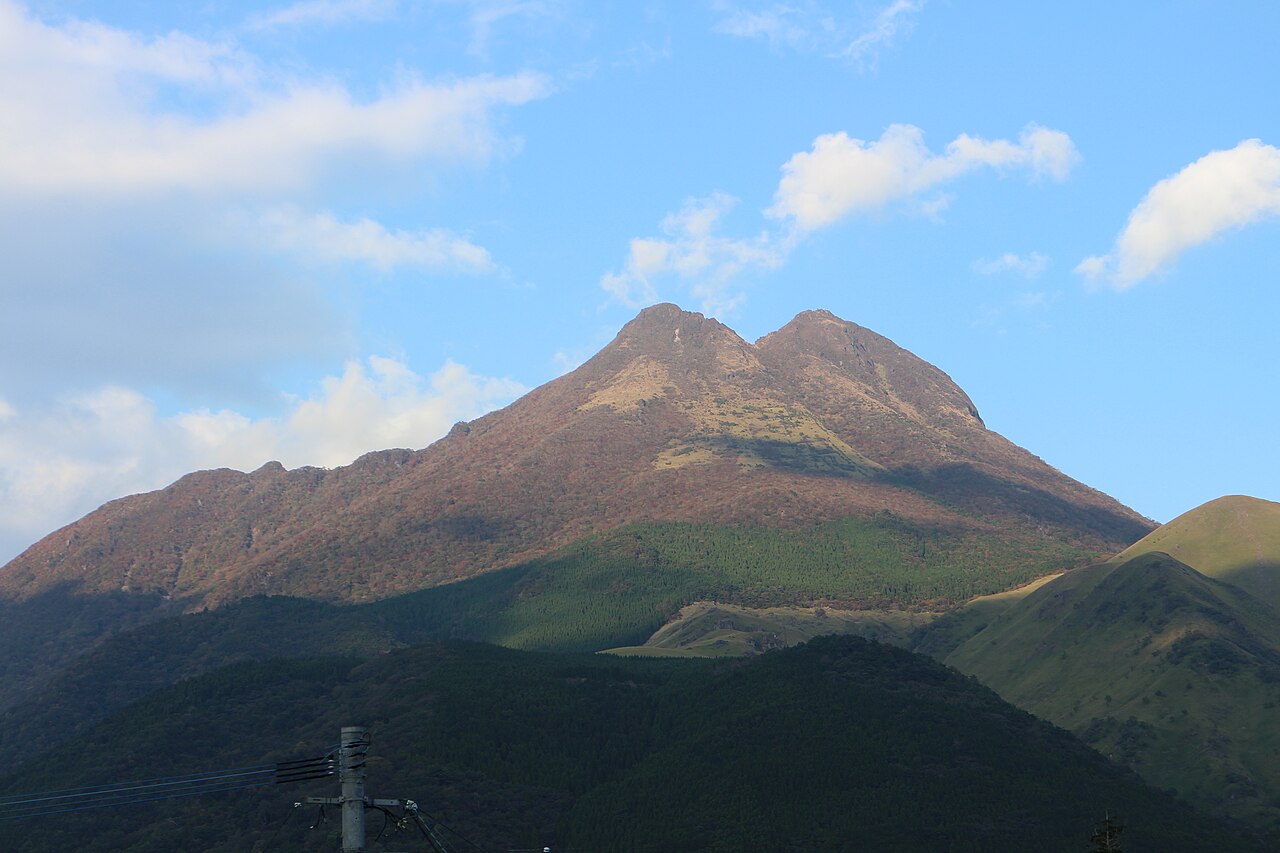
Oita Prefecture occupies the northeastern corner of Kyushu, Japan’s southwestern main island. It faces the Bungo Channel toward Shikoku across the water and rises quickly inland into volcanic highlands — this is hot-spring country, home to Beppu and Yufuin, two of the most famous onsen towns in Japan. The mountains matter to the craft story: forested slopes meant charcoal, and charcoal plus local iron-working villages is the raw recipe a forge needs.
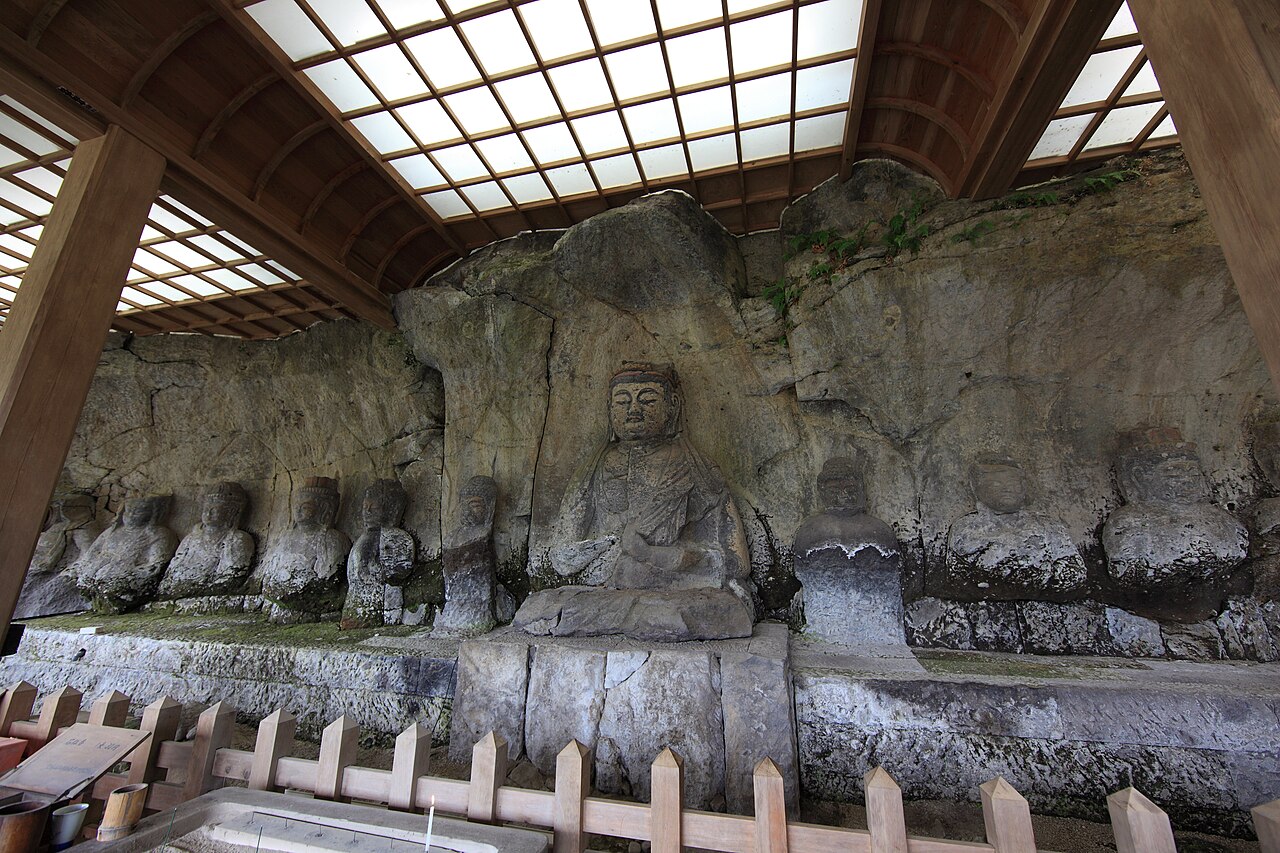
The region was a craft center long before it was a blade center. The Usuki Stone Buddhas (Usuki Sekibutsu), a group of cliff-carved stone images dating to the Heian period and now designated National Treasures, sit in the old Usuki domain and testify to centuries of skilled stoneworking and Buddhist patronage in Bungo.
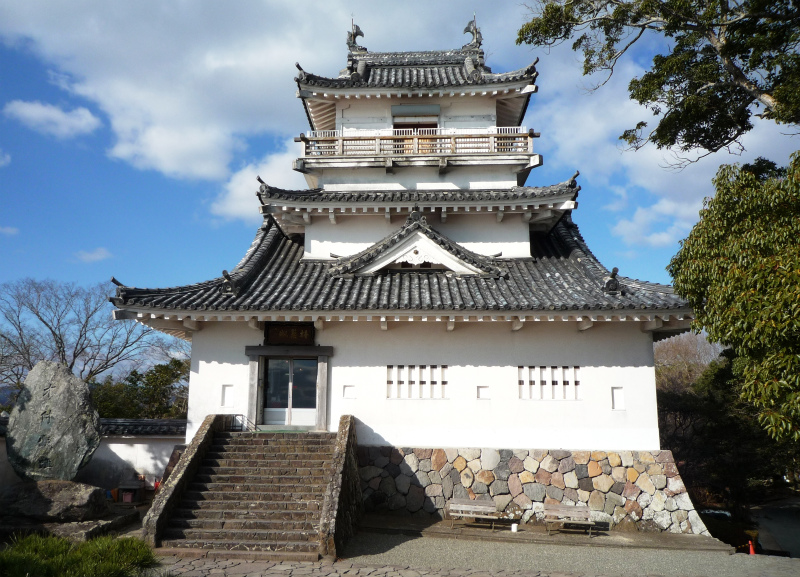
Politically, Bungo’s high point came in the 16th century under the Otomo clan. Lord Otomo Sorin turned Funai — the area of modern Oita city — into a major trade port and one of Japan’s earliest centers of Christian and overseas contact, receiving Portuguese ships and Jesuit missionaries. A trading capital needs metalwork, armorers, and smiths, and a swordmaking tradition had every reason to thrive here.
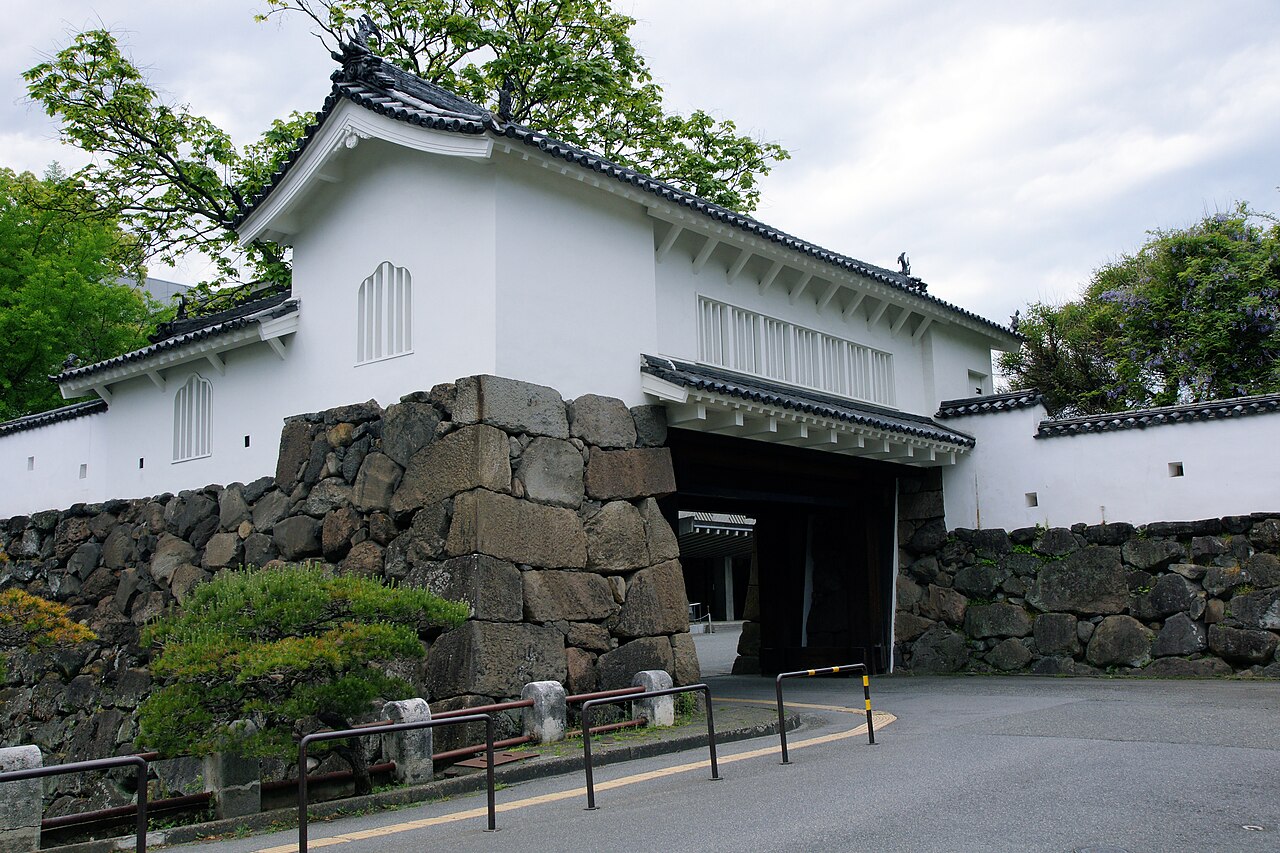
That tradition has a name. The Takada school — Fujiwara Takada, catalogued by collectors as Takada-mono — was one of Kyushu’s most productive groups of swordsmiths, working from the late Muromachi period through the Edo period. Takada blades were known less for ornament than for being reliable, plentiful working swords, supplied across the Funai, Usuki, and Kitsuki domains. Bungo, in other words, was a place that made a lot of steel and made it to be used.
- Heian period — The Usuki Stone Buddhas are carved, evidence of a deep Bungo crafts and patronage tradition.
- Late Muromachi (15th–16th c.) — The Takada (Fujiwara Takada) school of swordsmiths is active in Bungo, producing practical blades in volume.
- 16th century — Otomo Sorin makes Funai (modern Oita) a major trade and early Christian-contact hub.
- Edo period — Takada-mono swords continue under the Funai, Usuki, and Kitsuki domains; Kitsuki develops as a castle town.
- 1876 — The Haitorei edict bans sword-wearing; forging skill migrates into kitchen knives and farm tools.
- 20th c. onward — Bungo forging survives as domestic cutlery and tool smithing, including hand-forged kurouchi kitchen blades.
- 2026 — Hand-forged Oita petty knives are sold internationally through the Amazon JP Global Store.
The turn from sword to kitchen knife is the part international buyers often miss. When the Meiji government issued the Haitorei in 1876, the demand for swords collapsed almost overnight. Swordsmiths did not stop forging — they redirected the same heat-treatment and differential-hardening knowledge into the tools that still sold: sickles, hatchets, plane blades, and kitchen knives. This is the same path that produced the famous cutlery towns elsewhere in Japan, and it is the lineage a Bungo carbon petty quietly inherits.
“A kitchen knife from Bungo is not a sword. But the hand that hardens its edge is working from a memory of swords — a province that forged steel to be used, not displayed.”
One honest caveat: the heritage above is the regional and historical context drawn from the spec’s data notes, not a maker’s certified pedigree. Treat the Takada-school connection as the craft tradition of the place, not as a claim that this particular knife was forged by a registered sword lineage. The continuity that genuinely matters to a buyer is simpler — Oita remains a region where blades are still hand-forged in carbon steel for everyday use.
📌 How does it compare?
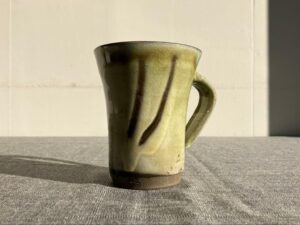
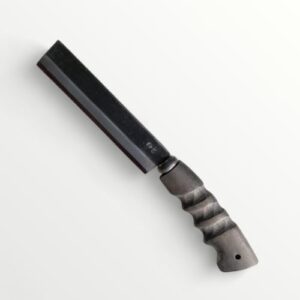
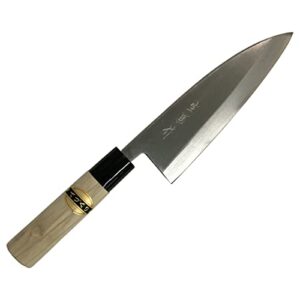
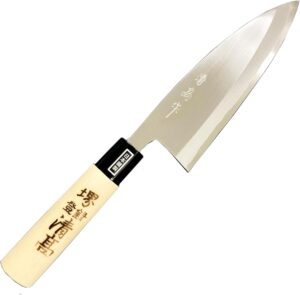
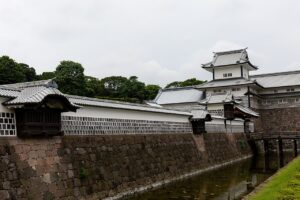
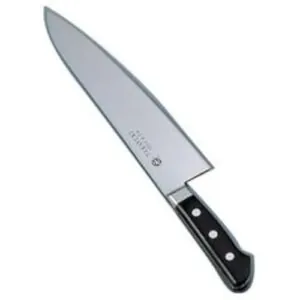
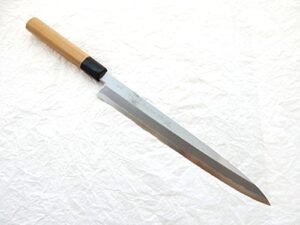
Hand-forged Japanese blades vary by region, format, and use. If you are weighing the Oita Bungo petty against other options, these jpmono.com guides cover neighboring crafts and alternative knife shapes:
Buying options across stores
Prices for hand-forged carbon petty knives vary with steel, forging, blade length, handle, finish, and maker. USD figures, where shown, are approximate estimates at a ¥150/USD baseline as of mid-2026.
| Store | Item / Variant | Price (JPY + USD est.) | Notes |
|---|---|---|---|
| 🇺🇸 Amazon.com (US) | Browse Japanese petty & utility knives | varies (USD) | Best if you are shopping from the US — Prime shipping, USD pricing, no international customs. Amazon US carries hand-forged Japanese petty and utility knives from various makers, useful for comparing steel and geometry. The exact Oita Bungo piece is sourced from Japan (next row). |
| 🇯🇵 Amazon JP Global Store | Oita Bungo hand-forged kurouchi petty | — | Ships internationally from Japan to most major destinations. |
| Maker direct | — | — | No maker-direct storefront was confirmed in the data set. Small Kyushu forges often sell only domestically. |
| Proxy services (Buyee / Tenso) | Same item via Japanese retailers | Item price + proxy fee + forwarding | A fallback if the Global Store does not ship to your country; adds a service fee and a Japan-side forwarding step. |
📦 Shipping & where to buy from outside Japan
The specific item is listed on the Amazon JP Global Store, which ships many household goods internationally to most major destinations. Knives are generally shippable, but some carriers and countries treat bladed items as restricted, so confirm at checkout that your destination is eligible before paying.
- Amazon JP Global Store — the simplest path; international shipping is calculated at checkout. Expect roughly $15–$40 to the US or EU for a small, light item like a petty knife, higher to other regions.
- Amazon US (search) — easiest if you would accept a comparable Japanese petty from another maker with domestic Prime shipping rather than importing this exact blade.
- Proxy / forwarding services (Buyee, Tenso) — use if the Global Store will not ship to your country; they receive the parcel in Japan and re-ship it, for an added fee.
- Customs & duties — orders above your local import threshold may incur duty or VAT on arrival. Carbon-steel knives are food-contact tools, not regulated weapons in most jurisdictions, but check your local rules.
What it does well
Weaknesses and things to verify before buying
- Carbon steel rusts. This is the defining trade-off. The blade must be wiped dry after every use and not left wet or in contact with acidic food for long. If that routine does not fit your kitchen habits, choose stainless.
- It will develop a patina. High-carbon edges discolor to grey-blue with use. This is normal and even protective, but buyers expecting a permanently bright blade will be disappointed.
- Product details may vary. Steel grade and bevel information should be confirmed before buying.
- A petty is not a primary chef’s knife. If you need a single do-everything blade, a santoku or gyuto is the better first purchase; the petty is a companion.
- Forge-scale finish is uneven by design. No two kurouchi blades look identical, and surface texture varies. Buyers wanting a flawless factory finish should look elsewhere.
- Heritage is regional, not certified. The Takada-school context describes the place’s tradition; it is not a guarantee that this knife was made by a registered sword lineage.
Conclusion — which buyer type are you?
Other ways to approach this purchase
❓ Frequently Asked Questions
Does this knife ship internationally?
Will the carbon-steel blade rust?
What is a petty knife used for?
What does “kurouchi” mean?
Can I put it in the dishwasher?
How is an Oita Bungo blade different from Echizen, Sakai, or Kaga knives?
Why does the article show a price I cannot confirm?
jpmono.com is curated by a Japan-based editorial team (working out of Toyama in the Hokuriku region and Nara in Kansai) and is independent. We do not take payment from the makers we feature; income comes from affiliate links. We do not physically test every product — we read maker specifications and regional craft sources.
This article was prepared with AI assistance and reviewed against maker specifications and regional craft sources. Specifications and prices can vary between knives and may change over time.
Affiliate disclosure: jpmono.com may earn a commission on qualifying purchases made through links on this page, at no additional cost to you.