![Banko-yaki Donabe Clay Pot: Yokkaichi Heat-Proof Cookware [2026]](https://jpmono.com/wp-content/uploads/2026/06/banko-yaki-donabe-clay-pot-where-to-buy-2026-featured.jpg)
A donabe (土鍋, “earthen pot”) is the clay vessel at the center of Japanese winter cooking — the pot that simmers nabe hot-pots at the table, steams rice into a slightly scorched, fragrant batch, and holds a slow broth at a gentle, even heat. Most of the donabe sold in Japan come from one place: Yokkaichi, a port-and-industrial city in Mie Prefecture, where the ware known as Banko-yaki (萬古焼, “Banko ware”) has been made since the 18th century. By common industry estimates, Yokkaichi accounts for roughly 80% of all donabe produced in Japan.
What separates Banko-yaki from ordinary earthenware is a single technical fact: its clay is blended with a high proportion of petalite, a lithium aluminosilicate mineral that gives the fired body extremely low thermal expansion. That property is the reason a Banko donabe can sit directly over an open gas flame and shrug off the thermal shock that would crack a typical clay pot. It is engineering, not folklore — and it is why Banko donabe became the default rice-and-nabe vessel in Japanese kitchens.
This guide, written from a Japan-based editor’s desk, covers the Ginpo (Ginpou) Banko-yaki Hana-Mishima donabe as a representative, widely available example — what it is, who it suits, where it comes from, and how to buy it from outside Japan. We compare it to other Japanese ceramics, flag the caveats that matter for international buyers, and lay out the purchase paths plainly.
🔄 Updated:
⏱️ Read time: ~11 min

- Who this is for — and who should skip it
- Product overview (from published specs)
- Which finish should you choose?
- 📍 Where this comes from — place, era, and the craft tradition
- Price snapshot across stores
- What it does well
- Weaknesses and things to verify before buying
- Conclusion — which buyer type are you?
- Other ways to approach this purchase
- 🏆 Editor’s Pick
- ❓ Frequently Asked Questions
Who this is for — and who should skip it
- Cook on a gas stove and want a pot built for direct flame
- Make table-side nabe hot-pots, oden, or shabu-shabu in cold months
- Want to cook rice the traditional way, with a crisp bottom layer (okoge)
- Like cookware that doubles as a serving dish brought straight to the table
- Value a craft object with a documented regional tradition behind it
- Cook only on an induction (IH) hob — standard donabe are not induction-compatible
- Want a dishwasher- and dropping-tolerant everyday pot
- Need something light — fired clay is heavier than a metal pan
- Have no patience for the seasoning step a new donabe usually needs
- Want guaranteed oven or microwave use without checking the specific listing
Product overview (from published specs)
The fetched data for this guide was thin: at the time of writing, only the Amazon US search snapshot was retrievable, and a live Amazon JP price for the specific listing was unavailable. The table below reflects what can be stated from the product identity and the maker’s published category information; figures that could not be confirmed are marked rather than guessed.
Banko-yaki Donabe Clay Pot
【2025年・正規品】 銀峯陶器(Ginpo Touki) 萬古焼 銀峯 菊花 ご飯鍋 2合炊き 「二重蓋」 ごはん 土鍋 直火対応 瑠璃釉 ブルー 日本製 46161
残り9点 ご注文はお早めに · Sold by ティーズマルシェ · ASIN B0D1FYPFY5
Price and availability as of 2026-08-31 02:30 JST. The Amazon listing at the time of purchase is authoritative. jpmono.com earns a commission on qualifying purchases at no extra cost to you.
| Attribute | Detail (per listing identity) |
|---|---|
| Product | Ginpo (Ginpou) Banko-yaki Hana-Mishima donabe clay pot |
| Ware | Banko-yaki (萬古焼), Yokkaichi, Mie Prefecture |
| Material | Petalite-blended heat-resistant earthenware (耐熱陶土) |
| Heat source | Direct open flame (gas) — induction (IH) not supported on standard donabe |
| Pattern | Hana-Mishima (花三島) — inlaid floral-stamp motif, a traditional Mishima style |
| ASIN | B0D1FYPFY5 |
| Size / capacity | Unconfirmed in fetched data — check the listing (donabe are commonly sold by go-number, e.g., 7-go ≈ 2–3 servings, 9-go ≈ 4–5) |
| Weight | Unconfirmed — check manufacturer / listing |
| Designation | Banko-yaki: National Traditional Craft (METI, 1979) |
Sources: Amazon US search (primary, moonill-20) + Amazon JP Global Store (secondary, moonill-22, sourced listing) + maker category information. Only the Amazon US search snapshot was available at writing; live pricing and exact dimensions for the specific listing were unavailable and should be confirmed before purchase.
📖 Glossary — key terms
- Donabe (土鍋) — a clay cooking pot used over direct flame for hot-pots, rice, and simmered dishes; brought to the table as a serving vessel.
- Banko-yaki (萬古焼) — “Banko ware,” the ceramic tradition of Yokkaichi, Mie; famous for heat-resistant donabe and unglazed purple shidei teapots.
- Petalite — a lithium aluminosilicate mineral blended into the clay; its very low thermal expansion is what lets the pot resist flame and thermal shock.
- Mishima / Hana-Mishima (三島 / 花三島) — a decorative technique of pressing stamps into the clay and filling them with contrasting slip; hana (“flower”) Mishima uses a floral stamp.
- Shidei (紫泥) — the unglazed purple-clay body of Banko teapots, the ware’s other flagship product.
- Okoge (おこげ) — the prized crisp, lightly scorched layer of rice at the bottom of a donabe.
- Go (合) — a traditional volume unit (~180 ml) used to size rice pots; donabe are often labeled by go-number.
Which finish should you choose?
This piece is listed in 9 finishes. The photos below are the actual 色 options on the listing right now — pick the one you want and confirm it on the product page before ordering, since hand-finished wares vary slightly piece to piece.
![Banko-yaki Donabe Clay Pot: Yokkaichi Heat-Proof Cookware [2026] — 粉引釉 (ホワイト) finish](https://m.media-amazon.com/images/I/31WHXhxGOiL._SL500_.jpg)
![Banko-yaki Donabe Clay Pot: Yokkaichi Heat-Proof Cookware [2026] — 粉引釉 (ホワイト) finish](https://m.media-amazon.com/images/I/31kbbYKjo1L._SL500_.jpg)
![Banko-yaki Donabe Clay Pot: Yokkaichi Heat-Proof Cookware [2026] — 飴釉 (ブラウン) finish](https://m.media-amazon.com/images/I/41+dfjvqbCL._SL500_.jpg)
![Banko-yaki Donabe Clay Pot: Yokkaichi Heat-Proof Cookware [2026] — 瑠璃釉 (ブルー) finish](https://m.media-amazon.com/images/I/412COcCIx7L._SL500_.jpg)
![Banko-yaki Donabe Clay Pot: Yokkaichi Heat-Proof Cookware [2026] — 瑠璃釉 (ブルー) finish](https://m.media-amazon.com/images/I/41zxwt0h9lL._SL500_.jpg)
![Banko-yaki Donabe Clay Pot: Yokkaichi Heat-Proof Cookware [2026] — 粉引釉 (ホワイト) finish](https://m.media-amazon.com/images/I/31gyeZMyOqL._SL500_.jpg)
![Banko-yaki Donabe Clay Pot: Yokkaichi Heat-Proof Cookware [2026] — 飴釉 (ブラウン) finish](https://m.media-amazon.com/images/I/318gkcOcV3L._SL500_.jpg)
![Banko-yaki Donabe Clay Pot: Yokkaichi Heat-Proof Cookware [2026] — 飴釉 (ブラウン) finish](https://m.media-amazon.com/images/I/31Yq8DacLQL._SL500_.jpg)
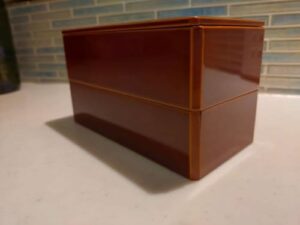 🟤 Ise Shunkei Lacquer (same prefecture, Mie)
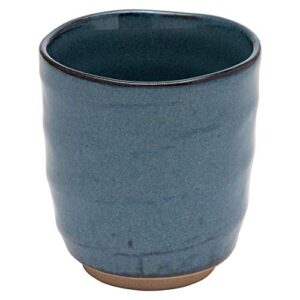 🍵 Shitoro-yaki Yunomi (Tokai pottery)
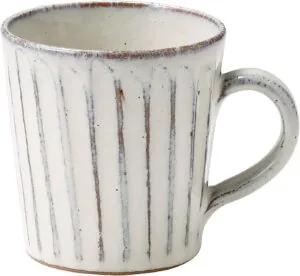 ☕ Shigaraki Mug (neighboring Shiga pottery)
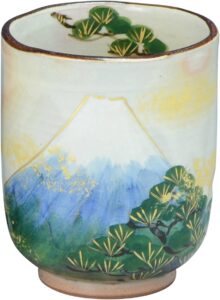 🌸 Kyoyaki Yunomi (Kansai pottery)
🫖 Kobushi-yaki Teapot
 🥃 Otani-yaki Tumbler
🍺 Bizen Ware Beer Mug
🔵 Arita Ware Mug
📍 Where this comes from — place, era, and the craft tradition

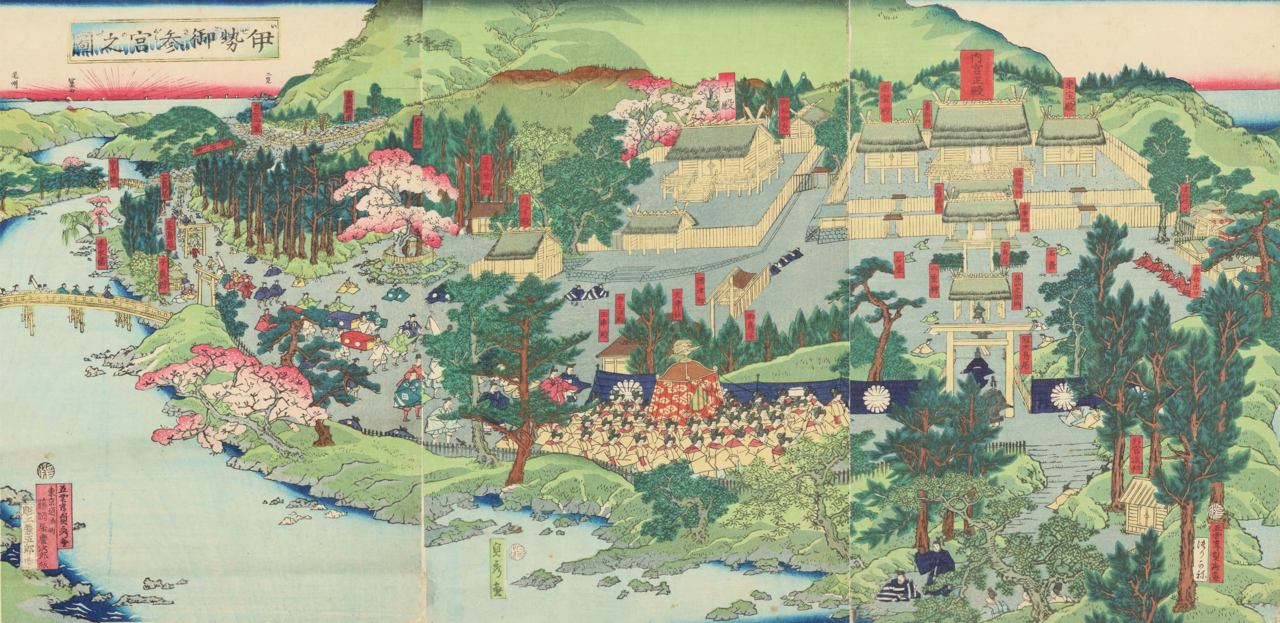
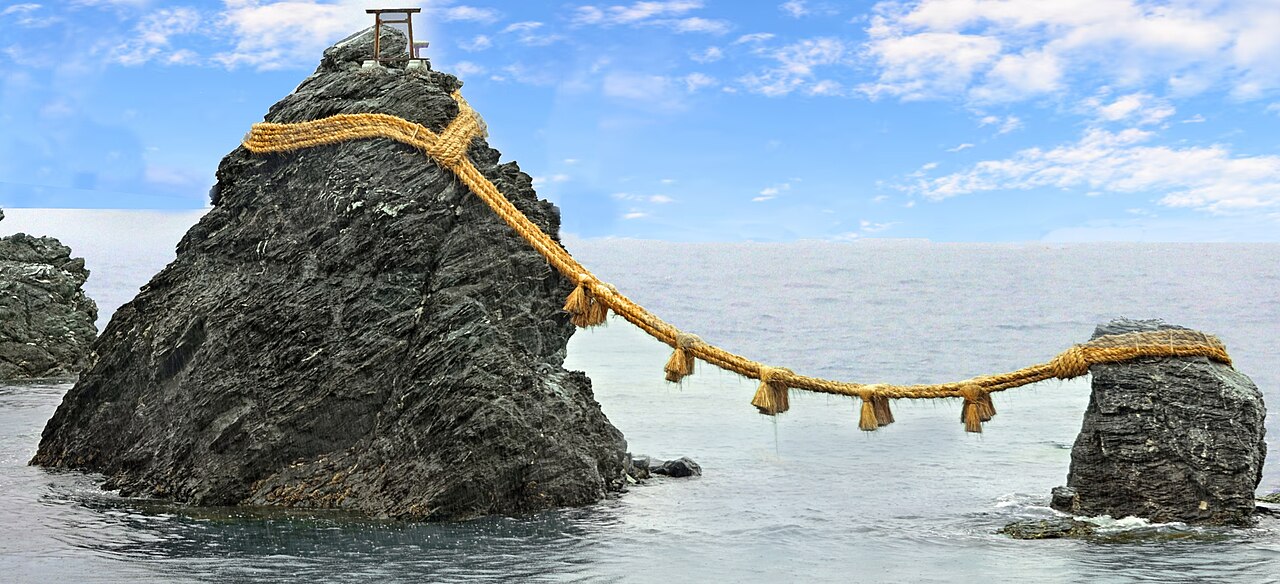
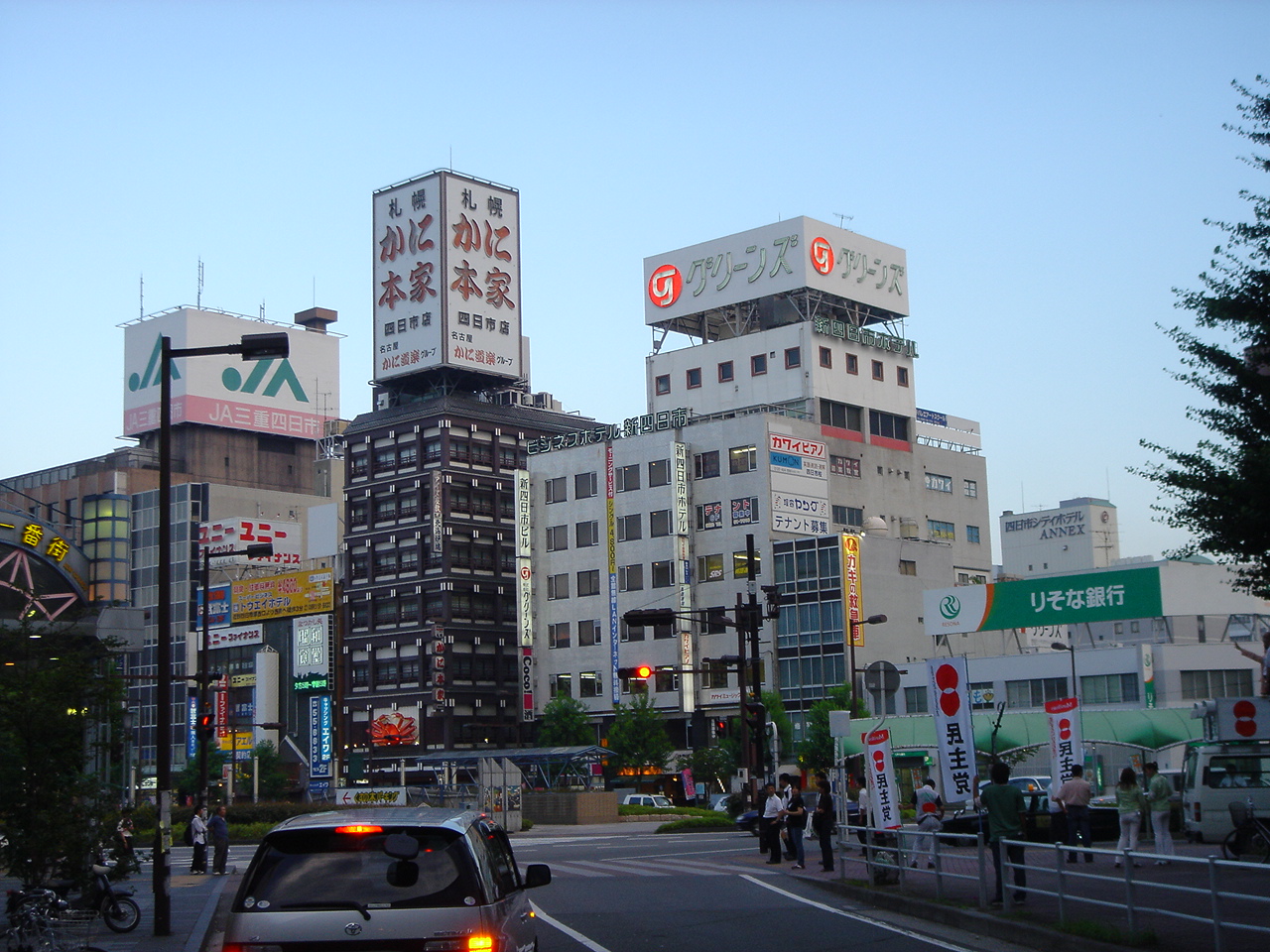
Mie Prefecture occupies the eastern side of the Kii Peninsula, fronting Ise Bay and the Pacific. It is a prefecture defined by two poles: the deeply spiritual south, home to Ise Jingu — the most sacred Shinto shrine complex in Japan — and the industrial north around Yokkaichi, a working port city that grew into one of the country’s ceramic-manufacturing centers. Banko-yaki belongs to that northern, hard-working Mie: less about ritual, more about the everyday pot that feeds a household.
Geographically, Yokkaichi sits where river-borne clay, a sheltered bay for shipping, and proximity to the great consumer market of Nagoya all meet. That combination — raw material, water, and logistics — is the practical reason a pottery industry took root and scaled here rather than staying a village handicraft. Northern Mie became, over time, a place that made ceramics by the trainload.
The ware’s name comes from a single craftsman’s stamp. In the 1730s, a wealthy merchant and tea enthusiast named Nunami Rozan opened a kiln at Obuke (in present-day Asahi, Mie) and marked his pieces banko fueki (萬古不易) — “eternal, unchanging” — a wish that his work would endure forever. That stamp gave the ware its name: Banko.
After Rozan’s death the original kiln fell dormant, and Banko-yaki entered a quiet period. Its revival — and its transformation from a tea-man’s hobby kiln into a major industry — happened in the mid-19th century, when Yamanaka Chuzaemon reestablished the ware in Yokkaichi itself. From that base the city became Japan’s pottery-industrial hub, mass-producing both the heat-resistant donabe and the unglazed purple shidei teapots that remain Banko’s two flagship lines.
- 1730s — Nunami Rozan opens a kiln at Obuke and stamps his wares banko fueki (“eternal, unchanging”) — the source of the name Banko.
- Late 18th c. — After Rozan’s death the kiln falls dormant; Banko-yaki enters a quiet period.
- Mid-19th c. — Yamanaka Chuzaemon revives the ware in Yokkaichi, seeding the modern industry.
- 20th c. — Petalite-blended heat-resistant clay makes Banko donabe the standard rice-and-nabe vessel nationwide.
- 1979 — Banko-yaki designated a National Traditional Craft by METI.
- 2026 — Yokkaichi still produces roughly 80% of all donabe made in Japan.
What “still being made here” means in Banko’s case is industrial continuity rather than a single surviving family kiln. Yokkaichi’s donabe are made across a cluster of established potteries — Ginpo (Ginpou) among them — that together supply the overwhelming majority of the national market. When a Japanese household buys a clay pot for winter nabe, the odds are strong it came from this one city.
“Four out of five donabe in Japan are born in a single city — and the reason is a mineral, not a myth: petalite, which lets fired clay sit on an open flame without cracking.”
Seasonally, the donabe is winter’s pot. As the cold sets in, Japanese tables turn to nabe: a shared earthenware pot of broth, vegetables, tofu, and meat or seafood simmered at the table and ladled into each diner’s bowl. The same pot cooks oden through the colder months and steams a fragrant batch of rice with a crisp okoge bottom at any time of year. It is cookware and serving dish in one object — which is exactly why a Banko donabe earns its place in a small kitchen.
Price snapshot across stores
JPY (¥) is the authoritative price for the specific sourced item. USD figures are approximate estimates at a ¥150/USD baseline (mid-2026) and depend on the current exchange rate. At the time of writing, a live price for this listing was not retrievable from the fetched data — verify at the retailer before purchasing.
| Store | Item / Variant | Price (JPY + USD est.) | Notes |
|---|---|---|---|
| 🇺🇸 Amazon.com (US) | Browse Japanese donabe & clay pots | varies (USD) | Best if you’re shopping from the US — Prime shipping, USD pricing, no international customs. Amazon US carries donabe and Japanese clay cookware from several makers; the exact Ginpo piece is sourced from Japan (next row). |
| 🇯🇵 Amazon JP Global Store | Ginpo Banko-yaki Hana-Mishima donabe (ASIN B0D1FYPFY5) | Price unavailable at writing — verify on listing | The sourced listing for this specific pot. Ships internationally from Japan to most major destinations. |
| Maker direct (Ginpo) | Hana-Mishima donabe line | Varies — domestic JP retail | Ginpo and Yokkaichi potteries sell mainly through Japanese retail; direct international shipping is not guaranteed. |
| Proxy services (Buyee / Tenso) | Any JP-only listing of the pot | Item price + proxy fee + forwarding | Use if a desired size/pattern is listed only on a Japan-domestic shop. Adds handling cost and fragile-item shipping risk. |
What it does well
Weaknesses and things to verify before buying
- Not induction-compatible. Standard donabe, including typical Banko pots, are made for direct gas flame. If your kitchen is IH/induction only, this pot will not heat — confirm before buying.
- Seasoning required. Many new donabe need an initial seasoning step (often cooking a starchy rice porridge to seal micro-pores) before regular use. Skipping it can lead to cracks or leaks.
- Thermal-shock rules still apply. “Heat resistant” does not mean indestructible — a wet exterior over flame, or a hot pot onto a cold surface, can still crack it. The base should be dry before heating.
- Weight and fragility. Fired clay is heavier than metal and breaks if dropped; this matters for international shipping and for handling a full pot.
- Size and capacity unconfirmed in the data. Donabe are sold in several go-sizes; the exact capacity of this listing was not in the fetched data. Check the listing for the size that matches your household.
- Oven / microwave / dishwasher use is not guaranteed. Do not assume these uses — verify on the specific product page, as policies vary by model.
- Pricing was unavailable at writing. Confirm the current price and shipping cost on the listing; figures here are estimates, not quotes.
Conclusion — which buyer type are you?
Other ways to approach this purchase
🏆 Editor’s Pick
❓ Frequently Asked Questions
Can I use a Banko donabe on an induction (IH) cooktop?
Standard donabe, including typical Banko pots, are designed for direct gas flame and do not work on induction. Some makers offer IH-compatible donabe with a special base or heat plate, but you must confirm that specifically on the listing. Do not assume induction support.
Do I need to season a new donabe before using it?
Usually, yes. Many donabe require an initial seasoning — commonly cooking a thin rice porridge to seal the clay’s micro-pores — before regular cooking. Follow the maker’s instructions; skipping this step can lead to leaks or cracking.
Does Amazon JP ship a donabe internationally?
Many Banko items are available through the Amazon JP Global Store, which ships to most major destinations. Because a donabe is heavy and fragile, expect higher shipping costs and check that the specific listing offers international delivery to your country before ordering.
What makes Banko-yaki suitable for direct flame?
Its clay is blended with a high proportion of petalite, a lithium aluminosilicate with very low thermal expansion. That low expansion is what allows the fired pot to withstand an open flame and resist thermal shock — the technical reason Banko donabe became the standard rice-and-nabe vessel.
How do I care for a donabe to prevent cracking?
Keep the exterior dry before placing it over flame, avoid sudden temperature swings (no hot pot onto a cold counter, no cold water into a hot pot), heat gradually, and let it cool before washing. Store it fully dry to discourage mildew in the porous body.
What size donabe should I buy?
Donabe are often sold by go-number. As a rough guide, a 7-go pot suits about 2–3 servings and a 9-go pot about 4–5. The exact capacity of the listed item was not in our fetched data, so check the listing and match the size to your household.
Is this the same as a Banko teapot?
No. Banko-yaki has two flagship product lines: heat-resistant donabe clay pots, and unglazed purple-clay (shidei) kyusu teapots. This guide covers the donabe; the teapots are a separate product made from a different, unglazed body.
jpmono.com is curated by a Japan-based editorial team (working out of Toyama in the Hokuriku region and Nara in Kansai) and is independent. We do not take payment from the makers we feature; income comes from affiliate links. We do not physically test every product — we read maker specs and source listings. Read more about our editorial standards.
🤖 This article was prepared with AI assistance and reviewed against the source listing and maker information available at the time of writing. Specifications, pricing, and availability should be confirmed at the retailer before purchase.
Affiliate disclosure: jpmono.com may earn a commission on qualifying purchases made through links on this page, at no additional cost to you.