![Shitoro-yaki Yunomi: Shizuoka’s Enshu Seven Kilns Tea Cup [2026]](https://jpmono.com/wp-content/uploads/2026/05/japan-map-regions-and-prefectures-800x1050.png)
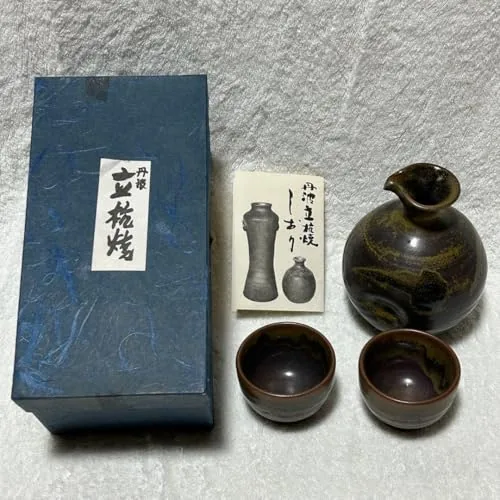
Shitoro-yaki (志戸呂焼, “Shitoro ware”) is a stoneware fired in Kanaya — today part of Shimada City, Shizuoka — along the old Tōkaidō highway between the post stations of Kanaya-juku and Kakegawa. Potters of the Seto and Mino lineage settled the area in the Tenshō era of the late 1500s, working a local iron-rich clay that fires into a dense, durable body and takes iron-ash and ame (amber) glazes. This yunomi (湯のみ, an everyday Japanese tea cup with no handle) belongs to that lineage: a quiet, iron-toned cup made for daily green tea rather than display.
What makes Shitoro notable beyond the region is its place in tea history. In the early Edo period the tea master and daimyō Kobori Enshū favored the kiln, and Shitoro came to be counted among the “Enshū Seven Kilns” (遠州七窯, Enshū Nanagama) — a small group of kilns prized for chaire tea caddies and tea bowls. That heritage sits naturally alongside Shizuoka’s identity as Japan’s leading green-tea region; the Makinohara plateau, just above Kanaya, is one of the country’s major sencha-growing areas.
This guide is for international readers deciding whether a Shitoro yunomi is the right daily tea cup and how the form compares with other regional yunomi. It explains the Shitoro tradition, the Enshū setting, and practical ways to look for this kind of ware outside Japan. Availability varies, so confirm the craft name and maker details before ordering.
🔄 Updated:
⏱️ Read time: ~9 min
Who this is for — and who should skip it
- Drink Japanese green tea (sencha, hōjicha, bancha) daily and want a sturdy everyday cup, not a display piece
- Prefer a dark, iron-toned, matte-to-glossy glaze over bright porcelain
- Like the idea of owning ware from one of the historic Enshū Seven Kilns
- Want a dense stoneware body that holds heat and feels substantial in the hand
- Are comfortable buying from Japan and confirming details before purchase
- Want a handled mug for coffee or Western tea — a yunomi has no handle
- Need confirmed capacity, weight, and dimensions before purchase (the fetched data did not include them)
- Expect bright white or heavily decorated porcelain
- Need a guaranteed dishwasher- and microwave-safe cup — treat handmade stoneware as hand-wash unless the maker states otherwise
- Are shopping for a matched large set; single cups and small pairs are the typical format

Product overview (from published specs)
The table below separates characteristics of Shitoro ware from details that vary by individual cup. Unconfirmed fields are left open rather than filled from memory or assumption.
| Attribute | Detail | Source |
|---|---|---|
| Object | Yunomi (handle-less Japanese tea cup) | Spec / data notes |
| Ware | Shitoro-yaki (Shitoro ware), Enshū Seven Kilns lineage | Data notes |
| Material | Iron-rich stoneware, finished with iron-ash / ame (amber) glaze | Data notes |
| Origin | Kanaya, Shimada City, Shizuoka Prefecture (Chūbu / Tōkai) | Data notes |
| Capacity | — | Not in fetched data |
| Dimensions / weight | — | Not in fetched data |
| Price | — | Not in fetched data |
📖 Glossary — key terms in this article
- Yunomi (湯のみ) — a tall, handle-less Japanese cup for everyday green tea, distinct from the wider chawan used for whisked matcha.
- Shitoro-yaki (志戸呂焼) — stoneware fired in Kanaya, Shizuoka, by potters of Seto/Mino descent since the late 1500s.
- Enshū Seven Kilns (遠州七窯, Enshū Nanagama) — a group of kilns associated with the tea master Kobori Enshū, esteemed for tea utensils.
- Ame-yu (飴釉, “amber glaze”) — an iron glaze that fires to a translucent amber-brown, named after ame (malt candy).
- Chaire (茶入) — a small ceramic caddy for powdered matcha used in the tea ceremony; a form Shitoro was historically prized for.
- Sencha (煎茶) — steeped green tea made from whole leaves; the everyday tea Shizuoka is known for.
- Tōkaidō (東海道) — the historic coastal highway linking Edo (Tokyo) and Kyoto, with Kanaya as one of its post stations.
- Stoneware — clay fired hot enough to vitrify into a dense, non-porous, durable body, between earthenware and porcelain.

Buying options
| Store | Item / Variant | Price (JPY → USD est.) | Notes |
|---|---|---|---|
| 🇺🇸 Amazon US (search) | Browse Japanese yunomi tea cups | varies (USD) | Best if you’re shopping from the US — Prime shipping, USD pricing, no international customs. Amazon US carries Japanese stoneware and porcelain tea cups from various makers; this exact Shitoro piece is sourced from Japan (next row). |
| 🇯🇵 Amazon JP Global Store | Shitoro-yaki yunomi | — | Where this specific cup is sourced. Ships internationally from Japan to most major destinations via the Global Store. |
| Maker direct | Kanaya / Shimada kiln shops | — | Individual Shitoro kilns do not reliably ship overseas; no confirmed direct-export channel in the fetched data. |
| Proxy services (Buyee / Tenso) | Japan-only options, forwarded | item price + forwarding fee | Useful for Japan-only marketplace options; adds a service fee and a second shipping leg. Fragile-item packing is your responsibility to request. |
USD figures shown alongside JPY are approximate (¥150/USD baseline as of mid-2026). The JPY price is the authoritative one for the specific listed item. Prices in USD depend on the current exchange rate.
What it does well
The iron-rich Kanaya clay vitrifies into a tough stoneware — built for daily use, not a delicate display object.
Iron-ash and amber glazes read as calm and earthy, complementing the green of sencha rather than competing with it.
One of the Enshū Seven Kilns favored by Kobori Enshū — a verifiable craft lineage, not heritage marketing.
Made directly below the Makinohara plateau, one of Japan’s major sencha-growing areas — cup and tea share a place.
Weaknesses and things to verify before buying
- Size and capacity vary. Confirm that the cup suits your intended use before ordering.
- No confirmed price. Pricing was unavailable at the time of writing for both the US and JP paths; do not assume a figure.
- No handle. A yunomi is held by the body. When filled with hot tea it gets warm to the touch — this is normal, not a defect, but it is not a coffee mug.
- Handmade variation. Glaze tone, speckling, and exact shape vary between kiln runs.
- Care assumptions. Treat handmade iron-glazed stoneware as hand-wash and avoid sudden temperature shocks unless the maker states that it is dishwasher- and microwave-safe.
- Fragility in transit. Ceramics can chip or crack in international shipping; if buying via a proxy service, request careful packing.
Conclusion — which buyer type are you?
For kiln-signed or gallery-grade Shitoro tea ware, compare work from a Kanaya kiln or a specialist gallery; everyday cups and more formal pieces serve different purposes.
You want one solid daily yunomi with real heritage. This Amazon JP Global Store cup fits — verify size and price, then order.
Price is your main concern. Compare with the Mino and Echizen yunomi in the cross-link box, and wait for a sale or bundle.
You want a handled mug, a guaranteed dishwasher-safe cup, or a large matched set. Shitoro yunomi are not the right tool here.
Other ways to approach this purchase
Amazon JP runs periodic sales; setting a price alert can be worthwhile when no current price is confirmed.
Older Shitoro pieces appear on Japanese resale marketplaces; reachable via a proxy service, with the usual condition caveats.
If you already hold Amazon points or rewards, a low-cost cup like this is a sensible way to spend them.
Where this comes from

Shitoro-yaki is fired in Kanaya, a former post town now part of Shimada City in the western part of Shizuoka Prefecture, on the Pacific (Tōkai) side of central Japan. The kilns sit along the old Tōkaidō, the historic highway that linked Edo (now Tokyo) and Kyoto, in the stretch between the post stations of Kanaya-juku and Kakegawa. The area’s defining raw material is its iron-rich local clay, which fires into a dense, durable stoneware and takes the iron-ash and ame (amber) glazes the ware is known for.
The kiln’s history begins in the late 1500s.
Potters of the Seto and Mino lineage — the great ceramic traditions of neighboring Aichi and Gifu — settled the Kanaya area in the Tenshō era and began working the local clay. In the early Edo period the tea master and daimyō Kobori Enshū favored Shitoro ware, and the kiln came to be counted among the “Enshū Seven Kilns” (Enshū Nanagama), a group esteemed for tea utensils such as chaire caddies and tea bowls. That is the heritage a Shitoro yunomi quietly carries.
- Late 1500s (Tenshō era) — Potters of the Seto / Mino lineage settle the Kanaya area and begin firing the local iron-rich clay.
- Early 1600s (early Edo) — The tea master and daimyō Kobori Enshū favors Shitoro ware.
- Edo period — Shitoro is counted among the Enshū Seven Kilns, prized for chaire caddies and tea bowls.
- Edo period — Kanaya-juku flourishes as a Tōkaidō post town between Kanaya and Kakegawa.
- 19th–20th century — The Makinohara plateau above Kanaya becomes one of Japan’s largest sencha-growing areas.
- 2026 — Iron-glazed Shitoro stoneware is still fired in Kanaya, now part of Shimada City.
The geography ties the cup to its contents. Directly above Kanaya rises the Makinohara plateau, one of Japan’s largest sencha-producing areas, in the prefecture most associated with Japanese green tea. A Shitoro yunomi and the sencha it is most often filled with are, in other words, products of the same few square kilometers of hillside and river valley.
“A Shitoro yunomi and the sencha it holds come from the same hillside — the cup was shaped from Kanaya’s iron clay, the tea grown on the plateau directly above it.”
None of this requires romanticizing. Shitoro is a working stoneware tradition that has been fired in the same place for over four centuries, attached to a documented tea-history lineage and to a still-active tea-growing region. That is the verifiable case for the cup — no exotic framing needed.
❓ Frequently Asked Questions
What is a yunomi, and how is it different from a matcha bowl?
A yunomi is a tall, handle-less cup for everyday steeped green tea such as sencha. It is narrower and deeper than a chawan, the wide bowl used for whisked matcha. Shitoro-yaki is made in both forms, but this guide covers the yunomi.
Does Amazon JP ship a Shitoro yunomi internationally?
Ceramics in this size often cost roughly $15–$40 to ship to the US or EU, with the final amount varying by country; customs duties may also apply above the local threshold.
How much does it cost?
Is it dishwasher- and microwave-safe?
Handmade iron-glazed stoneware is generally best hand-washed and protected from sudden temperature shocks unless the maker explicitly states that dishwasher or microwave use is suitable.
Why does Shitoro-yaki look dark and earthy?
The Kanaya clay is iron-rich, and the ware is finished with iron-ash and ame (amber) glazes. Together these give Shitoro its characteristic dense body and dark, iron-toned surface rather than the brightness of white porcelain.
What makes Shitoro historically notable?
In the early Edo period the tea master and daimyō Kobori Enshū favored the kiln, and Shitoro came to be counted among the Enshū Seven Kilns — a group esteemed for tea utensils. It has been fired in Kanaya since the late 1500s.
How does it compare to other regional yunomi?
Shitoro leans dark and iron-toned, where Mumyoi-yaki from Sado is a polished red clay and Mino or Echizen yunomi show different bodies and glazes. The cross-link box above gathers our guides to those alternatives so you can compare clay color, glaze, and price tier.
Affiliate disclosure: jpmono.com may earn a commission on qualifying purchases made through links on this page, at no additional cost to you.