![Kyō-yaki / Kiyomizu-yaki Yunomi — Shunzan-gama ‘Kisshō Fuji’ Cup from a Named Kyoto Kiln (¥2,745 / ≈$18 USD) [2026 Buyer’s Guide]](https://jpmono.com/wp-content/uploads/2026/05/aito-kyoyaki-shunzan-yunomi-where-to-buy-2026-featured-843x1050.jpg)
Kyō-yaki (京焼) and Kiyomizu-yaki (清水焼) are two overlapping names for porcelain and stoneware produced in Kyoto. Kyō-yaki is the broader umbrella term for ceramics made anywhere in the city; Kiyomizu-yaki refers specifically to the kilns clustered around Kiyomizu-dera in the Higashiyama hills. Modern usage treats them as synonyms, and the METI Traditional Craft Product designation issued in 1977 groups them together as one named craft. The tradition runs uncommonly long: from Nonomura Ninsei’s mid-seventeenth-century invention of polychrome overglaze, through Ogata Kenzan’s painted Rinpa-school ware, to roughly three hundred active kilns operating in and around Kiyomizu-zaka in 2026.
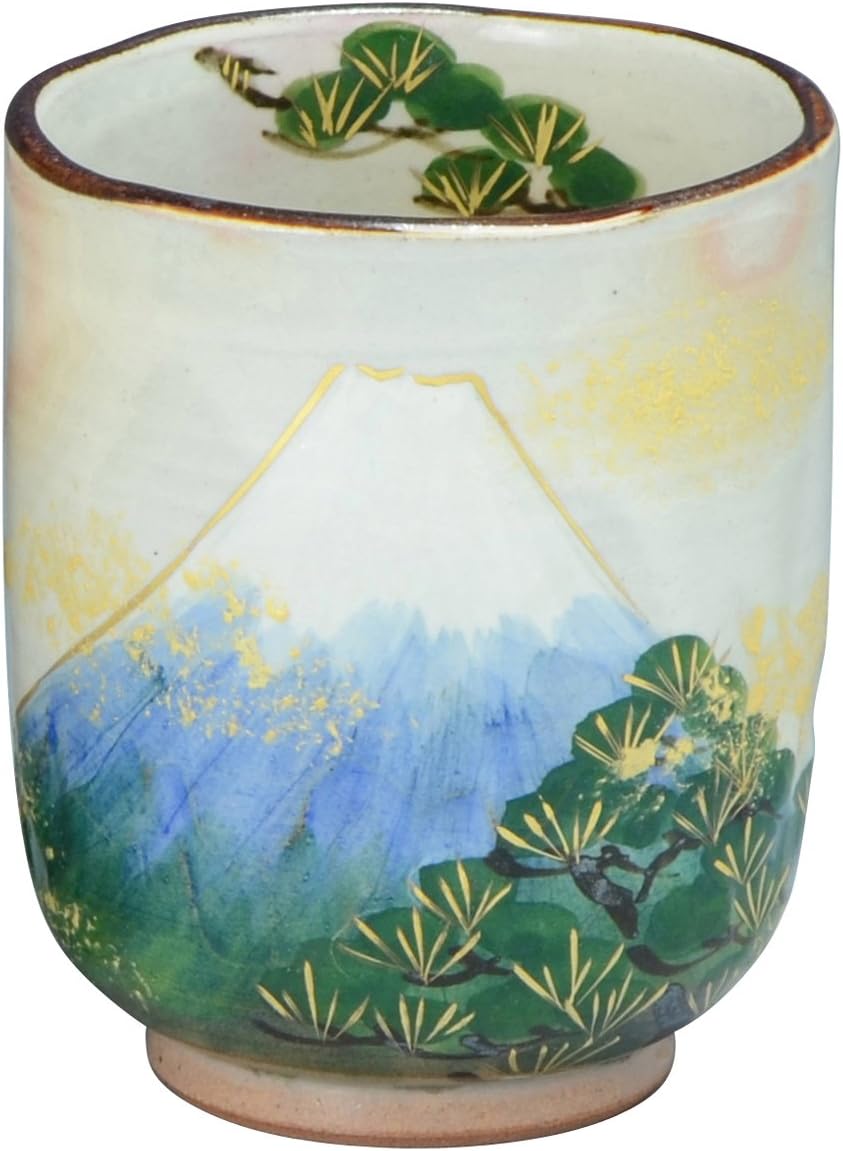
The piece this guide is built around is Shunzan-gama’s (俊山窯) “Kisshō Fuji” (吉祥富士, lucky Mount Fuji) yunomi — a 200 ml porcelain tea cup painted with Mount Fuji and a rising sun in red-orange overglaze, made by a multi-generation named kiln in the Kiyomizu-zaka workshop district. At ¥2,745 (≈$18 USD as of May 2026), it is one of the cheapest named-kiln Kyō-yaki pieces routinely available through Amazon JP Global Store, and a low-friction first piece of Kyoto pottery for a foreign buyer who has not previously owned hand-painted Japanese ceramics.
This guide covers who Shunzan-gama is, where Higashiyama-ku sits on the map of Japan, the four-century arc that put a working kiln district at the foot of Kiyomizu-dera, and the international purchase reality for a 130-gram porcelain cup shipped out of Japan. Comparison covers the Kishin-gama alternative kiln (quieter palette), the Asahi-yaki tea-ceremony tier in Uji, and several related jpmono pieces in adjacent craft categories.
🔄 Last updated May 16, 2026
⏱ ~14 min read
🏷 Japanese Craft · Kyoto · Ceramics
- Who this is for — and who should skip it
- Product overview (from published specs)
- 📌 How does it compare?
- Price snapshot across stores
- What it does well
- Weaknesses and things to verify before buying
- Where this comes from — Higashiyama-ku, Kyoto, and the four-century kiln district
- The region — eastern Kyoto, the kilns at the foot of Kiyomizu-dera
- The historical anchor — Nonomura Ninsei, Ogata Kenzan, and the Senke-juwakushū
- The 18th and 19th centuries — geographic concentration in Higashiyama
- Meiji and the modern era
- Shunzan-gama (俊山窯) — the maker of this cup
- Seasonal calendar and visiting the kiln district
- 📦 Shipping & where to buy from outside Japan
- Conclusion — which buyer type are you?
- Other ways to approach this purchase
- 🏆 Editor’s Pick
- ❓ Frequently Asked Questions
- 📌 Related Japanese Crafts
Who this is for — and who should skip it
- Want a named-kiln Kyō-yaki piece under $25 USD as a first Kyoto ceramic
- Drink loose-leaf sencha, hojicha, or genmaicha daily and need a 200 ml everyday cup
- Like the universally Japanese visual of Mount Fuji with a rising sun
- Are giving a “starter Japan” gift to a friend who has never owned hand-painted porcelain
- Want to pair with USK901-02 to assemble a meoto-yunomi (husband-and-wife pair)
- Need a chawan for matcha — yunomi are for steeped tea, not whisked tea ceremony
- Want a premium gift box presentation (the ¥2,745 price point ships in a standard product carton)
- Prefer a quiet, monochrome ceramic palette — the Fuji-and-sun motif is openly auspicious and graphic
- Use a dishwasher daily and will not switch to hand-washing (overglaze wears over decades)
- Are shopping for a tea-ceremony tier piece (consider Asahi-yaki or Senke-juwakushū lines instead)
Product overview (from published specs)
The table below summarizes the specifications published on the Amazon JP listing for ASIN B00WS3YP62 as of May 16, 2026. Amazon US does not carry this exact item; the row for amazon.com is a search across comparable Japanese yunomi and Kyoto ceramics from other named kilns.

Kyō-yaki / Kiyomizu-yaki Yunomi
アイトー(Aito) 京焼 清水焼 俊山窯 湯呑 大 吉祥富士 USK901-01
残り2点(入荷予定あり) · Sold by Amazon.co.jp · ASIN B00WS3YP62
Price and availability as of 2026-08-31 02:30 JST. The Amazon listing at the time of purchase is authoritative. jpmono.com earns a commission on qualifying purchases at no extra cost to you.
| Attribute | Shunzan-gama “Kisshō Fuji” (this article) | Kishin-gama “Shino-shiratōrai” (alternative) |
|---|---|---|
| ASIN | B00WS3YP62 | B00WS42OWI (large) / B00WS423BA (small) |
| Kiln | Shunzan-gama (俊山窯), Higashiyama-ku, Kyoto | Kishin-gama (喜信窯), Higashiyama-ku, Kyoto |
| Form | Yunomi, large (大, dai), ~200 ml | Yunomi (large or small versions) |
| Dimensions | ⌀ 7.5 × H 8.5 cm | Unconfirmed — check Amazon JP listing |
| Weight | ~130 g | Unconfirmed — check Amazon JP listing |
| Material | Porcelain (磁器) with overglaze painted decoration | Porcelain with Shino-style white glaze |
| Motif | Kisshō Fuji — Mount Fuji + rising sun, red/orange overglaze | Shino-shiratōrai (志野白梅) — white plum blossom, quiet palette |
| Made in | Higashiyama-ku, Kyoto | Higashiyama-ku, Kyoto |
| Distributor | Aito (アイトー, Nagoya) | Aito |
| Price (as of May 16, 2026) | ¥2,745 (≈$18 USD) | ¥2,475 (≈$17 USD) |
| Care | Microwave-safe; hand-wash recommended | Microwave-safe; hand-wash recommended |
Specs sourced from the Amazon JP Global Store listing snapshot for B00WS3YP62 on May 16, 2026. Live pricing may have shifted since the writing date.
📖 Glossary — Japanese ceramic terms used in this article
- Kyō-yaki (京焼)
- Umbrella term for ceramics produced in Kyoto. Includes Kiyomizu-yaki and other Kyoto-area pottery.
- Kiyomizu-yaki (清水焼)
- Pottery specifically from kilns near Kiyomizu-dera in Higashiyama-ku. Usually treated as a subset of Kyō-yaki, and now near-synonymous in everyday use.
- Yunomi (湯呑)
- A handle-less tea cup for steeped teas — sencha, hojicha, genmaicha. Distinct from chawan (matcha bowl) and chakai-jawan (formal tea-ceremony bowl).
- Iro-e (色絵)
- Multi-color overglaze painting on porcelain. Invented by Nonomura Ninsei in seventeenth-century Kyoto; the technical signature of Kyō-yaki.
- Kisshō (吉祥)
- Auspicious imagery — Fuji, rising sun, cranes, pine, plum, bamboo. Used at New Year, weddings, and home-opening ceremonies as a wish for good fortune.
- Kannyū (貫入)
- Fine hairline crackle that develops in glaze with age. An expected aging effect, not a defect; not present in new pieces.
- Meoto-yunomi (夫婦湯呑)
- Paired “husband-and-wife” yunomi set — one large (dai 大), one small (ko 小). The Shunzan USK901-01 (large) pairs with USK901-02 (small).
- Senke-juwakushū (千家十職)
- “Ten Workshops of the Senke School” — hereditary craft families officially supplying utensils to the Sen tea-master house. The historical apex of named-kiln status in Kyoto pottery.
📌 How does it compare?
Related jpmono guides on Japanese craft household pieces — adjacent kilns, regions, and material categories worth reading alongside this one.




Price snapshot across stores
Live prices and stock fluctuate. Verify at the retailer at the time of purchase. The first row links to a comparable-products search on Amazon US; the specific Shunzan-gama piece itself is sourced from the Amazon JP listing in the second row.
| Store | Item / Variant | Price | Notes |
|---|---|---|---|
| 🇺🇸 Amazon.com (US) | Browse Japanese yunomi & Kyoto ceramics | varies (USD) | Best if you’re shopping from the US — Prime shipping, USD pricing, no international customs. Amazon US carries Japanese yunomi from various Kiyomizu-zaka and Mino-yaki makers — useful for comparing forms, motifs, and price tiers. Shunzan-gama’s exact Kisshō Fuji piece is sourced from Japan (next row). |
| 🇯🇵 Amazon JP Global Store | Aito USK901-01 — Shunzan-gama Kisshō Fuji yunomi (large) | ¥2,745 (≈$18 USD) | Ships internationally from Japan. ~130 g; transit shipping $8–$15 USD; porcelain breakage rate in international transit ~2%. The authoritative listing for this exact ASIN. |
| Maker direct (Kiyomizu-zaka workshops) | Same item or comparable Kyō-yaki yunomi | Comparable JPY pricing | Most Kiyomizu-zaka workshops ship internationally via Japan Post. International shipping typically $20–$40 USD from Japan. Useful if you want a specific commission or non-listed motif. |
| Proxy services (Buyee / Tenso) | Reroute domestic-only JP listings | Item price + handling + forwarding | Useful when a Kyō-yaki seller does not ship internationally directly. Adds 8–15% in handling on top of forwarding. Generally not needed for Aito’s catalog (already on Global Store). |
Prices in USD are approximate (¥150/USD baseline) and depend on the current exchange rate. The JPY price is the authoritative one for the specific listed item.
What it does well
“Kyō-yaki kilns sit literally inside the most visited part of Kyoto — within walking distance of Kiyomizu-dera, Yasaka Shrine, and the Gion teahouse district. The craft is more visible to a foreign tourist than any other named Japanese pottery.”
Weaknesses and things to verify before buying
- No premium gift box at this price tier. The ¥2,745 price ships in a standard product carton. If you need a wood (kiri) presentation box for a wedding or business gift, plan to either step up to a higher-price kiln piece or have a Kyoto retailer add a paulownia box for an extra ¥1,500–¥3,000.
- Overglaze decoration is not dishwasher-friendly long-term. Per Aito’s care notes, hand-washing is recommended. The piece is microwave-safe, but repeated dishwasher cycles will wear the painted layer over years to decades. Buyers who cannot commit to hand-washing should consider an underglaze-painted (sometsuke) piece instead.
- The motif is graphic, not subtle. The Mount Fuji + rising sun is openly auspicious; it does not blend into a minimalist Scandinavian kitchen aesthetic. The Kishin-gama Shino-shiratōrai is the obvious quieter alternative.
- Not a tea-ceremony piece. Yunomi are for steeped tea (sencha, hojicha, genmaicha). A formal matcha tea ceremony uses chawan, not yunomi. If the recipient practices sadō, look at Raku-yaki chawan or Asahi-yaki (Uji) tea-ceremony tiers instead.
- Single piece, not a set. The USK901-01 is sold as one large yunomi; the meoto-yunomi pair requires also buying USK901-02 separately. Verify both SKUs are in stock if you want the matched pair.
- International shipping breakage risk is real, if small. Porcelain in international transit has a roughly 2% breakage rate per Aito distributor data. Amazon JP’s standard returns cover this, but expect a delay if a replacement is required.
- Listing turnover. Aito’s Amazon JP listings for individual Kiyomizu-zaka kilns can go in and out of stock as the distributor batches deliveries. If the listing shows “currently unavailable,” it usually returns within a few weeks rather than being permanently discontinued.
Where this comes from — Higashiyama-ku, Kyoto, and the four-century kiln district

The region — eastern Kyoto, the kilns at the foot of Kiyomizu-dera
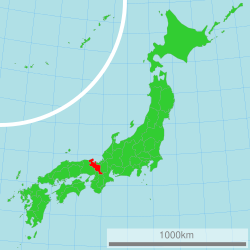
Kiyomizu-yaki kilns concentrate in Higashiyama-ku (東山区), the eastern half of central Kyoto, in the Kiyomizu-zaka district that climbs the hill toward Kiyomizu-dera. The area was historically the geological boundary between the Kyoto basin and the eastern hills, with clay-rich slope soils that supported pottery production. Modern Kyō-yaki workshops cluster within a one-kilometer radius of Kiyomizu-dera, along narrow lanes lined with pottery shops, kilns, and the homes of multi-generational potter families.
For international-reader geography: Kyoto sits 500 km west-southwest of Tokyo, 50 km north of Osaka, and 70 km north of Nara. Direct shinkansen from Tokyo Station takes 2 hours and 15 minutes. Higashiyama-ku is the heart of Kyoto’s tourist district, anchored by Kiyomizu-dera (founded 778 CE), Yasaka Shrine, the Gion geisha district, and the Sannenzaka and Ninenzaka pedestrian-only stone-paved streets.
The Kiyomizu-zaka itself is the road climbing from Higashiōji-dōri up to the Kiyomizu-dera main gate — about 600 meters long. Pottery shops line both sides; behind the storefronts, working kilns operate at the back. Several major Kyō-yaki workshops are open to the public, and visitors can watch wheel-throwing or overglaze painting in progress.
The geographic anchor matters: the Kyō-yaki kilns sit literally inside the most visited part of Kyoto, in the same district as the city’s three most photographed religious sites. This makes the craft uncommonly visible to international visitors — a Kyō-yaki shopping stop is often part of a foreign tourist’s day itinerary in Kyoto.
The historical anchor — Nonomura Ninsei, Ogata Kenzan, and the Senke-juwakushū
Kyō-yaki as a named tradition begins with Nonomura Ninsei (野々村仁清, dates uncertain, active c. 1648–1690), a potter who founded a workshop in the Ninna-ji temple area of western Kyoto in the mid-seventeenth century. Ninsei’s innovation was iro-e (色絵) — multi-color overglaze painting on porcelain. Before Ninsei, Japanese ceramics painted decoration in underglaze blue (sometsuke 染付) only; iro-e brought reds, greens, yellows, and gold to the surface, painted onto pre-fired glaze and then re-fired at lower temperatures to set the pigments.
The technique made Kyoto pottery instantly distinctive in the Japanese ceramic landscape. By the late seventeenth century, Kyō-yaki was the most visually sophisticated painted pottery in Japan — patronized by the imperial court, by the leading tea masters, and by the wealthy merchant class.
The next major figure was Ogata Kenzan (尾形乾山, 1663–1743), brother of the Rinpa-school painter Ogata Kōrin. Kenzan brought Rinpa-school painting — bold, gold-grounded, nature-themed — onto ceramic ware, often working with his brother who painted the surfaces of Kenzan’s pieces. Kenzan-style Kyō-yaki is among the most valuable Japanese ceramics; major pieces sit in the Brooklyn Museum, the British Museum, and the Tokyo National Museum.
In parallel with Ninsei and Kenzan, the Senke-juwakushū (千家十職, “Ten Workshops of the Senke School”) developed under the patronage of the Sen tea-master house. These ten hereditary craft families — including Raku-yaki for tea bowls, Yamanaka-ya for lacquerware, Kuroda-ya for bamboo — supplied utensils to the head tea schools (Omote-senke, Ura-senke, Mushakōji-senke) and through them to the broader Japanese tea-ceremony world. Several Kyō-yaki workshops trace their official status to Senke-juwakushū designation.
-
c. 1648–1690 — Nonomura Ninsei active in Kyoto. Invents iro-e polychrome overglaze; founding figure of Kyō-yaki. -
1663–1743 — Ogata Kenzan. Brings Rinpa-school painting onto ceramics; works alongside brother Ogata Kōrin. -
17th c. onward — Senke-juwakushū formalizes ten hereditary craft families supplying utensils to the Sen tea-master house. -
1700s — Kyō-yaki production concentrates in Higashiyama-ku near Kiyomizu-dera. The term “Kiyomizu-yaki” emerges for ware made specifically in this district. -
Early 19th c. — Aoki Mokubei, Eiraku Hozen, and Nin’ami Dōhachi — the “Late-Edo Kyoto Three Masters” — expand the technical repertoire with bold colored grounds and refined gold work. -
1868 — Meiji opening. Loss of Sen-school patronage; pivot to Western-form export tea sets routed through Yokohama. -
1977 — Kyō-yaki / Kiyomizu-yaki designated a METI Traditional Craft Product (国指定伝統的工芸品), grouping both names as one craft. -
2026 — Approximately 300+ active Kyō-yaki kilns across Higashiyama and adjacent Kyoto districts; Shunzan-gama among the named-kiln tier.
The 18th and 19th centuries — geographic concentration in Higashiyama
During the mid-Edo period (1700s), Kyō-yaki production gradually concentrated in the Higashiyama area near Kiyomizu-dera. The shift was driven by four factors: better clay supply (Higashiyama’s hillside soils contained higher-quality kaolin than the central Kyoto basin), fuel access (pine forests on the eastern hills supplied kiln charcoal), pilgrim traffic (Kiyomizu-dera was already a major pilgrimage destination, creating a customer base for finished ware), and apprenticeship clustering (master potters established workshops near each other, enabling knowledge transfer and shared resources).
By 1800, perhaps fifty to eighty named kilns operated in Higashiyama. The “Kiyomizu-yaki” name emerged in the eighteenth century specifically for ware produced in this district, while “Kyō-yaki” remained the broader term for any Kyoto pottery. Modern usage treats them as interchangeable, though specialists still distinguish Kiyomizu-yaki as the geographic subset.
In the early nineteenth century, three major potters — Aoki Mokubei (青木木米), Eiraku Hozen (永楽保全), and Nin’ami Dōhachi (仁阿弥道八) — expanded the technical repertoire with bold colored grounds, Chinese-style scenery painting, and refined overglaze gold work. These three are sometimes called the “Late-Edo Kyoto Three Masters.” Their stylistic descendants populate the modern named-kiln tier, including Shunzan-gama.
Meiji and the modern era
The Meiji opening of Japan in 1868 created two simultaneous pressures on Kyō-yaki: loss of the Sen tea-school patronage (as the new government secularized many cultural institutions) and new opportunity in international export markets. Kyō-yaki adapted by producing Western-form tea sets and decorative ware for European customers, primarily routed through Yokohama merchant houses.
The modern industry survived the 1923 Kantō earthquake (which had no direct effect on Kyoto kilns) and the wartime materials shortages of 1941–1945. Most Higashiyama kilns continued operating through the war, scaled down. Postwar recovery was steady; by the 1970s the kiln district had been recognized as a significant cultural heritage area. Kyō-yaki / Kiyomizu-yaki was designated a METI Traditional Craft Product (国指定伝統的工芸品) in 1977 — covering porcelain and stoneware produced in Kyoto City using traditional wheel-throwing and hand-painted overglaze techniques. The designation explicitly groups Kyō-yaki and Kiyomizu-yaki as a single craft.
In 2026 there are approximately 300+ active Kyō-yaki kilns across Higashiyama and adjacent Kyoto districts. The structure runs in three tiers:
Shunzan-gama (俊山窯) — the maker of this cup
Shunzan-gama is a named Kyō-yaki / Kiyomizu-yaki kiln operating in the Kiyomizu-zaka area of Higashiyama-ku, Kyoto. The workshop has been active across multiple generations and produces hand-painted overglaze yunomi, sake cups, plates, and small decorative ware. The kiln distributes through specialty Kyoto pottery retailers and through partnerships with national tableware distributors — including Aito, the Aichi-based distributor that sources this article’s USK901-01 product.
The Kisshō Fuji (“lucky Mount Fuji”) motif is one of Shunzan-gama’s signature designs: a stylized Mount Fuji with a rising sun (asahi 朝日), painted in red-orange overglaze on a clear porcelain ground. The motif draws on the Japanese kichijō (吉祥) iconography — auspicious symbols collected at New Year, weddings, and home-opening ceremonies. Fuji + sun is widely understood across Japan as a wish for good fortune, longevity, and stable beginnings.
The specific product (USK901-01) is the large (dai 大) version of a paired set. Aito distributes a matching small (ko 小, USK901-02) yunomi that completes a meoto-yunomi (husband-and-wife pair) for couple gifts.
Seasonal calendar and visiting the kiln district
The Kyoto pottery year follows the tourist calendar. March and April are cherry-blossom season; Kiyomizu-dera draws roughly five million visitors over six weeks, and pottery-shop traffic peaks. November and December bring autumn momiji plus year-end gift season, the second peak. The April Kiyomizu Pottery Festival runs annually along Kiyomizu-zaka with workshop tours. July’s Gion Matsuri — Japan’s most famous summer festival — sees pottery shops feature kichijō motif ware on their front displays.
Kiyomizu-zaka itself is reachable by Kyoto City Bus from Kyoto Station (~20 minutes, ¥230) or by walking from Gion-Shijō Station (~15 minutes). The pottery shops are generally open daily 9:00–17:00. Many workshops offer one-hour wheel-throwing or painting experiences (¥3,000–¥5,000) with advance reservation in English available. The Kyoto Municipal Museum of Traditional Arts (“Fureai-kan”) near Heian-jingū holds rotating Kyō-yaki exhibitions, and the Kyoto National Museum in Higashiyama-ku holds major Ninsei and Kenzan pieces.
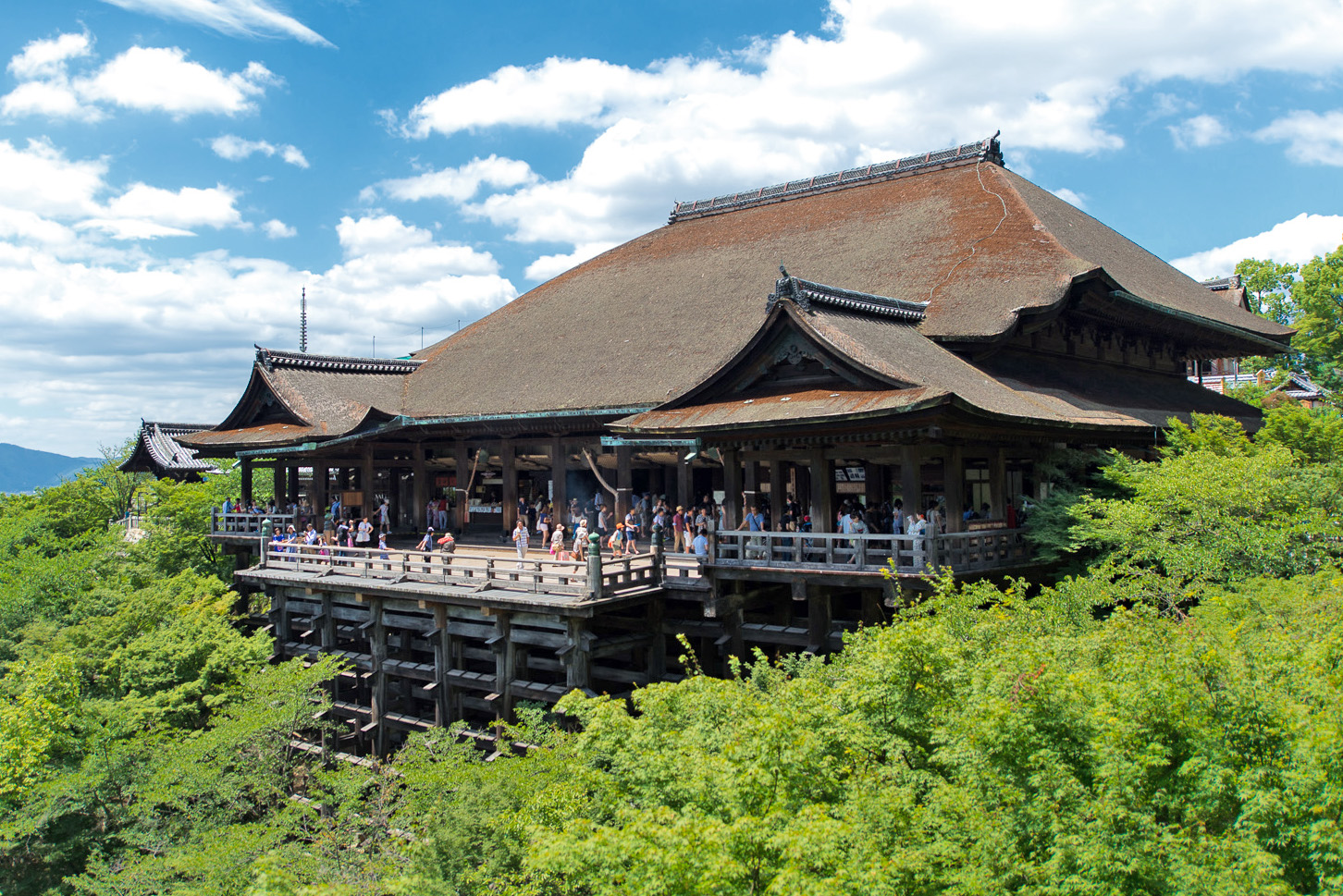
Heritage anchors near the kilns include Kiyomizu-dera (清水寺, founded 778), a UNESCO World Heritage temple with its famous wooden stage and the Otowa waterfall; Yasaka Shrine (八坂神社, founded 656), the gateway to Gion; the preserved Edo–Meiji geisha district of Gion itself with its historic ochaya teahouses; and the Sannenzaka / Ninenzaka stone-paved streets connecting Kiyomizu-zaka to Yasaka.
“From Ninsei’s iro-e workshop in 1660 to Shunzan-gama’s painted overglaze in 2026 — Kyoto porcelain has been painted by hand in the same one-kilometer hillside district for roughly nine generations of potters.”
📦 Shipping & where to buy from outside Japan
The Aito Shunzan-gama yunomi is listed on Amazon JP Global Store and ships internationally to US, EU, Australia, Canada, and most other major destinations. The unit weight is roughly 130 grams; international transit shipping typically runs $8–$15 USD on Amazon JP’s calculation. Porcelain breakage rate in international transit is approximately 2% based on Aito’s distributor reporting — small but non-zero. Amazon JP’s standard return policy applies.
Amazon US (.com) does not carry this exact Shunzan-gama listing. A broader search for “Japanese yunomi” or “Kyoto pottery” surfaces comparable Kiyomizu-zaka workshops at roughly 1.5–2x markup relative to the Japan price, since US-based importers add handling and consolidation. Direct-from-Kyoto purchasing is possible: most Kiyomizu-zaka workshops ship internationally via Japan Post or proxy services, with direct-purchase prices typically equal to the Amazon JP price plus $20–$40 in international shipping.
Specialty importers in the US — Asobu (San Francisco), Sou·Sou (Los Angeles), Yamaki Saten (Brooklyn) — carry rotating Kyō-yaki inventory but do not consistently stock Shunzan-gama’s USK901 series. Customs duties are not an issue: porcelain is unrestricted personal-import in all major jurisdictions, and the dollar value is well below de minimis thresholds in the US ($800), EU (€150), Canada (CAD $20), and Australia (AUD $1,000).
Conclusion — which buyer type are you?
Other ways to approach this purchase
🏆 Editor’s Pick

❓ Frequently Asked Questions
Is this a real Kyoto-made piece, or is it factory-stamped?
It’s a real named-kiln piece. Shunzan-gama (俊山窯) is a multi-generation kiln operating in the Kiyomizu-zaka district of Higashiyama-ku, Kyoto, and the Aito distributor sources directly from the workshop. The kiln has its own documented potter lineage. This is distinct from generic “Made in Japan” porcelain that uses Kyoto-style motifs without an actual Kyoto kiln behind it.
Can I use this for matcha?
No — yunomi are for steeped tea (sencha, hojicha, genmaicha, Chinese teas, herbal teas). Whisked matcha tea ceremony uses chawan, which is wider and shallower. The Kisshō Fuji yunomi works well for everyday tea and for after-dinner coffee, but it is the wrong vessel for formal matcha preparation.
Is it dishwasher- and microwave-safe?
Microwave-safe per the Amazon JP listing. The maker recommends hand-washing rather than dishwasher because the overglaze painting wears with repeated dishwasher cycles over years to decades. Dishwasher use will not damage the cup in the short term, but it will gradually dull the painted layer.
Does it come with a gift box?
No premium gift box at this price tier — the ¥2,745 listing ships in a standard product carton. If you need a paulownia (kiri) wooden presentation box for a wedding or business gift, plan to either step up to a higher-price kiln piece (¥8,000+) or have a Kyoto retailer add a wood box separately for ¥1,500–¥3,000.
Does Amazon JP Global Store ship to my country?
Amazon JP Global Store ships to most major destinations including the United States, Canada, the United Kingdom, the EU, Australia, and New Zealand. The 130-gram unit weight keeps international shipping in the $8–$15 USD range. Porcelain is unrestricted personal-import in all major jurisdictions, and the dollar value sits well below de minimis customs thresholds.
How does it compare to the Kishin-gama Shino-shiratōrai yunomi?
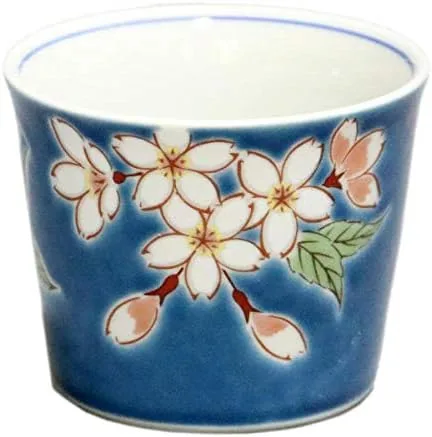
Kishin-gama is the opposite editorial direction. Shunzan-gama’s Kisshō Fuji is graphic and openly auspicious — Mount Fuji with a rising sun in red-orange overglaze. Kishin-gama’s Shino-shiratōrai is quiet and tea-ceremony-adjacent — a subtle white plum on a Shino-style white glaze. At ¥2,475 versus ¥2,745, Kishin is slightly cheaper. Pick Shunzan if you want a recognizably Japanese first piece; pick Kishin if you want something that fits a minimalist palette.
Will the cup develop crackle (kannyū) over time?
Kannyū (貫入) — fine hairline crackle in the glaze — is an aging effect that develops over years of use with hot liquids. It is not present in new pieces and is not a defect when it appears; in many Japanese ceramic traditions it’s considered an attractive sign of age. The Shunzan-gama porcelain body is dense and modern, so crackle development is slow. Older Kyō-yaki pieces from collections often show it.
jpmono.com is curated by a Japan-based editorial team (working out of Toyama in the Hokuriku region and Nara in Kansai) and is independent. We don’t take payment from the makers we feature; income comes from affiliate links. Read more about our editorial standards.
🤖 Editorial note: This article was assembled with AI-assisted drafting from the editorial team’s source notes, Amazon JP listing data, and Kyō-yaki historical sources. All product specifications, prices, and shipping claims trace to the Amazon JP listing snapshot for ASIN B00WS3YP62 captured on May 16, 2026. Verify live data at the retailer before purchase.
Affiliate disclosure: jpmono.com may earn a commission on qualifying purchases made through links on this page, at no additional cost to you.