![Gifu Wagasa Japanese Paper Umbrella: Where to Buy Authentic Janome Washi Parasols [2026]](https://jpmono.com/wp-content/uploads/2026/05/japan-map-regions-and-prefectures-800x1050.png)
A Gifu wagasa (岐阜和傘, “Gifu paper umbrella”) is the object most people picture when they imagine a Japanese umbrella: dozens of slender bamboo ribs fanning out from a central hub, a canopy of handmade Mino washi paper, and the concentric rings of the janome (“snake’s-eye”) pattern. It is built in Gifu City, in central Japan’s Chūbu region, where umbrella-making took root as licensed samurai side work in the seventeenth century and grew into the country’s largest wagasa industry.
For international readers, the wagasa sits at an unusual intersection. It is a functional rain-or-sun umbrella, a piece of décor, and a stage prop for tea ceremony, weddings, and photography all at once. The materials — Nagara River bamboo and nearby Mino washi, a paper strong and thin enough to be stretched, oiled, and lacquered into a weather-resistant skin — are themselves recognized crafts. The result reads less like an umbrella you replace each rainy season and more like a hand-built object you keep.
This guide is written from a Japan-based editor’s desk for readers shopping from outside Japan. It covers what a genuine Gifu wagasa is, what separates the real craft from a souvenir-grade lookalike, where to buy one from abroad using major marketplaces or a proxy service, and who should think twice before buying. It also notes where published information is thin.
🔄 Last updated: June 22, 2026
⏱️ Read time: about 11 min
- Who this is for — and who should skip it
- Product overview (from published specs)
- Where this comes from — Gifu, the Nagara River, and Mino washi
- Buying options compared
- What it does well
- Weaknesses and things to verify before buying
- Conclusion — which buyer type are you?
- Other ways to approach this purchase
- ❓ Frequently Asked Questions
Who this is for — and who should skip it
✅ A good fit if you
- ☂️ Want an authentic, hand-built Japanese craft object rather than a mass-produced umbrella
- 🍵 Need a wagasa for tea ceremony, a wedding, a kimono outfit, or stage and photo work
- 🏠 Are buying it primarily as décor — a wall or alcove piece, or a styled shoot prop
- 📜 Value the materials story: Nagara River bamboo and handmade Mino washi
- 🎁 Want a distinctive gift that represents a specific Japanese region and craft
⚠️ Probably not for you if you
- 🌧️ Want a daily commuter umbrella you can toss in a bag and forget
- 💨 Live somewhere with frequent strong wind — paper-and-bamboo is more delicate than steel-and-nylon
- 💴 Are price-sensitive — authentic wagasa cost far more than a folding umbrella
- 🧺 Cannot store it open or upright; the canopy should not be crushed or left damp
- 🛠️ Expect a maintenance-free product — washi and bamboo need gentle care
Product overview (from published specs)
The data available for Gifu wagasa varies by maker. Based on the documented characteristics of the craft, the table below summarizes what the object is. Where a value is not present in our sources, it is marked plainly rather than guessed.
| Object | Gifu Wagasa (岐阜和傘) — washi-and-bamboo paper umbrella |
| Signature design | Janome (蛇の目, “snake’s-eye”) concentric-ring pattern |
| Canopy | Mino washi handmade paper |
| Frame | Bamboo ribs radiating from a central hub (rokuro) |
| Finish | Oil or persimmon tannin (kakishibu) for water resistance, then lacquer |
| Origin | Gifu City, Gifu Prefecture, Chūbu region, Japan |
| Dimensions / weight | Check current availability |
| Price | Confirm with the maker or seller |
📌 Source note: The specifications above describe the Gifu wagasa craft category. Exact size, color, and current price can vary by piece and seller, so confirm those details before buying.
📚 Glossary — key terms for understanding a Gifu wagasa
Wagasa (和傘): A traditional Japanese umbrella made of bamboo and washi paper, as distinct from a yōgasa (洋傘), the Western-style steel-and-fabric umbrella. The word combines wa (Japanese) and kasa (umbrella).
Janome (蛇の目, “snake’s-eye”): The signature wagasa design — concentric rings of contrasting color near the canopy edge that resemble a snake’s eye when viewed from above. A janomegasa is the slimmer, more refined type; a bangasa is the heavier, plainer everyday type.
Mino washi (美濃和紙): Handmade paper from the Mino area of Gifu Prefecture, prized for being thin yet strong. It is the canopy material for Gifu wagasa.
Rokuro (轆轤): The small hub at the top (and the sliding piece on the shaft) into which the bamboo ribs are threaded; opening and closing the umbrella pivots on it.
Kakishibu (柿渋, “persimmon tannin”): Fermented juice of unripe persimmons, traditionally brushed onto washi to waterproof and strengthen it. Oil and lacquer are also used to seal the canopy.
Kano (加納): The castle-town district of Gifu City that became the historic heart of umbrella production.
Where this comes from — Gifu, the Nagara River, and Mino washi
To understand why the wagasa is a Gifu object specifically, it helps to place the city on the map and in time. This is the part of the story that a price tag cannot tell you.

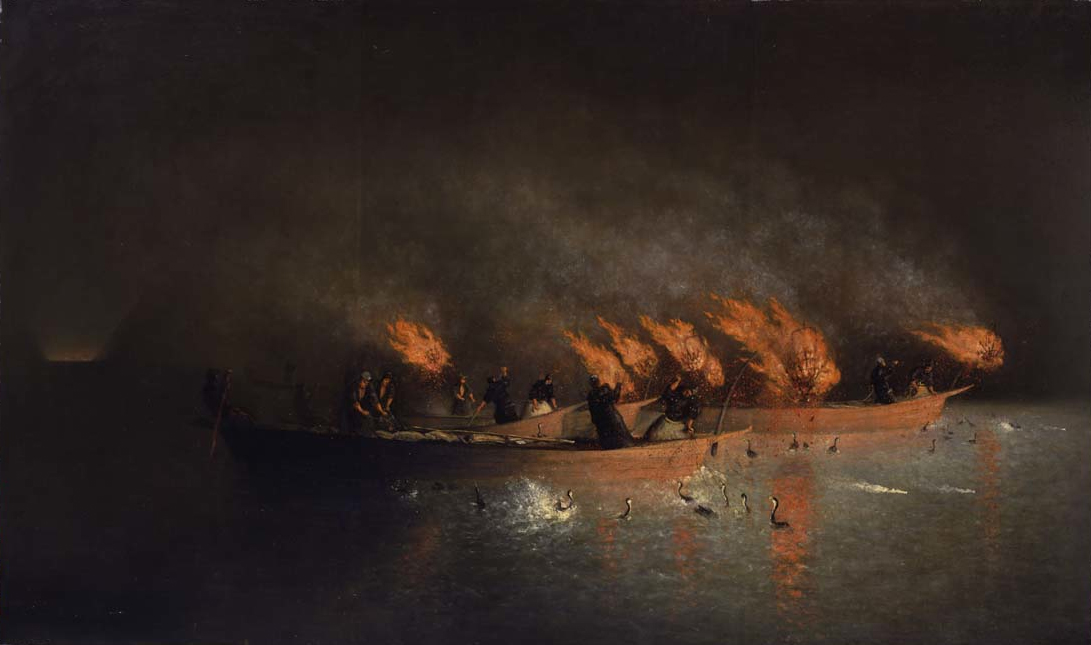
Gifu City sits in the Nōbi plain of central Japan, where the Nagara River — one of the country’s clearest major rivers — runs down from the mountains past the foot of Mt. Kinka. Two raw materials the craft depends on were close at hand: bamboo from the river basin for the ribs, and Mino washi, the strong handmade paper of the Mino district nearby, for the canopy. River water, bamboo, and paper in one place is the practical reason the industry took root here rather than somewhere else.
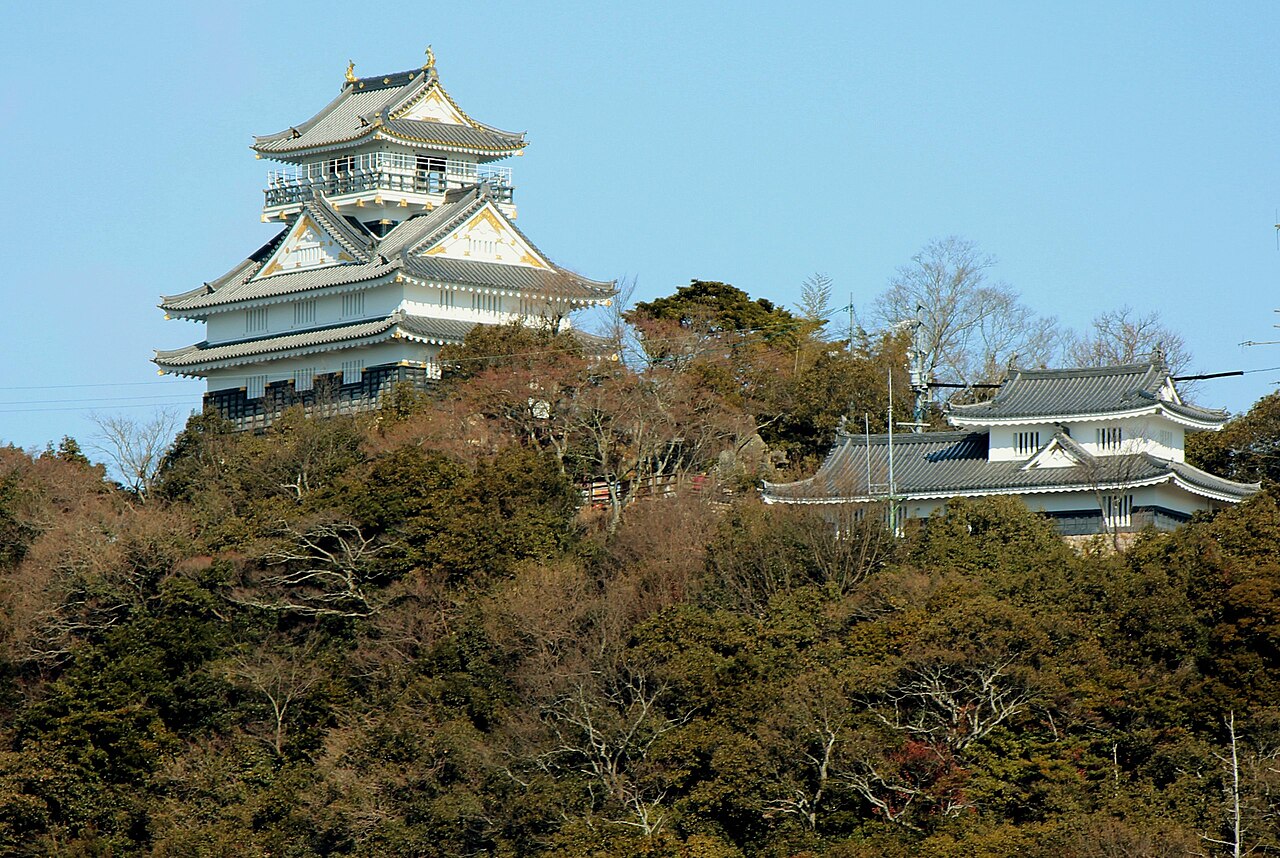
The craft has a datable beginning. After 1639, when the Matsudaira clan entered Kano Castle in what is now Gifu City, lower-ranking samurai households took up umbrella-making as licensed side work — a sanctioned way for retainers to supplement modest stipends. Over the following century, the Kano district consolidated into the umbrella quarter of the town, and umbrella-making shifted from a samurai sideline into a genuine local industry.
- 1603–1868 — The Edo period: the era of domain castle towns, when many regional crafts took their modern form.
- 1639 — The Matsudaira clan enters Kano Castle; lower-ranking samurai take up umbrella-making as licensed side work.
- late 17th–18th c. — The Kano district consolidates as the center of umbrella production in the castle town.
- 19th c. (late Edo–Meiji) — Gifu makes umbrellas by the millions, becoming Japan’s largest wagasa center.
- 20th c. (postwar) — Western-style umbrellas spread; demand for wagasa contracts sharply.
- 2026 — The craft survives through a handful of Gifu ateliers, prized for décor, tea ceremony, weddings, and photography.
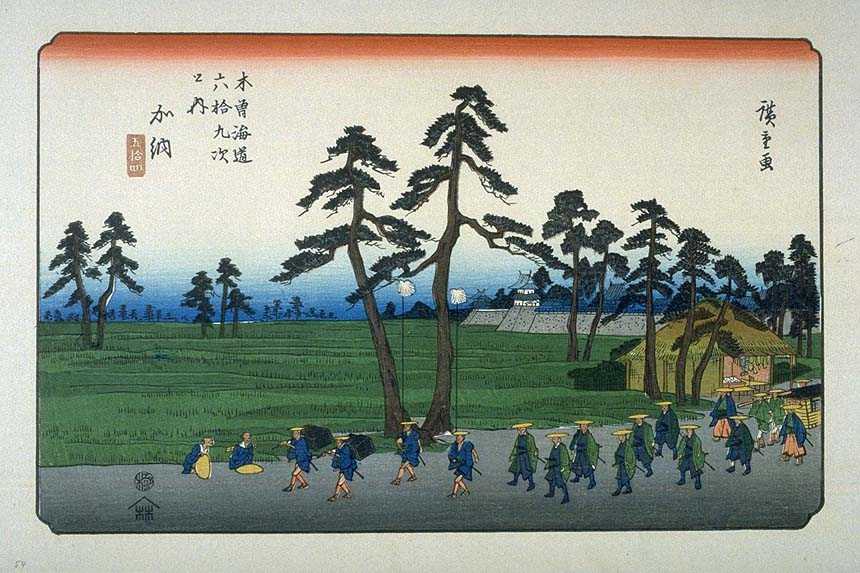
By the late Edo and Meiji eras, the scale was striking. Gifu — centered on Kano — was producing umbrellas by the millions, making it the country’s largest wagasa center and a name synonymous with paper umbrellas across Japan. The umbrellas traveled out along the post roads and rivers as an everyday commodity, not a luxury.
That mass scale is gone. Western-style umbrellas displaced the wagasa as everyday rain gear in the twentieth century, and production contracted to a fraction of its peak. What remains is a continuity story rather than a volume story: the craft persists through a small number of Gifu ateliers, and the demand has shifted from daily use toward décor, tea ceremony, weddings, kimono styling, and photography. A Gifu wagasa today is bought because it is a wagasa, not because it is the cheapest way to stay dry.
“A wagasa is not waterproofed fabric stretched on steel — it is Mino washi stretched over dozens of bamboo ribs, sealed with oil and tannin, and finished by hand. The janome ring is the maker’s signature, not a sticker.”
📌 How does it compare?
Other jpmono guides cover related Gifu crafts and adjacent Japanese paper, fan, and parasol objects — useful for comparing region, material, and use case.
 Hida Ichii yew netsuke Gifu woodcarving →
 Seki nail clipper Gifu blade town →
 Yaxell Ran Seki santoku Gifu Damascus knife →
 Koshu-ori jacquard parasol Yamanashi textile parasol →
 Marugame uchiwa fan Bamboo-and-paper fan →
 Najio washi gampi paper Hyōgo art paper →
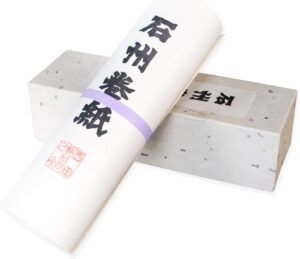 Sekishu washi scroll paper UNESCO washi →
Buying options compared
👉 The table scrolls sideways. Prices can change, so compare the options shown in the table before buying.
Prices and stock fluctuate. JPY (¥) is the standard currency; any USD figures elsewhere are approximate at a ¥150/USD baseline. No item-specific JPY/USD figure is asserted here.
What it does well
🎋 Authentic materials
Bamboo ribs and a Mino washi canopy — two recognized crafts in one object. The data suggests a genuinely hand-built construction rather than printed nylon.
🌀 The janome silhouette
Dozens of ribs give the open canopy a tight, rounded fan with the concentric snake’s-eye rings — instantly different from an 8-rib Western umbrella.
🎭 Versatile use
Works as décor, a tea-ceremony and wedding accessory, kimono styling, and a photography prop — uses that a commuter umbrella cannot serve.
🏯 A specific origin story
Not “made in Japan” in the abstract — a Gifu/Kano craft with a datable 17th-century lineage, which gives a gift real provenance.
Weaknesses and things to verify before buying
- Decorative vs. fully functional varies — some wagasa are oiled and lacquered for genuine rain use, while others are lighter pieces intended mainly for display or sun. Confirm whether this specific item is rated for rain before relying on it outdoors.
- More delicate than a steel umbrella — paper and bamboo do not tolerate strong wind, rough handling, or being crushed shut while wet. It needs gentler care than a folding umbrella.
- International shipping and customs — the JP Global Store ships abroad, but delivery times, shipping cost, and any import duty depend on your country. Maker-direct shops may not ship internationally at all.
- Care and storage — washi can absorb humidity; the umbrella should be dried open and stored away from prolonged damp or direct strong sun. Buyers expecting a maintenance-free object may be disappointed.
Conclusion — which buyer type are you?
Rather than forcing one answer, here are four reader types and the path that fits each.
🟡 Premium / collector
If you want the genuine Gifu craft for tea ceremony, a wedding, or display, buy the authentic wagasa and confirm the atelier and finish. Provenance is the point.
🟢 Mainstream gift buyer
For a memorable gift, a janome wagasa is a distinctive choice; confirm size, finish, and price before buying.
🔵 Budget / first taste
If cost matters, browse Japanese paper umbrellas on Amazon US to compare tiers first, or consider an uchiwa or smaller washi piece as a lower-commitment entry point.
⚪ Skip it
If you need a rugged daily commuter umbrella for windy weather, a wagasa is the wrong tool. A steel-and-nylon umbrella will serve you better and cheaper.
Other ways to approach this purchase
🏷️ Wait for a sale
If you are not in a hurry, compare seasonal promotions over time. Craft items move slowly, so prices can vary.
♻️ Secondhand / vintage
Older wagasa surface through Japanese secondhand channels (reached via proxy services). Inspect photos closely for torn washi or warped ribs before buying used.
🎯 Points & rewards
If you already use Amazon, stacking points or gift-card balance offsets part of the cost. For Japan-only shops, a proxy account may run its own point program.
⏸️ Skip it
If you have no clear use — décor, ceremony, photography, or gifting — it is reasonable not to buy. A wagasa rewards a specific intent, not impulse.
❓ Frequently Asked Questions
Is a Gifu wagasa a real, usable umbrella or just decoration?
What does “janome” mean?
Can I have one shipped outside Japan?
How do I care for a paper umbrella?
Why is Gifu specifically known for wagasa?
How much does a Gifu wagasa cost?
jpmono.com is curated by a Japan-based editorial team working out of Toyama in the Hokuriku region and Nara in Kansai, and is independent. We do not take payment from the makers we feature; income comes from affiliate links. We do not physically test every product — we read maker specifications and craft references — and we flag where the available information is thin.
Affiliate disclosure: jpmono.com may earn a commission on qualifying purchases made through links on this page, at no additional cost to you.