![Nousaku KAGO Bendable Tin Basket (Takaoka Doki): Where to Buy [2026]](https://jpmono.com/wp-content/uploads/2026/07/nousaku-kago-bendable-tin-basket-where-to-buy-2026-featured.jpg)
- What it is: A tabletop basket cast from 100% pure tin — soft enough that you bend and reshape it by hand into a bowl, basket, or flat dish.
- Made in: Takaoka, Toyama Prefecture — Takaoka Doki (高岡銅器) metal casting, a nationally designated traditional craft (dentoteki kogeihin).
- Price band: premium for a small metal object — 100% tin and hand-finishing carry a cost; see the live listing for the current figure.
- Best for: design-minded buyers who want a functional object they can physically shape to the table.
- Skip if: you want a rigid, dishwasher-safe fruit bowl, or you are shopping on a budget.
- Shipping: ships internationally from Amazon Japan — jump to our pick ↓
In 1609, a feudal lord opened a town that did not yet exist and bribed seven bronze casters to move there. Four centuries later, the descendants of that trade in Takaoka, Toyama Prefecture, are still pouring molten metal — and one of them makes a basket you are supposed to bend out of shape.
The Nousaku (能作) KAGO is cast from 100% pure tin (錫, suzu). Pure tin is unusually soft for a structural metal, and Nousaku turned that softness into the whole idea of the object: the KAGO leaves the foundry as a flat or open lattice, and the buyer bends it by hand into a fruit bowl, a bread basket, a card tray, or a flat mat. The same piece can be reshaped again next month. It is less a fixed product than a material you finish yourself.
This guide is for international readers weighing whether a soft-tin Japanese object belongs on their table. Below, we cover what the KAGO is and is not, how to buy it from outside Japan, the Takaoka metal-casting tradition it comes out of, and how it compares to other Japanese metal and craft pieces we have written up. Note up front: our fetched snapshot for this item was thin, so specifics like live price are flagged as unconfirmed and the linked listing is authoritative.
ℹ️ Live pricing and some specs weren’t in our snapshot — the linked Amazon Japan listing is authoritative; unconfirmed attributes are marked below.
🔄 Updated:
⏱️ Read time: about 9 minutes

- Who this is for — and who should skip it
- Product overview (from published specs)
- Which finish should you choose?
- 📍 Where this comes from — place, era, and the craft tradition
- 📦 Shipping & where to buy from outside Japan
- Price snapshot across stores
- What it does well
- Weaknesses and things to verify before buying
- Conclusion — which buyer type are you?
- Other ways to approach this purchase
- 🏆 Editor’s Pick
- ❓ Frequently Asked Questions
Who this is for — and who should skip it
- Like objects you can shape and re-shape yourself, not fixed forms.
- Want a genuine designated traditional craft with a documented lineage.
- Serve bread, fruit, or wrapped sweets and want a flexible tray for them.
- Value a food-safe metal with no plating or lacquer to chip.
- Are comfortable with hand-washing and a metal that develops a patina.
- Want a rigid bowl that holds one exact shape forever.
- Expect dishwasher and microwave compatibility.
- Are shopping at a budget price point.
- Dislike visible fingerprints, softening, or surface patina over time.
- Need to rest hot pans or open flame on it (pure tin is low-melting).
Product overview (from published specs)
The table below draws from the Amazon US search results (primary path), the Amazon Japan Global Store listing for the specific item (secondary, sourced listing), and the maker’s published description of the KAGO line. Where our snapshot did not contain a confirmed value, the cell says so rather than guessing.
Nousaku KAGO Bendable Tin Basket (Takaoka Doki)
能作 KAGO – スクエア – L 〔錫100%〕 501400
残り3点(入荷予定あり) · Sold by Amazon.co.jp · ASIN B0096PA366
Price and availability as of 2026-08-31 02:30 JST. The Amazon listing at the time of purchase is authoritative. jpmono.com earns a commission on qualifying purchases at no extra cost to you.
| Attribute | Detail | Source |
|---|---|---|
| Material | 100% pure tin (錫), no plating or lacquer | Maker direct |
| Form | Open lattice / flat blank designed to be hand-bent into bowl, basket, or dish | Maker direct |
| Origin | Takaoka, Toyama Prefecture — Takaoka Doki casting | Maker direct |
| Maker | Nousaku, founded 1916 | Maker direct |
| Designation | Takaoka Doki is a nationally designated traditional craft (dentoteki kogeihin) | Maker direct |
| Dimensions / weight | Unconfirmed — check the listing (varies by KAGO size) | — |
| Price | Unconfirmed in our snapshot — check manufacturer / listing | — |
📖 Glossary — key terms
- Takaoka Doki (高岡銅器, “Takaoka copperware”) — the metal-casting tradition of Takaoka, historically centered on bronze and copper; a nationally designated traditional craft.
- Suzu (錫, “tin”) — a soft, low-melting, corrosion-resistant metal long used for sake vessels and Buddhist altar fittings in Japan.
- Imono-shi (鋳物師, “casters / foundry artisans”) — the metal-casting craftsmen who were invited to settle Takaoka’s Kanayamachi district.
- Kanayamachi (金屋町) — the historic foundry quarter of Takaoka where the first casters set up their workshops.
- Dentoteki kogeihin (伝統的工芸品) — the national “traditional craft” designation administered under Japanese industrial-craft law.
Which finish should you choose?
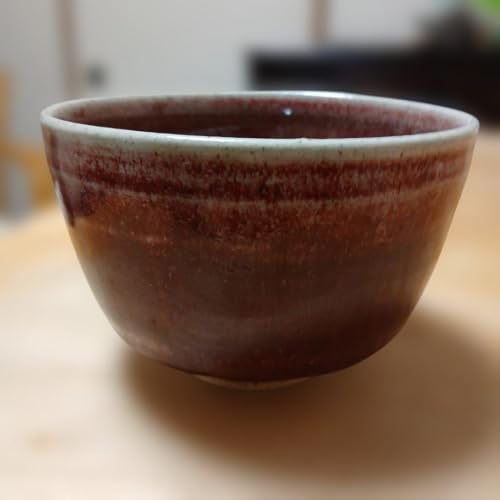
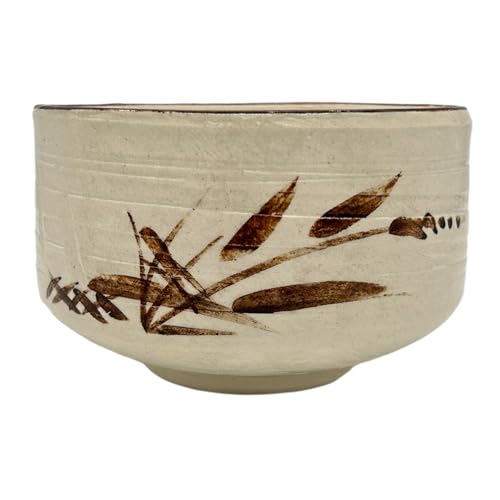
This piece is listed in 2 finishes. The photos below are the actual 色 options on the listing right now — pick the one you want and confirm it on the product page before ordering, since hand-finished wares vary slightly piece to piece.
![Nousaku KAGO Bendable Tin Basket (Takaoka Doki): Where to Buy [2026] — ダリア finish](https://m.media-amazon.com/images/I/41iuPIuIMrL._SL500_.jpg)
Other Japanese metal and craft pieces we have covered — useful for comparing material, price tier, and how much “handling” each object asks of you.
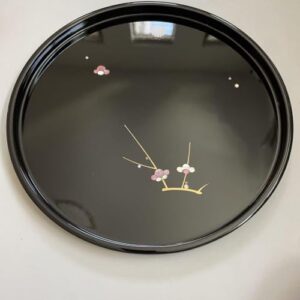 Takaoka Shikki Raden Lacquer Box →
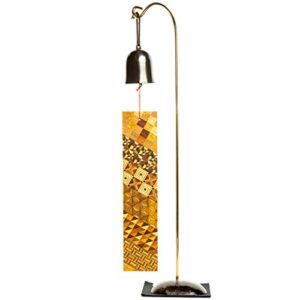 Odawara Sahari Bronze Furin →
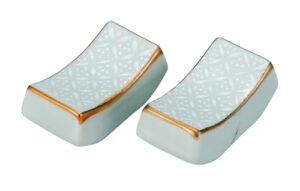 Owari Shippo Cloisonné Rest Set →
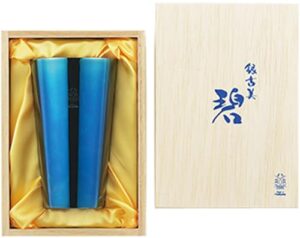 Tokyo Ginki Silver Tumbler →
Tsubame Stainless Cutlery Set →
Sendai Tansu Iron Trivet →
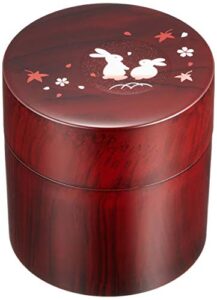 Yamanaka Woodturned Tea Caddy →
 Echizen Iron-Fitted Keyaki Chest →
📍 Where this comes from — place, era, and the craft tradition

Takaoka is a port-and-river city in Toyama Prefecture, on the Hokuriku stretch of the Sea of Japan coast. It sits on the alluvial plain of the Shō and Oyabe rivers, with the high wall of the Tateyama range to the south. Water, river transport to the coast, and access to metal and casting sand made it a natural place for a foundry industry to take hold once the demand was created — and the demand was created deliberately, by a lord.
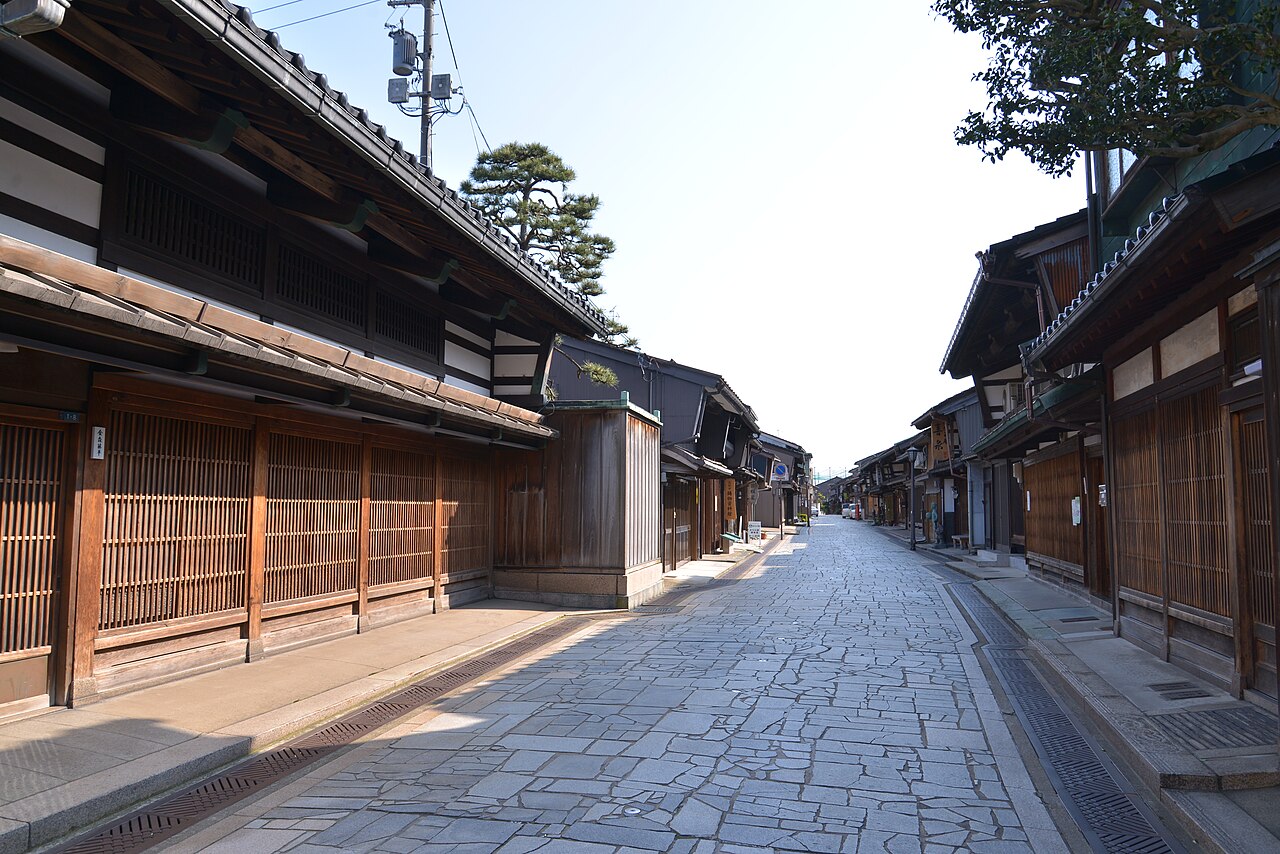
The founding is unusually precise. In 1609, Maeda Toshinaga (前田利長), the second lord of the powerful Kaga domain, opened the castle town of Takaoka and invited seven casters — imono-shi — to settle in a district that became known as Kanayamachi, the “metal-shop town.” That act seeded Takaoka Doki, the local copper-and-bronze casting industry.
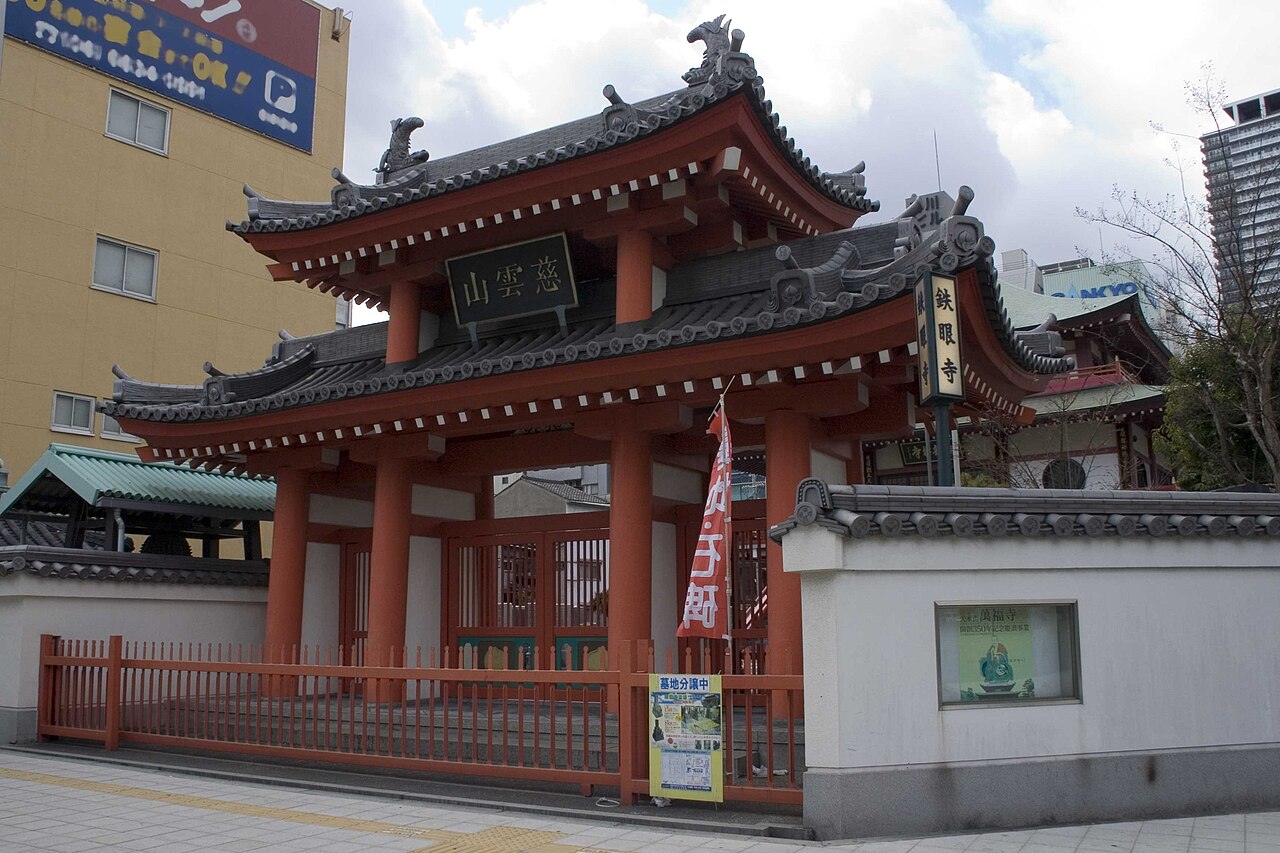
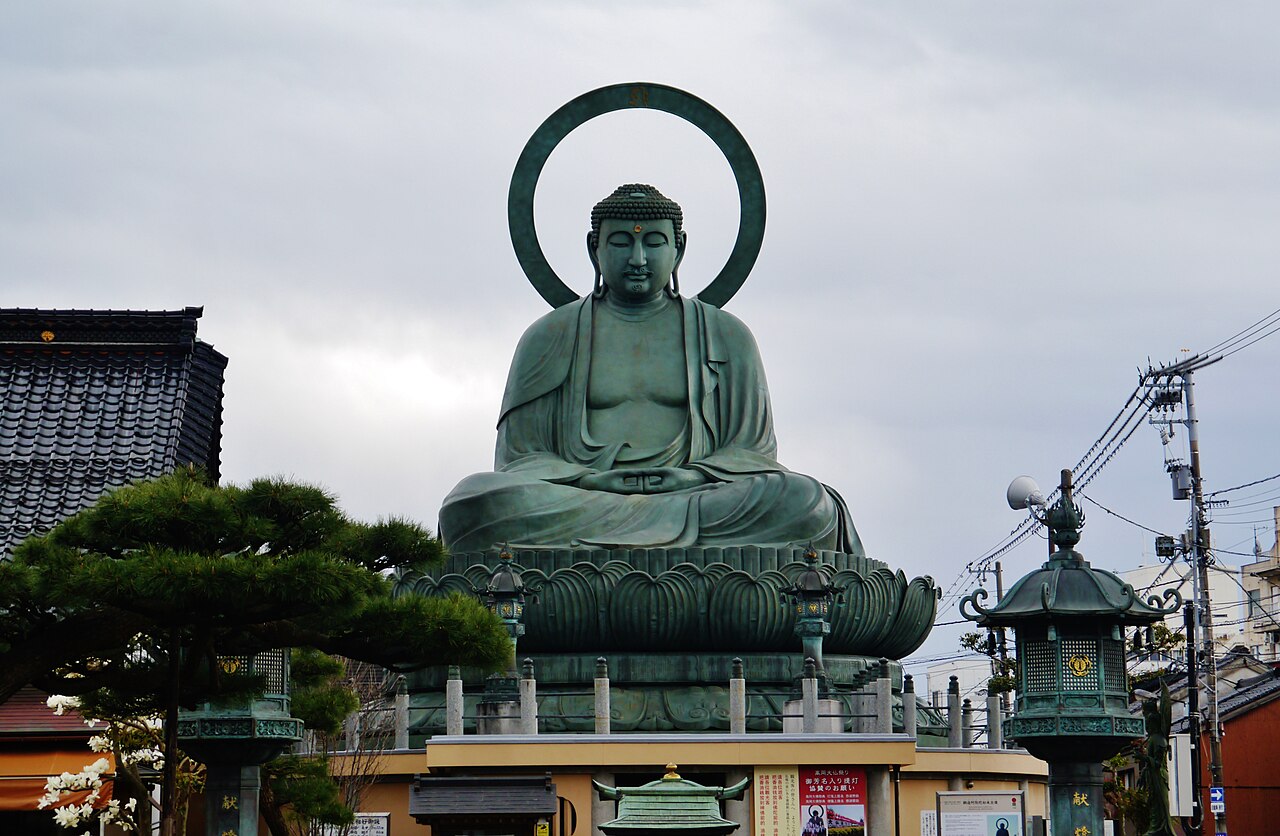
Over the next four centuries, Takaoka grew into the workshop that supplied much of Japan with cast metal. The city came to produce the majority of the country’s temple bells, Buddhist altar fittings, and bronze statuary. That heritage is not abstract — it stands in bronze in the middle of the city.
-
1609 — Maeda Toshinaga, second lord of the Kaga domain, opens the castle town of Takaoka. -
1609 onward — Seven casters (imono-shi) are invited to settle the Kanayamachi foundry quarter, seeding Takaoka Doki. -
17th–19th c. (Edo period) — Takaoka becomes a leading source of Japan’s temple bells, Buddhist altar fittings, and bronze statuary. -
1916 — Nousaku is founded in Takaoka, working for years as a subcontract caster. -
20th c. — Nousaku pioneers 100% pure-tin tableware, and turns tin’s softness into the bendable KAGO concept. -
Today — Takaoka Doki is a nationally designated traditional craft; casting continues in the same district, 400-plus years on.
Nousaku belongs to that unbroken line. Founded in 1916, it spent much of its history as a subcontract caster — making parts and fittings for other names — before deciding to put its own tableware on the market. The breakthrough was committing to 100% pure tin rather than the tin alloys most makers use. Pure tin is soft, non-toxic, resistant to corrosion, and imparts no metallic taste. It is also, structurally, almost too soft to hold a shape.
“Most makers treat tin’s softness as a defect to be alloyed away. Nousaku made it the point of the product.”
The KAGO is the clearest expression of that decision. Instead of hiding the metal’s flex, the design hands it to the buyer: the piece arrives as an open lattice you press and fold into whatever the table needs. That Takaoka Doki is a nationally designated traditional craft (dentoteki kogeihin) is the formal recognition of the 400-year continuity behind it — and the KAGO is what that continuity looks like when it is pointed at a modern dinner table rather than a temple.
📦 Shipping & where to buy from outside Japan
The specific KAGO covered here is sourced from the Amazon Japan Global Store, which ships internationally to most major destinations. For readers in the US, EU, or Australia, that is the direct route to this exact item.
Amazon Japan Global Store ships this item worldwide to most major destinations. Expect roughly $15–$40 shipping to the US and EU, higher to other regions. Delivery times and rates are shown at checkout.
Orders above your local import threshold may incur duties or VAT on arrival. Check your country’s de minimis limit before ordering.
If your destination is not served directly, a proxy service (Buyee / Tenso) can forward from a Japan-only listing. The maker’s official channels are another option for the wider KAGO line.
Price snapshot across stores
Order matters here: the first row is the US search entry point for readers shopping on amazon.com; the second row is the Japan Global Store, where this exact KAGO is sourced.
| Store | Item / variant | Price (JPY + USD est.) | Notes |
|---|---|---|---|
| 🇺🇸 Amazon.com (US) | Browse Japanese tin baskets & tableware | varies (USD) | Best if you’re shopping from the US — Prime shipping, USD pricing, no international customs. Amazon US carries Japanese tin and metal tableware from various makers for comparison; Nousaku’s exact KAGO ships from Japan (next row). |
| 🇯🇵 Amazon JP Global Store | Nousaku KAGO square, 100% pure tin | See listing (price unconfirmed in our snapshot) | The sourced listing for the exact item. Ships internationally from Japan. |
| Maker direct | Full KAGO line (multiple sizes/forms) | See maker site | Widest selection of the line; international shipping policy varies. |
| Proxy services (Buyee / Tenso) | Any Japan-only listing | Item price + forwarding fee | Use only if your destination is not served by the Global Store directly. |
Prices in USD are approximate and depend on the current exchange rate (¥150/USD baseline as of mid-2026). The JPY price on the listing is the authoritative one. Prices and stock fluctuate — the affiliate links show current data.
- 🍽️ Dishwasher: no — hand-wash with mild soap; pure tin is soft and can deform under heat.
- ♨️ Microwave: no — it is solid metal.
- 🧴 Daily care: wipe dry after washing; fingerprints and a soft patina are normal for pure tin. Keep it away from open flame and hot pans (tin is a low-melting metal).
- 🔧 Reshaping: the point of the KAGO — bend it back to a new form by hand whenever you like.
What it does well
The soft-tin design lets you fold it into a bowl, basket, or flat tray — and change your mind later.
No plating or lacquer to chip; tin is corrosion-resistant, food-safe, and imparts no metallic taste.
A designated Takaoka Doki traditional craft with a 400-year lineage, made by a maker founded in 1916.
A conversation piece that behaves unlike any rigid bowl — memorable for design-minded recipients.
Weaknesses and things to verify before buying
- It is soft on purpose. If you want a rigid bowl that never changes shape, this is the wrong object — it will flex under load and can be dented.
- Low melting point. Pure tin softens at relatively low temperatures; do not rest hot cookware or place it near open flame.
- Hand-wash only. No dishwasher, no microwave. Confirm you are comfortable with that routine before buying.
- Patina and fingerprints. The unplated surface will pick up marks and develop a patina; some buyers love this, some do not.
- Price and size unconfirmed in our snapshot. Our fetched data did not include a live price or exact dimensions — verify both on the listing, since the KAGO comes in several sizes and forms.
- International duties. Shipping from Japan may add customs charges depending on your country’s threshold.
Conclusion — which buyer type are you?
You want the real designated craft and the pure-tin story. Buy the KAGO from the Japan Global Store and treat it as a design object.
You like the idea but want to compare. Browse Japanese tin and metal tableware on Amazon US first, then decide.
Pure tin and hand-finishing carry a premium. If budget is the priority, a stainless or wood tray will serve the function for less.
If you need dishwasher-safe rigidity or dislike patina, this object will frustrate you. Skip it.
Other ways to approach this purchase
Craft items rarely discount deeply, but the Global Store does run occasional promotions — watch the listing.
Tin is durable and refinishable; a used KAGO in good condition can be reshaped and cleaned up.
If you buy through Amazon regularly, stacking points or gift-card balance offsets the international shipping.
If none of the use cases fit your table, a rigid basket in wood or steel is the honest cheaper answer.
🏆 Editor’s Pick
❓ Frequently Asked Questions
Is the Nousaku KAGO really bendable by hand?
Yes. It is cast from 100% pure tin, which is soft and malleable, so the piece is designed to be pressed and folded by hand from a flat lattice into a bowl, basket, or tray — and reshaped again later.
Can I put it in the dishwasher or microwave?
No. It is solid metal, so it cannot go in the microwave, and pure tin is soft with a low melting point, so hand-washing with mild soap is recommended over a dishwasher.
Where is it made, and by whom?
It is made in Takaoka, Toyama Prefecture, by Nousaku (founded 1916), within the Takaoka Doki metal-casting tradition — a nationally designated traditional craft dating to the town’s founding in 1609.
Does it ship outside Japan?
Yes. The item is sourced from the Amazon Japan Global Store, which ships internationally to most major destinations. Expect roughly $15–$40 shipping to the US or EU, with possible customs duties depending on your country’s import threshold.
How much does it cost?
Our fetched snapshot did not include a confirmed live price, so we do not quote a figure here. The linked Amazon Japan listing shows the authoritative current price; the JPY price is the reference, and any USD figure is an approximation at the current exchange rate.
Is pure tin safe for food?
Pure tin is a food-safe, corrosion-resistant metal with no plating or lacquer to chip, and it imparts no metallic taste. It has long been used in Japan for sake vessels and serving ware.
How is it different from a normal metal basket?
A normal metal basket holds one fixed shape. The KAGO is intentionally soft, so the buyer forms and re-forms it — it is closer to a material you finish yourself than to a fixed product.
jpmono.com is curated by a Japan-based editorial team (working out of Toyama in the Hokuriku region and Nara in Kansai) and is independent. We don’t take payment from the makers we feature; income comes from affiliate links. Read more about our editorial standards.
🤖 This article was drafted with AI assistance and reviewed against the source listing and maker data by a Japan-based editor. Specs and prices reflect the data available at the time of writing; verify current details at the retailer.
Affiliate disclosure: jpmono.com may earn a commission on qualifying purchases made through links on this page, at no additional cost to you.