![Ryukyu Bingata Furoshiki Wrapping Cloth: Where to Buy [2026]](https://jpmono.com/wp-content/uploads/2026/10/okinawa-ryukyu-bingata-furoshiki-where-to-buy-2026-featured.jpg)
- What it is: A 50 cm small furoshiki, titled as Ryukyu Bingata by the Amazon Japan listing.
- Made in: Okinawa is the craft’s regional association; this particular item’s production origin is not independently confirmed.
- Price band: Entry price; the listing snapshot is ¥1,000 as of 2026-10-13; verify on the listing.
- Best for: A small wrap for a compact gift or bento, after checking the dimensions suit the intended use.
- Skip if: You need confirmed fiber content, care instructions, or a documented workshop provenance.
- Shipping: Check destination eligibility and import fees at checkout; jump to our pick ↓
A vivid patterned cloth can turn the act of tying a lunch parcel into part of the presentation. The listing selected here is titled くば笠屋 琉球紅型 風呂敷 50cm 沖縄 お土産 紅型小風呂敷 ふじ 雑貨 and specifies a 50 cm small furoshiki; its title does not state the fiber or explain how the pattern was applied.
Ryukyu Bingata is a stencil-resist dyed textile associated with Shuri, now part of Naha, and the former Ryukyu Kingdom capital. Its vivid pigments and textile format make it legible beyond Okinawa, while the name alone cannot establish who made an individual retail item or where its cloth was produced.
This review is for shoppers considering a small wrapping cloth as a practical object or a modest gift. From a Japan-based editorial perspective working across Toyama and Nara, we compare the listing’s confirmed details with the information a buyer should still request, then outline shipping checks and alternatives.

- Who this is for — and who should skip it
- Product overview (from published specs)
- Where this comes from — Okinawa, Shuri, and the craft tradition
- Okinawa’s cultural setting
- Which finish should you choose?
- 📌 How does it compare?
- Price snapshot across stores
- 📦 Shipping & where to buy from outside Japan
- What it does well
- Weaknesses and things to verify before buying
- Conclusion — which buyer type are you?
- Other ways to approach this purchase
- 🏆 Editor’s Pick
- ❓ Frequently Asked Questions
Who this is for — and who should skip it
A reasonable fit
- You want a small cloth for a compact present or bento.
- You are comfortable with the listing title as the main evidence for its Bingata description.
- You value a vivid textile motif and will check the live image before ordering.
- You can confirm the 50 cm size works for your intended wrapping method.
- You are willing to ask the seller about material and care if those details matter.
A poor fit
- You need a large cloth for a bulky box, garment, or multi-item bundle.
- You require verified cotton, dimensions beyond the title’s 50 cm, or fabric-weight information.
- You need a documented artisan, workshop, or place of manufacture.
- You want published washing, colorfastness, or ironing instructions before purchase.
- You need guaranteed delivery to a particular country or a fixed landed cost.
“A craft name can guide your search; the individual listing must still answer the questions that matter for your purchase.”
Product overview (from published specs)
The Amazon Japan snapshot identifies a new item, titled as a Ryukyu Bingata 50 cm furoshiki and small Okinawa souvenir. The snapshot shows ¥1,000 and the seller うちなーむん(創業76年目の沖縄飲食料品卸小売専門店); it reported six remaining at the time it was captured. Stock can change quickly, so the listing is the current reference.
Ryukyu Bingata Furoshiki Wrapping Cloth
くば笠屋 琉球紅型 風呂敷 50cm 沖縄 お土産 紅型小風呂敷 ふじ 雑貨
残り6点 ご注文はお早めに · Sold by うちなーむん(創業76年目の沖縄飲食料品卸小売専門店) · ASIN B084L5D97G
Price and availability as of 2026-10-13 12:09 JST. The Amazon listing at the time of purchase is authoritative. jpmono.com earns a commission on qualifying purchases at no extra cost to you.
| Store / source | Confirmed detail | Price | What remains to check |
|---|---|---|---|
| 🇺🇸 Amazon.com (US) search | Search results for the craft and product type | Varies (USD) | Search results may show other sellers or products; compare each item’s details. |
| 🇯🇵 Amazon JP Global Store | New; listing title says 50 cm, Ryukyu Bingata, small furoshiki | ¥1,000 (≈ $7 USD at the ¥150/USD reference rate), as of 2026-10-13; verify on the listing | Confirm material, care, provenance, delivery eligibility, and current stock. |
| Maker direct | No maker-direct listing confirmed for this item | — | The title names くば笠屋 but does not establish the workshop or manufacturer. |
| Proxy services (Buyee / Tenso) | Possible route if a retailer does not ship to your address | Service and shipping charges vary | Check forwarding eligibility, total cost, and return terms before paying. |
It gives a 50 cm size and identifies the product as a small Ryukyu Bingata furoshiki. It does not identify the fiber, dye process for this piece, maker, production address, or care method. Treat those as seller questions rather than assumed properties.
Glossary: what do furoshiki and Bingata mean?
Furoshiki (風呂敷) is a square or rectangular wrapping cloth used to bundle or carry items. The selected title calls this one a 50 cm small furoshiki.
Ryukyu Bingata (琉球紅型) is the name used for an Okinawan stencil-resist dyed textile tradition associated with Shuri. Stencil-resist describes a process in which a stencil helps control where dye reaches cloth; this general description does not verify the method used on this particular listing.
Where this comes from — Okinawa, Shuri, and the craft tradition

Shuri was the capital of the Ryukyu Kingdom, and Bingata is traditionally associated with the court culture centered there. The craft is described as stencil-resist dyeing with vivid pigments. That context helps explain why the name carries a strong regional identity, but a retail title is not a substitute for an item’s maker label or provenance record.

Accounts of the tradition describe maritime exchange with China, Southeast Asia, and mainland Japan as part of the cultural setting in which it developed. The safe point for a buyer is the broad association: Okinawan textile practice, Shuri court culture, and a visual language known for vivid color. A particular cloth may or may not be made in Okinawa, and its production details should be confirmed with the seller.

World War II severely disrupted production in Okinawa. After the war, the textile tradition was revived with Naha as a center, and it is now treated as a representative Okinawan traditional textile. The exact timeline, named founders, and workshop histories are not established by the listing details available for this purchase, so this overview stays with those broad anchors.

- Ryukyu Kingdom era — Shuri is the capital and the court culture is associated with Bingata.
- Era of maritime exchange — Accounts place the tradition in a setting of exchange with China, Southeast Asia, and mainland Japan.
- Before World War II — Bingata production is part of Okinawa’s textile tradition.
- World War II — Production in Okinawa is severely disrupted.
- After the war — The tradition is revived, centered on Naha.
- Today — It is handled as a representative Okinawan traditional textile.
The court garden and historic district images offer a sense of the place-name context, not evidence about the cloth’s workshop. For the specific item, ask who made it, where it was dyed and sewn, and whether the seller can confirm that the listed design and fabric match the pictured stock.
“Regional context tells you what a craft name points toward; seller details tell you what this cloth actually is.”
Okinawa’s cultural setting
Okinawa’s regional identity is central to how Bingata is described, but this should not become a shortcut for claims about a particular piece. Buyers can respect the tradition while asking direct questions about the object in front of them: who produced it, where, from what material, and with what care requirements.

A textile can carry a regional reference without providing complete provenance. When the distinction matters, prioritize a named maker and a specific production statement over a general souvenir label.
Which finish should you choose?
This piece is listed in 2 colours. The photos below are the actual colour options on the listing right now — pick the one you want and confirm it on the product page before ordering, since hand-finished wares vary slightly piece to piece.
![Ryukyu Bingata Furoshiki Wrapping Cloth: Where to Buy [2026] — ピンク finish](https://m.media-amazon.com/images/I/610-FeuL3IL._SL500_.jpg)
📌 How does it compare?
These related guides cover other Okinawan and Japanese objects. Use them to compare the role of a textile or craft object, while checking each listing independently for size, material, and maker.
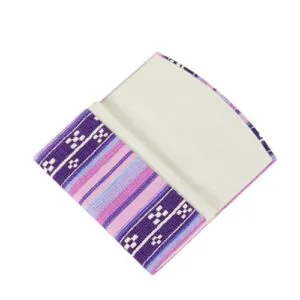 Yaeyama Minsa Card Case
Another Okinawan textile-associated gift format.
 Kaga Yuzen Furoshiki
A regional comparison for a different furoshiki tradition.
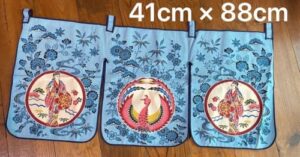 Ryukyu Bingata Noren: Where to Buy Okinawa’s Dyed Door Curtain [2026]
Consider a hanging textile if you want a larger decorative format.
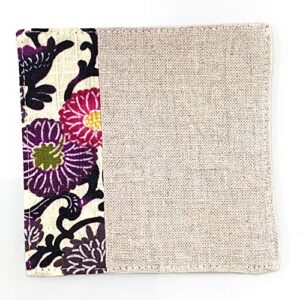 Ryukyu Bingata Coaster Set: Okinawa’s Royal Stencil-Dyed Textile, Where to Buy [2026]
A smaller tabletop textile use to compare with wrapping.
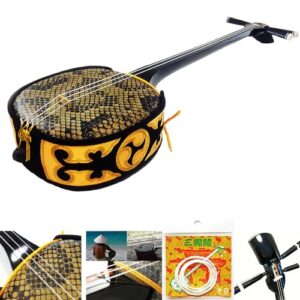 Ryukyu Sanshin Okinawan Three-String Lute: Where to Buy [2026]
A different kind of object rooted in Okinawan culture.
 Kyo-Yuzen Furoshiki: Kyoto Wrapping Cloth, Where to Buy [2026]
Compare another named dye tradition on a wrapping cloth.
Price snapshot across stores
The one specific live price captured for this item is ¥1,000 on Amazon Japan, as of 2026-10-13; verify on the listing. At the reference conversion of ¥150 per US dollar, that is approximately $7 USD. This conversion is only an estimate: the JPY amount is authoritative, and exchange rates and checkout totals vary.
| Store | Item / route | Price | Notes |
|---|---|---|---|
| Amazon.com (US) search | Browse Japanese wrapping cloths | Varies (USD) | Search results can include different products. Check whether a result is the exact listed item before ordering. |
| Amazon JP Global Store | Selected 50 cm listing | ¥1,000 (≈ $7 USD), as of 2026-10-13; verify on the listing | The item is sourced from Japan; destination delivery and total import costs are shown or confirmed during checkout. |
| Maker direct | No direct item page confirmed | — | Ask the seller whether there is a maker or workshop contact. |
| Proxy services (Buyee / Tenso) | Forwarding route if needed | Service fees and postage vary | Confirm that the retailer can ship to the proxy address and account for an additional shipping leg. |
Prices in USD are approximate and depend on the current exchange rate. Prices and stock can change; use the retailer page for the current amount and availability.
📦 Shipping & where to buy from outside Japan
- Set your destination country and full delivery address before relying on a delivery estimate.
- Confirm this exact listing is eligible for delivery through the Amazon JP Global Store to your address; eligibility can vary by item and destination.
- Review international postage, estimated import charges, and delivery timing shown at checkout.
- Check local customs rules and whether a carrier may collect additional fees.
- Keep the product page and order details in case you need to ask about a delayed parcel or return.
Amazon Japan international availability is destination- and item-dependent. Canada, the UK, and Australia are among the destinations to check; our country guides explain the import questions to consider for Canada, the UK, and Australia. Do not assume that a general shipping route guarantees this item’s eligibility.
Amazon’s checkout may estimate or collect import fees for supported destinations, but the final treatment depends on the order and local rules. For a proxy route, add the proxy’s service fee and onward postage to the item cost; also check whether a return would require international shipping. No reliable shipping-cost range is available for this item, so use the address-specific quote instead of treating a generic estimate as a promise.
The displayed ¥1,000 is the listing price snapshot, not a landed-cost total. A final total can include shipping, taxes, import fees, and any proxy service charges.
What it does well
The listing names a 50 cm cloth, a useful starting point for small parcels and compact lunch containers. Check the actual object against your intended bundle before buying.
The title gives shoppers a clear search term, Ryukyu Bingata, and a regional souvenir framing.
At ¥1,000 in the October 13 snapshot, it is a relatively accessible way to explore a small textile purchase. Confirm the live price and shipping total.
A small furoshiki can serve as wrapping and, depending on fabric and care instructions, may be reused. Ask the seller about material and suitable use before treating it as a food-contact wrap.
Weaknesses and things to verify before buying
- Fiber is not stated in the title. Do not assume cotton from a product hint or from the craft category; request a material confirmation if fiber matters.
- Workshop provenance is not established. The listing title associates the item with Ryukyu Bingata, but does not name an artisan, dye workshop, or production location.
- The dye method for this piece is unspecified. A general account of stencil-resist Bingata does not prove whether this item was hand-dyed, printed, or made using another process.
- Care instructions are not included in the snapshot. Ask about washing, color transfer, drying, and ironing before regular use.
- Fifty centimeters limits scale. Measure the object you plan to wrap; a compact cloth may not close securely around a large or unusually shaped item.
- Delivery is conditional. International eligibility, import fees, and return options depend on your destination and the current checkout terms.
These gaps are normal questions to resolve on a thin marketplace listing. A seller response in writing is useful if the material, care method, or place of manufacture affects your decision.
Conclusion — which buyer type are you?
Choose this only if the seller can document the workshop and technique you value; the current title alone does not provide that detail.
Consider it as a small, visually led wrap if 50 cm is adequate and the live photo matches your taste.
The snapshot price is ¥1,000; it may suit a modest gift budget, subject to shipping and fees.
Pass if you need a verified fiber, larger format, published care advice, or an identified maker before purchase.
Other ways to approach this purchase
Save the listing and compare its later price and shipping total. There is no confirmed sale schedule.
If provenance matters, seek a retailer or workshop page that states maker, material, and production location. Verify those claims before comparing price.
If your account offers points, compare the final checkout total and terms. Reward value should not obscure postage or import fees.
A card case, curtain, or coaster may fit your intended use better; the related guides above offer other formats to consider.
🏆 Editor’s Pick
くば笠屋 琉球紅型 風呂敷 50cm 沖縄 お土産 紅型小風呂敷 ふじ 雑貨 is the exact title in the Amazon Japan snapshot. It is listed as new, priced at ¥1,000 as of 2026-10-13; verify on the listing. The seller shown is うちなーむん(創業76年目の沖縄飲食料品卸小売専門店). The available title does not confirm fiber, workshop, or the precise dye process, so this pick is for shoppers who accept those open questions.
- The 50 cm size is explicit in the title.
- The snapshot gives a concrete listed price: ¥1,000, before any destination-specific shipping or import charges.
- The listing is presented as a new small furoshiki, rather than a multi-piece set.
The Japan listing is the source for the specific item. Delivery availability and the total payable amount depend on the destination shown at checkout.
❓ Frequently Asked Questions
What exactly is the selected item?
It is a new listing titled くば笠屋 琉球紅型 風呂敷 50cm 沖縄 お土産 紅型小風呂敷 ふじ 雑貨. The title describes a 50 cm small furoshiki. The snapshot price is ¥1,000 as of 2026-10-13; verify on the listing.
Is the cloth confirmed to be cotton?
No. Cotton is not stated in the listing title available for this article. Ask the seller for the fiber content if it is important to you.
Is this exact piece hand-dyed in Okinawa?
The title identifies it as Ryukyu Bingata and an Okinawa souvenir, but does not name a workshop or explain the process or production address. Those details remain unconfirmed; request them from the seller if provenance matters.
What does a 50 cm furoshiki suit?
It is a small format suited to compact wrapping tasks when the item fits. Measure your parcel and allow enough cloth to knot before ordering; the listing does not provide a broader sizing guide.
Can I order it from Canada, the UK, or Australia?
Check the Amazon JP Global Store checkout with your address. Eligibility and charges vary by item and destination. The country guides for Canada, the UK, and Australia cover general import considerations, but the checkout page is authoritative for this order.
How should I wash and care for it?
The listing snapshot does not provide care instructions. Ask the seller about washing, colorfastness, drying, and ironing; do not assume a textile’s care method from its craft name alone.
How much is the selected listing?
The captured Amazon Japan price is ¥1,000 as of 2026-10-13; verify on the listing. Shipping, taxes, currency conversion, and import fees can change the total paid.
jpmono.com is curated by a Japan-based editorial team working out of Toyama in the Hokuriku region and Nara in Kansai. We introduce Japanese household objects to international readers, focus on verifiable craft information and clear international purchase routes, and do not physically test every item. Affiliate links support this editorial work. Read more about our editorial standards.
AI assistance was used in preparing this article; product facts and purchase details are based on the cited retail listing snapshot and should be rechecked with the seller.
Affiliate disclosure: jpmono.com may earn a commission on qualifying purchases made through links on this page, at no additional cost to you.