![Naniwa Honzome Chusen Noren: Osaka’s Hand-Dyed Doorway Curtain, Birthplace of Chusen [2026]](https://jpmono.com/wp-content/uploads/2026/05/japan-map-regions-and-prefectures-800x1050.png)
A noren (暖簾, “split doorway curtain”) is the cloth a Japanese shop hangs at its entrance — half-curtain, half-signboard — and the one in this guide is dyed by a technique that Osaka can claim as its own. Naniwa Honzome (浪華本染め, “Naniwa true-dyeing,” using the old name for Osaka) is the local lineage of chusen (注染, “pour-dyeing”), a hand process developed in Sakai, Osaka in the 1880s before it spread to Hamamatsu and the rest of Japan. The dye is poured straight through stacked, paste-resisted layers of cotton, so the color soaks every face at once.
That single detail is the whole appeal. Because the dye penetrates rather than sitting on the surface, a chusen noren reads the same color front and back, with soft watery bleed gradients along each motif that no screen print reproduces. Osaka’s role as Edo-era Japan’s wholesale and merchant capital — tenka no daidokoro (天下の台所, “the nation’s kitchen”) — concentrated demand for exactly this kind of shop curtain, which is part of why a dense dyeing district grew up along the Yamato River.
This article is for international readers deciding whether a hand-dyed Osaka noren is worth buying and shipping home. It explains what chusen is, how the noren format works at a doorway, who the piece suits and who should skip it, and the honest caveats of hand-dyed variation, sizing, and indoor-versus-outdoor use.
🔄 Updated:
⏱️ Read time: ~9 min
- Who this is for — and who should skip it
- Product overview (from published specs)
- Where this comes from — Osaka, Sakai, and the birth of chusen
- Buying options compared
- What it does well
- Weaknesses and things to verify before buying
- Conclusion — which buyer type are you?
- Other ways to approach this purchase
- ❓ Frequently Asked Questions
Who this is for — and who should skip it
- Want a real hand-dyed textile, not a screen-printed reproduction, hung at a doorway, kitchen pass, or as a wall piece
- Value the chusen “born in Sakai” provenance and the soft bleed gradients that mark a hand pour
- Appreciate that the curtain looks finished from both sides, so it works in a room divider or open doorway
- Are comfortable with cotton care (cool hand-wash, line dry) and a little color settling over the first washes
- Are buying as a considered gift with a story behind it
- Need an exact, repeatable color and pattern with zero unit-to-unit variation
- Want a weatherproof outdoor banner — chusen cotton is an indoor/threshold textile
- Expect a standard Western curtain that fully blocks a doorway and light
- Are price-sensitive and would rather have a machine-printed look-alike
- Cannot accommodate Japanese noren proportions and the slit-panel hanging method
Product overview (from published specs)
The table below summarizes the technique facts and material details described in this guide. Where a detail is not established, it is marked rather than guessed.
| Attribute | Detail | Source |
|---|---|---|
| Item | Naniwa Honzome chusen hand-dyed cotton noren (door curtain) | Amazon US (search) + Amazon JP Global Store |
| Technique | Chusen (注染) — paste-resist stencil + poured dye through stacked layers | Data notes |
| Lineage | Naniwa Honzome (浪華本染め) — Osaka’s chusen lineage; technique born in Sakai, 1880s | Data notes |
| Material | Cotton | Maker direct |
| Reversibility | Same color on both faces (dye penetrates all layers) | Data notes |
| Origin | Osaka, Kansai, Japan | Maker direct |
| Dimensions / weight | Confirm with the maker | — |
| Price | Unconfirmed — live price not captured at time of writing; verify at retailer | — |
The technique and material are described above; exact dimensions and a current price are not asserted here. Prices may shift over time.
📖 Glossary — key terms
Noren (暖簾) — the split fabric curtain hung at a shop entrance or interior threshold. It signals that a business is open and gently screens the doorway without sealing it.
Chusen (注染, “pour-dyeing”) — a hand-dyeing method: paste resist is applied through stencils, the cloth is folded into accordion layers, and dye is poured (chu = pour) so it penetrates all layers at once.
Naniwa Honzome (浪華本染め) — “Naniwa true-dyeing”; Naniwa is the historic name for Osaka. The Osaka regional lineage of chusen dyeing.
Katazome / paste-resist — the rice-paste barrier brushed through a stencil that keeps dye out of areas meant to stay undyed, defining the motif.
Tenka no daidokoro (天下の台所) — “the nation’s kitchen,” the Edo-era nickname for Osaka as Japan’s wholesale and merchant hub.
Tenugui (手ぬぐい) — a flat cotton hand-towel, the other classic chusen product; a sibling format to the noren.
Where this comes from — Osaka, Sakai, and the birth of chusen

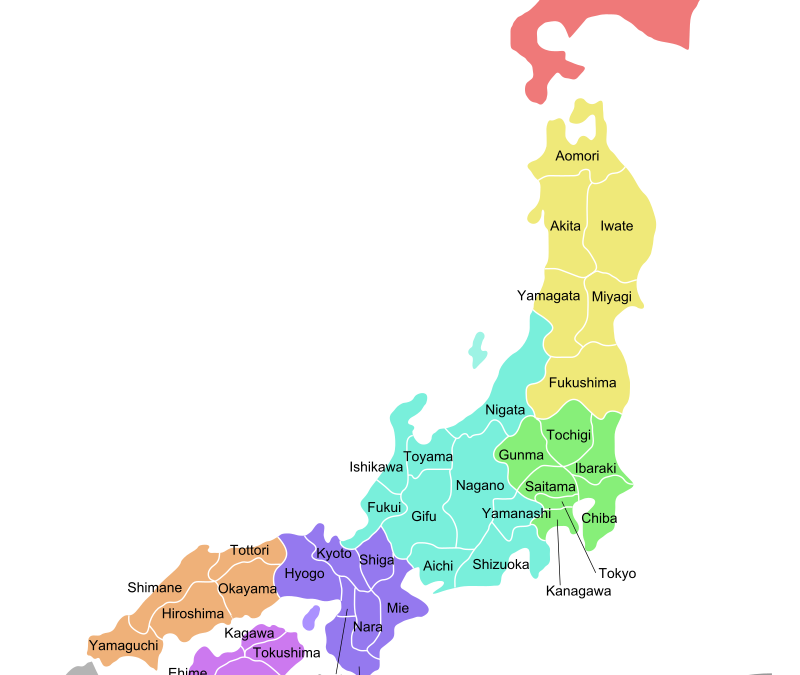
Osaka sits at the heart of the Kansai region on Japan’s main island of Honshu, where the Yodo and Yamato rivers drain into Osaka Bay. The bay and rivers made it a natural port and a clearinghouse for goods, and clean river water is also what a dyeing district needs — chusen depends on rinsing pasted, dyed cloth in flowing water. The Yamato River corridor on the city’s south side, around Sakai, became exactly that kind of dyeing ground.
Sakai’s prestige as a craft and trade hub is ancient. The Daisen Kofun — Japan’s largest keyhole-shaped burial mound — was raised here in the fifth century, and by the medieval period Sakai was one of the country’s wealthiest free-trade ports, later famous for forged blades. That accumulated metalworking-and-merchant know-how is the soil chusen grew from in the Meiji era.
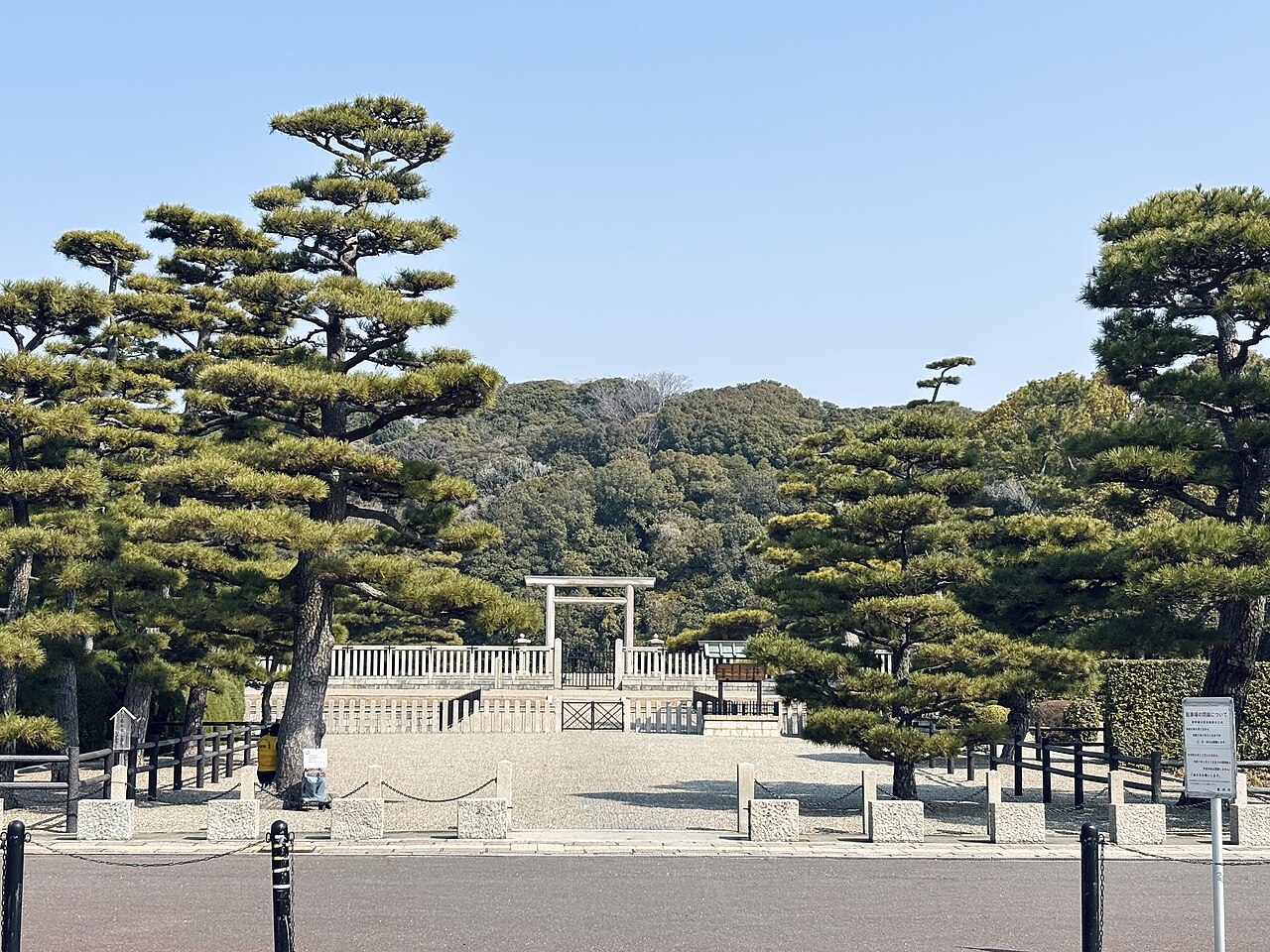
- 5th century — The Daisen Kofun is raised in Sakai, marking the area’s early prominence.
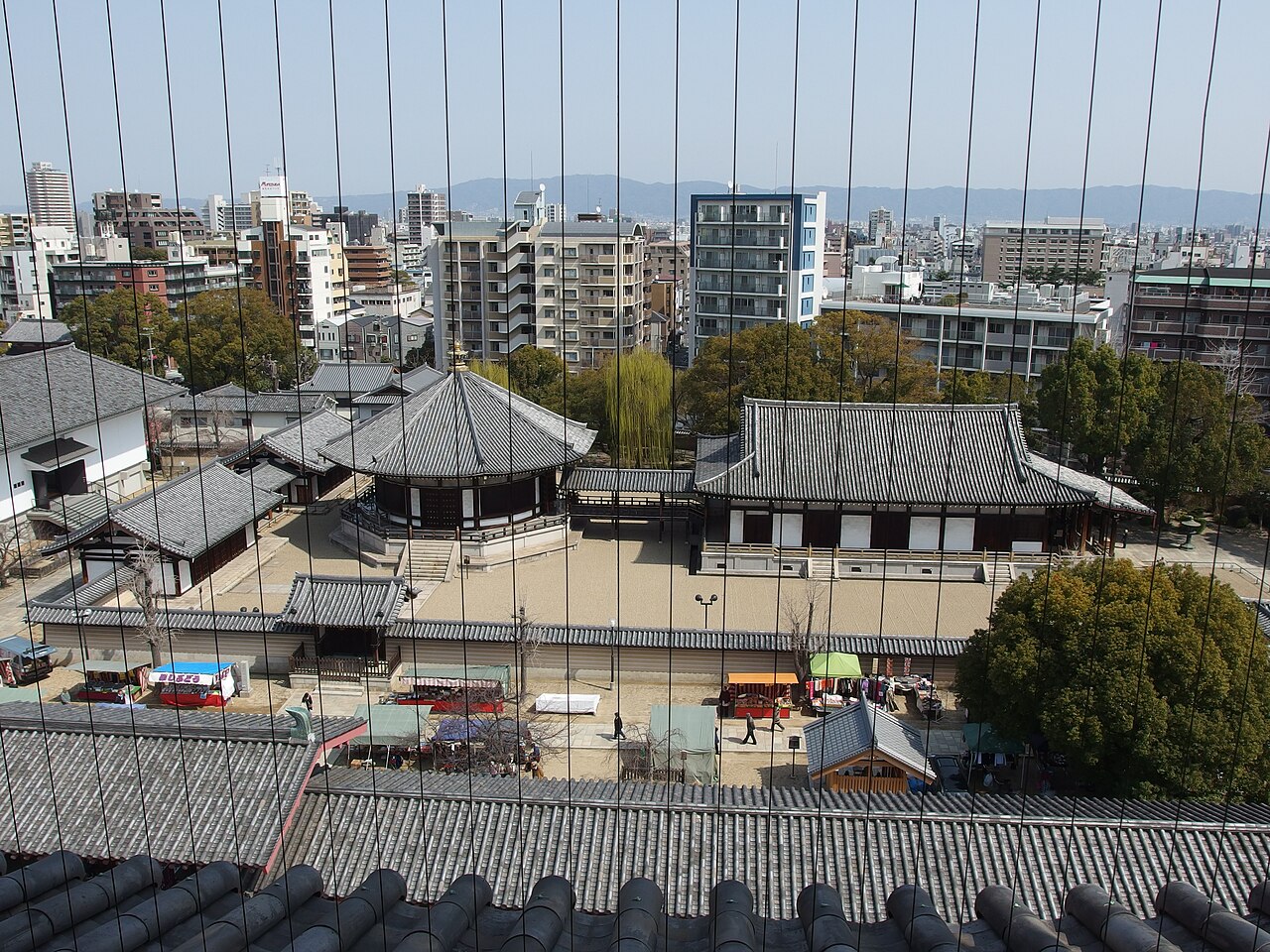
- 593 — Shitenno-ji is founded in Osaka, among Japan’s oldest state temples.
- 1603–1868 — In the Edo period Osaka becomes tenka no daidokoro; shop noren and yukata drive demand for dyed cotton.
- 1880s (Meiji) — Chusen pour-dyeing is developed in Sakai, Osaka — the birthplace of the technique.
- Early 20th century — The method spreads to Hamamatsu (Shizuoka) and beyond, becoming the national tenugui-and-yukata standard.
- 2026 — Naniwa Honzome continues as Osaka’s chusen lineage, still hand-poured.
The Edo period is when demand took shape. Osaka was the wholesale heart of the country — tenka no daidokoro, the nation’s kitchen — and a city of shops needs shop curtains. Every merchant house hung a noren bearing its mark, and townspeople wore dyed cotton yukata. That steady, large-scale appetite for dyed cotton is what let a specialized dyeing district consolidate and, in the Meiji era, refine the poured-dye method into chusen.

“A screen print colors one face; a chusen pour colors the whole cloth — which is why a noren born in Sakai looks finished no matter which side of the doorway you stand on.”
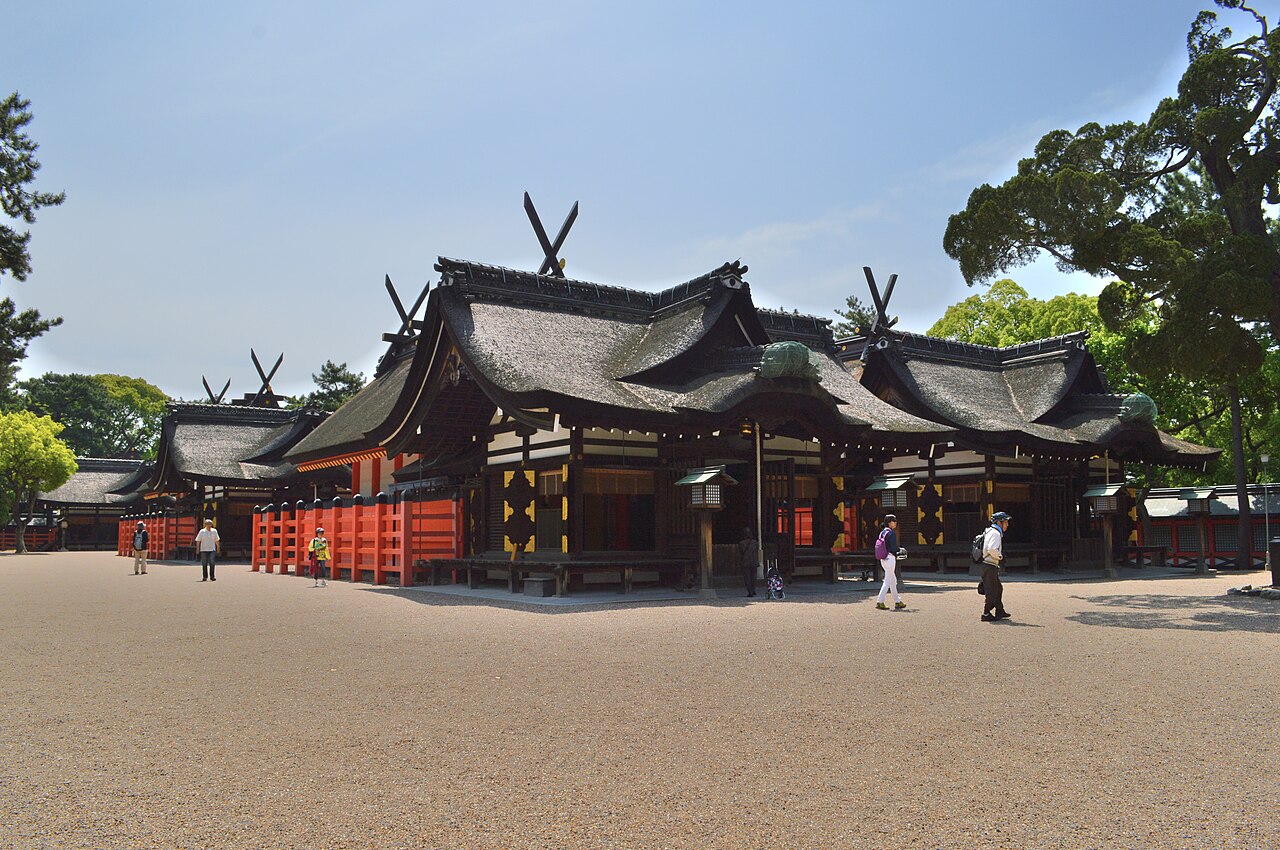
The region’s dyeing culture runs deeper than commerce alone. Osaka’s old shrines and temples — Sumiyoshi Taisha among the most ancient — have long used dyed festival textiles, and the city’s threshold habit of hanging cloth at an entrance is centuries old. Chusen did not invent that habit; it gave it a sharper, more saturated, water-bled finish.
What “still made here” means is straightforward: chusen remains a hand process. A dyer pours by hand, judging how far the color should bleed, and the rinse still happens in water. Naniwa Honzome is the name for that Osaka lineage carrying the Sakai origin forward. The bleed gradients you see on the curtain are the literal fingerprint of a human pour — the reason two pieces are never identical, and the reason a print can imitate the motif but not the depth.
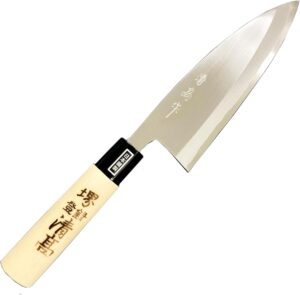 Sakai blade craft (same city) →
 Chusen tenugui (same technique) →
Awa indigo tenugui →
 Kyoto Yuzen furoshiki →
Bingata stencil dyeing →
Indigo cotton runner →
 Hakata-ori silk obi →
Buying options compared
A live price was not captured in the fetched data, so the cells below state where to buy rather than a fixed figure. JPY is the authoritative currency for the specific listed item; any USD figure would be an approximate estimate at a ¥150/USD baseline. Verify the current price at the retailer before purchasing.
| Store | Item / Variant | Price (JPY + USD est.) | Notes |
|---|---|---|---|
| 🇺🇸 Amazon US (search) | Browse Japanese noren & chusen textiles | varies (USD) | Best if you are shopping from the US — Prime shipping, USD pricing, no international customs. Amazon US carries Japanese noren and dyed cotton from various makers; this specific Naniwa Honzome piece ships from Japan (next row). |
| 🇯🇵 Amazon JP Global Store | Naniwa Honzome chusen noren | Check current availability | Ships internationally from Japan. This guide focuses on hand-dyed Naniwa Honzome Chusen noren. |
| Maker direct | Naniwa Honzome / Sakai chusen workshops | Unconfirmed — check workshop site | May offer wider motif and size selection; international shipping varies by workshop. |
| Proxy services (Buyee / Tenso) | Forwarded Japan-only orders | Item price + forwarding fee | Useful for Japan-only orders; adds a service fee and a forwarding step. |
What it does well
The poured dye penetrates every layer, so both faces read the same color — ideal for an open doorway or room divider seen from both sides.
The watery edges along each motif are a hand-pour signature that screen printing cannot reproduce — depth instead of a flat surface layer.
Chusen was born in Sakai, Osaka in the 1880s; Naniwa Honzome carries that origin, a clear story for a gift or a collection.
A lightweight cotton panel moves in a draft, screens a threshold without sealing it, and packs flat for shipping.
Weaknesses and things to verify before buying
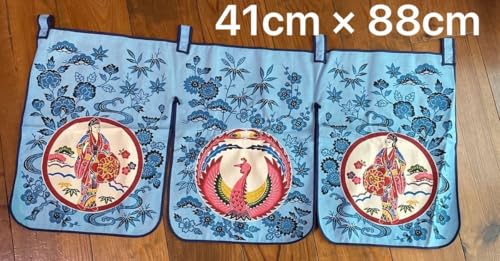
- Unit-to-unit variation. Hand pouring means color depth and bleed differ slightly between pieces; the photo is representative, not exact.
- Indoor textile, not outdoor signage. Chusen cotton is a threshold and interior curtain; it is not a weatherproof outdoor banner and will fade in sustained sun.
- Color settling and care. Hand-dyed cotton can release excess dye in the first washes; cool hand-wash separately and line-dry, and expect a gentle softening of color over time.
- It does not block a doorway. A noren screens and signals; it does not seal the opening or fully block light the way a Western curtain does.
- Hanging hardware. A noren hangs from a rod through the top sleeve — confirm you have or can fit a suitable rod for the panel width.
Conclusion — which buyer type are you?
You want the genuine Sakai-origin hand pour and value the bleed gradients. The Naniwa Honzome piece is the match — buy it for the provenance and the both-sides finish.
You want a beautiful, real Japanese noren for a doorway or kitchen pass and are comfortable with cotton care. This fits well — confirm the size first.
If price is the deciding factor, a machine-printed noren costs less — but you lose the hand pour and the reversible color. Weigh the trade honestly.
If you need exact repeatable color, an outdoor banner, or a doorway that fully seals, this is the wrong product. Look elsewhere.
Other ways to approach this purchase
Cross-border prices fluctuate with the yen and with seasonal promotions; if you are not in a hurry, compare options over time.
Sakai chusen workshops often carry more motifs and sizes than mass-market retailers; check their international shipping options before ordering.
If you already hold Amazon points or rewards, applying them at checkout offsets the cross-border premium on a hand-dyed item.
If a printed look-alike satisfies your need, there is no obligation to pay for a hand pour. Be honest about what you actually want from the piece.
❓ Frequently Asked Questions
What is chusen dyeing, and how is it different from a printed noren?
Why is Osaka the birthplace of this technique?
Does Amazon JP ship this noren internationally?
How do I wash and care for a chusen cotton noren?
Can I use a noren outdoors or to fully block a doorway?
Will the one I receive look exactly like the photo?
jpmono.com is curated by a Japan-based editorial team (working out of Toyama in the Hokuriku region and Nara in Kansai) and is independent. We do not take payment from the makers we feature; income comes from affiliate links. We do not physically test every product — we read maker specifications and craft references.
Affiliate disclosure: jpmono.com may earn a commission on qualifying purchases made through links on this page, at no additional cost to you.