![Kyo-Yuzen Furoshiki: Kyoto Wrapping Cloth, Where to Buy [2026]](https://jpmono.com/wp-content/uploads/2026/05/japan-map-regions-and-prefectures-800x1050.png)
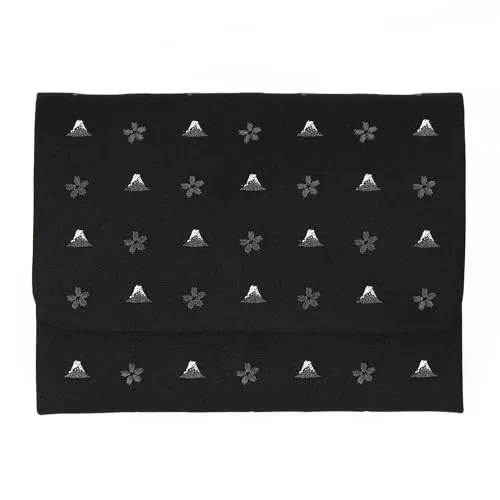
A furoshiki is, at first glance, an almost embarrassingly simple object: a single square of cloth. What makes a Kyoto Yūzen-dyed furoshiki different is the surface — painterly flowers, seasonal grasses, and flowing water rendered with the freehand resist-dyeing that Kyoto refined into a craft of its own in the late seventeenth century. The piece featured here (Amazon item ID B01298M99K, a Yamada Seni / Musubi Kyoto cotton wrapping cloth in the roughly 50–70 cm range) is a working version of that tradition, made to be tied, untied, and used again.
The appeal for an international reader is twofold. First, it is genuinely useful: one square wraps a wine bottle, covers a bento, becomes a market bag, or dresses up a gift you would otherwise hide in disposable paper. Second, it carries a real story — furoshiki sit at the intersection of Japan’s merchant-era packaging culture and Kyoto’s dyeing trade, and the eco-reuse revival of the last two decades has turned them into one of the more sensible souvenirs you can carry home.
This guide is written for the buyer deciding whether a Kyoto furoshiki is worth importing, which size to choose, and where to buy it from outside Japan. We cover what the cloth is, how to read the size choices, the comparison against silk and other Kyoto textiles, and the practical caveats before you spend.
🔄 Updated:
⏱️ Read time: about 9 minutes
- Who this is for — and who should skip it
- Product overview (from published specs)
- Where this comes from — place, era, and the craft tradition
- 📌 How does it compare?
- Buying options
- What it does well
- Weaknesses and things to verify before buying
- Conclusion — which buyer type are you?
- Other ways to approach this purchase
- ❓ Frequently Asked Questions
Who this is for — and who should skip it
- Want reusable, plastic-free gift wrap that becomes part of the gift
- Like one object that doubles as a bag, bottle carrier, and bento cover
- Value a Kyoto-dyed Yūzen pattern over generic printed cloth
- Are comfortable hand-washing and occasionally ironing cotton
- Want a compact, light, customs-friendly souvenir from Japan
- Want grab-and-go, disposable wrapping with zero learning curve
- Need a waterproof carrier — cotton furoshiki are not water-resistant
- Expect machine-washable, wrinkle-free synthetic fabric
- Want a guaranteed exact pattern — dyed-lot designs vary slightly
- Are unwilling to learn two or three basic musubi (knots)

Product overview (from published specs)
This is a traditional dyed cotton furoshiki in the small-to-medium range, finished with a Yūzen-style floral motif. The table below consolidates the craft characteristics; where a value varies by maker or pattern, it is marked rather than guessed.
| Source | What it tells us | Spec / note |
|---|---|---|
| 🇺🇸 Amazon US (search) | Comparable Japanese furoshiki from multiple makers | Primary path for US shoppers; the exact Musubi/Yamada Seni piece ships from Japan (below) |
| Maker direct | Yamada Seni / Musubi (Kyoto) | Kyoto dyeing house; pattern catalogs run far wider than a single online offer |
| Proxy services (Buyee / Tenso) | Forwarding for items not on Global Store | Useful for specific patterns/sizes; adds a forwarding fee |
Kyoto cotton furoshiki vary in price, exact dimensions, and pattern. Check the current details with the maker or retailer before buying.
📖 Glossary — key terms
furoshiki (風呂敷, “bath spread”) — a square cloth used to wrap, carry, and cover. The name dates to the era when bathers spread the cloth to stand on and bundle their clothes.
Yūzen / Yūzen-zome (友禅染) — a freehand paste-resist dyeing method that lets painterly, multi-color motifs be drawn onto plain-weave fabric. Perfected in Kyoto in the late 1600s.
tsutsumi (包み, “wrapping”) — the older, broader idea of wrapping and bundling cloth from which the furoshiki descends; treasure-bundling cloth survives from the Nara period.
musubi (結び, “knot”) — the tying technique. Two or three basic knots turn one square into a bag, a bottle carrier, or a sealed gift.
mon (家紋, “house crest”) — family emblems that Edo-era merchants dyed onto furoshiki to mark ownership of bundled goods.

Where this comes from — place, era, and the craft tradition

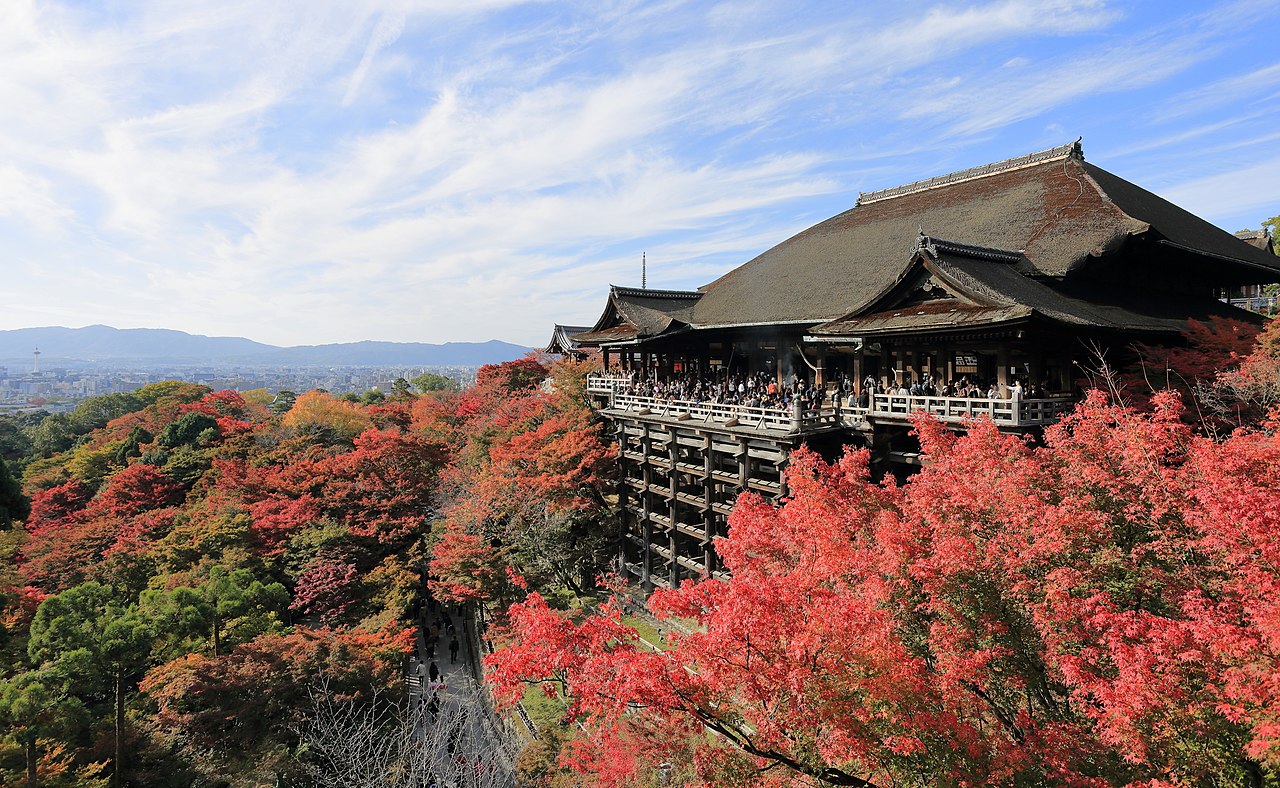
Kyoto is an inland basin in the Kansai region, sheltered by hills on its north, east, and west, with the Kamo and Katsura rivers running through it. That setting matters for dyeing: soft river water and a humid basin climate suited the washing and steaming steps that Yūzen work demands, and a thousand years as the imperial and cultural capital concentrated the patrons — court, temples, and later wealthy merchants — who could pay for decorated cloth.
The furoshiki itself is older than its name. Cloth used to bundle and protect treasures survives from the Nara period (710–794); the imperial Shōsō-in repository preserves the idea of wrapping precious things in cloth. The word furoshiki — literally “bath spread” — took hold later, in the Muromachi-to-Edo centuries, when people at bathhouses spread a cloth to stand on while changing and then knotted their clothes inside it to carry home.
Edo merchant culture did the rest. As cities grew, the furoshiki became everyday packaging: shopkeepers bundled wares in cloth marked with their mon (house crest), and the knotting techniques that let one square become a sealed parcel or a shoulder-slung bag became common knowledge.
- 710–794 — Nara period; treasure-bundling cloth (tsutsumi) used to wrap precious goods.
- 794 — Heian-kyō (Kyoto) becomes the imperial capital; court patronage concentrates textile crafts.
- 1336–1573 — Muromachi era; the term “furoshiki” takes hold around bathhouse use.
- c. 1680s — Miyazaki Yūzensai perfects freehand Yūzen resist-dyeing in Kyoto, enabling painterly floral motifs on plain weave.
- 1603–1868 — Edo period; merchant packaging culture spreads crest-marked furoshiki nationwide.
- 1869 — The capital function moves to Tokyo; Kyoto remains the dyeing heart of the trade.
- 2000s–2026 — Eco-reuse revival reframes the furoshiki as reusable wrap, bag, and bottle carrier; a leading sustainable souvenir.
The Yūzen breakthrough is what ties this object to Kyoto specifically. In the late seventeenth century, the fan painter Miyazaki Yūzensai is credited with perfecting a paste-resist method that let dyers draw freely — flowers, seasonal grasses, flowing water — in many colors on a flat field of cloth, rather than being limited to woven or stencil-bound patterns. That technique made Kyoto the design-and-dye center for decorated textiles, and most Japanese furoshiki are still designed and dyed there today.
“A furoshiki is the rare souvenir that is also a tool — one square of Kyoto-dyed cotton that wraps the gift, then outlives it.”
It is worth being precise about where this sits in Kyoto’s craft map. This is the dyed-textile lineage — distinct from Nishijin brocade, which is woven rather than dyed, and from Kyōyaki pottery, which is another trade entirely. The furoshiki fills the everyday-cloth corner of Kyoto craft: not ceremonial, not fragile, made to be knotted and carried.
📌 How does it compare?
Other jpmono guides to Japanese textiles and Kyoto craft worth reading alongside this one:
Buying options
JPY is the usual reference currency for Kyoto furoshiki, while USD figures are approximate estimates at a ¥150/USD baseline. Prices vary by fabric, size, and pattern, so compare current offers before buying.
| Store | Item / variant | Price (JPY + USD est.) | Notes |
|---|---|---|---|
| 🇺🇸 Amazon.com (US) | Browse Japanese furoshiki & wrapping cloth | varies (USD) | Best if you are shopping from the US — Prime shipping, USD pricing, no international customs. Amazon US carries furoshiki from several Japanese makers; the exact Musubi / Yamada Seni piece ships from Japan (next row). |
| 🇯🇵 Amazon JP Global Store | Yamada Seni / Musubi cotton furoshiki, ~50–70 cm | — | The selected Japanese source. Ships internationally from Japan to most major destinations. |
| Maker direct | Yamada Seni / Musubi (Kyoto) full pattern catalog | Varies — Unconfirmed | Widest pattern and size selection; international shipping policy varies by retailer. |
| Proxy services (Buyee / Tenso) | Specific patterns not on Global Store | Item price + forwarding fee | Use when you want an exact design Amazon does not export; adds a service fee and consolidation step. |
Prices in USD are approximate and depend on the current exchange rate. International orders may incur customs duties above your local threshold.
What it does well
Weaknesses and things to verify before buying
- Cotton wrinkles. It will need occasional ironing to look its best, especially as gift wrap. This is not a wrinkle-free synthetic.
- Dye can bleed at first. Traditionally dyed cotton may release a little color in the first wash; hand-wash separately in cold water until it runs clear.
- Not waterproof. Cotton furoshiki are not a substitute for a sealed bag; do not use them to carry anything wet or leak-prone.
- Pattern and color vary. Dyed-lot designs and exact shades can differ from the seller’s photo. If you need a precise pattern, confirm with the seller.
- Size confusion. The right size depends entirely on what you wrap; buying “a furoshiki” without matching the size to the use is the most common mistake.
- A small learning curve. The object is only as useful as your knots — budget a few minutes to learn two or three basic musubi.
- Availability varies. Confirm the current offer before committing.
Conclusion — which buyer type are you?
Other ways to approach this purchase
❓ Frequently Asked Questions
Does Amazon JP Global Store ship a furoshiki internationally?
What size furoshiki should I buy?
How do I wash and care for it?
What is “Yūzen,” and why does Kyoto matter here?
How is this different from Nishijin or Kyōyaki?
Is a furoshiki a good gift for someone outside Japan?
jpmono.com is curated by a Japan-based editorial team (working out of Toyama in the Hokuriku region and Nara in Kansai) and is independent. We do not take payment from the makers we feature; income comes from affiliate links. We read maker specifications and textile references rather than physically testing every product. Read more about our editorial standards.
🤖 This article was prepared with AI assistance and reviewed against the available source data. Specifications, prices, and availability reflect the dataset at the time of writing and should be verified at the retailer before purchase.
Affiliate disclosure: jpmono.com may earn a commission on qualifying purchases made through links on this page, at no additional cost to you.