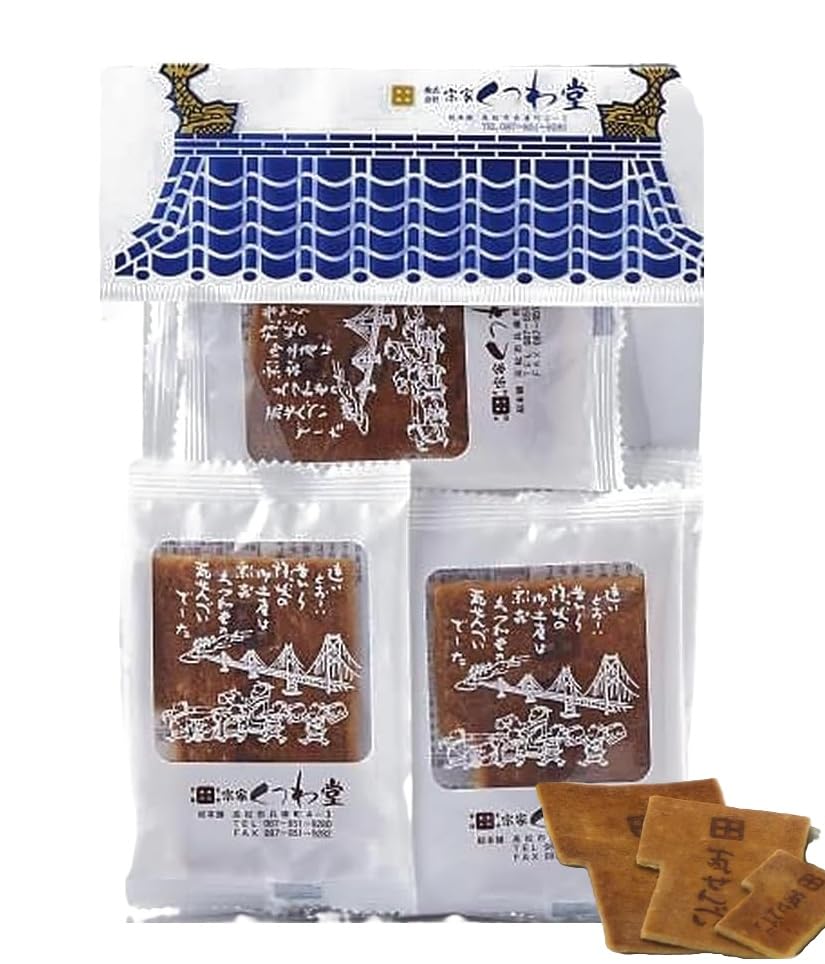
- What it is: A hard-baked, lightly sweet wheat cracker shaped like a roof tile, made by Soke Kutsuwado in Takamatsu.
- Made in: Takamatsu, Kagawa — on the Seto Inland Sea coast of Shikoku, a confectioner founded in 1877.
- Price band: ¥1,877 for the 9-piece small box (as of 2026-11-19; verify on the listing) — roughly ¥209 per cracker.
- Best for: Buyers who want a dry, firm, modestly sweet Japanese souvenir sweet instead of a soft cake or mochi.
- Skip if: You avoid wheat, egg or sesame, or you expect a soft, creamy or frosted confection.
- Shipping: Listed on Amazon Japan, which ships internationally to 65+ countries — jump to our pick ↓
The cracker is named after a roof tile, and it is baked the way a tile is: flat, hard, and one piece at a time on a hot iron plate.
Soke Kutsuwado (宗家くつわ堂) has made kawara senbei (瓦せんべい) in Takamatsu, Kagawa, since 1877, in the middle of the Meiji era. The maker says the rectangular shape was modeled on the edge tiles of Takamatsu Castle, and that the sweet was created as a local souvenir — a piece of the castle town that a visitor could carry home in a paper box.
What follows is a buyer’s comparison rather than a tasting note. It sets the small 9-piece box sold on Amazon Japan against the 8- and 16-piece paper boxes the maker lists, weighs the fragility problem that comes with any hard-baked cracker, and sets out what to confirm about allergens, shelf life and delivery before ordering from outside Japan.
Updated
12 min read

- Who this is for — and who should skip it
- Product overview (from published specs)
- 📍 Where this comes from — Takamatsu, Kagawa
- Price snapshot across stores
- 📦 Shipping & where to buy from outside Japan
- What it does well
- Weaknesses and things to verify before buying
- Conclusion — which buyer type are you?
- Other ways to approach this purchase
- 🏆 Editor’s Pick
- ❓ Frequently Asked Questions
Who this is for — and who should skip it
- Prefer a dry, firm bite — senbei rather than sponge cake, mochi or chocolate.
- Are assembling a Kagawa or Shikoku food box and want a named local sweet with a story attached.
- Like a lightly sweet cracker where toasted wheat, not sugar, carries the flavor.
- Need a shelf-stable souvenir: the maker lists a 90-day best-by for the medium crackers.
- Care whether the pieces are baked by hand on an iron plate rather than stamped out in a factory line.
- Want something soft, chewy, creamy or frosted — the texture here is dry and hard.
- Cannot eat wheat, egg or sesame; the maker lists all three as allergens.
- Are posting a single paper box across an ocean without protective packing.
- Need individually wrapped pieces for a large event — the listing does not state whether each cracker is wrapped.
- Are buying by volume: a 9-piece box at ¥1,877 is not an economical bulk snack.
Product overview (from published specs)
ℹ️ Only the Amazon JP listing from November 19, 2026 and the maker’s published product information were available for this guide — live pricing may have shifted since then. Attributes that could not be confirmed are marked as such below.
| Attribute | What the published material says | Source |
|---|---|---|
| Product type | Hard-baked sweet wheat cracker (kawara senbei) | Maker |
| Shape | Rectangular tile, modeled on the edge tiles of Takamatsu Castle | Maker |
| Maker | Soke Kutsuwado (宗家くつわ堂), Takamatsu, Kagawa | Maker / listing |
| Founded | 1877 (Meiji era) | Maker |
| Method | Baked one at a time on an iron plate | Maker |
| Textures and flavor | Firm, hard-baked body; gentle sweetness; toasted aroma | Maker |
| Pack sizes (medium) | Paper boxes of 8 and 16 pieces — pack sizes, not flavor assortments | Maker |
| Editor’s Pick format | Small kawara senbei, 9 pieces, paper box | Amazon JP listing, 2026-11-19 |
| Allergens | Wheat, egg, sesame | Maker |
| Best-by period | 90 days from manufacture, stated for the medium crackers | Maker |
| Price (9-piece small box) | ¥1,877 (about $12.50 USD at current rates) — as of 2026-11-19 | Amazon JP listing |
| Net weight | — | — |
The piece count is the one number worth reading twice. The cracker described throughout this guide as the standard souvenir is the medium type, sold as 8 or 16 in a paper box; the box sold on Amazon JP is the small type, 9 pieces. They are the same cracker at different dimensions, not different flavors, and the small box is a smaller buy than the medium 16-piece carton.
📖 Glossary — the words on the box
- Senbei (煎餅)
- A Japanese cracker, usually made from rice or wheat flour and baked or grilled dry. Senbei are savory or lightly sweet, never creamy.
- Kawara (瓦)
- A roof tile. Kawara senbei take their name and their flat rectangular shape from it.
- Kawara senbei (瓦せんべい)
- A tile-shaped, hard-baked wheat-flour cracker, traditionally associated with castle towns. Several regions make one; the Takamatsu version is the subject of this guide.
- Soke (宗家)
- “Head family” or “main house.” It signals the original line of a family business, and it is part of this confectioner’s trading name.
- Meiji era
- 1868–1912, the period when Japan industrialized and when this confectioner was founded.
- Best-by (賞味期限)
- The date by which the maker expects the taste to hold, given proper storage. In Japan it appears on almost all packaged food, separate from a use-by date.
📍 Where this comes from — Takamatsu, Kagawa
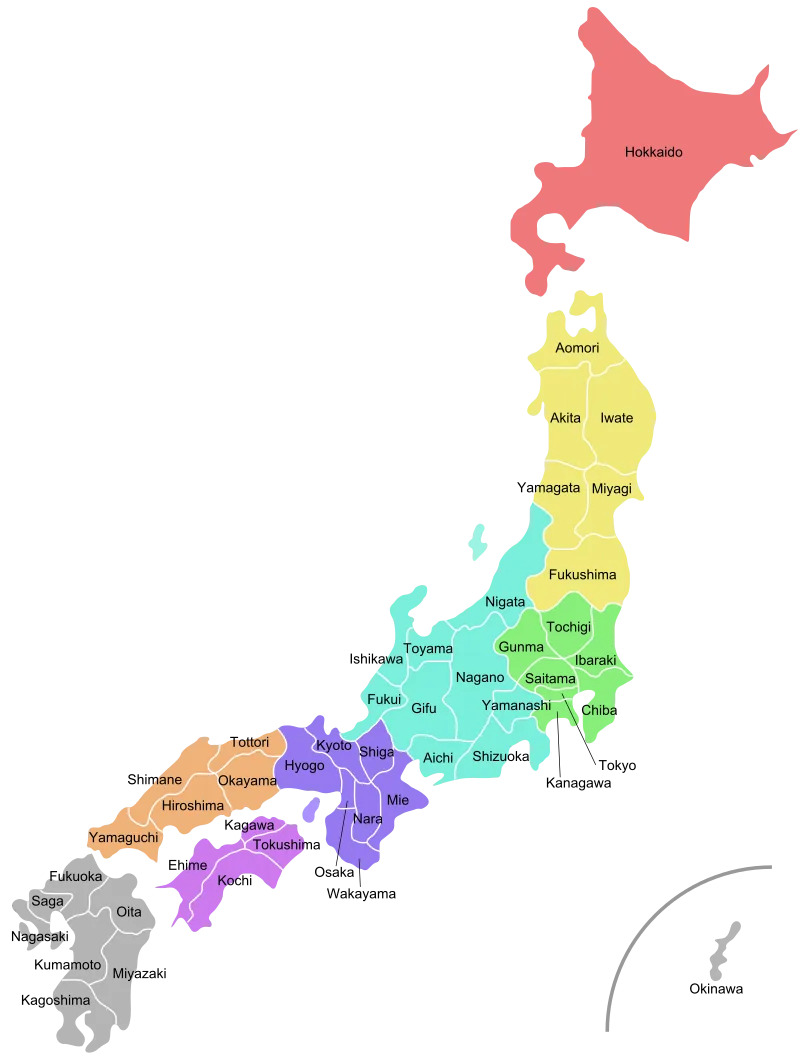
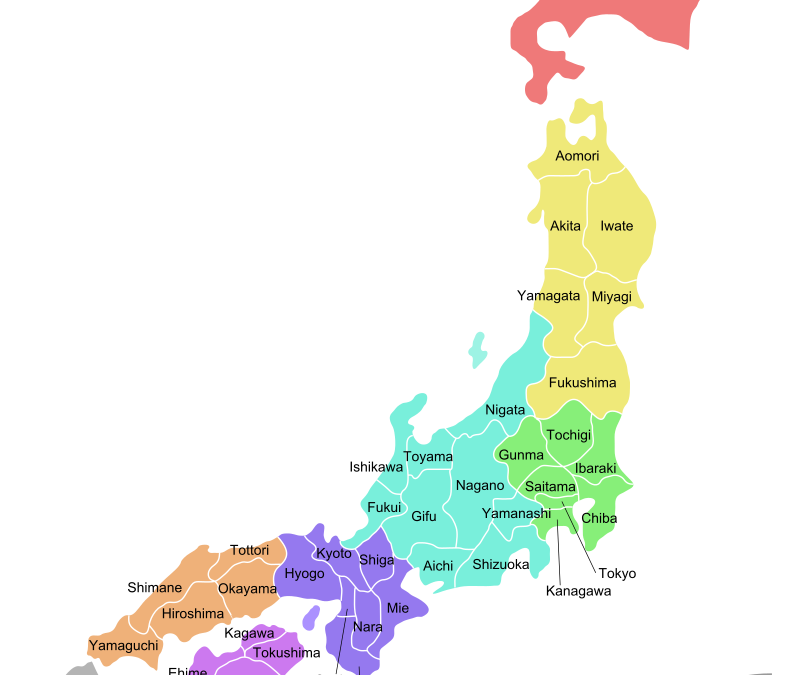
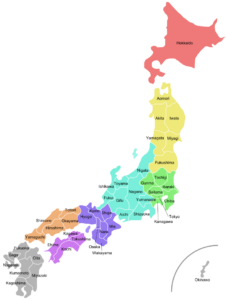
Takamatsu sits on the northern shore of Shikoku, the smallest of Japan’s four main islands, looking across the Seto Inland Sea toward Okayama on Honshu. The sea is the defining fact of the place: it narrows the horizon, moderates the weather, and has historically made this coast the busiest crossing point between the two islands. Trains run from Tokyo to Okayama and on across the water by bridge; there are also direct flights.
The mild, relatively dry climate of the Seto Inland Sea basin is the sort of regional detail that sounds like tourism copy until you consider what it means for a wheat cracker. A hard-baked, low-moisture sweet depends on dry air staying dry. A confection that keeps for months in a paper box is a confection designed by its climate as much as by its recipe.
Kagawa’s old name was Sanuki, and the province’s capital area is where Takamatsu grew up around its castle. The castle remains the reference point for the city’s self-image, including in its sweets: the maker states plainly that the cracker’s rectangular form follows the edge tiles of Takamatsu Castle.
“Kawara means roof tile. The cracker borrows the name, the flat shape and, in a sense, the purpose: a piece of the castle town that a traveler could take away.”
-
1868 — The Meiji era begins, the period in which the confectioner is founded. -
1877 — Soke Kutsuwado is founded in Takamatsu, Kagawa. -
Meiji era — Kawara senbei are made and sold as a Takamatsu souvenir, shaped after the castle’s edge tiles. -
Today — Each cracker is still baked individually on an iron plate in Takamatsu. -
Today — The maker lists the medium cracker in paper boxes of 8 and 16 — pack sizes, not flavor assortments. -
2026 — A 9-piece small box is listed on Amazon Japan at ¥1,877 (as of November 19, 2026).
What “still made here” means for this particular cracker is narrower than for a cast-iron teapot or a lacquer bowl. The maker does not publish a generation count or a count of active workshops in the material reviewed for this guide, so those figures should not be assumed. What is documented is the method rather than the lineage: the dough is formed and each cracker is baked one at a time on an iron plate, which is a slower process than a continuous oven and leaves the sort of variation between pieces that handwork produces.
Historically, kawara senbei belong to the castle-town family of Japanese sweets — confections whose shape refers to the local landmark rather than to a fruit, a flower or a season. That is why the same idea appears in several former castle towns, each with its own tile and its own version. The Takamatsu account, as the maker tells it, ties the sweet to Takamatsu Castle and to the souvenir trade that grew up around it.
Practically, the sweet occupies a modest place in Kagawa’s food culture. It is sold as a boxed gift and a travel souvenir — 銘菓 (meika, a celebrated confection) and お土産 (omiyage, a souvenir) are the words on the box — rather than as a daily snack. Buyers encountering it for the first time should read it in that register: something given, carried and shared, not something eaten by the handful.
Other Japanese sweets and teas covered on this site, each with its own sourcing notes and shipping caveats.
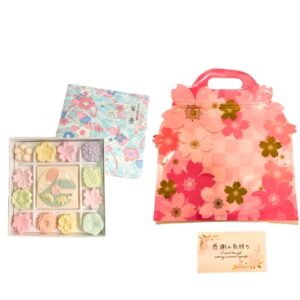
 Baikodo Wasanbon Higashi Pressed-Sugar Sweets (和三盆 干菓子, assorted)
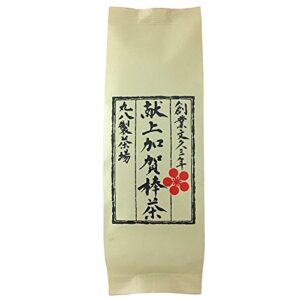
 Maruhachi Seichajo Kenjo Kaga Bocha (献上加賀棒茶, sealed bag/tin)
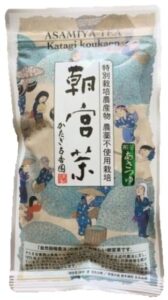
 Katagi Kokoen Asamiya-cha Sencha (朝宮茶 煎茶, sealed 100g loose-leaf)
🍵Suzuki Seicha Honkaku Ise Cha (鈴木製茶 本格伊勢茶, sealed bag)
 Hoshino Seichaen Yame Matcha (星野製茶園 八女抹茶, sealed 30–40g tin)
🍃Soejimaen Ureshino Kamairicha (嬉野茶 釜炒り茶, 80g) — Saga’s pan-fired green tea
Price snapshot across stores
| Store | Item / format | Price (JPY, USD estimate) | Notes |
|---|---|---|---|
| 🇺🇸 Amazon.com (US) | Browse Japanese senbei and rice crackers | varies (USD) | Best if you are shopping from the US — Prime shipping, USD pricing, no international customs. Amazon US carries Japanese crackers from other makers, useful for comparing texture and price tiers. Kutsuwado’s exact box ships from Japan (next row). |
| 🇯🇵 Amazon JP Global Store | 小瓦せんべい 9枚 (small, 9 pieces) | ¥1,877 (about $12.50 USD at current rates) | Sold by レイブリックス, in stock, condition new, as of 2026-11-19; verify on the listing. Ships internationally from Japan to 65+ countries — including Canada, the UK and Australia — with import fees estimated at checkout. |
| Maker direct (Soke Kutsuwado) | Medium crackers, paper boxes of 8 and 16 | Priced per box size — confirm with the maker | The two sizes the maker describes as its standard souvenir boxes. Domestic shipping; overseas delivery must be confirmed with the maker or through a proxy. |
| Proxy services (Buyee / Tenso) | Any Japanese domestic listing, consolidated | Item price plus service and forwarding fees | Useful when a seller will not ship abroad directly. Fees vary by weight and destination; consolidate to avoid paying forwarding twice. |
Prices in USD are approximate and depend on the current exchange rate. The yen figure is the authoritative one for the listed item; at ¥150 to the dollar, ¥1,877 works out to about $12.50 before shipping and any import charges.
📦 Shipping & where to buy from outside Japan
Amazon Japan’s Global Store ships to more than 65 countries — Canada, the UK and Australia included. For a boxed food item of this weight, shipping typically lands somewhere in the $15–$40 range depending on destination and speed, on top of the item price; Amazon estimates import fees at checkout for most destinations.
Two practical conditions apply to this product in particular. First, the listing is a third-party marketplace offer rather than the maker’s own storefront, so delivery availability and lead time are set by the seller and should be checked at checkout. Second, food is one category where destination rules are not uniform: some countries restrict or inspect particular food imports, and a cracker containing wheat, egg and sesame is still a food import. Check the destination’s rules separately rather than assuming the Amazon checkout covers everything.
What it does well
- 📦 Handling: keep the paper box flat and away from pressure; these are thin, hard-baked pieces that crack rather than bend.
- 🌡️ Shelf life: the maker lists 90 days from manufacture for the medium crackers — check the printed date on the box you receive, which may be shorter after transit.
- 🧾 Ingredients: the maker lists wheat, egg and sesame as allergens. Read the actual package label; the listing does not reproduce the full ingredient list.
- 🏠 Storage: follow the storage instructions printed on the package. A dry, cool cupboard keeps the cracker crisp; humidity softens it.
Weaknesses and things to verify before buying
- It breaks. A hard, thin cracker in a paper carton is the textbook casualty of international post. Expect some broken pieces unless the seller packs it well, and consider consolidating it with other items so it sits inside a larger, rigid parcel.
- Nine pieces at ¥1,877 is a considered purchase. That is roughly ¥209 per cracker before shipping. It reads as a souvenir price, not a snack price, and shipping can add more than the box costs.
- The seller is a marketplace seller, not the maker. The listing names レイブリックス, not Soke Kutsuwado. Stock, packing quality and dispatch time are that seller’s, so read the current offer rather than assuming continuity.
- Small box, medium-box facts. The 90-day best-by and the 8/16 packaging are stated for the medium crackers. The small box is a different item; confirm its own date, weight and wrapping.
- The allergen list is short but real. Wheat, egg and sesame rule this out for several common diets, and the package label is the only complete ingredient list.
- Narrow appeal by design. A dry, hard, lightly sweet cracker is a specific taste. Anyone expecting a soft wagashi or a buttery biscuit will be disappointed rather than pleasantly surprised.
- Food import rules are destination-specific. Delivery availability and any inspection requirements must be checked for the destination country, separately from the marketplace checkout.
Conclusion — which buyer type are you?
Other ways to approach this purchase
🏆 Editor’s Pick
- The smallest, simplest way to buy the real Takamatsu cracker: 9 pieces, one paper box, one listing.
- Baked singly on an iron plate and shaped after the castle’s edge tiles, per the maker’s account.
- Cheaper to commit to than the medium 16-piece box if you have not tasted kawara senbei before.
The listing describes a 9-piece small-size box made by 宗家くつわ堂 and sold by the marketplace seller レイブリックス. Packing and dispatch are the seller’s; ask about protective packing if the box is a gift.
❓ Frequently Asked Questions
Where can I buy Soke Kutsuwado kawara senbei outside Japan?
The most direct route is the Amazon JP Global Store listing for the 9-piece small box, which ships internationally. The maker’s own site lists the medium 8- and 16-piece boxes and is the better route if you want a larger gift box; overseas delivery from the maker needs to be confirmed, or handled through a proxy such as Buyee or Tenso.
Is the recommended box the 8- or 16-piece medium box?
No. The pick is the small box of 9 pieces — the listing title is 小瓦せんべい 9枚, with 小 meaning small. The 8- and 16-piece paper boxes the maker describes are the medium-size crackers, a different format sold through the maker rather than this listing.
How much does it cost?
¥1,877 for the 9-piece small box as of 2026-11-19, which is about $12.50 USD at current rates. That figure excludes shipping and any import fees. Verify the current price on the listing before ordering, since marketplace prices move.
How long does it keep?
The maker lists a best-by period of 90 days from manufacture for the medium crackers. The small box is a different item, so check the date printed on the package you receive — transit time eats into it, and the remaining shelf life may be shorter than 90 days on arrival.
Does it contain allergens?
The maker lists wheat, egg and sesame. The listing does not reproduce the full ingredient list, so read the package label and the current listing before buying for someone with a dietary restriction.
Will the crackers arrive broken?
Possibly. These are thin, hard-baked pieces in a paper box, with no rigid outer protection stated on the listing. Consolidating the order with other items, or asking the seller about protective packing, reduces the risk but does not remove it.
Is it a suitable gift?
It is sold as a souvenir confection — the box carries the words 銘菓 and お土産 — and the tile shape gives it a story worth telling. The paper carton is modest rather than luxurious, so it suits casual gift-giving better than a formal presentation.
jpmono.com is curated by a Japan-based editorial team, working out of Toyama in the Hokuriku region and Nara in Kansai, and is independent. We do not take payment from the makers we feature; income comes from affiliate links. We read maker specifications and source listings rather than testing every product ourselves.
This article was prepared with AI assistance for drafting and research organization; the selection, specifications and purchasing notes were reviewed by our editorial team. Product details are drawn from the maker’s published information and the marketplace listing as of the date shown.
Affiliate disclosure: jpmono.com may earn a commission on qualifying purchases made through links on this page, at no additional cost to you.