![Katagi Kokoen Asamiya-cha Sencha (朝宮茶 煎茶, sealed 100g loose-leaf bag) — Green Tea from Shiga’s Thousand-Year Asamiya Highlands [2026 Guide for International Readers]](https://jpmono.com/wp-content/uploads/2026/09/katagi-kokoen-asamiya-cha-sencha-where-to-buy-2026-featured.jpg)
- What it is: loose-leaf sencha (煎茶) — unshaded, steamed Japanese green tea, sold as whole leaf in a sealed foil bag, commonly around 100g.
- Made in: the Asamiya district of Shigaraki, Koka City, Shiga Prefecture — a highland tea area at roughly 400 meters, counted among Japan’s classic named tea districts.
- Price band: not captured in our data snapshot — the live Amazon listing is authoritative. Named-district single-origin sencha generally sits above supermarket blends.
- Best for: readers who already drink sencha and want a small-production named district rather than a national blend.
- Skip if: you want matcha, powdered tea, or teabags — this is whole leaf and needs a strainer or kyusu.
- Shipping: shelf-stable and feather-light; ships internationally from Amazon Japan — jump to our pick ↓
Asamiya sits at roughly 400 meters in the hills of Shigaraki, in the southern corner of Shiga Prefecture, and on most mornings cold mountain fog settles over the rows before the sun clears the ridge. That fog, and the wide gap between day and night temperature it signals, is the whole argument for the place. Tea grown slowly in thin highland air tastes different from tea grown fast on a warm coastal plain, and Asamiya’s growers have been making that argument for a very long time.
Local tradition traces the first plantings here to the early ninth century, when tea seeds carried back from Tang China were sown in the hills around Lake Biwa — the same period that produced Hiyoshi Chaen near Sakamoto, commonly described as Japan’s oldest surviving tea garden. Asamiya is still counted among Japan’s classic named tea districts alongside Uji, Sayama, Kawane, and Shizuoka. It stays almost invisible to visitors anyway, because total output is tiny and most of it is drunk inside Kansai without ever reaching a shipping carton.
Katagi Kokoen (かたぎ古香園) is a family grower working in Asamiya itself, cultivating and finishing its own leaf. This guide is for readers outside Japan who already drink green tea and want to move from a national blend to a named highland district: what the cup actually tastes like, how to brew it without scorching it, how to store it after the seal is broken, and how a sealed bag of dry leaf gets from Shiga to a kitchen in Toronto, Manchester, or Melbourne.
ℹ️ Live pricing and exact pack size were not in our snapshot — the linked listing is authoritative, and unconfirmed attributes are marked below. If the live listing shows a different Asamiya producer, trust the listing’s producer name over this article’s.
🔄 Last updated: September 16, 2026
⏱️ Read time: about 12 minutes

- Who this is for — and who should skip it
- Product overview (from published specs)
- 📍 Where this comes from — place, era, and the craft tradition
- What the cup is like — and how to brew it
- 📌 How does it compare?
- 📦 Shipping & where to buy from outside Japan
- Price snapshot across stores
- What it does well
- Weaknesses and things to verify before buying
- Conclusion — which buyer type are you?
- Other ways to approach this purchase
- 🏆 Editor’s Pick
- ❓ Frequently Asked Questions
Who this is for — and who should skip it
- Already drink loose-leaf sencha and own a kyusu, a strainer, or any basket infuser.
- Want a named small-production district rather than a nationally blended supermarket tea.
- Prefer a brisk, clean cup with a cool finish over the thick sweetness of shaded Uji teas.
- Are buying a Japanese food item to carry or ship abroad and want the least fragile possible format.
- Are assembling a Shigaraki-themed gift — the town’s pottery and its tea come from the same hills.
- Want matcha or powdered tea — this is whole leaf and will not whisk.
- Want teabags for an office drawer; there is no bagged format in this listing.
- Brew with boiling water straight from the kettle and do not intend to change that habit.
- Drink tea rarely — an opened bag is best finished within a few weeks, not a season.
- Need a roasted, low-astringency cup; a hōjicha or bōcha suits that palate better.
Product overview (from published specs)
| Attribute | Published value | Source |
|---|---|---|
| Product type | Sencha (煎茶) — unshaded, steamed green tea, whole leaf | Amazon JP Global Store (sourced listing) |
| Producer | Katagi Kokoen (かたぎ古香園), a family grower-processor in Asamiya | Amazon JP Global Store (sourced listing) |
| Origin | Asamiya district, Shigaraki, Koka City, Shiga Prefecture | Maker direct / listing label |
| Ingredients | Green tea leaves only | Amazon JP Global Store (sourced listing) |
| Pack format | Sealed foil/laminate bag, commonly around 100g — verify the exact gram count on the live listing | Amazon JP Global Store (sourced listing) |
| ASIN | B0FWC2V14Y | Amazon JP Global Store (sourced listing) |
| Storage | Room temperature, sealed, away from light, heat, moisture, and strong odors | Amazon JP Global Store (sourced listing) |
| Best-by | Printed on the bag; unopened bags typically run several months to about a year | Amazon JP Global Store (sourced listing) |
| Cultivation method | Unconfirmed — read the producer’s wording on the live listing and take it exactly as written | — |
| Price | Not captured in our snapshot — see the live listing | — |
Two of those rows are deliberately blank. Our fetch returned no live price and no cultivation wording, and the rule in this shop is that an unconfirmed attribute stays unconfirmed. The rest — origin district, producer, single-ingredient leaf, sealed bag — is what the listing and the maker’s own labeling state.
📖 Glossary — Japanese tea terms used in this guide
- sencha (煎茶) — Japan’s everyday green tea: leaf grown in full sun, steamed shortly after picking to stop oxidation, then rolled and dried. The default cup in a Japanese home.
- Asamiya-cha (朝宮茶) — tea grown in the Asamiya district of Shigaraki, Shiga Prefecture. A place name, not a processing style.
- kyusu (急須) — the side-handled Japanese teapot, usually with a built-in mesh or clay filter sized for fine sencha leaf.
- yuzamashi (湯冷まし) — a wide, open vessel used to cool boiled water before it touches the leaf. Pouring water between two cups does the same job.
- fukamushi (深蒸し) — “deep-steamed”: leaf steamed two to three times longer, producing a cloudier, softer, thicker cup. Standard sencha is futsūmushi, steamed the normal length.
- ichiban-cha (一番茶) — first flush, the spring picking. Later pickings through the season are niban-cha, sanban-cha.
- Shigaraki-yaki (信楽焼) — the pottery of the same town, and the reason most non-Japanese readers have heard of Shigaraki at all.
📍 Where this comes from — place, era, and the craft tradition

Shiga Prefecture is, to a first approximation, a lake with a rim of mountains around it. Lake Biwa fills the center; the tea is not on the lake. Asamiya sits up in the southern hills, in Shigaraki, part of Koka City, on a plateau at around 400 meters where cold air pools overnight and burns off late. Growers in highland districts everywhere say the same thing about this kind of site: the plant grows slowly, the leaf stays thin, and the flavor concentrates rather than bulks up. It also means a shorter season and a smaller harvest, which is the other half of why almost nobody outside Kansai has tasted it.
Local tradition puts tea in these hills from the early ninth century, when seeds carried back from Tang China were sown around Lake Biwa. Hiyoshi Chaen at Sakamoto, on the lake’s western shore, comes from the same tradition and is commonly described as Japan’s oldest surviving tea garden. These are traditional attributions rather than documented plantings, and they should be read that way — but the continuity of the claim itself is the point. Asamiya has been on the list of Japan’s named tea districts for a very long time, alongside Uji, Shizuoka, Sayama, and Kawane.
- 710–794 — Nara is Japan’s capital. The Kansai basin, including the country west and south of Lake Biwa, is the political and religious center of the state.
- 794 — The capital moves to Heian-kyō (Kyoto), a short journey west of the Shigaraki hills. The Heian period begins.
- Early 9th century — By local tradition, tea seeds brought back from Tang China are sown in the hills around Lake Biwa — the plantings from which Asamiya-cha is descended.
- Same period — Hiyoshi Chaen is established at Sakamoto on Lake Biwa’s west shore; it is commonly cited as Japan’s oldest surviving tea garden.
- 1185 — The Heian period ends. Tea in Japan has by now shifted from an imported court curiosity toward domestic cultivation.
- Modern era — Asamiya settles into the conventional list of Japan’s classic named tea districts, while Shigaraki’s international fame goes almost entirely to its pottery.
- 2026 — Katagi Kokoen, a family grower in Asamiya, still cultivates and finishes its own leaf, and sells it in sealed bags that reach international buyers through Amazon Japan.
“Shigaraki is a town the world knows for its clay. The same hills have been growing tea since the century the capital moved to Kyoto — and almost none of it leaves Kansai.”
That pottery connection is worth holding onto, because it is the one handle most international readers already have on this place. Shigaraki-yaki is the coarse, wood-fired, iron-flecked stoneware of the Japanese Six Ancient Kilns, and the raccoon-dog tanuki figures that stand outside restaurants across Japan are made here. Visitors come for the kilns, buy a cup, and drive home past tea rows without registering them. The clay and the leaf come out of the same geology and the same weather.
Katagi Kokoen works at the small end of a small district: a family operation that both grows and finishes, which in Japanese tea means the leaf is not sold off in bulk to a blending house that stamps another name on it. What you get in the bag came off rows the same family manages. Where the producer describes its cultivation practice on the listing, take that description literally and do not read anything further into it — this article deliberately does not upgrade a growing method into a promise about the cup.
The output is genuinely tiny, which is why Asamiya is a name a Kyoto tea shop knows and a London tea shop generally does not.
What the cup is like — and how to brew it
The brewing guidance for this style is unusually strict, and it is the single thing that decides whether a good bag of sencha tastes good in your kitchen. Roughly 3g of leaf per cup. Water cooled to about 70–80°C — not boiling. About 60 seconds for the first infusion, shorter for the second. Boiling water pulls hard astringency forward and flattens everything else.
If you do not own a thermometer, pour the boiled water into a second cup and let it stand a minute; each transfer drops it roughly ten degrees. That is what a yuzamashi does, and it is why one exists.
- 🌡️ Water temperature: about 70–80°C. Boiling water makes the cup harsh.
- ⏱️ Steeping: roughly 60 seconds for the first infusion, shorter for the second.
- 📦 Unopened: keep at room temperature until the printed best-by date — typically several months to about a year.
- 🔒 After opening: reseal tightly, keep away from light, heat, and moisture, and use within a few weeks for best flavor.
- 👃 Odor: tea leaf absorbs ambient smells, so an airtight caddy away from spices and coffee is the standard advice.
📌 How does it compare?
Other Japanese teas and one Shigaraki tea bowl we have covered — useful for placing Asamiya-cha against roasted, shaded, and deep-steamed alternatives.
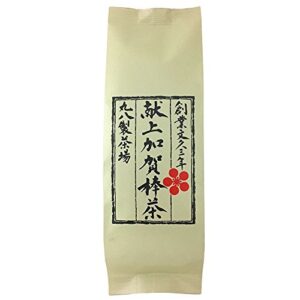
 Maruhachi Seichajo Kenjo Kaga Bocha (献上加賀棒茶, sealed bag/tin)
 Hoshino Seichaen Yame Matcha (星野製茶園 八女抹茶, sealed 30–40g tin)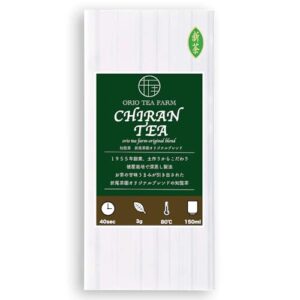
 Chiran-cha Deep-Steamed Sencha (知覧茶 深蒸し煎茶, sealed 100g bag)
 Ooigawa Chaen Fukamushi Sencha (大井川茶園 深蒸し煎茶, sealed foil bag)
🍵Kenichi Shizen Noen Yamato-cha Sencha (健一自然農園 大和茶 煎茶, sealed bag)
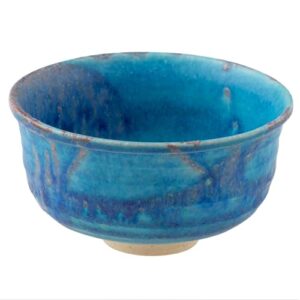
 Shigaraki-yaki Matcha Chawan: Wabi-Sabi Tea Bowl from Shiga
The Shigaraki tea bowl is the obvious pairing here: same town, same hills, same clay. The Yamato-cha guide is the closest comparison in spirit — another small Kansai named district, from Nara rather than Shiga.
📦 Shipping & where to buy from outside Japan
Dry sealed tea is close to the ideal Japanese food item to ship. It is light, shelf-stable at room temperature, has no liquid, no glass, and nothing to crush. The bag that leaves Shigaraki is the bag that arrives.
Amazon Japan’s Global Store ships to 65+ countries, including Canada, the UK, and Australia, with import fees estimated and usually collected at checkout. Shipping for a small parcel like this typically runs in the $15–$40 range to North America, Europe, and Oceania — frequently more than the tea itself, which is the honest arithmetic on a single 100g bag.
Two things to confirm at checkout rather than assume. First, food items are not eligible for AmazonGlobal International Shipping to every destination — the eligibility check happens when you enter your address, so verify before you plan around it. Second, several countries limit or scrutinize personal food imports; ordering one or two bags for personal use is the intended scale here, not a case.
If the listing turns out not to ship to your country, a proxy forwarder (Buyee or Tenso) can take delivery inside Japan and re-ship. That adds a fee and a second customs declaration, and it does not override your country’s food import rules — check those first.
Price snapshot across stores
| Store | Item / variant | Price | Notes |
|---|---|---|---|
| 🇺🇸 Amazon.com (US) | Browse Japanese loose-leaf green tea | varies (USD) | Best if you are shopping from the US — Prime shipping, USD pricing, no international customs. Amazon US carries sencha, gyokuro, hōjicha, and genmaicha from a range of Japanese producers, useful for comparing grades and pack sizes. Katagi Kokoen’s Asamiya leaf itself ships from Japan (next row). |
| 🇯🇵 Amazon JP Global Store | Katagi Kokoen Asamiya-cha sencha, sealed bag (ASIN B0FWC2V14Y) | Not captured in our snapshot — see live listing | Ships internationally from Japan to 65+ countries — including Canada, the UK, and Australia — with import fees estimated at checkout. This is the sourced listing for the exact tea covered here; confirm gram count and food-shipping eligibility for your address. |
| Maker direct | Katagi Kokoen’s own sales channels | Unconfirmed — check maker site | Small family producers frequently sell domestically only, and Japanese-only checkout with a Japan-only address is common. Not verified in our snapshot. |
| Proxy services (Buyee / Tenso) | Any Japanese-domestic listing, forwarded | Item price + service fee + re-shipping | A route if Global Store will not ship food to your country. Adds cost and a second customs step, and does not change your country’s food import rules. |
Prices and stock fluctuate; the linked listings are authoritative at the moment you read them. Where a JPY price appears in our data, JPY is the authoritative figure and any USD number alongside it is an estimate at a ¥150/USD baseline. For this article, no live price was captured.
What it does well
Weaknesses and things to verify before buying
- No live price in our snapshot. Our fetch returned no pricing data at all for this listing, so this guide states none. Check the live listing before deciding — and remember international shipping on a single bag can approach or exceed the tea’s own cost.
- Pack size is “commonly around 100g,” not confirmed. Japanese tea is sold in 80g, 100g, and 200g bags depending on the producer and grade. Read the gram count on the listing rather than assuming.
- It punishes careless brewing. Boiling water makes this style harsh. If you brew straight from a kettle at a rolling boil and do not want to change that, a roasted tea like bōcha is far more forgiving.
- Short useful window after opening. An unopened bag holds to its printed best-by date, but once the seal is broken the advice is a few weeks for best flavor. A slow drinker will watch the last third go flat.
- Tea leaf absorbs smells. Stored in an open cupboard next to coffee, spices, or anything aromatic, it picks them up. An airtight caddy is not optional fussiness here.
- Food shipping eligibility is per-country and per-listing. Global Store does not send every food item to every destination, and your own country may restrict personal food imports. Confirm at checkout, before you plan a gift around it.
- Producer identity on the live listing may differ. Asamiya has several growers. If the listing you land on names a different Asamiya producer, go by the listing — do not assume Katagi Kokoen.
- Cultivation wording is unconfirmed here. Read whatever the producer states on the listing exactly as written; this article deliberately makes no claims about growing method or its effects.
Conclusion — which buyer type are you?
Other ways to approach this purchase
🏆 Editor’s Pick
❓ Frequently Asked Questions
Can I get this shipped outside Japan?
Usually yes, through Amazon Japan’s Global Store, which ships to 65+ countries including Canada, the UK, and Australia, with import fees estimated at checkout. Food items aren’t eligible for every destination, though, so enter your address and confirm eligibility before planning around it. If it isn’t available to you, a proxy forwarder such as Buyee or Tenso is the alternate route — at extra cost, and subject to your country’s own food import rules.
What water temperature should I use?
About 70–80°C, not boiling. Standard guidance for this style is roughly 3g of leaf per cup, steeped about 60 seconds for the first infusion and shorter for the second. Boiling water pushes hard astringency forward and flattens the cup. Without a thermometer, pour the boiled water through a second cup and let it stand about a minute — each transfer drops it roughly ten degrees.
How long does it keep, and how should I store it?
An unopened sealed bag keeps at room temperature to its printed best-by date, typically several months to about a year. Once opened, reseal it tightly, keep it away from light, heat, and moisture, and use it within a few weeks for best flavor. Tea leaf absorbs ambient smells, so an airtight caddy away from coffee and spices is the usual advice.
How is Asamiya-cha different from Uji or Shizuoka tea?
Asamiya is a highland district at roughly 400 meters with wide day-to-night temperature swings and morning fog, and its output is very small — most of it is consumed within Kansai. The resulting sencha is described as tightly rolled dark leaf giving a clear, pale gold-green cup with gentle astringency and a long, cool finish, rather than the thick sweetness typical of shaded Uji teas. Asamiya is conventionally listed alongside Uji, Shizuoka, Sayama, and Kawane as one of Japan’s classic named districts.
Is this matcha, or can I make matcha with it?
No. This is sencha — unshaded, steamed, whole leaf that you steep and strain. Matcha is shaded leaf stone-ground to powder and whisked into the water rather than strained out. You can’t substitute one for the other, and grinding sencha at home won’t produce matcha. If powdered tea is what you want, a sealed matcha tin is the product to look for.
Does Shigaraki’s pottery have anything to do with its tea?
They come from the same hills and the same weather, which is the real connection. Shigaraki is internationally known for Shigaraki-yaki stoneware — including the tanuki figures seen outside restaurants across Japan — while its tea side stays largely unknown abroad. Pairing a bag of Asamiya-cha with a Shigaraki-yaki bowl makes a gift that tells one coherent story about one small place.
Why doesn’t this article list a price?
Our data snapshot for this listing returned no pricing information, and we don’t publish figures we haven’t verified. The linked Amazon listing is authoritative for both price and pack size. Where we do quote prices for Japan-sourced items, the JPY figure is the authoritative one and any USD amount alongside it is an estimate at a ¥150/USD baseline.
jpmono.com is a Japan-based curation site, with editorial centers in Toyama (Hokuriku region) and Nara (Kansai region), introducing Japanese household objects and regional foods to international readers. We focus on items with verifiable regional provenance and a clear international shipping path. We do not physically test every product — we read maker specifications and source listings — and affiliate links support the editorial work. We take no payment from the makers we feature.
This article was prepared with AI assistance under human editorial review. Product attributes are drawn from published listings and maker information; unconfirmed attributes are marked as such rather than estimated. Nothing here is health, dietary, or customs advice — check your own country’s food import rules before ordering.
Affiliate disclosure: jpmono.com may earn a commission on qualifying purchases made through links on this page, at no additional cost to you.