![Aizu Brass Candle Stand (Shokudai) — Tohoku Metal Craft Guide [2026]](https://jpmono.com/wp-content/uploads/2026/05/japan-map-regions-and-prefectures-800x1050.png)
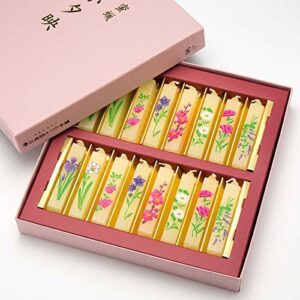
A shokudai (燭台, “candle stand”) is one of the quietest objects in a Japanese home, and one of the oldest. This one is hand-finished brass from Aizu-Wakamatsu, a castle town in the mountains of Fukushima Prefecture, in the Tōhoku region of northern Japan. It is built to do a single thing well: hold a candle upright and catch the wax. What makes it specific to Aizu is the candle it expects — e-rōsoku (絵蝋燭, “painted candles”), the hand-decorated wax tapers for which the town has been known for centuries.
Aizu is not famous, internationally, for metal. Its headline crafts are lacquerware (Aizu-nuri), those painted candles, and Aizu-Hongō pottery. The brass shokudai sits one layer below those — a secondary metal good that grew out of the same workshops that cast and finished kazari-kanagu (飾り金具, “decorative metal fittings”) for Buddhist altars and lacquered furniture. That lineage is the honest frame for the craft as a whole: not a thousand-year-old named craft of its own, but the metalworking root that the altar-and-candle economy of Aizu kept alive.
This guide explains the role of an Aizu brass shokudai, who may appreciate its form, how it relates to Tōhoku metalwork, and practical considerations for using one outside Japan. Where details vary among makers, we avoid assumptions.
🔄 Updated:
⏱️ Read time: ~10 min
- Who this is for — and who should skip it
- Product overview (from published specs)
- 📍 Where this comes from — place, era, and the craft tradition
- Price information
- What it does well
- Weaknesses and things to verify before buying
- Conclusion — which buyer type are you?
- Other ways to approach this purchase
- ❓ Frequently Asked Questions
Who this is for — and who should skip it
- Already own — or plan to buy — Aizu painted candles and want the matching stand.
- Want a small, warm-toned brass object for a Buddhist altar (butsudan), a tokonoma alcove, or a quiet table setting.
- Appreciate hand-finished metal that develops a patina rather than staying mirror-bright.
- Are assembling a coherent Tōhoku or Japanese-craft shelf and want a metal piece with a real regional story.
- Prefer a candle stand built around the Japanese taper diameter rather than Western dinner candles.
- Need a candelabra or multi-arm stand — this is a single, modest holder.
- Want a guaranteed fit for standard Western taper or tea-light candles without checking the cup diameter first.
- Expect a named, METI-designated metal craft — Aizu’s designated crafts are lacquer, candles, and pottery, not this brass.
- Dislike polishing; brass needs occasional care or it dulls.
Product overview (from published specs)
Aizu brass shokudai is a small metalwork form; dimensions, finish, and price vary by maker and edition. The notes below distinguish established features of the craft from details that need confirmation before purchase.
| Attribute | Detail | Source |
|---|---|---|
| Item | Aizu brass candle stand (shokudai), hand-finished | Amazon JP Global Store |
| Material | Brass (shinchū, 真鍮) — copper-zinc alloy | Amazon JP Global Store |
| Origin | Aizu-Wakamatsu, Fukushima, Tōhoku | Maker / regional attribution |
| Intended candle | Sized for Aizu e-rōsoku painted tapers | General description |
| Dimensions / weight | Not confirmed | — |
| Price | Not stated | — |
International buyers can compare Japanese home goods through broad US-facing searches, Japanese retail channels, or maker-direct and proxy services. Availability and shipping vary by destination.
📖 Glossary — key terms
- Shokudai (燭台, “candle stand”) — a single upright holder that seats a candle and catches dripping wax; standard altar and tokonoma furniture.
- E-rōsoku (絵蝋燭, “painted candles”) — hand-decorated wax tapers, an Aizu signature, painted with seasonal flowers; used where fresh flowers were scarce in the snow-country winter.
- Shinchū (真鍮, “brass”) — a copper-zinc alloy valued for its warm gold tone and workability; common in altar fittings and small ware.
- Kazari-kanagu (飾り金具, “decorative metal fittings”) — ornamental brass and iron fittings for Buddhist altars, chests, and lacquered furniture; the trade that seeded Aizu’s metal finishing.
- Butsudan (仏壇) — a household Buddhist altar; the everyday setting where a shokudai and a candle are used together.
- Aizu-nuri (会津塗) — Aizu lacquerware, the town’s best-known craft and the economic neighbor of its metal-fitting work.
📍 Where this comes from — place, era, and the craft tradition

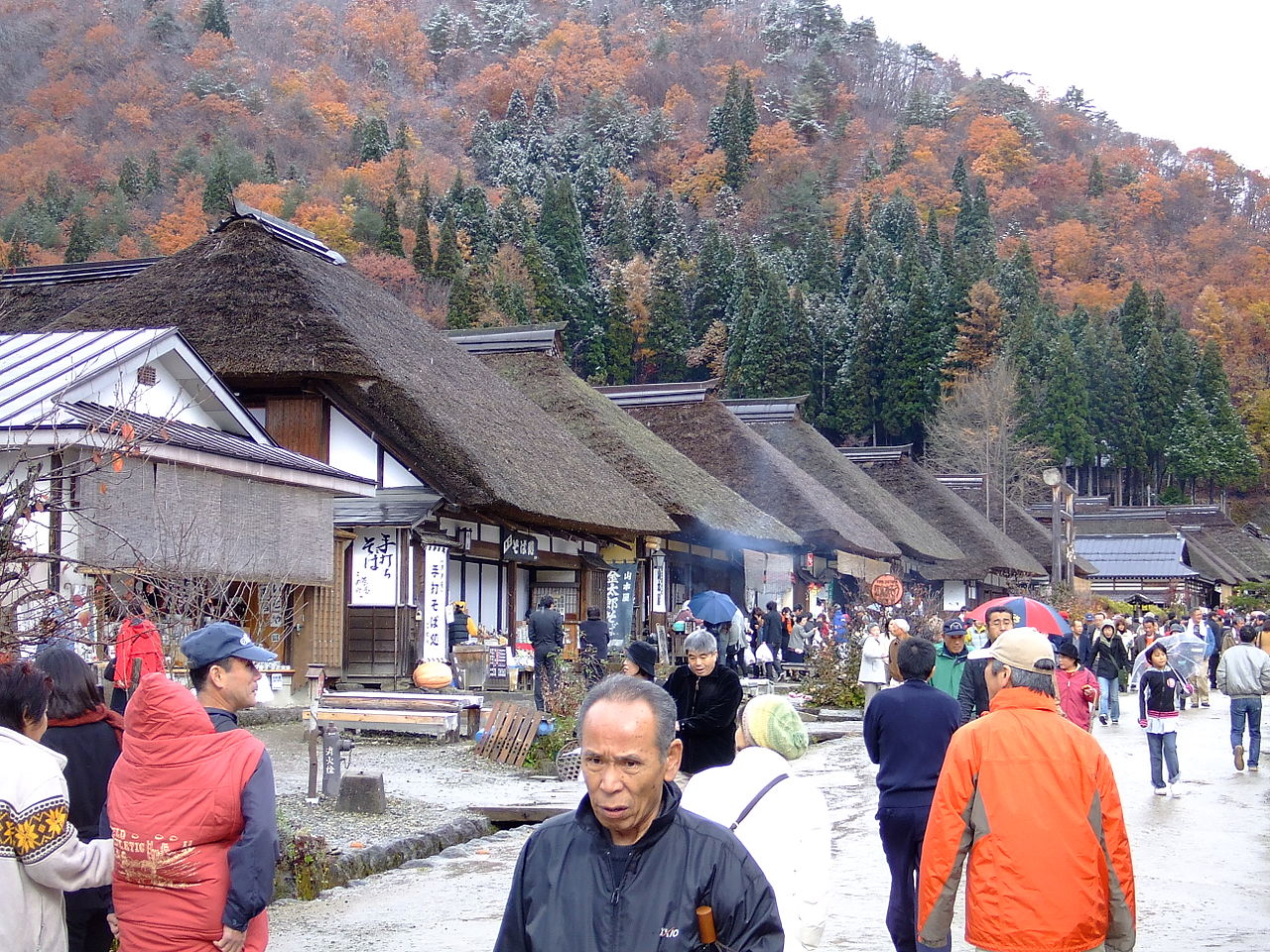
Aizu-Wakamatsu sits in a high inland basin in the western part of Fukushima Prefecture, walled off from the Pacific coast by mountains and from the Sea of Japan by more mountains. It is snow country: long, white winters that historically cut the basin off from easy trade and pushed its economy toward goods that could be made indoors through the cold months — lacquerware, painted candles, sake, and the metalwork that dressed altars and furniture. The basin’s clay fed the Aizu-Hongō pottery kilns; its forests and lacquer trees fed the Aizu-nuri workshops.
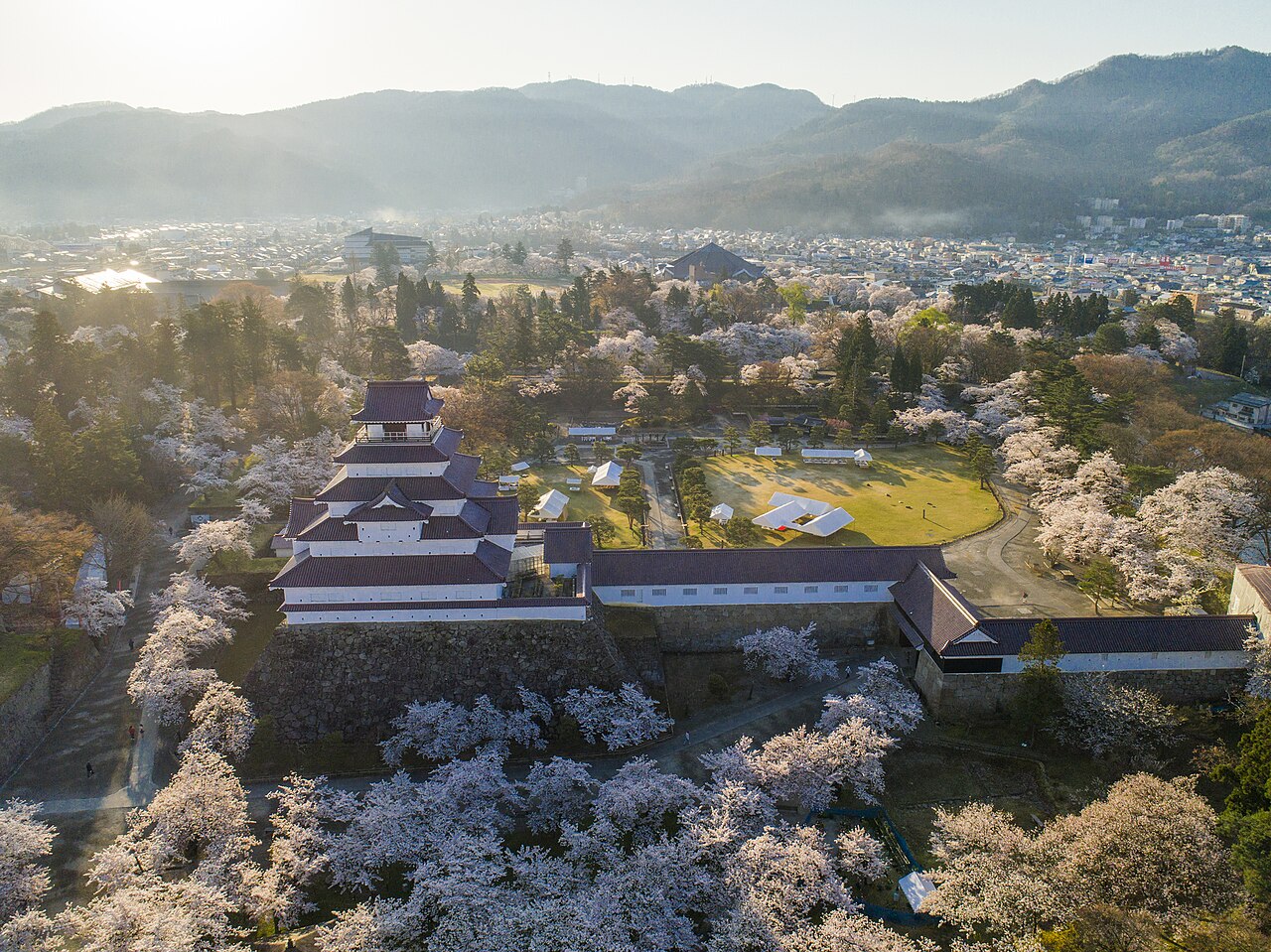
The town grew up around its castle. A fortress stood here from the late fourteenth century under the Ashina clan; in the 1590s the warlord-administrator Gamō Ujisato rebuilt it as Tsuruga Castle and deliberately promoted craft — lacquer and candle-making among them — as domain industry. In 1643 Hoshina Masayuki, a half-brother of the Tokugawa shōgun, was installed as lord, and Aizu became a loyal, fudai-aligned domain guarding the northern approaches to the Tokugawa heartland. For two centuries the castle town concentrated artisans: lacquerers, candle painters, potters, and the metal finishers who supplied kazari-kanagu fittings for the Buddhist altars those crafts surrounded.
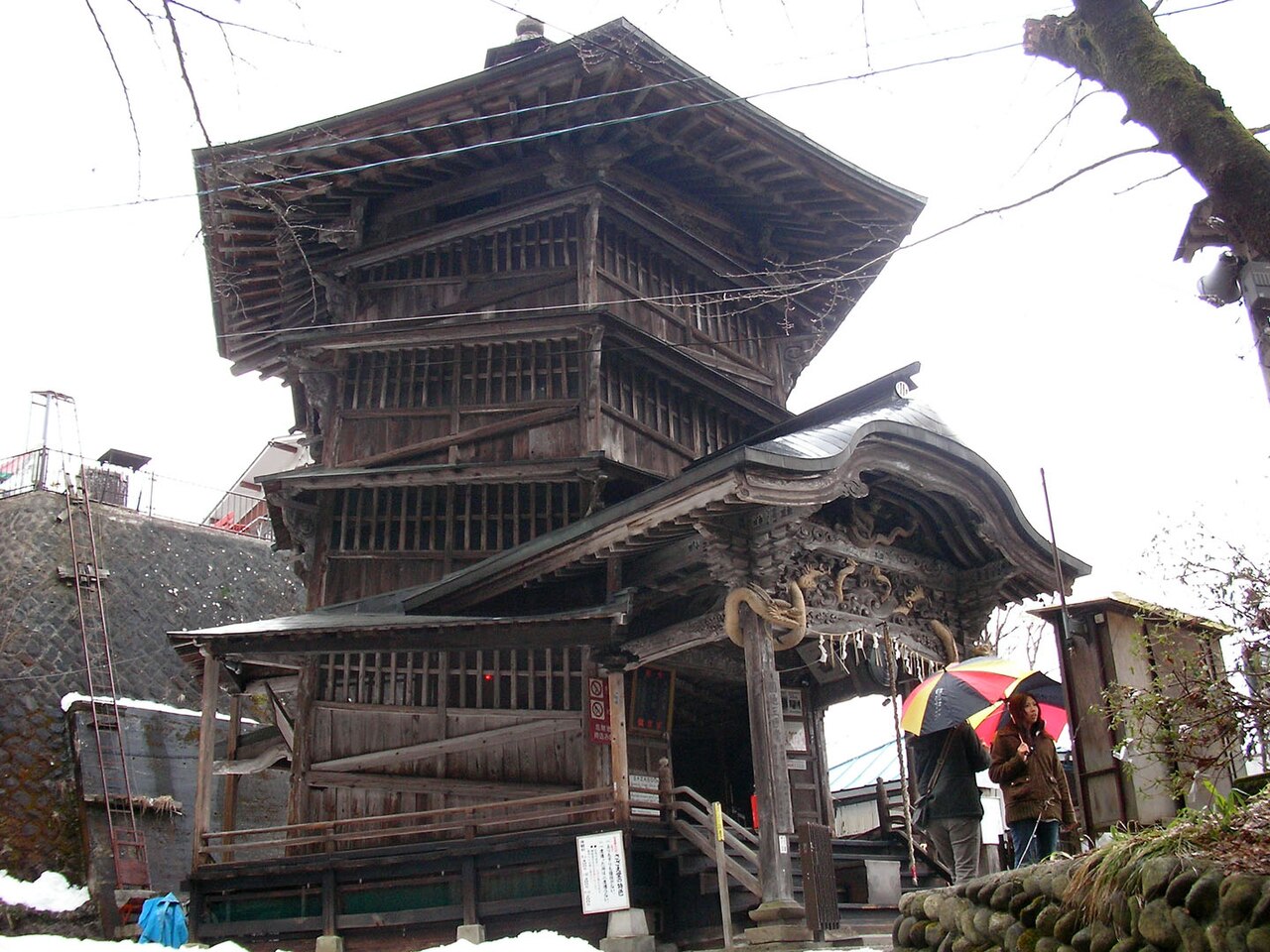
That Buddhist economy is the key to the candle stand. A temple town and a domain full of household altars need candles, candle stands, incense vessels, and the brass fittings that ornament an altar’s woodwork. Aizu’s painted candles answered the first need; its lacquer answered the cabinetry; and its metal finishers — the people who could cut, file, and polish brass into fittings — answered the rest. A brass shokudai is the everyday product of that skill set, sized to the local taper rather than to anything imported.
“In a snow-country castle town, the candle was not decoration — it was the flower that did not wilt, and the brass stand was the vase that held it.”
- 1384 — The Ashina clan establishes the castle (Kurokawa) that will become Tsuruga.
- 1590s — Gamō Ujisato rebuilds Tsuruga Castle and promotes lacquer and candle crafts as domain industry.
- 1643 — Hoshina Masayuki founds the Tokugawa-aligned Aizu domain guarding the north.
- 1700s — Painted candles, lacquerware, and altar metal-fitting work flourish under domain patronage.
- 1796 — Sazaedo, the double-helix temple, is built on Iimoriyama.
- 1868 — The Boshin War: Tsuruga Castle is besieged and the Byakkotai die on Iimoriyama.
- 1965 — The Tsuruga Castle keep is reconstructed; Aizu’s craft tradition continues as living industry.
- 2026 — Aizu lacquer, painted candles, Hongō pottery, and brass altar goods are still made in the city.
It is worth being precise about what this object is and is not. Aizu’s nationally recognized crafts are its lacquerware, its painted candles, and its Hongō pottery. The brass shokudai is not a separately designated craft with its own master-apprentice canon; it is a secondary metal good that survives because the altar-and-candle culture around it survives. Read it as the companion piece to a named tradition rather than as a headline craft in its own right. That framing is more accurate — and, for a buyer, more useful — than dressing it up as something it is not.
Related guides on jpmono.com — the candle this stand holds, and the other Tōhoku and Japanese metalwork and lacquer it sits beside.
Price information
Aizu brass shokudai prices and specifications can vary by workshop and finish. JPY is the usual reference for Japanese craft goods, while any USD conversion is only an approximate exchange-rate guide.
| Store | Item / variant | Price (JPY + USD est.) | Notes |
|---|---|---|---|
| 🇺🇸 Amazon US (search) | Browse Japanese brass candle stands & altar goods | varies (USD) | Best if you are shopping from the US — Prime shipping, USD pricing, no international customs. Amazon US carries comparable Japanese brass and altar home goods; the exact Aizu piece ships from Japan (next row). |
| 🇯🇵 Amazon JP Global Store | Aizu brass shokudai | Not stated | International shipping from Japan may involve customs or duties. |
| Maker direct | Aizu brass shokudai | — | A specific maker is not confirmed in the data; if you can identify the Aizu workshop, direct purchase may be possible but typically domestic-only. |
| Proxy services (Buyee / Tenso) | Forwarded from Japan | Forwarding fee may apply | Useful if a JP-only seller does not ship abroad; adds a service fee and a second shipping leg. |
What it does well
Weaknesses and things to verify before buying
- Candle-diameter fit. It is built around the Japanese taper. If you intend to burn Western dinner candles or tea-lights, check the cup diameter first — it may not fit.
- Brass needs care. Brass tarnishes and dulls without occasional polishing. If you want a forever-bright finish with zero maintenance, this is not it.
- Not a designated headline craft. Aizu’s recognized crafts are lacquer, painted candles, and Hongō pottery; the brass shokudai is a secondary metal good. Buy it for the object and lineage, not for a certification it does not carry.
- Single holder, not a candelabra. This is one modest stand. If you need a multi-arm or paired set, look elsewhere.
- Cross-border logistics. International shipping, customs duties over local thresholds, and possible proxy fees can add meaningfully to a small item’s landed cost.
- Maker not individually confirmed.
Conclusion — which buyer type are you?
Other ways to approach this purchase
❓ Frequently Asked Questions
What is a shokudai, and what makes the Aizu one specific?
A shokudai is a single upright candle stand that holds a taper and catches the wax. The Aizu version is brass and hand-finished, and it is sized for the town’s painted e-rōsoku tapers rather than for Western dinner candles, which is why it pairs naturally with Aizu candles.
Does it ship internationally?
Japanese craft retailers generally ship internationally to most major destinations, with Amazon JP Global Store as a common path. Customs duties may apply over local thresholds. If a JP-only seller will not ship to you, a proxy service such as Buyee or Tenso can forward it for a fee.
Will it fit a standard Western candle?
Japanese tapers and Western dinner candles can differ in diameter, so check the candle cup against the candle you intend to use. A tea-light may also require a different holder.
How do I care for the brass?
Brass develops a patina and can dull over time. A periodic wipe with a brass polish restores the warm gold tone; some owners prefer to let it darken naturally. Either way, keep it dry and remove wax buildup gently.
Is this a designated traditional craft?
No. Aizu’s nationally recognized crafts are its lacquerware, painted candles, and Hongō pottery. The brass shokudai is a secondary metal good that comes out of Aizu’s altar-fitting (kazari-kanagu) metalwork tradition. We frame it that way honestly rather than implying a designation it does not hold.
Why is the price not listed here?
Prices for Aizu brass shokudai vary with size, finish, and workmanship. Compare current offers when shopping, and treat any USD conversion as approximate.
What pairs well with it?
Aizu painted candles are the natural companion. If you are building a Tōhoku metal-and-lacquer shelf, it also sits comfortably beside Nambu cast iron, Tsugaru lacquer, and Hirosaki kogin textiles — all covered in the related guides above.
jpmono.com is curated by a Japan-based editorial team (working out of Toyama in the Hokuriku region and Nara in Kansai) and is independent. We do not take payment from the makers we feature; income comes from affiliate links. We do not physically test every product — we read maker specifications and published craft information, and say so when details are limited.
Affiliate disclosure: jpmono.com may earn a commission on qualifying purchases made through links on this page, at no additional cost to you.