![Sendai Hand-Forged Kiritsuke Knife: Date Masamune Blade Legacy [2026]](https://jpmono.com/wp-content/uploads/2026/05/japan-map-regions-and-prefectures-800x1050.png)
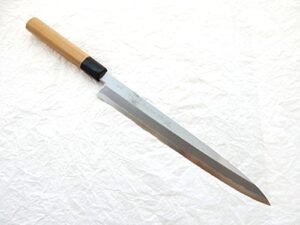
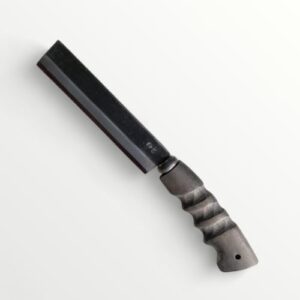
A kiritsuke (切付け) is the Japanese kitchen knife that looks most like a sword. Its blade runs straight along the spine, then drops to the edge in an angled, reverse-tanto tip — the same clipped sword profile a swordsmith would recognize at a glance. The Sendai hand-forged version covered here carries that resemblance honestly, because the city’s blade tradition descends directly from the Kunikane swordsmiths whom Date Masamune drew to his new castle town in the early 1600s.
This is a san-mai (三枚, “three-layer”) knife: a hard, high-carbon cutting core — blue or white steel — jacketed on both sides in softer iron. That construction is the kitchen-blade heir of the way Japanese swords were built, a brittle-but-keen core protected by a forgiving body. After the Meiji sword ban removed the swordsmiths’ original market, many Tōhoku smiths turned exactly this skill toward knives. The kiritsuke’s sword tip is the most literal surviving echo of that lineage.
This guide introduces Sendai hand-forged kiritsuke knives, the Date-domain history associated with the region, their kitchen uses, care needs, international shipping realities, and the strengths and caveats that matter to overseas buyers.
🔄 Updated:
⏱️ Read time: ~11 min
- Who this is for — and who should skip it
- Product overview (from published specs)
- 📍 Where this comes from — Sendai, the Date domain, and the Kunikane swordsmiths
- 📦 Shipping & where to buy from outside Japan
- Buying considerations
- What it does well
- Weaknesses and things to verify before buying
- Conclusion — which buyer type are you?
- Other ways to approach this purchase
- ❓ Frequently Asked Questions
Who this is for — and who should skip it
- Want a single-bevel-style profile for precise push-cuts, vegetable work, and clean slicing
- Are willing to dry and oil a carbon-steel blade after every use
- Value a knife whose lineage is documented — a Date-domain swordsmith tradition, not generic “Japanese style” branding
- Already sharpen on whetstones, or want to learn
- Prefer a hand-forged san-mai blade over a stamped stainless one
- Want a dishwasher-safe, maintenance-free stainless knife
- Dislike the patina and occasional reactivity that carbon steel develops
- Need an all-rounder and have never used a kiritsuke profile (the tall, flat blade has a learning curve)
- Will not hand-dry the blade immediately — carbon steel rusts if left wet
- Are shopping purely on lowest price; a hand-forged blade carries an artisan premium
Product overview (from published specs)
Published descriptions of Sendai hand-forged kiritsuke knives are often thin and can change between makers. The table reflects general features of the Sendai uchihamono tradition; values not confirmed in the craft descriptions are marked rather than guessed.
| Attribute | Details |
|---|---|
| Type | Kiritsuke (切付け) — sword-tip chef’s knife profile |
| Construction | San-mai (三枚) — high-carbon core clad in softer iron |
| Core steel | Carbon steel (blue / white steel — aogami / shirogami class) |
| Forging | Hand-forged (uchihamono) |
| Origin | Sendai, Miyagi Prefecture, Tōhoku region, Japan |
| Blade length / weight | Varies by maker |
International buyers may compare retailers and maker-direct channels. Specifications absent from the available craft descriptions are marked “Unconfirmed” rather than estimated.
📖 Glossary — key terms
- Kiritsuke (切付け) — a chef’s knife with a straight spine and an angled, clipped “sword tip”; historically a hybrid of the usuba (vegetable) and yanagiba (slicer) shapes.
- San-mai (三枚, “three sheets”) — a laminated blade: a hard cutting core sandwiched between two layers of softer iron or steel.
- Aogami / shirogami (青紙 / 白紙, “blue paper / white paper”) — Hitachi-brand carbon tool steels named for the paper wrapping their billets; prized for taking a very fine edge.
- Uchihamono (打刃物) — hand-forged bladeware, as opposed to stamped or machine-pressed blades.
- Kunikane (国包) — the swordsmith school founded in Sendai under Date patronage; its founder held the honorary title Yamashiro-no-Daijō Fujiwara Kunikane.
- Haitōrei (廃刀令) — the 1876 Meiji edict abolishing the wearing of swords, which pushed many smiths toward tools and kitchen blades.
Related jpmono guides — other Miyagi crafts, sword-smith heritage, and hand-forged knife families to compare against the Sendai kiritsuke.
📍 Where this comes from — Sendai, the Date domain, and the Kunikane swordsmiths

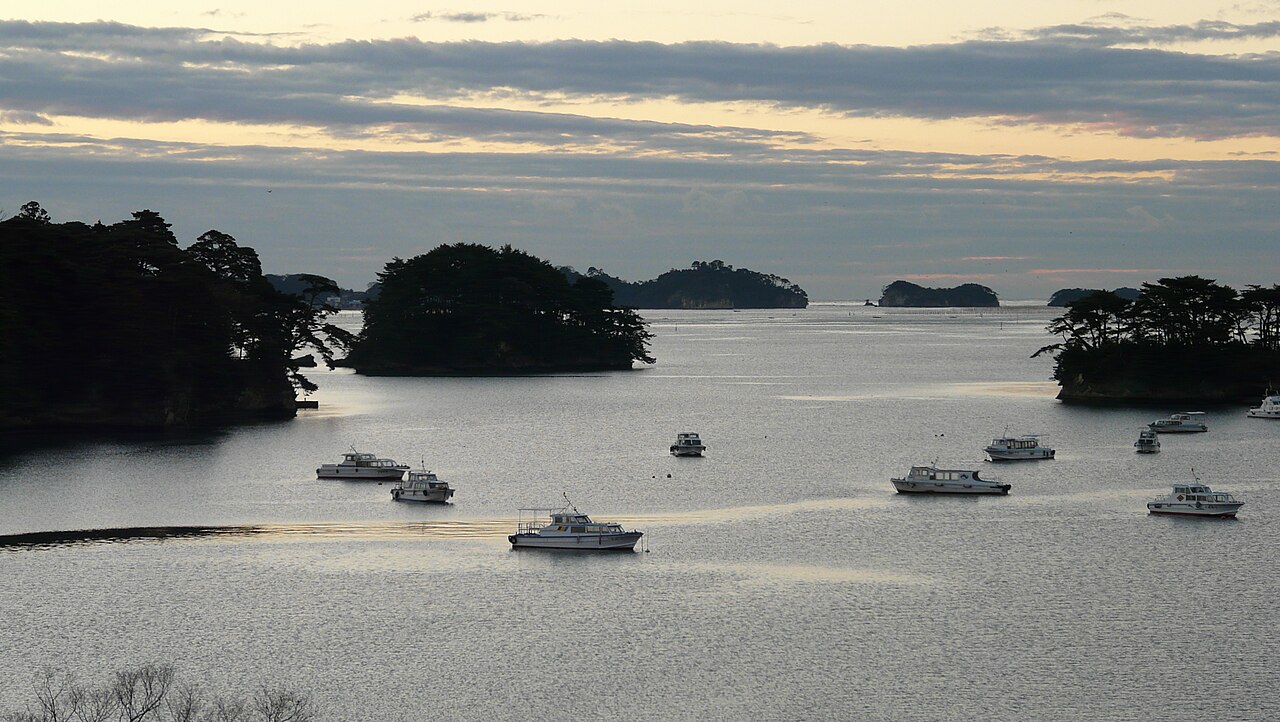
Sendai sits on the Pacific side of Tōhoku, the broad northern third of Japan’s main island. It is the region’s largest city, and its identity was deliberately built: in 1601, the warlord Date Masamune (伊達政宗, 1567–1636) began construction of Aoba-jō, Sendai Castle, on a bluff above the Hirose River, and laid out a new castle town below it. To populate and equip that town he recruited craftsmen into the domain — lacquerers, metal-fitting makers, and, crucially for kiritsuke-style blades, swordsmiths.
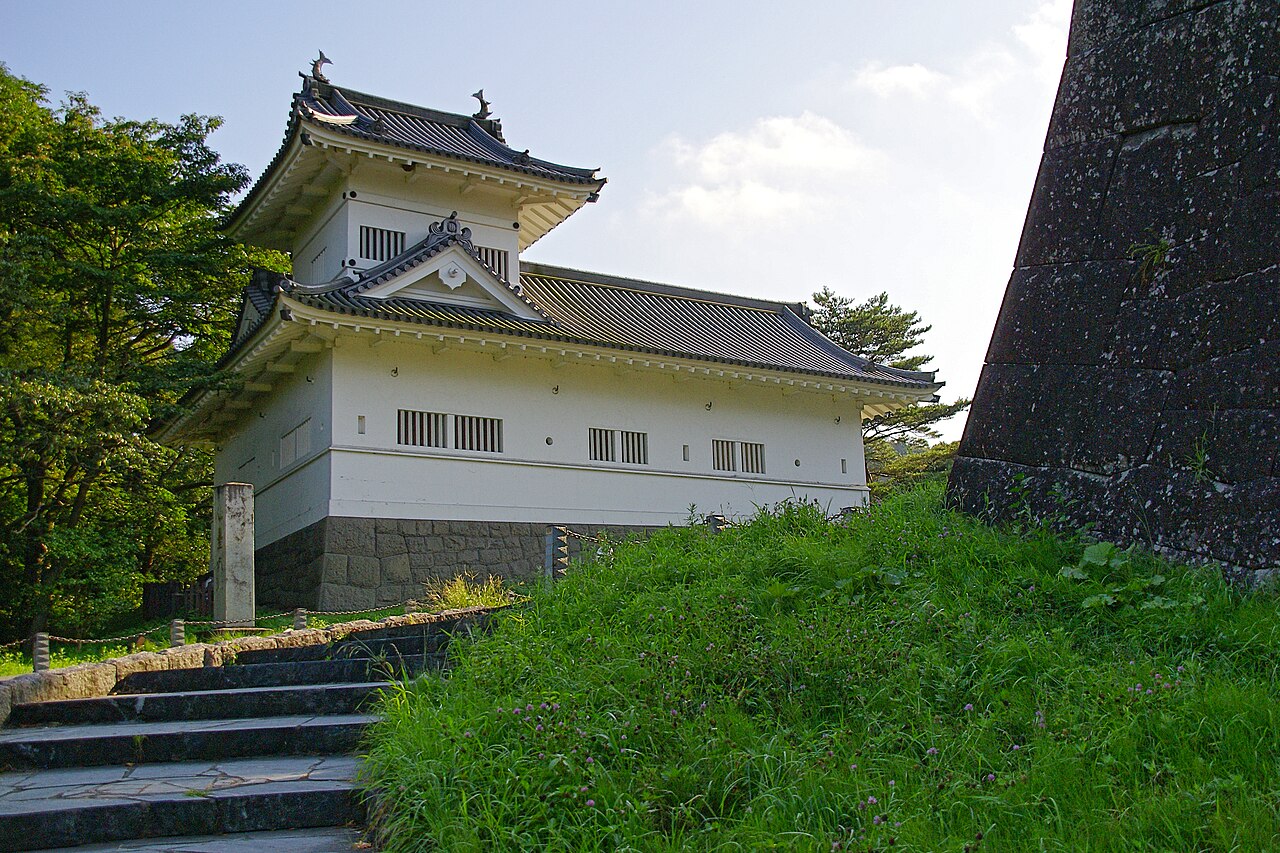
The most enduring of those smiths was the founder of the Sendai Kunikane school, who carried the honorary title Yamashiro-no-Daijō Fujiwara Kunikane (山城大掾藤原国包). His line continued through some thirteen generations into the modern era — one of the longest unbroken swordsmith lineages in northern Japan. The Date domain did not promote swords in isolation: it backed ironworking and tool-making generally, so the same pool of forging skill that turned out blades for samurai also supplied the agricultural and household edge tools the domain needed.
- 1601 — Date Masamune begins building Sendai Castle (Aoba-jō) and lays out the new castle town.
- 1607 — Masamune commissions Ōsaki Hachimangū, built by the domain’s concentrated pool of artisans.
- Early 1600s — Yamashiro-no-Daijō Fujiwara Kunikane founds the Sendai Kunikane swordsmith school.
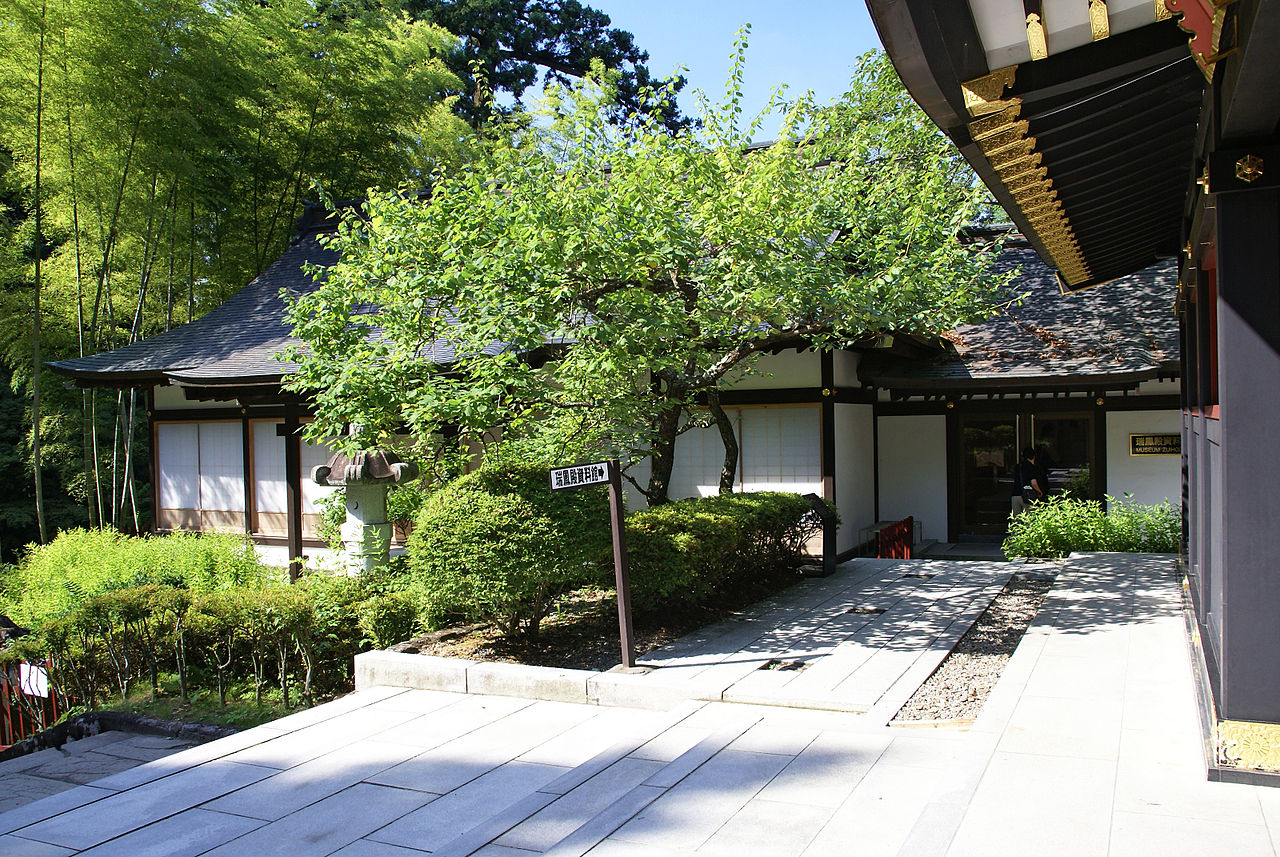
- 1636–1637 — Masamune dies; the Zuihōden mausoleum is built, displaying the domain’s metalwork and lacquer.
- ~13 generations — The Kunikane line continues forging through the Edo period and into the modern era.
- 1876 — The Haitōrei sword ban ends the swordsmiths’ original market; many turn to tools and kitchen blades.
- Today — San-mai hand-forging persists in Miyagi, producing kitchen blades like this kiritsuke.
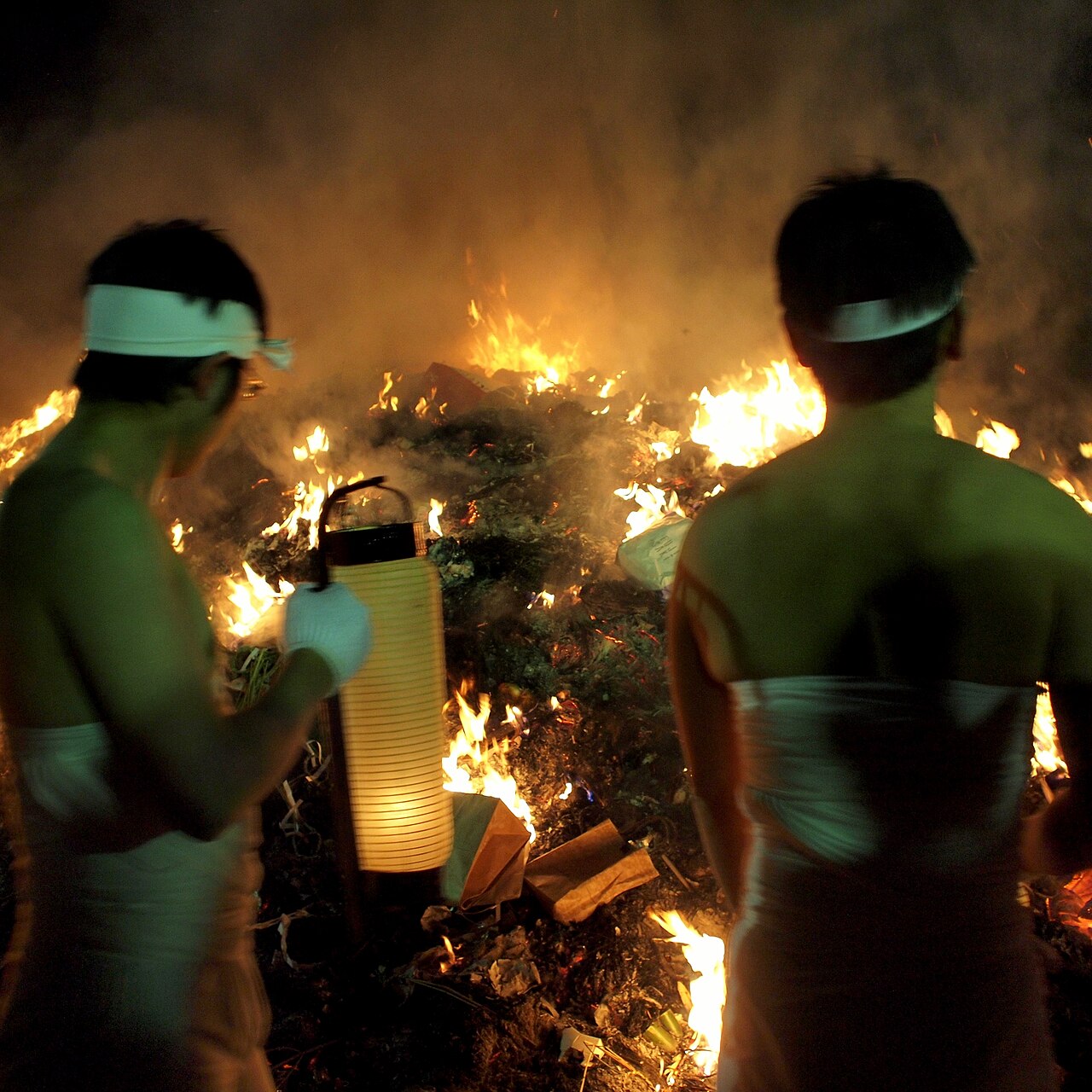
What changed the swordsmiths’ work was the law. In 1876 the Meiji government’s Haitōrei abolished the wearing of swords, and the demand that had supported smiths for centuries collapsed almost overnight. The skill, however, did not. Across Tōhoku, smiths redirected their san-mai forging — a hard, high-carbon core jacketed in softer iron — from blades meant for the belt to blades meant for the kitchen. The kiritsuke is where that transfer is most visible: its reverse-tanto sword tip is, quite literally, the katana’s clipped point reborn as a chef’s tool.
“The same hands that once shaped a blade for the belt now shape one for the cutting board — and on a kiritsuke, the sword tip never quite left.”
Miyagi’s broader monozukuri (ものづくり, “making of things”) identity reaches well beyond blades. The prefecture is also home to Naruko woodturning, Ogatsu slate inkstones, and Tsutsumi-yaki folk pottery — a spread of crafts that, like the knives, grew out of the resources and patronage of the old Date domain. A Sendai kiritsuke sits inside that wider material culture, not apart from it.
📦 Shipping & where to buy from outside Japan
For most international readers, there are two practical paths to a Sendai-style hand-forged kiritsuke:
- Amazon US (amazon.com) — the easiest route for US/EU/AU buyers: Prime shipping, USD pricing, and no international customs. Amazon US carries comparable hand-forged Japanese kitchen knives, useful for comparing geometry, steel, and price tiers.
- Amazon JP Global Store — an international route for Japanese household goods. Shipping and import costs vary by destination.
- Proxy services (Buyee / Tenso) — useful when a Japan-only shop does not ship abroad; they forward from a Japanese address for a handling fee.
Orders above your local duty threshold may incur customs charges on import. Carbon-steel knives are not electrical, so there are no voltage concerns. Prices and availability fluctuate — verify at the retailer before buying.
Buying considerations
JPY is the usual reference currency for Japanese knives. Prices in USD are approximate and depend on the current exchange rate, using a ¥150/USD baseline as a simple guide.
| Store | Item / Variant | Price (JPY + USD est.) | Notes |
|---|---|---|---|
| 🇺🇸 Amazon.com (US) | Browse Japanese kitchen knives | varies (USD) | Best if you’re shopping from the US — Prime shipping, USD pricing, no international customs. Amazon US carries hand-forged Japanese kitchen knives from Shun, Tojiro, Yoshihiro, and others — useful for comparing geometry, steel, and price tiers. The Sendai kiritsuke itself ships from Japan (next row). |
| 🇯🇵 Amazon JP Global Store | Sendai hand-forged kiritsuke | — | International shipping option from Japan; confirm destination coverage and fees before ordering. |
| Maker direct | Sendai uchihamono smith | — | Some Tōhoku smiths sell direct or via specialist knife galleries; availability varies and many are Japanese-language only. |
| Proxy services (Buyee / Tenso) | Forwarded from a JP address | item price + handling fee | Useful when a Japan-only shop does not ship abroad directly; adds a service fee and a second shipping leg. |
What it does well
Weaknesses and things to verify before buying
- Carbon steel rusts. The blade must be hand-dried immediately after use and lightly oiled for storage. It will also develop a grey patina — expected, not a defect, but not for those who want a permanently mirror-bright blade.
- Specifications vary. Core steel and bevel grind can differ between hand-forged knives; choose the combination that suits your sharpening practice.
- The kiritsuke profile has a learning curve. The tall, flat blade and pointed tip reward a practiced push-cut; rocking-chop users may find it awkward at first.
- Bevel orientation matters. Traditional kiritsuke can be single-bevel (handed) or double-bevel. Confirm which this is — a single-bevel blade ground for right hands will not suit a left-handed cook.
- Hand-forged means variation. Each blade differs slightly; finish, exact dimensions, and weight may vary from any catalog photo.
- Not dishwasher-safe. Machine washing will rust and dull the blade and can crack a wooden handle.
Conclusion — which buyer type are you?
Other ways to approach this purchase
❓ Frequently Asked Questions
What is a kiritsuke knife used for?
A kiritsuke is a hybrid chef’s knife combining the flat profile of a vegetable usuba with the slicing reach of a yanagiba. It handles vegetable push-cuts, herbs, and clean protein slicing in one tool, which is why it’s traditionally associated with experienced cooks.
Why does the Sendai version connect to swordsmiths?
When Date Masamune founded Sendai in 1601, he recruited swordsmiths to his domain — most enduringly the Kunikane school. After the 1876 sword ban, smiths in the region turned their san-mai forging toward kitchen blades, and the kiritsuke’s reverse-tanto sword tip is the most direct surviving echo of that katana ancestry.
How do I care for a carbon-steel knife?
Hand-wash and dry it immediately after use, never leave it wet, and wipe it with a thin film of food-safe oil for storage. It will develop a grey patina over time, which is normal and actually helps resist further corrosion. Do not put it in a dishwasher.
Does Amazon JP ship this knife internationally?
International shipping for Japanese knives varies by destination, with customs and handling fees depending on local rules. Japan-only sales may require a proxy service such as Buyee or Tenso, which adds a handling fee.
Is this knife single-bevel or double-bevel?
Kiritsuke knives may be single-bevel or double-bevel. A single-bevel blade is ground for one hand, so the bevel should match the cook’s preferred technique.
Is it a good knife for a beginner?
Not as a first knife. The tall, flat profile and carbon-steel maintenance both reward some experience. A beginner is usually better served by a stainless double-bevel santoku, then adding a kiritsuke later once comfortable with push-cutting and blade care.
jpmono.com is curated by a Japan-based editorial team (working out of Toyama in the Hokuriku region and Nara in Kansai) and is independent. We don’t take payment from the makers we feature; income comes from affiliate links. Read more about our editorial standards.
This article was prepared with AI assistance and reviewed against maker information and craft references. Where information is incomplete, that is stated plainly rather than estimated.
Affiliate disclosure: jpmono.com may earn a commission on qualifying purchases made through links on this page, at no additional cost to you.