![Bizen-yaki Beer Tumbler: Unglazed Six-Ancient-Kilns Stoneware [2026]](https://jpmono.com/wp-content/uploads/2026/05/bizen-yaki-beer-tumbler-where-to-buy-2026-featured.jpg)
A Bizen-yaki (備前焼, “Bizen ware”) beer tumbler is one of the few drinking vessels made entirely without glaze. The clay is dug near the Hyōgo–Okayama border, thrown in the village of Inbe in Bizen City, and fired for ten to fourteen days in a wood-burning kiln. Nothing is painted on; nothing is dipped in glaze. The color and the markings are whatever the fire, the falling pine ash, and the embedded rice straw decide to leave behind.
For an international reader, the practical reason to care is what that unglazed wall does to a drink. The surface is microscopically pitted rather than smooth, and those pits act as nucleation points: pour beer into a Bizen tumbler and the head breaks into a dense, fine, slow-collapsing foam. This is why Bizen beer cups and sake vessels are quietly prized in Japan, well outside the tea-ceremony circles where the ware first became famous.
This guide covers what the piece is, where it comes from, how the two main fired finishes (hidasuki and goma) differ, where it sits among Japan’s other unglazed stoneware traditions, and how to actually buy one from outside Japan. It is written from a Japan-based editor’s desk, not from a marketing brochure, so the caveats are here too — the parts a glossy listing skips.
🔄 Updated: May 31, 2026
⏱️ ~11 min read
![Bizen-yaki Beer Tumbler: Unglazed Six-Ancient-Kilns Stoneware [2026]](https://m.media-amazon.com/images/I/31Spor-HwqL._SL500_.jpg)
- Who this is for — and who should skip it
- Product overview (from published specs)
- 📌 How does it compare?
- Where this comes from
- Price snapshot across stores
- What it does well
- Weaknesses and things to verify before buying
- Conclusion — which buyer type are you?
- Other ways to approach this purchase
- 🏆 Editor’s Pick
- ❓ Frequently Asked Questions
Who this is for — and who should skip it
- Drink beer or highball at home and care about the foam head
- Like the idea of a cup whose pattern no factory can reproduce
- Already own and enjoy unglazed stoneware (Shigaraki, Tamba, Tokoname)
- Want a piece with a documented, centuries-deep regional history
- Are comfortable hand-washing and seasoning a porous-feel surface
- Want every cup in a set to look identical
- Expect to choose the exact markings from a catalog photo
- Need a dishwasher-and-microwave-anything daily mug
- Want the lowest possible price per cup
- Dislike the earthy, matte, slightly rough hand-feel of unglazed clay

Product overview (from published specs)
The data available for this specific listing is thin. Below is what can be stated from the source listing reference and the established characteristics of Bizen ware; anything not confirmed in the data is marked as such rather than guessed.
Bizen-yaki Beer Tumbler
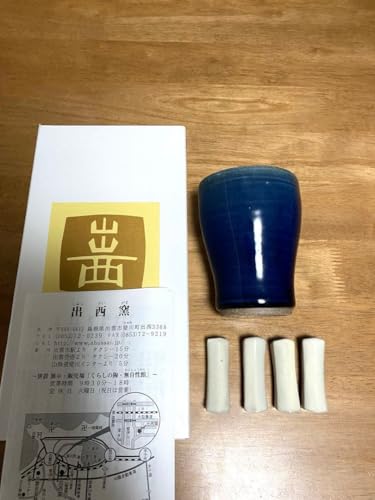
RODGERS 備前焼 ビアマグ 備前焼タンブラー ギフト プレゼント ビールグラス ビアグラス ハイボール 日本酒 コーヒータンブラー 日本製 贈答用 退職祝い プレゼント ギフト 緋襷 岡山
残り10点 ご注文はお早めに · Sold by Amazon.co.jp · ASIN B0BVMBZ8R6
Price and availability as of 2026-08-31 02:30 JST. The Amazon listing at the time of purchase is authoritative. jpmono.com earns a commission on qualifying purchases at no extra cost to you.
| Attribute | Detail | Source |
|---|---|---|
| Craft | Bizen-yaki (備前焼), unglazed wood-fired stoneware | Maker tradition |
| Item ID (ASIN) | B0BVMBZ8R6 | Amazon JP listing reference |
| Form | Beer tumbler / free cup | Listing reference |
| Material | Iron-rich Bizen clay, vitrified, glaze-free | Maker tradition |
| Surface finish | Natural kiln effects — hidasuki and/or goma (varies per piece) | Maker tradition |
| Origin | Inbe, Bizen City, Okayama Prefecture | Maker tradition |
| Designation | National Traditional Craft (1982) | METI |
| Capacity / dimensions | Unconfirmed — check the listing | Not in data |
| Price | Not captured in snapshot — check current price | Not in data |
Data note: Only the Amazon JP listing reference is available, and a live price was not captured in our data snapshot. Capacity, weight, and current pricing should be verified at the listing before purchase — live pricing and stock may have shifted since the writing date.
📖 Glossary — Bizen and unglazed-stoneware terms
- Bizen-yaki (備前焼) — unglazed stoneware from the old Bizen province, fired in Inbe, Okayama.
- Inbe (伊部) — the kiln village in Bizen City where most Bizen ware is still produced.
- Rokkoyō (六古窯, “Six Ancient Kilns”) — the six medieval Japanese kiln sites with continuous production: Bizen, Shigaraki, Tamba, Echizen, Tokoname, and Seto.
- Sueki (須恵器, “Sue ware”) — high-fired gray stoneware introduced from the continent in the Kofun period; the technical ancestor of Bizen.
- Anagama (穴窯) — a single-chamber tunnel kiln dug into a slope.
- Noborigama (登窯) — a multi-chamber “climbing kiln” stepped up a hillside.
- Goma (胡麻, “sesame”) — speckled glassy spots where pine ash melts onto the surface, resembling sesame seeds.
- Hidasuki (緋襷, “scarlet cords”) — red-orange lines left where rice straw is wrapped around the piece before firing.
- Sangiri (桟切り) — gray-to-blue tonal shifts caused by embers and reduced oxygen in the kiln floor.
- Yōhen (窯変, “kiln change”) — unpredictable color transformations from flame and ash, prized as one-of-a-kind effects.

📌 How does it compare?
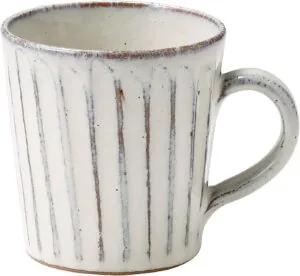
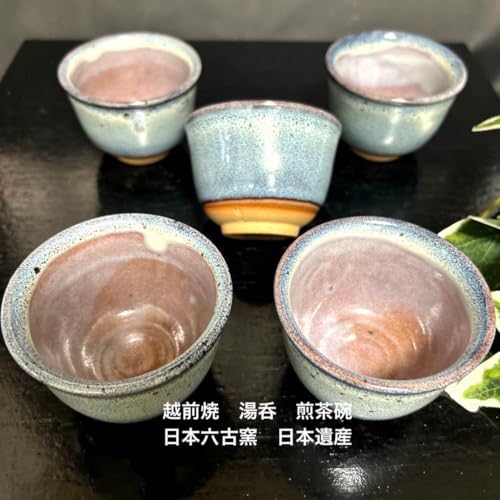
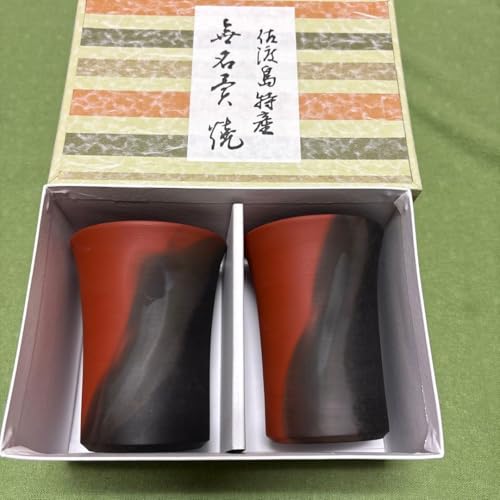
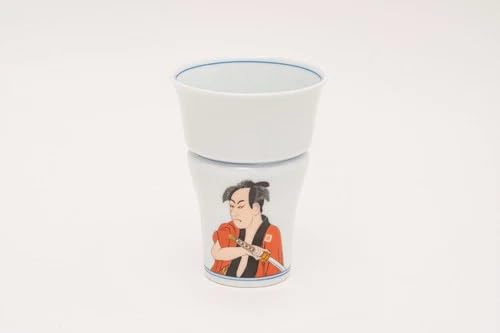
Bizen is one of several unglazed-stoneware traditions on jpmono. If you are weighing it against the other Six Ancient Kilns or nearby regional wares, these guides cover the closest comparisons:
Where this comes from

Bizen ware takes its name from the old Bizen province, today the southeastern part of Okayama Prefecture. The kilns cluster in Inbe, a village in Bizen City on the San’yō coast — the warm, dry, Inland-Sea side of western Honshu. The location is not an accident. The local clay, dug from old rice-paddy subsoil near the Hyōgo border, is unusually iron-rich and fine, and it vitrifies into a hard, water-tight body without needing any glaze. Add a hillside for climbing kilns and a coast for moving heavy ceramics by boat, and the conditions for a pottery industry were all present.
The technical lineage runs deep. Bizen descends from sueki (Sue ware), the high-fired gray stoneware introduced to Japan in the Kofun period, and continuous Bizen production is documented from the late Heian period — the twelfth century. That makes it one of the Rokkoyō, the Six Ancient Kilns, the half-dozen medieval kiln sites that never stopped working while imported porcelain fashions came and went.
Bizen’s golden age came with tea. In the Muromachi and Momoyama periods, the austere, unforced surfaces of unglazed Bizen suited the aesthetics of wabi-cha, and tea masters prized its water jars, flower vases, and bowls. Under the Edo-period Ikeda clan of the Okayama domain, the Inbe kilns were given formal patronage, and certain potter families held protected status.
- 6th–7th c. — Sueki (Sue ware) high-fired stoneware established in the region; the technical ancestor of Bizen.
- Late Heian, 12th c. — Continuous Bizen production begins in the Inbe district.
- Kamakura–Muromachi — The hard, reddish-brown, glaze-free body becomes Bizen’s signature.
- 15th–16th c. (Muromachi–Momoyama) — Prized in wabi-cha tea ceremony by leading tea masters.
- Edo period — Inbe kilns patronized by the Ikeda clan of the Okayama domain.
- 1982 — Designated a National Traditional Craft (dentō kōgeihin) by METI.
- 2026 — Inbe remains an active kiln district; pieces are still wood-fired for 10–14 days.
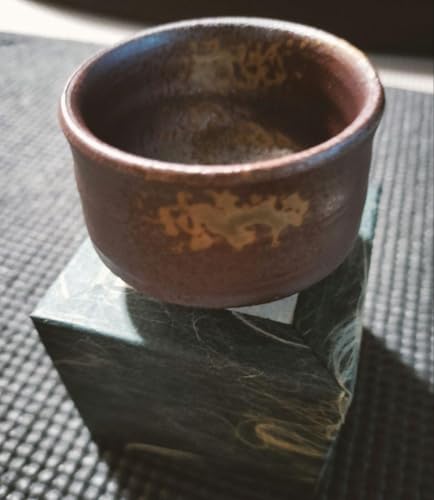
The firing itself is what makes a Bizen tumbler a Bizen tumbler. Pieces are stacked in a wood-burning anagama or noborigama and fired continuously for ten to fourteen days at high temperature. There is no glaze bucket. The color comes from the iron in the clay; the markings come from where each piece stood in the kiln — how the flame licked it, where the pine ash fell as goma, whether straw was wrapped around it to leave hidasuki lines, how much oxygen reached the kiln floor to produce sangiri grays.
“Nothing is painted on a Bizen cup. The pattern is a record of two weeks inside a wood fire — which is why no two are alike.”
For a beer drinker, the deep history matters less than one physical consequence of all this. Because the wall is unglazed, its surface is microscopically rough and pitted rather than glassy. Those pits give carbon-dioxide bubbles countless places to form, so poured beer throws a fine, dense, slow-collapsing foam. It is, traditionally, the reason Bizen beer and sake vessels earned their reputation — and it is the practical hook for choosing one over a smooth glazed mug.
Price snapshot across stores
The Amazon US row is the easiest path for most US, EU, and Australian readers; the Amazon JP Global Store row is where this specific Bizen tumbler is sourced and ships from. A live price for the JP listing was not captured in our data snapshot, so the table flags it rather than inventing a figure.
| Store | Item / variant | Price (JPY + USD est.) | Notes |
|---|---|---|---|
| 🇺🇸 Amazon US (search) | Browse Japanese pottery & stoneware tumblers | varies (USD) | Best if you are shopping from the US — Prime shipping, USD pricing, no international customs. Amazon US carries Japanese pottery and stoneware from various makers; the exact Inbe Bizen piece ships from Japan (next row). |
| 🇯🇵 Amazon JP Global Store | This Bizen-yaki tumbler (ASIN B0BVMBZ8R6) | Check current price (not in snapshot) | The sourced listing for this exact piece. Ships internationally from Japan to most major destinations; markings vary per piece. |
| Maker direct | Inbe kiln / Bizen-yaki cooperative shops | Varies by potter | Individual Inbe potters sell directly; most are Japanese-language only and may not ship abroad. Best for buyers already in Japan. |
| Proxy services (Buyee / Tenso) | Any Japan-only listing forwarded abroad | Item price + service fee + forwarding | Use when a piece is sold only on a Japan-domestic site. Adds a handling fee and a second shipping leg; customs duties may apply. |
Prices in USD are approximate and depend on the current exchange rate (¥150/USD baseline as of mid-2026). The JPY price at the listing is the authoritative one; always verify at the retailer before purchasing.
What it does well
Weaknesses and things to verify before buying
- You cannot pick the exact pattern. Because each piece is fired individually, the markings on the tumbler you receive will differ from any sample photo. If matched, identical cups are a requirement, this is the wrong ware.
- Care is hands-on. Unglazed stoneware is best hand-washed and fully air-dried; a quick rinse with water before first use, and avoiding harsh detergents and prolonged soaking, is the usual advice. Treat dishwasher and microwave use as unconfirmed for this listing — verify before assuming.
- Capacity and dimensions are not in our data. The snapshot did not capture volume or size; confirm at the listing that the tumbler holds the amount you expect.
- Price was not captured. No live price was in the data snapshot. Check the current JPY price at the listing rather than relying on any figure quoted elsewhere.
- The surface feel is earthy, not glassy. Unglazed Bizen has a matte, slightly rough hand-feel and an earthen color. Buyers expecting a smooth, shiny mug may be surprised.
- International shipping adds cost and time. Buying from Amazon JP Global Store or via a proxy means import shipping and possible customs duties above local thresholds; factor that into the total.
Conclusion — which buyer type are you?
Other ways to approach this purchase
🏆 Editor’s Pick
❓ Frequently Asked Questions
Is it safe to drink from unglazed pottery?
Yes. Bizen ware is high-fired stoneware that vitrifies into a dense, water-tight body, which is why it holds liquid without any glaze. It has been used for drinking and serving vessels for centuries. As with any ceramic, rinse it before first use and keep it clean.
Does it really improve the beer foam?
The unglazed wall is microscopically rough and pitted rather than glassy, and those pits give carbon-dioxide bubbles many places to form. Traditionally this is credited with producing a finer, denser, longer-lasting head, which is the main reason Bizen beer and sake vessels are valued in Japan.
Will my tumbler look exactly like the photo?
No. Each piece is wood-fired individually, so its hidasuki, goma, and sangiri markings are determined by the fire and its position in the kiln. Treat any image as representative, not exact — the variation is the point of the ware.
What is the difference between hidasuki and goma?
Hidasuki is the scarlet straw-mark line left where rice straw is wrapped around the piece before firing, giving bright contrast on a pale ground. Goma is the glassy “sesame” speckle left where falling pine ash melts onto the surface, often with gray-blue sangiri tones — an earthier, more tonal look.
How do I care for it?
Rinse with water before first use, then hand-wash and air-dry fully after use. Avoid prolonged soaking and harsh detergents. Treat dishwasher and microwave compatibility as unconfirmed for this listing — verify on the product page before assuming either is safe.
Does Amazon JP ship this internationally?
The piece is sourced from the Amazon JP Global Store, which ships many household items internationally to most major destinations. Shipping cost and customs duties depend on your country; if a listing is Japan-only, a proxy service such as Buyee or Tenso can forward it abroad for an added fee.
How much does it cost?
A live price was not captured in our data snapshot for this listing, so we do not quote a figure here to avoid being wrong. Check the current JPY price directly on the Amazon JP Global Store page; USD figures shown alongside JPY are approximate at a ¥150/USD baseline.
jpmono.com is curated by a Japan-based editorial team (working out of Toyama in the Hokuriku region and Nara in Kansai) and is independent. We do not take payment from the makers we feature; income comes from affiliate links. We do not physically test every product — we read maker specs and source listings. Read more about our editorial standards.
This article was prepared with AI assistance and reviewed against the available source data. Specifications, pricing, and availability should be confirmed at the retailer before purchase.
Affiliate disclosure: jpmono.com may earn a commission on qualifying purchases made through links on this page, at no additional cost to you.