![Kishū Lacquerware Soup Bowl Pair (B.C. TSUBO Natural) by Sumida Kihei — 400-Year Kuroe-Nuri Tradition (¥7,920 / ≈$53 USD) [2026 Buyer’s Guide]](https://jpmono.com/wp-content/uploads/2026/05/japan-map-regions-and-prefectures-800x1050.png)
Kishū Lacquerware Soup Bowl Pair (B.C. TSUBO Natural) by Sumida Kihei — 400-Year Kuroe-Nuri Tradition (¥7,920 / ≈$53 USD) [2026 Buyer’s Guide]
Kishū-shikki (紀州漆器) is the lacquerware tradition of Kuroe, a coastal district in the northern half of Wakayama Prefecture — a craft practiced continuously since the late 16th century, when the Kishū domain (held by the Tokugawa Yorinobu branch, one of the gosanke “three honored houses”) attracted Wakasa-province lacquer craftspeople to settle there. By the early Edo period the local Kuroe-nuri (黒江塗) finish — a tough red-over-black negoro-style coating optimized for daily wear — had become the regional standard, and by the 18th century Kuroe was one of the largest lacquer-producing districts in Japan by volume.
This guide covers Kishū shikki soup bowls from the Kuroe district. Sumida Kihei Shōten (角田清兵衛商店) is a named multi-generational maker still operating there. Its modern lacquerware can retain visible wood grain while using a finish intended for daily use. For Western kitchens that put bowls through a daily machine cycle, a wash-tolerant modern finish can be a practical choice within Japanese lacquerware.
The audience here is a reader outside Japan considering a first lacquerware purchase, or someone who already owns Wajima or Aizu-nuri bowls and wants to add a Wakayama / Kansai piece for variety. We cover the regional craft context of Kishū lacquer, the realistic care window for natural-wood bowls, and how the Kuroe-nuri line compares to other Japanese lacquer traditions covered on this site.
🔄 Last updated:
⏱️ Reading time: ~12 min
🏷️ Categories: Japanese Craft · Kitchen · Wakayama · Lacquerware
- Who this is for — and who should skip it
- Product overview (from published specs)
- 📍 Where this comes from — Kuroe, Kainan, and 400 years of Wakayama lacquer
- Buying options
- What it does well
- Weaknesses and things to verify before buying
- Conclusion — which buyer type are you?
- Other ways to approach this purchase
- ❓ Frequently Asked Questions
- 📌 Related Japanese Crafts
Who this is for — and who should skip it
- Want a named-maker Japanese lacquer piece, not a generic export bowl
- Run bowls through a dishwasher and need a finish that tolerates it
- Prefer visible wood grain (“Natural”) over solid red or black lacquer
- Use soup bowls for daily miso, suimono, or congee — not display
- Are open to setting up an Amazon JP Global Store / proxy purchase
- Want pure traditional urushi (this uses a modern dishwasher-safe finish)
- Need a single bowl — this is a pair set; no single-bowl SKU
- Plan to put it in a microwave (lacquer-finished wood is not microwave-safe)
- Need a wide ramen bowl — at ⌀ 11.5 cm this is a soup / miso size
- Need under $25 — entry Kishū-shikki exists, but not from named makers like Sumida Kihei
Product overview (from published specs)
| Field | Value | Source |
|---|---|---|
| Item | B.C. TSUBO Soup Bowl Pair (type1 Natural) | Amazon JP |
| Maker | Sumida Kihei Shōten (角田清兵衛商店) — Kainan (Kuroe), Wakayama | Amazon JP |
| Material | Wooden body, modern dishwasher-safe Kishū lacquer finish | Amazon JP |
| Dimensions | ⌀ 11.5 × H 7 cm × 2 pieces | Amazon JP |
| Weight | ≈ 150 g (pair) | Amazon JP |
| Origin | Kainan (Kuroe), Wakayama Prefecture, Japan | Amazon JP / maker |
| Dishwasher | Yes | Amazon JP |
| Microwave | No — lacquer-finished wood | Inferred from material |
| Price | — | Amazon JP |
| Craft designation | Kishū-shikki — METI Traditional Craft Product (designated 1978) | METI registry |
📖 Glossary — Kishū lacquerware terms (click to expand)
- Kishū-shikki (紀州漆器)
- Lacquerware tradition of Wakayama Prefecture, centered in the Kuroe district of present-day Kainan City. Designated a METI Traditional Craft Product in 1978.
- Kuroe-nuri (黒江塗)
- The signature Kishū-shikki finish: a tough red-over-black negoro-nuri-style coating where decades of use cause the upper red layer to wear gradually, revealing the black under-layer in a prized pattern.
- Negoro-nuri (根来塗)
- The historical wear-pattern aesthetic — red lacquer over black under-coat — originating at Negoro-ji temple in southern Wakayama in the medieval period; the visual logic that Kuroe-nuri inherited.
- Urushi (漆)
- Sap of the Toxicodendron vernicifluum tree, the traditional Japanese lacquer. Modern dishwasher-safe Kishū lines (including B.C. TSUBO) use a synthetic urushi formulation rather than the multi-coat natural urushi seen on premium ceremonial pieces.
- Wakasa-nuri (若狭塗)
- The lacquerware tradition of Wakasa (modern Fukui Prefecture). Wakasa craftspeople migrating to the Kishū domain in the late 16th century seeded what became Kishū-shikki.
- Gosanke (御三家)
- The “three honored houses” of the Tokugawa clan — Owari, Kishū, and Mito. The Kishū branch (founded by Tokugawa Yorinobu, son of Ieyasu) ruled Wakayama and patronized the Kuroe lacquer industry.
- METI
- Japan’s Ministry of Economy, Trade and Industry, which administers the “Traditional Craft Product” (伝統的工芸品) designation. Kishū-shikki received the designation in 1978.
📍 Where this comes from — Kuroe, Kainan, and 400 years of Wakayama lacquer

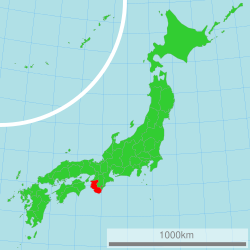
Wakayama Prefecture occupies the western half of the Kii Peninsula — the broad peninsula that extends south from central Honshu into the Pacific. Kainan City, where the Kuroe lacquer district is located, sits on the prefecture’s northern coast, a short distance south of Wakayama City and within Osaka’s broader economic orbit. The geography matters: Kuroe was historically a small port, and the early-Edo lacquer industry depended on river and coastal shipping to move both raw timber (from the heavily-forested Kii interior) and finished bowls toward the Kansai market.
The historical anchor is the late 16th century. When Tokugawa Yorinobu — the tenth son of Tokugawa Ieyasu, founder of the Edo shogunate — was installed as lord of the newly-created Kishū domain in 1619, the consolidation of the domain attracted lacquer craftspeople from Wakasa Province (modern Fukui, on the Sea of Japan coast). The Wakasa migration brought the technical foundation; the local condition — abundant zelkova and horse-chestnut timber, a damp-but-warm climate suitable for urushi curing, and reliable patronage from a Tokugawa gosanke house — let the craft scale. By the mid-Edo period, the Kuroe district was running thousands of lacquer workers and supplying lacquerware across Kansai. Designation as a METI Traditional Craft Product followed in 1978.
-
Late 1500s — Wakasa-province lacquer craftspeople begin migrating into the Kishū region, seeding the local industry. -
1619 — Tokugawa Yorinobu installed as lord of the new Kishū domain (gosanke branch); domain patronage formalizes the craft. -
Early-mid Edo period — Kuroe-nuri (red-over-black negoro-style) emerges as the regional signature finish. -
18th century — Kuroe becomes one of Edo Japan’s largest lacquer-producing districts by volume; supplies Tokugawa-affiliated households and the broader Kansai market. -
Meiji–Showa — Industrial-scale production; mechanized wood-turning and synthetic lacquer formulations introduced for everyday-tier products. -
1978 — Kishū-shikki designated a METI Traditional Craft Product (伝統的工芸品). -
2010s — Sumida Kihei Shōten launches the B.C. TSUBO modern designer line — dishwasher-safe Kishū lacquer over wooden bodies. -
2026 — Kainan City still operates the Kishū Lacquerware Museum (Kishū Shikki Kaikan); the craft continues, though active workshops are far fewer than at the Edo-period peak.
“Kuroe-nuri was not designed to be displayed. It was designed to be eaten from, every day, for a generation — and to look better as it wore.”
What “still being made here” means in 2026 is modest but real. Kainan City — the modern administrative name for the area containing the Kuroe district — still hosts the Kishū Lacquerware Museum (Kishū Shikki Kaikan), and a working population of lacquer households operates in the district, including multi-generational makers such as Sumida Kihei Shōten. The industry today is much smaller than at its Edo-period peak, and a meaningful share of “Kishū-shikki” sold in Japan is now finished with synthetic lacquers rather than the multi-coat natural urushi of the premium ceremonial line. The B.C. TSUBO line covered here sits squarely in that modern-finish tier — practical, daily, machine-tolerant — rather than the museum-grade tradition. Both tiers exist; the difference is worth understanding before buying.
Culturally, the bowl is a soup bowl in the strict Japanese sense — sized for miso-shiru, suimono, or congee, not for ramen or donburi. In a typical Japanese place setting the rice bowl (chawan) sits to the left, the soup bowl to the right; lacquerware is preferred for the soup side because it insulates the hand from hot liquid better than ceramic. That practical insulation, more than the aesthetic, is the original reason lacquer bowls became a Japanese kitchen standard.
Buying options
| Store | Item / Variant | Price | Notes |
|---|---|---|---|
| 🇺🇸 Amazon.com (US) | Browse Japanese lacquer soup bowls | varies (USD) | Best if you’re shopping from the US — Prime shipping, USD pricing, no international customs. Amazon US carries Japanese lacquer soup bowls from a range of makers (useful for comparing shapes, finishes, and price tiers); Sumida Kihei’s exact B.C. TSUBO pair is sourced from Japan (next row). |
| 🇯🇵 Amazon JP Global Store | B.C. TSUBO type1 Natural pair | Varies — see search results | Ships internationally from Japan via the Global Store fulfillment. ~150 g pair → estimated $8–$15 USD international shipping. Customs duty may apply over local thresholds. |
| Maker direct (Sumida Kihei Shōten) | B.C. TSUBO line (Japanese-language site) | Domestic JPY pricing | Japanese-language only; international shipping not typically configured. Useful for confirming the maker’s current catalog and finish options. |
| Proxy services (Buyee / Tenso) | Forwarded Japan-only sources | JPY + service fee + forwarded shipping | A fallback for finishes or variants that don’t appear on the Global Store. Expect 8–15 % service fee on top of item cost, plus international shipping from the Japan warehouse. |
What it does well
Sumida Kihei Shōten is a multi-generational Kuroe-area maker, not a generic export brand. Buying a named-maker piece is the cleanest way to back a small Japanese craft household.
Traditional lacquerware often requires hand-washing. Some modern lacquer finishes are designed for dishwasher use, but care depends on the material and finish; follow the maker’s instructions.
The “Natural” finish reads as a wood object first and a lacquer object second — easier to slot into a non-Japanese place setting than opaque red or black Kuroe-nuri.
Daily-use named-maker lacquerware generally occupies a lower price tier than ceremonial natural-urushi bowls from premium Wajima or Yamanaka traditions, while still bringing Japanese lacquer craft to the table.
Weaknesses and things to verify before buying
- Modern finish, not multi-coat natural urushi. The dishwasher-safe top-coat on B.C. TSUBO is a synthetic / hybrid lacquer formulation, not the traditional multi-layer hand-applied urushi seen on ceremonial Wajima or premium Kuroe-nuri pieces. If your reference for “Japanese lacquerware” is the museum-grade tier, this is not that.
- Pair-only SKU. The listed item is a 2-piece pair; there is no single-bowl SKU at this price. If you need an odd-number setting (one, three, five), buying two pairs and using the spare for guests is the practical workaround.
- Not microwave-safe. Lacquer-finished wood is not microwave-rated, even when the lacquer is synthetic. Heat the soup in a separate vessel, then transfer.
- Soup-bowl size, not ramen-bowl size. ⌀ 11.5 × H 7 cm is sized for miso-shiru, suimono, or congee. A ramen or donburi will not fit.
- International shipping costs / customs. The pair weighs ~150 g, so Global Store shipping is reasonable ($8–$15 USD to most destinations), but customs duties may apply over local de minimis thresholds (US $800, EU €150, UK £135 as of 2026). Always confirm at checkout.
- Limited variant availability through the Global Store. Sumida Kihei’s broader B.C. TSUBO catalog (vermilion, black, other shapes) rotates in and out of international stock. If you want a non-Natural finish, the proxy route (Buyee / Tenso) may be necessary.
Conclusion — which buyer type are you?
You want museum-grade natural urushi and don’t mind hand-washing. Skip B.C. TSUBO and look at ceremonial Wajima-nuri or hand-coated Kuroe-nuri lines from the maker’s traditional catalog.
You want a named-maker Japanese craft bowl for daily use and prefer a modern finish suited to busy kitchen routines. A contemporary Kishū-shikki bowl may fit; choose traditional natural urushi when ceremonial character and hand-washing matter more.
You want lacquer-style bowls under $25 and named-maker provenance is optional. Consider generic Kishū-shikki under the regional brand (often $10–$20) on Amazon JP — but expect anonymous workshop sourcing.
You need single bowls, ramen-bowl sizing, microwave compatibility, or strictly natural-urushi craft. None of those is what B.C. TSUBO is built for; spend elsewhere.
Other ways to approach this purchase
Amazon JP runs Prime Day, Black Friday, and year-end promotions; Global Store inventory occasionally drops 5–15 % during these. Set a price-watch on B07F1GBF7M before committing at full retail.
If a trip to Wakayama or Osaka is on your itinerary, the Kishū Lacquerware Museum (Kishū Shikki Kaikan) in Kainan stocks the full B.C. TSUBO line including finishes not available on the Global Store. No customs friction, full warranty path.
Pair the Amazon JP purchase with Amazon credit-card cashback (or Amazon Prime Visa if shopping the US search row). On a ~$53 item the difference is small in absolute terms, but it offsets a chunk of international shipping.
If a ceremonial multi-coat natural-urushi bowl is what you actually want, choose that category directly. Wajima or hand-coated Kuroe-nuri pieces serve a different purpose from modern daily-use lacquerware.
❓ Frequently Asked Questions
What is Kishū-shikki, and how is it different from other Japanese lacquerware?
Kishū-shikki is the lacquerware tradition of Wakayama Prefecture, centered in the Kuroe district of Kainan City. Its signature finish — Kuroe-nuri — is a red-over-black negoro-style coating originally optimized for daily wear. Compared to Wajima-nuri (Ishikawa, premium ceremonial), Aizu-nuri (Fukushima), or Tsugaru-nuri (Aomori, “togidashi” multi-color patterns), Kishū-shikki historically sat at the higher-volume, daily-use end of the market — supplying the broader Kansai region from the Edo period onward.
Is this bowl really dishwasher-safe, or is that a marketing claim?
Some modern lacquer formulations are designed for dishwasher use and differ from traditional natural urushi, which often requires hand-washing. Avoid prolonged high-temperature drying and abrasive scrubbing, and follow care directions from the maker.
Will it ship to my country from Amazon JP Global Store?
Lacquerware soup bowls of typical pair weight are usually well within standard international parcel limits. General craft purchase paths for readers outside Japan include searching Amazon Japan for Kishū lacquerware terms, contacting Kuroe-nuri kilns and cooperatives in Wakayama directly, or ordering through a proxy service (Buyee, Tenso) when domestic sellers do not ship abroad. Customs duty thresholds vary by destination (US $800, EU €150, UK £135 as of 2026); verify the figure at the point of purchase.
How does it compare to Wajima-nuri or Yamanaka-nuri bowls?
Wajima-nuri (Ishikawa) is a prestigious ceremonial lacquerware tradition, with multi-coat natural urushi over a hand-shaped wood body; entry pieces typically start around ¥20,000 per bowl and ceremonial sets reach ¥100,000+. Yamanaka-nuri (Ishikawa) is famous for wood-turning. Modern daily-use Kishū-shikki pieces form a different category, designed for regular use rather than ceremonial display.
Is the lacquer real urushi or synthetic?
A modern, dishwasher-tolerant lacquer formulation can be synthetic or hybrid urushi engineered for daily use, rather than the traditional multi-coat natural urushi seen in premium ceremonial Kuroe-nuri. If your priority is verifiably natural urushi, choose a traditional natural-urushi piece.
How should I care for these bowls long-term?
For a modern lacquer bowl, wipe it dry after washing rather than leaving water to pool. Avoid prolonged abrasion such as steel wool or abrasive sponges, do not microwave it, and do not soak it in boiling water for extended periods. Store wooden lacquerware in stable humidity.
Are these bowls microwave-safe?
No. Lacquer-finished wood is not microwave-rated regardless of whether the lacquer is natural or synthetic — both heat unevenly and can damage the finish. Heat the soup in a separate microwave-safe vessel, then transfer to the lacquer bowl for serving.
jpmono.com is curated by a Japan-based editorial team (working out of Toyama in the Hokuriku region and Nara in Kansai) and is independent. We do not take payment from the makers we feature; income comes from affiliate links. Read more about our editorial standards on the About page.
Affiliate disclosure: jpmono.com may earn a commission on qualifying purchases made through links on this page, at no additional cost to you.