![Echizen-yaki Flower Vase: One of Japan’s Six Ancient Kilns [2026]](https://jpmono.com/wp-content/uploads/2026/06/echizen-yaki-ash-glaze-flower-vase-where-to-buy-2026-featured.jpg)
Echizen-yaki (越前焼, “Echizen ware”) is one of the Nihon Rokkoyo — the Six Ancient Kilns of Japan, the small group of stoneware traditions that have fired continuously since the medieval period. It is made in Echizen Town, on the Sea-of-Japan side of Fukui Prefecture, where potters began working iron-rich local clay in the late Heian to Kamakura period, around the 12th century. The piece covered here is a single-stem flower vase, an ichirinzashi (一輪挿し), fired unglazed so that falling wood ash settles on the clay and melts into a natural green-brown surface in the kiln.
What makes Echizen-yaki notable to an international audience is not decoration — there is almost none — but lineage. For roughly eight centuries this kiln produced the large water, sake, and grain jars that moved up and down the Sea of Japan coast on Kitamae-bune trade ships. The vase in front of you is a domestic-scale descendant of those storage jars: same high-iron clay, same unglazed firing, same accidental ash glaze, shrunk to hold a single stem of seasonal flower.
This guide is written for readers weighing whether an unglazed, deliberately rustic Japanese vase belongs in their home, and for collectors filling in the Six Ancient Kilns. We cover what the listing actually states, where the craft comes from, how it compares to its sibling kilns (Bizen, Tamba, Shigaraki), the honest weaknesses of unglazed stoneware, and how to buy it from outside Japan. Based on the listing data available at the time of writing, pricing was not captured — we flag that plainly throughout rather than guess.
🔄 Updated: June 15, 2026
⏱️ Read time: ~9 min

- Who this is for — and who should skip it
- Product overview (from published specs)
- Where this comes from — place, era, and the craft tradition
- 📦 Shipping & where to buy from outside Japan
- Price snapshot across stores
- What it does well
- Weaknesses and things to verify before buying
- Conclusion — which buyer type are you?
- Other ways to approach this purchase
- 🏆 Editor’s Pick
- ❓ Frequently Asked Questions
Who this is for — and who should skip it
- Want quiet, unglazed stoneware that frames a single seasonal stem rather than a bouquet
- Are collecting across the Six Ancient Kilns and still need Echizen
- Appreciate wabi surfaces — natural ash glaze, iron color, fire variation — over painted decoration
- Practice or admire ikebana and want a vessel built for restraint
- Prefer objects with a documented place and lineage behind them
- Want a bright, glossy, uniformly colored vase — unglazed ware is matte and varies piece to piece
- Need to hold a large arrangement; an ichirinzashi takes one or a few stems
- Expect every unit to look identical to the photo — ash-glaze surfaces are not repeatable
- Want a dishwasher-proof, worry-free object (porous stoneware needs gentler care)
- Are price-sensitive and need a confirmed figure before buying — pricing was not in the listing snapshot
Product overview (from published specs)
The fetched data for this item was limited: the search snapshot returned no populated price or attribute fields at the time of writing. The table below therefore separates what is described by the craft category and listing from what could not be confirmed. We do not fill confirmed-spec gaps with training-data guesses.
Echizen-yaki Flower Vase
越前焼 花器 陶器
通常6~7日以内に発送します。 · Sold by あおぞらshop · ASIN B0GQN7BNXL
Price and availability as of 2026-09-01 05:22 JST. The Amazon listing at the time of purchase is authoritative. jpmono.com earns a commission on qualifying purchases at no extra cost to you.
| Attribute | Detail | Source |
|---|---|---|
| Craft | Echizen-yaki (越前焼), one of Japan’s Six Ancient Kilns | Maker / craft record |
| Type | Single-stem flower vase (ichirinzashi) | Listing / spec |
| Material | Iron-rich stoneware, high-fired unglazed (yakishime) | Craft record |
| Surface | Natural wood-ash glaze (shizen-yu), green-brown yohen fire variation | Craft record |
| Origin | Echizen Town, Fukui Prefecture, Chūbu / Hokuriku | Craft record |
| Dimensions / weight | Unconfirmed — check the live listing | — |
| Price | Not captured in the listing snapshot — verify before purchase | — |
Store paths covered below: Amazon US (search, primary) + Amazon JP Global Store (secondary, sourced listing) + maker direct + proxy services where relevant.
📖 Glossary — key terms
- Rokkoyo (六古窯, “Six Ancient Kilns”) — the six stoneware kilns recognized as having fired continuously since medieval Japan: Bizen, Tamba, Shigaraki, Tokoname, Echizen, and Seto.
- Yakishime (焼締) — high-fired, unglazed stoneware; the clay vitrifies in the kiln without an applied glaze coat.
- Shizen-yu (自然釉, “natural glaze”) — the glassy layer formed when wood ash from the firing settles on the pot and melts; not painted on.
- Yohen (窯変, “kiln change”) — surface color and texture variation produced by fire, ash, and atmosphere inside the kiln, never identical between pieces.
- Ichirinzashi (一輪挿し) — a small vase made to hold a single stem or a very few flowers.
- Kame / tsubo (甕・壺) — the large storage jars (for water, sake, grain) that Echizen historically mass-produced.
- Kitamae-bune (北前船) — the Edo-era cargo ships that traded along the Sea of Japan coast and carried Echizen jars north.
Related guides on jpmono.com — its sibling Six Ancient Kilns, other Fukui craft, other vessels for flowers, and neighboring Hokuriku tableware.
 🏺 Tamba: another Six Ancient Kiln
🍺 Bizen: Six Ancient Kiln stoneware
 ☕ Shigaraki: Six Ancient Kiln
 🔪 Echizen blades (same Fukui)
 🎍 Another vessel for flowers
 🍵 Neighboring Hokuriku craft
🥣 Hokuriku tableware (Niigata)
Where this comes from — place, era, and the craft tradition

Fukui Prefecture sits on the Sea-of-Japan side of central Honshu, in the Hokuriku region, between Ishikawa to the north and Shiga and Kyoto to the south. The kilns of Echizen-yaki are not on the coast itself but in the hills of present-day Echizen Town, inland of the port frontage. This matters: the kilns needed three things, and the geography supplied all of them — beds of iron-rich clay, forested slopes for firewood, and short overland access to a working coastline that opened onto the long Sea-of-Japan trade routes.
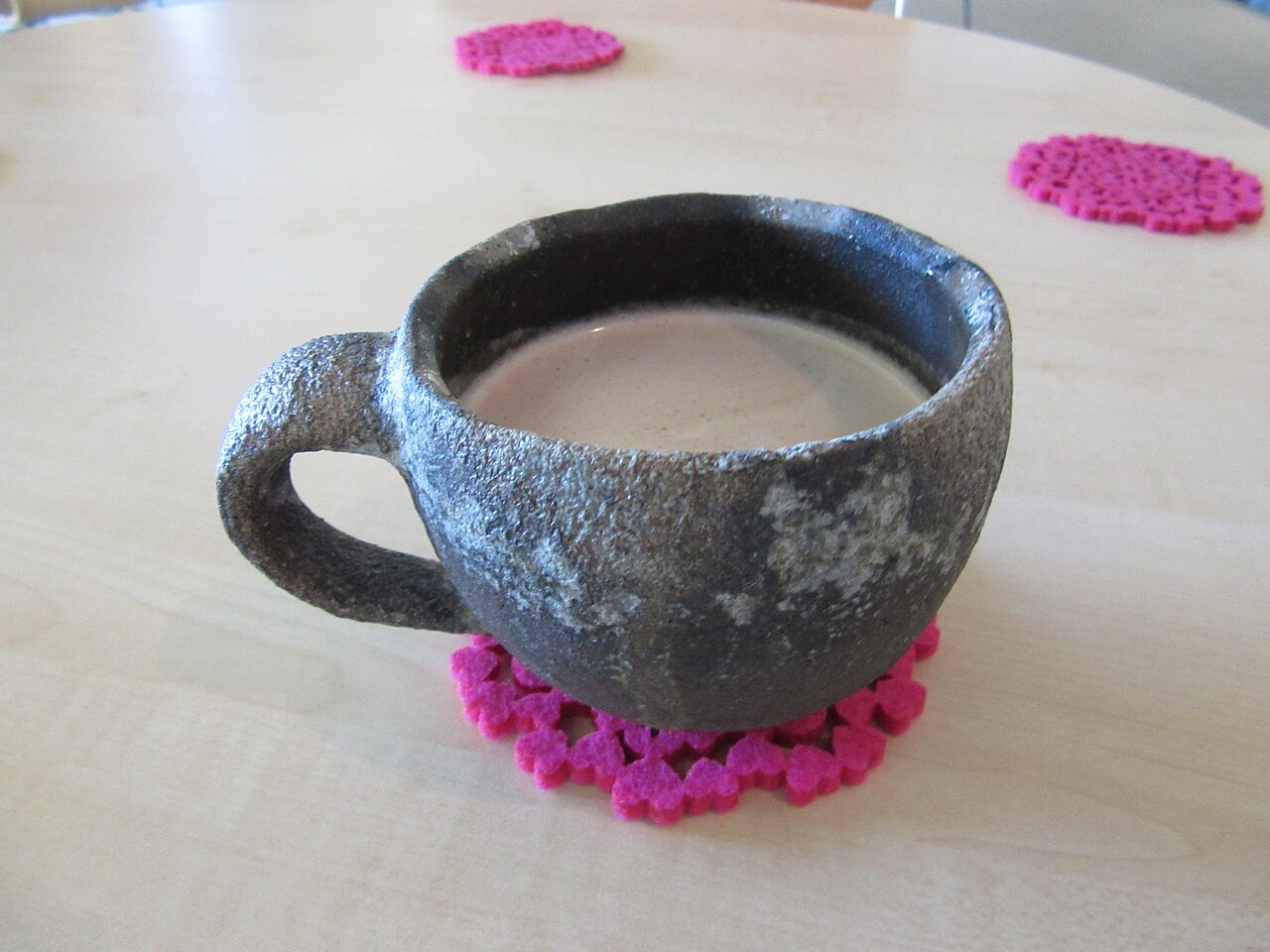
The historical anchor is the kiln tradition itself. Potters began firing here in the late Heian to Kamakura period — around the 12th century — placing Echizen among the Nihon Rokkoyo, the Six Ancient Kilns recognized as having fired continuously since medieval Japan. The other five are Bizen, Tamba, Shigaraki, Tokoname, and Seto. For most of its life Echizen was a workhorse kiln: it mass-produced large unglazed storage jars — kame and tsubo — for water, sake, and grain, the kind of practical vessels every household and merchant needed.
- Late 12th c. — Potters begin firing iron-rich clay unglazed in the Echizen hills (late Heian–Kamakura).
- 13th–16th c. — Large storage jars (kame / tsubo) for water, sake, and grain are mass-produced.
- Edo period — Kitamae-bune trade ships carry Echizen jars north along the Sea of Japan coast.
- 19th–20th c. — Long decline as industrial containers replace traditional storage jars.
- Post-war — The tradition is revived; the Echizen Tougei Mura pottery park becomes its center.
- 1986 — Echizen-yaki is designated a national traditional craft by METI.
- 2026 — Still firing — one of the six medieval kilns of Japan continuing today.
The distribution story is what gives those jars their reach. In the Edo period the Kitamae-bune — the cargo ships of the Sea-of-Japan route — carried Echizen ware far up the northern coast, into the Tōhoku and Hokkaidō markets. The kiln’s geography, a short hop from a working coastline, turned a regional pottery into a supplier for half of northern Japan. The vase you are considering is the small, domestic-scale heir to that maritime trade in heavy storage jars.
“The vase carries no painted pattern. The pattern is the fire: where the ash fell, how the iron answered the heat, what the kiln decided that day.”
The continuity case is concrete. After a long decline, the tradition was revived and gathered around the Echizen Tougei Mura pottery park, and in 1986 it was designated a national traditional craft by METI. Among the Six Ancient Kilns, Echizen is, with Seto, one of the last we have profiled on jpmono — not because it is minor, but because the kilns are so distinct that each deserves its own account. The unglazed, high-iron approach has not been replaced by glaze and decoration; it remains the point.
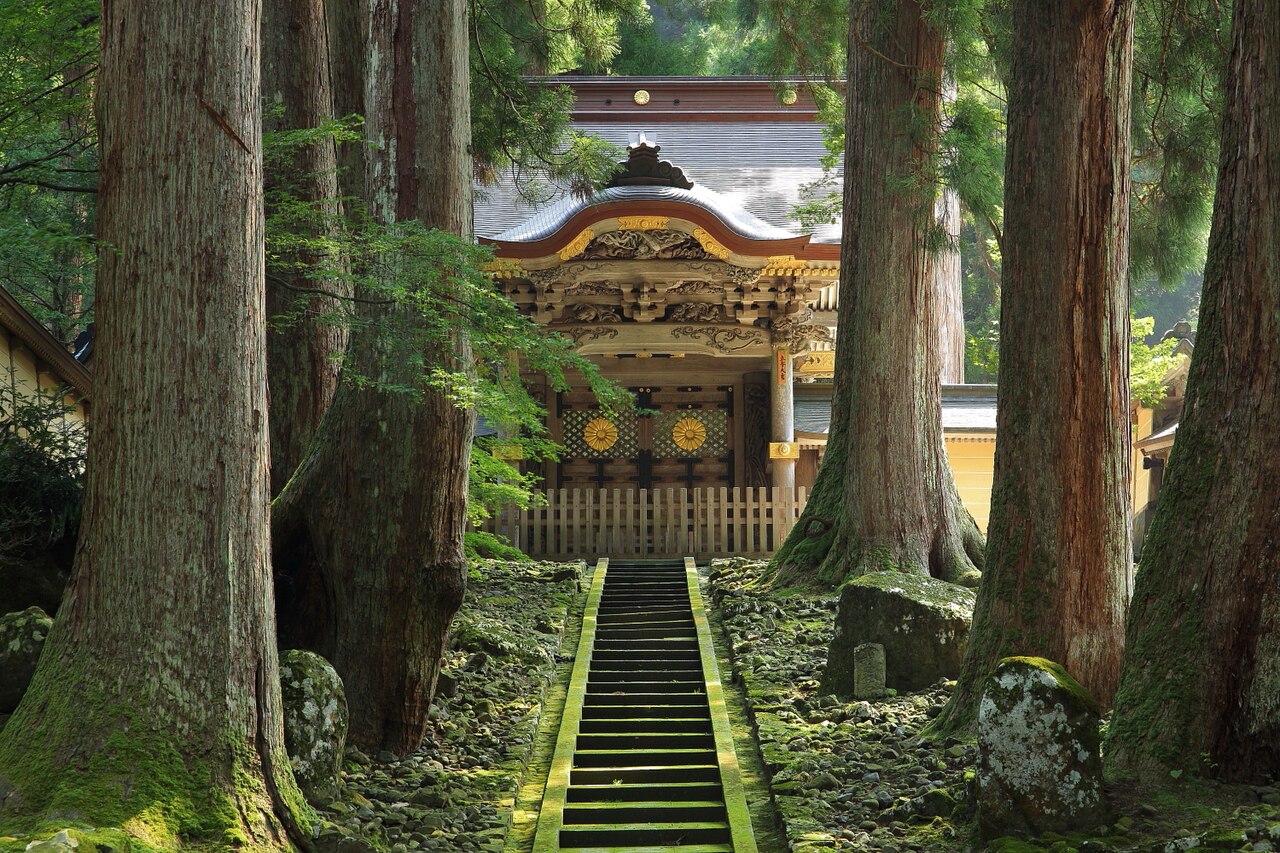
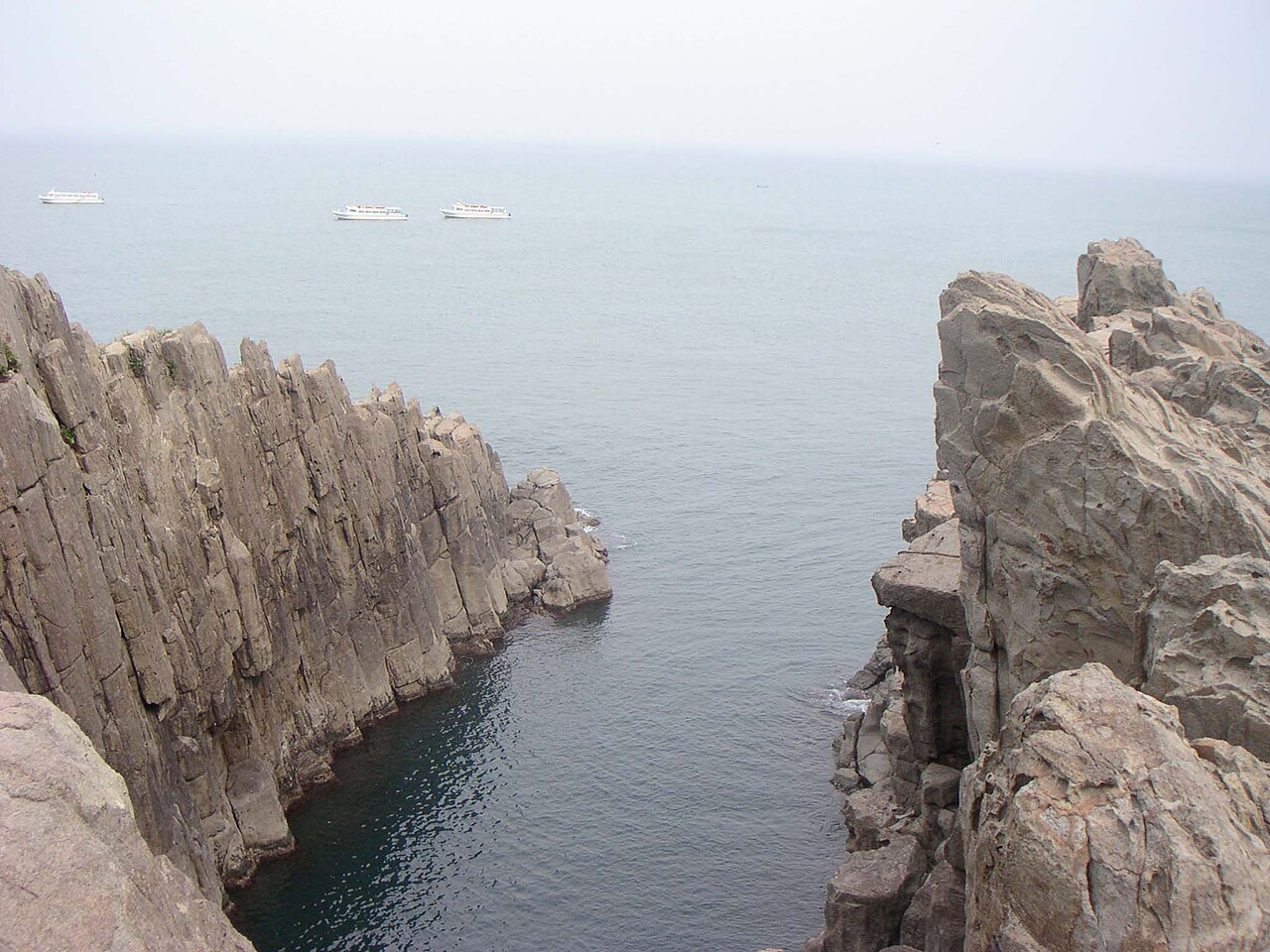
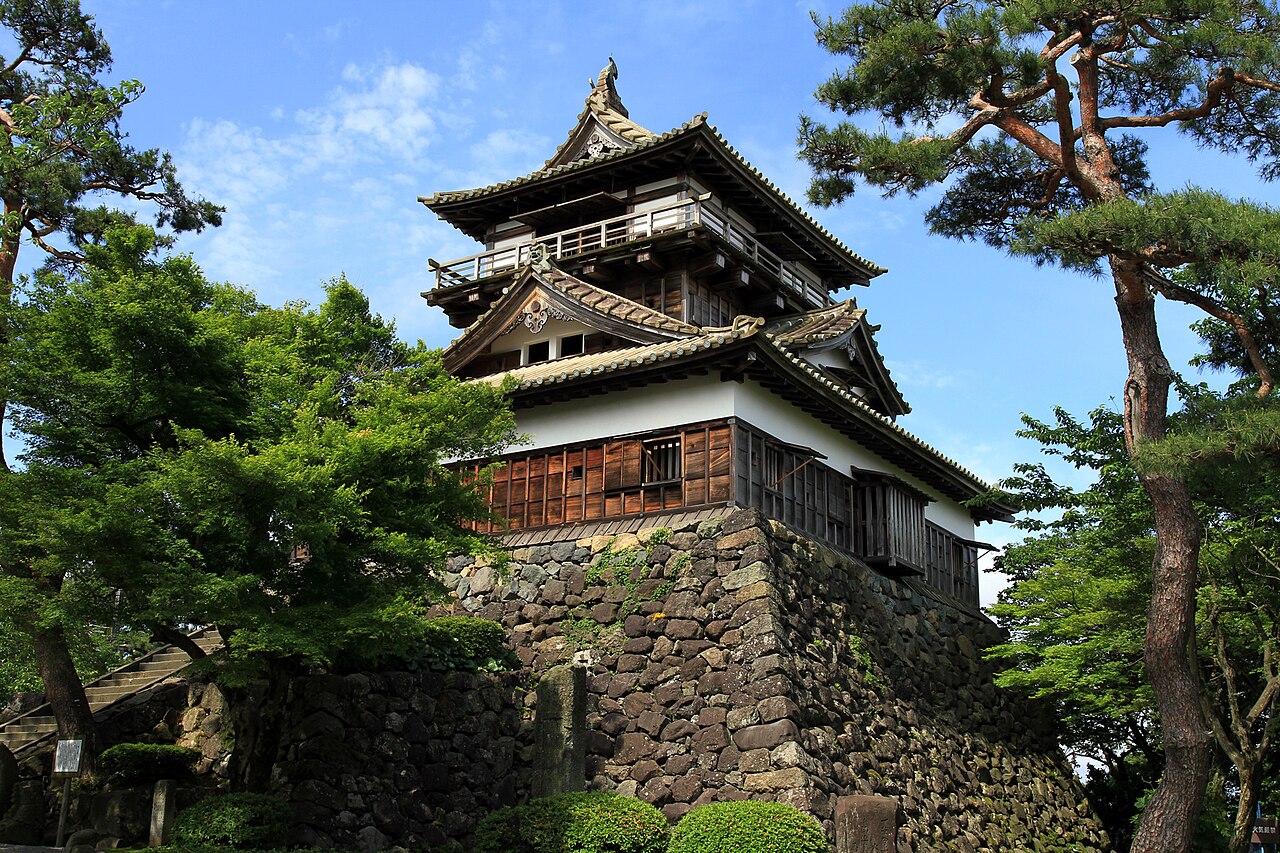
The wider Fukui setting deepens the picture. The same mountainous hinterland holds Eiheiji, the head temple of Soto Zen Buddhism founded in the 13th century, where an aesthetic of restraint and material plainness is lived rather than displayed — a sensibility the unglazed vase shares. Down on the coast, the basalt columns of Tojinbo mark the working sea frontage. And inland stands Maruoka Castle, home to one of Japan’s oldest surviving keeps, a reminder of the feudal Echizen domain that the kilns served alongside ordinary households.
📦 Shipping & where to buy from outside Japan
The specific vase covered here is sourced from the Amazon JP Global Store, which ships many household items internationally to most major destinations. For US and EU buyers, the simplest path is often to begin on Amazon US (search), where comparable Japanese pottery is carried with domestic shipping and USD pricing; the exact Echizen piece then ships from Japan through the JP Global Store. Estimated international shipping on a small vase from Japan typically runs in the $15–$40 range to the US and EU, and higher to other regions.
Two practical warnings. First, orders above your local duty-free threshold may attract customs duties and import VAT on arrival — budget for that on top of the item and shipping. Second, unglazed stoneware is fragile in transit; confirm the seller packs ceramics properly, since an ash-glaze vase has no glaze skin to protect its edges.
Price snapshot across stores
JPY is the authoritative price for the specific listed item; USD figures are approximate estimates at a ¥150/USD baseline. Pricing was not captured in the listing snapshot at the time of writing — verify at the retailer before buying.
| Store | Item / Variant | Price (JPY + USD est.) | Notes |
|---|---|---|---|
| 🇺🇸 Amazon US (search) | Browse Japanese pottery & flower vases | varies (USD) | Best if you’re shopping from the US — domestic shipping, USD pricing, no international customs. Amazon US carries comparable Japanese stoneware and flower vases; this exact Echizen piece ships from Japan (next row). |
| 🇯🇵 Amazon JP Global Store | Echizen-yaki single-stem flower vase (this item) | Not captured — check listing | The sourced listing for the exact item. Ships internationally from Japan to most major destinations. |
| Maker direct | Echizen Tougei Mura / kiln workshops | varies (JPY) | The pottery park and individual kilns sell directly; selection is widest but international shipping is not guaranteed. |
| Proxy services (Buyee / Tenso) | Any JP seller’s listing | item + service fee | Forwards purchases abroad when a seller won’t ship internationally; adds a handling fee and consolidated shipping. |
What it does well
Weaknesses and things to verify before buying
- No confirmed price. The listing snapshot did not capture a price; verify the live figure on the JP Global Store before committing.
- No confirmed dimensions or weight. An ichirinzashi can be quite small. Check the height and opening size against the stems you intend to use.
- Every piece differs. Ash-glaze yohen is not repeatable — the unit you receive will not match the photo exactly. That is the nature of the ware, but it disappoints buyers expecting uniformity.
- Porous, unglazed body. Unglazed stoneware can seep or sweat slightly and stains over time; treat it gently, hand-wash, and consider an inner liner or test for water-tightness before use.
- Fragile in transit. With no glaze skin, edges and rims chip easily. Confirm the seller packs ceramics properly for international shipping.
- Customs and duties. International orders above your local threshold may incur import duties and VAT on arrival, on top of item and shipping cost.
Conclusion — which buyer type are you?
Other ways to approach this purchase
🏆 Editor’s Pick
❓ Frequently Asked Questions
Is Echizen-yaki really one of Japan’s Six Ancient Kilns?
Yes. Echizen-yaki is one of the Nihon Rokkoyo — Bizen, Tamba, Shigaraki, Tokoname, Echizen, and Seto — the kilns recognized as having fired continuously since medieval Japan. Echizen began firing in the late Heian to Kamakura period, around the 12th century.
Why does the vase have no glaze or pattern?
Echizen ware is yakishime — high-fired unglazed stoneware. Its green-brown color comes from wood ash that melts onto the iron-rich clay during firing, forming a natural glaze (shizen-yu) and fire variation (yohen). The surface is the decoration, and it differs on every piece.
Will my vase look exactly like the photo?
No. Because the surface is formed by ash and fire inside the kiln, no two pieces are identical. Expect variation in color and texture from the listing image — that is intrinsic to the ware, not a defect.
Does Amazon ship this to my country?
The exact item is sourced from the Amazon JP Global Store, which ships many household goods internationally to most major destinations. US and EU buyers can also begin on Amazon US to compare similar Japanese pottery. Proxy services such as Buyee or Tenso cover any seller that does not ship abroad directly.
How do I care for unglazed stoneware?
Hand-wash gently and dry thoroughly; avoid the dishwasher. Because the body is porous it may seep slightly, so test for water-tightness or use an inner liner before display. Handle the rim carefully, as unglazed edges chip more readily than glazed ones.
How is Echizen different from Bizen, Tamba, or Shigaraki?
All four are Six Ancient Kilns making unglazed high-fired stoneware, but each uses different local clay and firing character. Echizen’s high-iron clay and ash-glaze tradition grew around large storage jars distributed by Sea-of-Japan trade. See our Tamba, Bizen, and Shigaraki guides linked above for direct comparison.
What was the listed price at the time of writing?
The listing snapshot used for this article did not capture a price. Please verify the current figure directly on the Amazon JP Global Store listing before purchasing; JPY is the authoritative price for the specific item.
jpmono.com is curated by a Japan-based editorial team (working out of Toyama in the Hokuriku region and Nara in Kansai) and is independent. We do not take payment from the makers we feature; income comes from affiliate links. We don’t physically test every product — we read maker’s specs and source listings.
Note: This article was prepared with AI assistance and reviewed against the source listing and craft records available at the time of writing. Specifications and pricing should be confirmed at the retailer before purchase.
Affiliate disclosure: jpmono.com may earn a commission on qualifying purchases made through links on this page, at no additional cost to you.