![Amehata Suzuri Inkstone: Yamanashi Slate for Calligraphy [2026]](https://jpmono.com/wp-content/uploads/2026/05/amehata-suzuri-inkstone-where-to-buy-2026-featured.jpg)
Amehata suzuri (雨畑硯, “Amehata inkstone”) is a black slate grinding stone quarried in the Hayakawa valley of Yamanashi Prefecture, deep in the Southern Alps. It belongs to one of Japan’s oldest written-arts traditions: the suzuri is the flat stone on which a calligrapher grinds a hardened sumi (墨, “ink stick”) with a few drops of water to make liquid ink. Local lore traces the discovery of the stone to the 14th century, and the craft matured under the Tokugawa shoguns as the prized inkstone of old Koshu (Kai) province.
For an international reader, the appeal is specific rather than decorative. Amehata slate has a tight, hard grain that produces a fine grinding texture — what Japanese craftsmen call hōbō (鋒鋩) — which breaks a sumi stick down evenly and, crucially, keeps the ground ink from drying out quickly on the stone. That combination is what serious shodō (書道, “calligraphy”) and sumi-e (墨絵, “ink painting”) practitioners look for, and it is why a worked-out stone like Amehata is now treated as a connoisseur’s piece rather than a beginner’s tool.
This guide is written from a Japan-based editor’s perspective for readers buying from outside Japan. We cover what the stone is, who should and should not consider it, how it compares to Japan’s other great suzuri (notably Ogatsu slate from Miyagi), how to buy it through Amazon US and the Amazon JP Global Store, and the real caveats — scarcity, authenticity, and the fact that pricing data for the specific listing was not available at the time of writing.
🔄 Updated:
⏱ Read time: ~10 min
![Amehata Suzuri Inkstone: Yamanashi Slate for Calligraphy [2026]](https://m.media-amazon.com/images/I/21Jb5vEu5SL._SL500_.jpg)
- Who this is for — and who should skip it
- Product overview (from published specs)
- 📌 How does it compare?
- Price snapshot across stores
- What it does well
- Weaknesses and things to verify before buying
- Conclusion — which buyer type are you?
- Other ways to approach this purchase
- Where this comes from
- 🏆 Editor’s Pick
- ❓ Frequently Asked Questions
Who this is for — and who should skip it
- Practice shodō or sumi-e and grind your own ink from a sumi stick
- Want a fine grinding surface (hōbō) that breaks ink down smoothly
- Value a dense natural slate that keeps ground ink workable longer
- Appreciate a worked-out, increasingly scarce regional stone with documented heritage
- Are comfortable buying a natural-material craft object that varies piece to piece
- Only ever use bottled liquid ink (bokujū) and never grind a stick
- Want a guaranteed-cheap beginner stone — an entry suzuri serves better
- Need confirmed pricing and stock before committing (data was thin here)
- Cannot verify authenticity and would overpay for a mislabeled stone
- Want a decorative object rather than a functional grinding tool

Product overview (from published specs)
The dataset for this article was thin. The Amazon US and secondary source feeds returned no live listing snapshot for this item, so the values below are drawn from the article spec and from general suzuri conventions rather than a fetched listing. Where a value could not be confirmed, it is marked as such — nothing here is invented.

Amehata Suzuri Inkstone
硯 雨畑硯 雨畑真石 C-312 小さめサイズ 小筆用
残り1点 ご注文はお早めに · Sold by ミフジ株式会社 · ASIN B01N7GCOAV
Price and availability as of 2026-08-31 02:30 JST. The Amazon listing at the time of purchase is authoritative. jpmono.com earns a commission on qualifying purchases at no extra cost to you.
| Attribute | Detail (per spec) |
|---|---|
| Item | Amehata natural black slate inkstone (suzuri) |
| Material | Nenbangan (粘板岩, clay slate / argillite), natural quarried stone |
| Form | Traditional rectangular suzuri with grinding flat (oka) and ink well (umi) |
| Size | ~4–5 sun (1 sun ≈ 3.03 cm, so roughly 12–15 cm long); confirm exact dimensions on the listing |
| Origin | Amehata, Hayakawa valley, Minamikoma District, Yamanashi Prefecture (Chūbu) |
| Use | Grinding sumi for calligraphy (shodō) and ink painting (sumi-e) |
| Weight | Unconfirmed — check the retailer listing |
| Reference ID | Amazon JP ASIN B01N7GCOAV |
| Price | Unavailable at time of writing — verify the live ¥ price before buying |
Spec sheets indicate the values above; live pricing and stock were not available from the source feeds and should be confirmed on the retailer page.
📖 Glossary — key terms
- suzuri (硯) — the inkstone; the flat stone on which solid ink is ground with water into liquid ink.
- sumi (墨) — the hardened ink stick (soot + animal glue) that is rubbed against the stone.
- sumi-e (墨絵) — monochrome ink painting done with ground sumi.
- shodō (書道) — Japanese calligraphy, “the way of writing.”
- fude (筆) — the calligraphy brush.
- hōbō (鋒鋩) — the microscopic “teeth” or fine grain of the grinding surface that abrades the ink stick.
- nenbangan (粘板岩) — clay slate / argillite, the rock type Amehata stone is cut from.
- oka (丘) and umi (海) — literally “hill” and “sea”: the flat grinding plateau and the deeper well where ground ink pools.
- sun (寸) — a traditional unit of length, about 3.03 cm, still used to size inkstones.
- Koshu / Kai (甲州 / 甲斐) — the historical name and province corresponding to modern Yamanashi.

📌 How does it compare?
 Ogatsu slate inkstone (Miyagi)Japan’s other great slate suzuri →
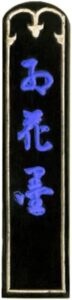 Kobaien Nara sumi inkstickThe ink stick you grind on it →
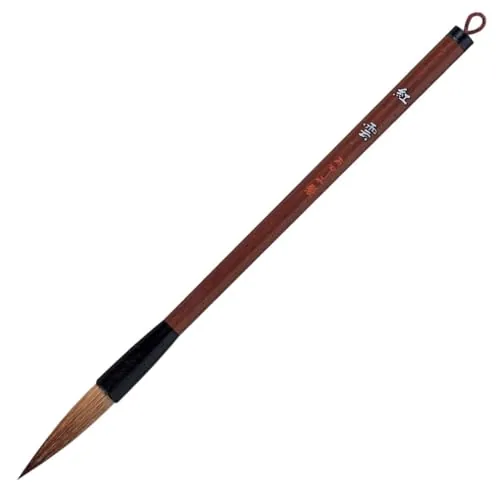 Akashiya Nara calligraphy brushThe fude to complete the set →
 Kumano fude brushes (Hiroshima)Japan’s brush-making capital →
Echizen washi goshuinchoHandmade paper for ink →
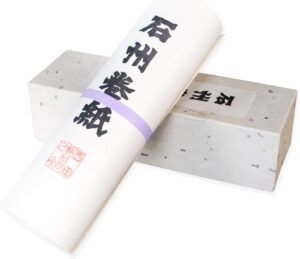 Sekishu washi scroll paperUNESCO-listed writing paper →
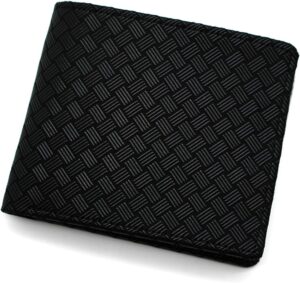 Koshu Inden wallet (same Yamanashi)Another craft from this prefecture →
Price snapshot across stores
JPY is the authoritative price for the specific listed item; USD figures elsewhere on jpmono are approximate estimates at a ¥150/USD baseline. For this listing, no live price was returned by the source feeds, so the cells below direct you to verify current figures at the retailer.
| Store | Item / Variant | Price | Notes |
|---|---|---|---|
| 🇺🇸 Amazon US (search) | Browse Japanese inkstones & calligraphy supplies | varies (USD) | Best if you are shopping from the US — Prime shipping, USD pricing, no international customs. Amazon US carries suzuri, sumi sticks, and brushes from various makers for comparing tiers; the Amehata piece itself ships from Japan (next row). |
| 🇯🇵 Amazon JP Global Store | Amehata black slate suzuri ~4–5 sun (ASIN B01N7GCOAV) | ¥ — (check live listing) | Where the specific item is sourced. Ships internationally from Japan to most major destinations. Price was unavailable at time of writing. |
| Maker direct | Amehata workshop / Yamanashi craft outlets | Varies | As the original mine is largely worked out, genuine stock is limited and not consistently listed online. Best provenance, least convenient for overseas buyers. |
| Proxy services (Buyee / Tenso) | Japan-only listings forwarded abroad | Item + fees | Useful for pieces not on the Global Store. Adds a service fee and a second shipping leg; factor in customs duties. |
What it does well
Weaknesses and things to verify before buying
- Scarcity and authenticity. The original Amehata mine is largely worked out, so genuine stock is limited and mislabeling is a real risk. Buy only where provenance is clear.
- No confirmed price. The source feeds returned no live pricing for this listing. Treat any figure you see as the moment’s price and verify before committing.
- Not tested first-hand. This is a catalog-and-spec review. We did not physically grind ink on this stone; performance notes come from the craft tradition and the spec, not our own bench test.
- Natural-material variation. Color, grain, and exact dimensions vary between pieces. The stone you receive will not be identical to any photo.
- Care is required. Ground ink left to dry on the stone, or harsh scrubbing, will damage the surface over time. A slate suzuri can also chip or crack if dropped.
- Overkill for casual use. If you write only occasionally or use bottled liquid ink, a connoisseur stone’s advantages are wasted; a basic suzuri does the job.
- Shipping and customs. A stone is heavy for its size, so international shipping is not trivial, and orders above local thresholds may attract import duties.
Conclusion — which buyer type are you?
Other ways to approach this purchase
Where this comes from

Amehata (雨畑) lies in the Hayakawa valley of Minamikoma District, in the southwest corner of Yamanashi Prefecture, deep in the Southern Alps and along the upper reaches of the Fujikawa river. This is mountain country: steep, forested, and sparsely settled. The craft took root here for the most basic of reasons — the rock itself. The valley’s beds of fine black clay slate (nenbangan) provided exactly the dense, even-grained stone that a good inkstone demands, and the river valley gave the early settlements their access route out toward the Kōfu basin and beyond.
Yamanashi is landlocked, bounded by mountains on every side, with Mt. Fuji on its southern frontier. In the old provincial system it was Kai province, later known as Koshu — the same Koshu whose name attaches to the prefecture’s lacquered-leather craft, Koshu Inden.
Local lore traces the discovery of Amehata’s ink-grinding slate to the 14th century. The story holds that a priest of the Nichiren sect, active in this region, recognized that the local black slate was well suited to grinding sumi. From those beginnings the craft matured under the Tokugawa shoguns, when Amehata suzuri became the prized inkstone of Koshu, patronized by samurai and by the literati class for whom calligraphy was a core discipline.
-
c. 1335 (Kenmu era) — A Nichiren-sect priest is traditionally said to discover ink-grinding black slate at Amehata. -
1603–1868 (Edo period) — Production matures; Amehata suzuri becomes Koshu province’s prized inkstone, patronized by samurai and literati. -
19th century — The stone is counted among Japan’s notable suzuri, alongside slates such as Ogatsu. -
20th century — The original Amehata mine is progressively worked out, reducing the supply of new stone. -
2026 — Genuine Amehata pieces are increasingly scarce and treated as a connoisseur’s inkstone.
What sets the stone apart is a matter of physics as much as heritage. The grain of Amehata slate is tight and hard, which gives the grinding surface a fine hōbō — the microscopic teeth that shave a sumi stick into pigment. A fine, even hōbō breaks the ink down smoothly, without the gritty particles a coarse stone leaves behind, and the dense surface holds the resulting ink so that it does not dry out as fast while you work. For a calligrapher mid-composition, that working window is not a small thing.
“An inkstone is not a container for ink — it is the tool that makes the ink. The stone’s grain decides what the brush can do.”
The continuity case is honest but sober. Amehata is not a story of dozens of thriving workshops; it is a story of a once-celebrated stone whose seam has largely given out. That scarcity is precisely why a genuine Amehata suzuri is now a connoisseur’s object — and why buyers should weigh provenance heavily. Within the jpmono map of Japanese craft, Amehata fills Yamanashi’s second cell beyond Koshu Inden leather, and it sits at the center of the site’s calligraphy cluster: the sumi stick you grind, the fude you write with, and the washi you write on.
🏆 Editor’s Pick
❓ Frequently Asked Questions
Where is Amehata suzuri made?
In Amehata, in the Hayakawa valley of Minamikoma District, Yamanashi Prefecture — mountain country in Japan’s Southern Alps, along the upper Fujikawa river, roughly 120 km west of Tokyo. The stone is quarried from the valley’s black clay-slate beds.
What makes Amehata slate good for grinding sumi?
Its tight, hard grain gives the grinding surface a fine hōbō (the microscopic teeth that shave the ink stick), which breaks sumi down smoothly. The dense stone also helps keep the ground ink from drying out quickly, giving a longer working window.
Is genuine Amehata inkstone hard to find now?
Yes. The original Amehata mine is largely worked out, so new stock is limited and genuine pieces are increasingly scarce. That scarcity makes provenance important — buy from sellers who can document the stone’s origin.
Does Amazon JP Global Store ship inkstones internationally?
Amazon JP Global Store ships many household and craft items internationally to most major destinations, and the specific listing in this guide is sourced there. A stone is heavy for its size, so check the exact shipping cost and any customs duties at checkout.
How do I care for a slate inkstone?
Rinse off ground ink with water after use and do not let ink dry hard on the surface; avoid harsh abrasives that wear down the grain. Handle it carefully — slate can chip or crack if dropped. With basic care a suzuri lasts for decades.
How does Amehata compare to Ogatsu suzuri?
Both are black-slate inkstones. Amehata (Yamanashi) is prized for a fine hōbō and is now scarce because its mine is largely worked out; Ogatsu (Miyagi) is Japan’s best-known suzuri stone and is more consistently available. See our dedicated Ogatsu guide for that stone’s specifics.
Can beginners use this, or is it only for experts?
A beginner can use it, but a scarce connoisseur stone is more than most newcomers need. If you are starting out, a basic practice suzuri (or an Ogatsu stone) delivers the function at lower cost; upgrade to a stone like Amehata once you grind ink regularly.
jpmono.com is curated by a Japan-based editorial team (working out of Toyama in the Hokuriku region and Nara in Kansai) and is independent. We do not take payment from the makers we feature; income comes from affiliate links. We do not physically test every product — we read maker specs and source listings.
This article was prepared with AI assistance and reviewed against the source data available at the time of writing. Specifications, pricing, and availability should be confirmed on the retailer’s page before purchase.
Affiliate disclosure: jpmono.com may earn a commission on qualifying purchases made through links on this page, at no additional cost to you.