![Etchu Seto-yaki Yuzamashi: Where to Buy Toyama Ash-Glaze Ware [2026]](https://jpmono.com/wp-content/uploads/2026/05/japan-map-regions-and-prefectures-800x1050.png)
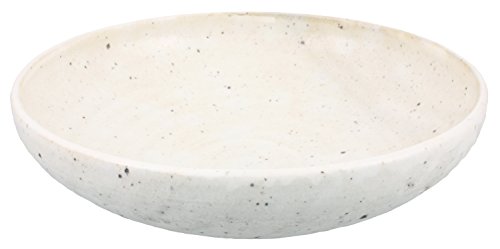
- What it is: a yuzamashi — an open, lipped stoneware bowl that holds boiled water until it drops to sencha temperature, roughly 70°C (about 158°F)
- Made in: the Seto district of Tateyama-machi, Toyama Prefecture — Etchu Seto-yaki (越中瀬戸焼), the prefecture’s oldest kiln line, founded in the 1580s
- Price band: Single-vessel tea-utensil tier from a small working kiln.
- Best for: loose-leaf sencha drinkers who already own a kyusu and keep scalding the first infusion
- Skip if: you brew with a kettle that holds a set temperature, or you want a matched, machine-uniform tea set
- Shipping: ships internationally from Amazon Japan, including to Canada, the UK, and Australia — jump to our pick ↓
Water that has just boiled will ruin sencha. At 100°C the leaf gives up its bitterness first and its sweetness never arrives, which is why a Japanese tea tray usually carries one vessel that does no brewing, no pouring, and no serving — it simply holds hot water and waits for it to fall to around 70°C. That vessel is the yuzamashi (湯冷まし, literally “water cooler”), and in Toyama Prefecture it is made at kilns that trace back to a warlord’s recruitment drive in the 1580s.
Etchu Seto-yaki (越中瀬戸焼) is Toyama’s oldest ceramic tradition. It sits in the Seto district of Tateyama-machi, at the foot of the Tateyama mountain range, and its name is a piece of history rather than geography: around 1583 the warlord Sasa Narimasa, then ruling the province of Etchu from Toyama Castle, invited potters from Seto in Owari — today’s Aichi Prefecture — to settle in his territory. The name records the migration. Under the later Kaga domain of the Maeda family, the kilns supplied tea utensils alongside everyday stoneware, and the same domain tea culture that sustained Kanazawa gold leaf and Yamanaka woodturning shaped what came out of the fire.
This guide is written for a reader outside Japan who is weighing a single hand-thrown tea vessel against a mass-produced set, and who needs to understand how the vessel is made before committing. Below: what a yuzamashi does and whether you need one, what the craft tradition does and does not establish, the place and kiln line the piece comes from, honest weaknesses, and the international shipping path from Japan.
🔄 Updated:
⏱️ Read time: about 11 minutes
- Who this is for — and who should skip it
- Product overview (from published specs)
- 📍 Where this comes from — place, era, and the craft tradition
- 📦 Shipping & where to buy from outside Japan
- Where to buy
- What it does well
- Weaknesses and things to verify before buying
- Conclusion — which buyer type are you?
- Other ways to approach this purchase
- ❓ Frequently Asked Questions
Who this is for — and who should skip it
- Brew loose-leaf sencha or gyokuro and want the first infusion to stop coming out bitter
- Already own a kyusu (急須, side-handled teapot) and are filling the last gap in the set
- Prefer one hand-thrown object with visible glaze movement over a matched factory set
- Want a Toyama craft piece with a documented kiln line rather than a generic “Japanese pottery” import
- Are comfortable buying from Amazon Japan’s Global Store and having import fees estimated at checkout
- Use a variable-temperature electric kettle — that already solves the problem this vessel solves
- Drink mainly bagged tea, black tea, or hojicha, all of which want near-boiling water
- Expect every unit to match the product photograph exactly — ash glaze does not behave that way
- Specifications vary by vessel. Check the product information before ordering.
- Want dishwasher-safe, drop-tolerant daily tableware for a household with small children
Product overview (from published specs)
ℹ️ Etchu Seto-yaki yuzamashi are hand-thrown ash-glazed vessels; capacity and other dimensions vary by maker.
| Attribute | What the sources state | Source |
|---|---|---|
| Object type | Yuzamashi — sencha water cooler with a formed pouring lip | Amazon JP Global Store |
| Craft tradition | Etchu Seto-yaki (越中瀬戸焼), Toyama’s oldest ceramic line | Maker direct / kiln documentation |
| Origin | Seto district, Tateyama-machi, Toyama Prefecture | Maker direct / kiln documentation |
| Body | Stoneware from local clay, hand-thrown on the wheel | Amazon JP Global Store |
| Glaze | Wood-ash glaze (with iron glazes used across the kiln line); pools thicker where the wall is thrown thin | Maker direct / kiln documentation |
| Capacity | — | — |
| Dimensions / weight | — | — |
| Dishwasher / microwave rating | Unconfirmed — hand-wash is the conventional handling for hand-thrown ash-glazed stoneware | — |
| Price | — | Amazon JP Global Store |
| International shipping | Available via Amazon JP Global Store; import fees estimated at checkout | Amazon JP Global Store |
📖 Glossary — the Japanese terms used in this article
- yuzamashi (湯冷まし) — literally “water cooler.” An open, lipped bowl that holds just-boiled water while it drops to brewing temperature.
- sencha (煎茶) — Japan’s everyday steamed green tea, brewed well below boiling.
- gyokuro (玉露) — shade-grown green tea, brewed cooler still, at roughly 50–60°C.
- kyusu (急須) — the side-handled Japanese teapot the cooled water is poured into.
- yunomi (湯呑) — a tall everyday teacup without a handle.
- Etchu (越中) — the pre-modern province corresponding to today’s Toyama Prefecture.
- Owari (尾張) — the pre-modern province corresponding to the western part of today’s Aichi Prefecture, and the original Seto.
- haiyu (灰釉) — ash glaze, made with wood ash; it flows during firing and pools where the clay wall is thin.
- Kaga domain (加賀藩) — the Maeda family’s Edo-period domain, which governed this part of Etchu.
- kintsugi (金継ぎ) — the lacquer-and-gold repair method used on broken ceramics.
📍 Where this comes from — place, era, and the craft tradition

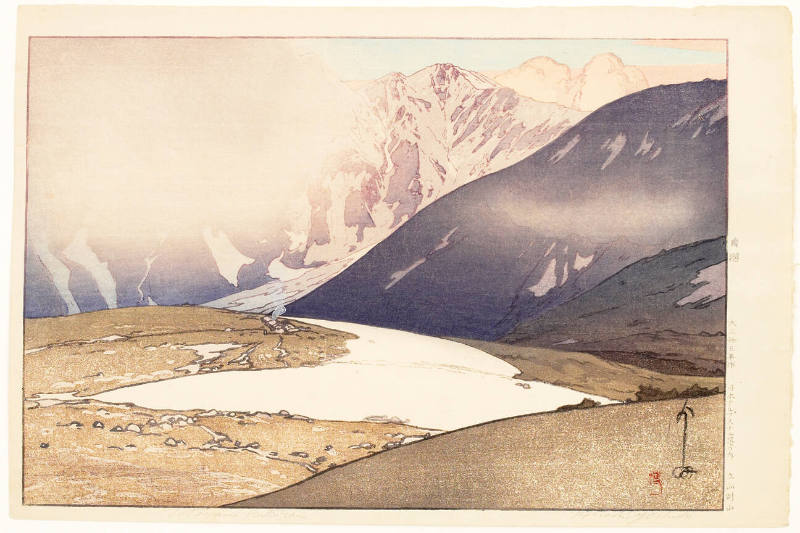
Toyama Prefecture faces the Sea of Japan, and its southern and eastern edges climb straight into the Northern Japanese Alps. The Tateyama range is the wall behind everything here. It catches enormous winter snowfall, releases it slowly through spring and summer, and sends it down through the prefecture as meltwater that is famously soft — low in dissolved mineral content, and therefore well suited to green tea, which turns dull and flat in hard water.
That matters more than it sounds. A kiln town’s product line is shaped by what the local water is good for, and Toyama’s water is good for sencha. Kyusu, yunomi, and the yuzamashi that cools boiling water before it touches the leaf are the natural output of a pottery district sitting under a snow mountain.
“The name Seto, in Toyama, is not a place. It is a record of who moved here, and roughly when.”
The historical anchor — a warlord, a castle, and an imported workforce
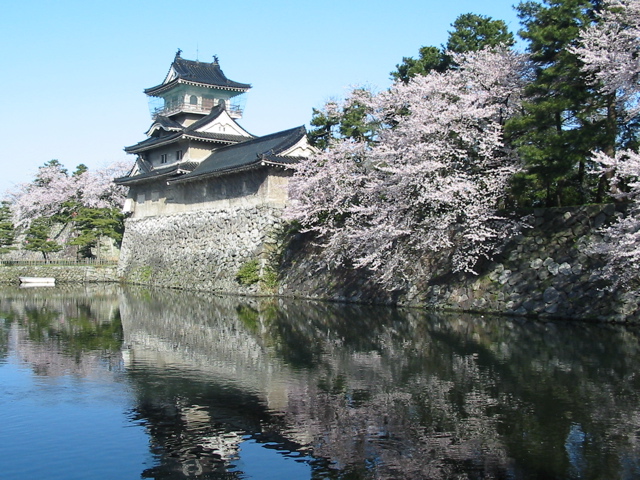
Around 1583, Sasa Narimasa was governing the province of Etchu from Toyama Castle, and he brought in potters from Seto in Owari — the ceramic town in what is now Aichi Prefecture — to settle in his territory and work the local clay. Kiln traditions in Japan are usually named for where they stand. This one is named for where its founders came from.
The line outlived its founder. Under the Kaga domain of the Maeda family, the kilns supplied tea utensils as well as everyday stoneware, and the demand was not incidental — Maeda domain tea culture is the same patronage environment that produced Kanazawa gold leaf and Yamanaka woodturning, two other Hokuriku crafts that still exist today. A domain that took tea seriously needed vessels, and it had a kiln district inside its own borders.
-
c. 1583 — Sasa Narimasa, ruling Etchu from Toyama Castle, invites potters from Seto in Owari to settle in the province. -
1580s — The Seto district of what is now Tateyama-machi becomes Toyama’s first ceramic center; the transplanted name sticks. -
Edo period (1603–1868) — Under the Maeda family’s Kaga domain, the kilns fire tea utensils alongside everyday stoneware for local households. -
Same era — The same domain tea culture sustains Kanazawa gold leaf and Yamanaka woodturning, both still active Hokuriku crafts. -
After 1868 (Meiji period onward) — Production shrinks sharply as domain patronage ends and industrial ceramics scale up elsewhere. -
20th century — The tradition survives, but only a handful of workshops remain in operation. -
2026 — Those surviving kilns still fire local clay with wood-ash and iron glazes, sencha vessels included.
The Kaga domain and why tea utensils, specifically
Craft survives where somebody keeps buying. In Hokuriku that somebody was the Maeda house, and the through-line connecting Kanazawa’s gold-leaf workshops, Yamanaka’s woodturners, and the Etchu Seto kilns is a single sustained appetite for objects used in serving and drinking tea. A domain that treats tea as a formal practice generates demand for water jars, bowls, caddies, trays, and coolers, decade after decade, and that demand is what keeps a kiln district alive long enough to develop a house style.
What “still being made here” actually means
It is worth being precise rather than romantic about the present. Etchu Seto-yaki is not a large industry. Production contracted sharply after the Meiji period, and only a handful of workshops remain in the Seto district today — this is a small, working kiln line, not a heritage theme park and not a factory.
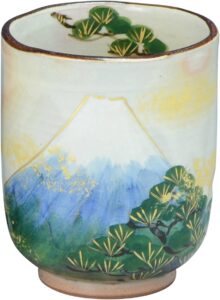
The material behavior is the direct consequence of that scale. These kilns fire local clay under wood-ash and iron glazes, and ash glaze moves in the heat: it runs, thins over the high points, and pools thick exactly where the potter threw the wall thin. On a wheel-thrown yuzamashi, whose whole geometry is a shallow open bowl with one pulled lip, that pooling is the most visible thing about the finished object.
Which also means no two are identical. That is a fact about the process, not a marketing line, and it cuts both ways — it is the reason the piece is interesting and the reason the unit you receive will differ from the photograph.
“A yuzamashi does no brewing, no steeping, and no serving. It holds water and waits. That restraint is the entire design.”
Water, season, and the tea table
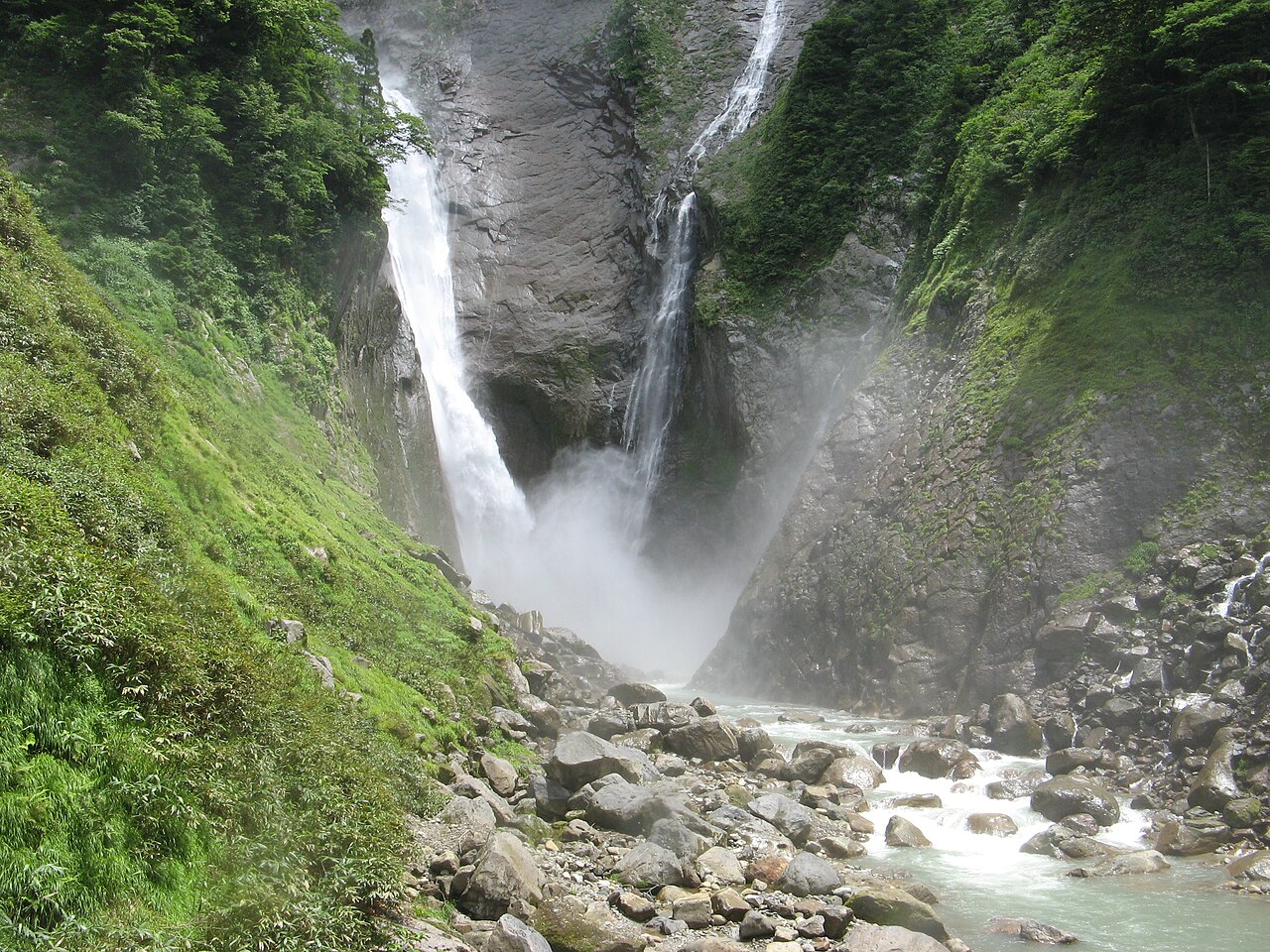
Everything above converges on one small object. Tateyama snowmelt gives Toyama soft water; soft water brews good sencha; good sencha requires water well under boiling; a yuzamashi is the vessel that gets it there. A kiln line four centuries old, sitting under the mountain that produces the water, making the bowl that cools it — that is a coherent story rather than a decorative one.
Other Hokuriku and tea-table pieces we have covered — useful for placing this yuzamashi against neighboring crafts, and for building out a tea set from the same region.
📦 Shipping & where to buy from outside Japan
Amazon Japan’s Global Store ships household goods to more than sixty-five countries, and that explicitly includes Canada, the UK, and Australia, not only the United States. Each of those linked guides covers the local duty threshold, the usual carrier handoff, and what a realistic delivery window looks like.
For a single small ceramic vessel, international shipping typically varies by destination, carrier, and speed. Duties depend on the destination country’s threshold, so check the customs rules before ordering.
One packing note specific to this category: a hand-thrown open bowl with a pulled lip is more fragile than a closed form. It is worth checking whether the seller offers gift or reinforced packing at checkout.
Where to buy
| Store | Item / Variant | Price | Notes |
|---|---|---|---|
| 🇺🇸 Amazon US (search) | Browse Japanese sencha tea ware | varies (USD) | Best if you are shopping from the US — Prime shipping, USD pricing, no international customs step. Amazon US carries kyusu, yunomi, and yuzamashi from Tokoname, Hasami, and Banko makers, which is useful for comparing shapes and price tiers. The Etchu Seto-yaki piece itself is sourced from Japan (next row). |
| 🇯🇵 Amazon JP Global Store | Etchu Seto-yaki ash-glaze yuzamashi | — | Ships internationally from Japan to 65+ countries — including Canada, the UK, and Australia — with import fees estimated at checkout. |
| Maker direct | Kiln stock, Seto district, Tateyama-machi | Unconfirmed | Only a handful of workshops remain in the district, and overseas ordering is not standard practice for kilns of this size. Treat maker-direct as a route for visitors to Toyama rather than a reliable import path. |
| Proxy services (Buyee / Tenso) | Japan-market Etchu Seto-yaki tea ware | Item price plus service fee | Useful for reaching Japan-only sellers and secondhand stock. Expect an added service fee, a forwarding step, and customs handling on your side. |
Prices and availability shown are based on data at the time of writing, August 23, 2026, and may have changed. Where a USD figure appears alongside JPY elsewhere on this site, it is an approximation at a ¥150/USD baseline; the JPY price is the authoritative one.
What it does well
- 🍽️ Dishwasher: hand-washing is the safe default for hand-thrown ash-glazed stoneware.
- ♨️ Microwave: no rating stated, and not relevant in use — a yuzamashi receives already-boiled water rather than heating it
- 🧴 Daily care: rinse with hot water after use and dry before storing; tea tannins will stain a porous foot ring if the piece is left wet
- 🔥 Thermal shock: pour hot water into a room-temperature bowl steadily, not in one shock; never take it from cold storage straight to boiling water
- 🔧 Repairs: no maker repair service is documented for this tea ware; broken stoneware of this type is conventionally repaired by kintsugi (金継ぎ) rather than replaced
Weaknesses and things to verify before buying
- Capacity matters. A yuzamashi should hold at least as much water as your kyusu takes in one filling. Choose one that suits your teapot before ordering.
- Care and fit vary by vessel. Confirm any dishwasher or microwave guidance before ordering.
- Availability changes over time. Compare current product information before ordering.
- The unit you receive will not match the photo exactly. Ash glaze runs and pools differently on every firing, and the piece is thrown by hand. Buyers who want visual uniformity across a set will be disappointed; this is a property of the process, not a defect.
- It is a single-purpose object. A yuzamashi cools water. If you do not brew loose-leaf green tea regularly, it will sit on the shelf — and a variable-temperature kettle replaces its function entirely for anyone who already owns one.
- An open lipped bowl is fragile in transit and in use. The pulled lip is the thinnest and most exposed part of the form. It is worth confirming the packing option at checkout, and it is not the right shape for a household where dishes get stacked in a hurry.
- Supply is genuinely thin. Only a handful of workshops remain in the Seto district. Restocking is not guaranteed, and an out-of-stock product may have no equivalent unit to reorder.
Conclusion — which buyer type are you?
Other ways to approach this purchase
❓ Frequently Asked Questions
What is a yuzamashi actually for?
It cools just-boiled water before brewing. Sencha is brewed at roughly 70°C, and water at 100°C extracts bitterness from the leaf while leaving the sweetness behind. You pour boiled water into the yuzamashi, let it stand while the open bowl and the stoneware body pull the temperature down, then pour it into the kyusu. The vessel does no brewing and no serving — holding water is its entire function.
Does Amazon Japan ship this outside Japan?
International availability for Japanese household ceramics varies by destination and retailer. Check carrier coverage and import requirements before ordering.
Is Etchu Seto-yaki the same as Seto-yaki from Aichi?
No, and the shared name is the reason for the confusion. Around 1583 the warlord Sasa Narimasa, ruling Etchu from Toyama Castle, invited potters from Seto in Owari province — today’s Aichi Prefecture — to settle in his territory. The Toyama kiln district took its name from where those founders came from rather than from a local place-name. Etchu Seto-yaki has been a separate tradition in Toyama ever since.
Can I put it in the dishwasher or the microwave?
Hand-washing is the conventional handling for hand-thrown ash-glazed stoneware and is the safe assumption here. Avoid sudden temperature changes. A yuzamashi receives water that has already been boiled rather than heating it, so it is not used as a cooking vessel.
Will the piece I receive look exactly like the photograph?
No. Wood-ash glaze moves during firing — it runs, thins over high points, and pools thick where the potter threw the wall thin — and the body is thrown by hand. Color depth, glaze pooling, and small profile differences vary from piece to piece. That variation is a property of the process rather than a defect, but buyers who want uniformity across a matched set should know it in advance.
What else do I need to brew sencha this way?
A kyusu, the side-handled Japanese teapot, and small cups pair naturally with a yuzamashi. Its capacity should be at least as large as the amount of water your kyusu takes in a single filling, so you can pour once and keep temperature control.
Why is Toyama a sensible place to buy tea ware from?
Two reasons compound. Snowmelt from the Tateyama range gives Toyama famously soft water, which suits green tea, so sencha vessels are a natural product line for kilns sitting under that mountain. And under the Maeda family’s Kaga domain the local kilns supplied tea utensils for centuries — the same patronage that sustained Kanazawa gold leaf and Yamanaka woodturning. The tea-ware focus here is inherited, not invented for export.
jpmono.com is a Japan-based curation site with editorial centers in Toyama (Hokuriku region — Takaoka metalcasting, Toyama glass, Etchu washi) and Nara (Kansai region — the historical heartland of Japanese craft), introducing Japanese household objects to international readers. We focus on items with verifiable craft heritage and clear traditional context. We do not physically test every product; we describe maker specifications and say plainly when a detail is unconfirmed. We take no payment from the makers we feature — income comes from affiliate links.
This article was drafted with AI assistance and reviewed by the jpmono editorial team before publication. Claims about the craft tradition are drawn from maker and kiln documentation; dimensions and other item details may vary by maker.
Affiliate disclosure: jpmono.com may earn a commission on qualifying purchases made through links on this page, at no additional cost to you.