![Hagi Cast Iron Furin Wind Chime from Yamaguchi: Where to Buy [2026]](https://jpmono.com/wp-content/uploads/2026/05/japan-map-regions-and-prefectures-800x1050.png)
A furin (風鈴, “wind chime”) is one of the quietest objects in the Japanese summer, and one of the most loaded. Hung at a veranda eave, it does almost nothing until the air moves — then a single iron note rings out and lingers. The piece in this guide is a cast iron furin from Hagi, in Yamaguchi Prefecture, made in the nambu (南部) casting style: an iron bell with an iron clapper and a paper strip (tanzaku) that catches the breeze.
Yamaguchi is not the first place most people associate with cast iron — that distinction belongs to Iwate’s Nambu ironware, the national flagship of the iron furin. What Hagi brings is a different lineage. This was the castle town of the Mōri domain after the Battle of Sekigahara in 1600, and the surrounding region carries one of Japan’s densest concentrations of industrial-iron heritage: the Ōitayama Tatara sand-iron works and the Hagi Reverberatory Furnace, both inscribed by UNESCO as “Sites of Japan’s Meiji Industrial Revolution.” A contemporary Hagi furin draws on that regional ironworking culture rather than on a centuries-old furin guild.
This article is for international readers weighing a cast iron furin rooted in Yamaguchi rather than Iwate. It explains how cast iron chimes differ from glass, the place and history behind the form, how to buy one outside Japan, and which buyer it suits. Where details vary among makers, we say so plainly.
🔄 Last updated: June 12, 2026
⏱️ Read time: ~9 min
- Who this is for — and who should skip it
- Product overview (from published specs)
- Where this comes from — place, era, and the craft tradition
- 📦 Shipping & where to buy from outside Japan
- Price information
- What it does well
- Weaknesses and things to verify before buying
- Conclusion — which buyer type are you?
- Other ways to approach this purchase
- ❓ Frequently Asked Questions
Who this is for — and who should skip it
- Want the deep, long-lingering ring of an iron chime rather than the bright tinkle of glass
- Appreciate cast iron as a material and want a furin tied to a documented regional iron heritage
- Are furnishing a veranda, eave, garden, or window where the chime catches a real breeze
- Like seasonal Japanese objects and the ritual of putting the furin out in early summer
- Are comfortable with light rust-prevention care (keeping the iron dry)
- Expect a centuries-old “Hagi furin” guild — this is a contemporary craft on a regional iron lineage
- Prefer the colorful, painted look of an Edo glass (Edo fūrin) wind chime
- Have no outdoor or airflow spot — a chime that never moves never rings
- Live somewhere with close neighbors who may not want a recurring note
Product overview (from published specs)
A Hagi-area cast iron furin in the nambu casting style has an iron body and clapper that together produce a clear, sustained tone. Dimensions, weight, and price vary by maker and size, so details not established for the craft are left unfilled rather than guessed.
| Attribute | Value |
|---|---|
| Item | Cast iron furin (wind chime), Hagi / Yamaguchi |
| Material | Cast iron bell body and iron clapper (zetsu) |
| Casting style | Nambu-style cast iron |
| Tone | Clear, long-lingering ring |
| Strip / tassel | Paper strip (tanzaku) hung below the clapper to catch the wind |
| Origin | Yamaguchi Prefecture, Japan |
| Dimensions / Weight | Not confirmed |
| Price | — |
Comparable Japanese cast iron furin are available through US-facing searches, Japanese retail channels, and proxy services. Availability, prices, and shipping can change over time.
📖 Glossary — key terms
Furin (風鈴, “wind bell”) — a small wind chime, traditionally hung at an eave in summer. The recurring note is associated with a sense of coolness.
Nambu (南部) — the casting tradition of the former Nambu domain in present-day Iwate Prefecture, famous for cast iron kettles (tetsubin) and wind chimes. “Nambu-style” describes the cast iron technique, not necessarily the place of manufacture.
Tatara (たたら) — the traditional Japanese smelting method that turns iron sand into steel and pig iron, using a clay furnace and bellows. The Ōitayama Tatara in northern Yamaguchi is a preserved example.
Tanzaku (短冊) — a narrow strip of paper hung below the chime’s clapper. It catches the wind so the clapper swings, and is often printed with a seasonal motif.
Zetsu (舌, “tongue”) — the clapper inside the bell that strikes the wall to produce the tone.
Where this comes from — place, era, and the craft tradition

Yamaguchi occupies the southwestern end of Honshū, the main Japanese island, wedged between the Sea of Japan to the north and the Seto Inland Sea to the south. Hagi sits on the northern, Sea-of-Japan coast — a windswept, maritime setting of inlets, river deltas, and offshore islands. It is far from Tokyo by any measure, closer in spirit to the western trading and smelting world that once connected the region to the continent. That coastal exposure matters for a wind chime: this is a place where the wind is a constant, not an occasional visitor.
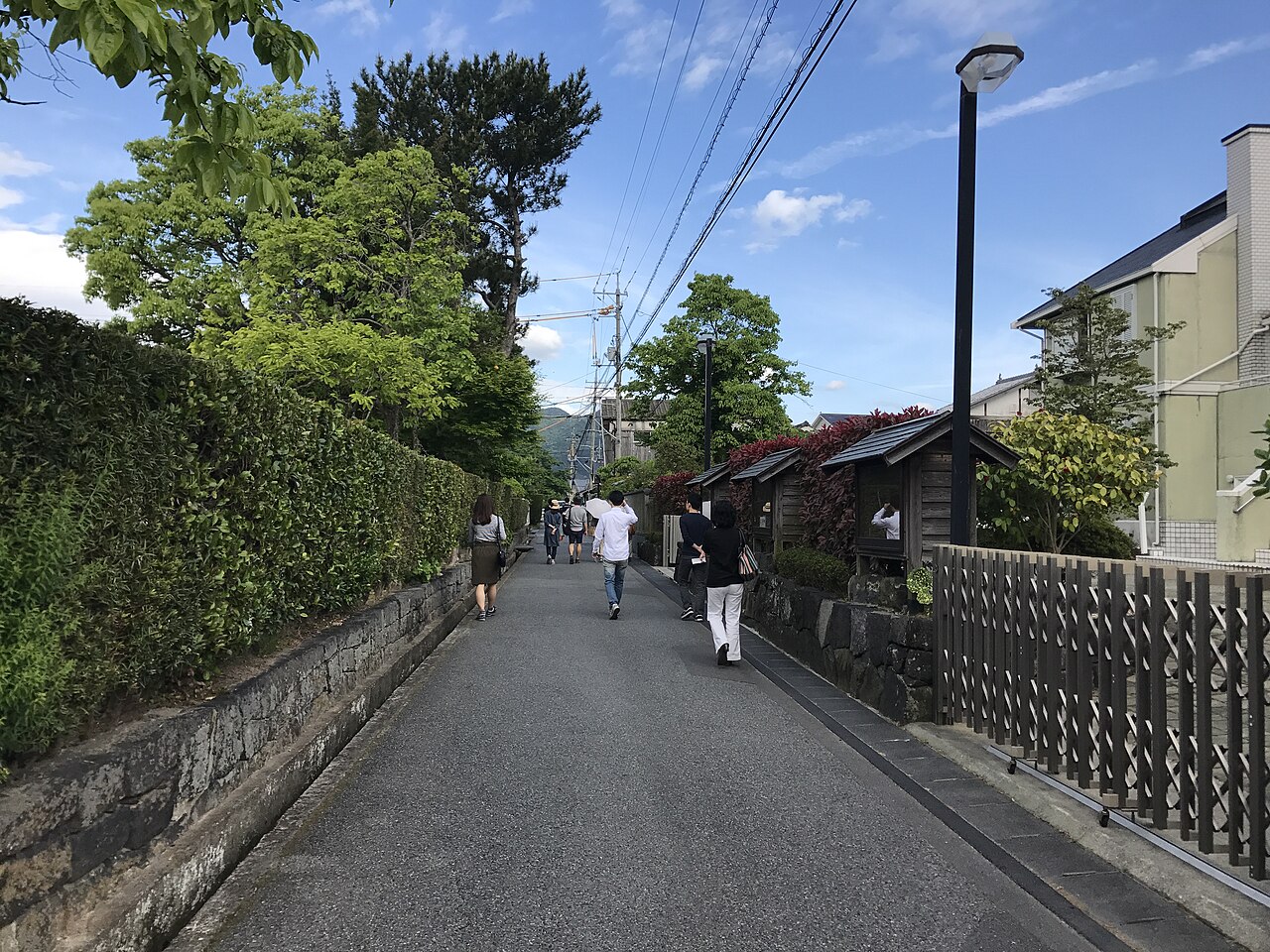
Hagi became historically important in the early Edo period. After the Mōri clan lost its central holdings following the Battle of Sekigahara in 1600, Mōri Terumoto established a new castle and castle town at Hagi, which served as the seat of the Chōshū domain for most of the Edo period. The grid of samurai residences, earthen walls, and merchant streets survives remarkably intact and is part of Hagi’s UNESCO World Heritage listing. A castle town concentrated artisans — including metalworkers serving the domain — and that concentration is the soil in which a regional iron culture grew.
Earlier still, the wider region had a golden age under the Ōuchi clan, who made the city of Yamaguchi a cultural capital in the Muromachi period — wealthy enough on continental trade to be called the “Kyoto of the West.” The five-story pagoda of Rurikō-ji, completed in 1442, is the surviving monument of that era and one of Japan’s three most celebrated pagodas.
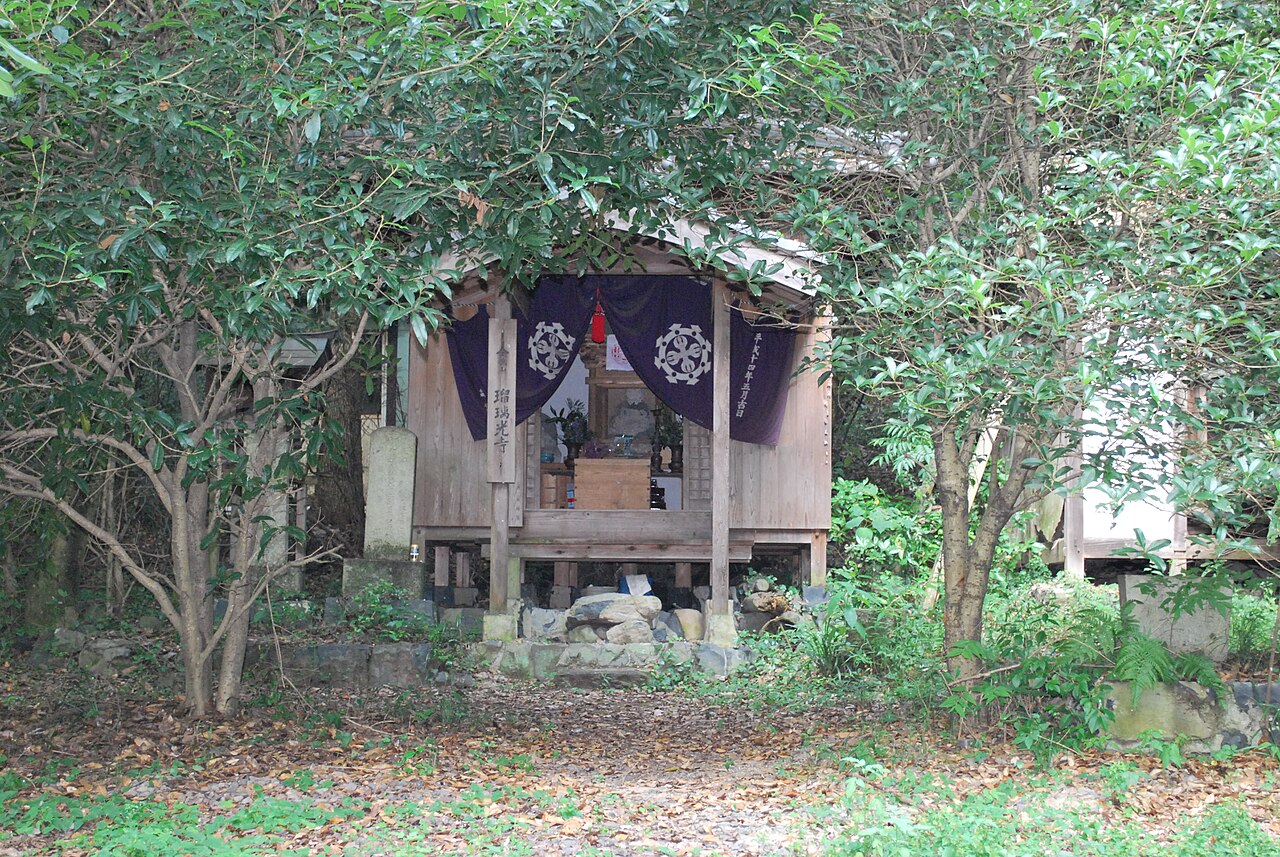
The iron story sharpens in the late Edo bakumatsu years. The Chōshū domain was an industrial and political powerhouse in the decades before the Meiji Restoration of 1868, and northern Yamaguchi holds two pieces of that heritage now recognized by UNESCO. The Ōitayama Tatara was a sand-iron smelting works of the traditional Japanese type. The Hagi Reverberatory Furnace, built by the domain in the 1850s, was an experiment in casting iron for cannon — an attempt to modernize armaments under threat from foreign powers. Both were inscribed in 2015 as components of the “Sites of Japan’s Meiji Industrial Revolution.”
- 1442 — Rurikō-ji five-story pagoda completed during the Ōuchi clan’s “Kyoto of the West” era
- 1600 — Battle of Sekigahara; the Mōri clan loses its central domains
- 1604 — Mōri Terumoto founds Hagi as the castle town of the Chōshū domain
- Edo period — Ōitayama Tatara smelts iron sand into steel and pig iron in northern Yamaguchi
- 1856 — Hagi Reverberatory Furnace built by the Chōshū domain to cast cannon iron
- 1868 — Meiji Restoration, led in large part by Chōshū domain figures
- 2015 — Ōitayama Tatara and Hagi Reverberatory Furnace inscribed by UNESCO
- 2026 — Contemporary Yamaguchi foundries cast iron furin in the nambu style
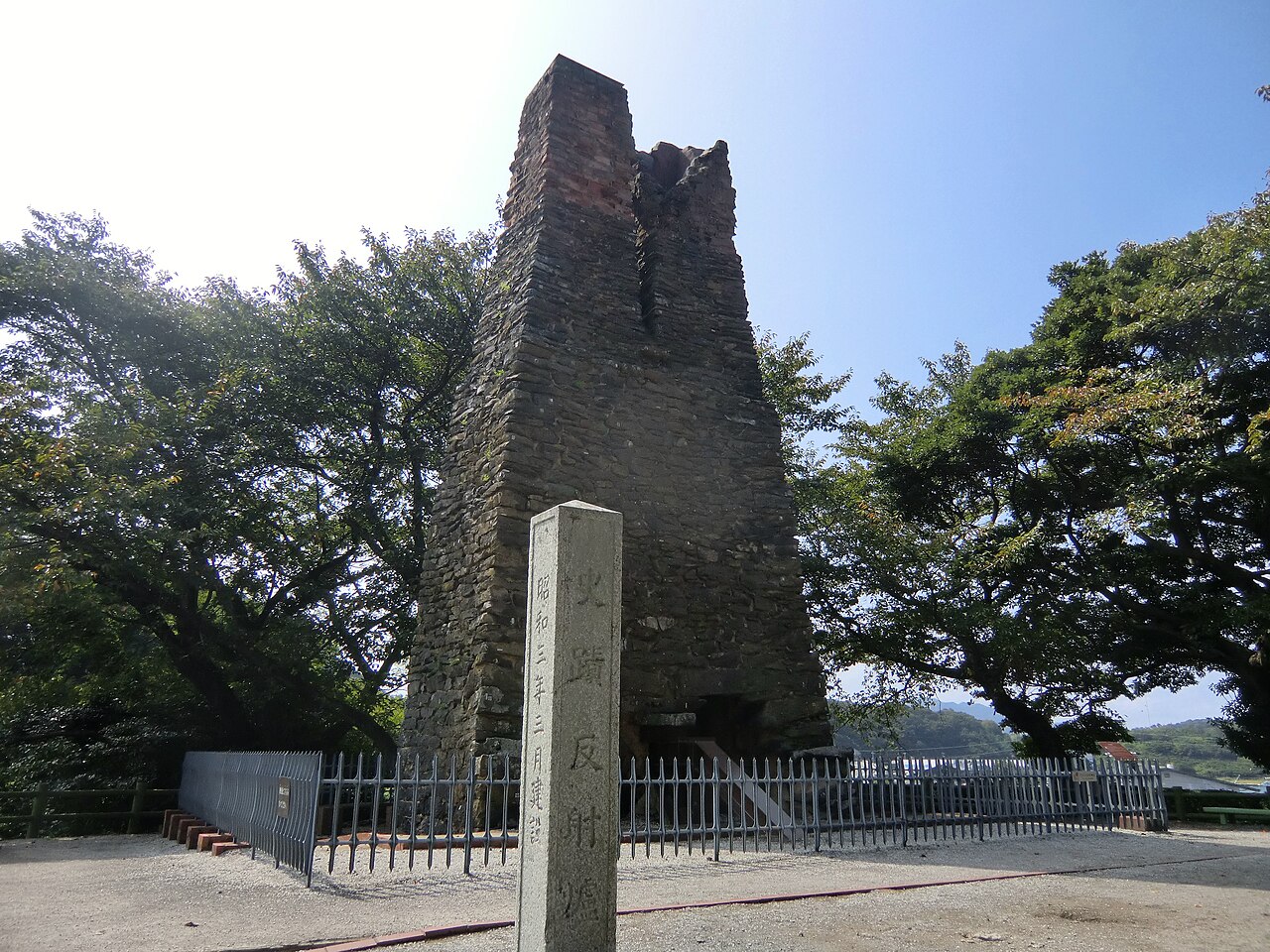
Here honesty matters more than romance. The iron wind chime as a craft type is most strongly associated with Iwate’s Nambu ironware, which remains the national flagship. A Hagi or Yamaguchi cast iron furin is best understood as a contemporary, regional craft made in the nambu casting style — drawing on Yamaguchi’s documented heritage of tatara smelting and reverberatory-furnace iron rather than on a centuries-old furin guild of its own. That is not a weakness; it is simply what the object is.
“Hagi did not invent the iron wind chime. But it has been pouring iron — for cannon, and later for craft — since the reverberatory furnace fired in the 1850s.”
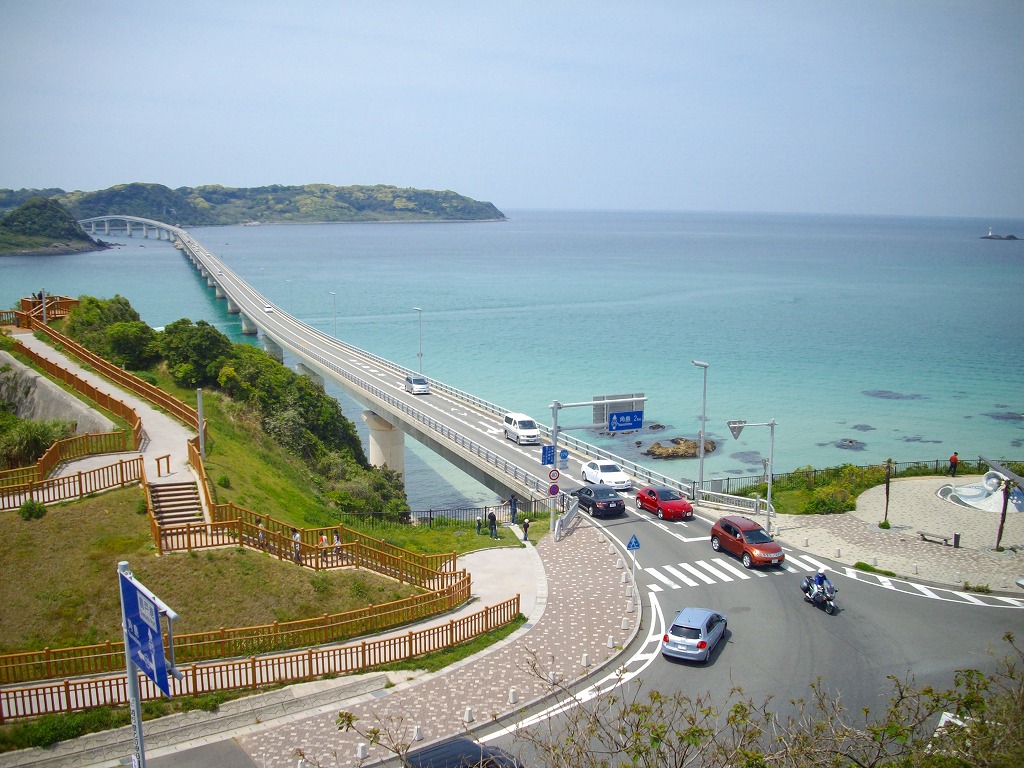
The seasonal logic of the furin fits the place. It is a summer object: hung out as the weather warms, it turns the coastal wind into a recurring note that, by long convention, is felt as cooling. On Yamaguchi’s exposed northern shore — the kind of windswept Sea-of-Japan coast you see at the Tsunoshima Bridge below — a chime rarely lacks for a breeze.
Related jpmono guides — other Japanese metal, blade, and craft objects worth weighing against this furin.
Another Yamaguchi metal craft — hand-forged blade
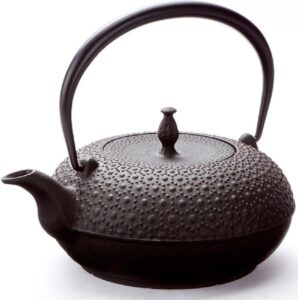 Nambu tetsubin iron kettle
The Iwate cast iron flagship lineage
 Kuwana cast iron skillet
Cast iron for the kitchen, Mie Prefecture
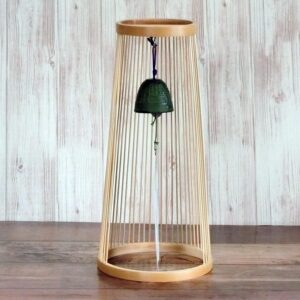 Suruga bamboo wind chime
A different furin material — bamboo, not iron
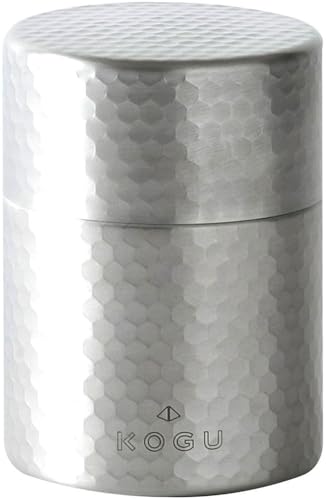 Kaikado tin tea caddy
Another Japanese metalcraft object
 Owari Shippo cloisonné
Decorative metalwork, Aichi Prefecture
Bizen ware beer mug
A neighboring Chūgoku-region craft
📦 Shipping & where to buy from outside Japan
A small cast iron furin is light and compact, so shipping is often simpler than for larger metalwork, although rates and customs depend on destination. Check import rules and duties before purchase.
If you are shopping from the US, compare Japanese cast iron furin through domestic retailers. Proxy services such as Buyee or Tenso can help when a Japanese retailer does not ship to your destination or when several purchases are consolidated into one parcel.
Price information
Prices for cast iron furin vary with size, finish, and workmanship. JPY prices are commonly used for Japanese craft goods, while USD conversions depend on the exchange rate.
| Store | Item / Variant | Price | Notes |
|---|---|---|---|
| 🇺🇸 Amazon.com (US) | Browse Japanese cast iron wind chimes | varies (USD) | Best if you are shopping from the US — Prime shipping, USD pricing, no international customs. Amazon US carries nambu-style cast iron furin from various makers, useful for comparing tone and size. This exact Yamaguchi piece is sourced from Japan (next row). |
| 🇯🇵 Amazon JP Global Store | Hagi cast iron furin | — | International shipping from Japan may involve customs or duties. |
| Maker direct | — | Unconfirmed | No verified maker-direct storefront was available in the fetched data; many small foundries sell only through retailers. |
| Proxy services (Buyee / Tenso) | Same item via forwarding | Item price + forwarding fee | Use if the Global Store does not ship to your country, or to consolidate multiple Japanese purchases into one parcel. |
What it does well
Weaknesses and things to verify before buying
- Size affects the tone. A furin’s tone depends partly on its size, so choose a size that suits the intended setting.
- Not a centuries-old “Hagi furin” tradition. This is a contemporary craft on a regional iron lineage. If you specifically want the flagship lineage, the Nambu (Iwate) furin is the better-documented choice.
- Cast iron rusts. Iron left in rain or humidity will develop rust. Keep it under an eave, bring it in during storms, and dry it if it gets wet. Some surface patina is normal and even valued.
- Sound is subjective and recurring. A wind chime rings whenever the wind blows. In dense housing or shared walls, a recurring note can bother neighbors — consider placement carefully.
- Needs airflow to work. Indoors with no draft, it is silent. It is designed for a veranda, window, balcony, or garden.
- Price and stock fluctuate. Pricing and availability shown are based on data at the time of writing and may have changed. Always confirm at the retailer before purchasing.
Conclusion — which buyer type are you?
Other ways to approach this purchase
❓ Frequently Asked Questions
Does the Amazon JP Global Store ship this furin internationally?
How is a cast iron furin different from a glass one?
Is this a centuries-old Hagi tradition?
How do I keep a cast iron wind chime from rusting?
What gives the furin its long-lingering tone?
Where is the best place to hang it?
jpmono.com is curated by a Japan-based editorial team (working out of Toyama in the Hokuriku region and Nara in Kansai) and is independent. We do not take payment from the makers we feature; income comes from affiliate links. We do not physically test every product — we read maker specifications and published craft information.
Affiliate disclosure: jpmono.com may earn a commission on qualifying purchases made through links on this page, at no additional cost to you.