![Iida Mizuhiki Paper Cords: Where to Buy Nagano’s Gift-Knot Craft [2026]](https://jpmono.com/wp-content/uploads/2026/05/japan-map-regions-and-prefectures-800x1050.png)
Mizuhiki (水引, water-pull) are the stiff, colorful paper cords tied into auspicious knots on Japanese gifts, money envelopes, and ceremonial wrapping. They are made by twisting thin strips of washi paper, coating them with starch — and sometimes silk thread or metallic foil — then drying them rigid so the cord holds a knot. They are used for gift wrapping and knot craft, with colors and materials chosen for the occasion.
What makes these cords more than generic craft supply is their origin. Roughly 70% or more of all mizuhiki produced in Japan comes from a single place: Iida, a city in the southern valleys of Nagano Prefecture. The trade there did not begin with gift wrapping at all — it grew out of motoyui, the paper topknot cords that bound samurai hair, which lower-ranking retainers of the Iida domain produced as a sanctioned side industry. When the Meiji-era haircut edicts ended the topknot, Iida’s makers turned the same twisting-and-starching technique to ceremonial gift cords, and the city became, in effect, the mizuhiki capital of Japan.
This guide is written for international readers who want to source genuine Iida-style mizuhiki for wrapping or craft — jewelry, knot art, card-making — and who want to understand what they are buying before they pay. We cover what the set is, where it comes from, how the knot forms carry meaning, how to buy it from outside Japan, and where the honest limits of the available data lie.
🔄 Last updated: June 14, 2026
⏱️ Read time: ~10 min
- Who this is for — and who should skip it
- Product overview (from published specs)
- Where this comes from — place, era, and the craft tradition
- Where to buy Iida mizuhiki cords
- What it does well
- Weaknesses and things to verify before buying
- Conclusion — which buyer type are you?
- Other ways to approach this purchase
- ❓ Frequently Asked Questions
Who this is for — and who should skip it
- Wrap gifts and want an authentic Japanese ceremonial finish (noshi, money envelopes)
- Make jewelry, knot art, or cards and want pre-stiffened cord that holds a shape
- Prefer washi-based, craft-grade cord over generic plastic ribbon
- Want material tied to a real production region rather than anonymous import stock
- Are comfortable buying an assorted set and sorting colors yourself
- Need a specific single color or exact cord count — assorted sets vary
- Want a finished, pre-tied knot ornament rather than raw cord
- Expect waterproof or outdoor-durable cord — this is starched paper
- Require confirmed dimensions and price before ordering (data here is thin)
- Want same-day domestic shipping inside the US — most stock ships from Japan
Product overview (from published specs)
| Attribute | Detail |
|---|---|
| Item | Mizuhiki decorative paper cord set, assorted colors |
| Material | Washi paper, twisted and starch-coated (some grades add silk/foil wrap) |
| Form | Rigid pre-stiffened cords (holds a knot) |
| Typical use | Gift wrapping, money envelopes, jewelry & knot craft |
| Cord length / count | — |
| Color assortment | — |
| Production region | Iida, Nagano (the dominant mizuhiki center, est. 70%+ of national output) |
| Price | Unconfirmed — live pricing was unavailable at time of writing |
📖 Glossary — key terms
- Mizuhiki (水引) — stiff washi-paper cords tied into auspicious knots for gifts and envelopes.
- Motoyui (元結) — the paper topknot cords once used to bind samurai hair; the technical ancestor of mizuhiki.
- Washi (和紙) — traditional Japanese paper, typically made from plant fibers such as kozo (paper mulberry).
- Kozo (楮) — paper mulberry, the long-fibered plant that gives washi its strength.
- Noshi (熨斗) — the decorative folded ornament/marking attached to formal gifts, often paired with mizuhiki.
- Goshugi-bukuro (御祝儀袋) — the special envelopes used to present money at weddings and celebrations, knotted with mizuhiki.
- Musubi-kiri (結び切り) — a “tie-once” knot that does not easily come undone; used for weddings and condolences (events that should happen only once).
- Awaji-musubi / cho-musubi (淡路結び / 蝶結び) — repeatable knots (the awaji loop, the butterfly bow) used for happy events that may recur.
Where this comes from — place, era, and the craft tradition

Iida sits in the deep valleys of southern Nagano (Shinshu), strung along the Tenryu River as it cuts south toward the Pacific. Nagano is a landlocked, mountainous prefecture in the Chūbu region of central Honshu, and Iida lies near its southern edge, far from the Sea of Japan and far from Tokyo. Two things that geography supplied mattered for paper-cord making: a steady source of kozo (paper mulberry) and washi production in the surrounding hills, and the clean, abundant water of the Tenryu valley needed to process fiber and starch.

The historical anchor here is not a temple or a castle keep but a samurai grooming custom. Under the Iida domain in the Edo period, lower-ranking retainers were permitted to produce motoyui — the paper cords that tied the topknot — as a sanctioned household side industry. It was respectable work that fit the warrior economy, and it built up exactly the skills mizuhiki would later need: twisting thin washi into cord and stiffening it so it holds.
Then the world changed. The Meiji-era haircut edicts ended the topknot, and with it the entire market for motoyui. Rather than let the craft die, Iida’s makers redirected the same twisting-and-starching technique toward ceremonial gift cords — the knots for noshi, for goshugi-bukuro money envelopes, for weddings and funerals. Over the twentieth century the town industrialized around this single product and became the dominant national source, producing an estimated 70% or more of Japan’s mizuhiki.
“When the topknot disappeared, Iida did not. The same hands that twisted cords for samurai hair learned to tie the knots that bless a wedding.”
-
Edo period (1603–1868) — Iida-domain retainers produce motoyui paper topknot cords as a sanctioned side industry. -
17th–18th c. — Local kozo/washi and the clean water of the Tenryu valley sustain the paper-cord trade. -
1871 — The Meiji haircut edicts (Danpatsurei) end the samurai topknot; demand for motoyui collapses. -
Late 19th c. — Iida makers pivot the same twisting-and-starching technique to ceremonial gift cords (noshi, goshugi-bukuro). -
20th c. — Iida industrializes as “the mizuhiki capital,” reaching an estimated 70%+ of national production. -
Today (2026) — Iida workshops also export craft-grade cords for jewelry and decoration, which is what reaches overseas buyers.
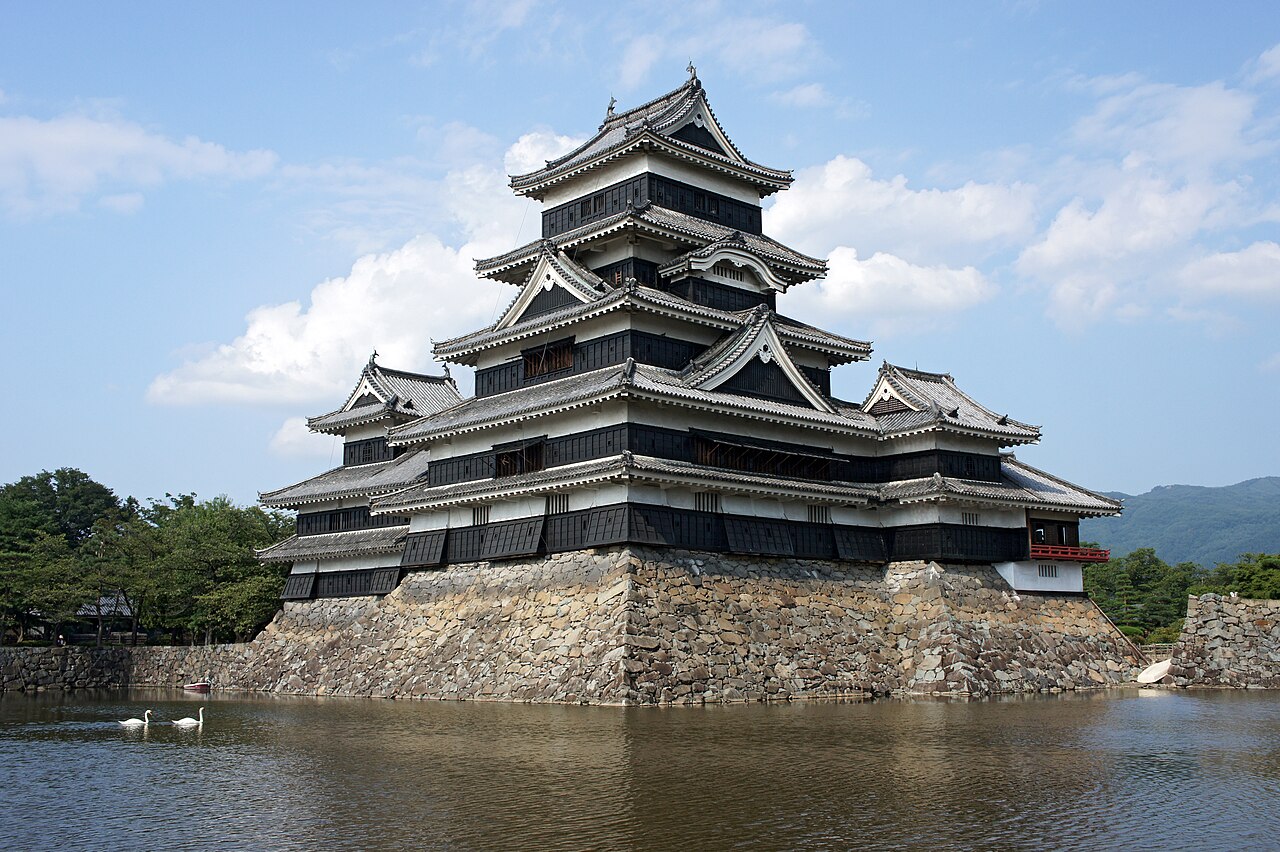
Iida is part of the wider Shinshu (Nagano) craft identity, a region known for working honestly with local materials — blades, wood, lacquer, and paper alike. Matsumoto Castle, Nagano’s national-treasure keep to the north, anchors that identity, even though Iida’s own story is a humbler, more domestic one.
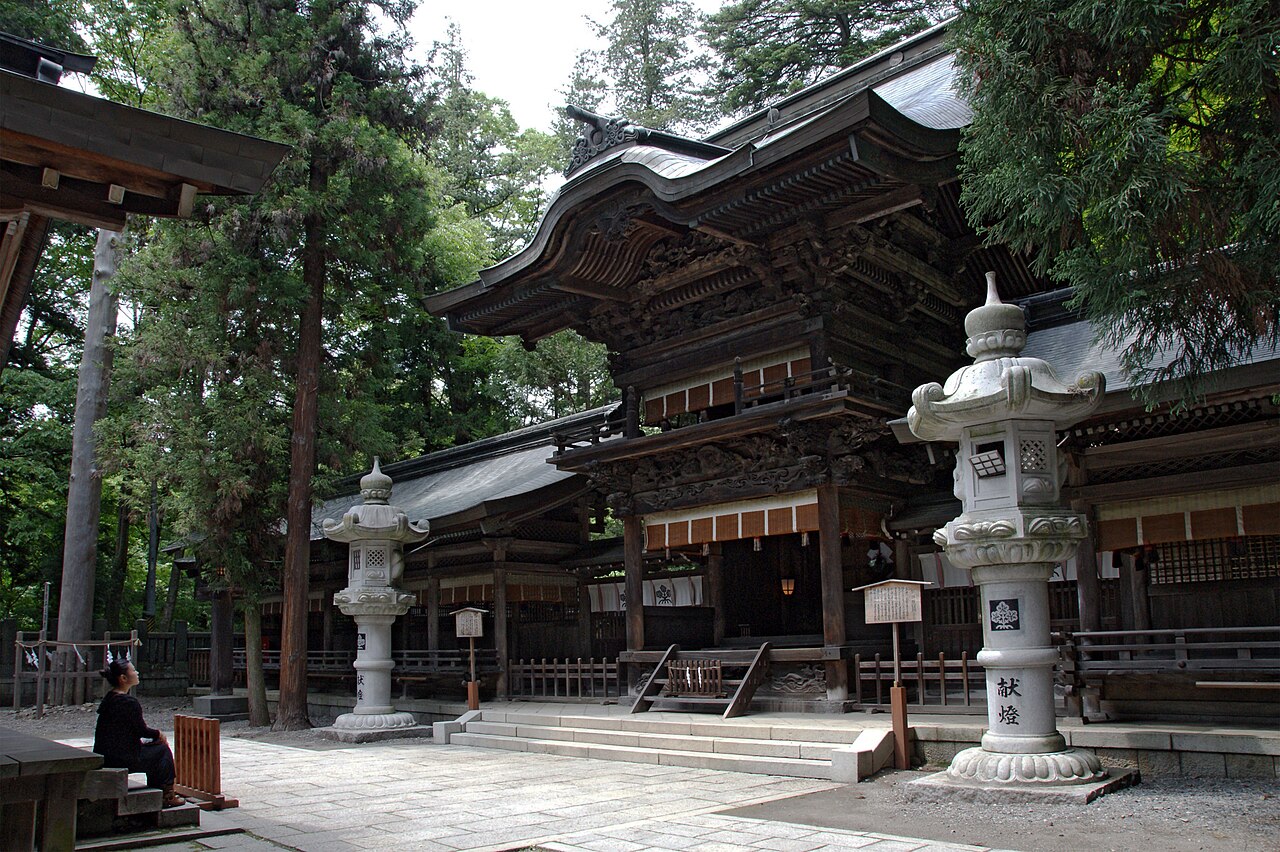
The knots themselves carry meaning, and that meaning is the reason mizuhiki survived the end of the topknot. The form of the tie signals the occasion. Musubi-kiri is a tie-once knot — pulled tight so it does not easily come undone — used for weddings and for condolences, occasions that should happen only once. Awaji-musubi and cho-musubi (the looping awaji knot and the butterfly bow) are repeatable, for happy events that may come again. The ceremonial gift-giving culture these knots adorn is rooted in Shinto rite, the kind of formal offering made at Japan’s oldest shrines.
Related guides on jpmono.com — other Nagano (Shinshu) crafts and other Japanese washi-paper goods worth weighing alongside Iida mizuhiki.
Where to buy Iida mizuhiki cords
Mizuhiki gift-knots from Iida are typically priced from a few hundred yen for a single cord to several thousand yen for a finished decorative knot or full noshi arrangement. JPY is the authoritative currency when buying in Japan; USD figures, where shown, are approximate at a ¥150/USD baseline (mid-2026) and depend on the current exchange rate.
| Store | Item / variant | Price (JPY + USD est.) | Notes |
|---|---|---|---|
| 🇺🇸 Amazon US (search) | Browse Japanese mizuhiki & washi craft cords | varies (USD) | Best if you are shopping from the US — Prime shipping and no international customs. Amazon US carries assorted mizuhiki and washi cord sets useful for comparing colors and counts; the Iida option is sourced from Japan. |
| 🇯🇵 Amazon JP Global Store | Mizuhiki assorted cord set | — | Ships internationally from Japan to most major destinations. Verify the color count and current availability before ordering. |
| Maker direct | Iida workshop cord sets / bundles | varies (JPY) | Iida mizuhiki makers sell bundles and craft-grade cord directly; some do not ship abroad, in which case a proxy is needed. |
| Proxy services (Buyee / Tenso) | Forwards Japan-only purchases | item price + fee + forwarding | Useful for Japan-only shops. Adds a service fee and reshipping cost; customs duties may apply on orders above your local threshold. |
What it does well
Gives wrapping and money envelopes a genuine Japanese knot finish rather than a generic ribbon look.
Starch-stiffened washi keeps a shape, which is exactly what knot craft and jewelry-making need.
An assorted set covers multiple occasions and palettes without buying single colors separately.
Tied to Iida, the production center behind an estimated 70%+ of Japan’s mizuhiki — not anonymous import stock.
Weaknesses and things to verify before buying
- Check the set contents. Exact cord length and color count are not established here; confirm them before ordering.
- Assorted, not custom. If you need one specific color or a precise quantity, an assorted set may not match. Check the counts per color before ordering.
- Paper, not cordage. These are starched washi cords. They are not waterproof, not outdoor-durable, and can crease or fray if mishandled.
- Knot meaning matters. For formal gifting, the wrong knot (e.g., a repeatable bow on a wedding gift, where a tie-once musubi-kiri is expected) can read as a mistake. Learn the basic distinctions first.
- Ships from Japan. Most authentic stock ships internationally from Japan, so expect longer transit than domestic US/EU orders and possible customs handling.
- Grade varies. Plain washi, silk-wrapped, and foil cords differ in look; confirm the grade rather than assuming it.
Conclusion — which buyer type are you?
You want top-grade silk/foil cords and curated colors. Look to maker-direct bundles from Iida workshops, ordered via proxy if needed.
You want a solid assorted set for gifting and craft with straightforward use. Choose a set whose cord colors and finish suit the knots you plan to make.
You want the lowest landed cost from the US. Browse assorted mizuhiki/washi cord sets on Amazon US and compare counts per dollar.
You need waterproof cord, a finished knot ornament, or one exact color/quantity. This assorted paper-cord set is the wrong tool.
Other ways to approach this purchase
There is no meaningful “refurbished” market for paper cord; the equivalent is starting with a small assorted set to test colors before committing to bulk.
If you already use Amazon points or a rewards card, applying them here lowers the effective price on either marketplace.
If you are unsure which knots you need, read up on musubi-kiri vs. cho-musubi before spending — the right knot matters more than the cord count.
❓ Frequently Asked Questions
What exactly is mizuhiki?
Mizuhiki are stiff paper cords made by twisting thin strips of washi, coating them with starch (and sometimes silk thread or metallic foil), then drying them rigid so they hold a knot. They are tied into auspicious knots on gifts, money envelopes, and ceremonial wrapping.
Where does genuine Iida mizuhiki come from?
From Iida, a city in the Tenryu River valley of southern Nagano (Shinshu). Iida is the dominant production center, accounting for an estimated 70% or more of Japan’s mizuhiki. The trade there grew out of Edo-period motoyui, the paper topknot cords for samurai hair.
Can I buy Iida mizuhiki from outside Japan?
Yes. The Amazon JP Global Store ships many such items internationally to most major destinations, and assorted mizuhiki cord sets also appear on Amazon US. For Japan-only shops, a proxy service such as Buyee or Tenso can forward the order; customs duties may apply on orders above your local threshold.
What is the difference between musubi-kiri and awaji or cho-musubi knots?
Musubi-kiri is a tie-once knot pulled tight so it does not easily come undone; it is used for weddings and condolences — events that should happen only once. Awaji-musubi and cho-musubi (the looping knot and the butterfly bow) are repeatable, used for happy events that may recur.
How should I store and handle paper mizuhiki cords?
Because they are starched washi, keep them dry and flat or loosely coiled, away from humidity that can soften the starch. They are not waterproof and can crease or fray if bent sharply, so handle finished knots gently.
Are these cords suitable for jewelry and craft, or only gift wrapping?
Both. Iida workshops export craft-grade cords specifically for jewelry and decoration, and an assorted set works for knot art, card-making, and accessories as well as for traditional gift and envelope wrapping.
jpmono.com is curated by a Japan-based editorial team (working out of Toyama in the Hokuriku region and Nara in Kansai) and is independent. We do not take payment from the makers we feature; income comes from affiliate links. Read more about our editorial standards.
This article was prepared with AI assistance and reviewed against the available source data. Specifications, prices, and availability vary by seller and should be verified on the retailer’s page before purchase.
Affiliate disclosure: jpmono.com may earn a commission on qualifying purchases made through links on this page, at no additional cost to you.