![Shinshu Uchihamono Hand-Forged Sickle: Nagano Blade Craft [2026]](https://jpmono.com/wp-content/uploads/2026/06/shinshu-uchihamono-hand-forged-sickle-where-to-buy-2026-featured.jpg)
A Shinshu hand-forged sickle is one of those tools that looks almost too thin to be serious — a crescent of dark carbon steel ground down to a hair, set on a plain wooden handle. It is built for one job: cutting grass, weeds, and soft stems close to the ground, cleanly, with very little effort. The item in this guide is a kusakari-gama (草刈鎌, “grass-cutting sickle”) forged in northern Nagano, the prefecture old maps still label Shinshu (信州).
What makes the Nagano version notable internationally is not the shape — sickles look broadly alike worldwide — but the lineage and the construction. Shinshu Uchihamono (信州打刃物, “Shinshu forged blades”) is a craft designated by Japan’s Ministry of Economy, Trade and Industry (METI), and its origin runs straight back to the Sengoku-era battlefields of Kawanakajima. The blade is laminated: a hard carbon-steel cutting edge fire-welded onto a softer iron back, then ground paper-thin. That combination is what lets a farm tool take a near-razor edge and still be re-sharpened on a kitchen whetstone.
This article is written for international readers deciding whether a traditional Japanese sickle is worth importing for gardening, foraging, or small-plot farm work. We cover who it suits and who should skip it, what the published listing does and does not tell us, how it compares to other Japanese forged blades, where it sits on the map and in history, and how to actually buy it from outside Japan. A note up front, in the interest of honesty: only the search keyword and the product ID were captured in our data snapshot — no live price, dimensions, or weight were recorded at the time of writing. We flag every place that matters below.
🔄 Updated:
⏱️ Read time: ~11 min

- Who this is for — and who should skip it
- Product overview (from published specs)
- Which finish should you choose?
- Price snapshot across stores
- What it does well
- Weaknesses and things to verify before buying
- Where this comes from
- Conclusion — which buyer type are you?
- Other ways to approach this purchase
- 🏆 Editor’s Pick
- ❓ Frequently Asked Questions
Who this is for — and who should skip it
- Do regular hand weeding, grass-cutting, or trimming along borders, paths, and raised beds
- Forage or harvest soft stems, herbs, and vegetables and want a clean cut
- Already maintain carbon-steel tools and are comfortable drying and oiling a blade
- Value a tool you can re-sharpen yourself for decades rather than replace
- Want a traditional, METI-designated Japanese forged blade with a documented lineage
- Want a maintenance-free tool you can leave wet in a shed — carbon steel rusts
- Need to cut woody branches or saplings — that is a job for a nata hatchet, not a thin sickle
- Prefer a powered trimmer or string strimmer for large areas
- Are buying a child’s or purely decorative tool — this is a sharp working blade
- Need confirmed dimensions or weight before buying and cannot verify them on the live listing first
Product overview (from published specs)
The honest position here: our captured data snapshot for this listing contained only the search keyword and the product ID (ASIN B0B34QJMR3). No live price, blade length, total length, steel grade, or weight was recorded at the time of writing. The table below therefore separates what is documented for the craft (from METI craft records and the maker tradition) from what must be verified on the live listing before you buy.
Shinshu Uchihamono Hand-Forged Sickle
ホウネンミヤワキ 信州型 薄鎌 中厚鎌 切れ味良 刈払い 165.180.195.210mm (中厚210mm)
残り11点 ご注文はお早めに · Sold by 株式会社ホウネンミヤワキ · ASIN B0B34QJMR3
Price and availability as of 2026-08-31 02:30 JST. The Amazon listing at the time of purchase is authoritative. jpmono.com earns a commission on qualifying purchases at no extra cost to you.
| Attribute | What we can state | Source |
|---|---|---|
| Item type | Grass sickle (kusakari-gama), hand-forged | Spec / listing keyword |
| Craft tradition | Shinshu Uchihamono, METI-designated traditional craft, northern Nagano | METI craft record |
| Blade construction | Laminated — hard carbon steel fire-welded to a soft iron back, ground thin | Craft tradition (higashira forging) |
| Origin point | Iiyama / Shinano-machi / Nakano, Nagano Prefecture | METI craft record |
| Blade length / total length | Unconfirmed — check the live listing | Not in captured data |
| Weight | Unconfirmed — check the live listing | Not in captured data |
| Price | Not captured — verify on Amazon JP Global Store listing | Not in captured data |
Sources for the store comparison further down: Amazon US search (primary, tag moonill-20) + Amazon JP Global Store (secondary, tag moonill-22 — the sourced listing) + maker-direct and proxy paths where relevant. Only the listing keyword and ASIN were available in our snapshot; live pricing and measurements may have shifted since the writing date and should be confirmed before purchase.
📖 Glossary — key terms
Shinshu Uchihamono (信州打刃物) — “Shinshu forged blades.” A METI-designated traditional craft of northern Nagano covering sickles, billhooks, and kitchen knives.
Shinshu (信州) — the old provincial name for what is now Nagano Prefecture; still used as a regional brand.
Kusakari-gama (草刈鎌) — a grass-cutting sickle, the thin, light type designed for weeds and soft stems rather than woody growth.
Awase / lamination — joining a hard high-carbon steel edge to a softer iron or low-carbon back, so the blade is both keen and tough.
Higashira / fire-forging — the heat-and-hammer welding step that bonds the steel and iron layers before grinding.
Shokunin (職人) — a trained craftsman; here, the smith who forges the blade by hand.
Nata (鉈) — a heavier Japanese chopping blade/hatchet for branches and bamboo; the tool you reach for when a thin sickle is the wrong choice.
Which finish should you choose?
This piece is listed in 5 finishes. The photos below are the actual 色 options on the listing right now — pick the one you want and confirm it on the product page before ordering, since hand-finished wares vary slightly piece to piece.
![Shinshu Uchihamono Hand-Forged Sickle: Nagano Blade Craft [2026] — 薄195mm finish](https://m.media-amazon.com/images/I/316Rybr4RjL._SL500_.jpg)
![Shinshu Uchihamono Hand-Forged Sickle: Nagano Blade Craft [2026] — 薄210mm finish](https://m.media-amazon.com/images/I/31w25GRu46L._SL500_.jpg)
![Shinshu Uchihamono Hand-Forged Sickle: Nagano Blade Craft [2026] — 中厚195mm finish](https://m.media-amazon.com/images/I/31nbQ0cu82L._SL500_.jpg)
![Shinshu Uchihamono Hand-Forged Sickle: Nagano Blade Craft [2026] — 中厚180mm finish](https://m.media-amazon.com/images/I/31T6QMft23L._SL500_.jpg)
Related hand-forged blades and Nagano crafts we have covered — useful for comparing region, steel, and intended cut.
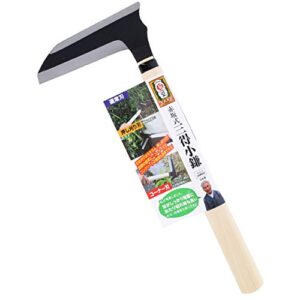 Chiba Koshogu sickle
Edo-armorer lineage — the closest comparison
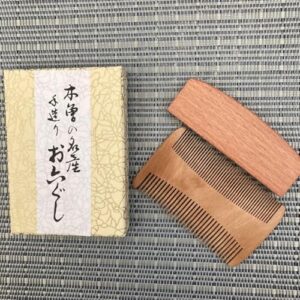 Kiso Oroku-gushi comb (Nagano)
Same prefecture, woodcraft
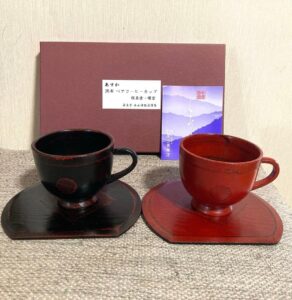 Kiso Honyama lacquer cups (Nagano)
Same prefecture, lacquerware
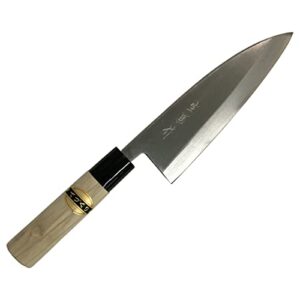 Echizen Uchihamono santoku
Another forged-blade tradition (Fukui)
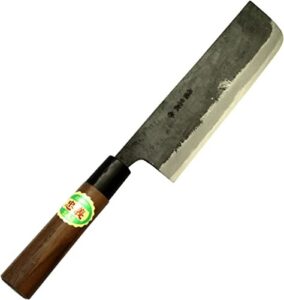 Kaga Hamono nakiri
Hokuriku forged kitchen blade
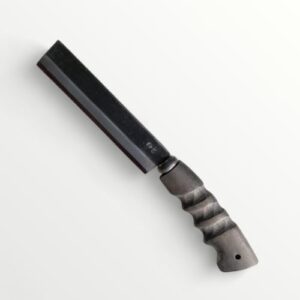 Miyakonojo nata hatchet
For woody growth a sickle can’t handle
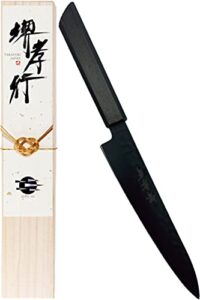 Oita Bungo petty knife
Small forged carbon-steel blade
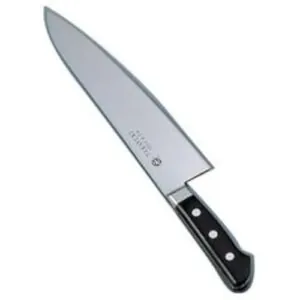 Sakai Takayuki gyuto
Reference point for forged-blade pricing
Price snapshot across stores
Live pricing was not captured in our data snapshot, so the figures below are deliberately left as “verify on listing.” Confirm the current price on the linked listing before buying.
| Store | Item / variant | Price | Notes |
|---|---|---|---|
| 🇺🇸 Amazon.com (US) | Browse Japanese hand-forged sickles & garden blades | varies (USD) | Best if you’re shopping from the US — Prime shipping, USD pricing, no international customs. Amazon US carries Japanese garden sickles, hori-hori knives, and forged kitchen blades from various makers; the specific Shinshu smith’s piece is sourced from Japan (next row). |
| 🇯🇵 Amazon JP Global Store | Shinshu Uchihamono hand-forged grass sickle (this item) | Verify on listing (JPY authoritative) | The sourced listing for the exact item. Ships internationally from Japan to most major destinations. Price not captured at writing time. |
| Maker direct | Shinshu smith / regional craft cooperative | Varies; often JP-only | Some Iiyama and Shinano-machi smiths sell direct, but sites are usually Japanese-language and domestic-shipping only. |
| Proxy services (Buyee / Tenso) | Any JP retailer listing | Item price + service fee + forwarding | Useful when a maker or shop ships only within Japan. Adds a handling fee and a forwarding leg; confirm blades are accepted for export to your country. |
“In Japan there is an old shorthand among gardeners and farmers: when the talk turns to sickles, kama means Shinshu — the blades came from Nagano.”
What it does well
The paper-thin ground edge slices soft grass and stems with little force, rather than tearing them — which is gentler on both the plant and your wrist.
Laminated carbon steel takes a keen edge on an ordinary whetstone, so the tool is meant to be maintained and kept for decades, not discarded.
The thin blade and simple wooden handle keep weight low, which matters during long sessions of low, repetitive cutting close to the ground.
As a METI-designated Shinshu Uchihamono craft, the forging method and regional origin are formally recognized — not heritage marketing.
Weaknesses and things to verify before buying
- Carbon steel rusts. The same steel that takes a fine edge will discolor and corrode if left wet. It must be wiped dry and lightly oiled after use — not a “leave it in the rain” tool.
- No measurements in our data. Blade length, total length, and weight were not captured. If size matters for your hand or task, confirm the figures on the live listing before ordering.
- No price captured. We could not record a price at writing time. Treat any USD figure you see elsewhere as an estimate and verify the JPY price on the listing.
- Wrong tool for woody growth. A thin grass sickle is not for branches, saplings, or bamboo. Forcing it through hard material will chip or bend the edge — use a nata or saw instead.
- It is genuinely sharp. This is a working blade, not a decorative one. It needs careful handling and safe storage, especially around children.
- Edge geometry varies by maker. Some Shinshu sickles are single-bevel (handed for right or left use). If you are left-handed, confirm the bevel orientation before buying.
- International shipping and customs. Bladed tools can face shipping or import restrictions in some countries. Confirm your destination accepts the item before ordering.
Where this comes from

Nagano sits in the mountainous heart of central Japan’s Chūbu region, the prefecture that older maps and brand names still call Shinshu. It is landlocked, high, and cold — a country of steep valleys, fast rivers, and some of the heaviest snowfall in Japan. Its northern districts, on the historic Shinetsu border with present-day Niigata, are where the forging tradition in this guide took root. Farmland here is small, sloped, and worked by hand, which is precisely the condition that made a light, keen sickle indispensable rather than a luxury.
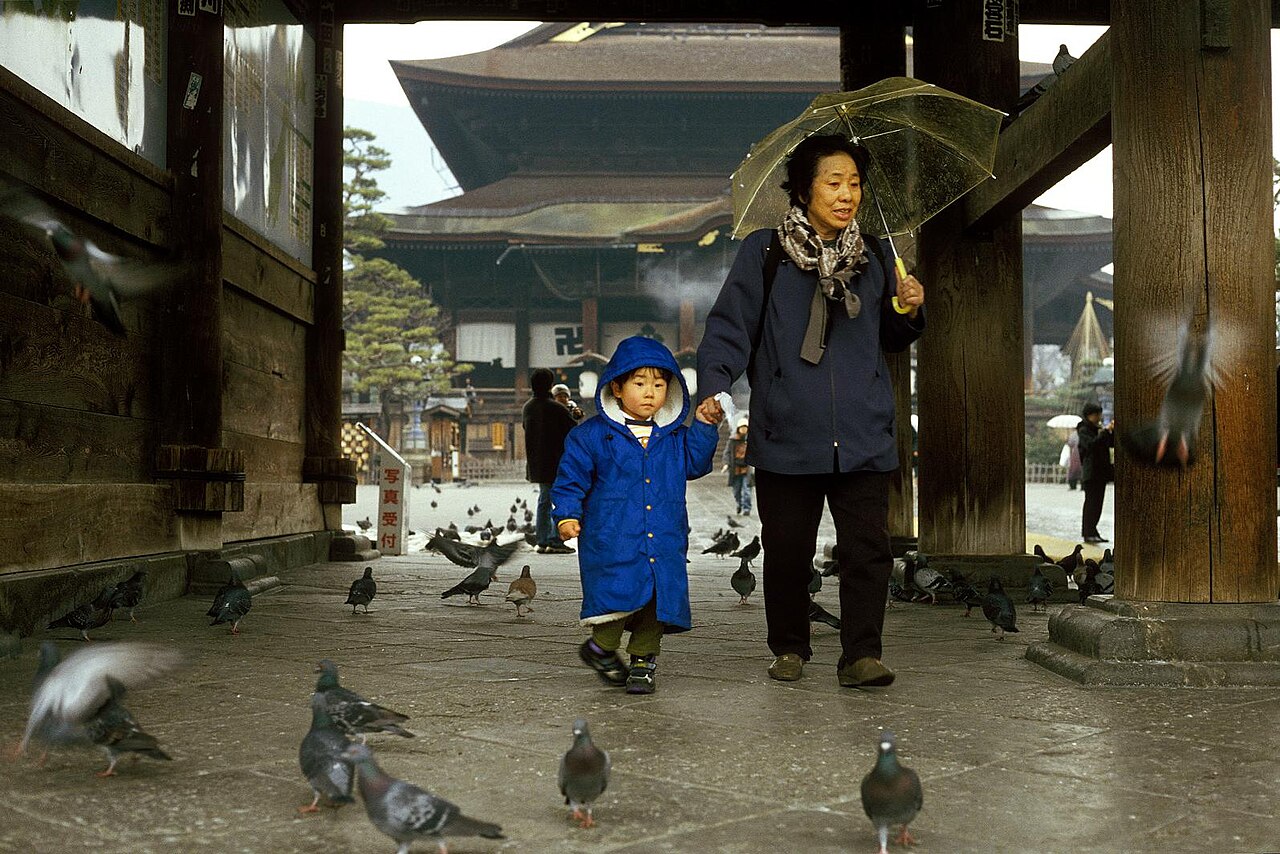
The historical anchor is unusually concrete for a farm tool. In the mid-16th century, the plains around what is now Nagano City were the setting for the repeated Battles of Kawanakajima, fought between two of the Sengoku period’s most famous warlords: Takeda Shingen of Kai and Uesugi Kenshin of Echigo. The campaigns ran across roughly a decade, and the most famous and bloodiest clash came in 1561.
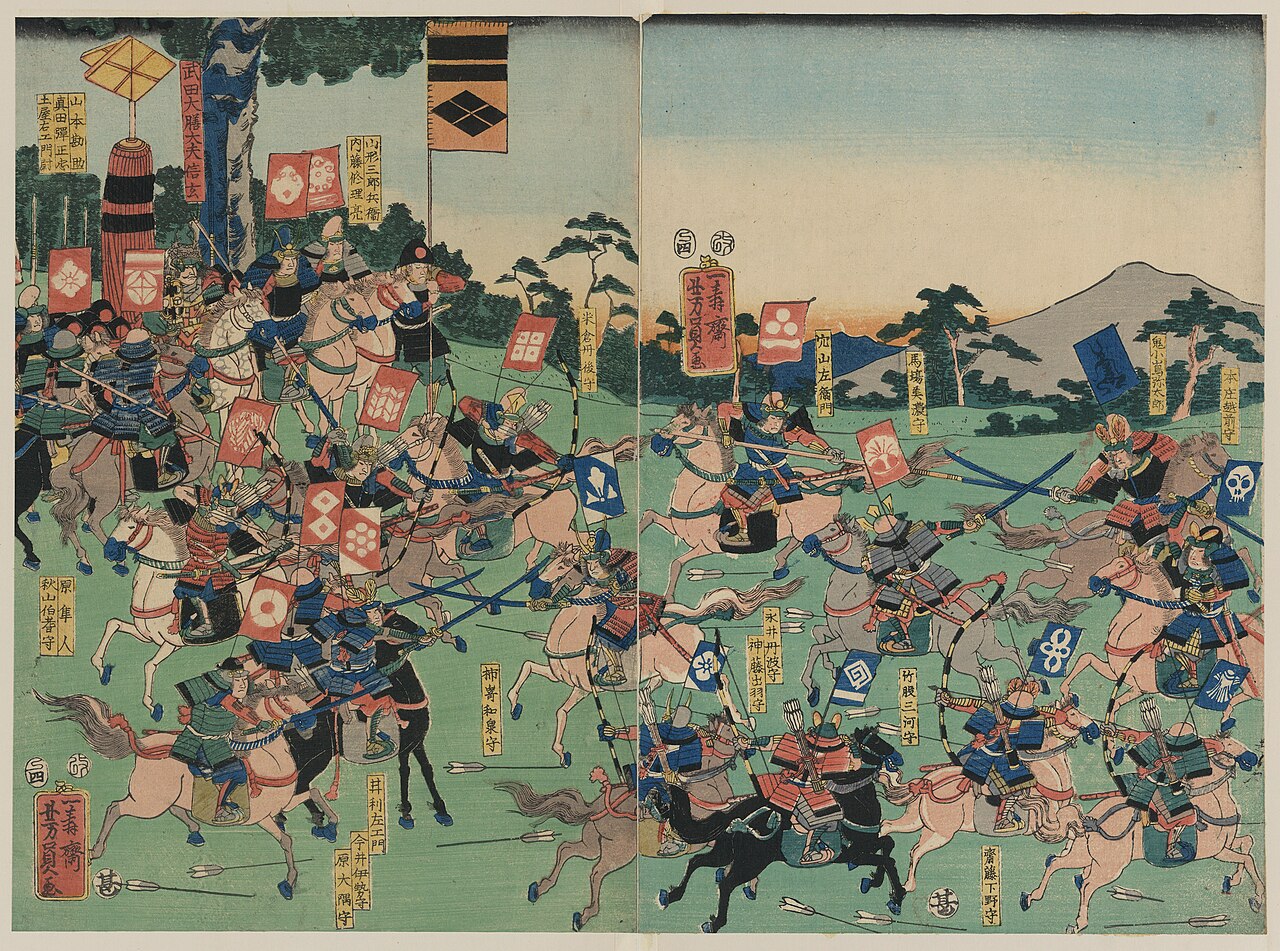
Armies of that scale needed smiths to repair armor, swords, and spears in the field. When the wars ended, some of those metalworkers stayed in the Shinetsu hills rather than returning to a patron’s castle town. They turned the same fire-welding and edge-grinding skill from weapons to farm implements — and the sickle, the single most-used hand tool of mountain agriculture, became their signature product. Over the Edo period, Nagano grew into Japan’s foremost sickle-producing region, the source of the old gardener’s shorthand that “kama means Shinshu.”
- 1553 — First clash at Kawanakajima between Takeda Shingen and Uesugi Kenshin.
- 1561 — The fourth and most famous engagement, the bloodiest of the campaigns.
- 1564 — Fifth and final Kawanakajima engagement; the decade of campaigns ends.
- Late 16th c. — Weapon-and-armor smiths settle in the Shinetsu hills and turn to farm tools.
- Edo period — Nagano becomes Japan’s foremost sickle-producing region.
- Modern era — Shinshu Uchihamono recognized as a METI-designated traditional craft.
- 2026 — Smiths in Iiyama, Shinano-machi, and Nakano still forge blades by hand.
The defining technique is lamination. A hard, high-carbon steel edge is fire-welded onto a softer iron back, then ground paper-thin. The hard layer holds a keen edge; the soft layer absorbs shock and keeps the blade from snapping. It is the same logic behind a traditional Japanese kitchen knife, applied to a tool that lives outdoors. Crucially, it is also what makes the blade re-sharpenable on a simple whetstone — a Shinshu sickle is designed to be maintained for a working lifetime, not replaced each season.
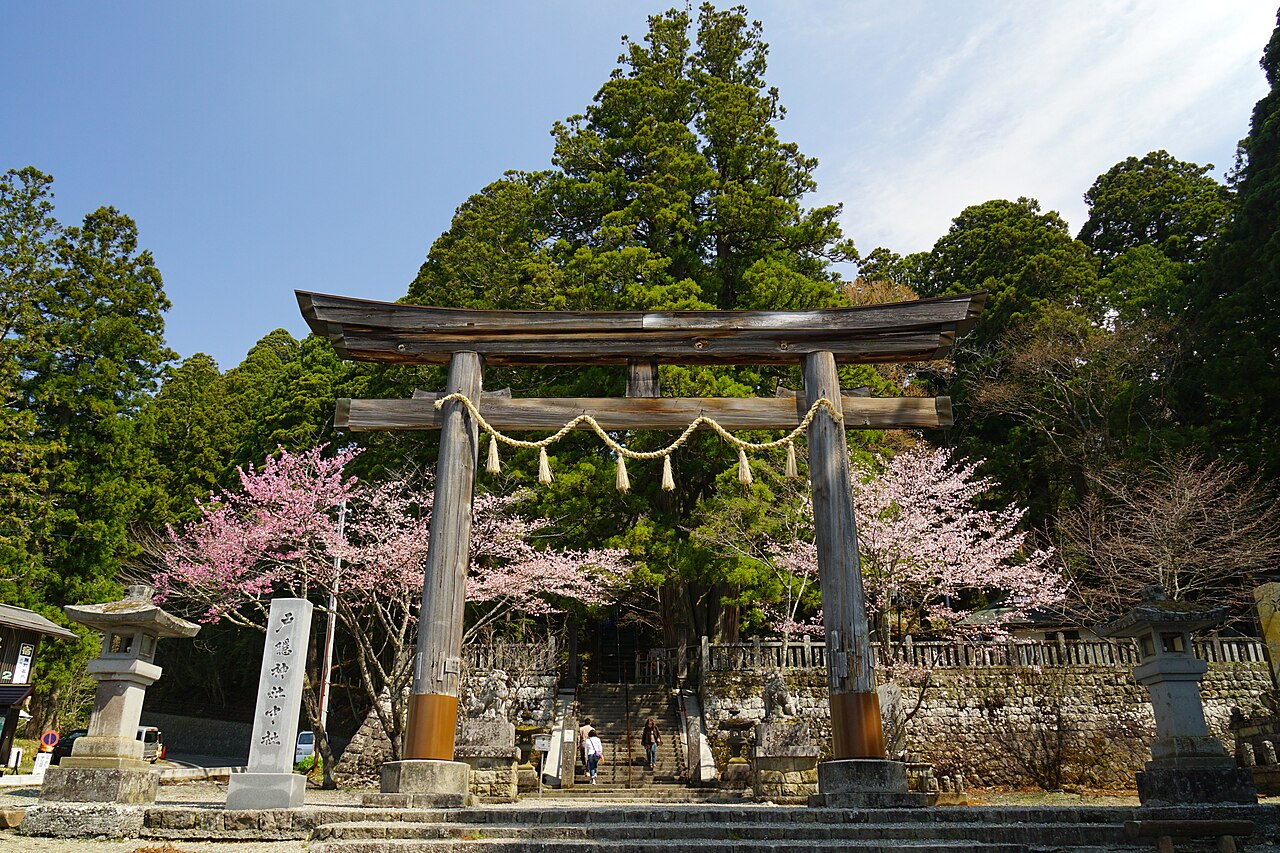
Geography and climate explain why the tool took the form it did. Nagano’s growing season is short and its winters long and snow-bound, so the work that does happen — weeding terraced fields, cutting grass for compost and animal fodder, clearing paths through forest and soba country — has to be efficient and done by hand on ground a machine cannot easily reach. A light, thin, keen blade is the rational answer to that landscape, and generations of Shinshu smiths refined exactly that.

This origin is also what separates the Shinshu blade from its closest comparison, the Chiba Koshogu sickle. The Chiba tradition descends from Edo-era armorers; the Shinshu tradition descends from battlefield weapon-smiths who settled the Kawanakajima country and then put down their swords for farm tools. Different region, different starting point — both still hand-forged today.
Conclusion — which buyer type are you?
You want a documented, hand-forged Shinshu blade and will care for carbon steel properly. This is your tool — buy the real thing and maintain it.
You weed and trim regularly and want a clean cut. A fit — just confirm size and bevel handedness on the live listing first.
If a stainless hardware-store sickle would do and you won’t oil a blade, a cheaper tool may serve you better day-to-day.
You need to cut branches or bamboo, want a powered trimmer, or can’t accept rust-prone steel. This is the wrong tool — look elsewhere.
Other ways to approach this purchase
Amazon JP Global Store pricing fluctuates with the yen. A weaker yen can make the same blade noticeably cheaper in USD — worth watching if you’re not in a hurry.
Some Iiyama and Shinano-machi smiths sell directly, occasionally with custom handles. Expect Japanese-language sites and, often, domestic-only shipping.
If you already use Amazon points or a cashback card, a tool like this is a small, sensible way to spend them. Stack with a sale where possible.
Buyee or Tenso can forward a JP-only listing abroad. Adds a fee and a forwarding leg — confirm bladed tools are accepted for export to your country first.
🏆 Editor’s Pick
❓ Frequently Asked Questions
Does Amazon JP ship this sickle internationally?
How do I care for a carbon-steel sickle?
What’s the difference between this and a Chiba Koshogu sickle?
Can it cut branches or bamboo?
How much does it cost?
Is it suitable for left-handed users?
jpmono.com is curated by a Japan-based editorial team (working out of Toyama in the Hokuriku region and Nara in Kansai) and is independent. We don’t take payment from the makers we feature; income comes from affiliate links.
Note: This article was prepared with AI assistance and reviewed against the source listing data. Specifications, pricing, and availability should be confirmed on the retailer’s page before purchase.
Affiliate disclosure: jpmono.com may earn a commission on qualifying purchases made through links on this page, at no additional cost to you.