![Inami Chokoku Carved Wood Wall Panel: Toyama’s Deep-Relief Craft [2026]](https://jpmono.com/wp-content/uploads/2026/05/japan-map-regions-and-prefectures-800x1050.png)
An Inami woodcarving begins as a single, thick block of zelkova or camphor and ends as a panel you can see straight through. This is sukashi-bori (透かし彫り, “openwork carving”) — a deep, three-dimensional relief cut so far into the wood that light passes between the peonies, waves, and cranes. The craft comes from Inami, a temple district of Nanto City in Toyama Prefecture, on the Sea of Japan side of central Japan, and it is recognized as a National Traditional Craft (designated by Japan’s Ministry of Economy, Trade and Industry in 1975).
What makes Inami notable to an international reader is scale and density, not novelty. Around 250 professional carvers still work in one small town — the largest concentration of woodcarvers in Japan — and the tradition traces to a specific, datable event: the 1763 reconstruction of Zuisen-ji, the great Jodo Shinshu temple at the heart of the district. The temple carvers who rebuilt it seeded a craft that never left. The ranma (欄間) transom panels they perfected for temples and grand houses are the direct ancestors of the wall panel covered here.
This guide is for readers deciding whether a hand-carved Inami wall panel belongs in their home, and how to evaluate one from outside Japan. We cover the craft, material, finish, home suitability, origin, and ways to compare panels across makers.
🔄 Updated:
⏱️ Read time: about 11 minutes
“In Inami, the sound of chisels on the main street is not a demonstration for tourists — it is simply what the town does for a living, and has since 1763.”
Who this is for — and who should skip it
- Want a wall piece with genuine, datable craft heritage rather than mass-produced decor
- Appreciate hand tool work — the openwork is cut with 200-plus chisels, not machined
- Like the idea of temple-transom (ranma) aesthetics scaled for a modern wall
- Value solid domestic hardwood (zelkova, camphor, or paulownia) over veneer or resin
- Are comfortable buying a one-of-a-kind object whose grain and detail vary piece to piece
- Need a low-cost decorative panel — hand carving carries an artisan price
- Want a guaranteed identical match to a catalog photo (each panel is individually carved)
- Cannot accommodate the care needs of unfinished or lightly finished natural wood
- Are shopping for something washable, outdoor-rated, or humidity-proof
- Expect same-day domestic delivery — this ships from Japan and timing varies
Product overview (from published specs)
Inami chokoku panels are individually carved, so wood species, dimensions, finish, and price can vary. Craft attributes such as technique, typical woods, and origin are drawn from the documented Inami tradition, while each panel should be assessed as its own work.
| Attribute | Detail |
|---|---|
| Craft | Inami Chokoku (井波彫刻, “Inami woodcarving”) — deep-relief openwork |
| Technique | Sukashi-bori three-dimensional openwork, hand-cut with 200-plus chisels |
| Typical wood | Zelkova (keyaki), camphor (kusu), or paulownia (kiri) — wood species varies by piece |
| Form | Wall-mounted relief panel (descended from ranma transoms) |
| Origin | Inami, Nanto City, Toyama Prefecture, Chūbu / Hokuriku |
| Designation | National Traditional Craft (METI), designated 1975 |
| Dimensions / weight | Unconfirmed — each piece varies |
| Price | Price varies by seller. |
📖 Glossary — key terms
- Inami Chokoku (井波彫刻) — the woodcarving tradition of the Inami district; “chokoku” means sculpture / carving.
- Sukashi-bori (透かし彫り) — openwork carving, where the design is cut clear through the wood so light passes through.
- Ranma (欄間) — the carved transom panel set above sliding doors in temples and traditional rooms, for light and ventilation. Inami’s signature format.
- Keyaki (欅) — Japanese zelkova, a hard, dense, prized hardwood with strong grain.
- Kusu (楠) — camphor wood, aromatic and workable, favored for larger carvings.
- Kiri (桐) — paulownia, a very light, stable wood.
- Shishi (獅子) — the guardian lion motif, a traditional Inami subject.
- Miya-daiku (宮大工) — temple-and-shrine carpenters, the trade from which Inami’s carvers emerged.
Where to buy
Pricing data for this craft category is limited — treat the figures below as directional and confirm at the retailer before buying. JPY is the authoritative currency; USD figures are estimates at a ¥150/USD baseline (mid-2026).
| Store | Item / variant | Price (JPY + USD est.) | Notes |
|---|---|---|---|
| 🇺🇸 Amazon.com (US) | Browse Japanese wood carvings & relief panels | varies (USD) | Best if you are shopping from the US — Prime shipping, USD pricing, no international customs. Amazon US carries Japanese carved wood decor and relief art for comparing styles and price tiers; this exact Inami panel is sourced from Japan (next row). |
| 🇯🇵 Amazon JP Global Store | Inami Chokoku wall panel | Price varies by seller. | International availability depends on the seller. |
| Maker direct | Inami carving studios / Nanto co-op | Unconfirmed — inquire | Individual Inami studios take commissions; most sell in-person or in Japanese. Best for bespoke motifs and sizes. |
| Proxy services (Buyee / Tenso) | Forwarding for Japan-only stores | Item + fee + freight | Useful when a studio or gallery ships only within Japan. Adds a service fee plus international forwarding; verify customs duties for your country. |
What it does well
The sukashi-bori openwork is cut clear through the block, giving real three-dimensional shadow and light play that printed or shallow-embossed panels cannot reproduce.
Inami carvers work with 200-plus chisels. The tradition is manual carving descended from temple carpentry, not CNC routing.
A National Traditional Craft since 1975, with an origin traceable to the 1763 rebuilding of Zuisen-ji — provenance you can verify, not marketing.
Carved from a single block of zelkova, camphor, or paulownia — dense, characterful domestic wood rather than veneer, resin, or composite.
Weaknesses and things to verify before buying
- Price of hand work. Deep openwork carving is labor-intensive; expect an artisan price rather than a decor-store price. If budget is the priority, this is not the category for you.
- Size and weight vary by piece. Choose a panel suited to the wall and mounting plan.
- Each piece is unique. Grain, motif detail, and finish vary between individually carved panels; the item you receive will not be a pixel-identical match to any single catalog photo.
- Wood is humidity-sensitive. Natural, lightly finished hardwood can move or check with sharp swings in humidity. Keep it away from direct sun, heaters, and damp walls; this is not an outdoor or bathroom object.
- Finish and wood species may vary. Confirm whether the piece is zelkova, camphor, or paulownia, and whether it is oiled, lacquered, or bare, before buying.
- Mounting hardware is not guaranteed included. Verify whether hangers or fittings ship with the panel, and match them to your wall type.
- International shipping timing and duties. Shipping from Japan takes longer than domestic delivery, and orders above your country’s threshold may attract customs duty. Budget for both.
Where this comes from

Inami is a district of Nanto City in the southwest of Toyama Prefecture, on the Hokuriku coast of the Sea of Japan. The town sits in a basin at the foot of the mountains that separate Toyama from Gifu, with the Tateyama range rising to the east across the Toyama plain. Abundant local and regional timber, a settled temple community, and generations of carpentry demand gave the craft its raw materials and its market. This is a place defined by wood.

The craft’s origin is unusually precise for a folk tradition. Inami grew up around Zuisen-ji (瑞泉寺), a great Jodo Shinshu temple founded in 1390. The temple burned repeatedly over the centuries, and its 1763 reconstruction is the pivot: to rebuild it, the temple carver Maekawa Sanshiro (前川三四郎) was brought from the Honganji in Kyoto, and he taught relief carving to the local carpenters working on the site.
Those carpenters kept carving after the temple was finished.
-
1390 — Zuisen-ji founded as a major Jodo Shinshu temple; a temple town grows around it. -
1763 — After repeated fires, Zuisen-ji is rebuilt; Kyoto Honganji carver Maekawa Sanshiro teaches relief carving to local carpenters. -
Late Edo — Inami carvers perfect deep ranma transoms, guardian-lion (shishi) heads, and Tenjin figures for temples and grand houses. -
Meiji onward — The town’s carvers supply temple and shrine work across Japan, spreading the Inami name. -
1975 — Inami Chokoku is designated a National Traditional Craft by Japan’s METI. -
Today — Around 250 professional carvers remain — Japan’s densest woodcarving community — extending the tradition from ranma to wall panels and small ornaments.

What “still being made here” means in Inami is easy to state: roughly 250 carvers still work in one small town, the largest such concentration in Japan. The signature technique is deep, three-dimensional openwork — sukashi-bori — carved from single blocks of zelkova (keyaki), camphor (kusu), or paulownia (kiri), using more than 200 chisels of different profiles. The classic subjects are the ranma transom, the guardian lion, and the Tenjin figure; the wall panel in this guide is the same craft, reformatted for a modern room.
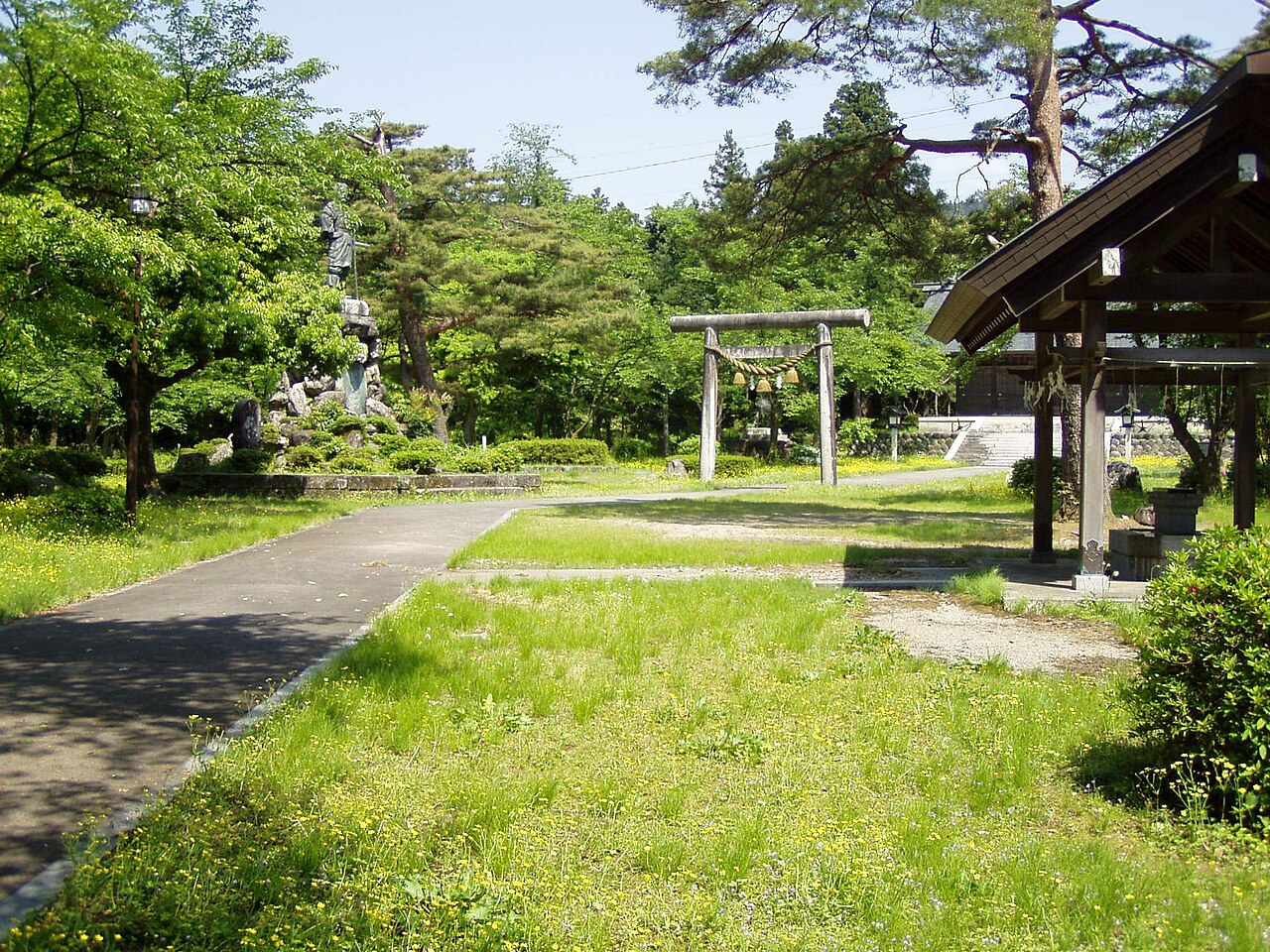
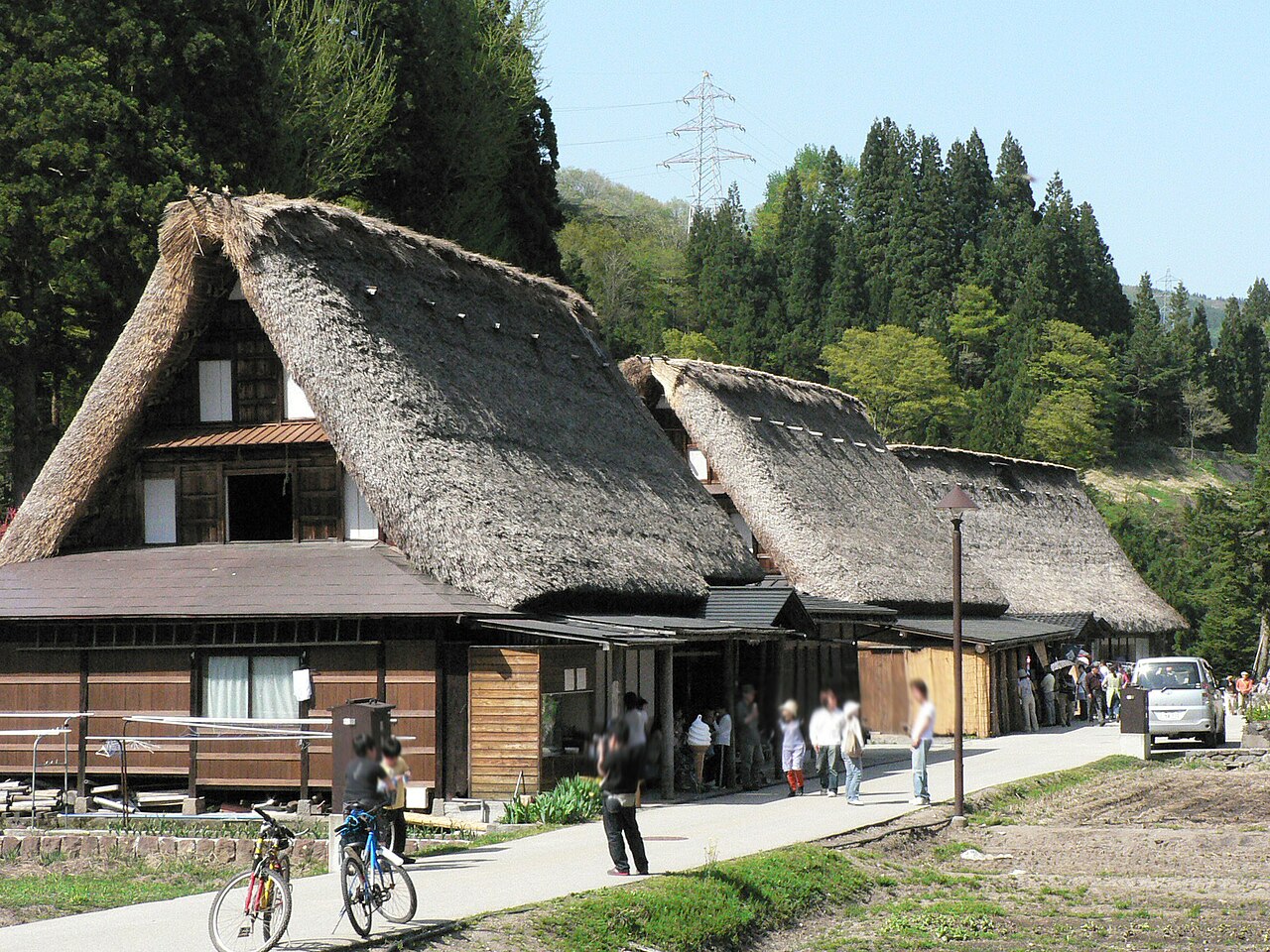
The setting reinforces the craft. Yokamachi-dori, the main street climbing toward Zuisen-ji, is lined with open studios where carvers work in view of the street. In the same Nanto City lie the Gokayama gassho-zukuri hamlets, whose steep, timber-framed thatch houses — a UNESCO World Heritage site — belong to the same deep regional relationship with wood and mountain building. Toyama’s broader craft economy, from Takaoka’s metalcasting to its lacquer, sits alongside this as a Hokuriku heritage of skilled hands.
Conclusion — which buyer type are you?
You want documented craft heritage and real hand carving. Buy the Inami panel and, if you want a specific motif or size, consider commissioning a studio directly.
You want one distinctive, authentic wall piece. Buy the listed panel via the Amazon JP Global Store and confirm size and finish before ordering.
Hand-carved openwork will stretch a tight budget. Browse Japanese carved-wood decor on Amazon US for lower-cost alternatives, understanding they are not Inami work.
You need something washable, outdoor-rated, or identical to a catalog photo. Natural hand-carved hardwood is not the right category.
Other ways to approach this purchase
Hand-carved work is priced for labour and materials, so prices may not follow mass-market discount patterns. Compare wood, carving density, and finish when assessing value.
Older ranma and Inami carvings surface through Japanese antique and craft galleries. A proxy service can forward purchases from Japan-only sellers.
If you buy through Amazon, apply any points or card rewards you already hold; for a single higher-value object the offset can be meaningful.
If none of the buyer types above fit, it is reasonable to pass. A craft object should earn its wall; there is no wrong answer in waiting.
❓ Frequently Asked Questions
Does the Amazon JP Global Store ship an Inami wall panel internationally?
Inami chokoku panels are often sold through Japanese and overseas craft retailers. Shipping cost, delivery time, and customs duty vary by country; compare them alongside wood species and carving finish.
What wood is an Inami panel carved from?
The Inami tradition typically uses zelkova (keyaki), camphor (kusu), or paulownia (kiri), each carved from a single block. The exact species can differ from panel to panel, so confirm it with the maker.
How do I care for a carved hardwood panel?
Keep it out of direct sunlight and away from heaters and damp walls, and avoid sharp humidity swings, which can cause natural wood to move or check. Dust the openwork gently with a soft dry brush. Do not wash it or use it outdoors. Before applying any product, identify whether the piece is oiled, lacquered, or bare.
Will the panel look exactly like the photo?
Not identically. Each panel is individually hand-carved, so grain, motif detail, and finish vary between pieces. That variation is a feature of hand work rather than a defect, but if you need a guaranteed match to a catalog image, this is not the right category.
What makes Inami carving different from other Japanese woodcarving?
Two things: the deep, three-dimensional openwork (sukashi-bori) descended from temple ranma transoms, and the sheer density of the craft. Inami is Japan’s largest woodcarving town, with roughly 250 carvers, tracing to the 1763 rebuilding of Zuisen-ji. Traditions such as Hida Ichii ittobori netsuke in neighboring Gifu are a different scale, wood, and format.
Is it a good gift?
For someone who appreciates craft and has wall space to give it, yes — it is a distinctive, one-of-a-kind object with clear heritage. For a recipient who prefers low-maintenance or purely functional decor, consider whether the care needs of natural wood suit them first.
jpmono.com is curated by a Japan-based editorial team (working out of Toyama in the Hokuriku region and Nara in Kansai) and is independent. We do not take payment from the makers we feature; we read maker specifications and documented craft history.
This article was researched and drafted with AI assistance and reviewed against documented craft history. Prices and availability can vary by maker; confirm current details before purchase.
Affiliate disclosure: jpmono.com may earn a commission on qualifying purchases made through links on this page, at no additional cost to you.