![Kamakura-bori Carved Lacquer Tray: Zen Temple Craft Guide [2026]](https://jpmono.com/wp-content/uploads/2026/06/kamakura-bori-carved-lacquer-tray-where-to-buy-2026-featured.jpg)
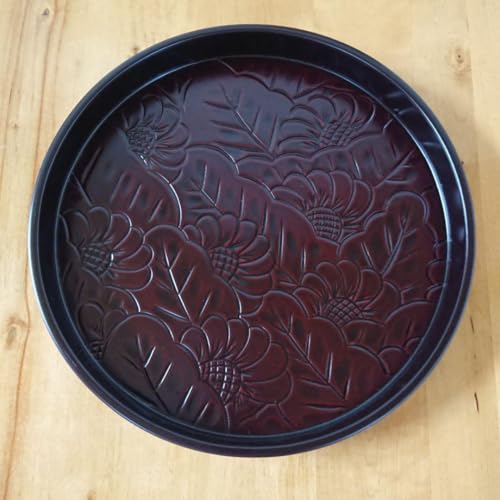
Kamakura-bori (鎌倉彫, “Kamakura carving”) is a carved-lacquer craft from the seaside city of Kamakura in Kanagawa Prefecture, just south of Tokyo. Unlike most Japanese lacquerware, where decoration is painted or sprinkled onto a smooth surface, Kamakura-bori begins with the knife: a pattern is carved in relief into a wood base — usually katsura or honoki — and only then is the piece coated in layers of red and black urushi (漆, “lacquer”). The result is a tray whose design you can feel as much as see, with the carved relief catching light and the polished lacquer pooling in the recesses.
The craft’s roots are unusually well documented. They trace to the 13th-century Kamakura period, when Zen temples such as Kenchoji and Engakuji imported Song-dynasty Chinese carved lacquer along with Buddhism, and local Buddhist sculptors — the same hands that carved temple statues and altar fittings — adapted the imported technique to their own tools and timber. What began as ritual objects became tea-ceremony utensils, and from the Meiji era onward, everyday wares: trays, hand mirrors, and sweets dishes. It is a Ministry of Economy, Trade and Industry (METI)-designated traditional craft.
This guide is written for readers outside Japan considering a Kamakura-bori carved tray (obon, 御盆) for the first time. It covers what separates carved lacquer from painted maki-e lacquer, what katsura and honoki wood bring to the piece, how to read an authentic carved relief, the care a lacquer surface needs, and how the international shipping path works. The data behind this article is thin in one specific way, and we say so plainly: only the Amazon JP Global Store listing reference (ASIN B0FPDJLZQM) was available, and live pricing was unavailable at the time of writing — so specifications below are category-level, and prices are described as ranges to verify on the listing rather than quoted as fact.
🔄 Last updated: June 15, 2026
⏱ Read time: about 17 minutes
🇯🇵 Editorial centers: Toyama / Nara
- Who this is for — and who should skip it
- Product overview (from published specs)
- 📍 Where this comes from — place, era, and the craft tradition
- Price snapshot across stores
- What it does well
- Weaknesses and things to verify before buying
- Conclusion — which buyer type are you?
- Other ways to approach this purchase
- 🏆 Editor’s Pick
- ❓ Frequently Asked Questions
Who this is for — and who should skip it
- Readers who want carved-relief lacquer specifically — the tactile, hand-cut surface rather than a painted or sprinkled maki-e finish
- Tea drinkers and hosts who want a small serving tray (obon) with verifiable Kamakura, Kanagawa provenance
- Buyers drawn to the Zen-temple origin story — the Song-dynasty import, the Buddhist-sculptor lineage — and who want context before they pay
- Gift buyers looking for a METI-designated traditional craft with a clear documentation chain and a workable international shipping path
- Collectors building a Japanese-lacquer table set who want one piece that is structurally different from their maki-e or raden pieces
- You want a confirmed single-ASIN price right now — live pricing was unavailable at the time of writing, so this is a category-level guide
- You expected a dishwasher-safe, everyday-abuse tray — urushi lacquer is hand-wash only and dislikes prolonged soaking, heat, and direct sun
- You assumed any “carved Japanese lacquer tray” online is genuine Kamakura-bori — many carved-look trays are machine-pressed or resin-molded imitations
- You prefer the smooth, mirror-flat painted surface of maki-e — Kamakura-bori is deliberately textured and matte in the carved recesses
- You want the lowest possible price — genuine hand-carved, hand-lacquered work sits well above mass-produced lookalikes
Product overview (from published specs)
The table below summarizes what a Kamakura-bori carved tray looks like as a category, drawn from the craft’s published documentation and the METI traditional-craft framework. Individual products vary; verify on the specific listing before purchase. Because the live Amazon JP listing snapshot for this keyword was thin at the time of writing, the specifications below are category-level rather than item-level.
Kamakura-bori Carved Lacquer Tray
鎌倉彫りお盆 漆塗装 天然木
通常6~7日以内に発送します。 · Sold by いろどりshop · ASIN B0FPDJLZQM
Price and availability as of 2026-08-31 02:30 JST. The Amazon listing at the time of purchase is authoritative. jpmono.com earns a commission on qualifying purchases at no extra cost to you.
| Specification | Typical for a Kamakura-bori carved tray (category) | Source |
|---|---|---|
| Object type | Obon (御盆, serving tray) — carved-lacquer form; the same technique also produces hand mirrors, sweets dishes, and incense cases | Craft documentation |
| Technique | Relief pattern carved into a wood base first, then layered with urushi lacquer — distinct from painted maki-e or inlaid raden | Craft documentation |
| Base material | Carved wood — typically katsura (桂, Japanese Judas tree) or honoki (朴, Japanese bigleaf magnolia), both even-grained and friendly to the carving knife | Craft documentation |
| Finish | Red (shu) and black (kuro) urushi, often combined so the carved relief reads against a contrasting ground | Craft documentation |
| Pattern | Traditional relief motifs — botanical (peony, chrysanthemum, arabesque), geometric grounds, and Buddhist-derived designs | Craft documentation |
| Care | Hand-wipe only; no dishwasher, no microwave, no prolonged soaking; keep out of direct sunlight and away from dry heat | General urushi care |
| Production region | Kamakura, Kanagawa Prefecture, Kantō region — the temple town where the craft originated and still clusters | Craft documentation |
| Designation | Kamakura-bori (鎌倉彫) — METI-designated Traditional Craft Product | METI registry |
| Reference listing | Amazon JP Global Store, ASIN B0FPDJLZQM (hand-carved urushi tray) — the sourced reference for this guide | Amazon JP Global Store |
| International shipping | Amazon JP Global Store ships many lacquer items to the US, EU, UK, Canada, and Australia; a small-to-mid tray is light, so shipping is modest relative to its value | Amazon JP Global Store |
Only the Amazon JP Global Store listing reference (ASIN B0FPDJLZQM) was available at the time of writing, and live pricing was unavailable; the specifications above are category-level and individual listings may differ. Verify on the linked store before purchase.
📖 Glossary — Japanese craft terms used in this article
- Kamakura-bori (鎌倉彫)
- “Kamakura carving.” A carved-lacquer craft from Kamakura, Kanagawa Prefecture, in which a relief pattern is carved into a wood base before urushi lacquer is layered over it. A METI-designated Traditional Craft Product.
- Urushi (漆)
- Japanese lacquer, the refined sap of the lacquer tree (Toxicodendron vernicifluum). Applied in thin layers and cured in humidity, it forms a hard, water-resistant, glossy surface. The base material of all Japanese lacquerware.
- Tsuishu / tsuikoku (堆朱 / 堆黒)
- Chinese-origin carved lacquer — many layers of red (tsuishu) or black (tsuikoku) lacquer built up and then carved. Song-dynasty examples imported through Kamakura’s Zen temples were the models that inspired Kamakura-bori, though the Japanese craft carves the wood first and lacquers after, reversing the order.
- Busshi (仏師)
- Buddhist sculptors — the artisans who carved temple statues and altar fittings. In Kamakura, they adapted imported carved-lacquer techniques to their own carving tools, seeding Kamakura-bori.
- Maki-e (蒔絵)
- “Sprinkled picture.” A lacquer-decoration technique in which gold or silver powder is sprinkled onto wet lacquer to build a design on a smooth surface. Mentioned here for contrast — Kamakura-bori is carved relief, not sprinkled decoration.
- Katsura (桂) / Honoki (朴)
- The two woods most used for Kamakura-bori. Katsura (Japanese Judas tree) and honoki (Japanese bigleaf magnolia) are both even-grained and soft enough to take crisp carved detail without splitting.
- Obon (御盆)
- A serving tray. The everyday carved-lacquer form most accessible to a first-time international buyer.
- Mokugyo (木魚)
- A hollow wooden “fish drum” struck during Buddhist chanting. One of the early ritual objects to which Kamakura’s carvers applied the technique.
- METI (経済産業省)
- Japan’s Ministry of Economy, Trade and Industry, which designates “Traditional Craft Products” (Dentōteki Kōgeihin) meeting criteria for technique, materials, and regional continuity. Kamakura-bori holds this designation.
- Shokunin (職人)
- Craftsperson; the lineage-based artisan tradition in which skills pass from master to apprentice over years.
📍 Where this comes from — place, era, and the craft tradition

The region on the map
Kamakura sits on the Pacific coast of Kanagawa Prefecture, on the southern edge of the Kantō region and the shore of Sagami Bay. It is close to Tokyo by modern standards — about fifty kilometers southwest of the capital, within easy commuting distance — but its geography is the opposite of open. Wooded hills wrap the town on three sides, and the sea closes the fourth. The only practical land approaches in the medieval period were narrow passes cut through the ridgelines, the kiridoshi.
That bowl-shaped, defensible terrain is the reason Kamakura mattered. In 1185, Minamoto no Yoritomo chose it as the seat of his new warrior government, and for nearly a century and a half it was the political center of Japan even though the imperial court remained in Kyoto. A capital of warriors attracts temples, and temples attract carvers, lacquerers, and metalworkers. The craft infrastructure that produced Kamakura-bori did not appear by accident — it grew around the religious and administrative demand of a shogunal city hemmed in by hills and facing the sea.
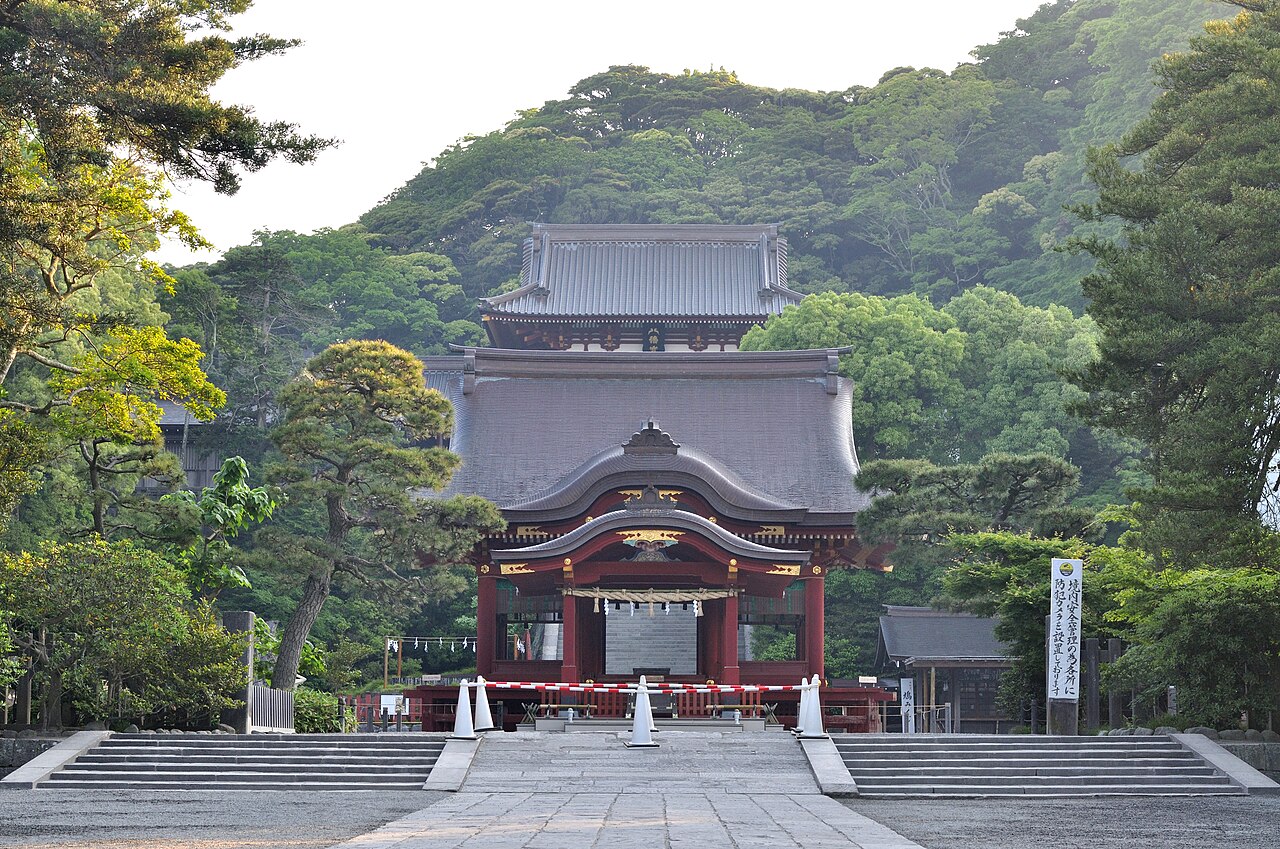
The historical anchor — from Zen temples to carved lacquer
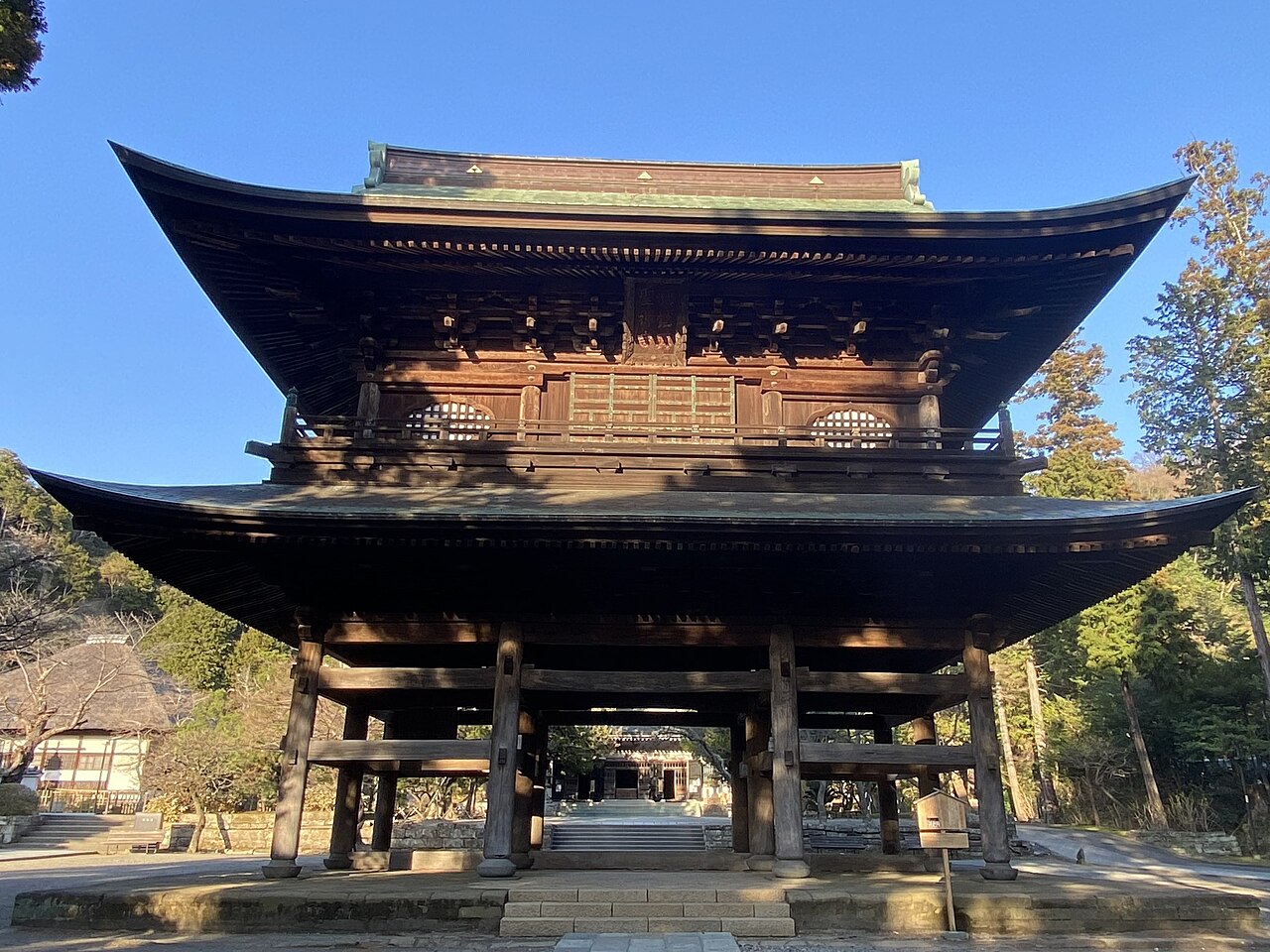
The deep history of Kamakura-bori runs through Zen Buddhism. In the 13th century, the Kamakura shogunate actively patronized Rinzai Zen, and the great temples of the city were founded in quick succession. Kenchoji was established in 1253 and Engakuji in 1282 — both centers of a religious network with direct ties to Song-dynasty China. Through those ties came not only Zen teaching but objects: Chinese carved lacquer, tsuishu and tsuikoku, in which many layers of red or black lacquer were built up and then carved into deep relief, used for altar fittings and ritual ware.
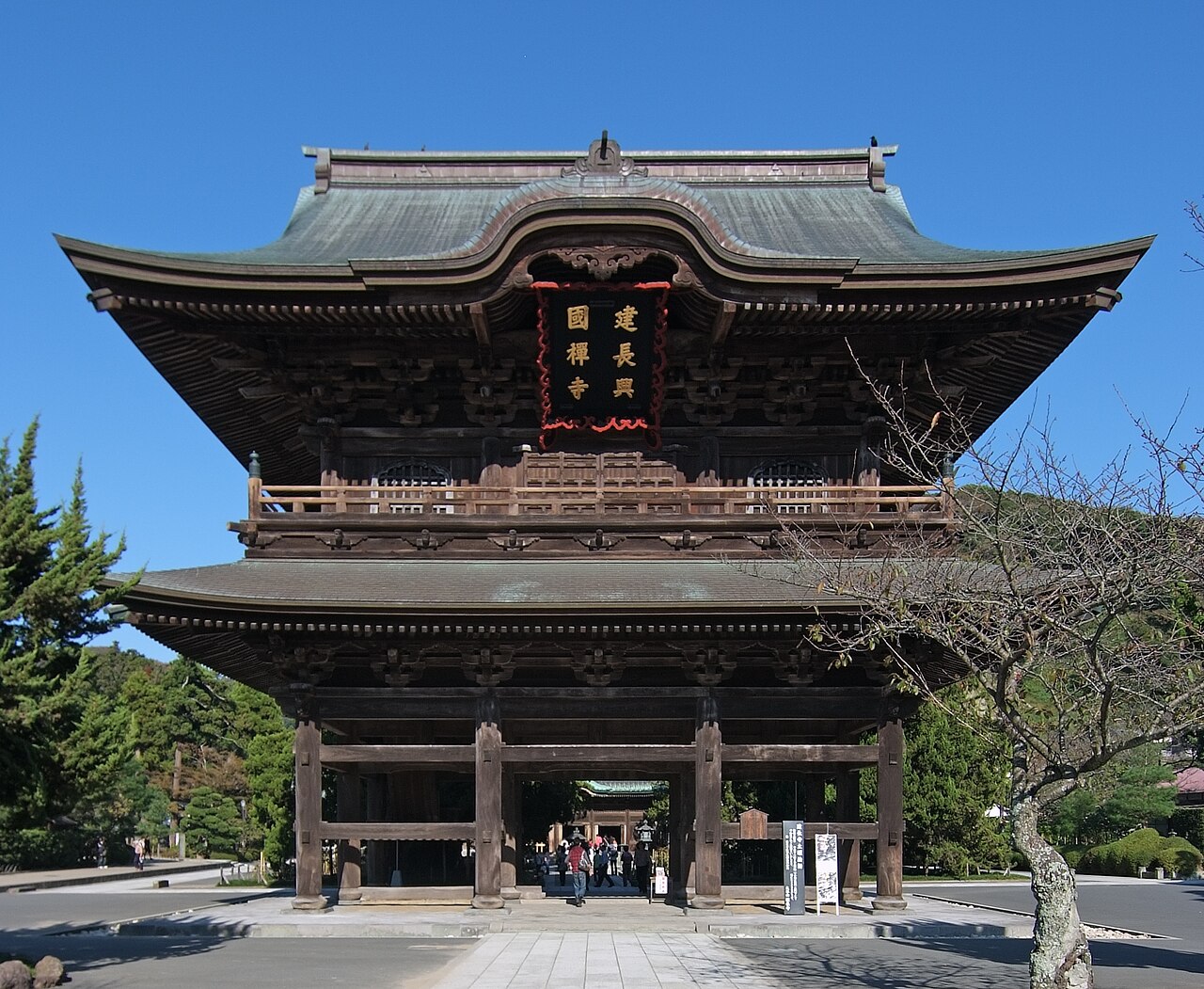
Kamakura already had the carvers to respond. The city’s Buddhist sculptors — the busshi who produced temple statues and altar fittings — looked at the imported carved lacquer and adapted it to their own tools and timber. Rather than carving through a thick block of cured lacquer, as the Chinese pieces did, they carved the relief pattern directly into a wood base of katsura or honoki, then finished it with layers of red and black urushi. This reversal is the technical signature of the craft: in Kamakura-bori the wood is carved first and lacquered second.
The earliest Kamakura-bori objects were religious: incense cases, the hollow wooden mokugyo struck during chanting, and other altar fittings. As the centuries passed and the tea ceremony rose to cultural prominence, the technique moved into tea utensils. Then, from the Meiji era (1868–1912) onward, it broadened again into the everyday — trays, hand mirrors, and sweets dishes that carried the temple-carving aesthetic into ordinary households. The same lineage that began with altar ware now produces the obon tray a reader abroad can buy today.
“Kamakura-bori inverts its Chinese model: where Song carved lacquer cuts through cured lacquer, the Kamakura carver cuts the wood first, then lays the lacquer on. The pattern is in the timber before it is ever in the shine.”
-
1185 — Minamoto no Yoritomo establishes his warrior government at Kamakura; the Kamakura period begins -
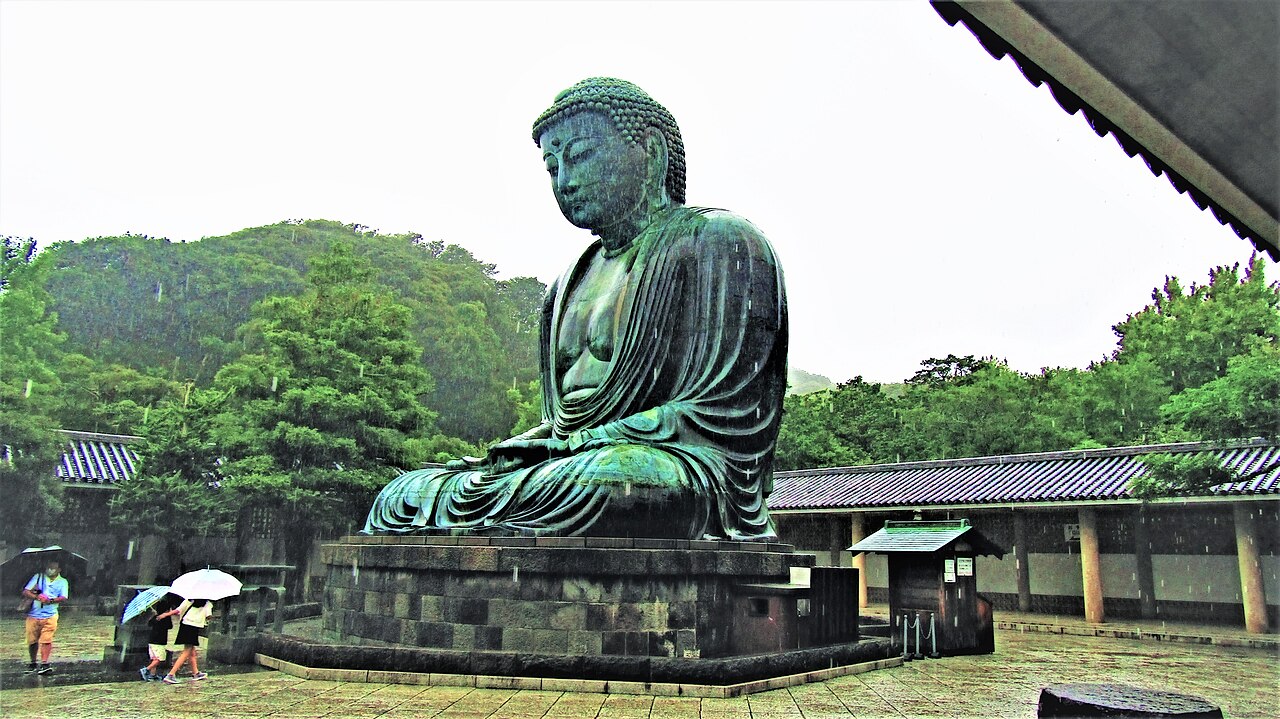
1252 — The bronze Great Buddha is cast at Kōtoku-in, a marker of Kamakura’s Buddhist sculpture culture -
1253 — Kenchoji founded; Rinzai Zen and ties to Song-dynasty China take root in the city -
1282 — Engakuji founded; imported carved lacquer (tsuishu / tsuikoku) reaches Kamakura through the Zen temple network -
13th–14th c. — Local Buddhist sculptors (busshi) adapt the carving technique to wood and urushi, producing ritual objects — the birth of Kamakura-bori -
16th–17th c. — The technique moves into tea-ceremony utensils as the tea ceremony rises to cultural prominence -
1868–1912 — In the Meiji era the craft broadens into everyday wares: trays, hand mirrors, and sweets dishes -
20th century — Kamakura-bori is designated a METI Traditional Craft Product (Dentōteki Kōgeihin) -
2026 — Workshops remain clustered in the Kamakura temple town, producing carved trays, mirrors, and dishes for everyday and ceremonial use
Carved relief vs painted decoration — what makes it Kamakura-bori
The single most useful thing an international buyer can understand is how Kamakura-bori differs from the other Japanese lacquer crafts they will see alongside it. Maki-e builds a picture by sprinkling gold or silver powder onto a smooth, flat lacquer ground. Raden inlays cut pieces of iridescent shell. Both work on a level surface. Kamakura-bori, by contrast, is fundamentally about relief — the design is cut into the wood, so the finished surface rises and falls under your fingertips, and the lacquer settles differently on the raised carving than in the recessed ground.
What “still being made here” means
Kamakura-bori remains a living workshop craft in its home city. The carving and lacquering are done by hand — a carver cuts the relief into the seasoned wood, and a lacquerer applies and cures the urushi in repeated thin coats — and the skills still pass through the master-apprentice lineage that defines a METI traditional craft. Workshops and ateliers cluster in the temple town, where the proximity of the historic Zen temples and the steady flow of visitors to Tsurugaoka Hachimangu and the Great Buddha sustain both the craft and its market. The object you buy today is made the same way the altar fittings of the 13th century were: carved, then lacquered, by hand.
Other Japanese lacquer and Kanagawa-region crafts we have covered for international readers. Each is governed by its own history and technique — useful comparisons if you are assembling a Japanese lacquer table set rather than buying a single object, or exploring what else Kanagawa and the Kantō region produce.
Price snapshot across stores
Pricing for a Kamakura-bori carved tray varies by size, wood, and the depth and fineness of the carving. The notes below are category-level — the live Amazon JP listing snapshot for this specific keyword was thin at the time of writing, so no individual ASIN price is quoted. Treat this as a starting reference and verify on the linked store.
| Store | Item | Price (JPY / USD est.) | Notes |
|---|---|---|---|
| 🇺🇸 Amazon.com (US) | Browse Japanese lacquer trays & urushi tableware | varies (USD) | Best if you are shopping from the US — Prime shipping, USD pricing, no international customs. Amazon US carries Japanese lacquer trays and urushi tableware from various makers — useful for comparing size, finish, and price tiers. A specific Kamakura, Kanagawa carved tray is sourced from Japan (next row). |
| Amazon JP Global Store | Kamakura-bori hand-carved urushi tray (ASIN B0FPDJLZQM) | Varies — verify on listing (live price unavailable at writing) | The sourced reference for this guide. Ships internationally to most major destinations. A carved lacquer tray is light, so international shipping is modest relative to the item’s value. |
| Maker direct (Kamakura workshops) | Carved trays, mirrors, sweets dishes — full atelier catalogs | Listed in JPY; broadly the same retail range | Kamakura-bori ateliers and the local craft cooperative sell directly, often with limited English UI. Best for confirming carving depth, wood, and pattern, and for higher-end signed pieces. International shipping is case-by-case. |
| Proxy services (Buyee / Tenso) | Any Kamakura-bori listing on Rakuten, Yahoo Shopping, or a maker site | Base price + 5–15% proxy commission + forwarding | Useful if Amazon JP Global Store does not ship to your country, or for specific workshop pieces and vintage trays not on Amazon JP. |
USD figures are approximate (¥150/USD baseline as of mid-2026) and depend on the current exchange rate. Customs duty may apply on the destination side for orders over local thresholds (US $800 de minimis; EU VAT applies; Canada and Australia have their own GST rules). Only category-level information was available at the time of writing; verify the live price on the linked store before committing.
What it does well
The carved relief is the whole point. Light catches the raised pattern while lacquer settles into the recesses, giving the tray a depth and tactility that painted or sprinkled lacquer cannot match. It reads as hand-work, because it is.
The craft traces to 13th-century Kamakura, the Song-dynasty carved lacquer imported through Kenchoji and Engakuji, and the Buddhist sculptors who adapted it. A METI Traditional Craft Product — a documentation chain, not a marketing slogan.
A carved wood tray is light compared with ceramic or cast iron, so international shipping through Amazon JP Global Store is modest relative to the item’s value, with low breakage risk in transit.
Among Japanese lacquer crafts, carved relief is comparatively rare on the international market. A Kamakura-bori tray stands apart from the maki-e and raden pieces a recipient is more likely to already own.
Weaknesses and things to verify before buying
- Confirm it is genuine carved Kamakura-bori, not a molded imitation. Many inexpensive “carved Japanese lacquer” trays online are machine-pressed wood-composite or resin moldings that imitate the relief, not hand-carved katsura or honoki finished with urushi. Look for a stated wood base, a stated urushi (not “lacquer-look” or “urethane”) finish, and a Kamakura, Kanagawa origin or maker name.
- Hand-wash only — no dishwasher, microwave, or soaking. Urushi is durable in daily use but intolerant of the dishwasher’s heat and detergent, of microwaving, and of prolonged immersion. Wipe with a soft damp cloth and dry promptly. If low-maintenance is your priority, lacquer is the wrong category.
- Keep it out of direct sunlight and dry heat. Sustained UV exposure and very dry, hot conditions can dull or craze a lacquer surface over time. A tray displayed in a sunny window or stored beside a heater will not age gracefully.
- “Urushi” and “lacquer” are not always the same word on a listing. Some products described loosely as “lacquer” use synthetic urethane coatings over the carving. True urushi behaves and ages differently. If the natural lacquer matters to you, confirm it explicitly before buying.
- Live pricing was unavailable for this keyword at the time of writing. Only the Amazon JP Global Store listing reference (ASIN B0FPDJLZQM) was available; this guide does not quote a confirmed price. Check the linked store for the current figure before committing.
- Color may shift slightly as the lacquer matures. Natural urushi can deepen or clarify over the first months and years, especially red (shu), which often grows richer with light, gentle use. This is normal behavior, not a defect — but expect the tray to look subtly different in a year.
Conclusion — which buyer type are you?
Wants a deeply carved, signed piece from a named Kamakura atelier and is prepared to pay for fine relief and natural urushi. Maker-direct ateliers and the local craft cooperative are the channels; Buyee or Tenso for forwarding where direct shipping is not offered.
Wants a genuine Kamakura-bori carved tray with international shipping and reasonable care. A small-to-mid hand-carved urushi obon is the standard starting point. Browse Amazon US for comparable lacquer trays; use Amazon JP Global Store for the sourced Kamakura piece.
Wants the carved-relief look at the lowest price. Be careful here: the cheapest “carved lacquer” trays are usually molded imitations. A smaller genuine piece, or a vintage Kamakura-bori tray via a proxy service, is a more honest budget path than a resin lookalike.
If you want a dishwasher-safe everyday tray, or you prefer the flat mirror finish of maki-e, Kamakura-bori is the wrong object. A coated wood or melamine tray will survive hard daily use; come back to carved urushi when you want the hand-work itself.
Other ways to approach this purchase
Amazon JP runs seasonal promotions (Prime Day in July, late November / early December, late March fiscal-year close). Discounts on hand-made lacquer are rarely deep, but marketplace-seller pricing fluctuates more than maker-direct, so it is worth checking around those windows.
Vintage Kamakura-bori trays appear regularly on Japanese auction and antique channels. An older carved tray can be a fine purchase, but verify the lacquer is intact and not chipped, crazed, or flaking at the relief edges before bidding.
Amazon JP loyalty points accrue toward future purchases on the Japanese side; useful only if you buy from Amazon JP regularly. Rakuten points (via proxy services) work similarly. For a one-time international purchase the value is largely locked.
If carved relief is not what you actually want, a maki-e lacquer box or a Takaoka raden piece offers a smooth, decorated alternative; for everyday hard use, a coated wood tray is more forgiving. Kamakura-bori should be a deliberate choice, not a default.
🏆 Editor’s Pick
This guide was assembled by the jpmono.com editorial team — a small group based in Toyama (Hokuriku region) and Nara (Kansai region), curating Japanese craft items for international readers. We do not test every item ourselves; our role is to translate what Japanese makers, retailers, and craft historians document into English, and to flag international-buyer considerations (shipping, customs, care). For this article, only the Amazon JP Global Store listing reference (ASIN B0FPDJLZQM) was available and live pricing was unavailable, so individual ASIN-level pricing is not quoted; the historical and technical detail is drawn from the documented record of Kamakura-bori and the METI Traditional Craft framework.
❓ Frequently Asked Questions
What is Kamakura-bori, and how is it different from maki-e?
Kamakura-bori (鎌倉彫) is a carved-lacquer craft from Kamakura, Kanagawa. A relief pattern is carved into a wood base — usually katsura or honoki — and then layered with red and black urushi lacquer, so the finished surface is textured and can be felt. Maki-e is different: it builds a design by sprinkling gold or silver powder onto a smooth, flat lacquer ground, so the surface stays level. One is carved relief; the other is sprinkled decoration on a flat surface.
How do I care for a Kamakura-bori lacquer tray?
Treat it as natural lacquer over wood. Wipe with a soft, damp cloth and dry promptly; do not put it in the dishwasher or microwave, and do not let it soak in water. Keep it out of direct sunlight and away from dry, concentrated heat, both of which can dull or craze the lacquer over time. With that routine, a urushi surface holds up well to everyday serving use.
Does Amazon JP Global Store ship a Kamakura-bori tray internationally?
Many lacquer items are enrolled in the Amazon JP Global Store and ship to the US, Canada, the EU, the UK, and Australia. A carved wood tray is light and low-risk to ship compared with ceramic or cast iron, so international shipping is modest relative to the item’s value, and breakage risk is low. If your country is not served, a proxy-forwarding service (Buyee, Tenso) can fetch and forward instead. Customs duty may apply over local thresholds.
How can I tell genuine Kamakura-bori from a mass-produced imitation?
Check three things. First, the wood — genuine pieces state a carved wood base such as katsura or honoki, not “wood composite” or “resin.” Second, the finish — look for natural urushi, not a vague “lacquer-look” or urethane coating. Third, the origin — a Kamakura, Kanagawa origin or a named local maker is the signal of authenticity. Very cheap “carved Japanese lacquer” trays are usually machine-pressed or molded imitations of the relief rather than hand-carved work.
What wood and lacquer are used, and will the color change over time?
The base is typically katsura (Japanese Judas tree) or honoki (Japanese bigleaf magnolia), both even-grained and well suited to crisp carving, finished with red and black urushi. Natural lacquer can change subtly as it matures — red (shu) in particular often deepens and grows richer with light, gentle use over months and years. That maturing is normal behavior for urushi, not a defect.
Is a Kamakura-bori carved tray a good gift?
It works well as a gift for two reasons. Carved relief is comparatively uncommon on the international market, so it tends to stand apart from the maki-e or inlaid pieces a recipient may already own; and it carries a clear, documented story — a Zen-temple origin in 13th-century Kamakura and a METI traditional-craft designation — that gives the object context beyond its appearance. Pair it with a short care note (hand-wash, no soaking, out of direct sun) so the recipient treats it correctly.
jpmono.com is curated by a Japan-based editorial team — working out of Toyama in the Hokuriku region and Nara in Kansai — and is independent. We do not take payment from the makers we feature; income comes from affiliate links. Read more about our editorial standards.
🤖 This article was drafted with AI assistance from the jpmono editorial pipeline, using the documented history of Kamakura-bori (its 13th-century Zen-temple origin, the Song-dynasty carved-lacquer import, the Buddhist-sculptor lineage) and the METI Traditional Craft framework, and was reviewed for accuracy before publication. Only the Amazon JP Global Store listing reference (ASIN B0FPDJLZQM) was available and live pricing was unavailable at the time of writing, so individual ASIN-level pricing is not quoted. We do not physically test every product; we read maker specs, listings, and the public historical record.
Affiliate disclosure: jpmono.com may earn a commission on qualifying purchases made through links on this page, at no additional cost to you.